- What causes high-rise rooftop AC unit failures?
- What tools and safety gear do you need for rooftop AC repair?
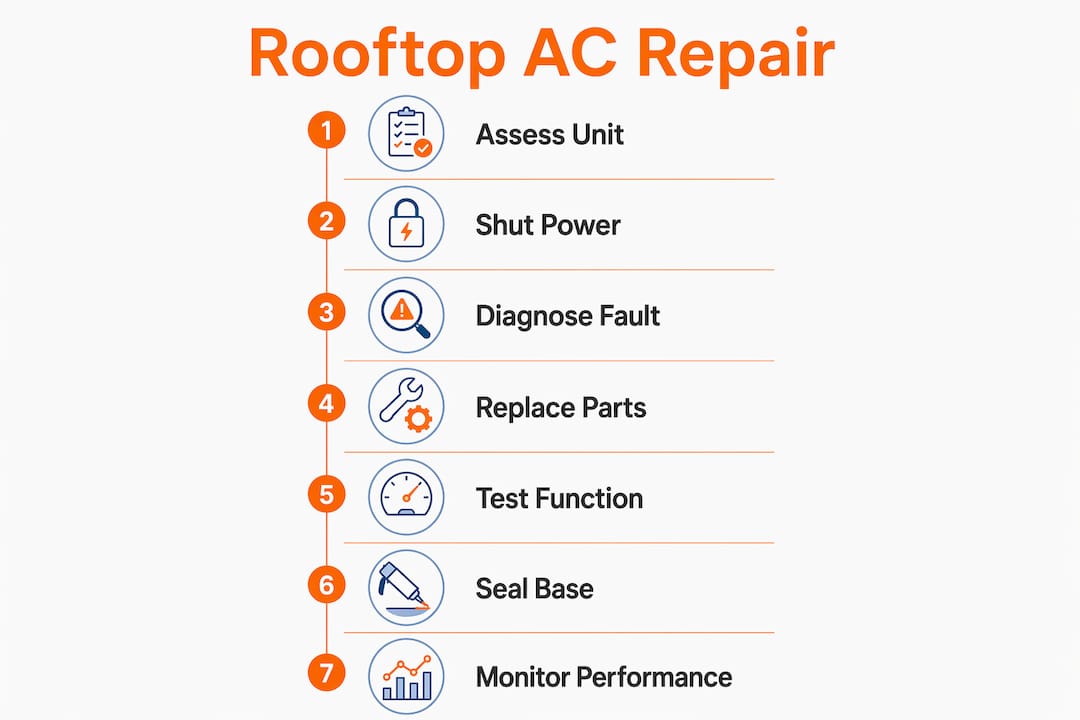
- Step-by-step guide to repairing a rooftop AC unit
- How do you troubleshoot common rooftop AC problems?
- Key Takeaways
- What I’ve learned from years of rooftop AC work in high-rises
- LC Heating and Air Conditioning: rooftop AC repair you can count on
- FAQ
- Recommended
TL;DR:
- High-rise rooftop AC units commonly fail due to refrigerant leaks, compressor issues, electrical faults, airflow restrictions, or economizer malfunctions. Regular maintenance, proper safety protocols, and timely repairs are essential to prevent costly breakdowns and ensure tenant comfort. Repair decisions depend on unit age, repair costs, and adherence to EPA refrigerant regulations.
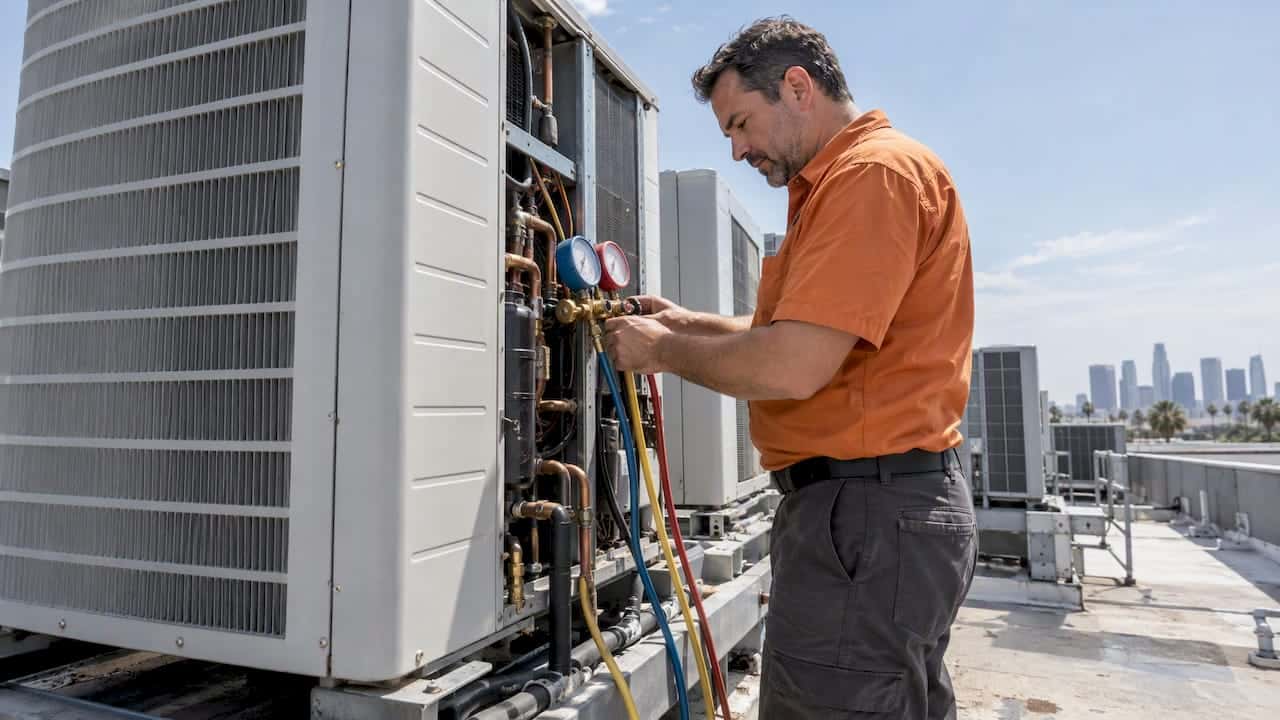
Fixing a high-rise rooftop AC unit means diagnosing mechanical, electrical, and refrigerant faults in a packaged rooftop unit (RTU) that sits exposed to weather, wind, and UV stress far above ground level. RTUs are the industry term for these self-contained systems, and they power the cooling in most mid-rise and high-rise apartment buildings across Los Angeles. When one fails, dozens of tenants lose comfort fast. Commercial RTU maintenance standards call for a minimum of two professional service visits per year, which can extend unit lifespan by 5–10 years and cut emergency repair frequency significantly. LC Heating and Air Conditioning has handled rooftop unit repairs across Los Angeles for over twenty years, and this guide covers exactly what building managers and tenants need to know to get cooling restored safely and efficiently.
What causes high-rise rooftop AC unit failures?
Rooftop AC units fail for predictable reasons. Knowing the root cause before you call a technician saves time and helps you communicate the problem clearly.
The most common failure modes in high-rise RTUs include:
- Refrigerant leaks. Vibration and UV exposure crack copper fittings over time. A 10% refrigerant loss reduces cooling capacity by 20% and puts the compressor at serious risk of failure.
- Compressor failure. Compressors are the heart of the system. Running low on refrigerant or with dirty coils forces the compressor to work harder, shortening its life. Replacement costs run $3,000–$8,000, making prevention the only smart strategy.
- Electrical faults. Contactors, capacitors, and control boards degrade from heat cycling and moisture. A failed capacitor is a small but mighty component. When it goes, the compressor or fan motor will not start.
- Airflow restrictions. Neglecting filter replacement and coil cleaning causes head pressure to spike, stressing the compressor. Monthly filter checks prevent roughly 80% of airflow-related problems.
- Economizer malfunctions. Many commercial RTUs use economizers to bring in outside air for free cooling. Stuck dampers or faulty sensors cause the unit to either overcool or fail to meet setpoints.
- Belt and bearing wear. Older RTUs use belt-driven blowers. A worn belt causes reduced airflow and strange squealing noises that tenants notice immediately.
High-rise ac unit challenges go beyond what ground-level systems face. Rooftop exposure means constant wind-driven debris, thermal expansion from direct sun, and accelerated corrosion from rain and humidity. Maintenance neglect compounds every one of these factors. A unit that misses its spring startup inspection enters the summer cooling season already compromised.
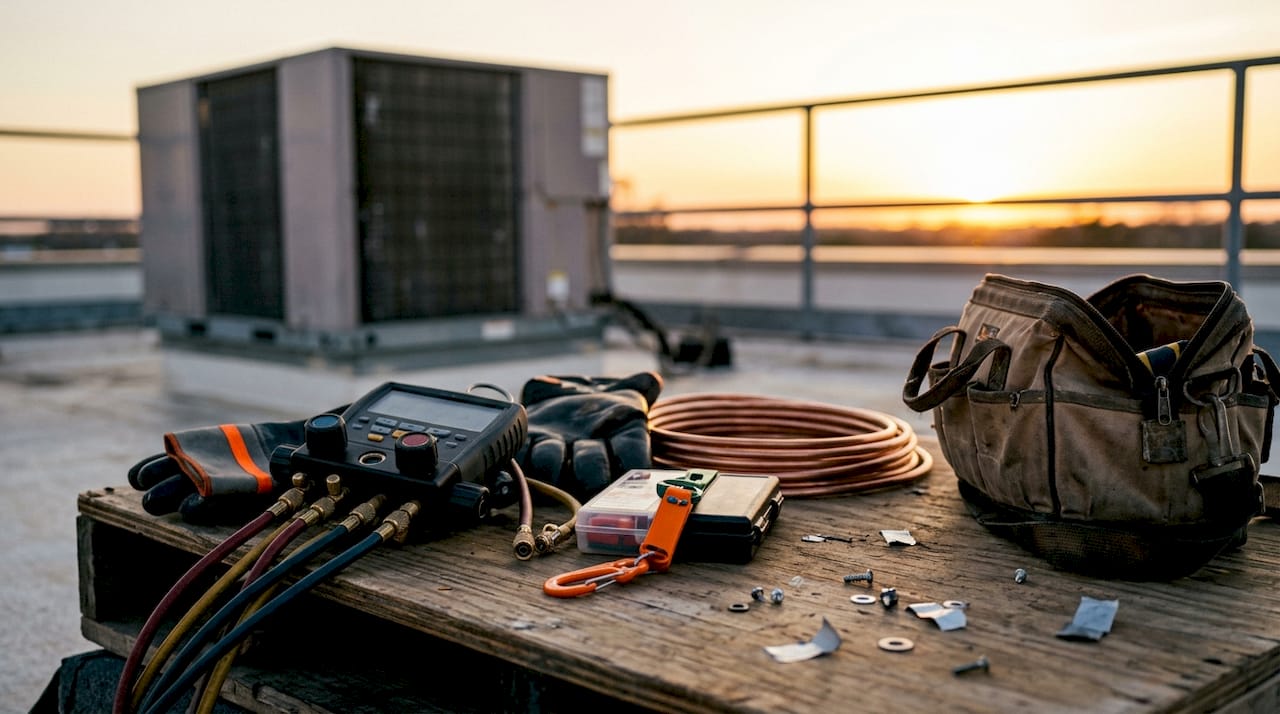
What tools and safety gear do you need for rooftop AC repair?
Rooftop AC repair requires specific tools and strict safety protocols. Arriving on a rooftop without the right equipment is not just inefficient. It is dangerous.
| Tool or Safety Item | Function |
|---|---|
| Manifold gauge set | Measures refrigerant pressure on high and low sides |
| Electronic leak detector | Pinpoints refrigerant leaks at fittings and coils |
| Multimeter | Tests voltage, continuity, and resistance in electrical components |
| Belt tension meter | Confirms correct belt tension to prevent slippage or breakage |
| Refrigerant recovery machine | Removes refrigerant safely per EPA 608 regulations |
| Lockout/tagout kit | Isolates electrical power before any component work begins |
| Fall protection harness | Required on any rooftop with unguarded edges |
| Screwdriver and nut driver set | Accesses panels and replaces components |
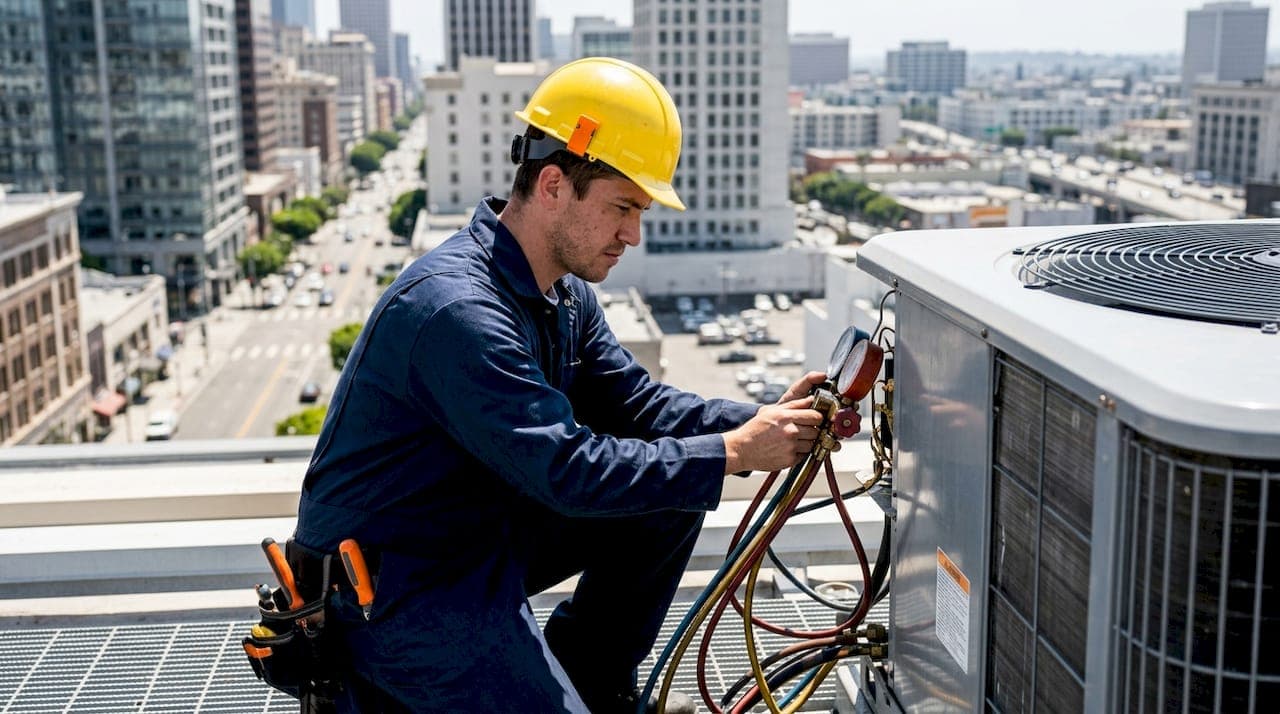
Safety on a rooftop is non-negotiable. Electrical lockout/tagout (LOTO) procedures must be completed before touching any internal components. Fall protection harnesses are required by OSHA on rooftops with unguarded edges. You also need to coordinate with building management before accessing the roof, since many high-rises require permits or escort procedures.
Pro Tip: Confirm with building management whether the roof has active sprinkler shutoffs or underground voids near your crane or equipment staging area. Ground assessment before any heavy equipment placement prevents costly structural damage.
Proper sealing and flashing around the RTU curb also matter during any repair that disturbs the unit’s base. Roof membrane integrity must be maintained to protect the building’s roof warranty. Always coordinate with a licensed roofing contractor if repairs involve lifting or repositioning the unit.
Step-by-step guide to repairing a rooftop AC unit
Repairing a rooftop air conditioner follows a logical sequence. Skipping steps leads to misdiagnosis and repeat service calls.
-
Conduct an initial visual inspection. Walk the unit perimeter. Look for physical damage, debris in the coil fins, disconnected wiring, and signs of refrigerant oil staining near fittings. Oil staining almost always indicates a leak point.
-
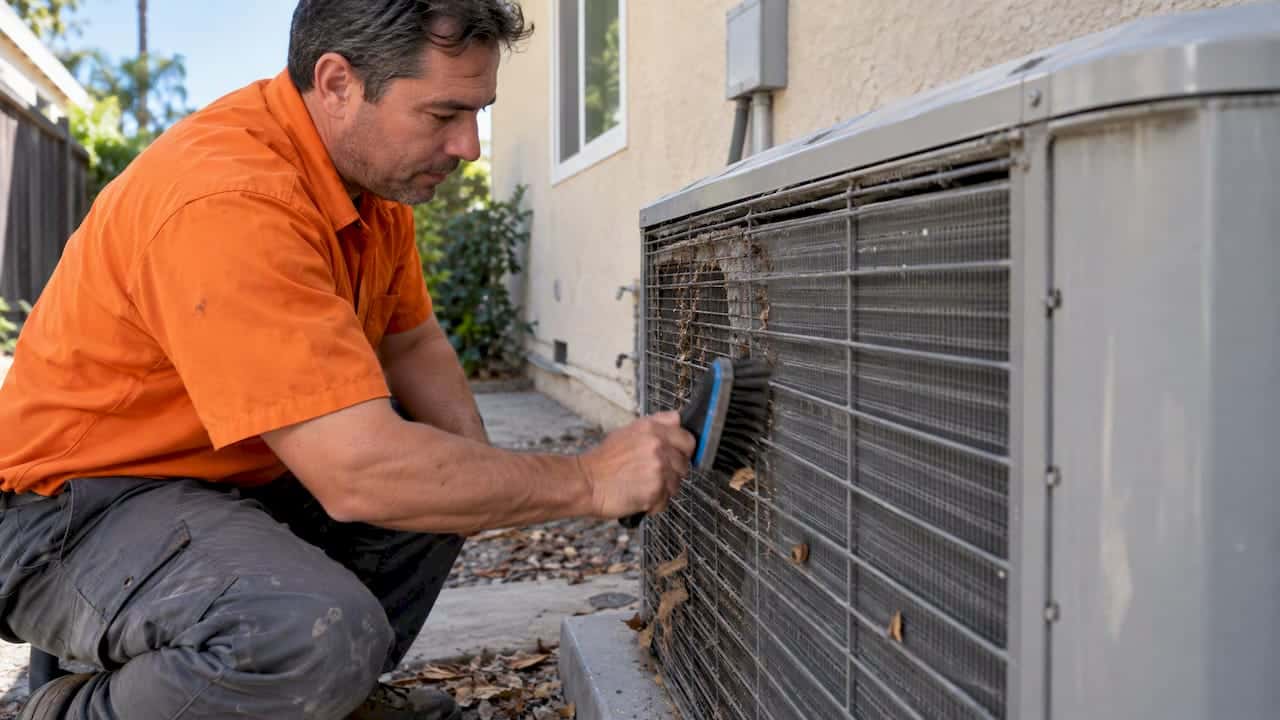
Check the air filter and coils. Pull the filter and inspect for blockage. Dirty filters are the single most common cause of reduced airflow. Inspect the evaporator and condenser coils for dirt buildup. Clogged coils raise head pressure and force the compressor to work harder.
-
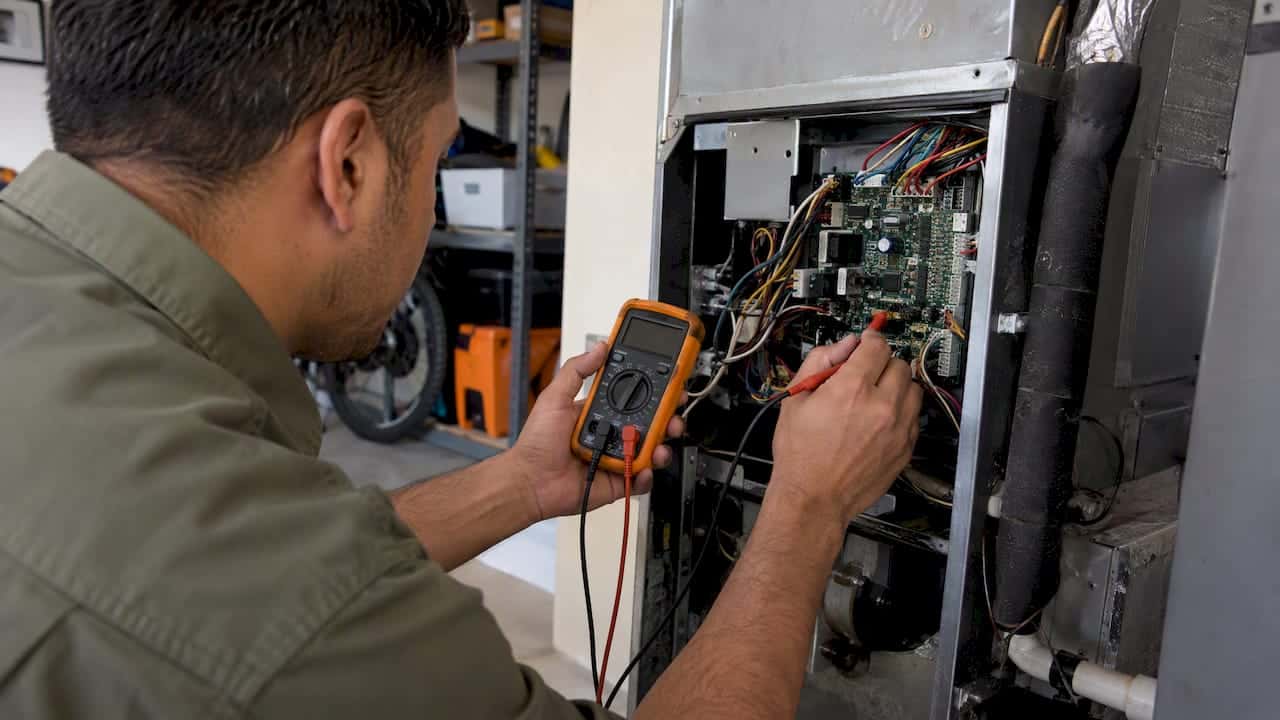
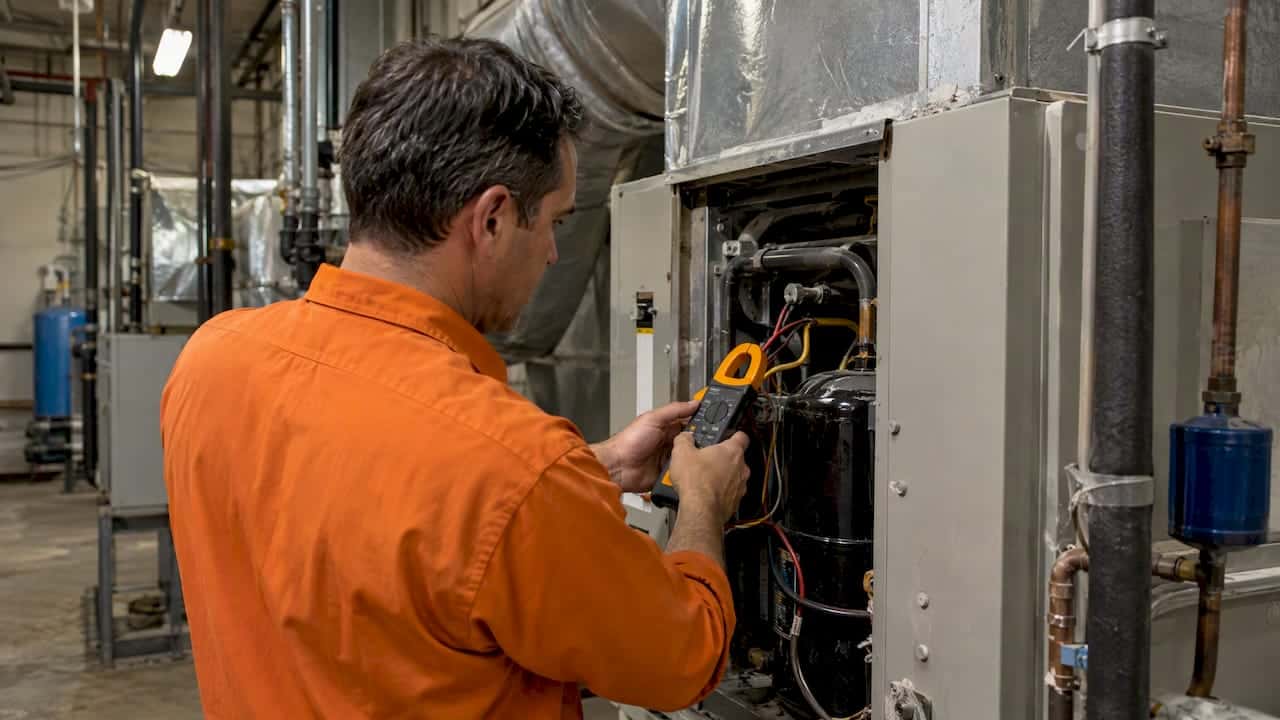
Test electrical components. Use a multimeter to check voltage at the disconnect, contactor operation, and capacitor microfarad ratings. A capacitor reading more than 10% below its rated value needs replacement. Check the control board for fault codes if the unit has a digital display.
-
Measure refrigerant pressures. Connect the manifold gauge set to the service ports. Compare suction and discharge pressures against the manufacturer’s specifications for the current outdoor temperature. Low suction pressure with high superheat points to a refrigerant leak or restriction.
-
Locate and repair refrigerant leaks. Use an electronic leak detector to find the source. Repair the leak before adding refrigerant. EPA 608 regulations require proper documentation of leak rates and refrigerant recovery before any charging work begins. Correct superheat measurements confirm an accurate charge after repair.
-
Inspect and replace belts and bearings. On belt-driven units, check belt condition and tension with a belt tension meter. A belt that deflects more than the manufacturer’s specification is too loose. Replace worn belts and lubricate bearings per the service manual.
-
Clean the coils and drain pan. Use a coil cleaner approved for the coil type. Rinse thoroughly. Clear the condensate drain line to prevent water backup, which can cause water damage inside the building.
-
Test the economizer. Manually cycle the economizer damper and verify the actuator responds correctly. Check the outdoor air sensor calibration. A stuck-open damper in summer brings in hot outside air and destroys cooling efficiency.
-
Restart and verify performance. Power the unit back on and monitor supply air temperature, refrigerant pressures, and amperage draw. Allow 15–20 minutes for the system to stabilize before recording final readings.
-
Document and communicate. Log all findings, parts replaced, and refrigerant quantities added. Share a summary with building management so they can communicate the repair status to tenants.
Pro Tip: Schedule rooftop repairs during early morning hours when outdoor temperatures are lower. Cooler ambient conditions give you more accurate refrigerant pressure readings and reduce heat stress on technicians working in direct sun.
Knowing when to repair versus replace is a critical decision point. Experts advise repair when units are under 8 years old and repair costs stay below $1,500. Beyond that threshold, replacement often delivers better long-term value.
When a full unit replacement becomes necessary, the logistics shift significantly. Replacing rooftop units in high-rises requires phased planning, crane lifts during low-occupancy periods, and temporary cooling to protect tenants. Crane rental alone averages $800–$1,200, with permits and traffic control adding to the total. That complexity is exactly why catching problems early through regular maintenance pays off.
How do you troubleshoot common rooftop AC problems?
Effective AC troubleshooting in a high-rise starts with matching symptoms to likely causes. Guessing wastes time and money.
Short-cycling (unit turns on and off rapidly):
- Check for a dirty air filter or blocked return air grille.
- Verify refrigerant charge. Low refrigerant causes the low-pressure switch to trip repeatedly.
- Inspect the thermostat location. A thermostat near a heat source will call for cooling constantly.
No cooling despite the unit running:
- Confirm the compressor is actually running, not just the fan. A failed contactor or capacitor can leave the fan running while the compressor sits idle.
- Check refrigerant pressures. A fully discharged system produces no cooling at all.
- Inspect the economizer. A stuck-open damper flooding the space with hot outside air mimics a refrigerant failure.
Strange noises:
- Squealing points to a worn belt or dry bearings.
- Rattling suggests loose panels or debris inside the unit cabinet.
- Grinding indicates bearing failure. Continued operation will damage the motor.
Electrical trips:
- A tripped breaker on startup usually means a failed capacitor or a compressor drawing locked-rotor amperage. Test both before resetting.
- Repeated trips after reset indicate a wiring fault or a failing compressor that needs professional evaluation.
Common mistakes that make rooftop AC problems worse include ignoring small refrigerant leaks, setting incorrect belt tension, and skipping filter changes. Routine log-based monitoring of refrigerant pressures and electrical draw is the most cost-effective way to catch compressor problems before they become failures.
Seasonal preventive maintenance is the best defense against emergency repairs. Tailored spring and fall inspections catch the majority of failure modes before they cause breakdowns. Generic yearly checklists miss the seasonal failure patterns that experienced technicians know to look for. Budgeting $150–$500 per unit annually for preventive maintenance is standard practice for commercial buildings and far cheaper than a single emergency compressor replacement.
After any repair, monitor the unit’s performance for 48–72 hours. Check supply air temperatures, listen for unusual sounds, and verify that tenant complaints have resolved. If the same fault recurs within a week, the root cause was not fully addressed.
Key Takeaways
Fixing a high-rise rooftop AC unit requires accurate diagnosis, the right tools, EPA-compliant refrigerant handling, and a clear communication plan for tenants throughout the repair process.
| Point | Details |
|---|---|
| Two service visits per year | Commercial RTU standards require spring and fall inspections to extend unit life by 5–10 years. |
| Refrigerant leaks cause compressor damage | A 10% refrigerant loss cuts cooling capacity by 20% and risks a $3,000–$8,000 compressor failure. |
| Repair if under 8 years and under $1,500 | Beyond these thresholds, replacement typically delivers better long-term value than repeated repairs. |
| EPA 608 compliance is mandatory | All refrigerant recovery, leak documentation, and charging must meet EPA 608 requirements. |
| Tenant communication reduces disruption | Phased repairs with clear updates prevent tenant dissatisfaction and potential lease disputes. |
What I’ve learned from years of rooftop AC work in high-rises
The most expensive rooftop AC failures I’ve seen were not caused by bad equipment. They were caused by deferred maintenance and the assumption that “it’s still running, so it’s fine.” A unit limping through summer on low refrigerant and a dirty condenser coil is burning out its compressor one degree at a time.
Building managers often ask me whether they should repair or replace an aging RTU. My honest answer is that the age and repair cost thresholds matter, but so does the maintenance history. A well-maintained 10-year-old unit can outperform a neglected 5-year-old one. The log data tells the real story. If a unit has no service records, treat it as high-risk regardless of its age.
Tenant communication is something most facilities teams underestimate. When cooling goes down in a high-rise during a Los Angeles summer, tenants notice within hours. A quick notice explaining the issue and the expected repair timeline does more for tenant satisfaction than a fast repair with no communication. I’ve seen buildings avoid lease disputes simply by keeping residents informed.
My strongest recommendation for any building manager is to schedule preventive maintenance twice a year without exception. Spring startup catches refrigerant and electrical issues before peak demand. Fall shutdown prepares the unit for winter and identifies anything that needs attention before the next cooling season. That rhythm, combined with monthly filter checks, eliminates the majority of emergency calls I respond to.
— Leo
LC Heating and Air Conditioning: rooftop AC repair you can count on
Building managers and tenants in Los Angeles need a repair partner who shows up prepared, diagnoses accurately, and communicates clearly throughout the process. LC Heating and Air Conditioning brings over twenty years of local experience to every rooftop unit service call, from refrigerant leak repairs to full electrical diagnostics.

Same-day service is available for urgent cooling failures, and every repair comes with flat-rate pricing so you know the cost before work begins. No surprise fees, no pressure to replace equipment that can be fixed. Whether you need a single repair or a full commercial maintenance program, LC Heating and Air Conditioning has the tools, certifications, and experience to restore comfort fast. Contact LC Heating and Air Conditioning today to schedule a rooftop inspection or get expert AC repair for your building.
FAQ
How often should a high-rise rooftop AC unit be serviced?
Commercial RTU standards require at least two professional maintenance visits per year, typically in spring and fall. This schedule extends unit lifespan by 5–10 years and prevents the majority of emergency failures.
What are the signs that a rooftop AC unit needs repair?
Short-cycling, reduced airflow, unusual noises, warm supply air, and tripped breakers are the most common warning signs. Any of these symptoms warrants a professional inspection before the problem escalates.
Does EPA 608 certification apply to rooftop AC repairs?
Yes. Any technician handling refrigerant in a rooftop AC unit must hold EPA 608 certification. The regulation covers refrigerant recovery, leak documentation, and proper charging procedures.
When should a rooftop AC unit be replaced instead of repaired?
Repair is the right call when the unit is under 8 years old and repair costs stay below $1,500. Older units with higher repair costs typically deliver better value through replacement, especially when factoring in energy efficiency gains.
What tenant rights apply when a high-rise AC unit fails?
Tenant rights vary by jurisdiction, but landlords who include air conditioning in a lease are generally obligated to maintain it. Tenants should document the issue in writing and notify management promptly rather than withholding rent.
Recommended
- How to Fix AC at Home When It Is Not Cooling
- How to Fix an AC Blowing Warm Air | Diagnostic Wiki | LC Heating & Air | LC Heating & Air
- How to Fix a Frozen AC Unit | Diagnostic Wiki | LC Heating & Air | LC Heating & Air
- How to Clean Your Outdoor AC Condenser Coils | Diagnostic Wiki | LC Heating & Air | LC Heating & Air
Leo, Propietario y Técnico Principal en LC Heating & Air
Leo dirige LC Heating & Air como propietario-operador y tiene la licencia C-20 HVAC #1073586 de California. Sus guías se enfocan en diagnósticos prácticos, decisiones de reparación seguras y consejos claros para propietarios de Los Ángeles.