- Key Takeaways
- What are the most common blower motor failure symptoms?
- How do blower motor problems show up in your home HVAC system?
- How does a failing blower motor behave differently in a vehicle?
- What actually causes a blower motor to fail?
- Quick, safe checks you can do before calling a technician
- Repair vs. replace: what does a blower motor job actually cost?
- When should you call a professional, and what will they check?
- How LC Heating and Air Conditioning diagnoses and fixes blower motor problems
- LC Heating and Air Conditioning: same-day blower motor diagnostics in Los Angeles
- Sources
- FAQ
- Recommended
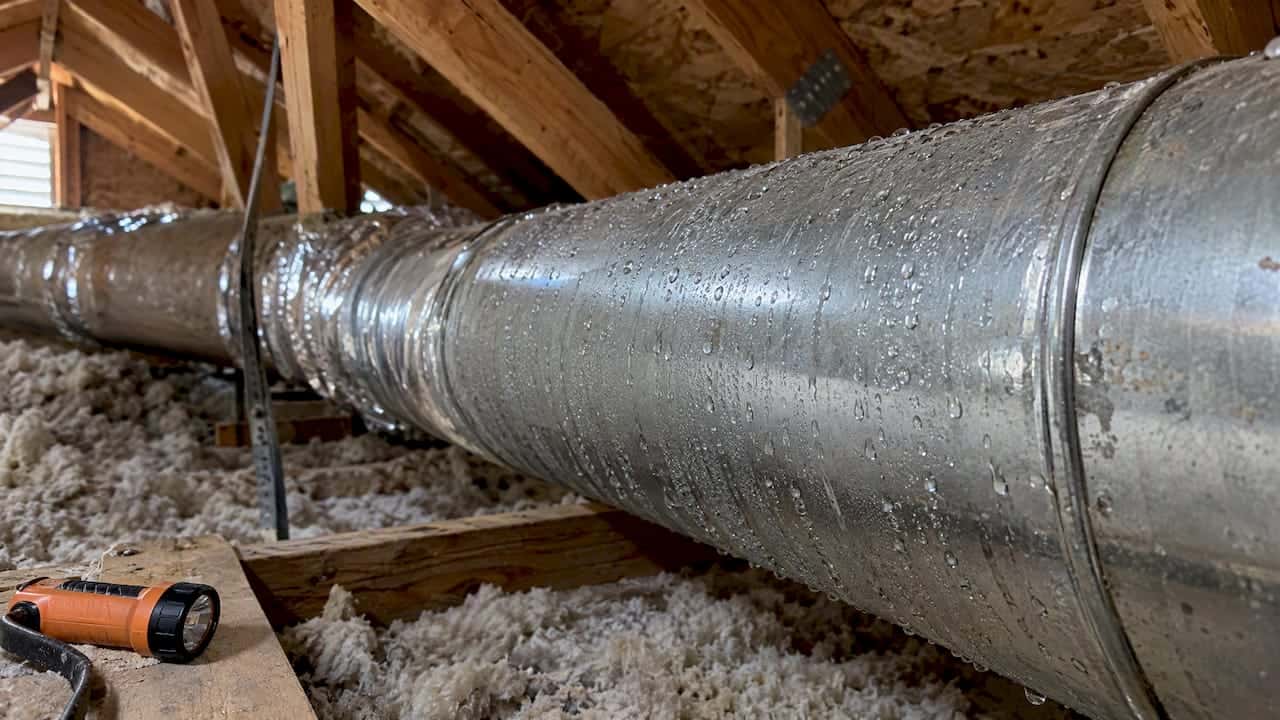
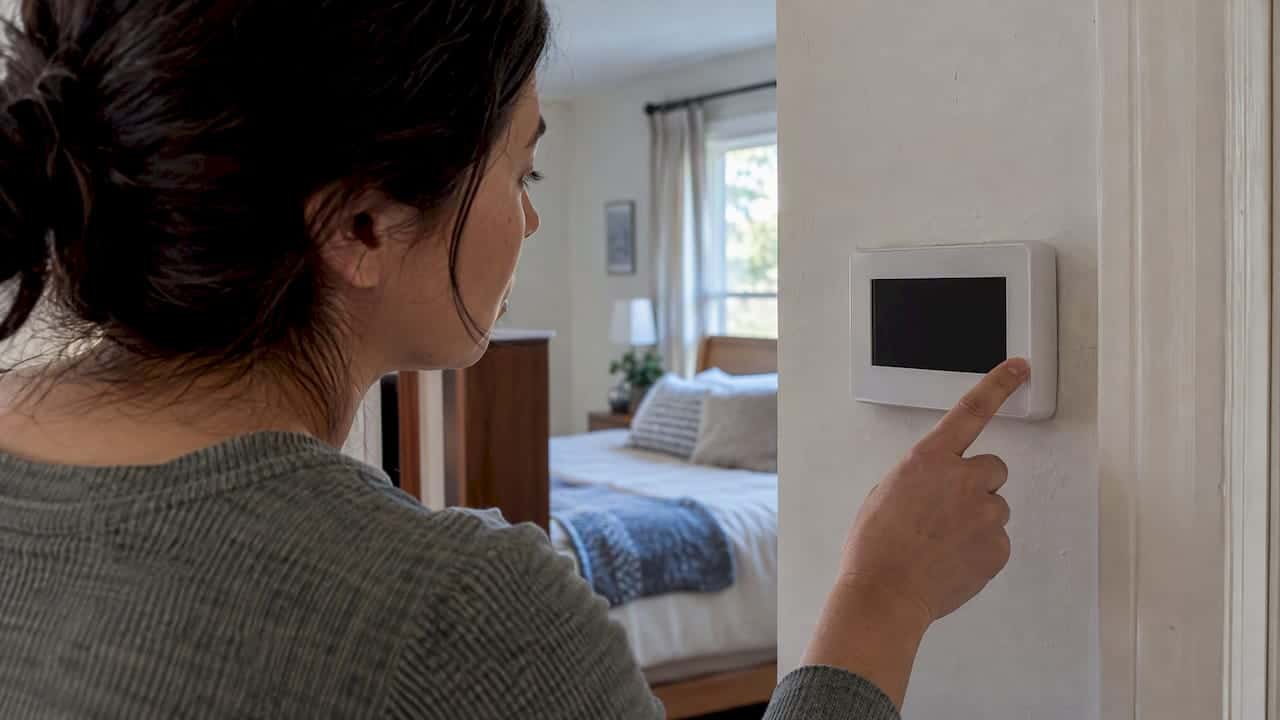
If your vents are blowing weak air, making strange noises, or your system keeps tripping the breaker, there’s a good chance you’re dealing with blower motor failure symptoms. The blower motor is the component that physically moves air through your HVAC system or vehicle cabin, and when it starts to go, the signs are usually hard to miss. Running an AC with a bad blower motor is not recommended — poor airflow can freeze the evaporator coils, strain other components, and drive up your energy bills fast.
Turn the system off immediately if you notice any of these:
- Little to no air coming from the vents while the system is running
- Grinding, squealing, or rattling sounds from the air handler or dashboard
- A burning smell or the scent of hot electrical insulation
- A tripped circuit breaker or blown fuse tied to the blower circuit
- The fan only works on certain speeds (or not at all)
- The motor feels hot to the touch after a short run cycle
Any one of these warrants a closer look. Two or more together almost always point to the motor itself or a closely related part like the capacitor or resistor.
Key Takeaways
Blower motor failure symptoms follow a clear pattern: weak or no airflow, unusual noises, burning smells, and tripped breakers are the four signs that most reliably point to the motor or a closely related part.
| Point | Details |
|---|---|
| Check the filter first | A clogged filter is the most common preventable cause of blower motor failure — replace it before anything else. |
| Speed-only issues point to the resistor | If the fan works on some speeds but not others, diagnose the resistor before replacing the motor. |
| Stop the system for urgent symptoms | Burning smells, repeated tripped breakers, or a hot motor require professional service — don’t keep running the system. |
| Repair vs. replace cost range | Residential motor replacement typically runs $300–$900 installed; vehicle motor parts commonly cost $50–$200 plus labor. |
| LC Heating and Air Conditioning | Offers same-day diagnostics, flat-rate pricing, and honest repair-or-replace guidance across Greater Los Angeles. |
What are the most common blower motor failure symptoms?
Typical blower motor symptoms include reduced airflow, unusual noises, overheating, and unexpectedly high energy bills. Here’s how to triage them quickly:
- Weak or no airflow: If registers are barely pushing air, the motor may be failing or seized. Alternate cause: a clogged filter or blocked duct can mimic this — check the filter first.
- Unusual noises (squealing, grinding, rattling): Squealing usually points to worn bearings; grinding suggests metal-on-metal contact; rattling often means debris in the blower wheel. Alternate cause: a loose panel or debris in the duct.
- Fan works on some speeds only: A strong sign of a failing resistor or control module rather than the motor itself. Alternate cause: a corroded speed-selector switch.
- Burning odor or overheating: The motor’s windings may be burning out, or the motor is overheating from restricted airflow. Stop the system now.
- Tripped breakers or blown fuses: A motor drawing too much current will trip the breaker repeatedly. Alternate cause: a short elsewhere in the circuit.
- Higher energy bills without explanation: A struggling motor works harder and longer to move the same amount of air, which shows up on your utility bill.
Pro Tip: The single most preventable cause of blower motor damage is a clogged air filter. Check yours before anything else — if it’s gray and matted, replace it and run the system again. Many “motor failures” clear up immediately.
How do blower motor problems show up in your home HVAC system?
Home HVAC blower motors fail in predictable ways, and knowing which symptom points where saves you from an unnecessary replacement.
Weak or no airflow is the most common complaint. Before assuming the motor is dead, pull the filter. A filter clogged with dust forces the motor to strain against restricted airflow, which accelerates wear and can trigger the thermal overload switch. If the filter is clean and airflow is still weak, the motor itself is the likely culprit.
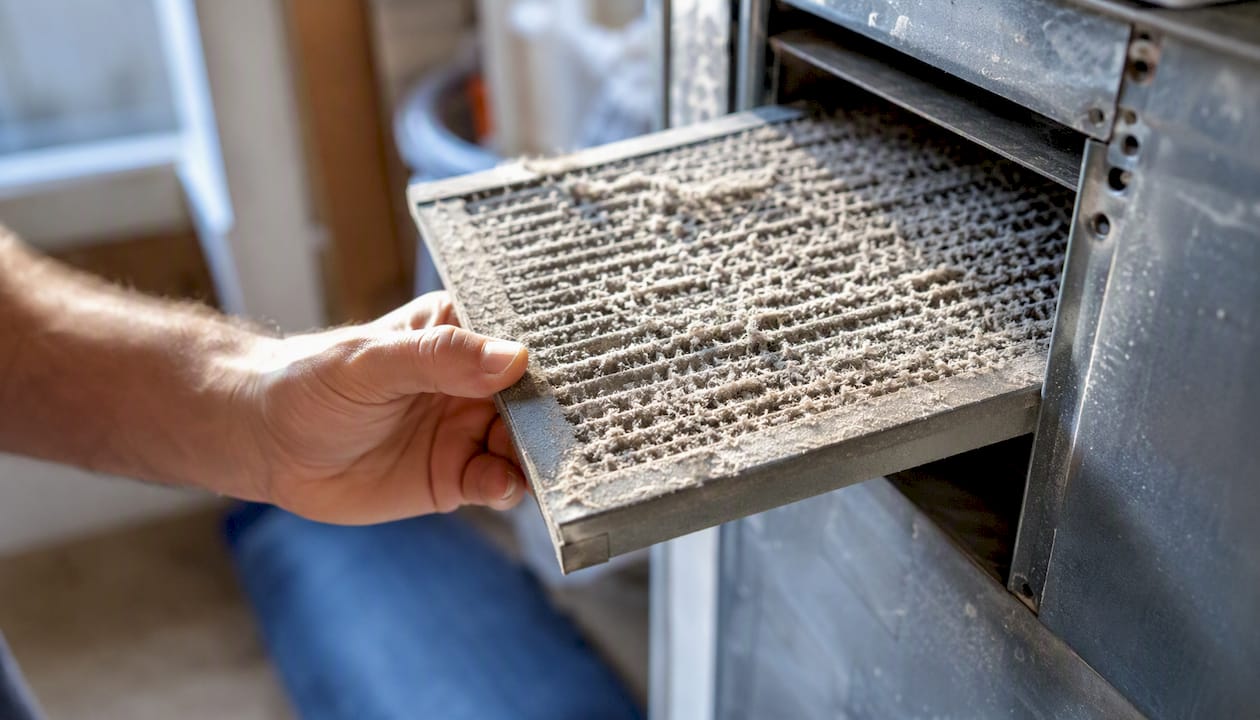
Noises tell a specific story. A high-pitched squeal almost always means the bearings are dry or worn — the motor is still spinning but not for long. A low hum with no airflow movement suggests the motor is receiving power but can’t turn, which often points to a failed capacitor (the capacitor gives the motor its starting torque). A rattling or thumping sound usually means debris has gotten into the blower wheel, or the wheel itself has come loose from the motor shaft.
Overheating and the limit switch work together as a safety net. When the motor runs too hot, the furnace’s high-limit switch shuts the system down to prevent damage. If your furnace or air handler keeps cycling off after a few minutes, overheating from a struggling motor is a common reason. A burning smell during operation is an urgent sign — shut the system off and call a technician.
- Zone vs. whole-house clues: If only one room has weak airflow, the problem is more likely a damper, duct leak, or register issue. If every room is affected, the blower motor or air handler is the starting point.
- Electrical safety note: Never remove access panels or touch wiring inside the air handler without cutting power at the breaker first. Capacitors hold a charge even after the system is off.
How does a failing blower motor behave differently in a vehicle?
Vehicle blower motors share the same basic failure modes as home HVAC units, but the symptoms show up in a slightly different way.
- Fan works on high only, or on low only: This is the classic sign of a failing blower motor resistor, not the motor itself. The resistor controls fan speed by varying electrical resistance; when it fails partially, some speeds disappear. Replace the resistor before the motor.
- No airflow on any speed: If the fan is completely dead, check the fuse first, then the relay. If both are fine and the motor hums but doesn’t spin, the motor is seized.
- Whirring or rattling from under the dash: Leaves, pine needles, or a small animal nest in the blower housing are surprisingly common. The motor itself may be fine.
- Burning smell from the vents: Hot electrical insulation from a failing motor or resistor. Turn off the HVAC and have it checked before driving long distances.
- Cabin air filter note: A clogged cabin air filter puts the same strain on a vehicle blower motor that a dirty furnace filter puts on a home unit. Vehicle blower motor parts commonly cost roughly $50–$200, so ruling out the filter first is worth the two-minute check.
Safety note: If your vehicle has a passenger-side airbag, the blower motor housing is often nearby. Avoid probing around the dashboard without knowing where the airbag module sits. When in doubt, let a shop handle it.
What actually causes a blower motor to fail?
Most blower motor failures trace back to one of a handful of root causes, and each one produces a recognizable symptom pattern.
- Clogged filters or debris buildup: Restricted airflow forces the motor to run hotter and longer. Over time, this burns out the windings. Symptom: gradual performance decline, overheating, eventual seizure. This is the most preventable cause — regular filter maintenance is the single most cost-effective defense.
- Worn bearings: Bearings dry out with age, especially in humid climates. Symptom: squealing or grinding that gets louder over time, eventually leading to a seized motor.
- Capacitor failure: The run capacitor gives the motor its starting push. A weak or failed capacitor means the motor hums but won’t spin, or starts slowly and struggles. Symptom: hum with no airflow, slow startup, intermittent operation.
- Blown fuse or open circuit: A fuse protects the motor circuit. Symptom: complete loss of fan function on all speeds. Check the fuse box before assuming the motor is dead.
- Bad ground or loose connection: Intermittent operation, especially after vibration or temperature changes, often points to a loose wire or corroded connector rather than the motor itself.
- Resistor or control module failure: In both vehicles and some HVAC systems, the resistor or variable-speed control module manages fan speed. Symptom: fan works on some speeds but not others. See the blower motor resistor guide for a detailed breakdown.
- Moisture and corrosion: In coastal or high-humidity areas, corrosion on motor terminals and connectors causes intermittent failures and eventually open circuits.
Pro Tip: Before ordering a new motor, check the capacitor and the fuse. Both are inexpensive and are responsible for a large share of “dead motor” calls. A multimeter test can confirm whether the motor is receiving voltage — if it is, and still won’t spin, the capacitor or motor windings are the next suspects.
Quick, safe checks you can do before calling a technician
These steps are safe for most homeowners and vehicle owners. Stop if you reach a step that requires removing electrical components or if you smell burning.
- Check and replace the air filter (or cabin air filter). Pull it out and hold it up to the light. If you can’t see through it, replace it. Run the system again and see if airflow improves. This single step resolves more “blower motor” calls than any other fix. For more AC maintenance tips, a regular schedule prevents most of these issues entirely.
- Inspect vents and registers. Make sure all supply and return registers are open and unobstructed. A couch pushed against a return vent can mimic motor failure.
- Listen for motor hum vs. movement. Turn the fan on and stand near the air handler or under the dash. A hum with no airflow means the motor is getting power but not spinning — capacitor or seized motor. Silence means no power is reaching the motor — check the fuse or breaker.
- Check the circuit breaker or fuse. Reset a tripped breaker once. If it trips again immediately, stop — there’s a short or the motor is drawing too much current. For vehicles, check the fuse box diagram and swap the blower fuse.
- Try multiple fan speeds. If the fan works on high but not low (or vice versa), the resistor is the likely culprit, not the motor. This is a much cheaper fix.
- Visual check for debris. If you can safely see the blower wheel through an access panel (with power off), look for leaves, dust buildup, or a wheel that’s visibly off-center.
When to stop DIY: If you smell burning, see scorched wiring, feel a motor that’s hot to the touch after a short run, or need to remove panels that require tools and expose live electrical components, call a professional. Electrical work inside an air handler or behind a vehicle dashboard carries real risk.
Repair vs. replace: what does a blower motor job actually cost?
Cost is often what drives the repair-or-replace decision, and the numbers vary by system type.
For residential HVAC systems, blower motor replacement typically runs between $300 and $900 installed, depending on motor type, system age, and labor rates in your area. Furnace blower motor replacement costs in Los Angeles tend to sit at the higher end of that range given local labor rates. Variable-speed ECM motors cost more than single-speed PSC motors, both for the part and the labor. A capacitor replacement, by contrast, usually runs $75–$200 installed — a much easier call.
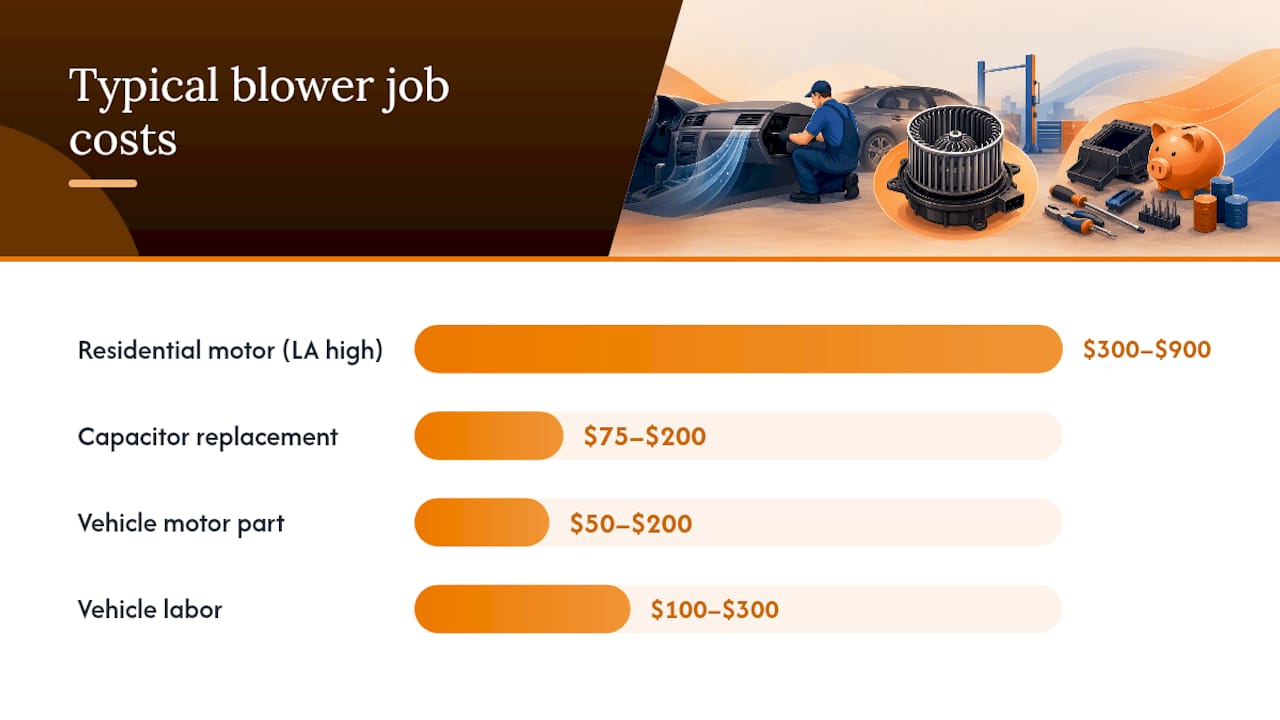
For vehicle blower motors, the part itself commonly falls in the $50–$200 range, with labor adding $100–$300 depending on how buried the motor is in the dashboard. A resistor replacement is usually under $100 parts and labor combined.
Typical motor lifespan and replacement criteria:
- A well-maintained residential blower motor can last many years, but neglected filters and high humidity can shorten its lifespan significantly.
- Vehicle blower motors often last the life of the car with normal use, but cabin filter neglect accelerates wear.
- Replace rather than repair when: bearings are seized, the motor has failed twice in two seasons, or the repair estimate approaches 50% of a new motor’s installed cost.
- For furnace blower motor replacement cost guidance and what factors move the price up or down, a transparent estimate from a flat-rate provider removes the guesswork.
Pro Tip: Always ask for a parts-and-labor breakdown before approving any repair. A reputable technician will tell you the motor cost, the capacitor cost (if needed), and the labor separately — not just a single number.
When should you call a professional, and what will they check?
Some symptoms are safe to investigate yourself. Others mean you should pick up the phone right now.
Call a technician immediately if you notice:
- A burning smell or visible smoke from the air handler or vents
- A breaker that trips repeatedly after being reset
- No airflow while the system is clearly running
- A motor that’s hot to the touch after only a few minutes
- Any sign of scorched or melted wiring
What a thorough diagnostic should include:
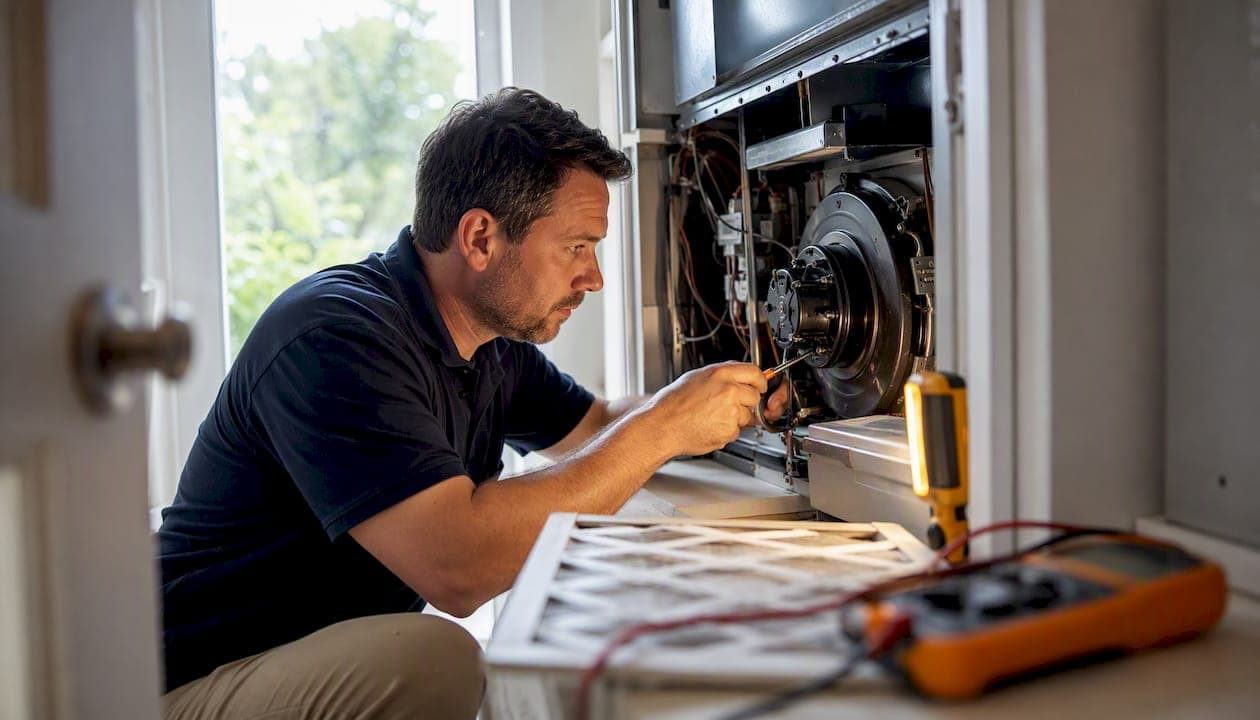
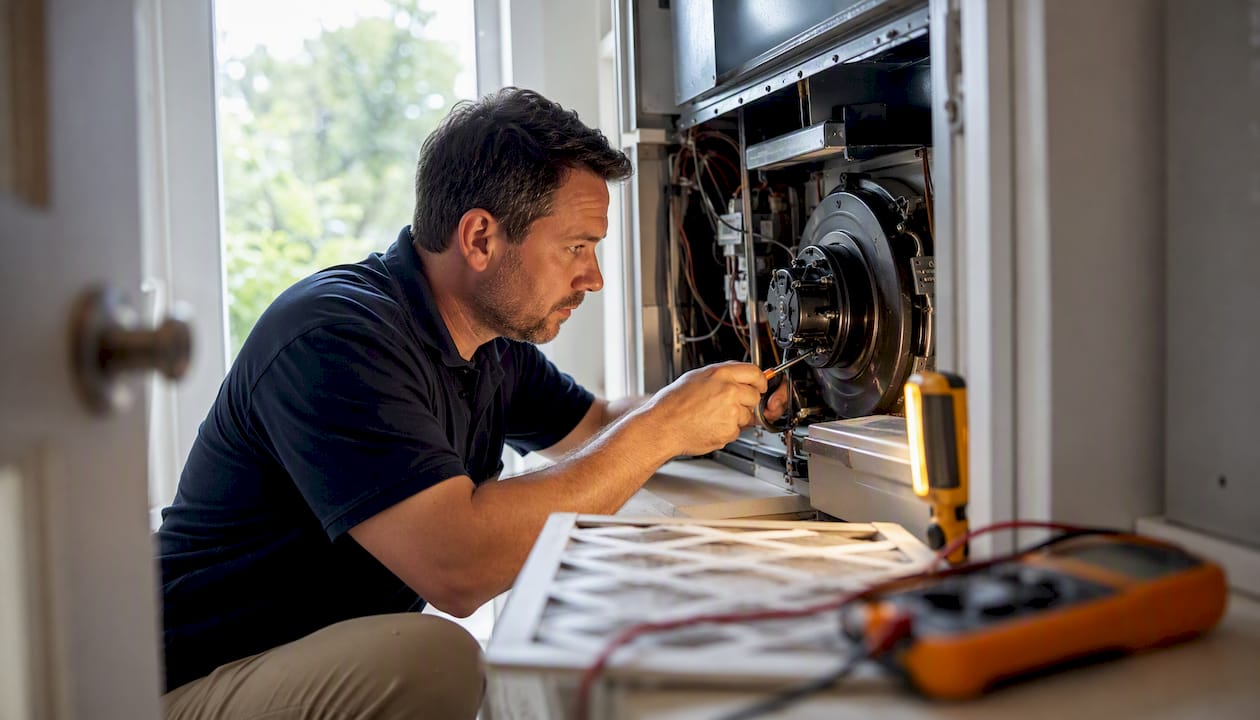
A good technician won’t just swap the motor and call it done. Expect them to check filter and duct condition, measure voltage at the motor terminals with a multimeter, test the capacitor and resistor, inspect the blower wheel for debris or imbalance, and verify motor temperature and bearing condition after a test run. Multimeter testing is the standard method for confirming whether the motor is receiving proper voltage before any parts are ordered — this step alone prevents many unnecessary motor replacements.
Questions worth asking your technician:
- Is this a flat-rate repair or time-and-materials?
- What brand of replacement motor do you use, and does it carry a warranty?
- If the motor fails again within a year, what’s covered?
- How long will the repair take, and is same-day service available?
How LC Heating and Air Conditioning diagnoses and fixes blower motor problems
LC Heating and Air Conditioning has been diagnosing blower motor problems across Greater Los Angeles for over 20 years, covering everything from historic bungalows in Hollywood to modern heat pump multi-zone systems in Beverly Hills and commercial VRF installations.
Here’s what a diagnostic visit from LC Heating and Air Conditioning looks like:
- Intake and system history: The technician asks about symptoms, how long they’ve been present, and whether any recent changes (new filter, thermostat, recent repair) might be relevant.
- Visual inspection: Air handler access panel is opened (power off), and the blower wheel, motor housing, and wiring are checked for visible damage, corrosion, or debris.
- Filter and duct check: Filter condition is confirmed, and supply/return airflow is measured to rule out restriction as the primary cause.
- Electrical tests: Voltage at the motor terminals is measured with a multimeter, and the capacitor is tested for proper microfarad rating. If a resistor is involved, that’s tested too.
- Blower wheel inspection: The wheel is checked for balance, debris, and secure attachment to the motor shaft.
- Test run and written report: The system is run, temperatures and airflow are verified, and the technician provides a clear written estimate with parts and labor listed separately.
LC Heating and Air Conditioning uses flat-rate pricing, so the number you’re quoted is the number you pay. No surprise fees after the work is done. Same-day diagnostics are available across Los Angeles HVAC service areas, and the team is equally comfortable with heat pumps, mini-splits, and traditional forced-air systems.
A note from Leo
After more than 20 years of HVAC work in Los Angeles, I’ve seen the same pattern repeat: a homeowner calls about a “dead blower motor,” and half the time it turns out to be a $90 capacitor or a filter that hasn’t been changed in two years. That’s not a criticism — these systems are complex, and the symptoms genuinely look the same from the outside. What I can promise is that every diagnostic we run at LC Heating and Air Conditioning starts with the honest question: what’s actually causing this? We don’t push replacements when a repair will do the job. If you’re hearing strange noises or losing airflow and you’re not sure what’s going on, call us. We’ll tell you exactly what we find.
LC Heating and Air Conditioning: same-day blower motor diagnostics in Los Angeles
When your blower motor is acting up, waiting days for a diagnosis isn’t an option — especially during a Los Angeles heat wave or a cold snap. LC Heating and Air Conditioning offers same-day diagnostic appointments across Greater Los Angeles, with flat-rate pricing that means no surprise bills at the end of the visit.
The team at LC Heating and Air Conditioning handles the full range: traditional forced-air systems, heat pumps, mini-splits, and commercial VRF systems. Whether the issue is a seized motor, a failed capacitor, or a resistor that’s killing your fan speeds, the diagnostic process is thorough, transparent, and built around finding the real cause — not the most expensive fix. Every repair comes with a clear parts-and-labor breakdown and a warranty on the work performed.
Ready to get your system checked? Schedule a same-day diagnostic or browse HVAC repair and service options to see what’s covered in your area.
Sources
- HVAC Blower Motor — ACDirect blog
- Carparts
- HVAC blower motor symptoms: Is it time for a replacement? | MR. HVAC
- How To Test HVAC Blower Motor With Multimeter - Tru Comfort AZ
- Can I Run My AC With a Bad Blower Motor? - Paradise Heating and Air
FAQ
Can I run my AC with a bad blower motor?
No. Running your AC with a failing blower motor can freeze the evaporator coils, increase energy consumption, and cause damage to other system components. Turn the system off and schedule a diagnostic.
What happens when the blower motor goes bad in a car?
You’ll typically lose airflow from the cabin vents, hear unusual noises from under the dashboard, or find that the fan only works on certain speeds. A failed resistor is often the cause of partial speed loss, while a completely dead fan usually points to the motor, fuse, or relay.
Is it worth replacing a blower motor?
Usually yes, especially if the system is otherwise in good condition. Residential motor replacement runs roughly $300–$900 installed, which is far less than a full system replacement. For vehicles, parts commonly cost $50–$200. If the motor has failed repeatedly or the system is near the end of its lifespan, a full replacement conversation makes more sense.
How often do blower motors go out?
A well-maintained residential blower motor can last many years, but neglected filters and high humidity can shorten its lifespan significantly. Vehicle blower motors often last the life of the car with normal use. Filter neglect, high humidity, and infrequent maintenance are the factors that shorten that lifespan most significantly.
Recommended
Leo, Propietario y Técnico Principal en LC Heating & Air
Leo dirige LC Heating & Air como propietario-operador y tiene la licencia C-20 HVAC #1073586 de California. Sus guías se enfocan en diagnósticos prácticos, decisiones de reparación seguras y consejos claros para propietarios de Los Ángeles.