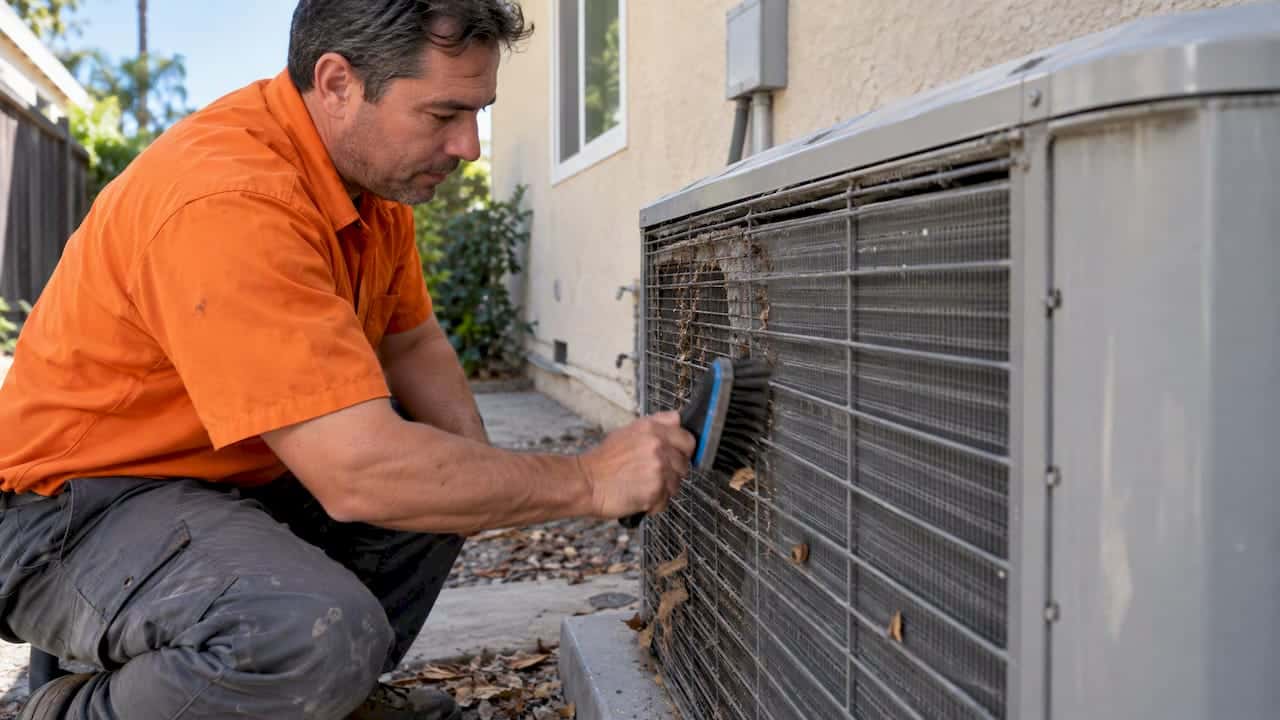
- Key takeaways
- 1. The ac repair vs replacement benefits of evaluating key criteria first
- 2. Benefits of AC repair for the right situations
- 3. Benefits of AC replacement when the time is right
- 4. Side-by-side comparison: repair vs replacement at a glance
- 5. Situational guidance: making the decision based on your circumstances
- My honest take on the repair vs replacement decision
- Get expert help from LC Heating and Air Conditioning
- FAQ
- Recommended

TL;DR:
- Deciding to repair or replace your AC depends on factors like age, repair costs, and energy efficiency, with rules like 50% and $5,000 guiding assessments. Repairing is best for units under 10 years old with minor issues and warranties remaining, while replacement suits older, inefficient systems with recurring failures. Proper installation and system matching are crucial for maximizing performance and value, regardless of your choice.
When your air conditioner starts acting up in the middle of a Los Angeles summer, you face a decision that feels both urgent and expensive. Should you repair what you have, or cut your losses and replace the whole unit? Understanding the ac repair vs replacement benefits on both sides of this equation can save you thousands of dollars and years of frustration. This guide breaks down the real costs, the efficiency gains, and the practical factors that determine which choice actually makes sense for your home and your budget.
Key takeaways
| Point | Details |
|---|---|
| Use the 50% and $5,000 rules | If repair costs exceed 50% of replacement price or age times repair cost exceeds $5,000, replacement wins. |
| Age is the biggest factor | Units under 10 years old are usually worth repairing; units over 15 years typically benefit from replacement. |
| New units cut cooling costs | Upgrading to a higher-efficiency unit can reduce your cooling bills by 30 to 40 percent annually. |
| Warranty coverage changes the math | Repairs on newer units may only cost you labor if major parts are still under warranty. |
| Installation quality determines the outcome | Even a top-tier new unit loses 30% efficiency if installed incorrectly or paired with mismatched components. |
1. The ac repair vs replacement benefits of evaluating key criteria first
Before you open your wallet, you need to look at your situation through a clear lens. Not every noisy or underperforming AC unit needs to be replaced, and not every repair is money well spent. The right answer depends on a handful of specific factors.
Age and overall condition sit at the top of the list. Air conditioners typically last 10 to 15 years, with repairs being cost-effective for units under 8 to 10 years old and replacement making more sense once a unit passes the 15-year mark with a history of breakdowns.
Two widely used financial rules help cut through the noise:
- The 50% rule: If the repair quote exceeds 50% of what a new unit would cost, replacement is the smarter financial move.
- The $5,000 rule: Multiply your unit’s age by the repair cost. If that number tops $5,000, it is time to replace.
Beyond cost, think about energy efficiency. Older units run on outdated technology and often have low SEER (Seasonal Energy Efficiency Ratio) ratings. A unit limping along at 10 SEER costs significantly more to run than a modern replacement.
Refrigerant type also matters. If your system still uses R-22, you are in a tough spot. R-22 was phased out in 2020, making any repair requiring refrigerant recharge extremely expensive. That alone can tip the scales toward replacement.
Finally, consider repair frequency. One repair in five years is normal. Three repairs in one summer is a pattern, and patterns get worse before they get better.
Pro Tip: Before calling anyone, write down every repair your unit has had in the last three years, including the approximate cost. That list will tell you more about your AC’s future than any single diagnosis.
2. Benefits of AC repair for the right situations
Repair is not the consolation prize. For the right unit in the right circumstances, it is the smartest financial decision you can make. Here is when repairing your AC genuinely pays off.
- Lower upfront cost. A targeted repair, such as replacing a capacitor or fixing a refrigerant leak, typically costs a fraction of a full system replacement. If the rest of the unit is in good health, that focused fix delivers real value.
- Less disruption. A repair can often be completed in a few hours. A full replacement means a full-day installation, potentially without cooling during that window.
- Warranty coverage reduces your out-of-pocket cost. For units still under warranty, if a major component like the compressor fails, you may only pay for labor. That transforms a potentially $1,500 to $2,000 repair into a $300 to $500 bill.
- Extends a healthy unit’s life by several years. If your unit is 7 years old and has been well-maintained, a minor repair can easily buy you another 5 to 8 years of reliable service.
- Preserves compatibility. Your existing AC was installed to work with your current ductwork, air handler, and electrical setup. Staying with the same system avoids the risk of compatibility headaches.
The ac repair cost factors in California vary based on the type of failure, refrigerant type, and whether parts need to be special-ordered. Knowing those variables ahead of time helps you evaluate quotes confidently.
Pro Tip: Always ask your technician to assess the overall condition of the unit, not just the broken component. A good technician at LC Heating and Air Conditioning will tell you honestly whether the rest of the system looks healthy or is showing signs of aging.
3. Benefits of AC replacement when the time is right
Sometimes a repair is just delaying the inevitable, and every delay costs you money in higher energy bills, recurring service calls, and lost comfort. These are the real benefits of replacement when your situation calls for it.
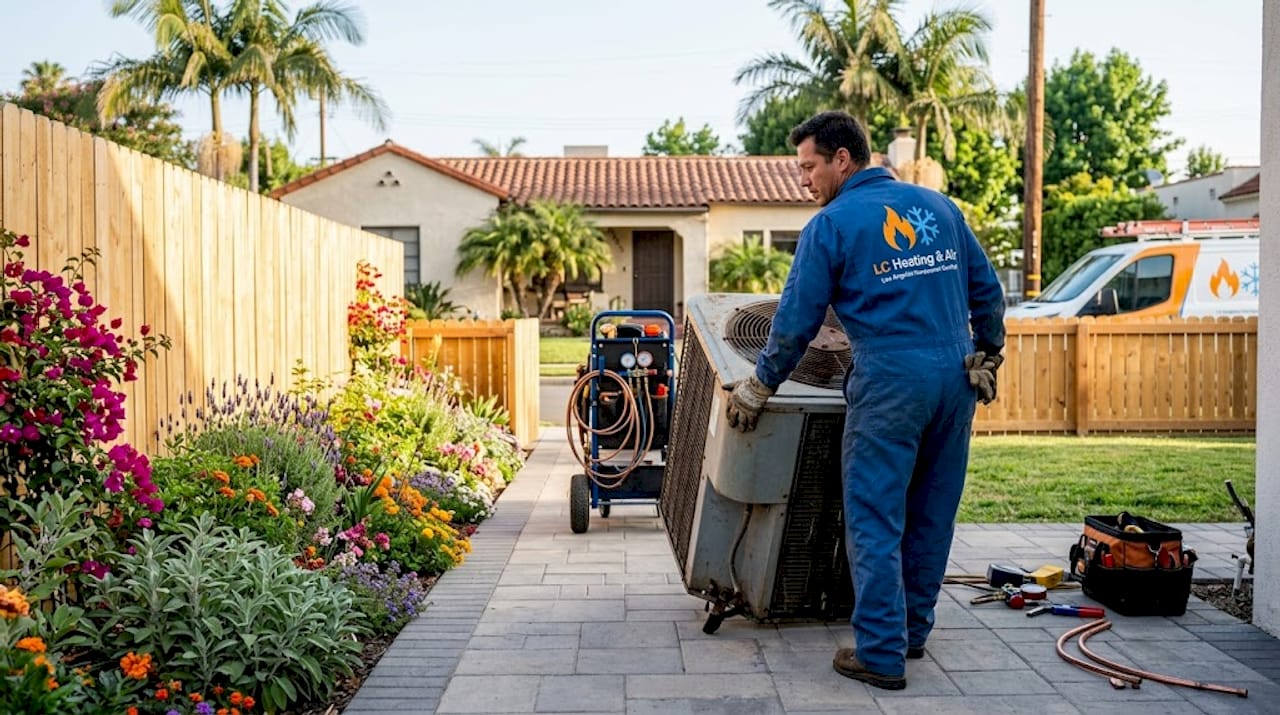
Replacing an old, inefficient unit with a modern high-efficiency model is where the long-term savings really add up. New units with higher SEER2 ratings can reduce your cooling costs by 30 to 40 percent compared to older 10 SEER units. In a city like Los Angeles, where you may run your AC six to eight months of the year, those savings are substantial.
Here is what you gain with a new system:
- Greater reliability. A new unit comes with a full manufacturer warranty, typically 5 to 10 years on parts and compressor. You are not guessing what will fail next.
- Updated comfort technology. Modern systems offer variable-speed compressors, better humidity control, and smart thermostat compatibility. Your home stays more comfortable at a lower cost.
- Eligibility for rebates and tax incentives. Depending on the efficiency rating and your location, you may qualify for utility rebates or federal tax credits on qualifying equipment.
- Lower long-term maintenance costs. Older units need more frequent service. A new, well-installed system typically needs only annual maintenance for the first several years.
- Peace of mind. Knowing your system is not going to fail on the hottest day of August is worth something real.
The ac replacement long-term benefits extend well beyond the first year, especially when you factor in energy savings compounding over a 15-year lifespan.
4. Side-by-side comparison: repair vs replacement at a glance
This table gives you a clear picture of how the two options stack up across the factors that matter most to homeowners.
| Factor | AC Repair | AC Replacement |
|---|---|---|
| Upfront cost | Low to moderate ($150 to $2,500 typical) | High ($3,500 to $8,000+ installed) |
| Long-term savings | Limited unless unit is relatively new | Significant through energy efficiency gains |
| Energy efficiency | Stays the same or declines over time | Improved by 30 to 40% with modern SEER2 units |
| Lifespan added | 1 to 8 years depending on unit condition | 15 to 20 years for a new quality system |
| Disruption | Minimal, often same-day resolution | Full-day installation, brief loss of cooling |
| Warranty | Only if existing manufacturer warranty applies | New full warranty on parts and labor |
| Maintenance outlook | May require more frequent service calls | Low maintenance for first several years |
| Best for | Units under 10 years, minor to moderate issues | Units over 12 to 15 years or with recurring failures |
One thing this table cannot capture is the impact of installation quality on a replacement. Improper HVAC installation can cut efficiency by 30% and void warranties. That means a poorly installed new unit can perform worse than the old unit you just replaced, while still costing you the full replacement price.
Matching new condensers with compatible components like evaporator coils and air handlers is critical to achieving certified SEER2 efficiency and keeping your warranty intact. This is not a DIY job or a “lowest bid wins” scenario.
5. Situational guidance: making the decision based on your circumstances
The right answer is not one-size-fits-all. These practical scenarios help you apply the criteria to your specific situation.
Choose repair when:
- Your unit is under 10 years old and this is the first significant repair
- The broken component is covered under an existing manufacturer warranty
- The repair quote is well under 50% of the cost of a comparable new system
- Your unit has been regularly serviced and is otherwise in good shape
- You plan to sell the home in the next one to two years and a new system would not add proportional value
Choose replacement when:
- Your unit is over 12 to 15 years old with multiple past repairs
- You are using an R-22 refrigerant system and facing a recharge or major repair
- Your energy bills have climbed steadily without explanation
- The system is struggling to maintain comfortable temperatures in multiple rooms
- Repair costs trigger either the 50% rule or the $5,000 rule
If replacement is the right call, think about replacing your AC and furnace together. Combining both replacements in one visit typically saves $1,000 or more in labor costs. If your furnace is close to end-of-life anyway, this is a smart consolidation that also improves system compatibility.
For financing, many HVAC companies, including LC Heating and Air Conditioning, offer payment plans that spread the cost of replacement over manageable monthly installments. This removes the upfront cost barrier from the equation and lets you make the decision based on what is actually right for your home.
Pro Tip: Ask any HVAC contractor for a written breakdown showing how they calculated their repair-versus-replace recommendation. A professional should be able to show their reasoning. If they push replacement without explaining the criteria, get a second opinion.
My honest take on the repair vs replacement decision
After more than twenty years working on AC systems across Los Angeles, I have seen homeowners make both decisions well and both decisions poorly. The mistake I see most often is focusing entirely on upfront cost without thinking through the total cost of ownership over the next five to ten years.
A homeowner who spends $400 to patch a 16-year-old unit three summers in a row has spent $1,200 and still owns a 19-year-old unit that is one bad compressor away from a $4,000 replacement anyway. The repairs felt cheap in the moment. The pattern was expensive.
I have also seen the opposite mistake. Someone replaces a 9-year-old unit because a contractor told them repair was “not worth it,” when in reality the unit had a minor electrical fault and years of life left. That is $6,000 that did not need to be spent.
The thing that bothers me most in this industry is partial replacement without proper system matching. Replacing only the condenser while leaving an older furnace in place often creates a mismatched system that underperforms and runs inefficiently from day one. Homeowners think they saved money. They actually bought a new problem.
Installation quality is the most important factor in any replacement, more important than the brand name on the unit. I have seen premium equipment fail early because it was sized wrong or wired incorrectly. Get the installation right and almost any quality unit will serve you well for 15 years or more.
My recommendation: when you are deciding, ask the technician to walk you through the unit’s age, repair history, efficiency rating, and refrigerant type. Then apply the 50% rule and the $5,000 rule. If both point toward replacement and your unit is over 12 years old, trust the math. If the numbers point toward repair, fix it and maintain it. A well-maintained AC does not owe you anything.
— lc
Get expert help from LC Heating and Air Conditioning
Whether you are leaning toward a targeted repair or ready to explore a full replacement, you deserve a straight answer from someone who is not guessing.

LC Heating and Air Conditioning has been serving Los Angeles homeowners for over twenty years with transparent diagnostics, flat-rate repair pricing, and same-day service when you need it most. There are no surprise fees, no pressure to replace systems that still have life in them, and no cutting corners on installation. From a quick AC repair in Los Angeles to a full system replacement with modern high-efficiency equipment, the team handles both with the same commitment to quality. You can also browse recent HVAC projects to see the quality of work firsthand. Call LC Heating and Air Conditioning or visit lahvaclc.com to schedule your assessment today.
FAQ
Is it worth repairing an AC that is over 10 years old?
It depends on the repair cost and the unit’s history. Use the $5,000 rule: multiply the unit’s age by the repair cost, and if that total exceeds $5,000, replacement is likely the better financial choice.
How much more efficient is a new AC compared to an older unit?
Upgrading from a 10 SEER unit to a modern SEER2-rated system can reduce your cooling costs by 30 to 40 percent annually, delivering significant long-term savings.
What is the 50% rule for AC repair vs replacement?
If the cost of a repair exceeds 50% of what it would cost to replace the unit entirely, most HVAC professionals recommend replacement over repair.
Can I just replace the outdoor AC unit and leave the rest?
You can, but replacing only the condenser while keeping an older air handler or furnace often results in a mismatched system that reduces efficiency and may void the warranty on your new equipment.
Does proper installation really make a difference with a new AC?
Absolutely. Poor installation can cut efficiency by up to 30% and void manufacturer warranties, making professional installation one of the most critical factors in getting the value you paid for.
Recommended
Leo, Owner & Lead Technician at LC Heating & Air
Leo leads LC Heating & Air as an owner-operator and holds California CSLB C-20 HVAC license #1073586. His guides focus on practical diagnostics, safe repair decisions, and clear advice for Los Angeles homeowners.