- Key Takeaways
- Why desert heat overwhelms air conditioners
- Common faults that make a struggling AC worse
- Quick, safe fixes you can try right now
- Warning signs that mean you need a technician now
- What repairs and replacements typically cost
- Equipment upgrades that actually perform in desert heat
- How to prepare for a technician visit
- What I’ve learned from desert-heat service calls
- LC Heating and Air Conditioning is ready when you need same-day help
- Sources
- FAQ
- Recommended
How to Fix an AC Overwhelmed by Desert Heat
When your AC can’t keep up in extreme heat, start here: check and replace the air filter, clear debris from the outdoor condenser, set your thermostat to COOL with fan on AUTO at 76–78°F, and run ceiling fans to help circulate air. Those four steps restore most lost capacity within minutes and cost nothing. Your system running nonstop on a 105°F day is often completely normal, not a sign of failure. The real question is whether it’s still pulling indoor temps down, or whether the gap between inside and outside is shrinking.
Do these right now:
- Replace or check the air filter (a clogged filter is the single most common cause of reduced cooling)
- Clear leaves, dirt, and debris from around the outdoor condenser unit
- Set the thermostat to COOL, fan to AUTO, and raise the setpoint to 76–78°F
- Close blinds and curtains on sun-facing windows
- Run ceiling fans counterclockwise to push cool air down
- Avoid using ovens, dryers, or other heat-generating appliances during peak afternoon hours
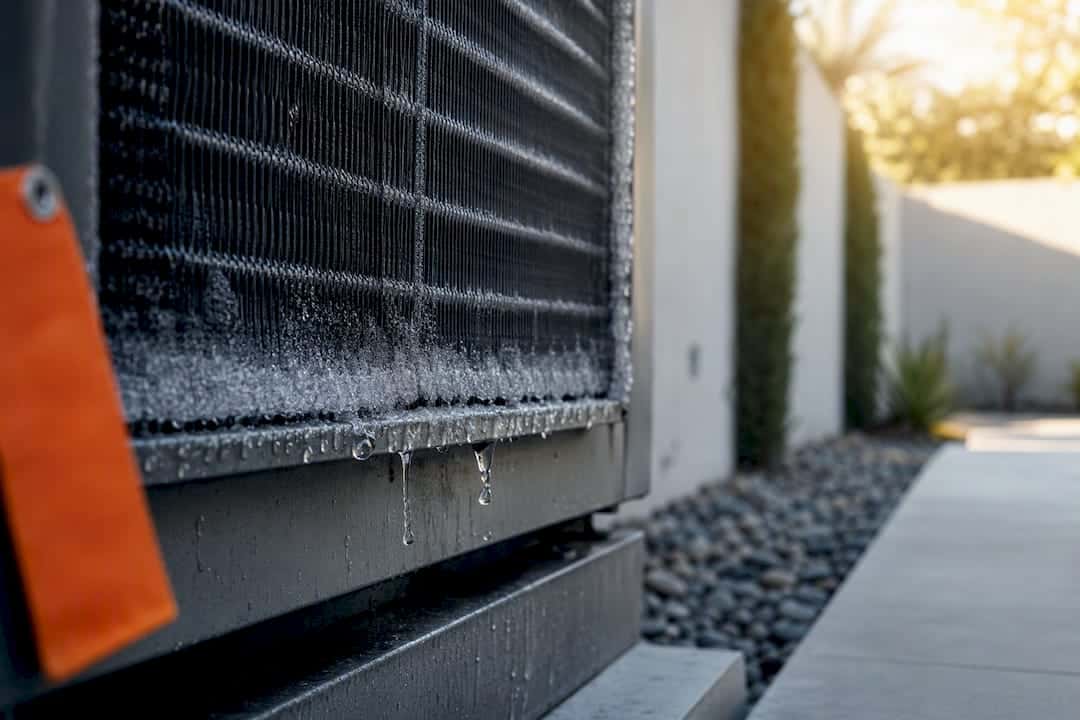
Red flag — shut the system off immediately if you see ice forming on the refrigerant lines or indoor coil. Running a frozen unit can destroy the compressor within hours.
Pro Tip: A pre-season AC tune-up before summer hits catches low refrigerant, dirty coils, and failing capacitors before they become a 105°F emergency.
Key Takeaways
An AC overwhelmed by desert heat is often a maintenance problem first and an equipment problem second — fix airflow and condenser cleanliness before assuming the system is broken.
| Point | Details |
|---|---|
| Check filter and condenser first | A clogged filter or dirty condenser coil is the most common cause of lost cooling capacity. |
| 15–20°F split is the healthy benchmark | If supply air is only slightly cooler than return air, the system has a mechanical problem, not just a heat-load problem. |
| Ice on lines means shut it off | Running a frozen unit risks compressor damage; turn it off, let it thaw, then call a technician. |
| Inverter systems handle desert heat better | Variable-speed heat pumps and mini-splits modulate capacity and outperform older fixed-speed units on extreme days. |
| LC Heating and Air Conditioning | Offers same-day repair, flat-rate pricing, and heat-pump expertise across Greater Los Angeles. |
Why desert heat overwhelms air conditioners
Your AC doesn’t create cold air. It moves heat from inside your home to outside. On a 110°F afternoon, that outdoor environment is already saturated with heat, which means the system has to work much harder to dump each BTU. The hotter it gets outside, the more the system strains.
Here’s the part most homeowners don’t know: residential AC systems are sized around expected peak conditions using a calculation called Manual J. They’re designed to maintain a specific indoor-to-outdoor temperature difference, typically somewhere in the 15–20°F supply-to-return range. That’s a sizing guideline, not a hard physical ceiling. A well-maintained system can sometimes exceed it under favorable conditions, but on a 110°F day with a sun-baked attic above you, expecting 72°F indoors is unrealistic.
The real diagnostic: A system running nonstop but holding a steady 15–20°F drop between return and supply air is maxed out by heat, not broken. A system where that gap is shrinking hour by hour — or where supply air barely feels cool — has a mechanical problem that needs attention. Continuous operation during extreme heat is expected; the diagnostic is whether the temperature gap holds or collapses.
Heat soak makes this worse. By 3–5 PM, your roof, attic, and walls have absorbed hours of direct sun. That stored heat radiates inward even after outdoor temps start dropping, which is why late afternoon is always the hardest stretch. Duct runs through a 140°F attic can lose significant cooling capacity before conditioned air ever reaches your rooms.
Common faults that make a struggling AC worse
A system maxed out by heat has no margin for mechanical problems. Any one of these faults can push it from “barely keeping up” to “not cooling at all.”
Check or have a technician check these:
- Dirty air filter: Restricts airflow across the evaporator coil, reducing heat transfer and causing the coil to freeze
- Clogged outdoor condenser coil: Dirt, cottonwood, and debris coat the fins and trap heat the system is trying to expel
- Low refrigerant from a leak: Reduces the system’s ability to absorb heat; frozen evaporator coils are a frequent symptom and a sign the system needs immediate attention
- Failed run capacitor: A small but critical electrical component that degrades under sustained heat stress; capacitors often bulge or leak before they fail completely
- Failing contactor: The relay that switches the compressor and condenser fan on; worn contacts cause intermittent or no operation
- Undersized equipment: A system that was never properly sized for your home’s actual heat load will always fall short on peak days
- Duct leaks: Leaky ducts in a hot attic dump conditioned air before it reaches living spaces, cutting effective capacity significantly
- Blocked or closed supply vents: Restricts airflow and can cause pressure imbalances that reduce system efficiency
The healthy benchmark: hold a thermometer at a supply vent and at the return air grille. A 15–20°F difference between return and supply is normal. If supply air is barely cooler than return air, or if you see ice anywhere on the system, you have a mechanical problem, not just a heat-load problem.
Refrigerant work is not a DIY task. Handling refrigerant without EPA 608 certification is illegal. If you suspect a leak, turn the system off and call LC Heating and Air Conditioning for a proper diagnosis.
Quick, safe fixes you can try right now
Work through these in order. Most homeowners recover meaningful cooling capacity from steps 1–5 alone.
- Replace the air filter. Pull it out and hold it to the light. If you can’t see through it, replace it immediately. A 1-inch pleated MERV 8 filter is a solid choice for most systems.
- Set the thermostat correctly. Mode to COOL, fan to AUTO (not ON), and raise the setpoint to 76–78°F. Running the fan continuously on ON recirculates warm air during the off cycle.
- Close all window coverings. South- and west-facing windows gain enormous heat in the afternoon. Blackout curtains or cellular shades cut solar gain significantly.
- Run ceiling fans. They don’t lower air temperature, but they make 78°F feel like 72°F by increasing evaporative cooling on your skin. Set them counterclockwise in summer.
- Eliminate internal heat sources. Ovens, dryers, dishwashers, and even incandescent lighting add measurable heat load. Shift those tasks to morning or evening.
- Check the circuit breaker. A tripped breaker is a quick find. Reset it once. If it trips again, stop and call a technician — a repeatedly tripping breaker signals an electrical fault.
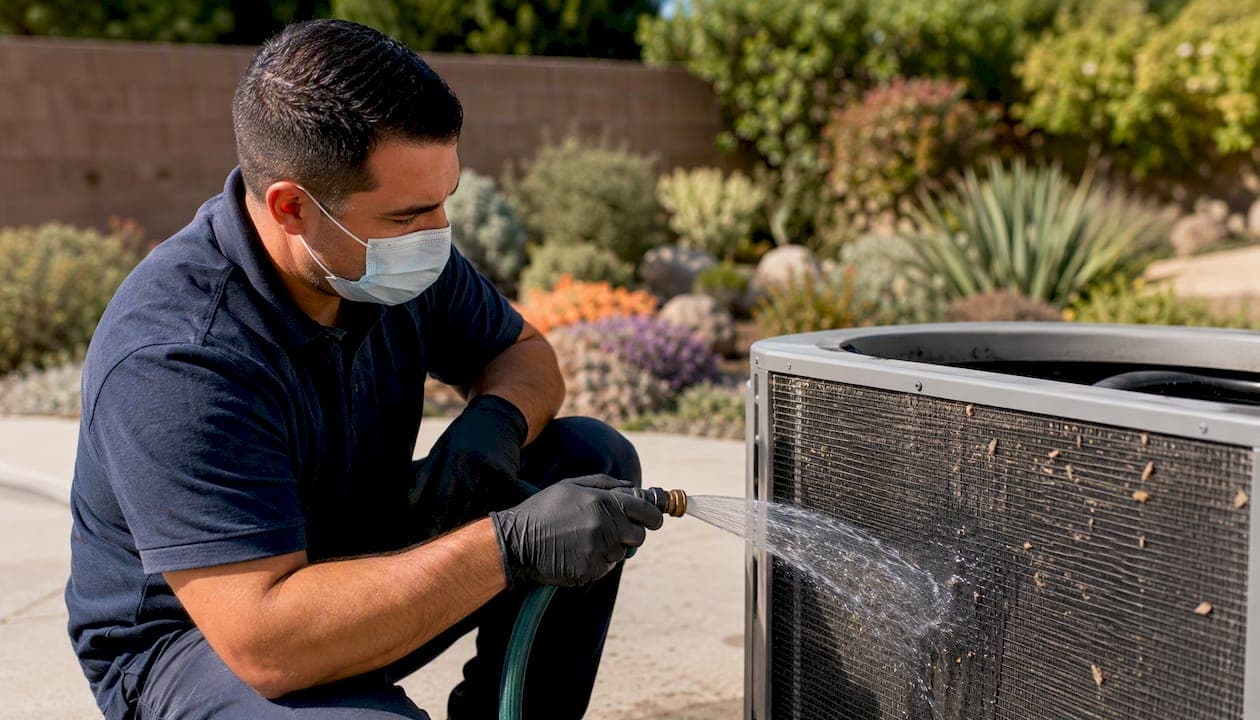
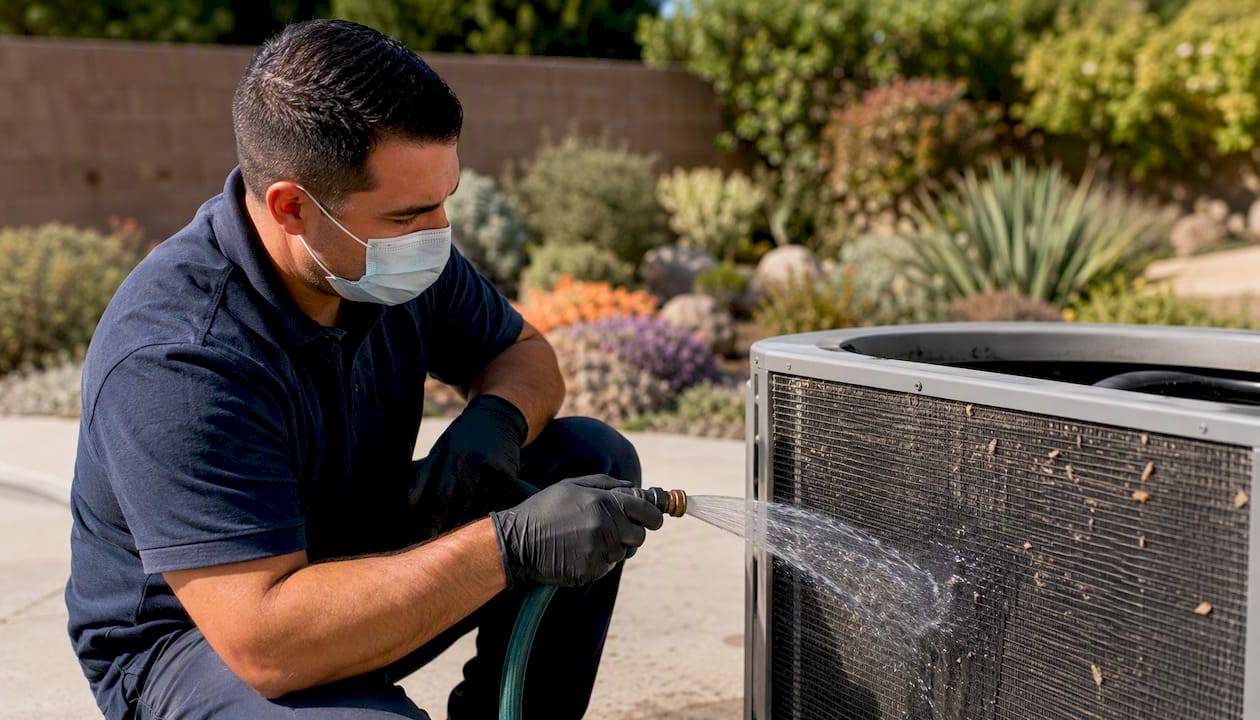
- Inspect and clean the outdoor condenser unit. Turn off the electrical disconnect or breaker at the outdoor unit first. Clear any leaves, grass clippings, or debris from around the unit. Then, using a gentle garden-hose spray, rinse the condenser fins from the inside out. Never use a pressure washer — it bends the aluminum fins and reduces airflow.
Pro Tip: Shading the outdoor condenser from direct afternoon sun with a fence, lattice, or shade cloth can reduce its workload noticeably. Keep at least 2 feet of clearance on all sides for airflow.
What not to do: Don’t open the electrical panel or disconnect box yourself. Don’t add refrigerant from a store-bought can. Don’t run the system if you see ice on the lines — turn it off, let it thaw for 2–3 hours with the fan running on AUTO, and then restart. If it ices again, call a pro.
Warning signs that mean you need a technician now
Some symptoms mean the system is failing, not just struggling. These require professional attention, and waiting makes the damage worse.
Call immediately if you notice:
- Supply air that is room temperature or only slightly cool
- Ice on refrigerant lines, the indoor coil, or the outdoor unit
- The breaker tripping more than once
- Grinding, banging, or squealing noises from either unit
- A sudden spike in indoor humidity (the system is no longer dehumidifying)
- Short cycling — the system turns on and off every few minutes
- The system won’t restart at all
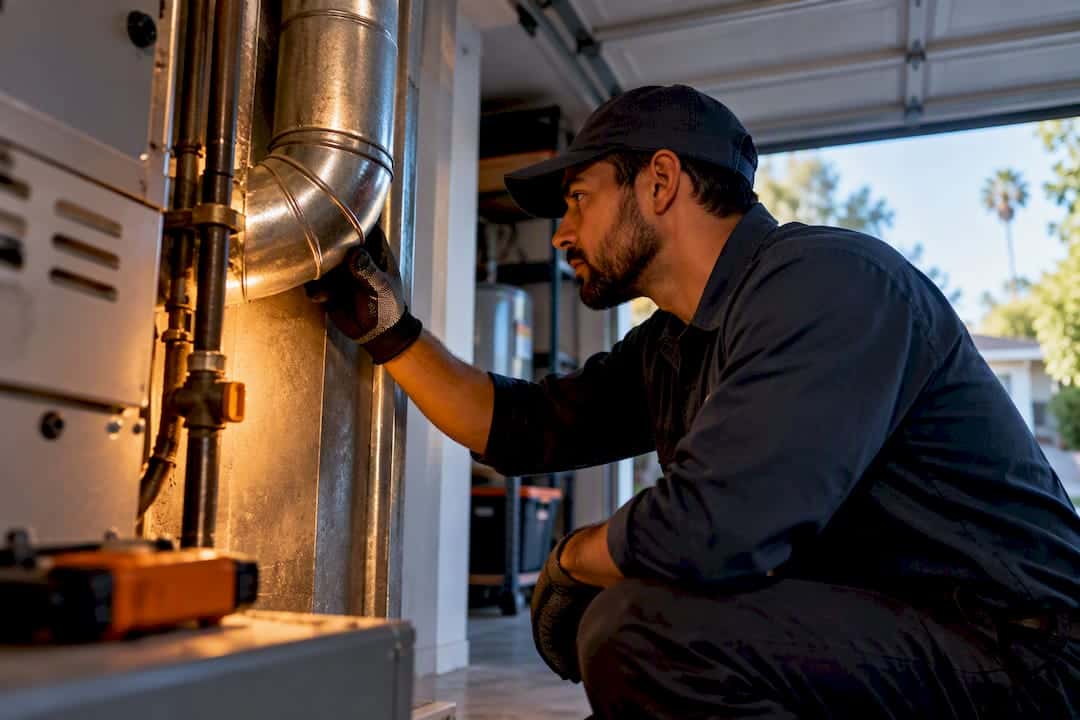
What a technician will check on arrival:
- Measure supply-to-return temperature split
- Test capacitor and contactor condition
- Check refrigerant charge and look for leak indicators
- Inspect the condenser coil for blockage or damage
- Test blower motor amperage and airflow
- Check static pressure in the duct system
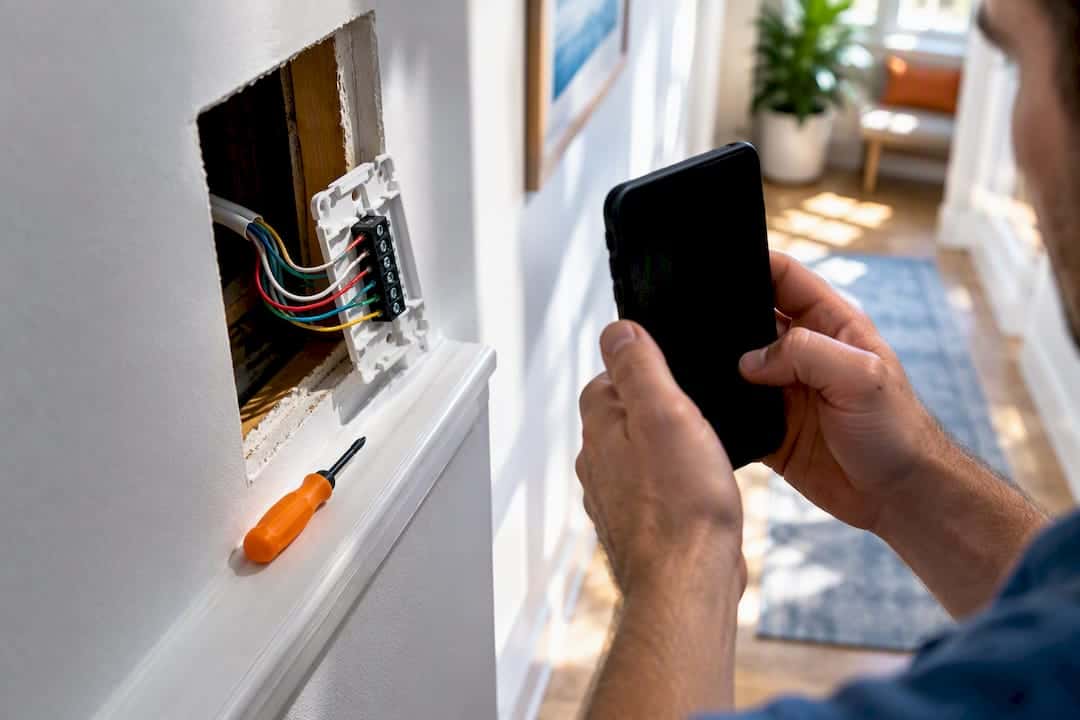
- Inspect the control board and thermostat wiring
- Assess compressor health via amp draw
A grinding or banging noise from the outdoor unit often means compressor slugging — liquid refrigerant entering the compressor — which can cause permanent damage within minutes. That’s a turn-it-off-now situation.
What repairs and replacements typically cost
Costs vary by region, equipment brand, and labor rates. These ranges reflect typical residential jobs and are meant to help you evaluate quotes, not replace one.
Factors that move the price:
- SEER rating (higher SEER = higher upfront cost, lower operating cost)
- Variable-speed or inverter compressor vs. fixed-speed
- Ductwork condition or need for new duct runs
- Number of zones for a multi-zone system
- Permit and inspection requirements in your jurisdiction
Always get a written, itemized quote before authorizing any repair over $500.
Equipment upgrades that actually perform in desert heat
Modern inverter-driven compressors modulate output continuously, matching the actual load. That’s a significant advantage in desert climates where heat load shifts dramatically between morning and late afternoon.
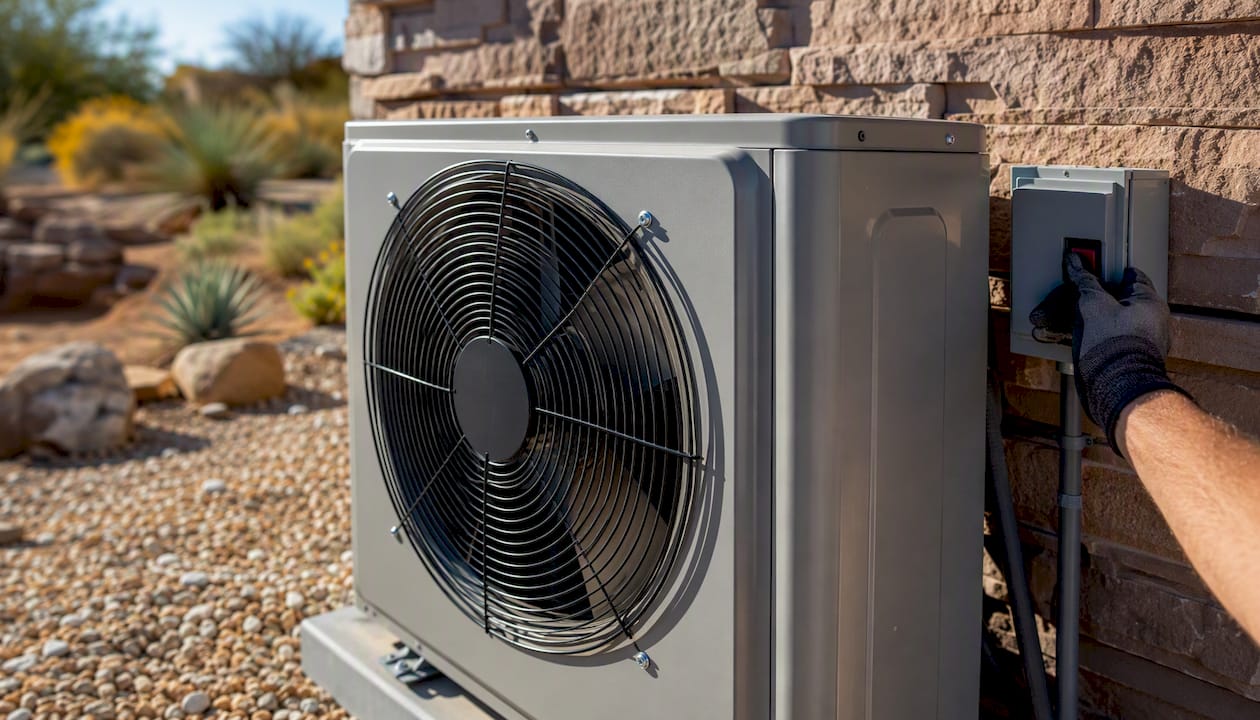
Modern inverter heat pumps and multi-zone mini-splits handle part-load conditions far better than older fixed-speed systems, making them a strong upgrade choice for hot, dry climates.
| System Type | Desert Climate Strengths | Considerations |
|---|---|---|
| High-SEER central AC (18+ SEER2) | Whole-home coverage, familiar duct system | Requires good ductwork; fixed-speed models still cycle |
| Inverter mini-split (single zone) | Precise modulation, no duct losses, quiet | One zone only; outdoor unit placement matters |
| Multi-zone inverter heat pump | Zoned comfort, heating + cooling, high efficiency | Higher upfront cost; professional load sizing required |
Complementary upgrades that multiply the effect:
- Duct sealing: Ducts leaking into a 140°F attic can waste 20–30% of your system’s output before air reaches the room
- Attic insulation: Reducing attic heat soak lowers the thermal load on the entire system
- Reflective roofing or radiant barrier: Cuts the amount of solar heat entering the attic in the first place
- Condenser shading: Reduces the ambient temperature the outdoor unit works against
Before replacing any system, LC Heating and Air Conditioning recommends a proper Manual J load calculation. Oversizing is as problematic as undersizing — an oversized system short-cycles, fails to dehumidify, and wears out faster. Get the math done first, then choose equipment.
How to prepare for a technician visit
A little preparation makes the service call faster and more accurate. Technicians who arrive to a documented problem diagnose it faster and are less likely to miss an intermittent issue.
Before the technician arrives:
- Record the current indoor temperature and the outdoor temperature
- Hold a thermometer at a supply vent and at the return grille; note both readings
- Write down when the problem started and how the system has been behaving (short cycling, running nonstop, not starting)
- Note any unusual sounds and when they occur
- Photograph any ice, water, or visible damage around either unit
- Check and note the filter condition
Questions worth asking the technician:
- What specific readings did you take, and what do they tell you?
- Is this a repair that will last, or is the underlying equipment at end of life?
- Does this system need a Manual J load calculation before we consider replacement?
- What warranty covers this repair?
- Would a heat pump or inverter mini-split be a better long-term fit for this home?
Watch for these red flags during the visit: a technician who recommends full replacement without showing you diagnostic readings, refuses to explain what they found, or gives a verbal-only price with no written breakdown. LC Heating and Air Conditioning’s standard is transparent diagnostics with flat-rate pricing — you see the numbers before you approve anything.
What I’ve learned from desert-heat service calls
The most common scenario I see in the field during a heat wave: a homeowner calls because the AC “stopped working,” and when I arrive, the filter is completely blocked, the condenser is coated in cottonwood and dust, and the thermostat is set to 68°F on a 108°F day. A filter swap, a condenser rinse, and a thermostat adjustment to 76°F, and the system is pulling a healthy 18°F split within 20 minutes. No parts, no refrigerant, no drama.
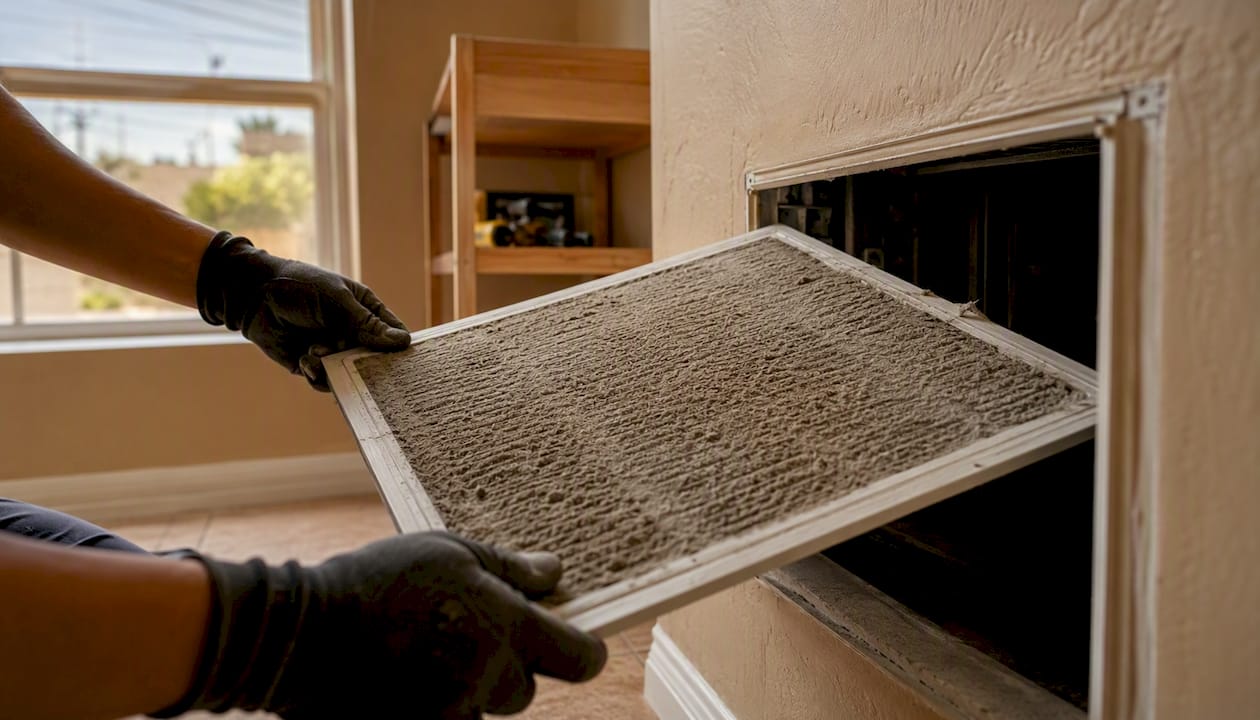
That’s not always the story, of course. I’ve also walked into homes where a run capacitor had been failing for weeks, the compressor was slugging, and another day of running it would have meant a $3,000 compressor replacement instead of a $200 capacitor swap. The difference between those two outcomes is often a pre-season tune-up in March or April, before the desert heat arrives in force.
For homes where the existing system is genuinely undersized or aging, a Daikin inverter heat pump or a multi-zone mini-split system changes the equation entirely. These systems modulate capacity rather than cycling on and off, which means they handle a 110°F afternoon far more gracefully than a 15-year-old fixed-speed unit ever could.
Pro Tip: Schedule your annual maintenance in March or early April. By May, every HVAC shop in a desert climate is booked solid with emergency calls. A pre-season tune-up costs a fraction of an emergency repair and catches the problems that cause those calls.
LC Heating and Air Conditioning is ready when you need same-day help
When your AC is struggling in extreme heat, you need answers fast, not a three-day wait and a surprise bill. LC Heating and Air Conditioning offers same-day HVAC repair across Greater Los Angeles, with flat-rate pricing so you know the cost before any work begins. No diagnostic fee surprises, no pressure to replace a system that can be repaired.
The team specializes in heat pumps, inverter mini-splits, multi-zone systems, and VRF commercial installations, with over 20 years of local experience. Whether you need a capacitor swapped today or a full Manual J load calculation before a heat-pump upgrade, the process starts with an honest diagnostic. Book a same-day service call or browse the HVAC repair and service options to see what fits your situation.
Sources
- Can your air-conditioning system cool your space 20 degrees? | Popular Mechanics
- AC Can’t Keep Up in August Heat: Normal vs. Problem | Texas Temp Masters
- Why Your AC Can’t Keep Up in a Heat Wave | Energo NYC
- AC Not Cooling Properly In Extreme Heat: 5 Critical Checks 2026 | MJB HVAC
- How to protect your AC unit in heat waves | Martha Stewart
FAQ
Is it normal for AC to run nonstop in extreme heat?
Yes. When outdoor temperatures exceed 100°F, most residential systems run continuously and may only hold the indoor temperature 15–20°F below outdoor levels. Continuous operation is not a failure sign; a shrinking temperature gap or warm supply air is.
What is the $5,000 AC rule?
It’s a repair-versus-replace guideline: consider the system’s age and the repair cost carefully. Replacement generally becomes a better investment as repair costs rise and the system ages.
What are the best AC systems for desert climates?
Inverter-driven heat pumps and multi-zone mini-splits perform best in desert heat because they modulate capacity continuously rather than cycling on and off. High-SEER2 central systems are also effective when paired with well-sealed ductwork and proper Manual J sizing.
How do you help an AC unit struggling in extreme heat?
Replace the filter, clear the outdoor condenser, raise the thermostat setpoint to 76–78°F, close window coverings, and run ceiling fans. If the system still can’t maintain a 15–20°F supply-to-return split after those steps, schedule a diagnostic with a licensed HVAC technician.
Recommended
Leo, Propietario y Técnico Principal en LC Heating & Air
Leo dirige LC Heating & Air como propietario-operador y tiene la licencia C-20 HVAC #1073586 de California. Sus guías se enfocan en diagnósticos prácticos, decisiones de reparación seguras y consejos claros para propietarios de Los Ángeles.