- Noisy AC Unit? Here’s What Every Sound Means
- Key Takeaways
- What Does Each AC Noise Mean?
- What’s Actually Failing Inside Your AC?
- What Can You Safely Check Before Calling for Help?
- When Should You Stop and Call a Professional?
- How Does a Technician Actually Diagnose a Noisy AC?
- What I’d Tell a Neighbor Whose AC Just Got Loud
- Get Your Noisy AC Diagnosed the Same Day, No Surprise Fees
- Sources
- FAQ
- Recommended
Noisy AC Unit? Here’s What Every Sound Means
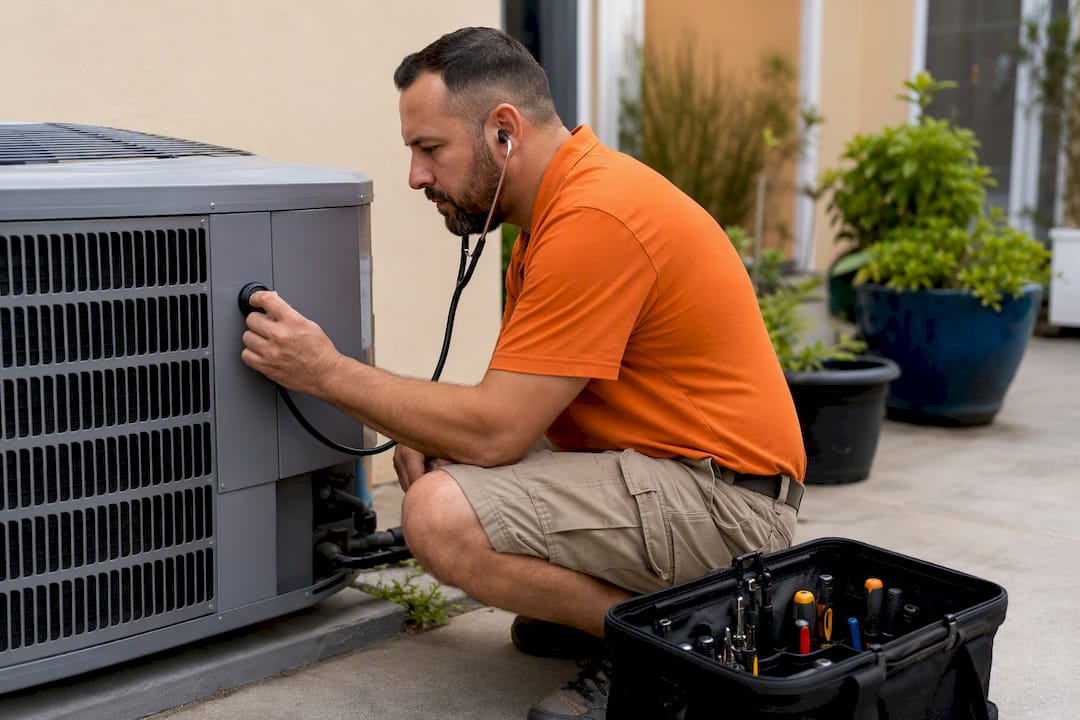
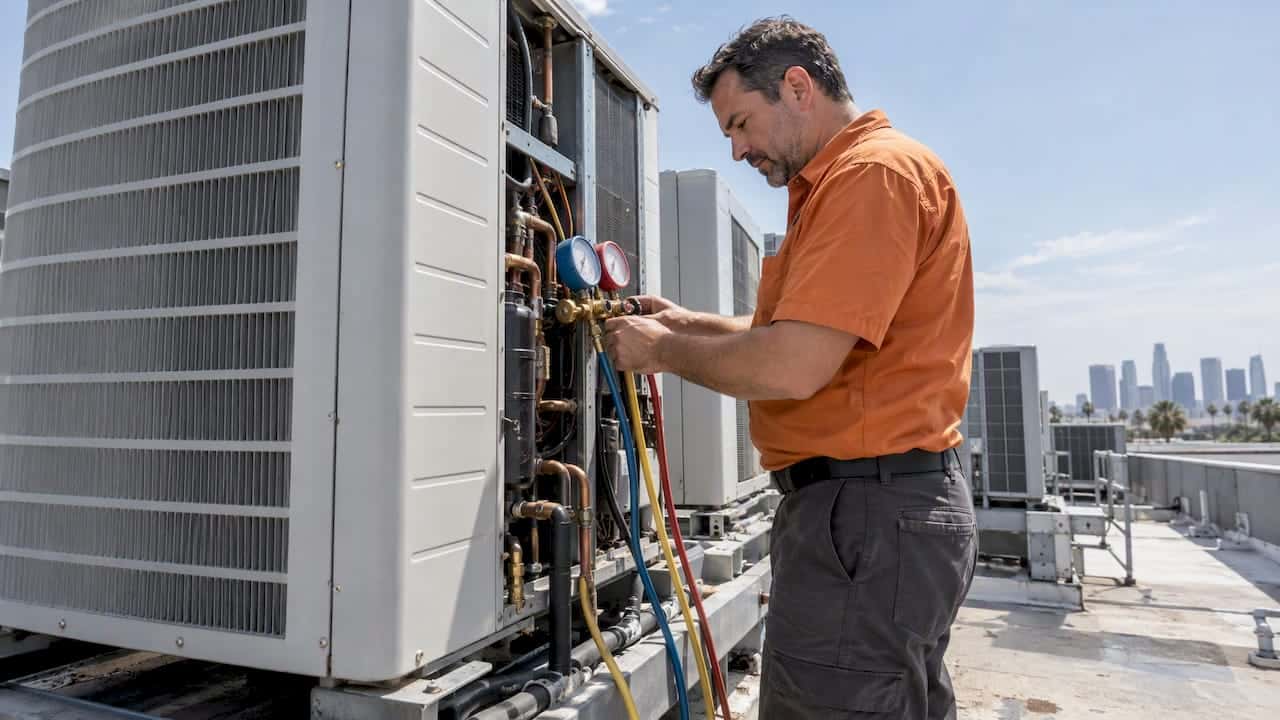
A noisy AC unit almost always points to one of three problems: restricted airflow, a loose or failing mechanical part, or an electrical or refrigerant fault. If you hear banging, screeching, grinding, or hissing, turn the system off at the thermostat or breaker and don’t run it again until it’s been checked. Most airflow and loose-part noises are safe to investigate yourself, but electrical and refrigerant issues need a licensed technician working under EPA Section 608 refrigerant handling rules.
Here’s your one-line verdict for the loudest, scariest sounds:
- Banging or clanking: Power off now. This usually means a broken part inside the compressor or a loose motor mount, and it’s a call-a-pro situation.
- Screeching or grinding: Power off now. Bearings are failing, and running the unit even a few more hours can seize the motor.
- Hissing or bubbling: Power off now. This is the sound of a refrigerant leak, and it’s not a DIY fix.
A noisy AC unit is a warning system, not just an annoyance. The specific sound almost always tells you whether you’re looking at a $150 fix or a $2,000 one, long before a technician ever shows up.
Ignoring a noise complaint rarely saves money. Simple repairs like a capacitor swap typically run under a few hundred dollars, but a neglected fault can escalate into a compressor replacement costing $1,500 to $2,000 or more. If your unit is buzzing or rattling but still cooling fine, you likely have time to run through the checks below before calling LC Heating and Air Conditioning.
Key Takeaways
The sound your AC makes almost always identifies whether the fix is a cheap part swap or a major repair, and shutting down for banging, screeching, or hissing prevents that damage from spreading.
| Point | Details |
|---|---|
| Identify the sound first | Match buzzing, clicking, screeching, or hissing to its likely cause before deciding whether to act. |
| Shut down for high-risk sounds | Power off immediately for banging, screeching/grinding, or hissing and avoid the electrical panel. |
| Try safe checks first | Clear debris, replace the filter, and tighten panels before assuming the worst. |
| Know the cost stakes | Small repairs often run under a few hundred dollars, while neglected faults can reach $1,500 to $2,000+ in compressor costs. |
| Book flat-rate diagnostics | LC Heating and Air Conditioning offers same-day, flat-rate diagnostic visits across Los Angeles for noisy AC and heat pump issues. |
What Does Each AC Noise Mean?
Every sound your air conditioner makes is a clue, and matching it correctly saves you from either panicking over nothing or ignoring something serious. Use this chart as your starting point, then read the notes below for the sounds that get confused with each other most often.
- Buzzing: Often a failing start or run capacitor, a loose electrical connection, or debris hitting the fan blade. Moderate urgency if the outdoor fan still spins; higher if it doesn’t.
- Rattling or clanking: Loose panel screws, twigs or gravel in the outdoor unit, or a bent fan blade. Low to moderate urgency, often DIY-fixable.
- Screeching or squealing: Worn or dry motor bearings, or a slipping belt on older systems. High urgency, since continued operation risks motor burnout.
- Grinding: Metal-on-metal contact from a failing motor bearing or a broken part inside the compressor. High urgency, shut it down.
- Hissing or bubbling: Refrigerant escaping a line or valve, sometimes paired with weak cooling or ice on the coil. High urgency.
- Clicking: Normal once at startup or shutdown; repeated clicking during operation often means a failing thermostat, relay, or contactor. Moderate urgency.
- Humming without airflow: The compressor is trying to start but can’t, usually a capacitor problem. Moderate to high urgency.
- Whistling: Airflow squeezing through a gap, a dirty filter, or a loose duct connection. Low urgency.
The tricky part is telling similar sounds apart. A single click when the system kicks on is completely normal, the contactor closing and the compressor spinning up. But five or six clicks in a row, especially if the unit tries and fails to start each time, points to a weak capacitor or a bad contactor that’s arcing instead of connecting cleanly. Similarly, not every buzz is a disaster. Manufacturers note that inverter-driven heat pumps and mini splits naturally produce a variable hum or buzz as the compressor adjusts speed to match the load, and that sound often changes pitch as the thermostat setting changes. If the buzz tracks with temperature demand and the system still cools well, you’re probably hearing normal variable-speed operation, not a fault.
Pro Tip: Record a 15 to 20 second video on your phone the next time the noise happens. Note whether it’s the indoor or outdoor unit, whether it happens at startup or continuously, and whether adjusting the thermostat changes the pitch or frequency. That single clip often tells a technician more than a five-minute phone description.
If what you’re hearing is hissing, crackling, or anything that smells like burning plastic, skip the diagnostic process entirely. Shut the system off at the thermostat and the breaker, and don’t go near the outdoor unit’s electrical panel. Those three signs are the clearest indicators of refrigerant or electrical hazards, and they’re the exception to almost every “try this first” rule in this guide.
What’s Actually Failing Inside Your AC?
Behind every noise is a physical part doing something it shouldn’t. Understanding what each component does makes the sound chart above make a lot more sense, and it helps you gauge whether you’re looking at a quick fix or a major expense.
The compressor is the heart of your outdoor unit, pressurizing refrigerant so it can absorb and release heat. It’s a sealed, high-pressure component, which means when something breaks loose inside it, like a valve or a piston mount, you hear loud banging or clanking rather than a subtle rattle. Because most residential compressors are sealed units, internal damage almost always means full replacement rather than a repair, which is why this sound gets flagged as high-cost and high-urgency across the board.
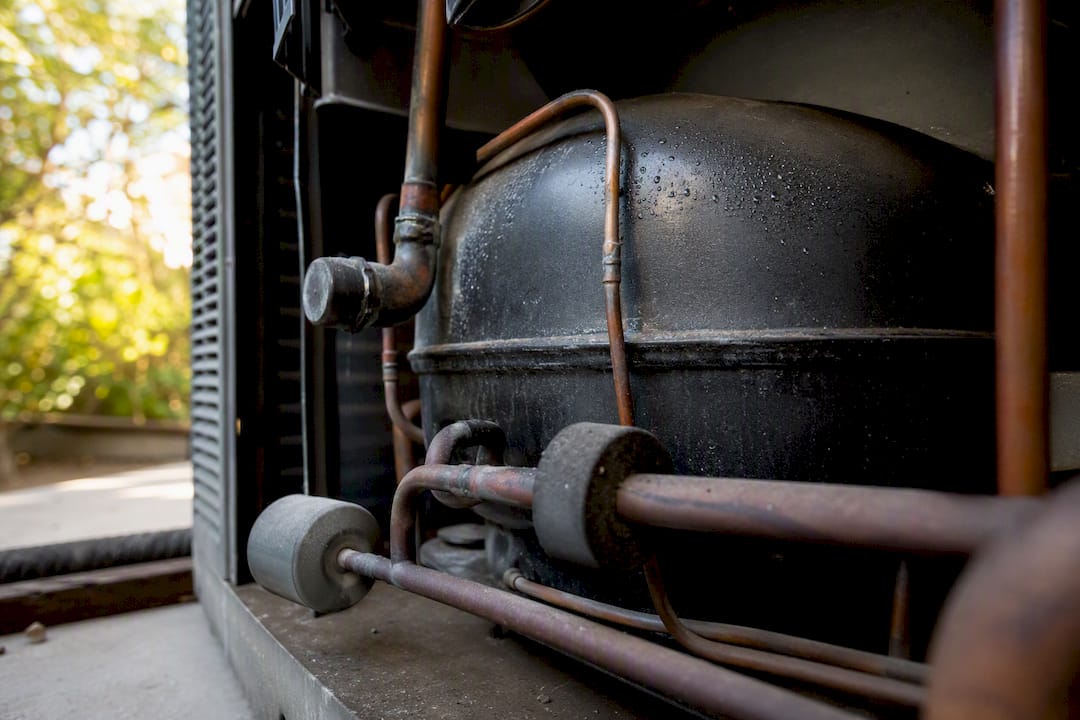
The condenser fan pulls air across the outdoor coil to release heat. A bent blade, usually from a dropped tool, a storm, or a lawnmower rock, creates a rhythmic thumping or rattling that speeds up with fan speed. Debris caught in the fan cage sounds similar but is far cheaper to fix.
The blower motor and its bearings move air through your ductwork. Bearings run dry over years of use, and dry bearings scream. That’s your screeching or squealing sound, and it’s a race against time: a seized blower motor is a full motor replacement, while caught early, some units just need lubrication or a bearing service.
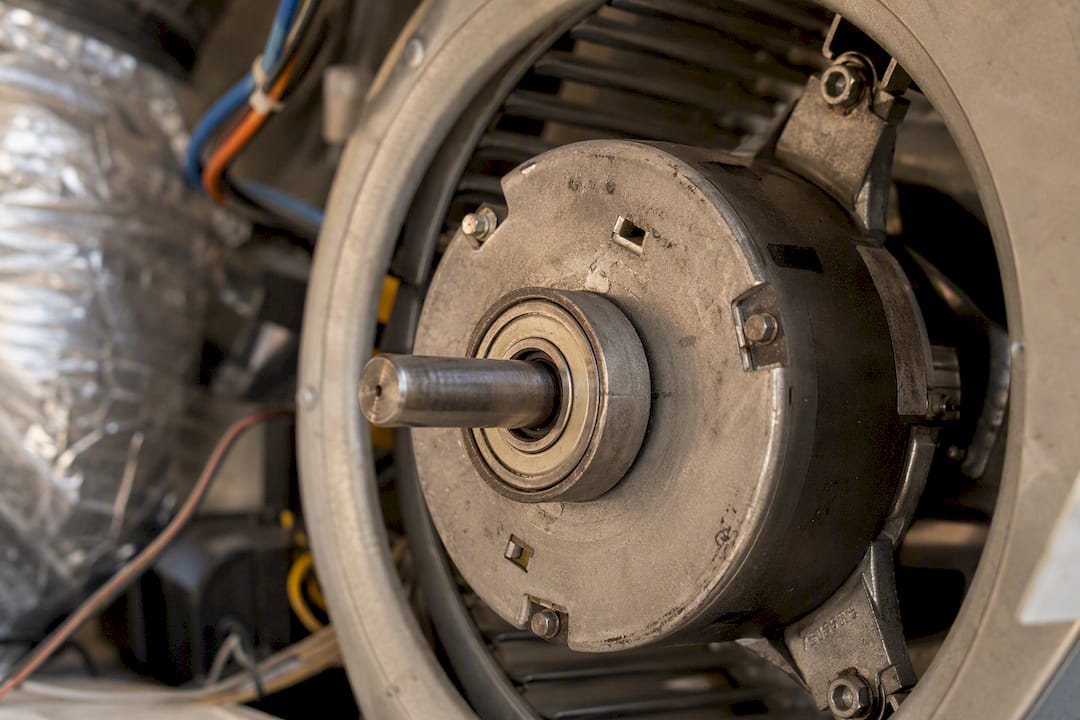
Capacitors and contactors are small electrical components with an outsized effect on noise. A capacitor stores and releases the electrical charge that kick-starts your compressor and fan motors. When it weakens, the motor struggles to start, producing a loud hum without the fan actually turning. A contactor is the switch that completes the circuit to your outdoor unit, and when its contacts pit or corrode, you get the repeated clicking mentioned earlier, sometimes paired with a burning smell.
Refrigerant lines carry the pressurized gas between your indoor and outdoor units. A leak, whether from a rubbed line, a corroded fitting, or a factory defect, releases refrigerant with a hissing or bubbling sound. This is never a sound to sit on: low refrigerant makes your compressor work harder and hotter, which can shorten its life dramatically.
Ducts and panels are the low-drama half of this list, but they’re often the reason a system sounds far worse than it actually is. Loose access panels vibrate against the cabinet, and undersized or disconnected ductwork produces whistling or a low rumble. Neither of these hurts your system mechanically, but persistent airflow restriction can force your AC to run constantly, adding wear everywhere else.
The sounds that cost the most are the ones that mean a sealed component failed internally. A rattling panel is an afternoon fix. A grinding compressor is a new outdoor unit.
Three failure types deserve their own warning here, because they tend to get expensive fast if you keep running the system: internal compressor damage, a seized blower motor, and any confirmed refrigerant leak. All three point toward major repair costs, and continued operation typically makes the damage worse, not better.
A safety note belongs here too. Never open the electrical compartment on your outdoor unit, and never touch a capacitor, even with the power off. Capacitors store an electrical charge after shutdown and can deliver a serious shock. Refrigerant work carries its own risks, including frostbite from escaping liquid refrigerant and legal restrictions on handling it without EPA Section 608 certification. These are the two areas where “just take a look” isn’t good advice.
What Can You Safely Check Before Calling for Help?
Plenty of noisy AC unit calls turn out to be simple fixes that any homeowner can handle in twenty minutes. Work through this list in order, and stop the moment you reach anything involving the electrical panel or refrigerant lines.
- Turn off power first. Shut the system off at the thermostat, then flip the disconnect switch or breaker for the outdoor unit before you get close to it.
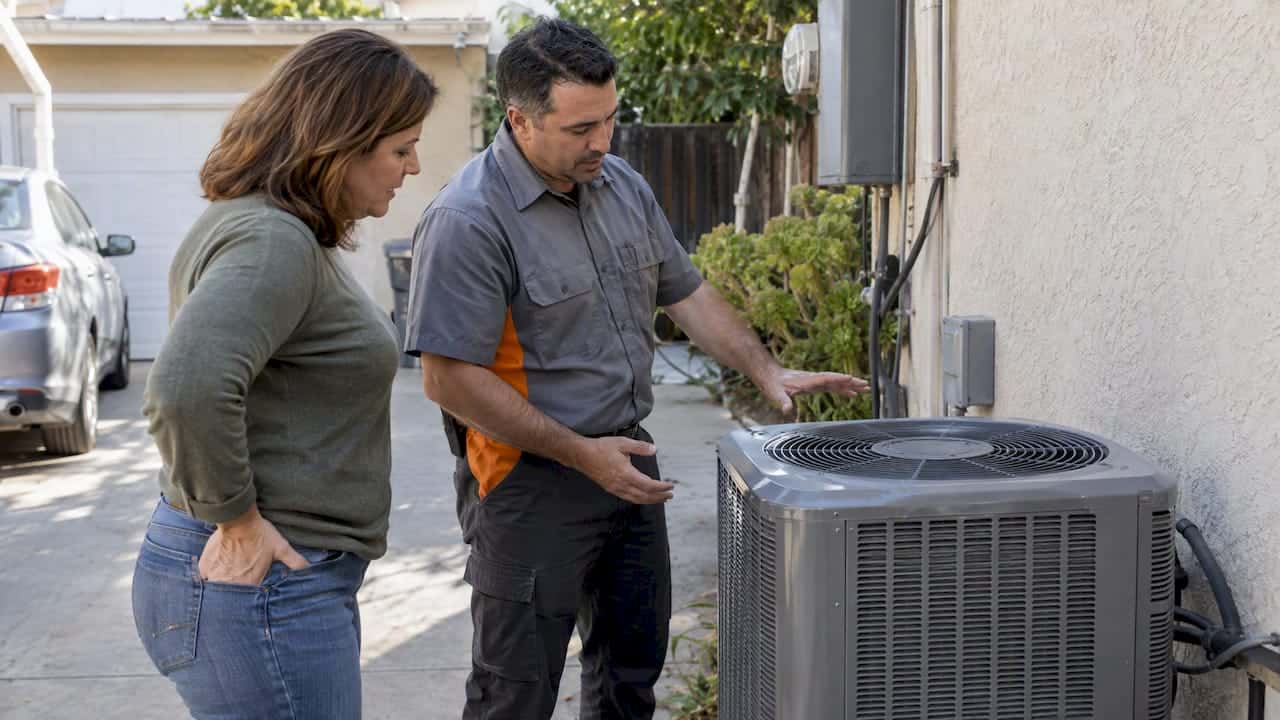
- Do a visual walk-around. Look for obvious debris: leaves, twigs, a stray plastic bag, or gravel that’s worked its way into the fan cage.
- Clear debris by hand. Remove anything loose from around and inside the outdoor cabinet, and clean off the condenser coils if they’re caked with dust or pollen.
- Check and replace the air filter. A clogged filter restricts airflow and can cause whistling or a labored, straining sound from the indoor unit.
- Tighten accessible screws and panels. Loose access panels on the outdoor unit are a common source of rattling and are safe to snug down with a screwdriver.
- Check that the unit sits level. An outdoor condenser that has settled unevenly on its pad can vibrate against nearby fencing or siding.
- Look for loose or disconnected duct sections in accessible areas like the attic or basement, since a gap here can whistle or hum.
Do not attempt these tasks yourself, even if you’re handy: handling refrigerant, opening the compressor housing, replacing a capacitor or contactor, or recharging refrigerant. Each one carries an electrical or chemical hazard, and refrigerant work is legally restricted to certified technicians.
Before your service visit, run through this quick mental checklist: power off if the sound was banging, screeching, or hissing; filter checked and replaced if needed; debris cleared from the outdoor unit; panels and screws tightened. If the noise is still there after all that, you’ve eliminated the easy causes and it’s time to bring in a professional for diagnosis.
When Should You Stop and Call a Professional?
Some signs mean stop immediately and call for same-day service: screeching or grinding from the outdoor unit, any hissing or bubbling sound, crackling or a burning smell from either unit, or repeated clicking where the system tries and fails to start. Each of these points to a fault that gets worse, not better, with continued use.
Cost is usually the first question homeowners have, and it’s a fair one. Here’s what typical repairs run:
| Service | Typical Cost Range | Typical Timeline |
|---|---|---|
| Diagnostic visit | $150 or less | Same day to next day |
| Capacitor or contactor replacement | $150 to a few hundred dollars | Same visit, once diagnosed |
| Fan motor repair or replacement | a few hundred dollars | Same day to 2 days (parts dependent) |
| Compressor replacement | $1,500 to $2,000 or more | 2 to 5 days (parts lead time) |
| Refrigerant leak repair | $200 to $1,500+ | 1 to 3 days depending on leak location |
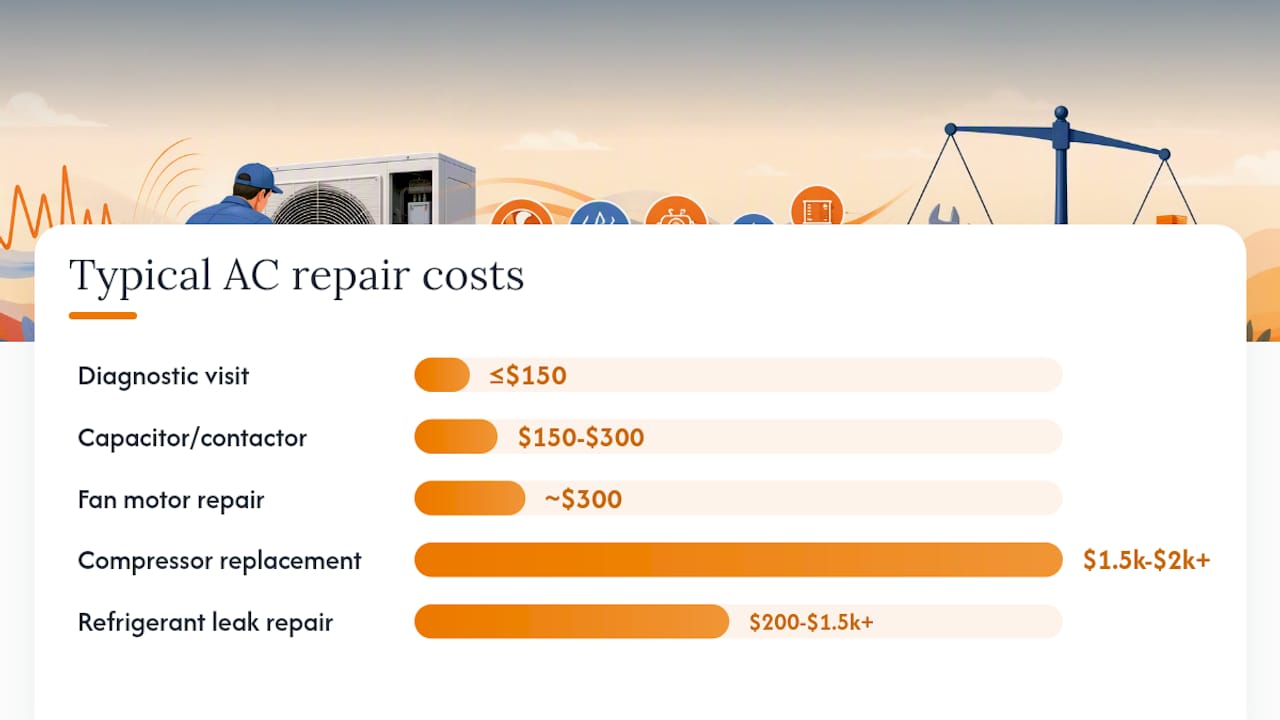
Once repair costs approach the $2,000 range on a system older than 12 to 15 years, replacement often becomes the more economical choice, especially with rebates available on new heat pump systems.
Before your technician arrives, gather a few details: when the noise happens (startup, shutdown, or continuous), whether it’s coming from the indoor or outdoor unit, your system’s age and type (standard AC vs. heat pump vs. mini split), and any video or audio you captured. This alone can cut diagnostic time significantly, especially on multi-zone or VRF systems where pinpointing the noisy component takes more than a stethoscope.
How Does a Technician Actually Diagnose a Noisy AC?
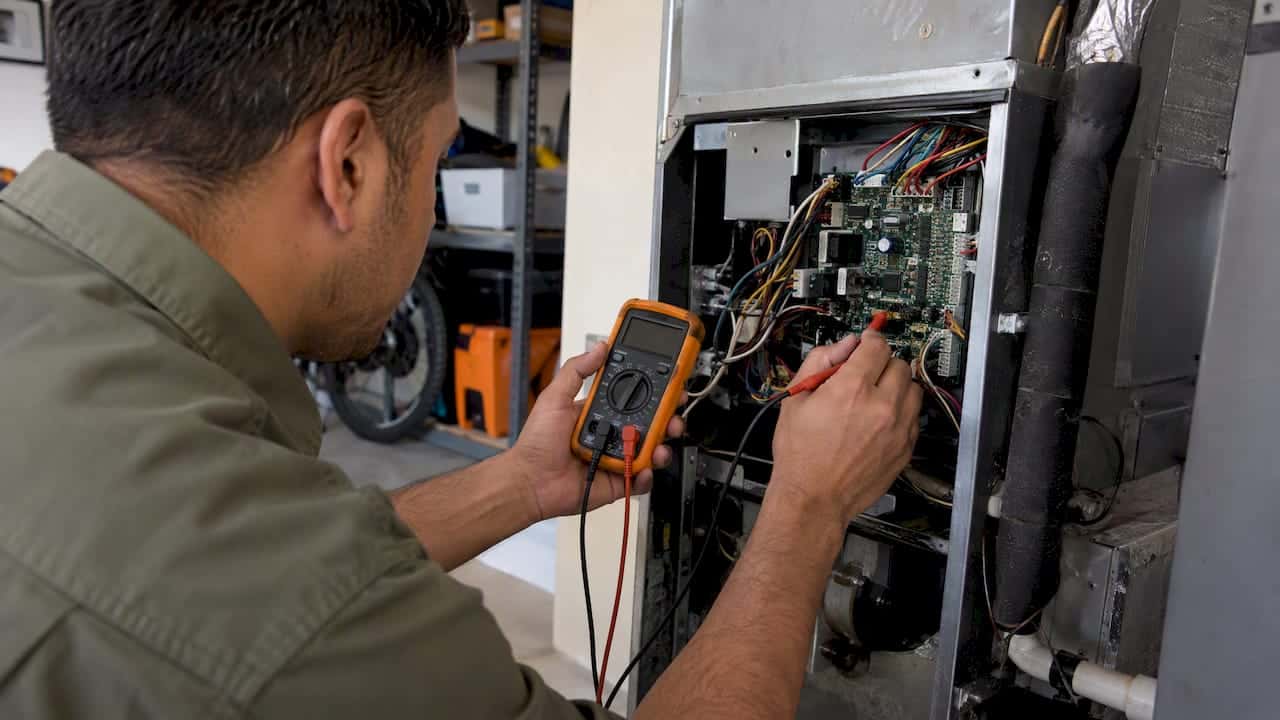
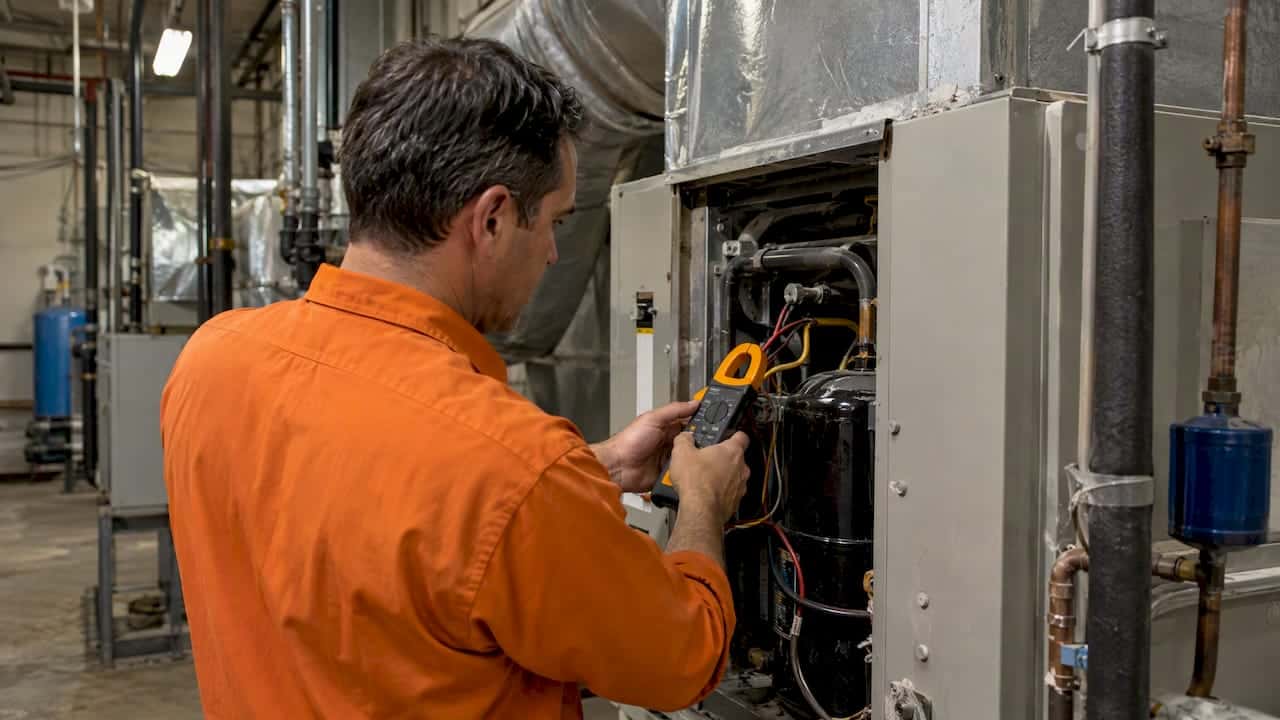
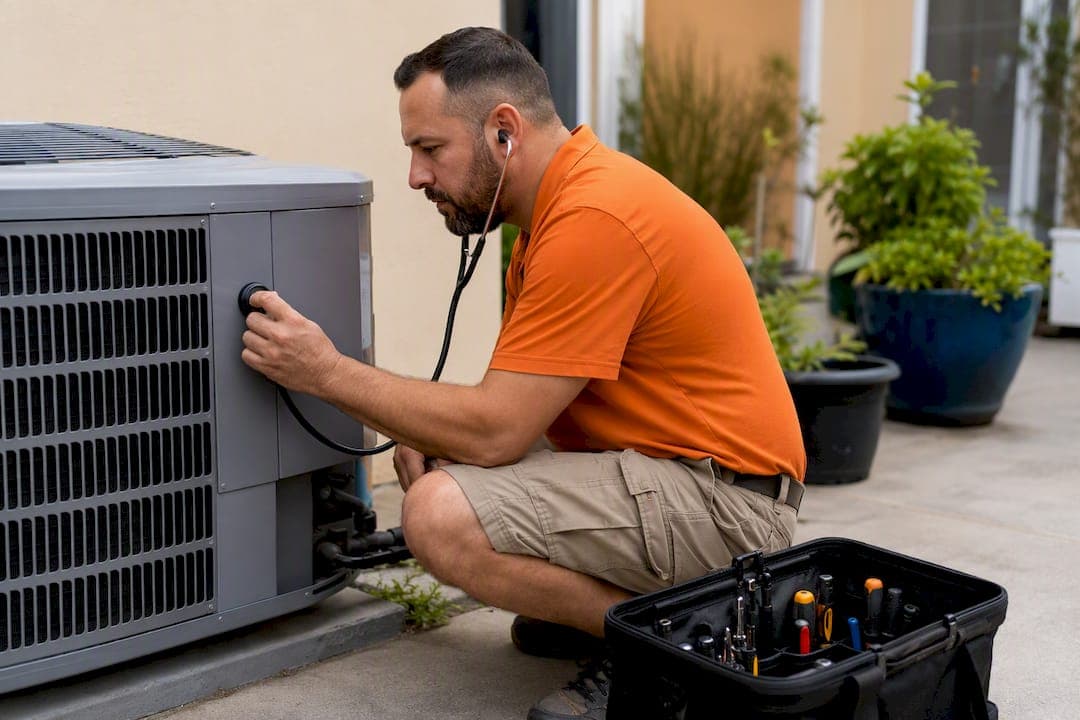
A proper diagnostic visit follows a sequence, not a guess. A licensed technician starts with observation and a listening test at both the indoor and outdoor units, then moves to targeted checks: capacitor and motor testing with a multimeter, vibration and mounting inspection, and, where refrigerant is suspected, pressure testing done under EPA Section 608 certification. Electrical inspection of contactors, relays, and wiring connections rounds out the visit.
That certification isn’t a formality. Refrigerant handling without it is both a safety risk and a federal violation, which is one reason flat-rate, licensed diagnostic visits cost more than a guess-and-replace approach but save you from paying twice.
A real diagnostic isn’t “listen for thirty seconds and quote a compressor.” It’s a sequence of tests that rules out the cheap causes before anyone talks about the expensive ones.
Pro Tip: Ask any technician you hire whether their diagnostic fee is flat-rate and whether it applies toward the repair. That single question tells you a lot about how transparent the company is going to be for the rest of the job.
What I’d Tell a Neighbor Whose AC Just Got Loud
If you asked me what matters most when your AC starts acting up, it’s this: don’t guess at the expensive stuff, and don’t ignore the cheap-to-fix stuff either. I’ve seen homeowners nurse a buzzing capacitor for months, hoping it goes away, and then pay for a compressor because the strain finally caught up with it.
The most common mistake I see is people assuming any noise means “it’s dying,” so they either panic-replace a system that needed a $200 part, or they run a screeching unit for another week because it’s still technically cooling. Twenty years of doing this locally has taught me the sound almost always tells the truth, if you know how to read it.
Get Your Noisy AC Diagnosed the Same Day, No Surprise Fees
LC Heating and Air Conditioning gives you a flat-rate diagnostic instead of the escalating hourly guessing game some contractors run, and same-day appointments across Los Angeles mean you’re not sitting on a screeching compressor for a week waiting for a callback.

Whether the fix turns out to be a capacitor swap, a fan motor repair, a refrigerant leak seal, or a full heat pump service, our licensed technicians work under EPA Section 608 certification for every refrigerant job, and we walk you through exactly what’s wrong before any work starts. If your outdoor unit has been buzzing, clicking, or hissing, book a diagnostic through our HVAC repair page and get a straight answer today instead of a guess.
Sources
- HVAC Noise Diagnosis & Repair
- LG Air Conditioner sound guide: Identifying normal vs. problematic noises
- 10 Common AC Noises and When to Call a Technician | Eco
FAQ
How Do You Fix a Noisy Air Conditioner?
Start with the safe checks: clear debris, replace the filter, and tighten loose panels. If the noise is mechanical or electrical, like screeching, grinding, or hissing, call a licensed technician rather than attempting the repair yourself.
Should I Turn Off My AC if It’s Making Noise?
Yes, for banging, screeching, grinding, or hissing sounds, turn the system off at the thermostat and breaker right away. For milder sounds like a soft whistle or occasional click, you can usually keep running it while you investigate.
Why Is My AC Unit Suddenly So Loud?
A sudden change usually means something shifted mechanically or electrically. Debris in the fan, a weakening capacitor, or a bearing starting to wear out are the most common causes of a noise that appeared overnight rather than gradually.
What Does a Bad Compressor Sound Like on an AC?
A failing compressor typically produces loud banging, clanking, or grinding from the outdoor unit. Because most compressors are sealed, this sound usually means replacement rather than an internal repair.
Recommended
Leo, Propietario y Técnico Principal en LC Heating & Air
Leo dirige LC Heating & Air como propietario-operador y tiene la licencia C-20 HVAC #1073586 de California. Sus guías se enfocan en diagnósticos prácticos, decisiones de reparación seguras y consejos claros para propietarios de Los Ángeles.