- Key Takeaways
- What’s causing that burning smell from your vents?
- How to tell if the smell is a real emergency
- Safe checks you can do right now as a homeowner
- When to call an HVAC technician, an electrician, or 911
- What a trained HVAC technician actually checks
- Routine maintenance that prevents most burning smells
- Why prompt action on burning smells matters more than most homeowners realize
- LC Heating and Air Conditioning is ready to help today
- Sources
- FAQ
- Recommended
A burning smell from vents is most often harmless dust burning off heating elements at the start of the season, but a sharp plastic, chemical, or acrid odor can signal an electrical fault or fire risk that requires immediate action. The rule is simple: if the smell clears within a short time of first startup, you can monitor it. If it persists, returns mid-season, or smells like melting plastic or chemicals, shut the system off at the thermostat and keep it off until a professional inspects it.
Right now, do these three things:
- Ventilate. Open windows and doors to clear the air and reduce your exposure.
- Turn the system off at the thermostat. Do not just lower the temperature — switch it fully off.
- Decide whether to stay or leave. If you see smoke, notice sparks, smell rotten egg (gas), or feel dizzy or nauseous, leave the home immediately and call 911 from outside.
If the smell fades quickly and you feel fine, you have time to work through the checklist below. If anything feels wrong, trust that instinct and get out first.
Pro Tip: When you call a technician, describe the smell as specifically as you can — “burning rubber near the air handler,” “plastic smell from every vent,” or “dusty smell only on first startup.” That detail cuts diagnostic time significantly.
Key Takeaways
A burning smell from vents is either harmless seasonal dust that clears in under 30 minutes or a warning sign requiring immediate shutdown, professional inspection, or emergency evacuation, depending on the odor type and accompanying symptoms.
| Point | Details |
|---|---|
| Dust smell on first startup | Normal if it clears quickly; persistent or mid-season odors need professional inspection. |
| Plastic or chemical smell | Shut the system off immediately — this indicates electrical overheating or melting insulation. |
| Evacuate for gas or smoke | A rotten-egg smell, visible smoke, or health symptoms require leaving the home and calling 911. |
| Replace filter first | A clogged filter is the most common fixable cause; replace every 1–3 months to prevent recurrence. |
| LC Heating and Air Conditioning | Offers same-day diagnostics with flat-rate pricing for burning-smell and safety-related HVAC calls in Greater Los Angeles. |
What’s causing that burning smell from your vents?
The odor you’re noticing is your first clue. Different failure modes produce distinctly different smells, and matching the scent to a cause helps you decide how urgently to act.
According to Carrier’s HVAC guidance, a burning dust smell on first startup usually clears within 20–30 minutes. Dust settles on heat exchangers, burners, and electric resistance coils during months of inactivity, and that first run burns it off. It’s the HVAC equivalent of a pan that sat in the cabinet all summer. Persistent or mid-season odors are a different story entirely.
A clogged air filter restricts airflow and forces the blower motor to work harder than it should. That extra strain generates heat, and you’ll often notice a warm, slightly acrid smell that returns every time the system cycles. Replacing filters regularly is the single easiest way to prevent this.
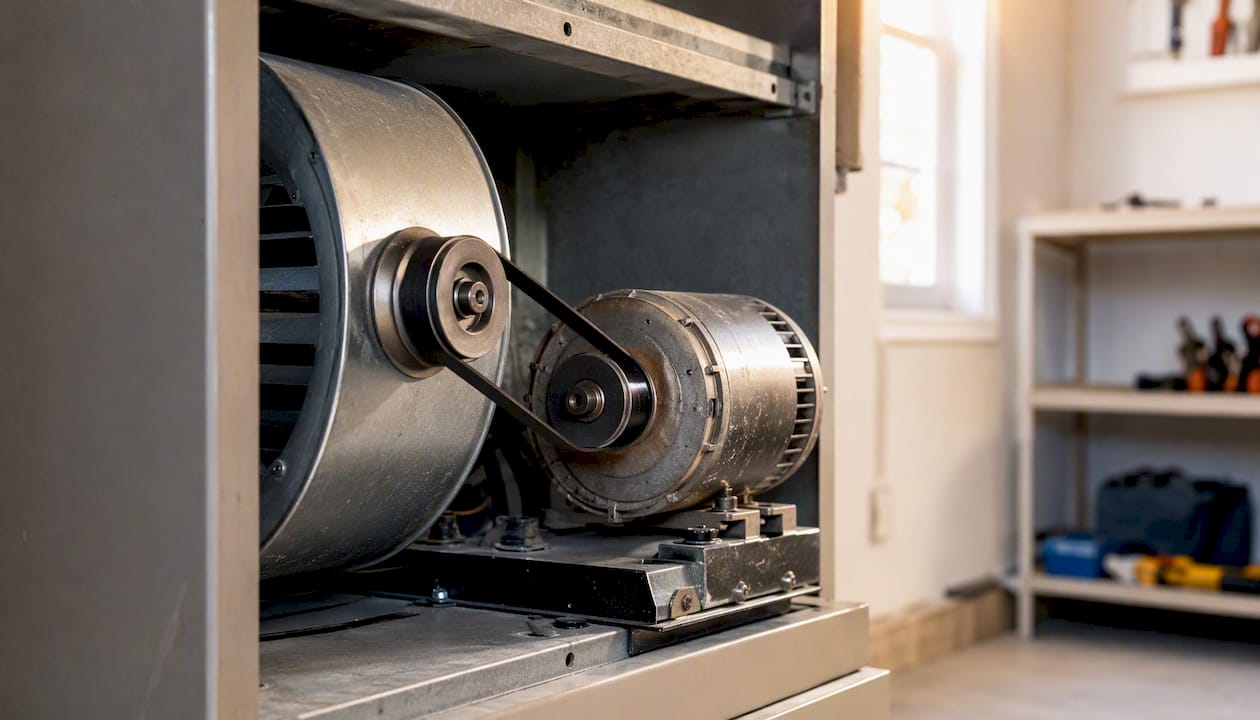
Burning rubber smells point to fan belts or seized motor bearings, often accompanied by reduced airflow or a faint grinding noise. A sharp, plastic, or chemical scent usually means melting wire insulation or a failing circuit board. Both require the system to be shut off immediately.
| Smell | Likely Cause | Urgency |
|---|---|---|
| Dusty, fades quickly | Seasonal dust burn-off | Low — monitor |
| Persistent warm/acrid | Clogged filter, overworked motor | Moderate — replace filter, call if it returns |
| Burning rubber | Belt wear, seized bearing | High — shut off, call HVAC |
| Sharp plastic or chemical | Melting insulation, failing board | High — shut off immediately |
| Rotten egg | Gas leak | Emergency — evacuate, call 911 |
| Foul, organic | Dead animal in ducts | Moderate — call HVAC for duct inspection |
| Musty, not burning | Mold or mildew | Moderate — see why your AC smells moldy |
A localized plastic smell near one register often points to a foreign object — a toy, a piece of packaging — that fell into a duct or sits on a heat source. Check visible registers with a flashlight before assuming the worst.
One cause that has nothing to do with your HVAC system: phantosmia, or olfactory hallucination. According to Healthline, phantosmia commonly produces sensations like burnt toast or burning smells and can follow a respiratory infection, head injury, or allergies. If no one else in the home notices the smell and your system checks out, mention it to your doctor.
A smell that clears in under 30 minutes on the first cold day of the season is almost always dust. A smell that returns every cycle, appears mid-season, or has a chemical edge is the system telling you something is wrong. — Boyle Brothers Energy
How to tell if the smell is a real emergency
Most burning odors from vents are not emergencies. A few are. Knowing the difference can save your life.
Evacuate immediately and call 911 if you notice any of these:
- A rotten egg or sulfur smell — this is the odorant added to natural gas. Do not flip any light switches. Leave the door open as you exit and call your gas utility and 911 from outside.
- Visible smoke or flames anywhere near the air handler, furnace, or electrical panel.
- Sparking or popping sounds from the unit or breaker panel.
- A sharp, acrid, or formaldehyde-like chemical odor that does not fade — this can indicate a cracked heat exchanger, which also carries carbon monoxide risk.
- Health symptoms — dizziness, headache, nausea, difficulty breathing, or sudden fatigue while the system is running. These can indicate CO exposure even without a detectable smell, since carbon monoxide is odorless.
Carbon monoxide deserves a direct note. CO itself has no smell, but the combustion problems that produce it often create chemical or exhaust-like odors. If anyone in the home feels flu-like symptoms while the heating system is running, treat it as a CO emergency: leave, call 911, and do not re-enter until cleared by emergency responders.
An ozone or metallic smell often accompanies failing capacitors or arcing electrical connections. These smells tend to appear when the system is starting up and may come with a motor that struggles to reach full speed. Shut the breaker off and call an HVAC technician, not just the thermostat.
If you smell an unknown fume and have symptoms or are unsure what you’re dealing with, open windows, leave the building, and call Poison Control at 1-800-222-1222 — free expert guidance is available 24 hours a day, 7 days a week.
Safe checks you can do right now as a homeowner
These steps are designed to be safe, quick, and genuinely useful. None of them require opening electrical panels or reaching inside the air handler.
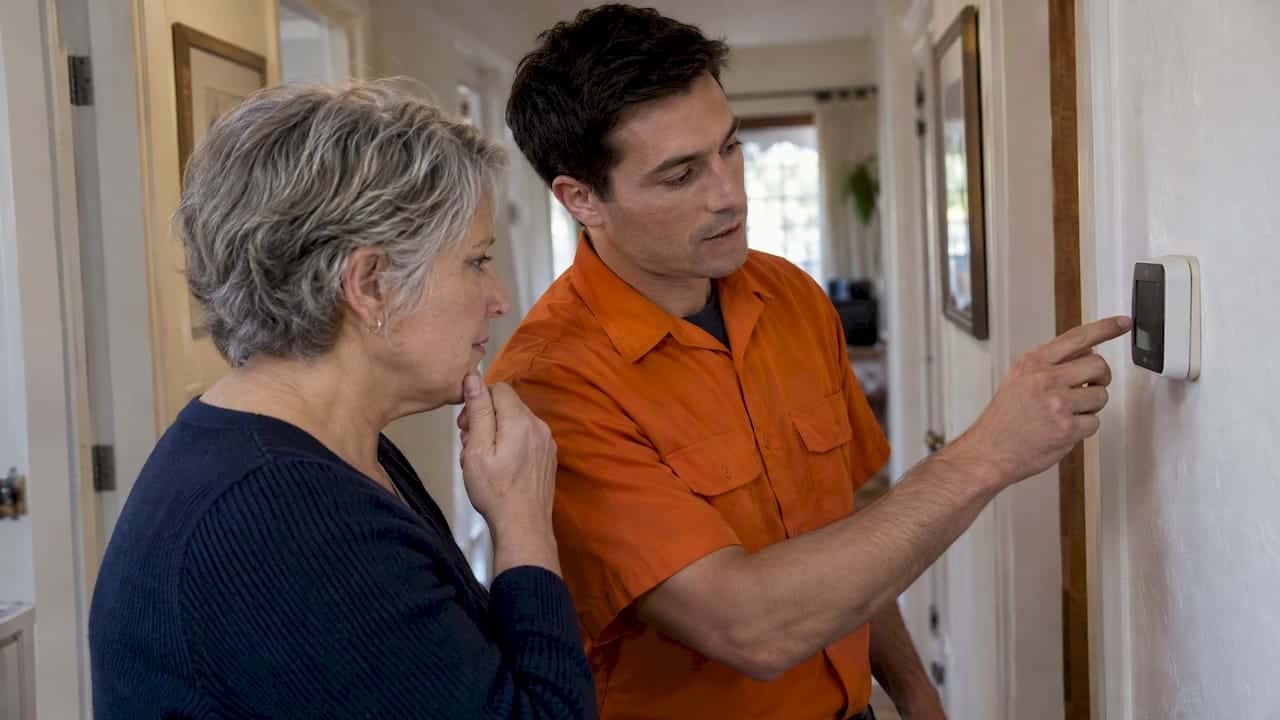
- Turn the system off at the thermostat. Switch it fully to “off,” not just a lower temperature setting. This stops the blower and heating elements immediately.
- Open windows and exterior doors. Ventilate the home for at least 10 minutes before doing anything else. Fresh air protects you and helps you assess whether the smell is coming from outside.
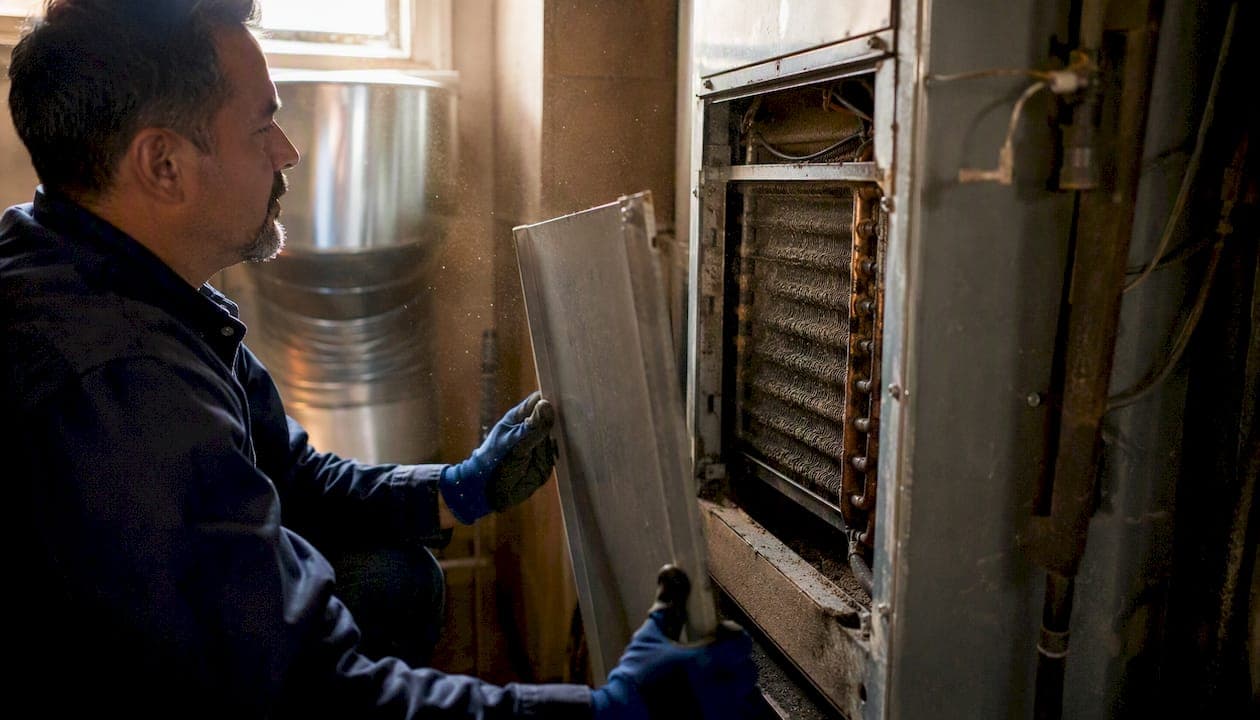
- Check the air filter. Locate the filter slot (usually at the return air grille or inside the air handler cabinet). Pull it out and look at it. A filter so clogged it looks gray or black is a likely culprit. Replace it with the correct size before restarting.
- Scan visible vents and registers with a flashlight. Look for debris, melted plastic, or any object that may have fallen in. Do not reach inside.
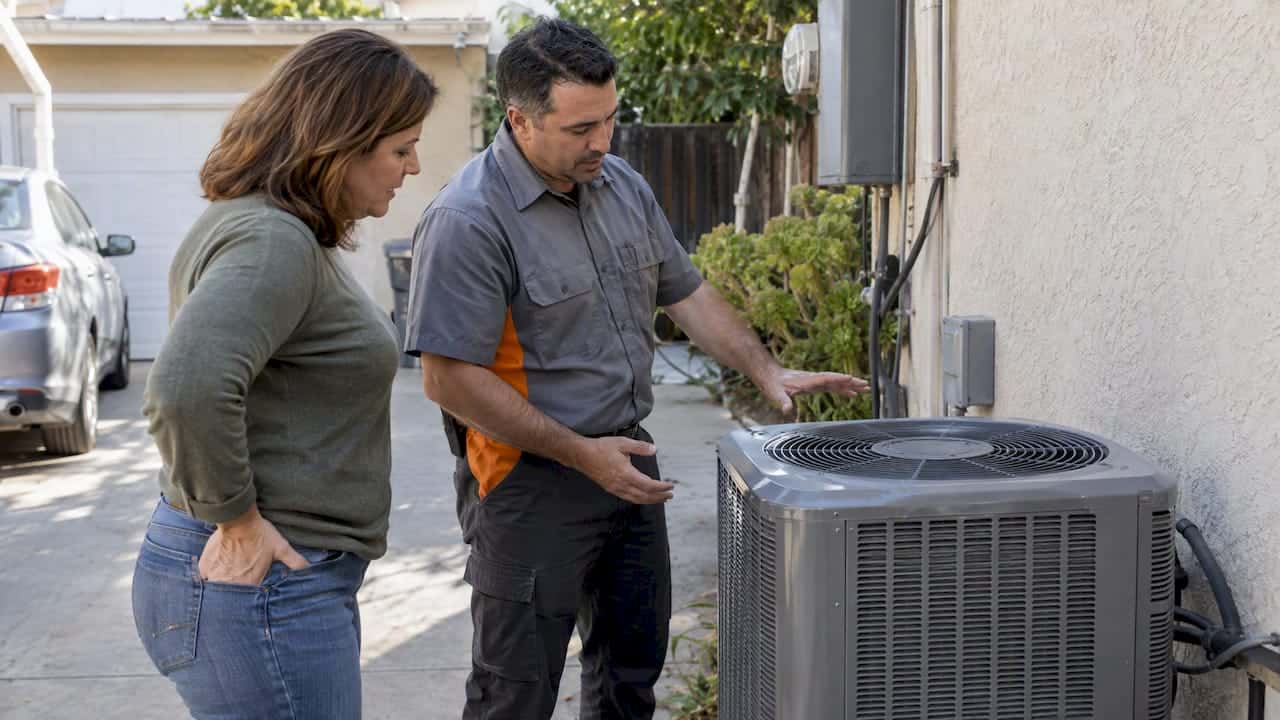
- Check the outdoor unit from a safe distance. Look for debris, ice buildup, or any visible damage. Do not touch electrical connections.
- Check the breaker panel for tripped breakers. A tripped HVAC breaker that keeps tripping after reset is a sign of an electrical fault — stop resetting it and call an electrician or HVAC technician.
What not to do:
- Do not open the electrical panel or touch wiring.
- Do not put your hands inside the air handler or blower compartment.
- Do not spray water anywhere near electrical components.
- Do not restart the system if the smell persists after ventilation.
Pro Tip: Take photos of anything unusual — a discolored filter, a scorch mark near a vent, a tripped breaker — before a technician arrives. Those photos often cut the diagnostic visit in half.
If the smell is gone after ventilation and a fresh filter, you can restart the system and monitor it for the next 30 minutes. If it returns, keep the system off. For broader HVAC troubleshooting guidance, LC Heating and Air Conditioning’s how-to library covers many common scenarios in detail.
For no-heat situations that sometimes accompany these odor complaints, this warm-climate HVAC troubleshooting guide from E320 Air covers related failure patterns worth reviewing.
When to call an HVAC technician, an electrician, or 911
The right call depends on what you’re smelling and what you’re seeing. Here’s how to route yourself quickly.
| Situation | Who to Call |
|---|---|
| Gas smell or active fire | 911 immediately — evacuate first |
| Visible sparking or smoke from panel/wiring | 911 or licensed electrician |
| Persistent plastic, chemical, or electrical smell | Licensed HVAC technician |
| Burning rubber, motor noise, weak airflow | Licensed HVAC technician |
| Organic/dead animal smell from ducts | Licensed HVAC technician |
| Smell cleared, filter replaced, no recurrence | Monitor — schedule annual tune-up |
HVAC technicians handle motors, blower assemblies, capacitors, belts, heat exchangers, refrigerant systems, ductwork, and control boards. They are the right call for most burning-smell complaints that aren’t active emergencies.
Electricians handle building wiring, the main electrical panel, and branch circuits. If a breaker keeps tripping or you see scorch marks near an outlet or panel, that’s an electrician’s job — not an HVAC tech’s.
Emergency services (911) handle active fires, gas leaks, and medical emergencies. Do not wait to see if a gas smell fades.
For guidance on when to call a professional for AC issues, LC Heating and Air Conditioning has a dedicated resource that walks through the decision in more detail.
What to prepare before the call:
- The smell description (dusty, rubber, plastic, chemical, rotten egg)
- When it started and whether it’s constant or only during certain cycles
- Your system’s age and the last time the filter was replaced
- Any recent changes — new furniture near vents, recent pest activity, recent electrical work
Same-day emergency diagnostic visits are available for safety-related calls. Flat-rate diagnostic pricing means you’ll know the cost before any work begins.
What a trained HVAC technician actually checks
A professional diagnostic visit for a burning smell follows a specific sequence, and understanding it helps you know what you’re paying for.
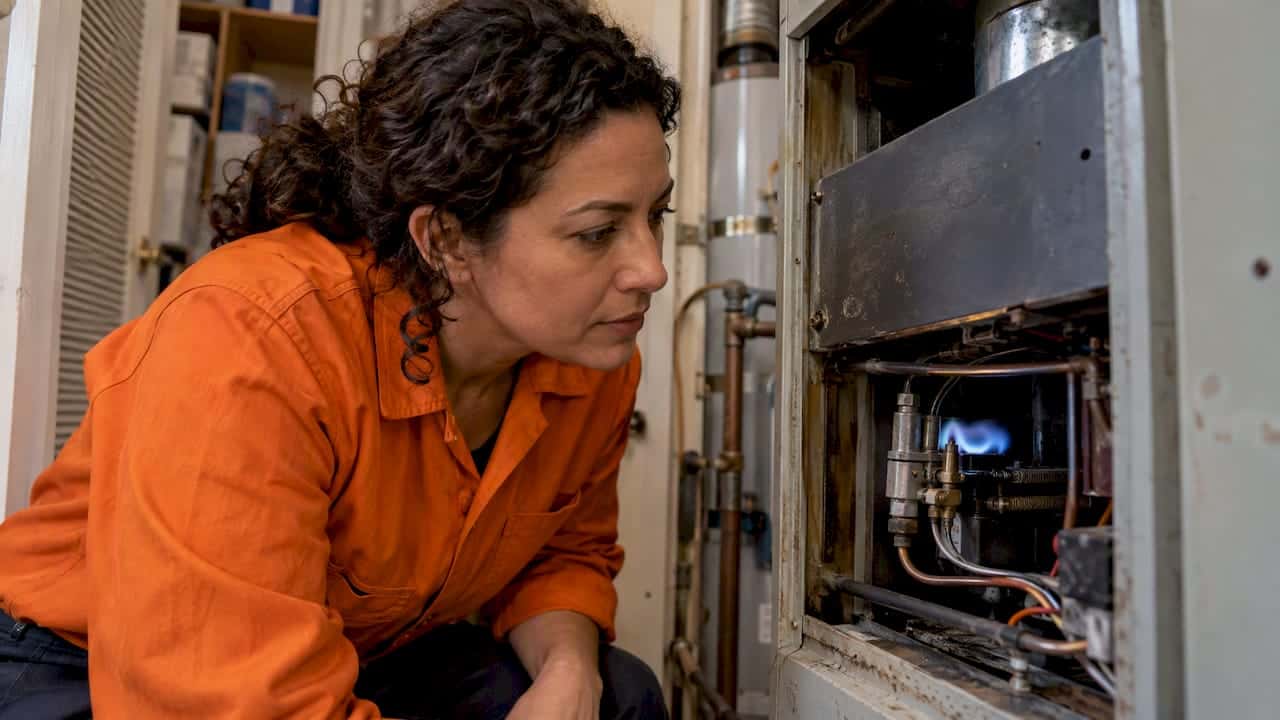
The technician starts with a visual inspection — looking for scorch marks, discoloration, or melted components near the air handler, furnace, or heat pump. This alone often narrows the cause to one or two systems.
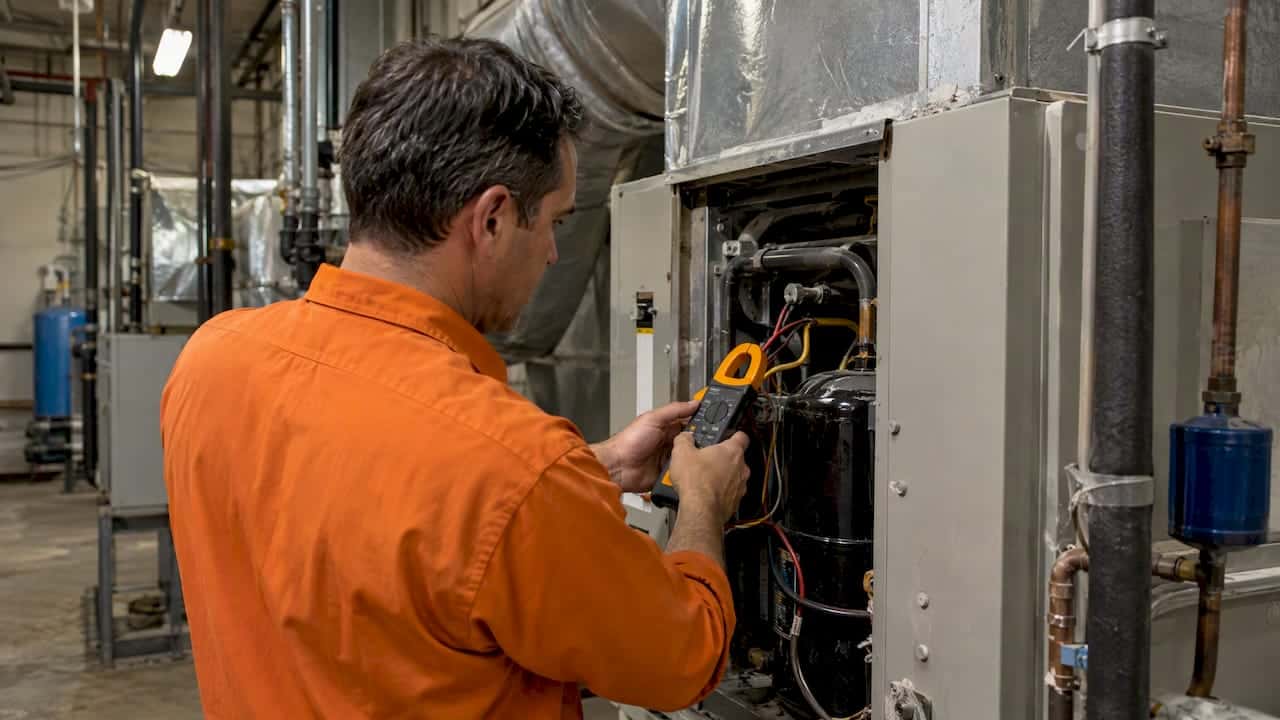
Next comes motor and electrical testing. An amp clamp measures whether the blower motor is drawing more current than its rating, which indicates strain from a clogged filter, failing bearings, or a bad capacitor. A multimeter checks voltage at key terminals and identifies loose or corroded connections that can arc and cause fires.
Capacitor testing is a small but important step. A weak or failed capacitor causes the motor to struggle at startup, which generates heat and sometimes produces that ozone or metallic smell. Replacing a capacitor is one of the most cost-effective repairs in HVAC.
For gas-fired equipment, a combustion analyzer checks flue gases for signs of incomplete combustion, and the heat exchanger is inspected for cracks — the failure mode that creates formaldehyde-like odors and CO risk. A cracked heat exchanger is a replacement-level finding, not a repair.
Duct inspection, sometimes using a borescope camera, identifies debris, dead animals, or damaged insulation inside the ductwork. For dead animal smells from air vents, duct access and cleaning are typically required.
Common repairs from a burning-smell diagnostic:
- Filter replacement and airflow correction
- Blower motor or bearing replacement
- Capacitor replacement
- Tightening or replacing corroded electrical connections
- Debris removal from ducts or heat exchanger
- Heat exchanger repair or full system replacement when cracked
LC Heating and Air Conditioning’s HVAC repair and diagnostics service covers all of these, with flat-rate pricing so there are no surprises after the inspection.
Routine maintenance that prevents most burning smells
Most burning-odor calls are preventable. A consistent maintenance routine catches the small problems before they become expensive ones.
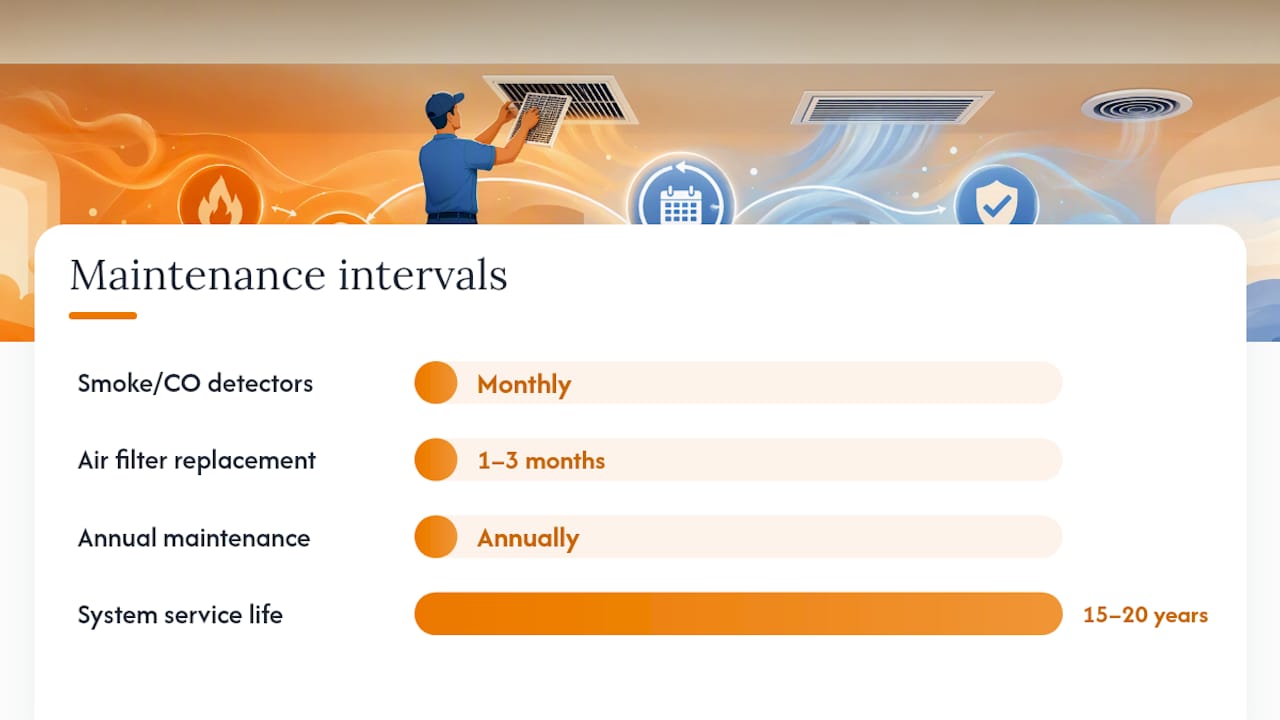
- Replace air filters every 1–3 months. Homes with pets or high dust levels need the shorter interval. A clean filter is the single most effective thing you can do between professional visits.
- Schedule an annual professional tune-up before heating season — late summer or early fall is ideal. A technician will check the heat exchanger, test electrical connections, measure motor amp draw, and clean components before the first cold snap hits.
- Keep vents and return grilles clear. Furniture, rugs, and curtains blocking returns force the blower to overwork, which generates heat and accelerates wear.
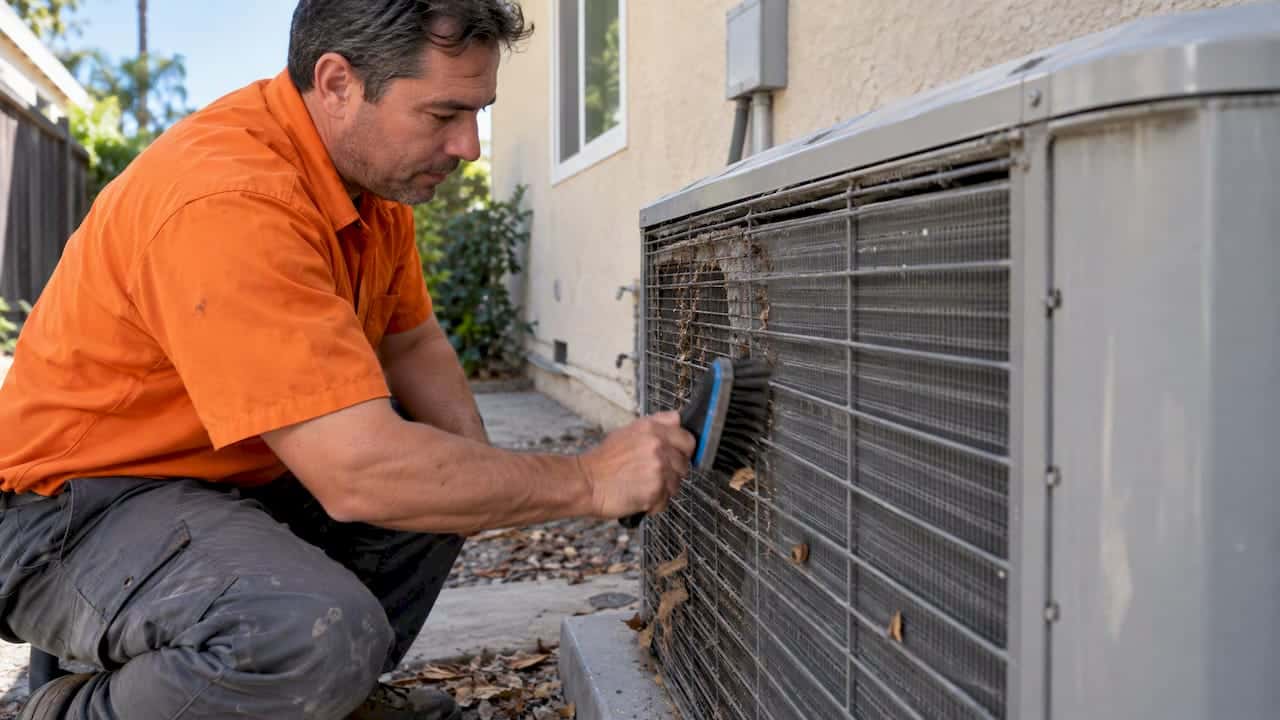
- Clear debris from the outdoor unit. Leaves, dirt, and plant growth restrict airflow and can cause overheating in heat pump systems.
- Test smoke alarms and CO detectors monthly and replace batteries annually. Carrier recommends annual professional inspections specifically to catch heat-exchanger, electrical, and combustion issues before they become safety events.
- Know your system’s age. Most HVAC systems have a service life of 15–20 years. Recurring electrical faults, frequent burning smells, or repeated capacitor failures in a system older than 15 years are signs that replacement is more cost-effective than continued repair. LC Heating and Air Conditioning’s expertise in heat pump systems and multi-zone mini-splits makes replacement planning straightforward for Los Angeles homeowners.
Heat pumps and mini-split systems have slightly different odor patterns than traditional furnaces. Because they don’t burn fuel, you’ll never get a combustion smell — but electrical component odors (capacitors, motors, refrigerant leaks with a faint chemical note) still apply. Annual inspections matter just as much, and the diagnostic process is similar. For older systems showing signs of repeated failure, this overview of HVAC fire hazards in aging units is worth reading before the next heat wave.
Why prompt action on burning smells matters more than most homeowners realize
Twenty years of HVAC work in Los Angeles teaches you something the manuals don’t say directly: the calls that turn into expensive repairs almost always started as a smell someone decided to ignore for a few weeks.
A dusty smell on the first startup of the season is genuinely harmless in most cases. But that same homeowner who shrugs it off in October is sometimes the one calling in December with a seized blower motor or a heat exchanger that’s been cracking slowly all season. The smell was the system asking for attention. The ignored smell became a $2,000 repair.
Los Angeles adds its own wrinkle. The mild climate means heating systems often sit unused for six to eight months, accumulating more dust than systems in colder climates that run year-round. Heat pumps, which now make up a growing share of the systems we service, don’t have the same dust-burn-off pattern as furnaces, so any burning smell from a heat pump or mini-split deserves a closer look from the start. There’s no “first-startup dust” excuse for a heat pump producing a sharp electrical odor.
Flat-rate diagnostics exist precisely because homeowners shouldn’t have to gamble on whether a service call is worth it. A same-day safety inspection costs far less than the alternative of running a system with a failing motor or an arcing connection.
LC Heating and Air Conditioning is ready to help today
When a burning smell from vents has you second-guessing whether to run your system, you need a straight answer fast, not a vague estimate and a two-week wait.

LC Heating and Air Conditioning provides same-day diagnostic visits for burning-smell and safety-related HVAC calls throughout Greater Los Angeles, with flat-rate pricing so you know the cost before any work starts. The team specializes in heat pump repair, mini-split systems, motor and electrical diagnostics, and duct inspection — the exact failure modes most likely behind an unusual odor. Whether the system is a 1960s central furnace in a historic home or a modern Daikin heat pump, the diagnostic process is the same: thorough, honest, and focused on finding the real cause rather than recommending unnecessary replacements.
To book a visit, call with the smell description, when it started, and your system’s approximate age. LC Heating and Air Conditioning will handle the rest. Schedule your same-day HVAC diagnostic today.
Sources
- Poison
- Smelling burnt toast — Healthline
- Burning smell in house? Causes and solutions — Carrier
- What that burning smell from your HVAC means and when to act — Boyle Brothers Energy
This article is general information, not a substitute for advice from a qualified doctor. Consult a qualified healthcare professional about your own circumstances before acting on anything here.
FAQ
Is there a smell before an electrical fire?
Yes. Electrical fires are often preceded by a sharp, acrid, or plastic-like burning smell caused by melting wire insulation or overheating components. An ozone or metallic odor can also indicate arcing connections before visible fire starts.
What can be mistaken for a burning smell in a house?
Phantosmia (olfactory hallucination) can produce sensations of burning or burnt toast with no actual source, and commonly follows respiratory infections, head injuries, or allergies. Mold or mildew in ducts can also produce an odor some people describe as burning, though it’s typically musty rather than sharp.
Why do I smell a weird burning smell in my house?
The most common HVAC-related causes are seasonal dust burning off heating components, a clogged air filter overworking the blower motor, or an electrical component beginning to fail. If the smell is sharp, chemical, or plastic-like, shut the system off and call a licensed HVAC technician.
Is it safe to stay in a house with a burning smell?
It depends on the smell. A faint dusty odor that clears within 20–30 minutes on first startup is generally safe to monitor. A persistent, plastic, chemical, or rotten-egg smell, or any smell accompanied by dizziness, headache, or nausea, means you should leave the home and call 911 or Poison Control at 1-800-222-1222.
Recommended
Leo, Propietario y Técnico Principal en LC Heating & Air
Leo dirige LC Heating & Air como propietario-operador y tiene la licencia C-20 HVAC #1073586 de California. Sus guías se enfocan en diagnósticos prácticos, decisiones de reparación seguras y consejos claros para propietarios de Los Ángeles.