- TL;DR
- Why rooftop package units need a maintenance schedule
- Safety first: lockout/tagout before any panel comes off
- How often to service a rooftop package unit
- The RTU maintenance checklist
- Filters, coils, and drains: the heart of routine maintenance
- Electrical and mechanical checks that prevent breakdowns
- Gas heat, heat pump, and A2L differences
- What building staff can do and what belongs to a technician
- What RTU maintenance costs
- Repair or replace an aging RTU
- Get your rooftop units on a schedule
- Our view on rooftop unit maintenance
- FAQ
- Sources
- Recommended

A rooftop package unit (RTU) needs a filter, coil, and drain check every quarter. It needs a deeper electrical, refrigerant, and heat-section inspection once or twice a year, before cooling season and again before heating season. Gas heat sections, refrigerant work, and anything electrical belong with a qualified technician. In Los Angeles, where an RTU may run nearly year-round, a planned schedule costs far less than a mid-summer failure on a 100-degree day. Our commercial HVAC team in Greater Los Angeles services rooftop package units, and this guide shows what a proper maintenance visit covers.
TL;DR
- Plan on quarterly checks of filters, coils, burners, and condensate drainage, semiannual checks of belts and controls, and annual checks of compressors, economizers, ductwork, fans, and refrigerant lines.
- Condenser coil cleaning is the single highest-value task, and it is tied to refrigerant charge, fan operation, and economizer checks.
- Lock out and tag the power before anyone opens a panel, and leave refrigerant, gas heat, and electrical diagnostics to qualified technicians.
- Schedule the two big visits in the shoulder seasons, before cooling season and again at its end, when technicians are less pressed and the roof is more workable.
- Keep a written maintenance log: pressures, temperatures, and findings from each visit show trends before a failure.
Why rooftop package units need a maintenance schedule
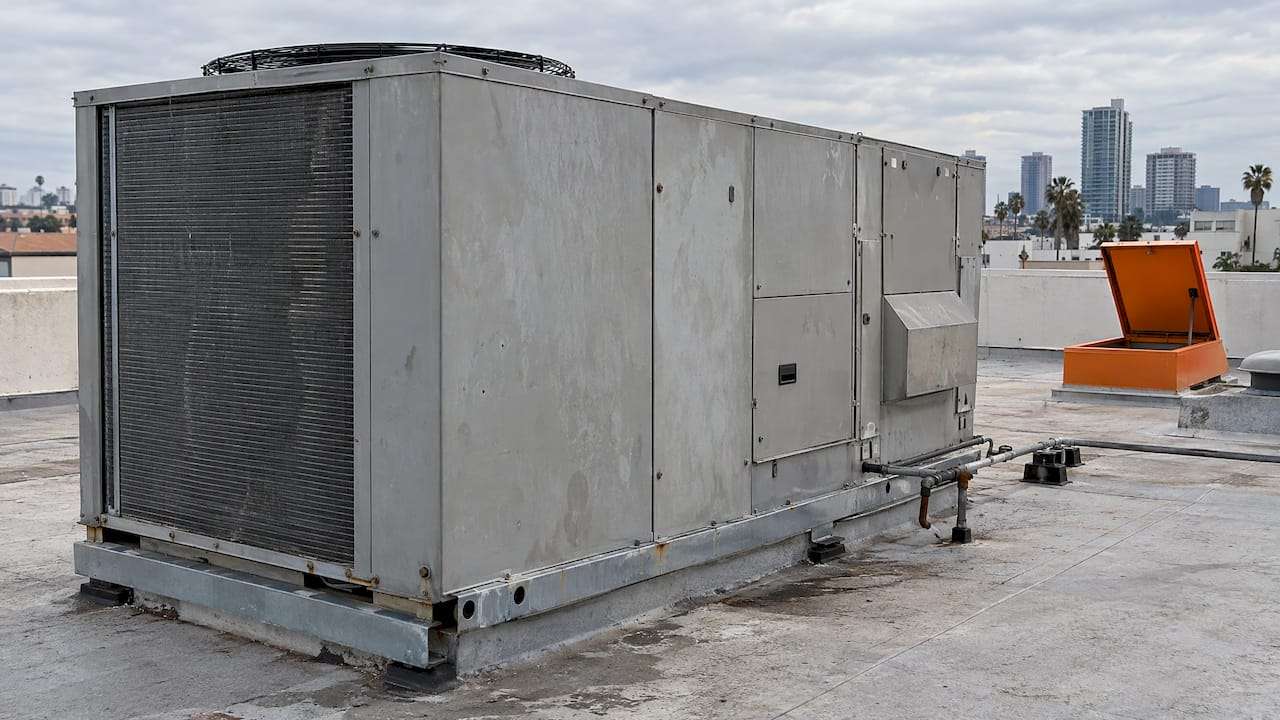
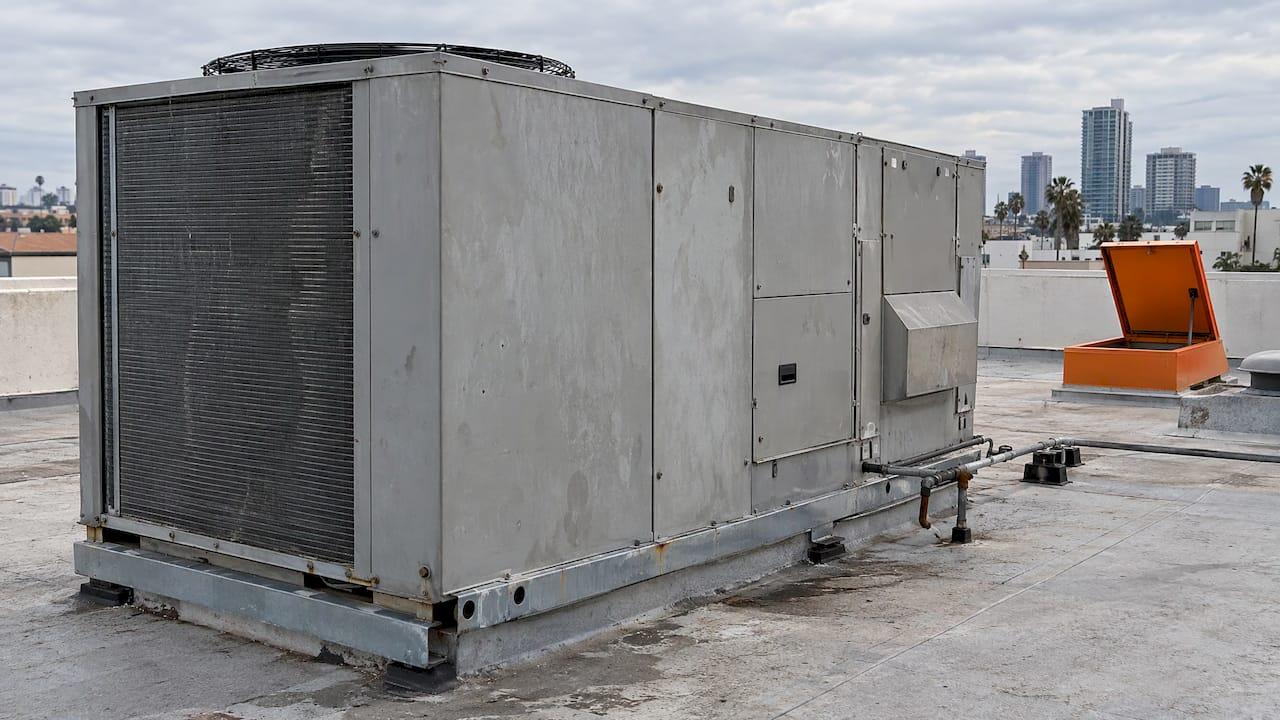
A package unit puts the compressor, condenser coil, evaporator coil, fans, controls, and often the gas heat section in one cabinet on the roof. It sits in sun, dust, and weather, and it is out of sight. Nobody hears a slowly failing condenser fan from the break room, and a clogged drain pan does not show until water stains a ceiling tile.
The national benchmark for this work is ANSI/ASHRAE/ACCA Standard 180-2018. It sets minimum inspection and maintenance requirements for commercial HVAC systems so that comfort, energy efficiency, and indoor air quality hold up over time, and it includes a dedicated table of tasks for rooftop units. The National Renewable Energy Laboratory’s Rooftop Unit Maintenance Guide, published in September 2025, adapts that standard into quarterly, semiannual, and annual task lists. The checklists below follow that structure.
The money argument is documented too. HPAC Engineering calculated in 2014 that twice-yearly preventive maintenance over an RTU’s first seven years would have cost $5,600, about $800 a year. Deferring it added $8,400 in energy cost over the same period. If the unit kept deteriorating, the added energy cost through 12 years reached $15,000, and the unit’s life was cut by three years. Those are 2014 dollars and a specific modeled case, so treat them as a pattern, not a quote for your building.

Safety first: lockout/tagout before any panel comes off
Every manufacturer manual starts the same way. Trane’s Precedent packaged rooftop manual (July 2026) warns that failing to disconnect power before servicing could result in death or serious injury. It calls for disconnecting all electric power, including remote disconnects, following lockout/tagout procedures so the unit cannot be re-energized, and confirming with a voltmeter that no power is present.
Carrier’s 48T service manual says the same: shut off the main power switch and tag the disconnect to avoid shock or injury from rotating parts. It adds that the compressor must not run unless its terminal cover is in place and secured, and that if a refrigerant leak is suspected, all pressure must be relieved before anyone touches anything inside the compressor terminal box.
Two more safety points for a roof:
- Chemical coil cleaners. Trane notes that cleaning agents can be acidic or highly alkaline and can burn severely on contact with skin or eyes. The manual calls for goggles or a face shield, chemical-resistant gloves, boots, and an apron or suit.
- Access. NREL recommends that roof access maintain the manufacturer’s recommended clearances and leave a clear path from the unit to the roof access, wide enough for a cart carrying air filters or a fan wheel. If your unit is hard to reach, it is also hard to maintain, and tasks get skipped.
Carrier’s manual states that only trained and qualified service personnel should install, repair, or service air-conditioning equipment, while untrained personnel can handle the basic functions of cleaning coils and replacing filters. For a facility team, that line is a useful boundary: building staff can handle filters, and everything involving refrigerant, gas, or live electrical work goes to a technician.
How often to service a rooftop package unit
There is no single number that fits every building, and the sources agree on that. The ranges below combine published guidance.
| Interval | What it covers | Source of the guidance |
|---|---|---|
| Monthly | Filter and condensate float checks in the cooling season, plus a visual look at coils, fans, and dampers | Trane manual |
| Quarterly | Air filters, coils, gas burners, P-trap and condensate drainage | NREL guide |
| Semiannual | Belts and controls | NREL guide |
| Annual | Compressors, economizers and dampers, ductwork, fans and bearings, refrigerant lines | NREL guide |
Trade press points the same way. ACHR News reports that quarterly and semiannual service are both common for light commercial package rooftop units, with monthly service reserved for critical applications, and that regular maintenance belongs at the start of the heating season and again at the start of the cooling season. A 2024 ACHR News article quotes a Daikin technical services director saying twice-a-year service may be even better, and that light commercial applications might need quarterly service depending on the environment.
NREL adds that the protocol should be tailored to location, unit size, and age, and that larger, newer units offer more long-term savings potential.
Pick the right months in Los Angeles
HPAC Engineering advises scheduling routine maintenance before cooling season begins and again at its end. Its reasoning is practical: top service personnel are busy with urgent repairs in mid-summer, and rooftop temperatures are far friendlier to quality work in the shoulder seasons. In LA, that points to a spring visit before the first heat wave and a fall visit after the worst of the heat. Units near the coast, near freeways, or under tree cover, where dust and debris load coils faster, may justify quarterly visits.
The RTU maintenance checklist
Use this as the base list. The tasks come from NREL’s guide, the Trane and Carrier manuals, and HPAC. A written copy of each visit, with readings, is part of the job.
Quarterly tasks
- Air filters. Inspect and replace as needed. Carrier says to clean or replace filters at the start of each heating and cooling season, or more often if operating conditions require.
- Coils. Inspect the condenser and evaporator coils for dirt, debris, and bent fins. Carrier’s manual has the condenser coil inspected monthly and cleaned annually.
- Condensate drainage. Check the drain pan, P-trap, and condensate piping for blockage, and confirm the condensate overflow switch float moves freely.
- Gas burners. On units with gas heat, inspect the burner section.
- General walk-around. Look for loose access panels, leaking piping connections, and anything unusual. Trane’s manual lists this as a standard check.
Semiannual tasks
- Belts. Inspect belt condition and tension on belt-driven blowers.
- Controls. Verify thermostat and control operation, including building automation settings where applicable.
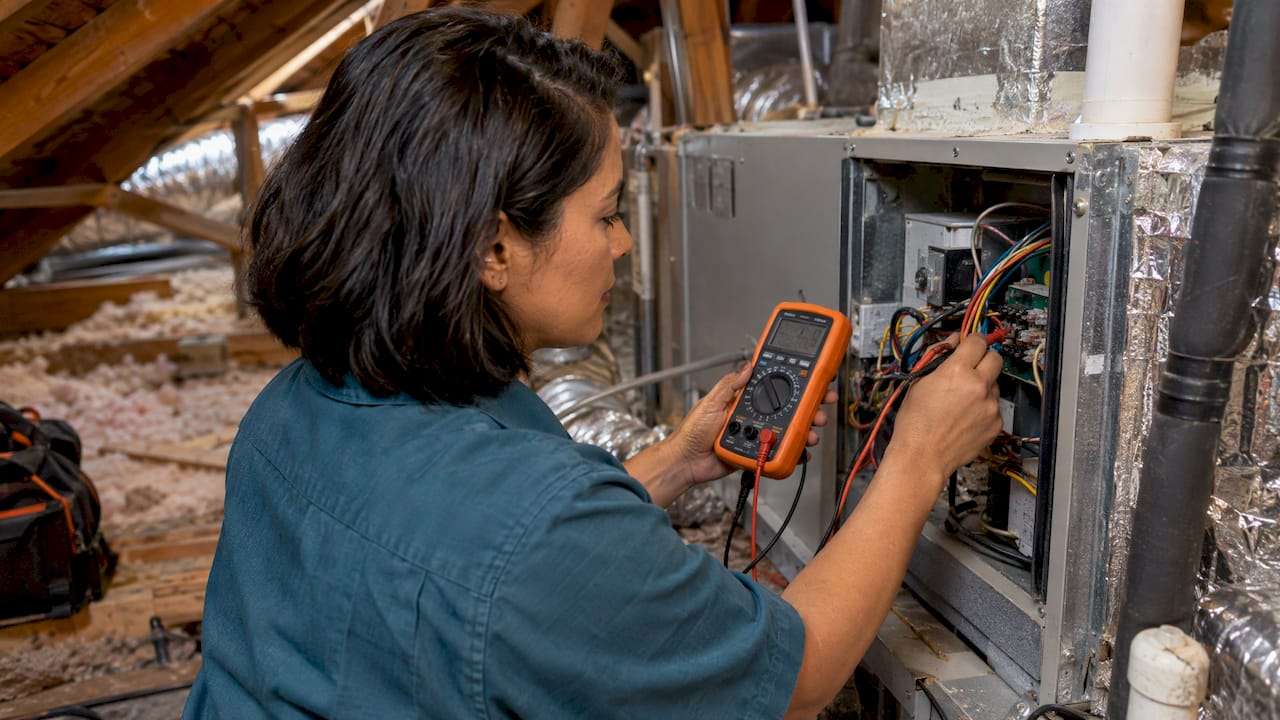
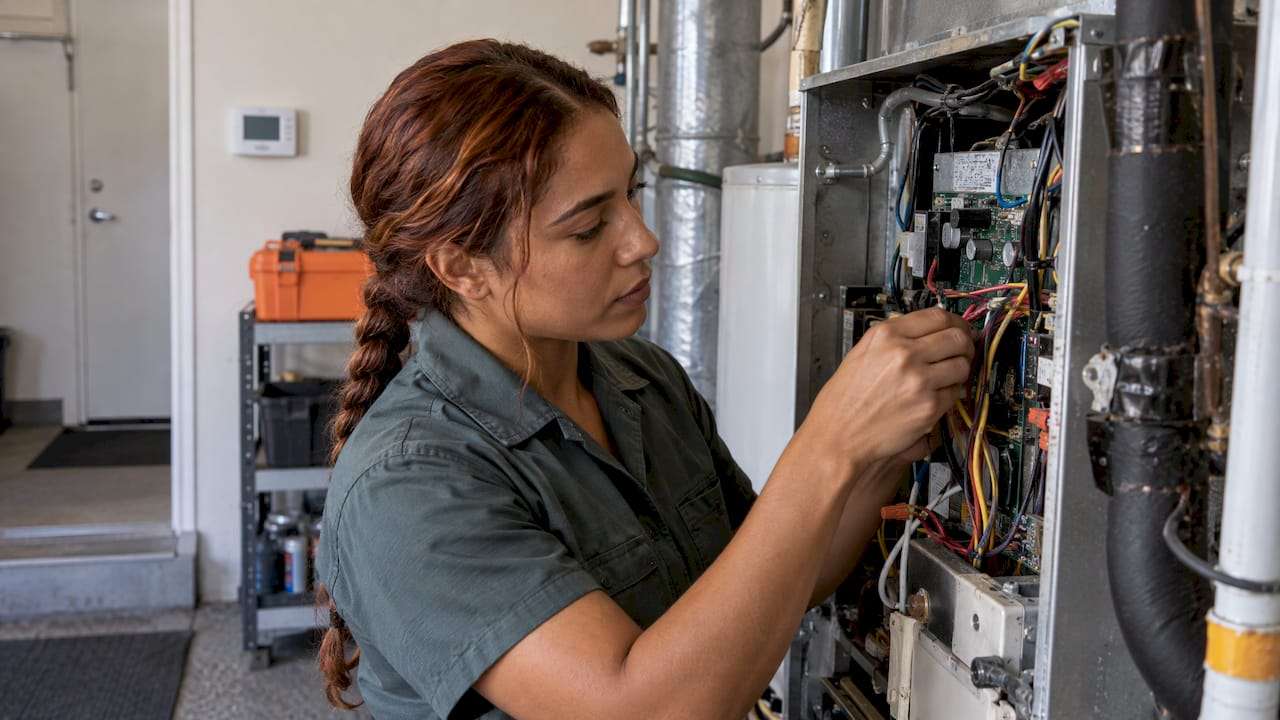
- Electrical connections. Verify that wire terminals are tight and inspect the main control panel and heat section control box for loose components or damaged wire insulation.
- Damper and economizer movement. Check damper hinges, pins, and linkages for free, full travel.
Annual tasks
- Compressors. Check amp draw against the nameplate and review operating pressures and temperatures.
- Economizers and dampers. Verify proper operation and blade sealing.
- Fans and bearings. Rotate condenser fans by hand to confirm free movement, check motor bearings for wear, and verify mounting hardware is tight.
- Refrigerant lines and charge. Inspect lines for leaks and verify charge.
- Ductwork. Inspect connections and condition.
- Cabinet and curb. Inspect the cabinet, gaskets, and the roof curb seal and weatherproofing around the unit.
- Heat pump units. Test defrost controls and the reversing valve.
Filters, coils, and drains: the heart of routine maintenance
Filters
Filters are the cheapest task and the one most often missed. A loaded filter starves the evaporator coil of air, drives up fan energy, and lets dirt reach coils that are far harder to clean. Replace on the schedule your operating conditions demand: monthly in dusty settings, at minimum at each season change. Use the filter rating the unit and your indoor air quality goals call for.
Condenser coil cleaning
HPAC ranks cleaning the condenser coil first among the most critical preventive tasks. The full ranked list is: clean the condenser coil, verify condenser fan operation, adjust refrigerant charge, verify economizer operation, check compressor discharge temperature, test compressor oil for acid, test high- and low-pressure cutout switches, adjust the thermostatic expansion valve, and check and adjust the blower belt.
A dirty coil raises head pressure and compressor load, so the unit works harder for less cooling. Trane specifies cleaning condenser coils at least once a year, or more often in a dirty environment. The cleaning method depends on the coil type:
- Microchannel coils: Trane’s manual says to use pressurized water or air only, with a non-pinpoint nozzle at no more than 600 psi, and no detergents.
- Traditional tube-and-fin coils: a soft brush and sprayer with a quality detergent can be used.
- Evaporator coil: power off, remove the access panel, slide the filters out, clean with a commercial coil cleaner, wash both sides, flush with clean water, flush the condensate pan, and reinstall everything. Carrier describes the same sequence.
Using the wrong method, such as a pinpoint nozzle or the wrong chemical on a microchannel coil, can damage a coil permanently. Our guide to cleaning outdoor condenser coils explains the basics of what dirt does to a coil, and a technician confirms the right method for your coil type, cleaner, and PPE before the work starts.
Condensate drains
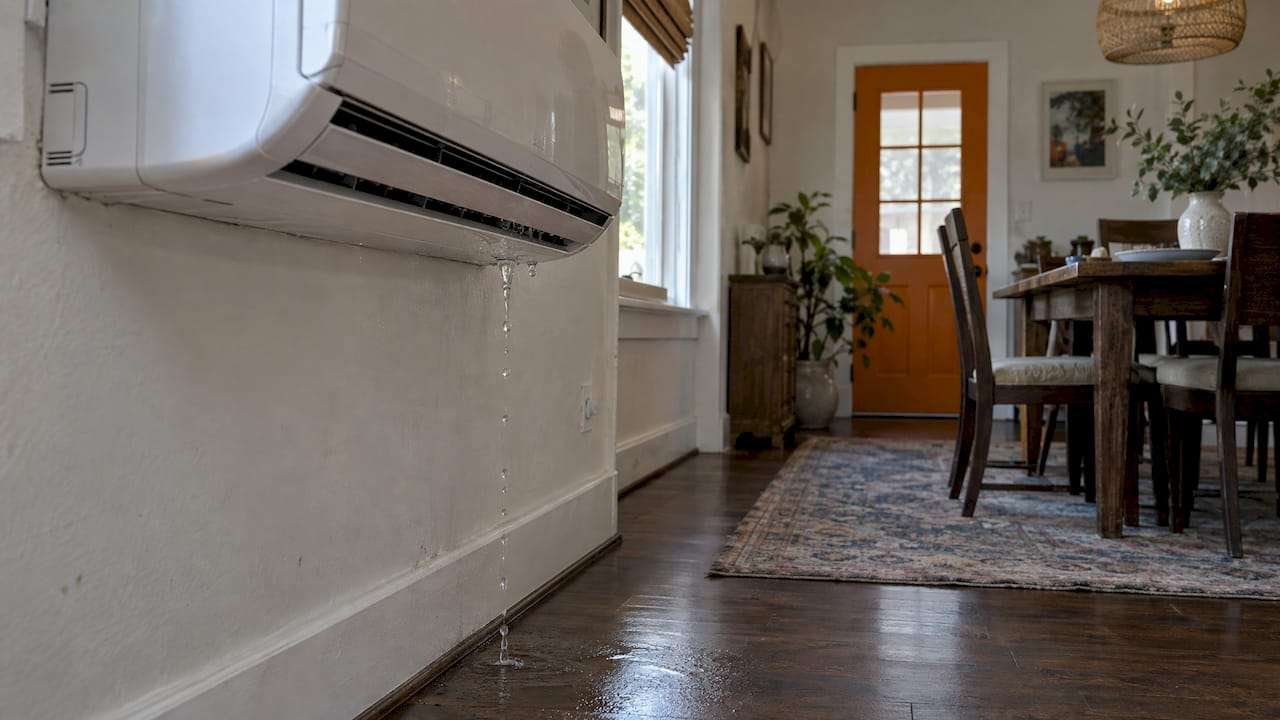
Carrier says to check and clean the condensate drain every year at the start of cooling season. Trane’s monthly cooling-season list adds the drain pans and condensate piping. A blocked drain overflows into the cabinet, can trip the overflow switch and shut the unit down, and, worse, can leak into the space below. If the pan has standing water or growth, flush it and check the trap.

Electrical and mechanical checks that prevent breakdowns
These checks catch the failures that cause most summer shutdowns:
- Terminal connections. Heat cycles loosen terminals. Tightening them is a routine task on both Trane’s and NREL’s lists.
- Compressor amp draw. Compare the reading to the nameplate. A rising draw over successive visits is an early warning.
- Infrared scan. Some commercial checklists add a thermal scan of electrical components during annual service to find hot connections before they fail.
- Condenser fans and motors. Spin them by hand with power locked out. Rough rotation or noise signals bearing wear. Our article on roof AC noise checks covers what different sounds mean and the safety points facilities teams should know.
- Superheat and subcooling. Recording suction and discharge pressures and superheat in a log, as Trane’s monthly list requires, lets a technician spot a refrigerant problem long before a compressor fails.
- Roof curb and cabinet. Worn seals let water in around the unit and into the building.
Gas heat, heat pump, and A2L differences
Not every RTU is the same. Maintenance changes with what is inside the cabinet.
Gas/electric units. Trane’s owner manual says heating system maintenance belongs at the start of each heating season and should be done by a qualified service technician. It lists inspecting control panel wiring, verifying ignition control and spark electrode operation, checking gas valve closure, checking burner manifold pressure, and visually inspecting flue passageways for deposits and corrosion. AAON’s RN Series manual likewise says a qualified service technician should inspect flue product areas and main burners once a year before heating season. Some maintenance checklists also add carbon monoxide testing on gas-fired units.
Heat pump RTUs. Add defrost cycle testing and reversing valve checks to the annual list. We specialize in heat pump and VRF systems, and the same discipline applies: pressures, temperatures, and controls are logged and compared from visit to visit.
Newer refrigerants. NREL notes that RTUs require specialized expertise, for example with emerging technologies that use mildly flammable A2L refrigerants, and that sensor verification is part of annual service on those units. If your next replacement unit uses an A2L refrigerant, make sure the technician servicing it has that training.
What building staff can do and what belongs to a technician
A sensible split works for most facilities:
| Task | Who |
|---|---|
| Replacing filters, keeping the roof around the unit clear, logging visible issues | Trained facility staff |
| Condenser and evaporator coil cleaning with chemicals | Qualified technician, with PPE and the right method for the coil type |
| Electrical testing, amp draw, terminal tightening | Qualified technician |
| Refrigerant pressures, charge, leak checks | Certified technician, since federal rules require certification to handle refrigerant |
| Gas heat section, burners, flue, CO testing | Qualified technician |
| Economizer and control calibration | Qualified technician |
The reason for the split is not only safety. A technician reading pressures and amp draws compares them against the unit’s earlier readings and nameplate data, and that trend is what makes preventive maintenance preventive. Our commercial HVAC maintenance checklist lays out the monthly to annual tasks across a whole building, and the VRF maintenance schedule does the same for VRF systems.
What RTU maintenance costs
Budget by the ton. HPAC’s 2014 guidance recommended allocating at least $50 to $75 per ton annually for RTU preventive maintenance, against energy savings it put at $50 to $100 per ton per year. Labor and parts costs have risen since 2014, so use those figures as a ratio, not a current price. A realistic plan gets quotes for your actual tonnage, unit age, and number of visits per year.
Our flat-rate approach keeps costs predictable: we do not charge surprise diagnostic fees, and repairs are quoted at a flat rate. A service call starts from $125, and our HVAC maintenance plan runs $180-250 per year. For rooftop equipment on commercial properties, we scope the visit to the unit, so call for details.
Repair or replace an aging RTU
A unit that has received consistent filter changes, coil cleaning, electrical checks, and drain maintenance can run well past the point where an unmaintained unit would fail. A maintenance log helps you decide when repair costs and energy penalties add up to a replacement. Our repair vs. replace decision guide walks through the factors. We give honest diagnostics and do not push replacement when a repair solves the problem. For an example of rooftop work in practice, see our rooftop package unit repair case study, and for high-rise buildings, our article on fixing high-rise rooftop units.
Get your rooftop units on a schedule
If your RTUs have no log, no schedule, or a summer full of callbacks, start with one inspection visit. We offer commercial HVAC and maintenance service across Greater Los Angeles, with same-day service and upfront flat-rate pricing on repairs. You can reach us at (323) 970-3113, or see all of our HVAC services.

Book the first visit before the cooling season starts. Technicians are more available, the roof is more comfortable to work on, and any repair surfaces before the first heat wave, not during it.
Our view on rooftop unit maintenance
Most of the rooftop failures we are called to are not mysterious. A dirty coil, a loose terminal, a plugged drain, or a belt nobody looked at in a year. None of that is hard to find when someone is looking on a schedule, and all of it is expensive to find in July.
We believe in honest diagnostics. If a unit needs a coil cleaning and a new contactor, that is what we say, with a flat-rate price before the work starts. If the unit has years left, we say that too. Nobody should be pressured into a replacement they do not need.
We work on commercial HVAC, heat pumps, mini splits, and VRF systems, and after more than twenty years in Los Angeles we know what the climate does to rooftop equipment. Keep a log, schedule the visits in the shoulder seasons, and call us when something changes.
Leo
FAQ
How often should a rooftop package unit be serviced?
At least twice a year: before cooling season and again before heating season. Published guidance from ACHR News says quarterly and semiannual service are both common for light commercial units. Dusty or high-use settings may need quarterly visits.
What is the most important RTU maintenance task?
Cleaning the condenser coil. HPAC Engineering ranks it first, followed by verifying condenser fan operation and adjusting refrigerant charge. Filters come close behind, since they protect both coils.
Can my facilities team do RTU maintenance?
Basic work such as cleaning coils and replacing filters can be handled by trained staff, according to Carrier’s service manual. Refrigerant, gas heat, and electrical work belong to qualified technicians. Always lock out and tag the power first.
What should I record at each visit?
Record ambient temperature, compressor suction and discharge pressures, superheat, and amp draw. Trane’s maintenance list calls for an operator’s log. Comparing readings over time shows a developing problem early.
Does a gas heat section need separate maintenance?
Yes. Trane’s owner manual calls for a qualified technician to service the heating system at the start of each heating season, including ignition, gas valve, burner pressure, and flue checks.
Sources
- Rooftop Unit (RTU) Maintenance Guide, NREL
- ANSI/ASHRAE/ACCA Standard 180-2018 preview
- Precedent Packaged Rooftop Units manual, Trane, July 2026
- Precedent owner manual, Trane, January 2017
- Carrier 48T installation, start-up and service instructions
- What Owners Need to Know About Rooftop-Unit Maintenance, HPAC Engineering
- Rooftop Maintenance Checked, ACHR News
- A Little TLC Can Extend the Life of Condensing Units, ACHR News
Recommended
Leo, Propietario y Técnico Principal en LC Heating & Air
Leo dirige LC Heating & Air como propietario-operador y tiene la licencia C-20 HVAC #1073586 de California. Sus guías se enfocan en diagnósticos prácticos, decisiones de reparación seguras y consejos claros para propietarios de Los Ángeles.