- TL;DR
- What a commercial maintenance checklist is for
- Monthly tasks
- Quarterly tasks
- Semi-annual tasks: before cooling and before heating
- Annual tasks
- Quick reference table
- Extra steps for VRF systems
- Commercial heat pumps: what changes
- Refrigerant leaks and the rules that apply
- How to set a schedule that fits your building
- What to put in a commercial maintenance plan
- Our perspective on commercial maintenance
- Work with us on your commercial systems
- Common mistakes to avoid
- FAQ
- Sources
- Recommended

A good commercial HVAC maintenance checklist sorts the work by frequency: filters and drains every month, coils and belts every quarter, controls, economizers and electrical twice a year, and a full inspection with performance testing once a year. Below is that checklist in a form you can hand to your facilities team or your contractor, plus the extra items that VRF systems and commercial heat pumps need and a way to set a schedule that fits your building.
We are LC Heating & Air, and we service commercial systems across Los Angeles, including VRF and heat pump equipment. This guide reflects how we think about preventive maintenance for the buildings we work in.
TL;DR
- Filters, condensate drains and visual checks are monthly jobs. Coils, belts, bearings and refrigerant pressures are quarterly or semi-annual. A full performance review belongs once a year.
- There is no single correct calendar. ASHRAE’s handbook says frequency depends partly on run time and how your facility operates, so a restaurant and a small office need different schedules.
- VRF systems and heat pumps need their own steps: micro-fin condenser cleaning, error code investigation and careful refrigerant work.
- Larger systems carry legal duties. Under EPA Section 608, comfort cooling appliances with 50 pounds or more of refrigerant have a 10% leak-rate trigger.
- Ask any contractor for a written, itemized scope. A plan is only as good as the checklist behind it.
What a commercial maintenance checklist is for
Preventive maintenance (PM) means doing small, scheduled jobs so you avoid large, unscheduled ones. In a commercial building the stakes go beyond comfort. A failed rooftop unit can close a dining room, spoil inventory, overheat a server closet or send tenants to your competitors.
A checklist turns “we keep an eye on it” into a record. It tells your technician what to touch, tells you what was done, and gives you a trail of readings you can compare over time. Rising amp draw on a compressor or a creeping pressure drop across a filter bank shows up in the log months before it shows up as a service call.
The most widely used reference is ANSI/ASHRAE/ACCA Standard 180, the standard practice for inspecting and maintaining commercial building HVAC systems. ASHRAE publishes a preventive-maintenance checklist built on Standard 180 with separate sheets for monthly, quarterly, semi-annual, annual and multi-year tasks. The schedule below follows the same logic in plain language.

Monthly tasks
Monthly work is mostly visual and quick. It is also where most owners fall behind, because nothing looks wrong yet.
- Check air filters. Look at the pressure drop across the filter bank if you have gauges, or inspect the media by eye. Replace dirty filters. Clogged filters raise fan energy, starve coils of airflow and let dust into the ductwork.
- Inspect drain pans and condensate lines. Clear any standing water and slime. ASHRAE’s checklist calls for monthly inspection of filters and condensate drains to prevent biological growth and humidity problems.
- Walk the equipment. Listen for new noises, look for oil stains at refrigerant fittings, check for water on floors or ceiling tiles below air handlers.
- Verify thermostat and control settings. Confirm schedules, setpoints and setbacks still match how the space is used. Tenants and staff change settings, and nobody tells maintenance.
- Review alarms and error codes. Log them, even if the unit seems fine. More on that in the VRF section.
- Boilers, during the heating season. The Department of Energy’s school facilities template lists monthly combustion efficiency testing by a qualified technician with flue gas analysis, with standard boilers typically running 70 to 85% efficiency and high-efficiency condensing units up to 95%. If you have a boiler, our boiler maintenance tips go deeper.
Quarterly tasks
Quarterly is where a technician starts opening panels.
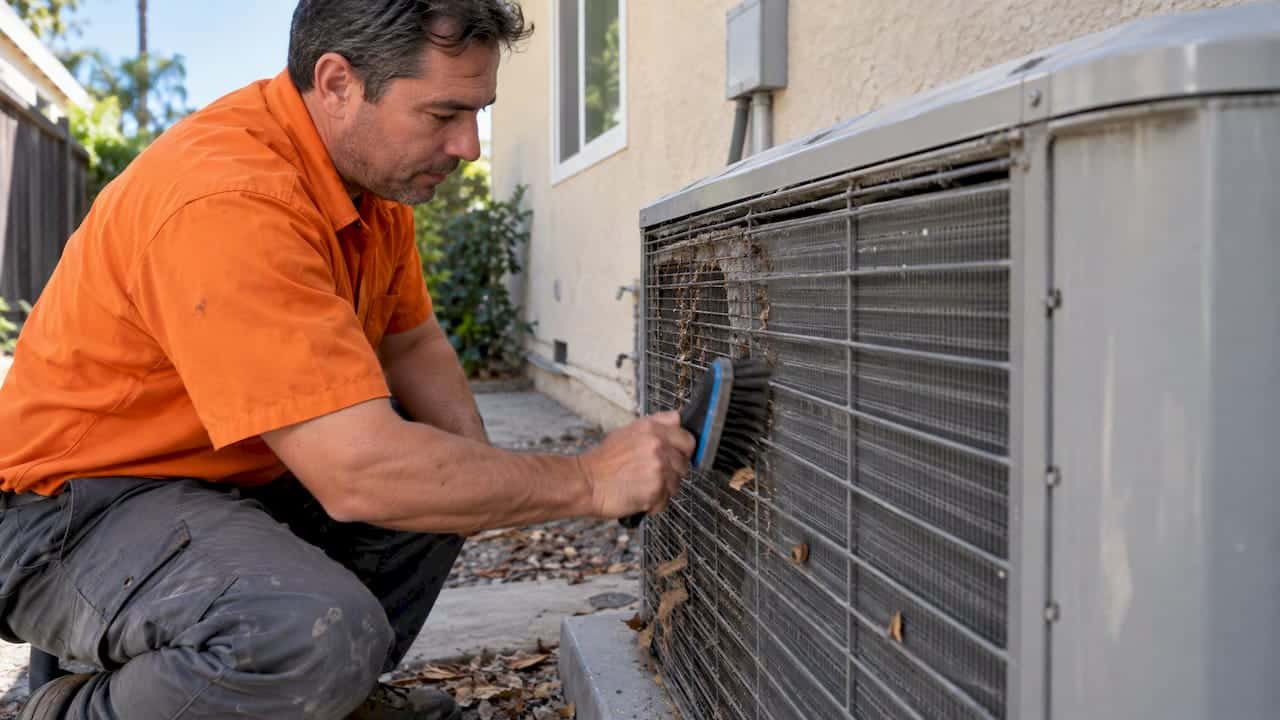
- Clean evaporator and condenser coils as needed. Dirty coils make the compressor work harder and cut capacity. In Los Angeles, rooftop condensers collect dust, leaves and grease from nearby kitchens faster than many owners expect.
- Inspect belts and pulleys. Look for cracking, glazing, wrong tension and misalignment. Replace worn belts before they snap.
- Lubricate motors and bearings that are not sealed. Check for heat and vibration.
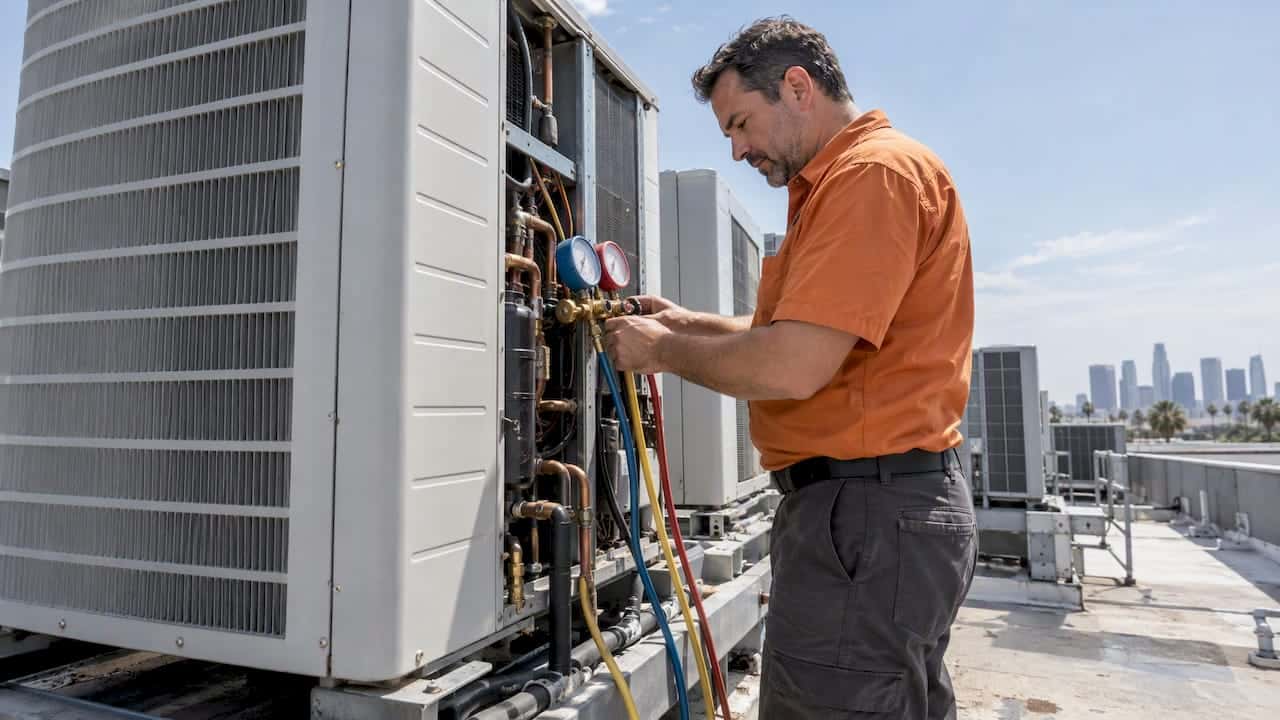
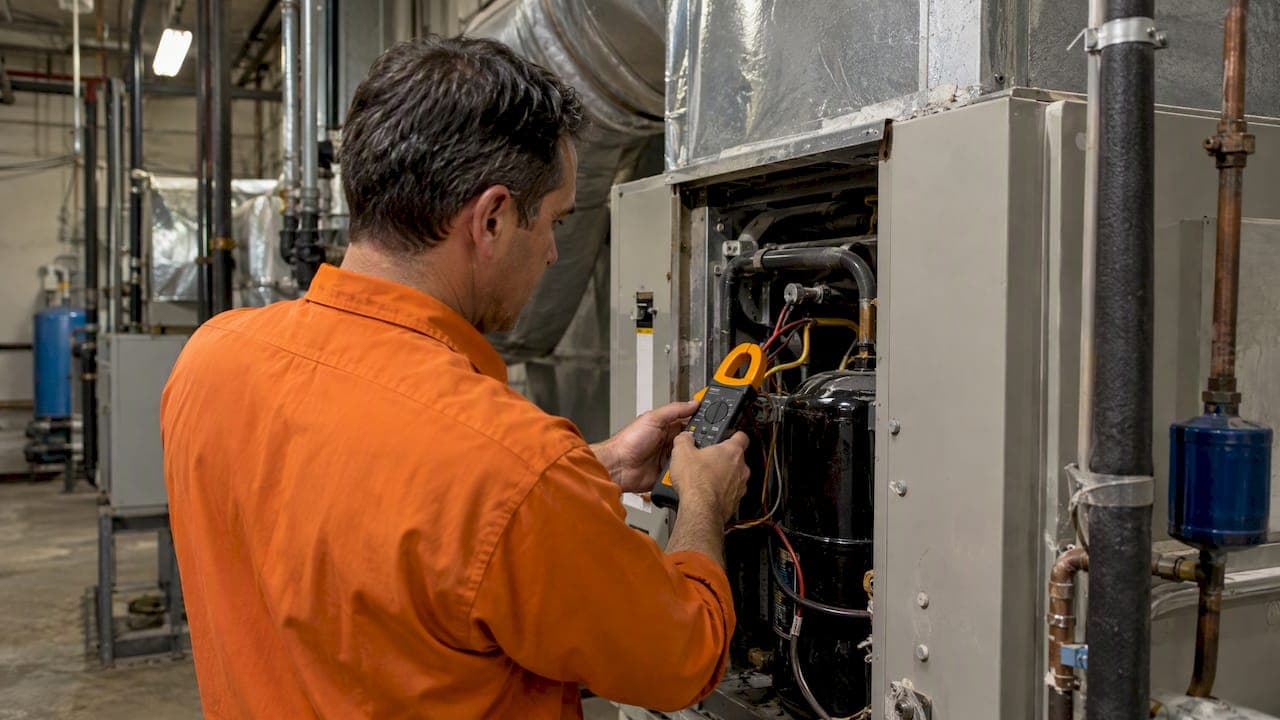
- Check refrigerant pressures and temperatures. Compare suction and discharge readings with the manufacturer’s range. Record superheat and subcooling.
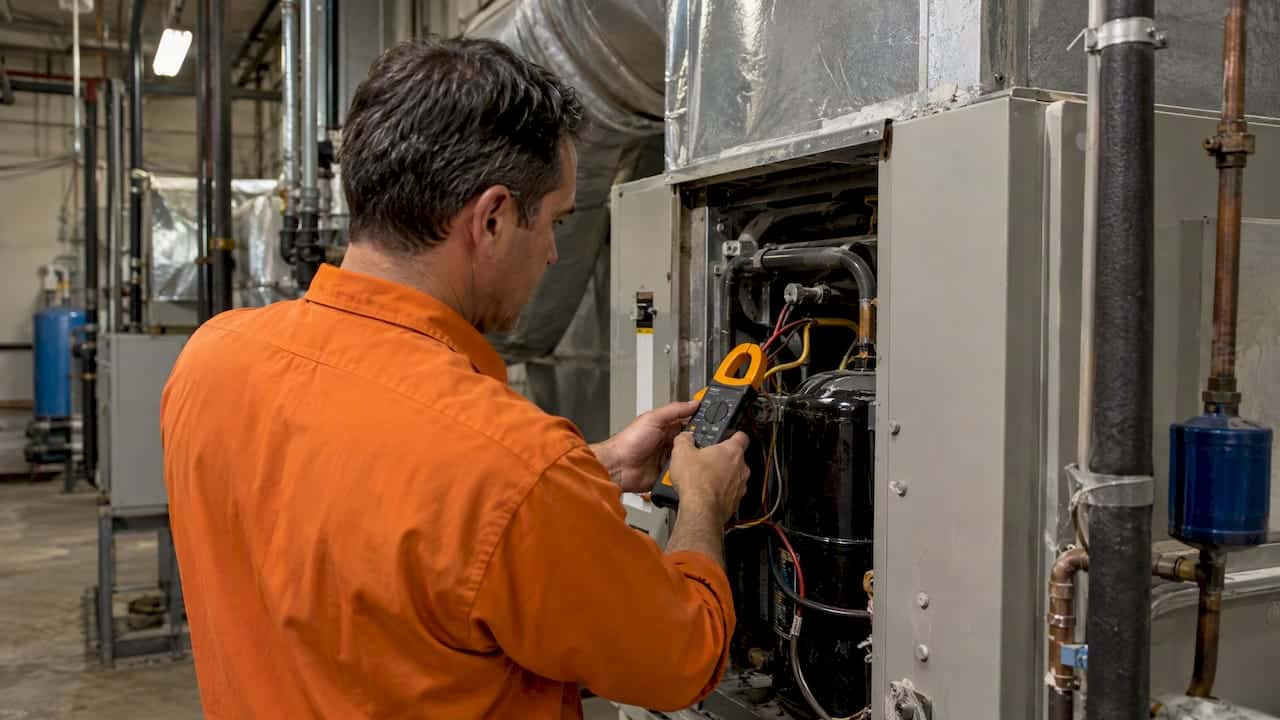
- Inspect electrical connections. Tighten loose lugs, look for discoloration, test contactors. ENERGY STAR’s maintenance checklist is not needed to know this one: loose connections cause heat, and heat causes failures.
- Test safety devices. Confirm high-pressure and low-pressure cutouts, float switches and limit controls trip as designed.
Semi-annual tasks: before cooling and before heating
Twice a year, ideally just before your heaviest cooling and heating seasons, add these:
- Test economizers. Check that dampers move freely, linkages are adjusted and outdoor air and mixed air sensors read correctly. ASHRAE’s checklist treats economizers as a biannual functional test. The Department of Energy notes that air-side economizers promise big free-cooling savings that are rarely realized because sensors and linkages are not maintained. A stuck damper can quietly add cost for years.
- Wash outdoor coils thoroughly. This is the full wash, not a quick rinse.
- Check heat exchangers and burners on gas heating equipment, including flue condition and venting.
- Inspect ductwork and insulation for leaks, disconnected joints and damaged wrap, especially in attics and plenums.
- Calibrate sensors and thermostats. Temperature, humidity and CO2 sensors drift.
- Verify control sequences. Confirm that startup, setback, lockout and shutdown behave as written.
Annual tasks
Once a year, step back and look at the whole system.
- Full performance check. Measure airflow, temperature split, amp draw and run time against baseline.
- Inspect the building envelope’s effect on HVAC. Added tenant walls, blocked returns and new equipment loads change what the system has to do.
- Check cooling efficiency over the longer term. The DOE template suggests checking cooling efficiency every three to five years, or after a system change.
- Review the maintenance log. Look for repeat faults, rising energy use and parts that keep failing.
- Update your equipment inventory. Model numbers, ages, refrigerant type and charge, warranty dates and replacement forecasts.
Quick reference table
| Frequency | Core tasks | Why it matters |
|---|---|---|
| Monthly | Filters, drain pans, visual walkthrough, alarm review | Protects airflow and prevents water and mold problems |
| Quarterly | Coils, belts, bearings, pressures, electrical, safeties | Catches wear before failure |
| Semi-annual | Economizers, full coil wash, burners, ducts, sensors | Prepares for peak seasons |
| Annual | Performance testing, log review, inventory, replacement planning | Sets baseline and budget |
Extra steps for VRF systems
Variable refrigerant flow (VRF) systems pack a lot of capacity into a few outdoor units and a web of refrigerant piping. They are efficient and flexible, but they are not forgiving of neglect. If you want background, see our guides on how VRF systems work and where they fit and why they can be a game-changer for efficiency.
Three maintenance points deserve a place on your checklist.
Clean micro-fin condensers at least twice a year
Many VRF outdoor units use micro-fin coils. According to ASHRAE’s journal podcast, these trap debris faster than traditional fin-tube coils and should be hosed down at least twice a year to prevent airflow obstruction that can lead to compressor failure. Coil cleaning should use the right method for the coil so fins are not bent.

Investigate error codes, do not silence them
The same ASHRAE discussion describes owners silencing alarms instead of finding the cause. VRF systems can over-speed the remaining compressors to compensate for one that has failed, so a building can feel fine while the system heads toward a bigger breakdown. Our rule for clients: every code gets logged, and repeat codes get a technician visit.
Treat refrigerant work as engineering, not topping off
The same source notes that field changes to the original design piping layout mean the manufacturer’s software needs to be rerun to calculate the correct charge. Skipping that step, even after a small adjustment, often leads to overcharging, which it names as a leading cause of premature compressor failure in heat pump systems. ASHRAE’s experts also point to poor installation practices, such as not purging lines with nitrogen during brazing, and a lack of consistent professional maintenance as the main causes of ongoing VRF problems.
Practical VRF additions to the checklist:
- Download and review the system’s fault history at each visit.
- Check each indoor unit’s filter, drain and condensate pump.
- Inspect refrigerant branch boxes and piping insulation.
- Confirm communication wiring and controller connections.
- Record compressor operating data and compare against the previous visit.
Commercial heat pumps: what changes
Heat pumps run year-round, cooling in summer and heating in winter, so they log far more hours than an AC-only unit. That is why run time matters more than the calendar. Add these to your checklist:
- Reversing valve operation. Confirm the unit switches modes cleanly and does not leak across the valve.
- Defrost controls where they apply, including sensors and defrost termination.
- Both coils, both seasons. The indoor and outdoor coils trade roles, so both need to be clean.
- Charge verification. Check against manufacturer data in both heating and cooling modes. Overcharging and undercharging both shorten compressor life.
- Supplemental heat. Test electric strip heat or backup stages so they work when called.
If your heat pump is acting up, our heat pump repair and service page explains what we handle, and our Los Angeles heat pump services page covers the commercial and residential side.
Refrigerant leaks and the rules that apply
If any of your equipment holds a large refrigerant charge, leak checks are more than good practice. The EPA’s Section 608 leak repair rules apply to appliances with a full charge of 50 pounds or more. According to the EPA’s leak repair requirements, owners must take corrective action when the leak rate exceeds the trigger rate, which is 10% for comfort cooling and 20% for commercial refrigeration, measured over a 12-month period.
What this means for your checklist:
- Know the refrigerant type and full charge of every system.
- Keep service records that show every refrigerant addition.
- Look for oil residue at joints and fittings, a common sign of a slow leak.
- Ask your contractor whether your equipment falls under federal rules, and whether California requirements also apply to your facility. State rules can be stricter than federal ones, so check them with a licensed contractor or the California Air Resources Board.
Do not top off a system repeatedly without finding the leak. It costs more each time and can put you out of compliance.
How to set a schedule that fits your building
Checklists tell you what to do. A schedule tells you when. Because maintenance frequency depends partly on run time and operating profile, use these questions to adjust the baseline:
- How many hours a day does the equipment run? A 24/7 server room or hospital suite needs tighter intervals than a 9-to-5 office.
- What is in the air around the building? Restaurants, salons, dry cleaners and sites near construction or busy roads clog filters and coils faster.
- How old is the equipment? Older units need more frequent inspection of belts, bearings and electrical parts.
- What does downtime cost? If a failure shuts down revenue or damages inventory, buy more inspection.
- Is the equipment under warranty? Many manufacturers require documented maintenance. Check your terms.
A typical small commercial building might use monthly filter checks done by staff, quarterly technician visits and a thorough semi-annual service before summer and winter. Heavier-use sites move to monthly technician visits. Your contractor should explain why they recommend a given frequency.
What to put in a commercial maintenance plan
A plan should be a written scope, not a promise. Before you sign, ask for:
- An itemized checklist for each piece of equipment, by visit type.
- A list of what is included and what is billed separately, such as filters, belts and refrigerant.
- Written service reports after each visit with readings, not just “checked OK”.
- Response terms for breakdowns.
- A clear way to flag problems and get a flat, upfront price for repairs.
The Air Conditioning Contractors of America (ACCA) has a checklist for evaluating contractors that helps building owners confirm they are getting proper maintenance. Use it, whoever you hire.
Our perspective on commercial maintenance
We built LC Heating & Air around a few simple beliefs. Diagnostics should be honest, pricing should be upfront, and nobody should be pressured to replace a system that can be repaired. Those beliefs matter even more in commercial work, where a recommendation can mean a five-figure decision.
Here is what we see most often. The system that fails in July usually showed signs in spring: a dirty coil, a code nobody investigated, a drain that was slowly backing up. Owners do not skip maintenance because they do not care. They skip it because nothing looks broken. A checklist with dates and names against each task fixes that.
Heat pumps, mini splits and VRF are where we spend much of our time, and our team has more than twenty years of local experience in Los Angeles. We have worked on everything from historic buildings to modern multi-zone systems. The lesson is the same everywhere: the best-run systems are the ones where someone reads the log. We would rather help you catch a failing capacitor in a quarterly visit than meet you for an emergency call on the hottest day of the year.
— Leo
Work with us on your commercial systems
If you manage a commercial property in Los Angeles, our commercial maintenance page explains how we approach scheduled service, and our preventive maintenance page covers the checklist-driven visits described above. Our seasonal tune-ups are a good starting point before summer or winter. Our service call starts from $125, and we use flat-rate pricing for repairs so you know the cost before work begins. To book a visit or ask about a plan for your building, visit our services page or call (323) 970-3113.
Common mistakes to avoid
- Treating filters as the whole job. Filters matter, but they are one line on a long list.
- Letting staff reset faults without logging them. You lose the pattern that tells you what is wrong.
- Buying the cheapest plan. A low price often means a thin scope. Compare the checklists, not just the totals.
- Ignoring controls. Schedules that no longer match occupancy waste energy and wear equipment.
- Skipping documentation. Without records, you cannot prove maintenance for a warranty claim or a regulator.
- Waiting for a failure to plan replacement. Annual inventory reviews let you budget instead of scramble.
FAQ
What is commercial HVAC maintenance?
It is the scheduled inspection, cleaning, adjustment and testing of a building’s heating, cooling and ventilation equipment. The goal is to prevent breakdowns, keep efficiency up and extend equipment life. It typically covers filters, coils, drains, belts, motors, refrigerant circuits, electrical components and controls.
How often should commercial HVAC be serviced?
Most systems need basic checks monthly, technician service quarterly or semi-annually and a full review annually. The right interval depends on run time, the building’s use and the equipment type, as ASHRAE’s handbook explains. A contractor should justify any schedule they propose.
Do VRF systems need different maintenance than standard rooftop units?
Yes. VRF systems need regular condenser coil cleaning, error code review and careful refrigerant handling, since charge depends on the exact piping layout. They also have many indoor units, each with its own filter and drain. See our VRF overview for more.
What should a commercial maintenance plan include?
A good plan lists the tasks for each visit, the frequency, what parts and refrigerant are covered, response times and the reports you receive. Ask for it in writing. If the scope is vague, the value will be too.
Sources
- EPA: Stationary Refrigeration Leak Repair Requirements
- ASHRAE: IAQ Preventive Maintenance Checklist (Standard 180)
- ASHRAE Journal Podcast Episode 29
- ASHRAE Handbook, Chapter 39: Operation and Maintenance Management
- U.S. Department of Energy: Equipment Operations and Maintenance Summaries
- U.S. Department of Energy: Action Plan Template, HVAC
- Better Buildings: Standard Practice for Inspection and Maintenance of Commercial Building HVAC Systems
- ENERGY STAR: Maintenance Checklist
Recommended
Leo, Owner & Lead Technician at LC Heating & Air
Leo leads LC Heating & Air as an owner-operator and holds California CSLB C-20 HVAC license #1073586. His guides focus on practical diagnostics, safe repair decisions, and clear advice for Los Angeles homeowners.