- 1. Common causes of rooftop packaged-unit noise
- 2. How serious is the noise? Health, OSHA thresholds, and red flags
- 3. Quick, safe checks staff or homeowners can run now
- 4. What a professional diagnostic looks like
- 5. Engineering fixes that actually reduce rooftop noise
- 6. Preventive maintenance and O&M practices to stop noise from returning
- 7. LC Heating & Air Conditioning’s field perspective
- 8. How LC Heating & Air Conditioning can help
- Sources
- FAQ
- Recommended

A rooftop packaged AC unit that hums, rattles, or bangs almost always points to a mechanical issue, a loose mount, or duct-transmitted rumble. Run the simple safe checks below to narrow it down, and call a licensed HVAC technician right away if you hear metal-on-metal grinding, feel strong vibration through the roof deck, or notice loose panels or oil residue near the unit.
TL;DR:
- Fan and motor issues, such as imbalance or worn bearings, are the most common causes of rooftop unit noise, often producing thumping or squealing sounds.
- Structural problems like loose panels or missing bolts can create rattling or buzzing that may persist even at increased distances from the unit.
- Red flags include grinding, metal contact, overheating, or sudden loud noises, which require immediate shutdown and professional inspection.
- Routine maintenance, including lubrication, belt checks, and inspecting vibration isolators, can prevent most noise complaints and extend equipment life.
- A thorough professional diagnosis involves verifying fan operation, inspecting mechanical parts, and reviewing control systems to identify and prioritize effective fixes.
1. Common causes of rooftop packaged-unit noise
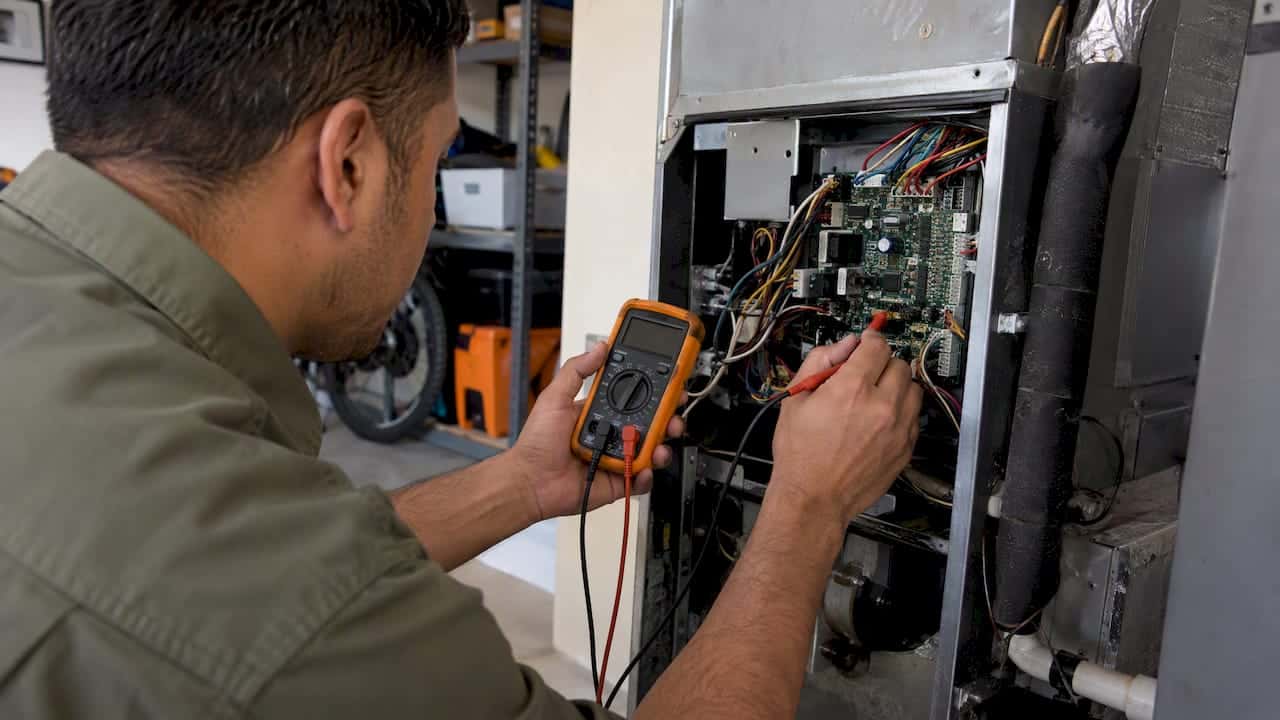
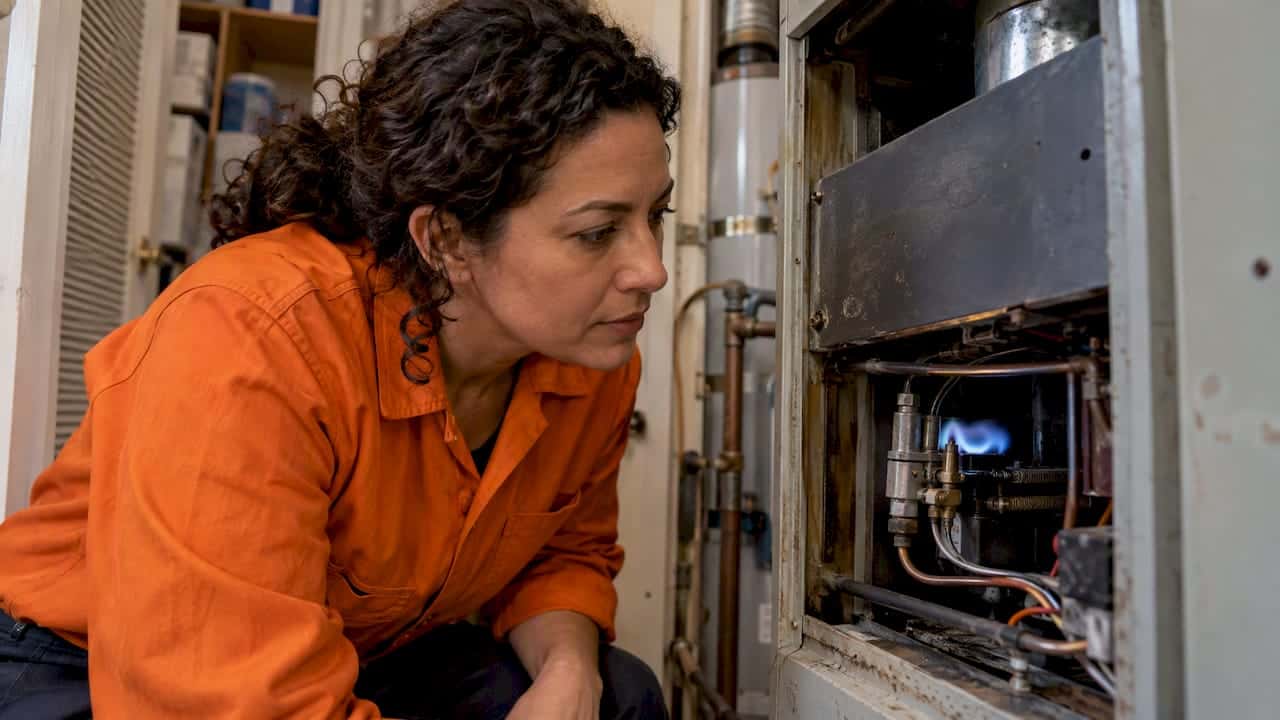
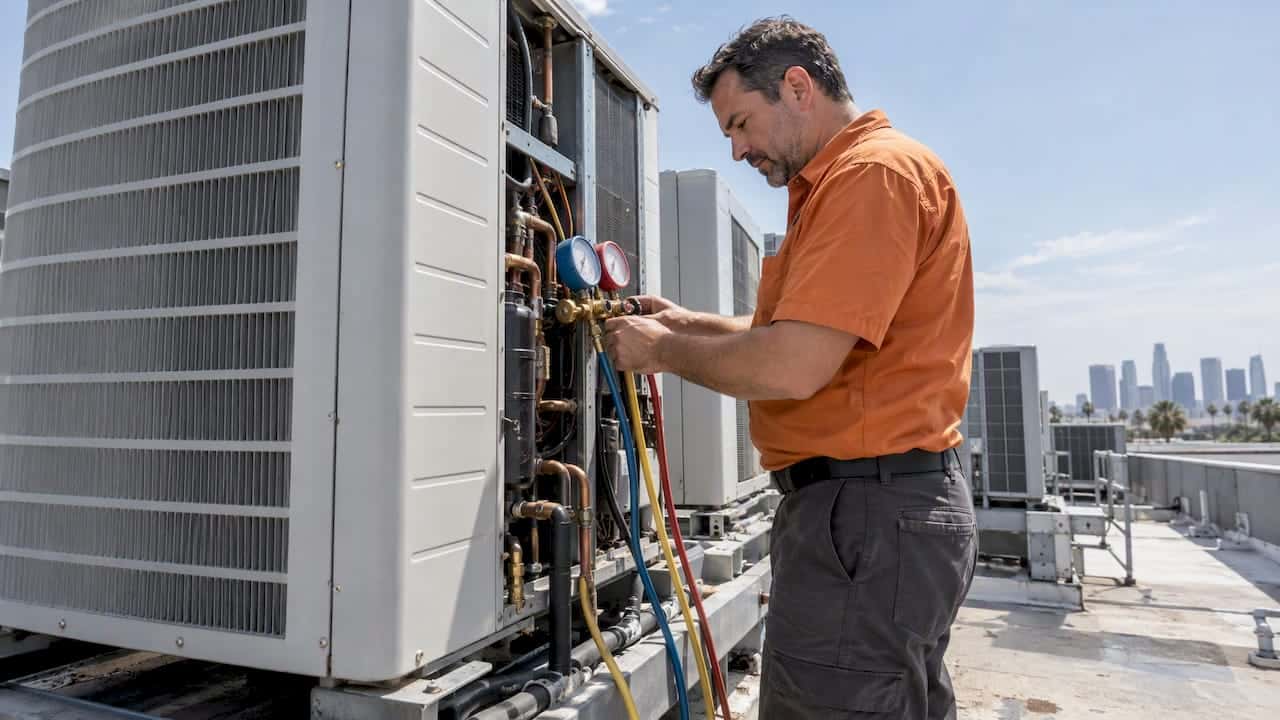
Rooftop units are exposed to weather, vibration, and years of thermal cycling, so it helps to know which parts tend to fail first. Fan and impeller problems are among the most frequent culprits: a bent blade, worn bearing, or accumulated debris throws the fan off balance and produces a rhythmic thumping or whine. Motor bearings that are drying out or wearing down often create a high-pitched squeal that gets worse under load, while a loose or glazed belt adds a slapping or squealing sound as it slips on the pulley. Compressors have their own noise signature: a healthy one runs with a steady hum, while a failing one can click, knock, or rattle internally, especially at startup.
Structural causes are just as common. Missing shipping bolts, loose access panels, or worn vibration isolators let the whole cabinet buzz against the roof curb. According to OSHA’s noise guidance, many reported rooftop noise complaints trace back to commissioning or maintenance oversights rather than component failure.
- Fan or motor issues: imbalance, worn bearings, or debris cause thumping, squealing, or whining.
- Loose hardware: unremoved shipping bolts, loose panels, or worn isolators create rattling or buzzing.
- Duct-transmitted noise: rectangular ductwork and sharp elbows carry low-frequency rumble into occupied rooms below.
For a closer look at what specific sounds usually mean, see what every AC sound means.
2. How serious is the noise? Health, OSHA thresholds, and red flags
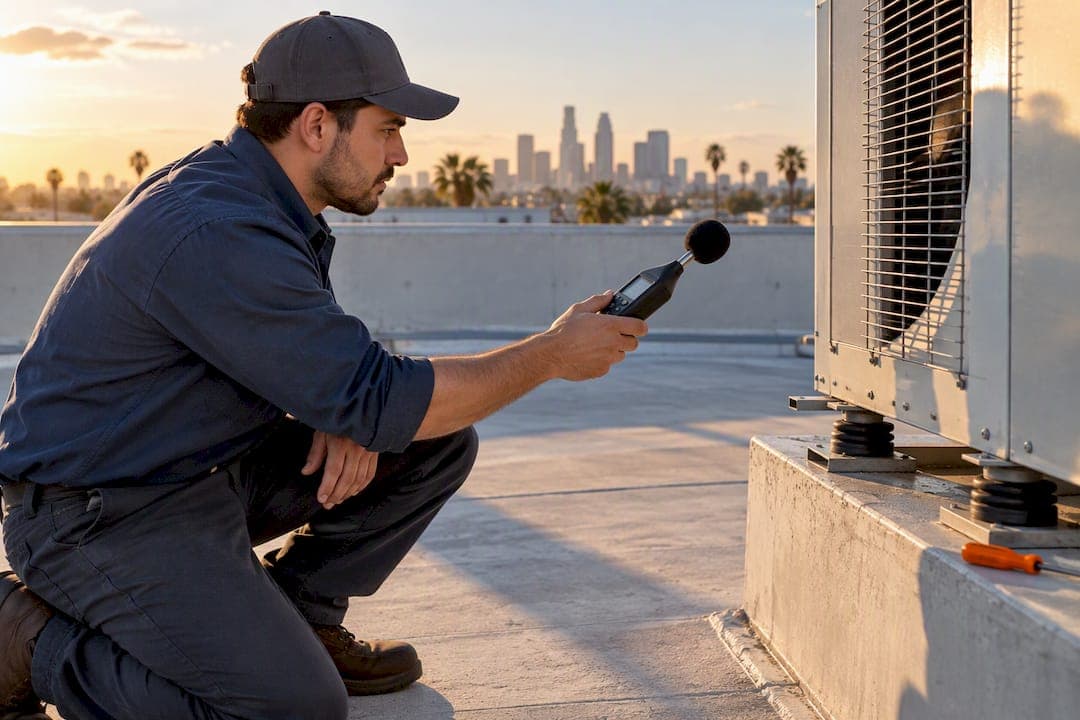
Not every noisy rooftop unit is an emergency, but some sounds warrant quicker action than others. Noise is measured in decibels using A-weighting (dBA), which reflects how the human ear perceives loudness. OSHA sets an action level of 85 dBA as an 8-hour time-weighted average, the point at which employers are expected to start a hearing conservation program for workers regularly exposed near that source.
Grinding, metal-on-metal contact, or visible overheating (discoloration, melted insulation, a burning smell) are red flags that call for an immediate shutdown and a professional inspection, not a wait-and-see approach. Sudden, sharp impulse noises, like a bang at startup, deserve the same urgency, since they often signal a failing component rather than routine wear.
If building staff or tenants spend extended time near rooftop equipment, it is worth having a technician confirm sound levels during a service visit rather than guessing from memory.
3. Quick, safe checks staff or homeowners can run now
Before calling anyone, there is useful information you can gather safely from the ground or through a closed access door, without going near moving parts or the roof edge.
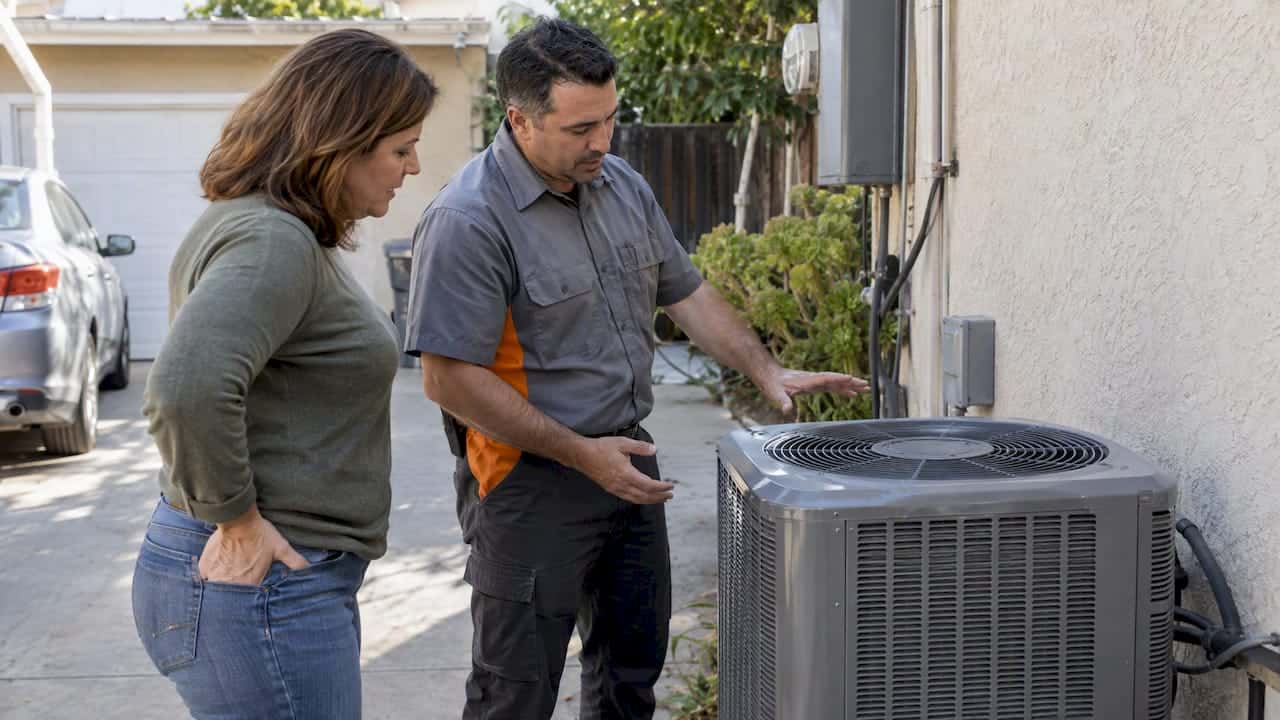
- Stand at a few different distances from the unit and listen: airborne noise fades quickly with distance, while a sound that stays just as loud farther away often points to structureborne vibration traveling through the building. Doubling your distance from most noise sources cuts the level by roughly 6 dBA, so a sound that barely changes is worth flagging.
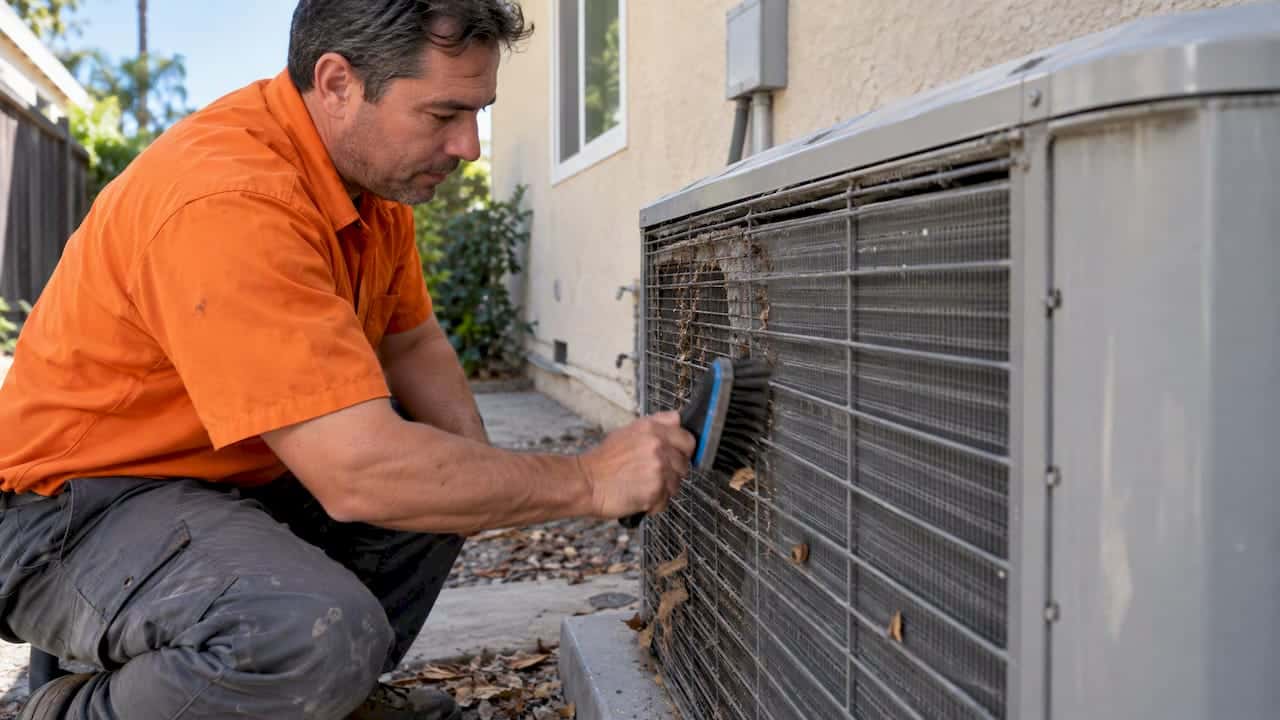
- Look for loose or vibrating panels, visible debris around the fan housing, a belt that looks glazed or frayed, and any oil residue near the compressor or refrigerant lines.
- Check whether the isolator pads or springs under the unit still look intact and are not compressed flat or cracked.
- If the noise is tolerable but disruptive, close windows near the unit, temporarily relocate occupants from the room below, and consider scheduling the unit’s noisier cycles for off-hours until service can be arranged.
Never climb onto a roof without proper fall protection, and never open an electrical panel or access door on a running unit. Those checks are for a licensed technician with the right training and equipment.
Pro Tip: Record a short video of the unit running so a technician can hear the sound pattern before the visit, it often speeds up diagnosis.
More troubleshooting steps, including how to tell duct noise from equipment noise, are covered in same-day AC noise troubleshooting.
4. What a professional diagnostic looks like
A thorough rooftop inspection follows a fairly predictable sequence, and knowing it helps you judge whether a technician did a complete job rather than a quick guess.
- Startup and commissioning checks: confirm shipping bolts and brackets were removed, verify fan rotation direction, and check refrigerant pressures against the unit’s specifications.
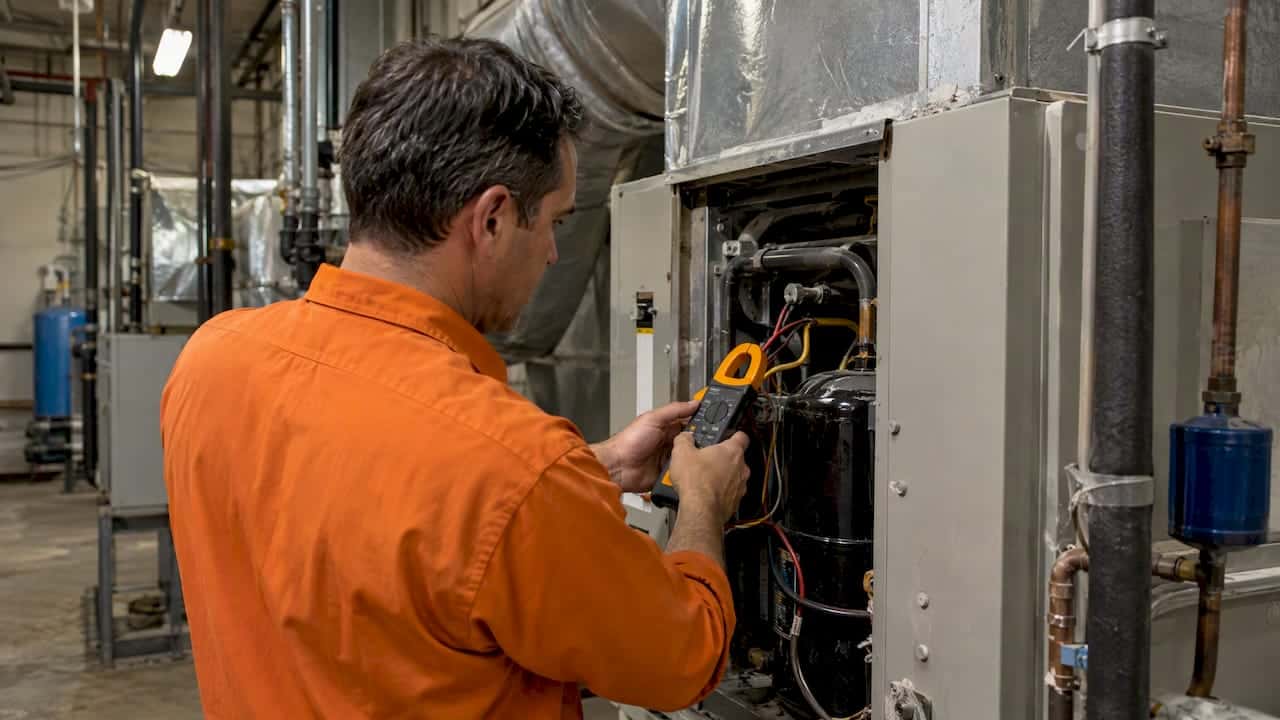
- Mechanical checks: inspect bearings, fan balance, belt tension, vibration isolators, and the condition of the roof curb and its attachment points.
- Controls checks: review the building’s DDC or energy management system for fault codes, confirm sensor accuracy, and run the unit through a service test mode.
- Ductwork and structure checks: look for duct breakout noise, evaluate whether an acoustic plenum would help, and confirm roof or ceiling penetrations are properly sealed.
According to the CBEA/DOE rooftop unit specification, a proper startup checklist including shipping-bolt removal and fan rotation verification catches a large share of early noise complaints before they become bigger repairs.
A good diagnostic ends with a written report: measured readings, the suspected cause, and a prioritized list of costed fixes, not just a verbal “it sounds fine now.” For units on high-rise or multi-story roofs, the process is covered in more detail in fixing rooftop units on high-rise buildings.
5. Engineering fixes that actually reduce rooftop noise
Once the cause is confirmed, the fix generally falls into one of three categories: source, path, or receiver.
Source-level fixes address the noise where it starts, replacing a worn motor or bearing, rebalancing a fan, or in some cases choosing quieter replacement equipment at the next purchase cycle, a principle OSHA’s exposure control guidance and the BuyQuiet initiative both support: buying quieter equipment upfront is often cheaper than retrofitting later.
Path-level fixes interrupt how vibration and sound travel. According to ASHRAE’s rooftop noise and vibration guidance, this includes properly sized vibration isolators, curb isolation, structural stiffening where the roof deck is lightweight, and duct reconfiguration such as round or dual-wall ducts with radiused elbows in place of sharp rectangular turns. Low-frequency duct rumble under 250 Hz is notably hard to treat and often responds best to an acoustic plenum chamber or a change in duct geometry rather than added insulation.
Receiver-level fixes work on the occupied side: sealing roof and ceiling penetrations, adding mass or lagging to a ceiling below the unit, or building a local enclosure. These help when relocating the equipment is not practical.
Each approach carries a different cost and downtime tradeoff. Component repairs are usually fastest and cheapest; isolation and duct work take longer but solve chronic problems; and when a unit is old enough that repeated repairs are stacking up, replacing it, often with a modern heat pump system, tends to be the more durable long-term fix.

6. Preventive maintenance and O&M practices to stop noise from returning
Most rooftop noise complaints are preventable with routine care. A solid maintenance plan includes:
- Lubricating bearings and motors on a set schedule, not just when something squeaks.
- Cleaning coils and replacing filters to keep airflow and fan load within design range.
- Checking belt tension and alignment, and replacing belts before they glaze or fray.
- Inspecting and replacing worn vibration isolators before they compress flat.
The ANSI/ASHRAE/ACCA Standard 180 sets minimum inspection and maintenance requirements for commercial HVAC equipment, and following it alongside DOE’s preventive maintenance guidance can save an estimated 5 to 20 percent on energy bills while extending equipment life. For ductwork specifically, five quick checks for ductwork banging covers common recurring issues.
7. LC Heating & Air Conditioning’s field perspective
After more than twenty years serving Los Angeles homes and buildings, our experience with rooftop units, heat pumps, mini splits, and commercial VRF systems has shown that most noise complaints trace back to a handful of preventable issues. We built our approach around honest diagnostics and flat-rate pricing because homeowners deserve to know what a repair costs before we start, not after.
— Leo
8. How LC Heating & Air Conditioning can help
If your rooftop unit is grinding, rattling, or humming louder than it used to, a flat-rate diagnostic visit gets you a straight answer instead of a guessing game.

We handle everything from a same-day diagnostic service call to vibration isolation retrofits, belt and bearing repairs, and full heat pump replacement when a unit has reached the end of its useful life. Our maintenance plans are built around the same preventive practices covered above, catching loose isolators and worn belts before they turn into a 2 AM call.
| Need | What we offer | Starting point |
|---|---|---|
| Diagnosing a noisy rooftop unit | Flat-rate diagnostic service call | from $125 |
| Ongoing prevention | HVAC maintenance plan | $180 to $250 per year |
| Replacing an aging unit | Heat pump installation | $5,500 to $12,000 |
Book a diagnostic visit through Lahvaclc or set up ongoing coverage with the maintenance plan.
Sources
- Occupational noise | OSHA
- CHAPTER 49. Noise and vibration control — ASHRAE Handbook (Rooftop-Mounted Air Handlers)
- Preventative maintenance for commercial HVAC equipment (Better Buildings Solution Center / DOE)
- High Performance Rooftop Unit Full Specification (CBEA/DOE)
FAQ
Why does my rooftop AC unit suddenly sound louder than before?
A sudden increase in noise usually means a mechanical part has started failing, such as a worn bearing, a slipping belt, or a fan going out of balance. It can also mean an isolator has compressed or a panel has loosened, both of which are quick fixes for a technician during a service visit.
Is a rattling rooftop AC unit dangerous?
Rattling on its own is usually a sign of loose hardware or a worn isolator rather than an immediate hazard, but grinding, metal-on-metal contact, or visible overheating should be treated as urgent. If exposure to the noise is prolonged, OSHA’s 85 dBA action level is the standard threshold building managers use to decide when hearing conservation steps are needed.
Can I fix rooftop AC noise myself?
You can safely do visual checks from the ground or through an access door, like checking for loose panels or listening at different distances, but repairs involving the fan, motor, or electrical components should go to a licensed HVAC technician. Roof-edge work also requires proper fall protection that most homeowners do not have on hand.
How much does it cost to diagnose a noisy rooftop AC unit?
LC Heating & Air Conditioning offers a flat-rate diagnostic service call starting at $125, with no surprise fees added after the visit. The final repair cost depends on what the technician finds during the inspection.
How often should rooftop AC units be serviced to prevent noise?
Most manufacturers and the ANSI/ASHRAE/ACCA Standard 180 guidance recommend at least annual inspection and maintenance, with twice-yearly service common for units under heavy use. A maintenance plan that checks belts, bearings, and isolators on schedule catches most noise problems before they start.
Recommended
Leo, Owner & Lead Technician at LC Heating & Air
Leo leads LC Heating & Air as an owner-operator and holds California CSLB C-20 HVAC license #1073586. His guides focus on practical diagnostics, safe repair decisions, and clear advice for Los Angeles homeowners.