- Recommended thermostat setpoints for an LA summer
- Programming your thermostat schedule the right way
- Humidity, fan settings, and thermostat placement mistakes
- Pre-summer maintenance that keeps your AC efficient
- LADWP rebates and demand response: getting paid to adjust your thermostat
- When thermostat tweaks aren’t enough
- How LC Heating & Air keeps your cooling and thermostat working together
- FAQ
- Sources
- Recommended

Set your thermostat to 78°F when you’re home and awake, raise it to 80-85°F when you’re away, and bump it up a few degrees overnight with a fan running. That one adjustment, raising your setpoint from 72°F to 78°F, can cut cooling costs by 6% to 18%. Before summer peaks, enroll in LADWP Power Savers to earn incentives for letting your smart thermostat flex during high-demand hours.
TL;DR:
- Raising your thermostat to 78°F while home can cut cooling costs by up to 18%, but effectiveness varies based on insulation and outdoor heat.
- Pre-cooling and scheduling adjustments with smart thermostats optimize energy use and comfort, especially during peak heat hours.
- Fan settings, thermostat placement, and humidity control significantly impact perceived comfort, requiring proper venting and fan operation.
- Regular pre-summer maintenance, including filter changes and duct sealing, ensures your system performs efficiently and avoids unnecessary repairs.
- Enrolling in LADWP’s demand response programs can provide up to $145 rebates and allows controlled temperature adjustments during high-demand periods.
Recommended thermostat setpoints for an LA summer
A smaller gap between indoor and outdoor temperature means your system works less to keep up, which is the whole secret behind every “ideal” thermostat number you’ll see. For most Los Angeles homes, that means 78°F while you’re home and active, 80-85°F when nobody’s there, and 82°F or warmer overnight if you’re using a fan to stay comfortable.

Raising your thermostat from 72°F to 78°F can save between 6% and 18% on your cooling bill, according to the Department of Energy, depending on your home’s insulation and the outdoor temperature that day. A well-sealed bungalow in Silver Lake behaves differently than a drafty hillside home in Laurel Canyon, so treat these numbers as a starting point, not a rule carved in stone.
A few adjustments make a higher setpoint feel just as comfortable:
- Run ceiling fans in occupied rooms since moving air lets you raise the setpoint without losing comfort.
- Close blinds on west-facing windows during peak afternoon sun.
- Dress lighter indoors instead of fighting the heat with colder air.
- Adjust for medical needs or infants, who may need a cooler, steadier temperature regardless of savings.
Programming your thermostat schedule the right way
A programmable or smart thermostat does the adjusting for you, so you’re not reaching for the dial every time you leave the house or go to bed. A simple schedule for most households looks like this:
- Wake (6-8 AM): set to 78°F as the house wakes up.
- Away (8 AM-4 PM): raise to 82-85°F, since an empty house doesn’t need cooling.
- Return (4-6 PM): pre-cool slightly before the hottest part of the afternoon if you’re home to enjoy it.
- Sleep (10 PM onward): settle around 80-82°F with a fan for airflow.
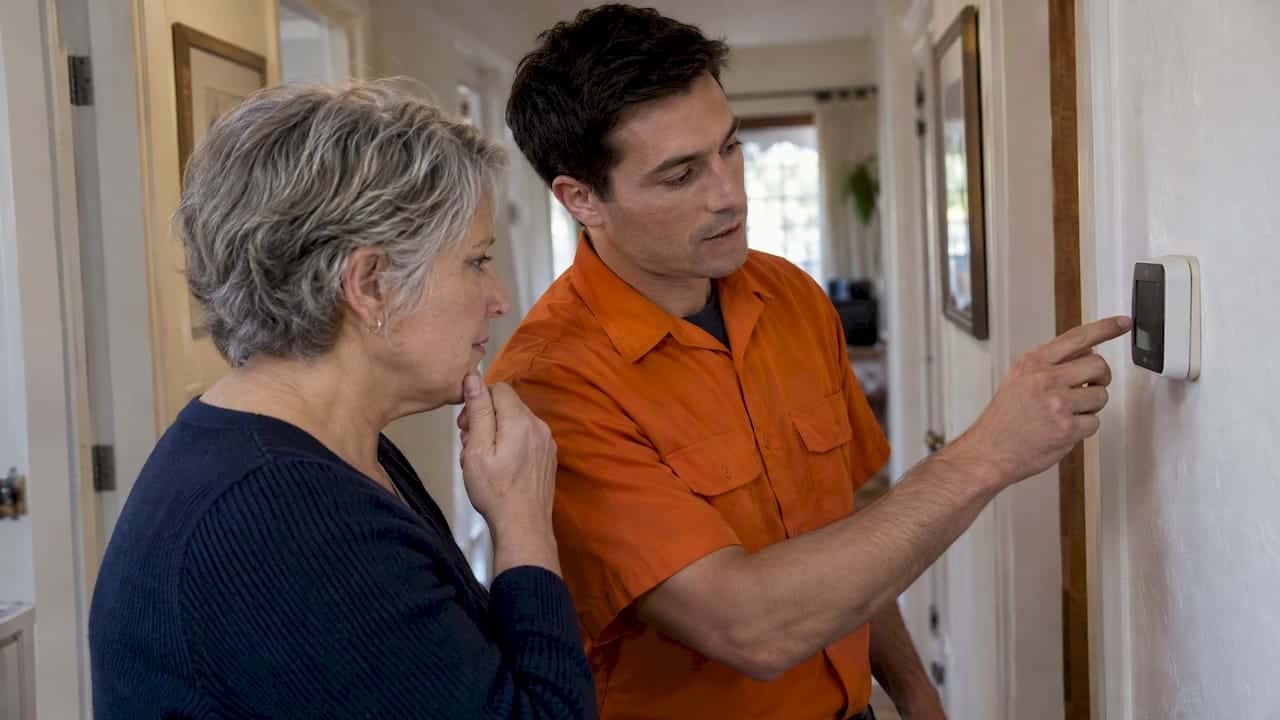
Pre-cooling a home an hour before peak heat uses less energy than holding a constant low temperature all day, because your system isn’t fighting a losing battle against the sun for eight hours straight. Smart thermostats with geofencing or learning modes handle this automatically, and most let you override or skip a utility event if timing doesn’t work for your household that day. If you have a heat pump, pick a thermostat rated for heat pump operation. Standard models can misread the system’s two-stage heating and cooling, which hurts efficiency and comfort alike.
Pro Tip: Set your “away” temperature a few degrees higher than you think you need. Most people underestimate how much an empty house can warm up without anyone there to notice.

Humidity, fan settings, and thermostat placement mistakes
A thermostat reading 78°F can still feel sticky and uncomfortable if humidity is high, which is why fan settings and thermostat placement matter as much as the number on the display. Keeping the fan on “AUTO” rather than “ON” helps control moisture, since continuous fan operation can pull moisture that collected on the evaporator coil back into your living space, according to ENERGY STAR’s humidity control findings. In some field cases, that fan overrun noticeably increased the hours a home spent above
relative humidity.
A few other common mistakes work against you:
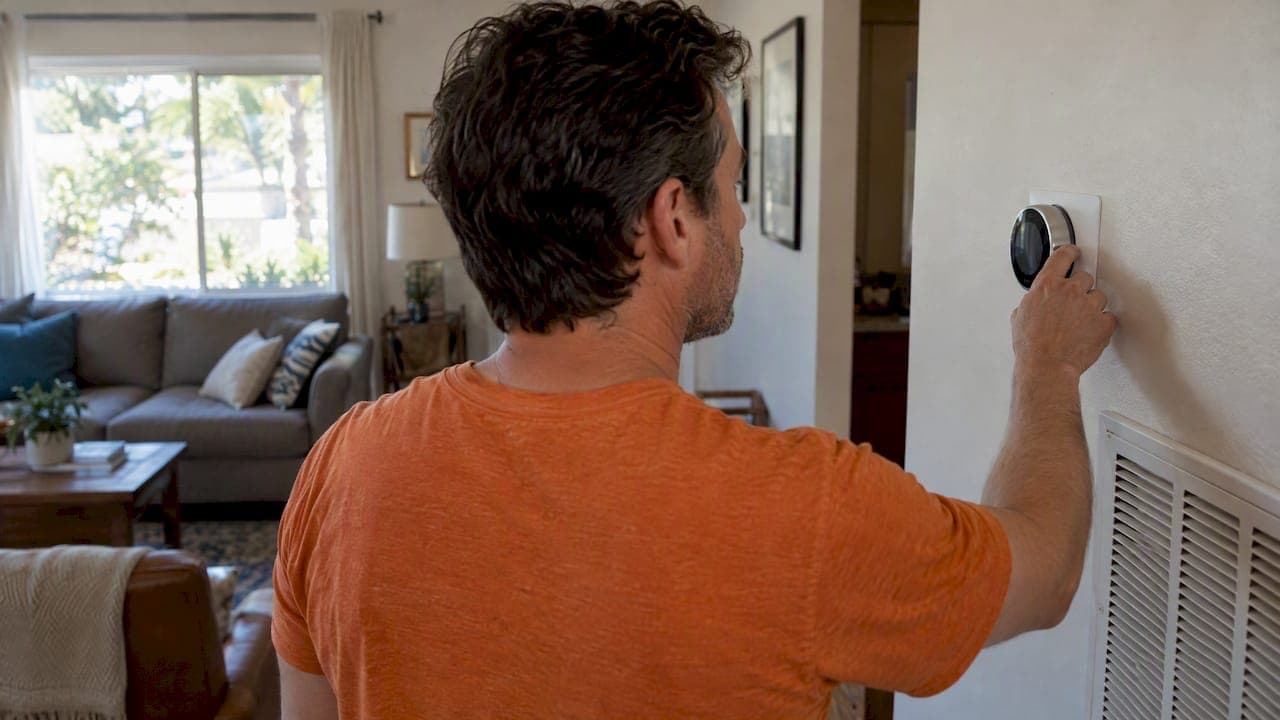
- Thermostats placed near a window, lamp, or kitchen read warmer than the rest of the house and cause overcooling elsewhere.
- Direct sunlight hitting the thermostat face throws readings off by several degrees.
- Persistent stickiness despite a fan on “AUTO” often points to duct leaks, poor ventilation, or a home that needs a standalone dehumidifier.
Pro Tip: If a room still feels damp after you’ve switched the fan to “AUTO,” check your attic insulation and duct seals before assuming the AC itself is the problem; learn more about humidity effects on interiors in San Antonio’s heat and humidity effects on interior doors.
Pre-summer maintenance that keeps your AC efficient
A perfectly programmed thermostat can’t compensate for a system that’s been neglected since last fall. A few checks before the first heat wave go a long way:
- Check or replace air filters monthly during peak cooling season since a clogged filter restricts airflow and forces the system to run longer.
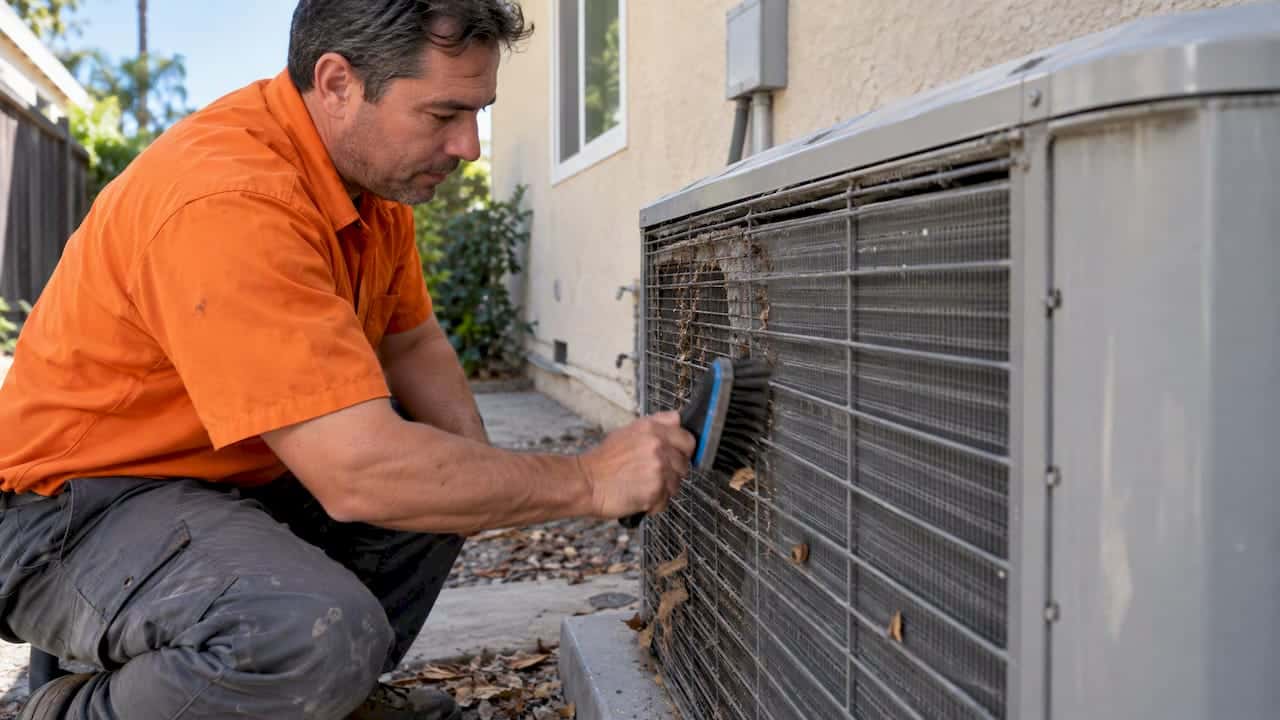
- Clear debris around the outdoor condenser and trim back plants or leaves that block airflow.
- Have refrigerant levels and coils inspected by a technician, since low refrigerant is a common cause of weak cooling.
- Verify the condensate drain isn’t clogged, which can cause water damage and humidity buildup if ignored.
- Inspect ductwork and insulation for leaks, since gaps in attic ducts let cooled air escape and pull humid outside air in.
If your system is short cycling, blowing warm air, or struggling to hit your setpoint despite a clean filter, that’s the signal to schedule a professional tune-up rather than keep adjusting the thermostat. Ask the technician to check refrigerant charge, electrical connections, and airflow balance across every vent, not just the compressor itself.
LADWP rebates and demand response: getting paid to adjust your thermostat
Los Angeles homeowners have a financial reason to embrace a slightly higher summer setpoint. Through LADWP’s Power Savers program, enrolled smart thermostats can be adjusted by up to 4°F during high-demand events, typically between 1 PM and 10 PM, with a pre-cool period beforehand to soften the transition. Participants can opt out of any individual event if the timing doesn’t work.
LADWP’s Smart Thermostat Rebate offers up to roughly $140 to $145 toward an eligible smart thermostat, based on the utility’s own rebate announcement, which lowers the upfront cost of upgrading.
A few things to know before enrolling:
- Enrollment typically includes a one-time or seasonal incentive on top of the rebate.
- The program runs through the warmer months and automatically adjusts your thermostat during qualifying demand events, allowing up to a 4°F adjustment during high-demand periods.
- You keep control: most platforms let you override the adjustment in real time if you’re uncomfortable.
When thermostat tweaks aren’t enough
A thermostat setting can only do so much when the real problem sits elsewhere. An undersized compressor, leaky ducts, or failing insulation will keep a home warm no matter how carefully you program the schedule.
Coastal neighborhoods near Santa Monica or Venice tend to fight humidity more than heat, while inland areas like the San Fernando Valley deal with drier, more intense afternoon temperatures, and the fix often depends on which problem you’re actually facing.
— Leo
How LC Heating & Air keeps your cooling and thermostat working together
We built our business around the frustrations most Los Angeles homeowners already know too well: surprise diagnostic fees and pressure to replace a system that just needs a repair. We focus on fixing the actual problem, whether that’s a thermostat mismatch, a refrigerant leak, or ductwork losing cooled air before it reaches your living room.
| What you need | Where to start |
|---|---|
| A diagnostic for inconsistent cooling | Book a service call |
| A pre-summer tune-up | Schedule an AC tune-up |
| Year-round upkeep | Join our maintenance plan |
| A heat pump compatible thermostat | Explore smart thermostat installs |
Here’s what that looks like in practice:
- Same-day appointments when your AC can’t wait.
- Flat-rate pricing before any work begins, so there are no surprises on the invoice.
- Technicians familiar with everything from historic Los Angeles homes to modern heat pump and multi-zone systems.
If your thermostat settings aren’t translating into real comfort, book a service call and we’ll find out why.
FAQ
Is 75 too hot for a thermostat in summer?
Not necessarily. For many Los Angeles homes, a setpoint below 78°F may feel comfortable, though raising it toward 78°F saves more on cooling costs, per DOE guidance. Comfort at a lower versus higher setpoint often comes down to humidity levels and personal preference.
Is 77 a good temperature for AC in summer?
Yes, a setpoint in the high 70s sits well within the recommended summer range and balances comfort with efficiency for most homes. Pairing it with a ceiling fan on low can make it feel even cooler without lowering the setpoint further.
Is 72 a good temperature for cool in the summer?
72°F works for comfort but costs more to maintain, since every degree closer to outdoor temperature reduces how hard your system has to work. Raising the setpoint from 72°F to 78°F can save 6% to 18% on cooling bills depending on your home’s insulation.
Is 70 too cold for AC in summer?
For most Los Angeles homes, a setpoint in the low 70s forces your AC to run far more often than necessary and significantly increases energy use compared to settings in the mid to high 70s.
Sources
- Top 11 things you didn’t know about saving energy at home: Summer edition | Department of Energy
- Demand Response – Power Savers | Los Angeles Department of Water and Power
- Humidity control field findings and recommendations | ENERGY STAR
Recommended
Leo, Propietario y Técnico Principal en LC Heating & Air
Leo dirige LC Heating & Air como propietario-operador y tiene la licencia C-20 HVAC #1073586 de California. Sus guías se enfocan en diagnósticos prácticos, decisiones de reparación seguras y consejos claros para propietarios de Los Ángeles.