- What thermostat settings best reduce AC energy costs?
- How does regular HVAC maintenance lower your cooling bill?
- What efficient cooling habits and home improvements cut AC electricity bills?
- How can homeowners use 2026 energy incentives to offset AC upgrade costs?
- Key Takeaways
- What I’ve learned after two decades of LA cooling seasons
- LC Heating and Air Conditioning can help you cool smarter
- FAQ
- Recommended
TL;DR:
- Proper thermostat settings, regular AC maintenance, and energy-efficient habits significantly lower cooling costs. Homeowners can save up to 10% annually by adjusting their thermostat and following best practices. Using available tax credits and home upgrades further reduces the expense of efficient cooling systems.
Your air conditioning system is the single largest energy consumer in your home during summer, and the right combination of thermostat settings, maintenance habits, and available tax credits can meaningfully cut what you pay every month. Homeowners who want to reduce AC energy bill cooling costs don’t need to sacrifice comfort to do it. The U.S. Department of Energy, ENERGY STAR standards, and the Energy Efficient Home Improvement Credit all provide a clear framework for keeping your home cool without letting electricity costs spiral. This guide gives you the specific numbers, habits, and professional steps that actually move the needle on your bill.
What thermostat settings best reduce AC energy costs?
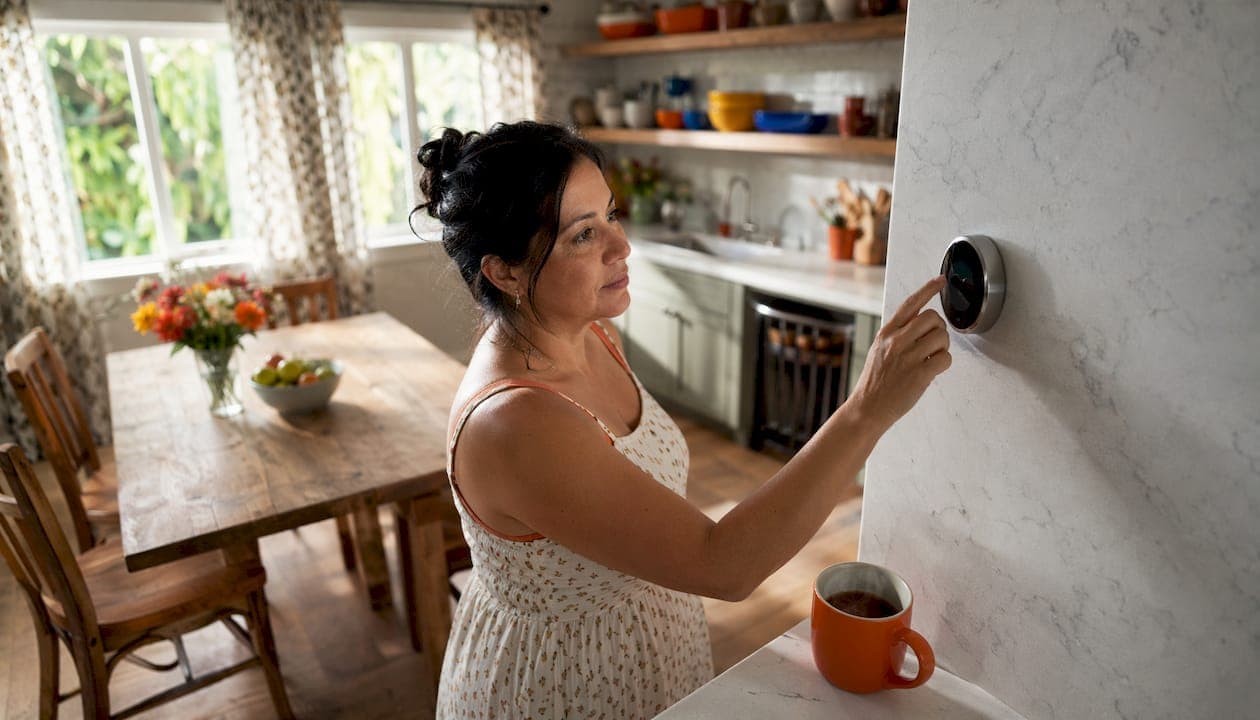
The most effective thermostat setting for balancing comfort and savings is 78°F when you are home. Setting it lower does not cool your home faster. Your AC runs at the same speed regardless of the target temperature, so a lower setting just means a longer run time and a higher bill.
The real savings come from thermostat setback. Adjusting the thermostat by 7–10°F for 8 hours daily saves up to 10% annually on cooling costs. That means raising the temperature while you sleep or while you are at work. Each single degree of adjustment yields roughly 3% in cooling cost savings, so even modest changes add up quickly over a full summer.
A few thermostat habits make a real difference:
- Set to 78°F when you are home and active.
- Raise to 85–88°F when you leave for more than two hours.
- Never set below 72°F expecting faster cooling. It wastes energy with no speed benefit.
- Wait 3 minutes before restarting your AC after a shutdown. This protects the compressor from pressure-related stress.
- Follow the 20-degree rule: keep your indoor target no more than 20°F below the outdoor temperature to avoid overworking the system.
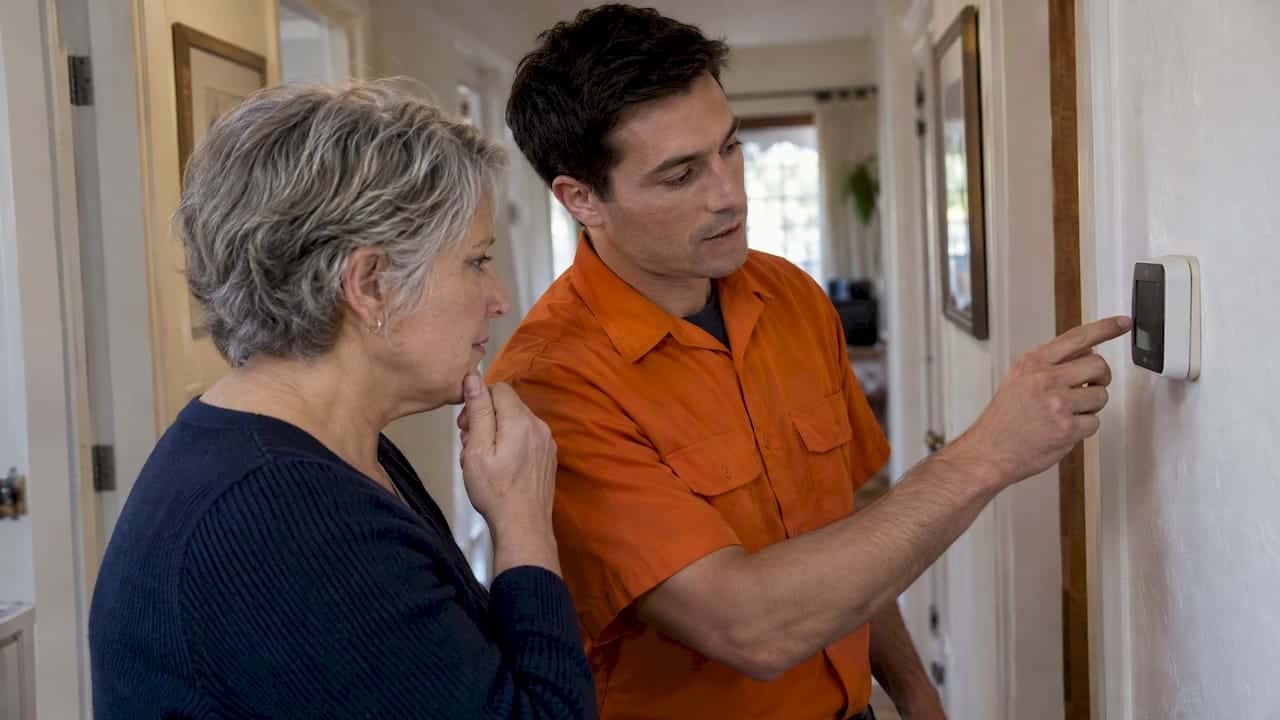
Pro Tip: A programmable or smart thermostat automates setback schedules so you never forget to adjust before leaving. Many utility companies offer rebates on these devices, which makes the upfront cost even easier to justify.
One nuance that surprises many homeowners: in humid climates, turning the AC off completely is a mistake. Turning off AC in humid conditions raises mold risk significantly. Setting back a few degrees keeps humidity under control while still saving energy. LC Heating and Air Conditioning regularly advises Los Angeles homeowners on this exact balance, especially during late summer when humidity spikes.
How does regular HVAC maintenance lower your cooling bill?
A well-maintained AC system runs 15–25% more efficiently than a neglected one, saving homeowners $150–$450 every year. That efficiency gap is not a minor detail. It is the difference between a system that cools your home on budget and one that strains to keep up while burning extra electricity.
Professional maintenance goes far beyond swapping a filter. A proper tune-up includes:
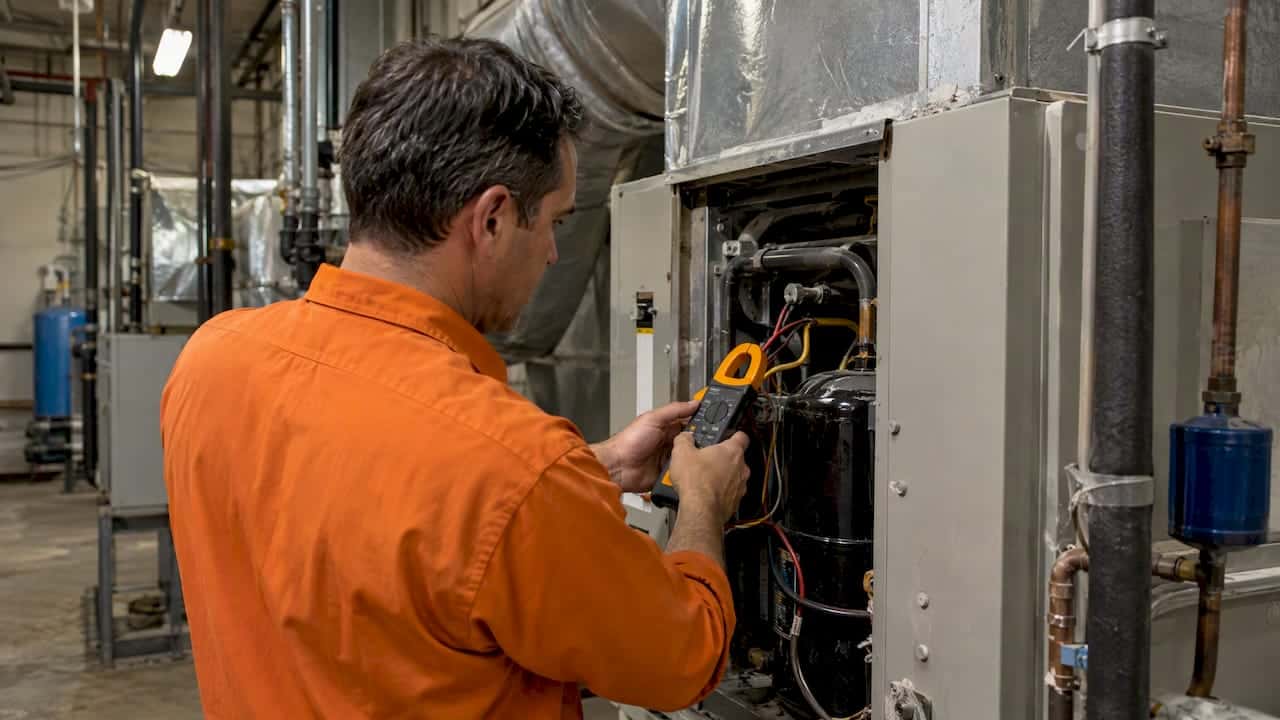
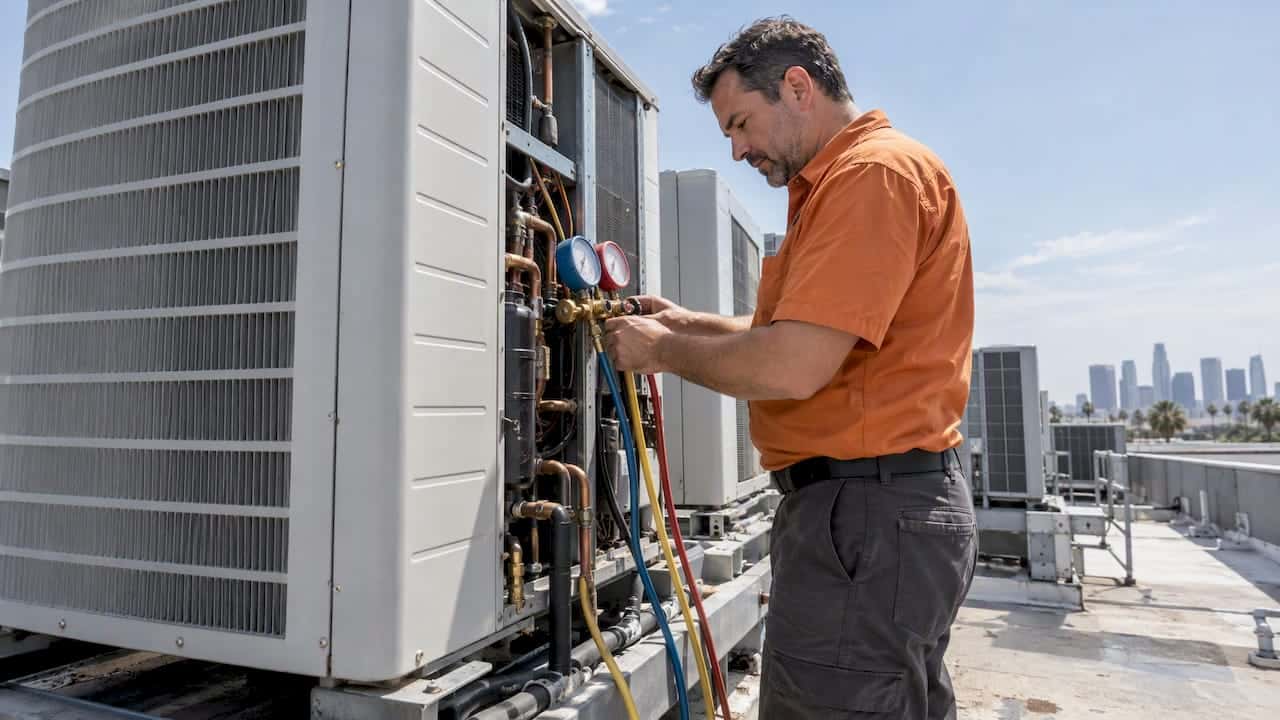
- Measuring superheat and subcooling to confirm the refrigerant charge is correct. An improper charge forces the compressor to work harder and shortens its life.
- Testing capacitor microfarads. Run capacitor failure is the leading cause of AC breakdowns during heat waves. Annual microfarad testing catches a failing capacitor before it leaves you without cooling on the hottest day of the year.
- Checking temperature splits across the evaporator coil to confirm the system is actually removing heat at the rated capacity.
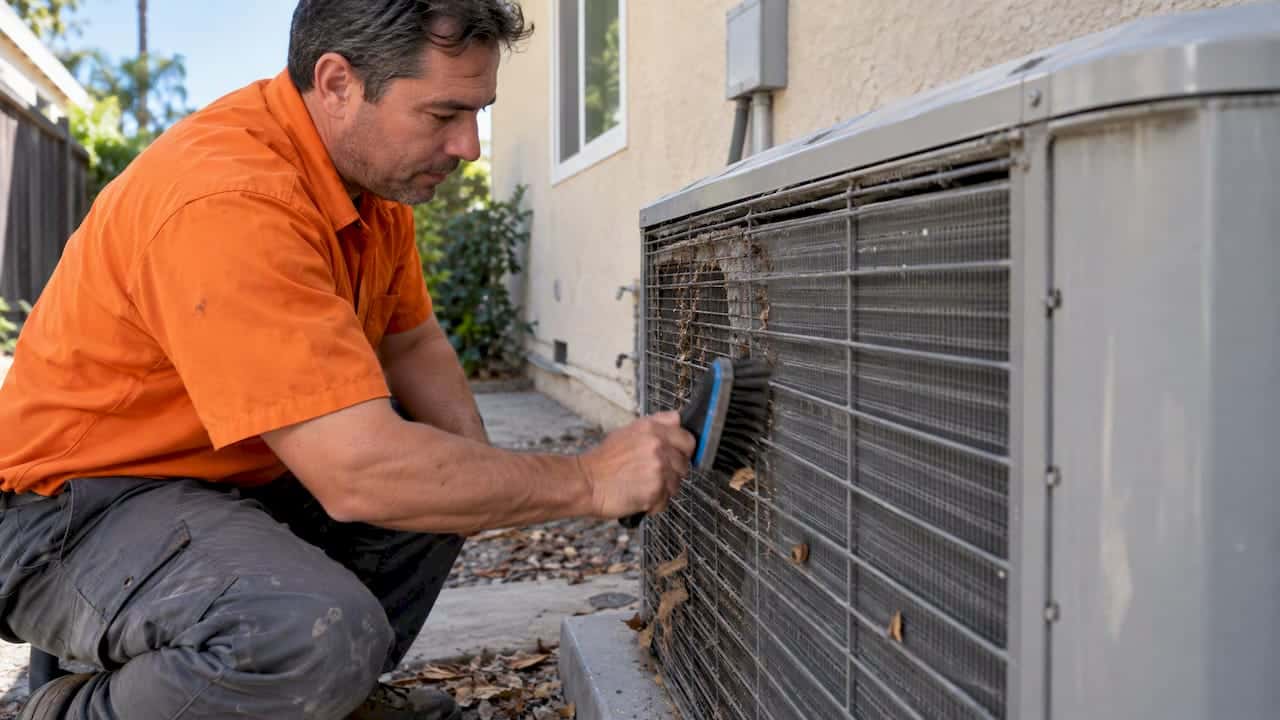
- Cleaning condenser coils. Dirty coils act like an insulating blanket around the heat exchanger, forcing the system to run longer to achieve the same result. You can learn the basics of coil cleaning to stay on top of this between professional visits.
- Inspecting electrical connections and controls to catch wiring issues before they cause failures or fire hazards.
A professional AC tune-up measures superheat, subcooling, capacitor ratings, and temperature splits. Basic visual checks simply cannot catch the issues that cost you money.
| Maintenance task | Frequency | Typical benefit |
|---|---|---|
| Replace air filter | Every 1–3 months | Improves airflow, reduces strain |
| Clean condenser coils | Annually | Restores heat transfer efficiency |
| Test run capacitor | Annually | Prevents emergency breakdown |
| Check refrigerant charge | Annually | Corrects efficiency loss from leaks |
| Inspect ductwork for leaks | Every 2–3 years | Reduces cooled air waste |
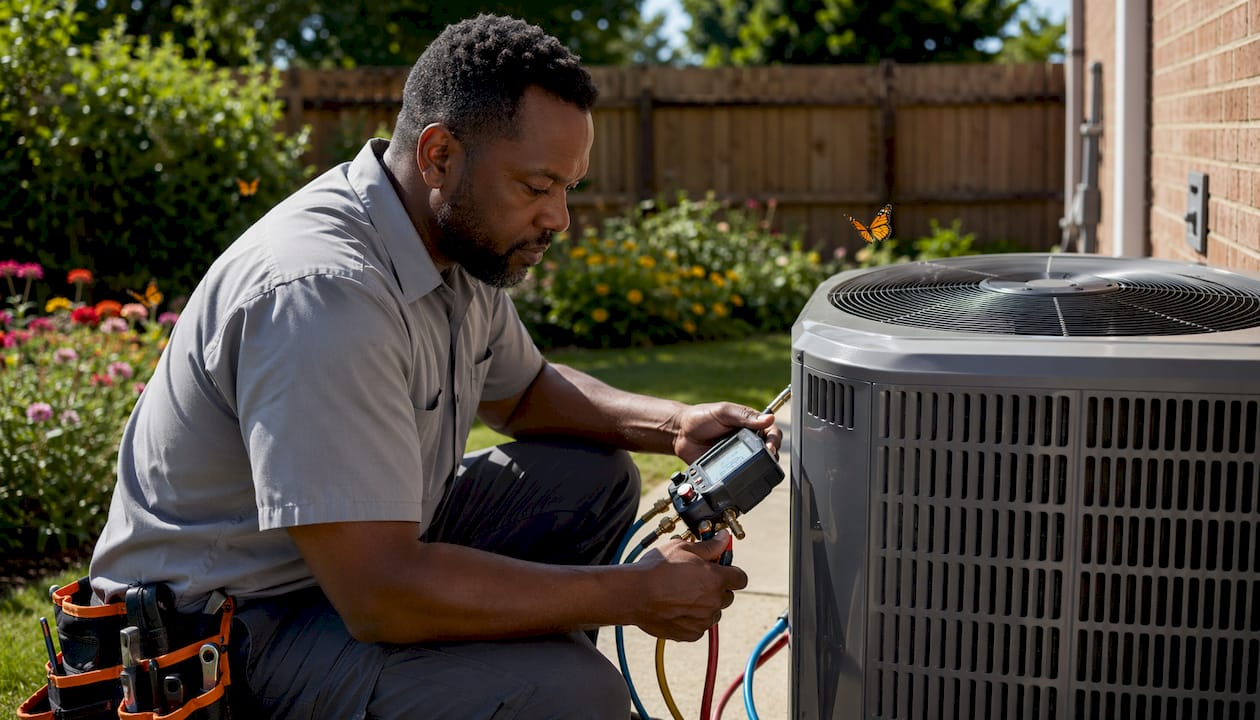
Annual HVAC maintenance plans typically cost $150–$300 per year and include priority scheduling and repair discounts. That cost pays for itself quickly when you factor in the efficiency gains and avoided emergency repair fees.
Pro Tip: Keep a maintenance log for your HVAC system. Record every filter change, tune-up, and repair with the date and technician notes. This log supports warranty claims, helps technicians diagnose recurring issues faster, and gives you a clear picture of your system’s health over time.
What efficient cooling habits and home improvements cut AC electricity bills?
Changing how you use your home is one of the fastest ways to lower air conditioning costs without spending anything on equipment. These habits work immediately and compound over a full cooling season.
- Use ceiling fans strategically. Ceiling fans allow you to raise your thermostat setpoint by about 4°F without any loss of comfort. The fan creates a wind-chill effect on your skin, not an actual temperature drop. Turn fans off when you leave the room, since they cool people, not spaces.
- Close doors and vents in unused rooms. Cooling an empty guest room all day is wasted energy. Redirect that airflow to the rooms you actually occupy.
- Block heat at the window. Closing curtains or blinds on south and west-facing windows during peak afternoon hours cuts solar heat gain significantly. Cellular shades and blackout curtains perform better than standard blinds.
- Seal your home. Gaps around doors, windows, and electrical outlets let cool air escape and hot air enter. Weatherstripping and caulk are inexpensive fixes that reduce the load on your AC all summer.
- Address attic heat. A poorly ventilated attic can reach extreme temperatures and radiate heat directly into your living space. Understanding how attic heat affects AC performance is a step many homeowners overlook entirely.
For homeowners ready to invest in upgrades, the efficiency gains are even larger.
| Strategy | Type | Typical impact on cooling costs |
|---|---|---|
| Ceiling fans | Habit | Allows 4°F thermostat increase |
| Blackout curtains | Low-cost upgrade | Reduces solar heat gain |
| Weatherstripping and caulk | Low-cost upgrade | Reduces air leakage |
| Duct sealing | Professional upgrade | Recovers cooled air lost in ducts |
| ENERGY STAR central AC | Equipment upgrade | Significant efficiency improvement |
| Shade trees (west/southwest) | Landscaping | Reduces cooling costs by 7–47% |
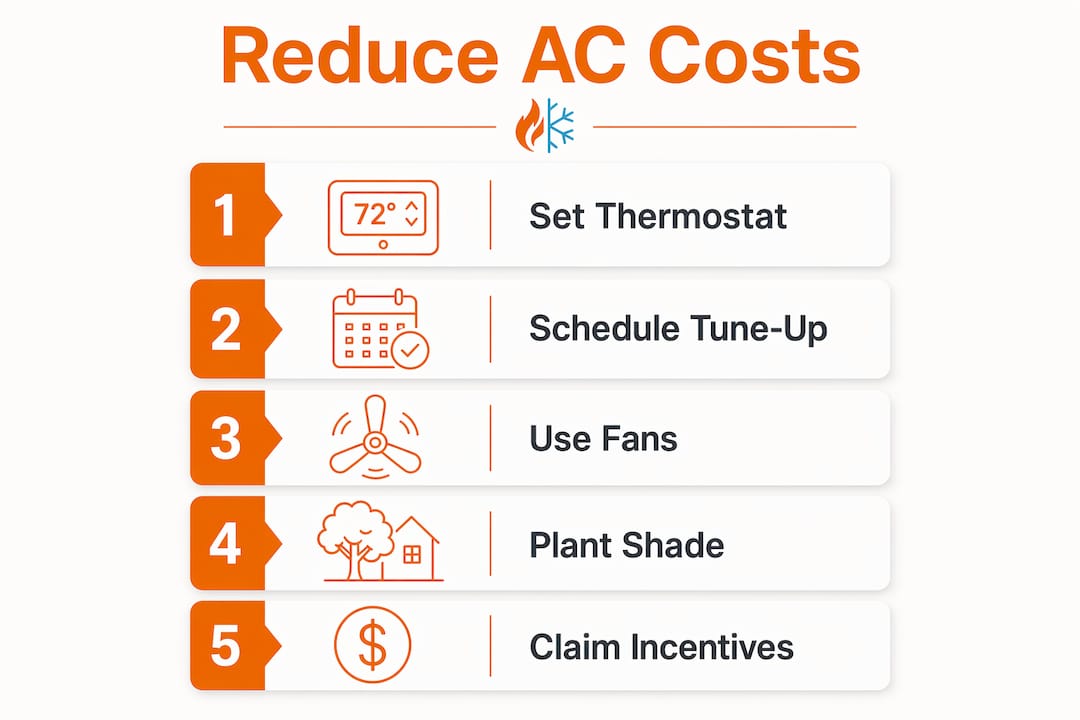
Shade trees planted on the west and southwest sides of your home can reduce cooling costs by 7–47%. That is a wide range because the impact depends on your home’s orientation, window area, and local climate. Even modest tree coverage makes a measurable difference over time.
ENERGY STAR certified HVAC equipment meets strict efficiency standards set by the U.S. Environmental Protection Agency. Replacing an older system with an ENERGY STAR unit delivers consistent, measurable efficiency gains compared to standard models. Duct sealing is another upgrade worth prioritizing. Leaky ducts can waste a significant portion of your cooled air before it ever reaches the living space.
How can homeowners use 2026 energy incentives to offset AC upgrade costs?
The Energy Efficient Home Improvement Credit offers tax credits up to $3,200 annually for qualifying home upgrades. This credit directly reduces what you owe in federal taxes, not just your taxable income. That distinction matters because a tax credit is dollar-for-dollar savings.
Qualifying improvements under current IRS guidelines include:
- Heat pumps for heating and cooling
- Central air conditioning systems that meet efficiency thresholds
- Energy-efficient windows and doors
- Home energy audits conducted by a certified professional
- Insulation and air sealing materials
You claim the credit using IRS Form 5695 when you file your federal return. Keep all receipts and manufacturer certification statements, since the IRS requires documentation that the equipment meets the qualifying efficiency standards.
Home energy audits deserve special attention here. An audit identifies exactly where your home loses energy, which upgrades will deliver the best return, and whether your current system is sized correctly. An oversized AC unit short-cycles, meaning it turns on and off too frequently to remove humidity properly. An undersized unit runs constantly and still fails to cool adequately. Both scenarios waste money.
Pro Tip: Schedule your home energy audit before purchasing any new equipment. The audit results tell you which upgrades qualify for the credit and which ones will actually lower your bill. Buying equipment first and auditing second often leads to mismatched solutions.
Homeowners exploring energy-efficient cooling options in other markets face similar incentive structures, which reflects a broader global shift toward rewarding efficiency investments. In the U.S., pairing the federal credit with any available state or utility rebates can dramatically reduce the net cost of a system upgrade.
Key Takeaways
Lowering your cooling costs requires combining the right thermostat settings, consistent maintenance, practical home habits, and available tax incentives into one coordinated approach.
| Point | Details |
|---|---|
| Set thermostat to 78°F | This setting balances comfort and efficiency; going lower wastes energy without cooling faster. |
| Use setback to save 10% | Raising the temperature 7–10°F for 8 hours daily cuts annual cooling costs by up to 10%. |
| Schedule annual tune-ups | Well-maintained systems run 15–25% more efficiently and avoid costly emergency breakdowns. |
| Add ceiling fans | Fans allow a 4°F thermostat increase with no comfort loss, reducing runtime and energy use. |
| Claim the 2026 tax credit | The Energy Efficient Home Improvement Credit offers up to $3,200 for qualifying AC upgrades. |
What I’ve learned after two decades of LA cooling seasons
After more than twenty years working on HVAC systems across Los Angeles, I’ve noticed that most homeowners focus on the wrong problem. They call us because their bill is high, and their first instinct is to blame the equipment. The system is old. The system is broken. The system needs to be replaced.
Sometimes that’s true. But more often, the system is fine and the habits around it are the real issue. A thermostat set to 68°F all day in a house with single-pane west-facing windows and a dirty filter is going to produce a painful electricity bill regardless of how new the equipment is.
The homeowners who consistently pay less for cooling share a few traits. They treat maintenance as a fixed annual expense, not an optional cost. They use programmable thermostats and actually program them. They know what their filter looks like when it’s dirty because they check it regularly. These aren’t complicated behaviors. They’re just consistent ones.
The other thing I’ve seen is that the tax credit conversation almost never happens until after a homeowner has already bought new equipment. That’s backwards. The Energy Efficient Home Improvement Credit can cover a meaningful portion of an upgrade, but only if you plan for it. An energy audit first, then equipment selection, then installation. That sequence saves money. The reverse sequence often doesn’t.
Smart thermostats and remote diagnostics have changed what’s possible for homeowners who want to stay on top of their system between professional visits. You can monitor runtime, catch unusual patterns, and adjust settings from anywhere. That visibility alone tends to change behavior in ways that lower bills.
The bottom line is this: comfort and cost savings are not in conflict. They require the same things. A well-maintained, properly set, efficiently operated system keeps you cool and keeps your bill manageable. The two goals point in the same direction.
— Leo
LC Heating and Air Conditioning can help you cool smarter
If you’re ready to put these strategies into practice, LC Heating and Air Conditioning makes it straightforward. With over twenty years serving Los Angeles homeowners, the team handles everything from annual AC tune-ups and duct sealing to full system replacements with ENERGY STAR certified equipment.
LC Heating and Air Conditioning uses flat-rate pricing, so you know the cost before any work begins. Same-day service is available for urgent cooling issues, and maintenance plan members get priority scheduling plus repair discounts that offset the plan cost. Whether you need a tune-up to restore efficiency or guidance on which upgrade qualifies for the 2026 tax credit, the team at LC Heating and Air Conditioning is ready to help. Call or visit the website to schedule your appointment.
FAQ
What is the best thermostat setting to save on cooling costs?
The U.S. Department of Energy recommends 78°F when you are home. Raising the temperature by 7–10°F while away or sleeping saves up to 10% annually on cooling costs.
How often should I schedule a professional AC tune-up?
Once per year is the standard recommendation, ideally in spring before peak cooling demand. Annual tune-ups include capacitor testing, refrigerant checks, and coil cleaning that keep your system running at full efficiency.
Do ceiling fans actually lower my electricity bill?
Ceiling fans do not lower the air temperature, but they allow you to raise your thermostat by about 4°F without feeling warmer. That thermostat increase reduces AC runtime and cuts your electricity bill.
What qualifies for the 2026 Energy Efficient Home Improvement Credit?
Qualifying improvements include heat pumps, central air conditioning systems meeting efficiency thresholds, energy-efficient windows, home energy audits, and insulation. You claim the credit on IRS Form 5695, with a maximum of $3,200 annually.
Can dirty air filters really increase my cooling bill?
A clogged filter restricts airflow, forcing your AC to work harder and run longer to reach the target temperature. Replacing filters every 1–3 months is one of the simplest and most cost-effective ways to maintain AC efficiency.
Recommended
Leo, Owner & Lead Technician at LC Heating & Air
Leo leads LC Heating & Air as an owner-operator and holds California CSLB C-20 HVAC license #1073586. His guides focus on practical diagnostics, safe repair decisions, and clear advice for Los Angeles homeowners.