- Heat Pump Maintenance: A Los Angeles Homeowner’s Guide
- TL;DR
- Why a heat pump needs maintenance at all
- What you can do yourself
- What a professional heat pump tune-up covers
- How often should you service a heat pump?
- What heat pump maintenance costs in Los Angeles
- Mini split and ductless maintenance
- Signs your heat pump needs service now
- A year-round maintenance calendar
- Our perspective: maintenance is where honest HVAC starts
- When maintenance is not enough: repair, replacement and rebates
- Book heat pump maintenance with LC Heating & Air
- FAQ
- Sources
- Recommended
Heat Pump Maintenance: A Los Angeles Homeowner’s Guide

A heat pump needs two kinds of care: simple chores you do yourself (filters, clearing the outdoor unit, a quick look at the drain) and a professional check-up once a year. Skip both and the system runs harder, costs more to operate and wears out sooner. This guide covers what to do, how often, what a proper service visit includes, and what it costs here in Los Angeles. It also covers ductless mini splits, which follow the same rules with a few twists.
TL;DR
- Check or clean filters every month during heavy use, keep the outdoor unit clear, and watch the condensate drain in cooling mode.
- Book a professional tune-up once a year. Spring suits cooling, fall suits heating, and a heat pump does both, so choose the season you lean on most.
- A proper visit tests refrigerant charge, airflow, electrical connections, coils, drain and thermostat communication. A filter swap alone is not maintenance.
- At LC Heating & Air, a service call starts at $125 and our maintenance plan runs $180-$250 per year.
- Mini splits need the same care, with extra attention to indoor-unit filters, coils and blower wheels.
Why a heat pump needs maintenance at all
A heat pump does the work of an air conditioner and a furnace with one set of equipment. In Los Angeles it runs most of the year, so it gets less downtime than a system in a colder climate. More hours means more wear and more chances for dust to build up.
The main enemy is neglect. ENERGY STAR’s maintenance guidance frames routine upkeep as the way to prevent future problems and unwanted costs. When dirt builds up on the indoor and outdoor coils, the system has to run longer to deliver the same comfort. That raises your bill and shortens the equipment’s life.
Life span matters here. A Department of Energy training document on air source heat pumps puts the typical expected life of an air source heat pump at about 15 years, and notes that this depends on the type of system and on how consistently it is maintained. A well-kept unit has a good chance of reaching that number. A neglected one often does not.
There is also a savings angle. The Department of Energy notes that a high-efficiency heat pump can cut electricity use for heating by up to 75% compared with electric resistance heating. Neglect eats into that advantage, because a dirty filter or a wrong refrigerant charge makes the system work harder for the same result.

What you can do yourself
These tasks need no tools beyond a screwdriver, a garden hose and a soft brush. They are the same ones the Department of Energy’s heat pump maintenance page points homeowners toward. Always switch the system off at the thermostat and the breaker before you open or rinse anything.
Filters: the monthly job
The air filter is the cheapest part of your system and the one that causes the most trouble. A clogged filter restricts airflow, so the blower strains, the coil can ice up, and the rooms feel stuffy. The ENERGY STAR guide to energy-efficient heating and cooling lists uneven room temperatures among the signs that your system needs attention.
- Check the filter monthly in summer and in any month you heat heavily.
- Replace disposable filters when you can no longer see light through them, or on the schedule printed on the box.
- Rinse washable filters, dry them completely, then reinstall.
- Write the date on the frame so you know when it was last changed.
Homes with pets, nearby construction, wildfire smoke days or older ductwork go through filters faster. Dust that gets past a bad filter ends up on your coils and in your rooms. If your home already feels dusty, our note on how routine cleaning helps indoor air quality is a useful companion to a fresh filter.
The outdoor unit
Walk around the outdoor unit every month or two.
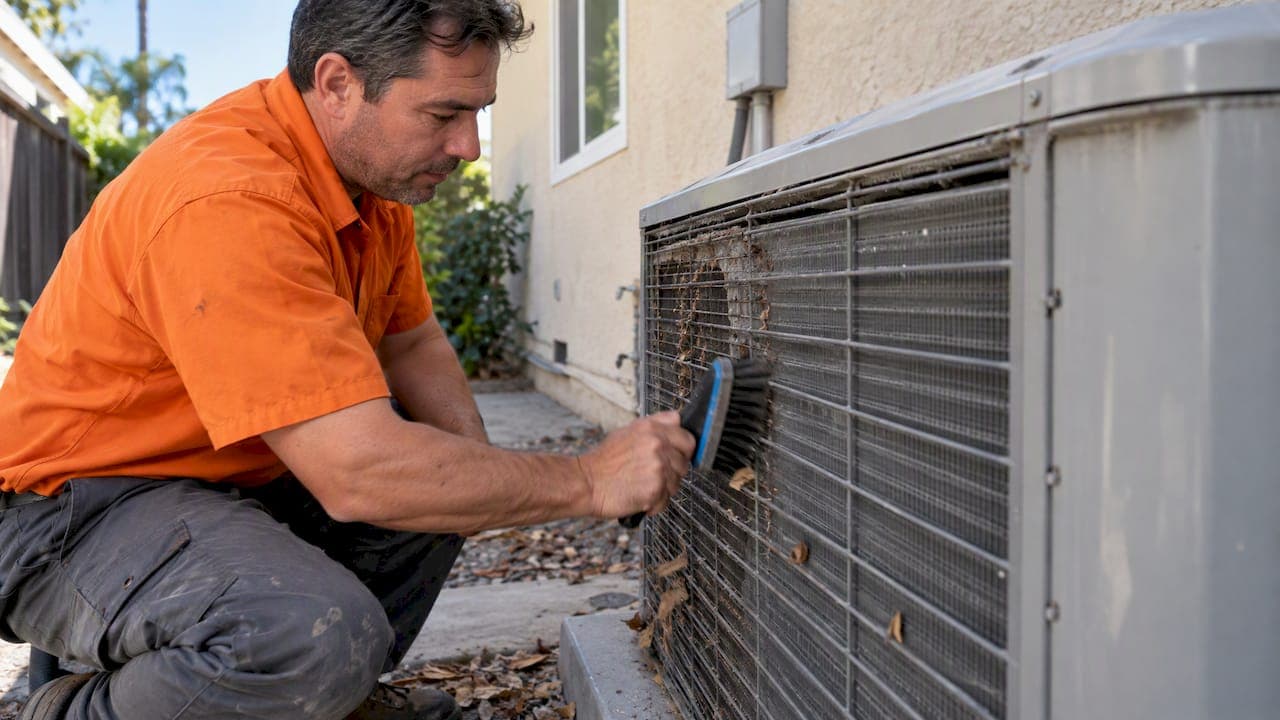
- Clear leaves, trash, and anything leaning against the cabinet.
- Trim plants back so there are at least a couple of feet of open space on all sides.
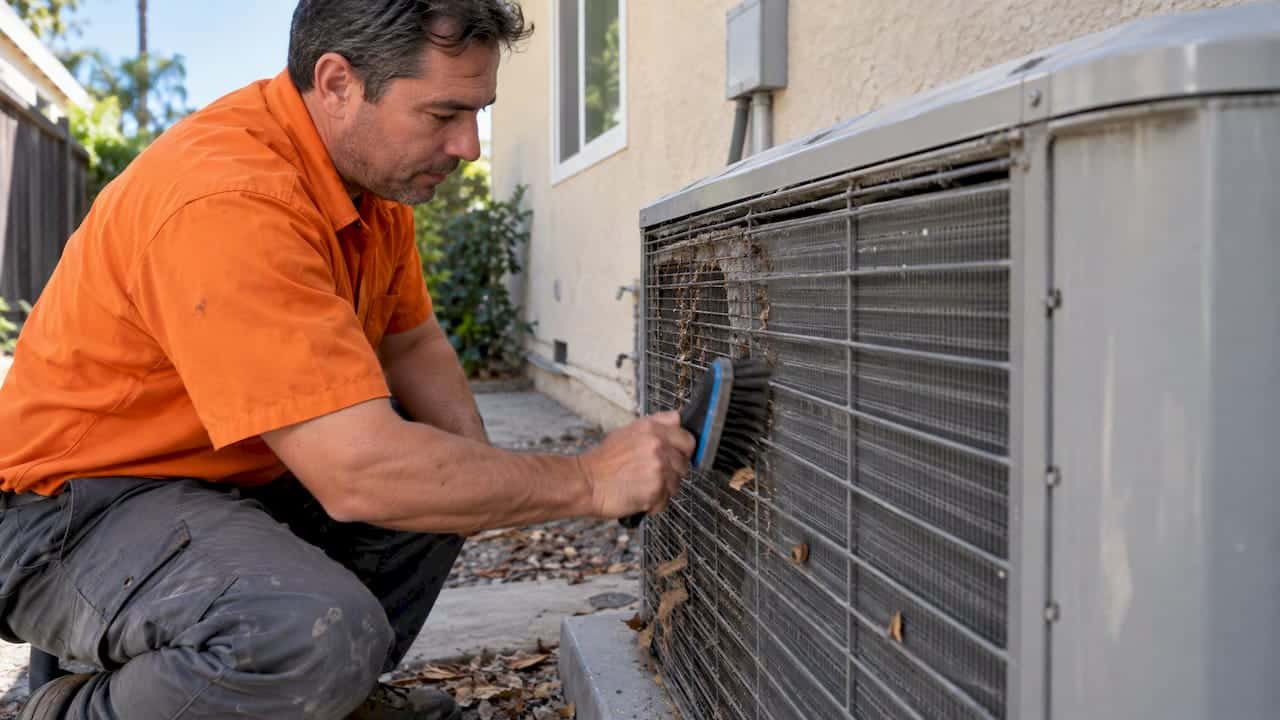
- With the power off, gently rinse the coil fins from the outside with a hose. Use a light spray, never a pressure washer, and never bend the fins.
- Check that the unit sits level and the pad has not shifted.
In the Hollywood Hills, Pasadena and the Valley, outdoor units collect blossoms, pine needles and fine dust quickly. A unit tucked into a side yard with poor airflow will run hotter in a heat wave.
The condensate drain
In cooling mode your heat pump pulls moisture out of the air and sends it down a drain line. A clogged drain does more than stop the system. According to the ENERGY STAR guide, it can cause water damage, encourage mold and bacteria, and disrupt humidity control. Look for water around the indoor unit or a musty smell. If you see either, turn the system off and call us. Do not keep running it.
The thermostat and a basic listen
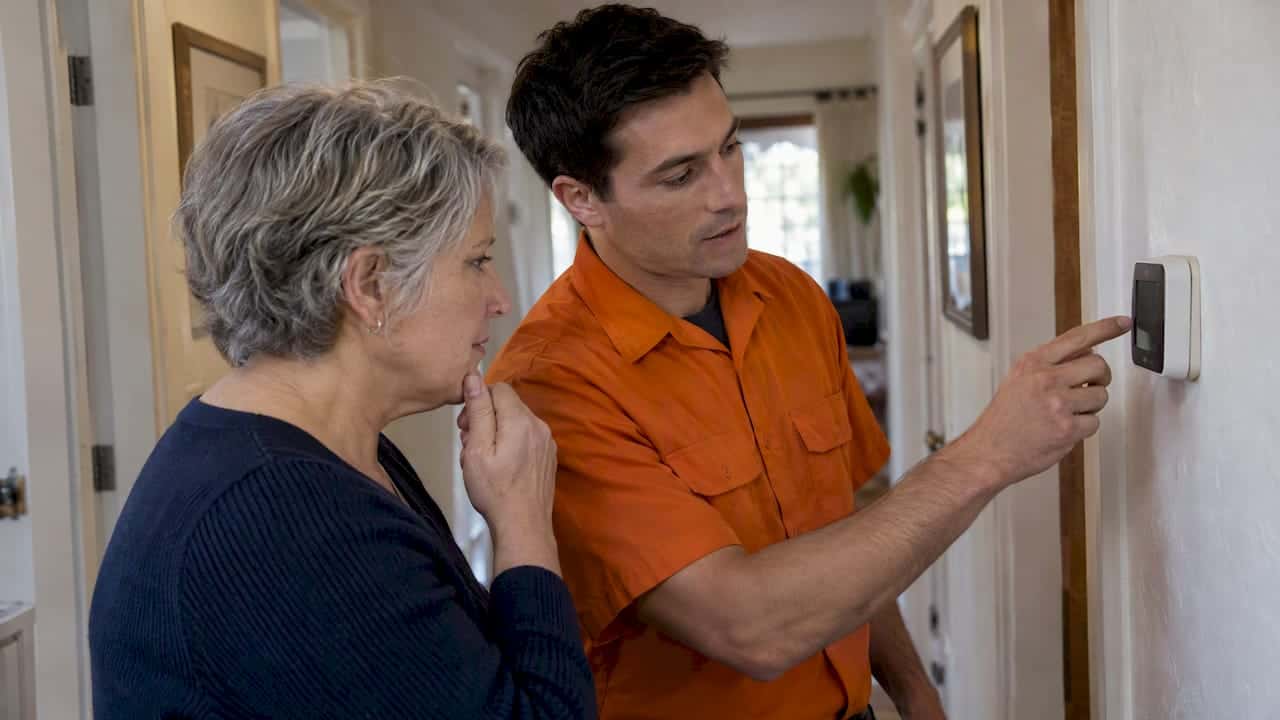
Confirm the thermostat reads the right temperature and that the unit responds when you change the setting. Listen for new sounds: grinding, rattling, buzzing or a long hiss. Pay attention to a unit that runs constantly without catching up. You do not need to diagnose the cause. You just need to notice it early.
What a professional heat pump tune-up covers
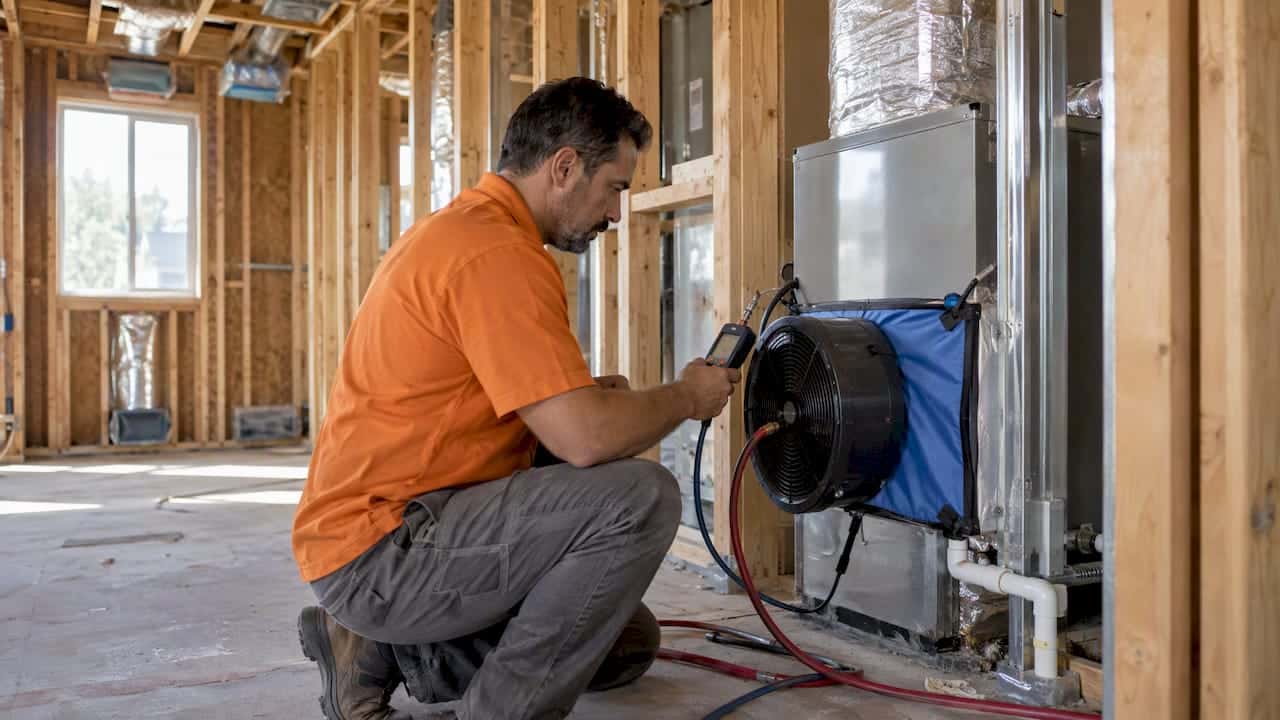
A filter change is not a tune-up. The Department of Energy training material makes the point that a heat pump is part of a whole-home system, so maintenance includes airflow, electrical safety and thermostat communication, not just the machine. Here is what a thorough visit should cover.
| Check | Why it matters |
|---|---|
| Refrigerant charge | ENERGY STAR says a correct charge reduces energy use and lowers the risk of failure. A low or high charge strains the compressor. |
| Indoor and outdoor coils | Dirty coils block heat transfer, so the system runs longer and works harder. |
| Electrical connections and capacitors | Loose or worn connections are a safety risk and a common cause of no-start calls. |
| Blower motor and fan | Dust and worn bearings reduce airflow and add noise. |
| Condensate drain | A clear drain prevents leaks, mold and humidity trouble. |
| Reversing valve and mode changeover | The heat pump must switch cleanly between cooling and heating. |
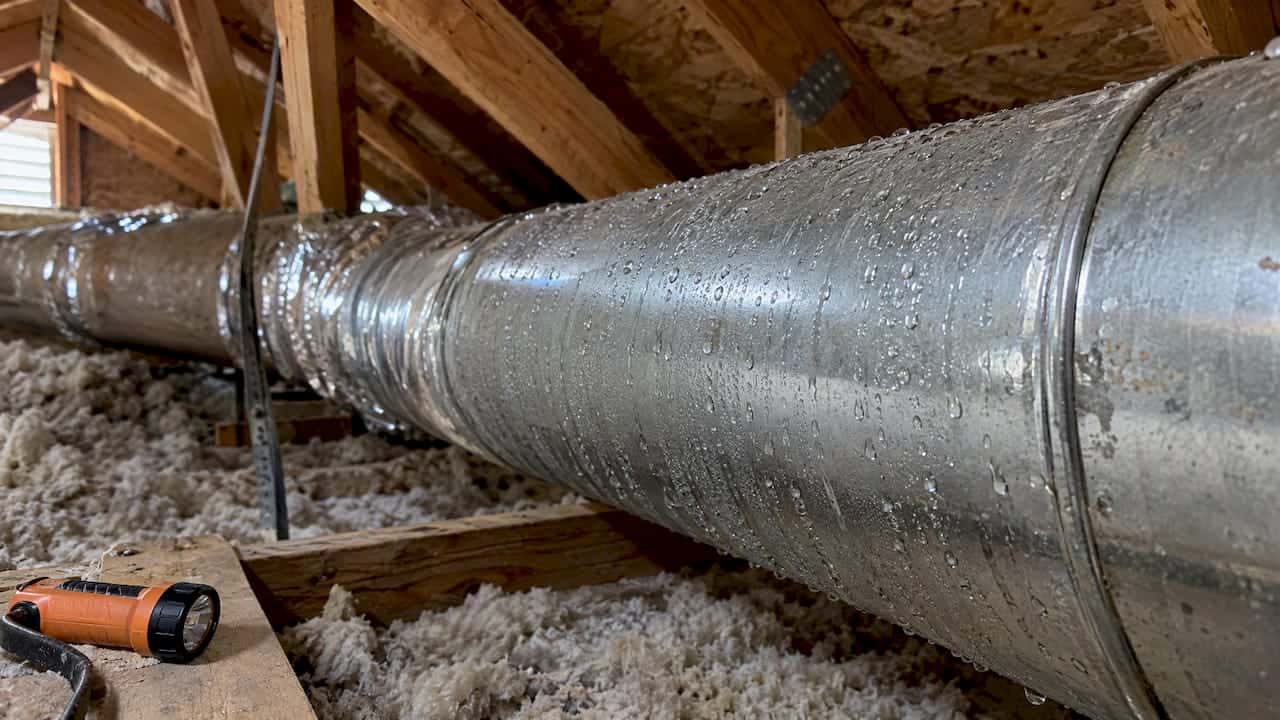
| Airflow and ductwork | Weak airflow often points at duct leaks or blockages, not the heat pump itself. |
| Thermostat communication | The control has to talk to the unit correctly, or comfort suffers. |
The reversing valve is the part that makes a heat pump different from an air conditioner. We test it as part of every visit because it is easy to forget until the first cold morning, when the unit blows cool air in heating mode.
A good technician also measures rather than guesses. Modern diagnostic tools can read pressures and temperatures from sensors in real time, according to the Department of Energy’s heat pump chapter. That same document reports that a large majority of central air and heat pump systems in the U.S. carry hidden, energy-wasting faults. A measured tune-up is how those faults get found.
How often should you service a heat pump?
Once a year is the safe answer. ENERGY STAR says routine professional maintenance is needed to keep systems efficient, and that many manufacturers recommend service every one to two years. It also suggests scheduling cooling check-ups in spring and heating check-ups in fall, since contractors are busiest once summer and winter arrive.
In Los Angeles, our advice is a little more specific:
- Annual visit, early spring or early fall. Because your heat pump handles both seasons, one thorough visit before your heavier season covers both modes.
- Twice a year if the system runs hard: a large home, a home with a lot of sun exposure, a home office that runs all day, or a unit that serves a commercial space.
- Right after any odd symptom: ice on the coil, a tripped breaker, water at the indoor unit, a sudden bill spike.
- Before your warranty needs proof. Many manufacturers ask for maintenance records when a claim comes up, so keep your service paperwork.
What heat pump maintenance costs in Los Angeles
Price is the question most people ask first, so here is what we publish. A service call with LC Heating & Air starts at $125, a one-time fee. If you want the work scheduled and the pricing predictable, our HVAC maintenance plan runs $180-$250 per year.
We do not publish a fixed price for heat pump repairs, because the cause decides the cost. What we do commit to is flat-rate pricing: we diagnose first, tell you the price of the repair before we start, and do not add a surprise diagnostic fee after the fact. You decide with the number in front of you.
What moves the cost of a visit:
- System type. A single-zone mini split is simpler than a multi-zone system or a commercial VRF system with many indoor units.
- Access. A roof pad, a tight attic air handler or a hillside install takes longer.
- Condition. A unit that has gone untouched for years needs a deeper cleaning than one serviced every spring.
- Scope. A cleaning and inspection visit is different from one that also includes refrigerant work or a part replacement.
Prevention is cheaper than repair. A cheap filter and a yearly visit cost far less than a failed compressor, and that is the pattern we see on repair calls across Greater Los Angeles.
Mini split and ductless maintenance
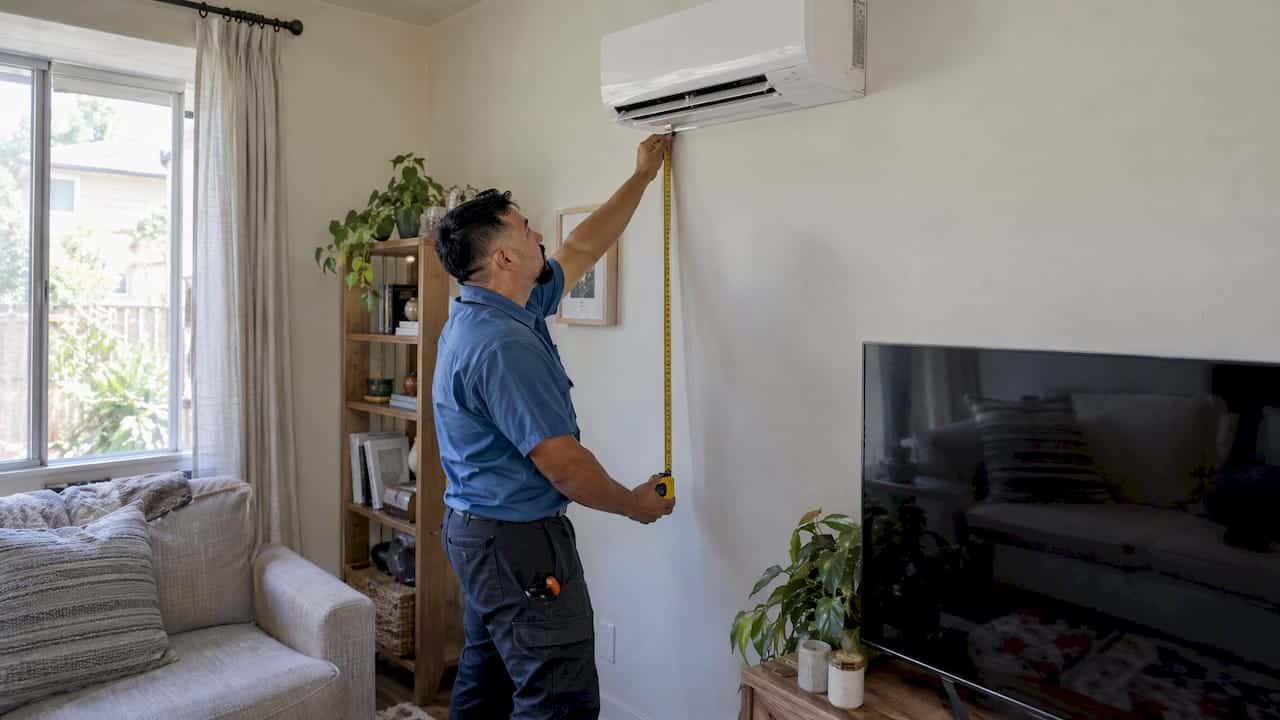
Ductless systems are popular in older Los Angeles homes, additions, guest houses and garages because they skip the ductwork. They are also easy to neglect, because the indoor heads sit quietly on the wall. They need the same annual professional check as a ducted heat pump, plus a few extra habits.
What you can do
- Wash the indoor-unit filters every month or two. Open the front panel, slide the mesh filters out, rinse them in lukewarm water, let them dry fully, then slide them back in.
- Wipe the front panel and louvers with a soft damp cloth.
- Clear the outdoor unit the same way you would a ducted system.
- Check the drain line for drips from the wall unit. Water running down the wall is a sign of a blockage.
- Use the unit regularly. Running the system now and then in the off season helps you catch problems before you need it.
What needs a technician
The blower wheel inside the indoor head collects dirt and mold over time. Cleaning it properly means removing the cover and often taking the unit partly apart. The same goes for a full coil clean and a refrigerant check. A rushed DIY job can damage the fins, send water into the electronics or leave the line set stressed. This is the work we do on a visit.

If you have a multi-zone system, each head has its own filter, coil and drain. Count the heads when you plan your service, because every one of them counts.
Signs your heat pump needs service now
Do not wait for the annual visit if you see any of these:
- Weak airflow from the vents or the indoor head
- Rooms that stay too hot or too cold
- Ice on the outdoor coil or refrigerant lines
- Cool air in heating mode, or warm air in cooling mode
- A burning smell, loud banging or grinding
- Short cycling, where the unit turns on and off every few minutes
- A bill that climbs without a change in your habits
- Water leaking at the indoor unit
A high bill is worth a closer look. In the research we reviewed, the usual culprits were dirty filters and improper refrigerant levels, both of which force the system to run longer to hit the temperature you set. If the problem goes beyond maintenance, our team handles heat pump repair with same-day service.
A note on safety: anything involving refrigerant, high-voltage wiring or the inside of the cabinet is a job for a licensed technician. Switch the system off at the breaker and call. Do not keep running a unit that smells like burning or is leaking water.
A year-round maintenance calendar
| When | What to do |
|---|---|
| Every month | Check filters, look at the outdoor unit, glance at the drain for drips |
| Early spring | Professional tune-up, test cooling mode before the first heat wave |
| Summer | Replace filters more often, keep the area around the outdoor unit clear |
| Early fall | Test heating mode, check thermostat settings, replace the filter |
| Winter | Watch for ice on the outdoor unit and cool air in heating mode |
| After wildfire smoke or heavy dust | Check the filter right away and replace it if loaded |
Our perspective: maintenance is where honest HVAC starts
We are heat pump, mini split and commercial VRF specialists, and we see the same story on service calls across Los Angeles. A homeowner has put off a $0 chore for a year, the coil is caked, the filter is gray, and the system has been running flat out through a heat wave. Then the quote for a repair, or a pitch for a full replacement, lands harder than it should.
We built our service around the opposite approach. We diagnose honestly, we quote flat-rate prices, and we do not push you to replace a system that can be repaired. Maintenance is the other half of that promise. A system that is checked once a year gives us a chance to catch a weak capacitor or a slow leak before it turns into a no-cool call in August.
We also work on older homes, where a heat pump has to fit around plaster walls, tight attics and original ductwork, and on modern multi-zone and commercial VRF systems. Sizing and installation quality matter as much as upkeep. ENERGY STAR warns that rule-of-thumb sizing leads to oversized equipment, which cycles too often, controls humidity poorly and wears out early no matter how well it is maintained. Maintenance cannot fix a unit that was wrong from day one, and we will tell you honestly if that is your situation.
Our advice is simple. Do the monthly chores, book the yearly visit, and call us when something sounds or smells wrong.
— Leo
When maintenance is not enough: repair, replacement and rebates
Sometimes a service visit shows that the system is near the end of its life, or that the original installation was the problem. The Department of Energy training document notes that at least 20% of system failures trace back to improper installation rather than the age of the parts. In that case we explain the options and let you decide, with no pressure.
If replacement does make sense, Los Angeles homeowners have help. The LADWP Consumer Rebate Program offers up to $2,500 per ton for qualifying heat pump HVAC systems installed on or after November 1, 2025, with efficiency requirements that the equipment has to meet. Check the program page for the current terms, since rebate rules can change. Our guides explain how Los Angeles homeowners secure LADWP rebates and what you can stack with other incentives.
For planning, our published installation ranges are $5,500-$12,000 for a heat pump and $3,500-$20,000 for a mini split system, with financing options available. The range depends on size, number of zones and the home.
Book heat pump maintenance with LC Heating & Air
We have more than twenty years of local experience, verified customer reviews and same-day service. Our heat pump maintenance service covers every item in the table above, on ducted heat pumps, mini splits and commercial VRF systems. If you prefer scheduled care, the maintenance plan runs $180-$250 per year. Or call us at (323) 970-3113 and we will find a time that works. We serve Hollywood, West Hollywood, Beverly Hills, Bel Air, Brentwood, Pasadena, the Valley and the rest of Greater Los Angeles.
FAQ
Does a heat pump need servicing every year?
Yes, once a year is the safest schedule. ENERGY STAR says many manufacturers recommend service every one to two years. Because a Los Angeles heat pump works in both seasons, we suggest an annual visit, or twice a year for heavily used or commercial systems.
How much does heat pump maintenance cost in Los Angeles?
Our service call starts at $125, and our yearly maintenance plan is $180-$250. Repair pricing depends on the diagnosis, and we quote a flat rate before we begin work. There is no surprise diagnostic fee.
Why is my electric bill so high with a heat pump?
The most common causes are a dirty filter, dirty coils or a wrong refrigerant charge, all of which make the system run longer. Duct leaks and an oversized or poorly installed unit can also push bills up. A tune-up with measured readings usually finds the cause.
How long does a heat pump last?
An air source heat pump typically lasts about 15 years, according to a Department of Energy training document. Regular maintenance and good installation help it get there, while neglect shortens that.
Can I maintain a mini split myself?
You can wash the indoor filters, wipe the panel and clear debris from the outdoor unit. Deep cleaning of the blower wheel and coils, plus anything involving refrigerant or wiring, should go to a licensed technician.
Sources
- Air source heat pump guide, U.S. Department of Energy training document
- Heat Pumps chapter, U.S. Department of Energy training document
- Clean Heating and Cooling, ENERGY STAR
- Maintenance Checklist, ENERGY STAR
- HVAC Quality Installation, ENERGY STAR
- A Guide to Energy-Efficient Heating and Cooling, ENERGY STAR
- U.S. Department of Energy
- Consumer Rebate Program, LADWP
Recommended
Leo, Propietario y Técnico Principal en LC Heating & Air
Leo dirige LC Heating & Air como propietario-operador y tiene la licencia C-20 HVAC #1073586 de California. Sus guías se enfocan en diagnósticos prácticos, decisiones de reparación seguras y consejos claros para propietarios de Los Ángeles.