- How does attic heat physically impact air conditioning systems?
- What are the measurable effects on energy bills and AC lifespan?
- What practical improvements reduce attic heat effects on AC?
- How does duct location and condition affect AC performance?
- Key takeaways
- What I’ve learned after twenty years of attic heat calls in Los Angeles
- LC Heating and Air Conditioning can help you fix attic heat problems
- FAQ
- Recommended
How Attic Heat Affects AC Performance and Efficiency
TL;DR:
- Attic heat significantly reduces air conditioning efficiency by raising duct temperatures and stressing electrical components. Sealing duct joints, improving insulation, and installing radiant barriers can greatly lower attic temperatures and extend AC system lifespan. Proper attic maintenance can save energy, cut costs, and prevent premature equipment failures.
Attic heat is one of the leading causes of AC inefficiency in American homes, and most homeowners never see it coming. Summer attic temperatures routinely reach 130 to 160°F, creating a thermal environment that forces your cooling system to work far harder than it should. The result is a direct, measurable impact: thermal gain through attic ductwork causes 20 to 40% cooling capacity loss before conditioned air ever reaches your living room. Understanding how attic heat affects AC is the first step toward fixing it. LC Heating and Air Conditioning has spent over twenty years diagnosing exactly these kinds of hidden efficiency problems for Los Angeles homeowners.
How does attic heat physically impact air conditioning systems?
Attic heat damages AC performance through two distinct pathways: thermal transfer through ductwork and direct stress on electrical components. Both happen simultaneously, and both compound over time.
Heat gain through ductwork
Ductwork in an unconditioned attic acts like a passive heating system working against you. Cooled air warms by 5 to 10°F as it travels through attic ducts before reaching your rooms. That means your AC sets the thermostat to 72°F, but the air arriving at your vents may already be 80°F or warmer. Your system then runs longer to compensate, burning more energy for less comfort.
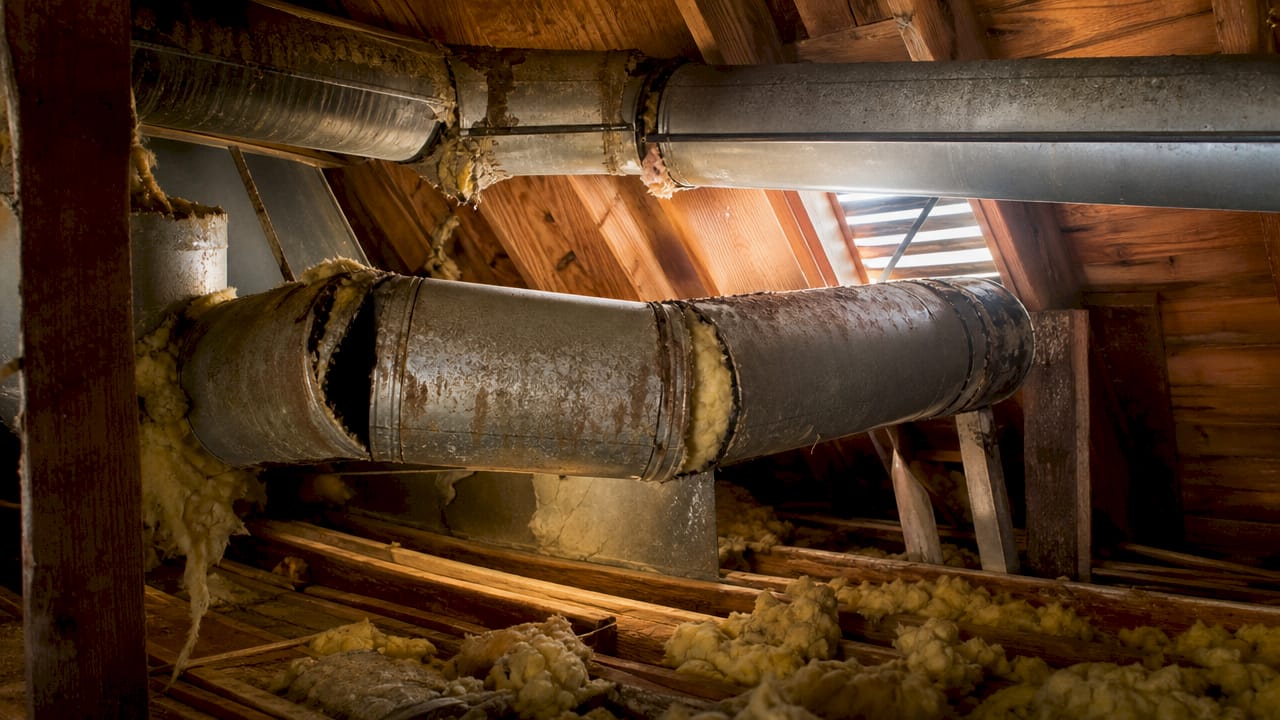
The physics here are straightforward. Duct walls are thin metal or flexible material. When the surrounding attic air sits at 150°F, heat moves aggressively through those walls into the cooled air inside. Poor or missing duct insulation makes this transfer even faster.
Pro Tip: Check your attic ducts for gaps, disconnected joints, or insulation that has fallen away. Even a small gap pulls scorching attic air directly into your supply ducts, raising delivery temperatures immediately.
Compressor and blower motor stress
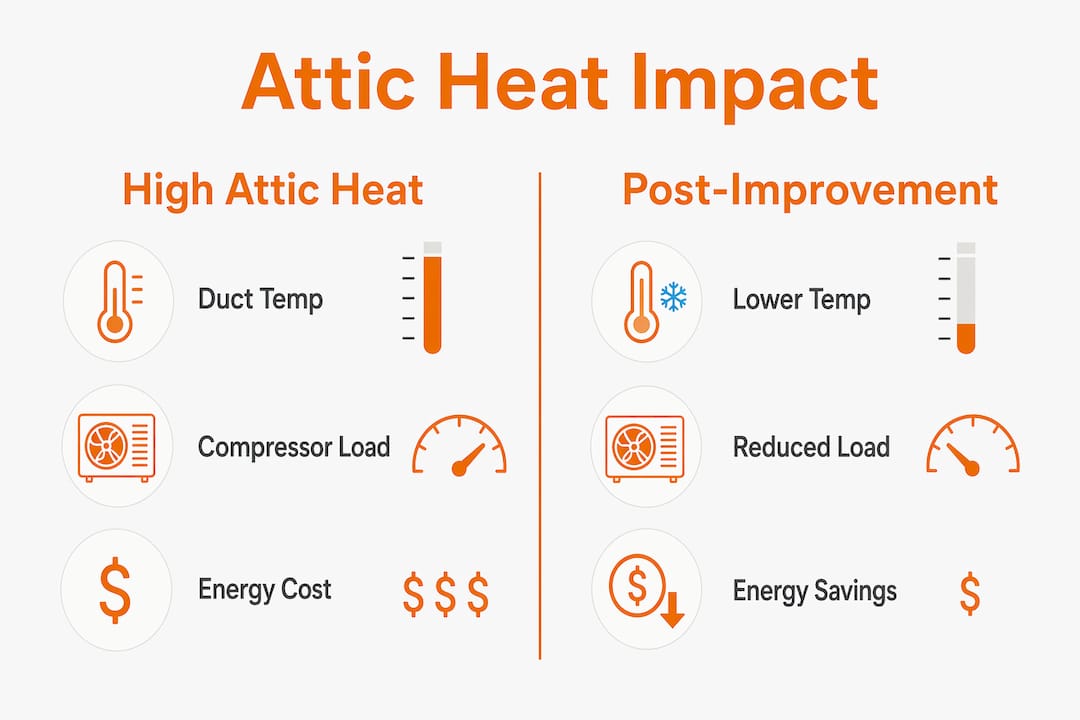
Higher attic temperatures increase the workload on your compressor and blower motor. The compressor must reject more heat to maintain the refrigerant cycle, and when outdoor temperatures climb above 100°F, heat rejection efficiency drops sharply, sometimes triggering high-pressure safety shutdowns. That is why your AC may cut out entirely on the hottest days.
The blower motor also works harder because it needs to push more air volume to compensate for the temperature rise in the ducts. This increases electricity draw and generates additional heat inside the air handler itself.
Electronic component damage
Extreme attic heat causes electronic component failures in air handlers, including swollen capacitors and cracked circuit boards. These failures are often misattributed to aging equipment when the real cause is the thermal environment the components live in. A capacitor rated for 85°C ambient conditions will fail years early when it sits in a 160°F attic. Replacing components without addressing the attic heat solves nothing long term.
- Swollen or failed capacitors reduce motor starting efficiency
- Cracked circuit boards cause intermittent shutdowns and error codes
- Corroded electrical connections increase resistance and heat buildup
- Refrigerant line insulation degrades, reducing system efficiency further
What are the measurable effects on energy bills and AC lifespan?
The efficiency metric that best captures real-world attic heat impact is EER, the Energy Efficiency Ratio. EER ratings show actual efficiency drops as attic and outdoor temperatures rise, unlike SEER which averages performance across a full season. When your attic hits 150°F on a July afternoon, your EER at that moment tells the real story.
Runtime, energy costs, and equipment life
The numbers are significant. Proper attic ventilation and radiant barriers can cut AC runtime by 15 to 25% by reducing attic temperatures by 30 to 50°F. That runtime reduction translates directly into lower monthly energy bills. It also means your compressor, blower motor, and capacitors accumulate fewer operating hours, extending their service life.
“Homeowners often underestimate the cumulative effect of heat rejection efficiency loss during extreme attic heat that worsens when outdoor temps rise above 100°F.” This compounding effect means a single hot week can cause more wear than months of moderate operation.
Equipment lifespan takes a measurable hit in hot attic conditions. Electronic HVAC components in attics degrade faster due to extreme heat, causing premature failures that homeowners often blame on age. The practical result is that systems in poorly ventilated attics need replacement years earlier than comparable systems in conditioned spaces.
| Impact area | Effect of high attic heat | Effect after attic improvement |
|---|---|---|
| Duct air temperature | Rises 5–10°F before delivery | Drops closer to set-point temperature |
| AC runtime per cycle | 15–25% longer than necessary | Returns to normal design runtime |
| Monthly energy cost | Noticeably higher during summer | Reduced proportionally to runtime cut |
| Equipment lifespan | Shortened by heat-related component failure | Extended by reduced thermal stress |
| Compressor shutdowns | Risk of high-pressure safety trips | Significantly reduced risk |
Why older homes face the biggest risk
Non-compliant attic duct installations in older homes lock many homeowners into inefficient designs. Duct systems installed before modern building science standards were common often lack adequate insulation and have numerous unsealed joints. These homes see the largest efficiency losses and benefit most from targeted attic improvements. If your home was built before 1990, your attic ductwork deserves a close look.
What practical improvements reduce attic heat effects on AC?
The good news is that attic heat mitigation follows a clear priority order, and the most cost-effective fixes are often the simplest ones.
Ranked solutions by return on investment
-
Seal duct joints with mastic or foil tape. Duct sealing is the highest-return intervention for preventing hot attic air from entering supply ducts. Costs typically run $150 to $600 for a professional seal job, and the efficiency gains show up immediately on your next energy bill. Mastic sealant is more durable than tape for permanent repairs.
-
Add or improve duct insulation. Wrapping ducts with R-6 or R-8 insulation slows heat transfer through duct walls. This is especially important for flexible ductwork, which has thinner walls and loses more heat than rigid metal ducts.
-
Install a radiant barrier. A radiant barrier is a reflective foil material stapled to the underside of roof rafters. It reflects radiant heat from the roof before it warms the attic air. Radiant barriers cost $400 to $1,500 installed and can reduce attic temperatures by 20 to 30°F on their own.
-
Improve attic ventilation with soffit and ridge vents. Passive ventilation moves hot air out of the attic continuously. Soffit vents pull cooler outside air in at the eaves while ridge vents exhaust hot air at the peak. A properly balanced ventilation system significantly reduces peak attic temperatures.
-
Add a solar-powered attic fan. Solar attic fans cost $300 to $600 and require no wiring or operating costs. They actively exhaust hot air during peak sun hours, exactly when your attic is hottest and your AC is working hardest. The ROI on these solutions typically arrives within 1 to 2 cooling seasons.
Pro Tip: Combine a radiant barrier with improved soffit and ridge ventilation before adding a fan. Passive ventilation is free to operate and handles most of the load. A fan then handles the peak hours when passive flow is not enough.
Comparing attic improvement approaches
| Improvement type | Upfront cost | Primary benefit | Best for |
|---|---|---|---|
| Duct sealing | $150–$600 | Stops hot air infiltration | All homes with attic ducts |
| Radiant barrier | $400–$1,500 | Reduces radiant heat gain | Homes with dark or low-slope roofs |
| Solar attic fan | $300–$600 | Active hot air exhaust | Attics with limited passive ventilation |
| Soffit and ridge vents | $200–$500 | Continuous passive airflow | Homes lacking balanced vent systems |
How does duct location and condition affect AC performance?
Duct location is the single biggest structural factor in AC performance in hot attics. Building science experts at the U.S. Department of Energy recommend moving ductwork inside conditioned spaces whenever possible. In existing homes, that is often not practical, which makes duct condition and insulation the next most critical variables.
Signs your ducts are losing efficiency
- Uneven room temperatures: Rooms farthest from the air handler run warmer, a classic sign of heat gain along long duct runs.
- AC running constantly: If your system runs but your house stays hot, attic duct heat gain is a primary suspect.
- High energy bills without explanation: Thermal gain through ducts adds cooling load without any change in your home’s occupancy or thermostat settings.
- Visible duct damage: Disconnected flex duct sections, torn insulation, or crushed duct runs all reduce airflow and increase heat exposure.
- Musty or hot air from vents: Hot attic air pulled through duct leaks delivers air that smells stale and arrives warmer than set-point.
Inspection and repair best practices
A proper duct inspection starts with a visual check of all accessible duct runs in the attic. Look for disconnected joints, insulation gaps, and flexible duct sections that have kinked or collapsed. A pressure test, called a duct blaster test, measures total duct leakage and gives you a baseline for comparing before and after repairs.
Sealing duct leakage with mastic or tape is often more cost-effective than adding large amounts of attic insulation. Mastic applied to every joint and seam creates a permanent, airtight seal. Foil tape is a faster option for accessible joints. After sealing, re-wrap any sections where insulation has degraded or fallen away. A professional duct repair service can complete a full attic duct inspection and seal job in a single visit, and the efficiency improvement is measurable the same day.
Homeowners in older Los Angeles homes should also check whether their duct insulation meets current standards. Older duct wrap often uses R-4 insulation, which is inadequate for attics reaching 150°F. Upgrading to R-8 wrap on all attic duct runs is a straightforward improvement that pays for itself quickly.
Key takeaways
Attic heat forces your AC to work significantly harder by warming cooled air in ducts and stressing electrical components, but targeted improvements like duct sealing, radiant barriers, and better ventilation can restore efficiency and extend equipment life.
| Point | Details |
|---|---|
| Attic temps reach extreme levels | Summer attic temperatures hit 130–160°F, causing 20–40% cooling capacity loss through ductwork. |
| Duct heat gain is measurable | Cooled air warms by 5–10°F in attic ducts, making your AC run longer to reach set-point. |
| Equipment degrades faster | Electronic components in hot attics fail earlier, shortening system lifespan by years. |
| Duct sealing delivers the best ROI | Sealing duct joints for $150–$600 stops hot air infiltration and pays back within 1–2 cooling seasons. |
| Ventilation and barriers compound savings | Radiant barriers and attic fans can cut AC runtime by 15–25% when combined with duct sealing. |
What I’ve learned after twenty years of attic heat calls in Los Angeles
After two decades of HVAC work across Los Angeles, the pattern I see most often is this: a homeowner replaces their AC unit because it stopped keeping up, and the new system struggles just as much within a year. Nobody looked at the attic.
The attic is where most residential cooling efficiency is lost, and it is almost always the last place homeowners think to check. I have walked into attics in july where the air handler was sitting in 155°F heat with duct insulation that had crumbled to dust. The AC was not failing because it was old. It was failing because it was being asked to cool a house while sitting inside an oven.
The mistake I see homeowners make most often is treating duct sealing as optional. They will spend $1,500 on a radiant barrier and skip the $300 duct seal job. The barrier helps, but the leaking ducts pull hot attic air directly into the supply stream and erase most of the gain. Do the duct sealing first. Always.
One more thing worth saying directly: condenser coil condition matters more in extreme heat. When your attic is hot and your outdoor unit is sitting in 105°F air, a dirty condenser coil pushes the compressor into high-pressure territory fast. Cleaning condenser coils before summer is not optional maintenance. It is the difference between a system that survives a heatwave and one that shuts down on the hottest day of the year.
The homeowners who get the most out of their AC systems are the ones who treat the attic and the equipment as a single system. Fix the attic environment, seal the ducts, and keep the equipment clean. That combination extends system life, cuts energy bills, and keeps your home comfortable when it matters most.
— Leo
LC Heating and Air Conditioning can help you fix attic heat problems
If your AC runs constantly but your home stays warm, attic heat and duct issues are the most likely cause. LC Heating and Air Conditioning provides same-day HVAC repair and diagnostics across Los Angeles, with honest flat-rate pricing and no surprise fees.

Our team inspects attic ductwork, identifies heat gain sources, and performs professional duct sealing and insulation upgrades that deliver measurable efficiency improvements. We have handled attic heat issues in everything from 1920s Craftsman bungalows to modern multi-zone systems. Whether you need a full duct repair or a targeted efficiency assessment, we give you a clear diagnosis and a fair price before any work begins. Call us or book online for same-day service.
FAQ
How much can attic heat reduce AC efficiency?
Attic temperatures between 130 and 160°F cause 20 to 40% cooling capacity loss through thermal gain in attic ductwork. This forces your AC to run significantly longer to reach the same set-point temperature.
Does attic insulation actually help AC performance?
Yes, but duct sealing delivers better results per dollar spent. Sealing duct joints stops hot attic air from entering supply ducts directly, while insulation slows heat transfer through duct walls. Both improvements work best together.
How do I know if my attic ducts are causing problems?
The clearest signs are uneven room temperatures, an AC that runs constantly without cooling the house, and higher energy bills during summer. A professional duct blaster test measures leakage precisely and confirms whether ducts are the source.
Can a radiant barrier replace attic ventilation?
No. A radiant barrier reduces radiant heat from the roof but does not remove hot air that has already built up in the attic. Proper soffit and ridge ventilation, or a solar attic fan, is needed to exhaust that heat and keep attic temperatures manageable.
How often should attic ductwork be inspected?
Attic ductwork should be inspected every 3 to 5 years, or any time your AC performance drops noticeably. Homes built before 1990 benefit from an immediate inspection, since older duct installations often lack adequate insulation and sealing.
Recommended
Leo, Propietario y Técnico Principal en LC Heating & Air
Leo dirige LC Heating & Air como propietario-operador y tiene la licencia C-20 HVAC #1073586 de California. Sus guías se enfocan en diagnósticos prácticos, decisiones de reparación seguras y consejos claros para propietarios de Los Ángeles.