- What is an HVAC nitrogen flush and why is it used?
- How and when is an HVAC nitrogen flush performed?
- What are the risks of skipping a nitrogen flush?
- How much does an HVAC nitrogen flush cost and is it worth it?
- Key Takeaways
- Why I never let a compressor job leave without a nitrogen flush
- LC Heating and Air Conditioning handles nitrogen flushing the right way
- FAQ
- Recommended
What Is HVAC Nitrogen Flush? A Homeowner’s Guide
TL;DR:
- A nitrogen flush involves purging HVAC systems with dry nitrogen to prevent moisture and contaminants during repairs. Skipping this step causes acid buildup, corrosion, and repeated compressor failures, voiding warranties. Proper flushing is a low-cost and essential process that protects system longevity and homeowner investment.
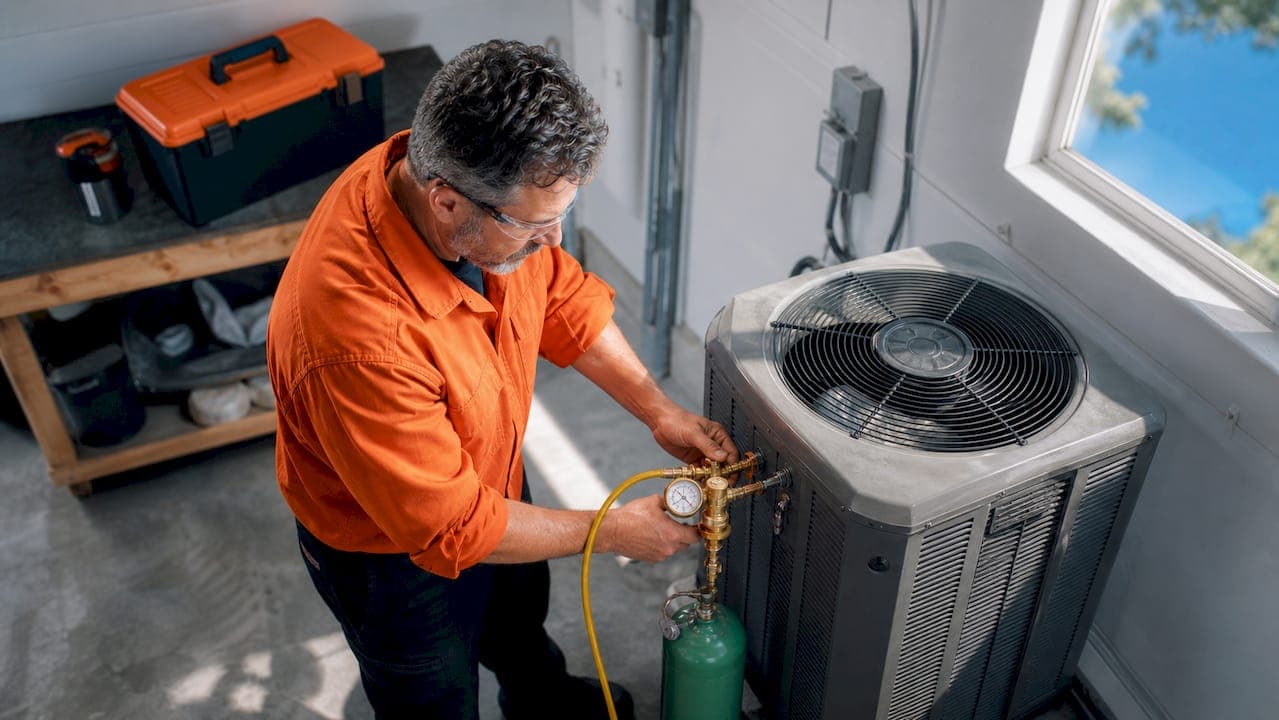
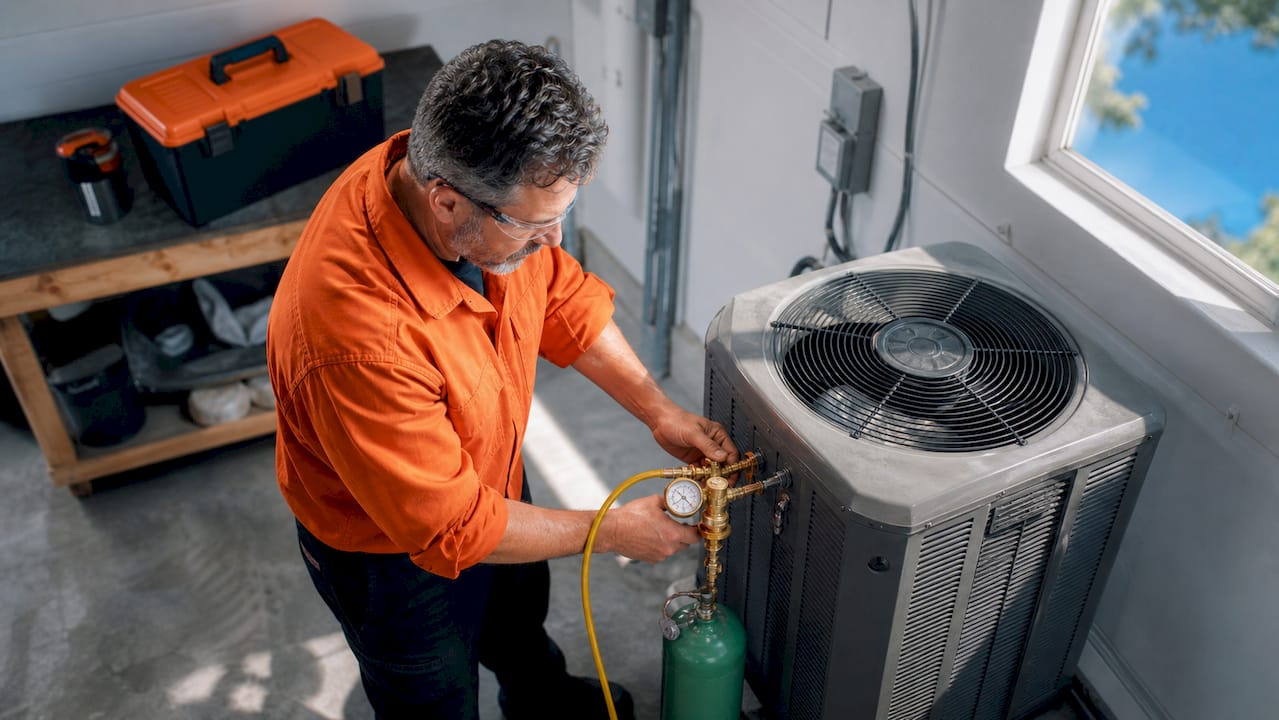
An HVAC nitrogen flush is the process of purging an air conditioning system with dry nitrogen gas to remove moisture, oxygen, and contaminants from its internal components. Technicians use this procedure during repairs, after compressor burnout, and whenever refrigerant lines are opened or brazed. The nitrogen flush protects critical parts like the compressor, thermostatic expansion valve (TXV), and filter driers from corrosion and acid damage. Skipping it after a major repair is one of the most common reasons a brand-new compressor fails within weeks. Understanding what this process does, and why it matters, puts you in a much stronger position as a homeowner.
What is an HVAC nitrogen flush and why is it used?
An HVAC nitrogen flush, also called a nitrogen purge, uses dry inert nitrogen gas to displace oxygen and moisture inside your system’s copper refrigerant lines and components. Nitrogen is dry by nature, meaning it carries no water vapor. That single property makes it the right tool for protecting the inside of your HVAC system during and after repairs.
Here is why oxygen and moisture are so damaging. When moisture gets trapped inside refrigerant lines, it reacts with the refrigerant itself. That reaction forms corrosive acids that eat away at copper tubing, valve seats, and compressor internals. The damage is slow at first, but it compounds quickly. A system that looks fine after a repair can fail completely within a few months because of acid buildup that was never cleared.
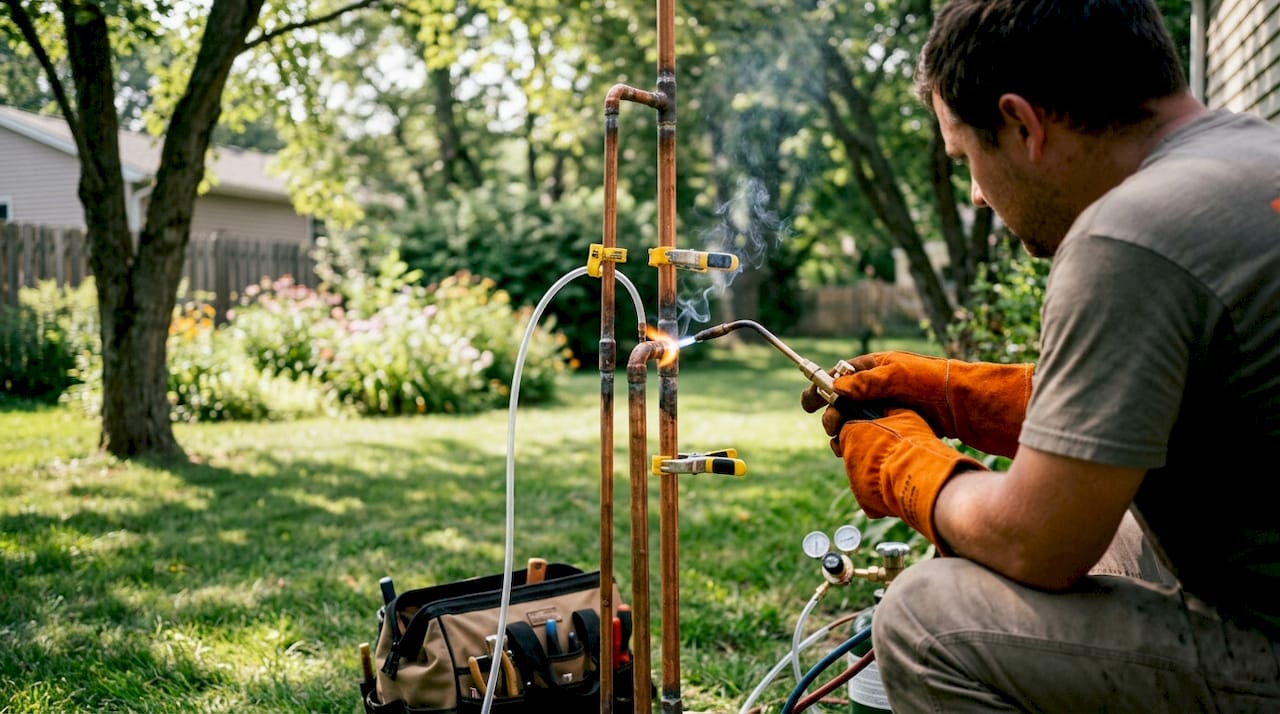
Oxygen creates a separate problem during brazing. When a technician heats copper lines to solder or braze fittings, oxygen inside the line reacts with the hot copper surface. This reaction creates black oxide flakes that break off and circulate through the system. Those flakes clog the TXV, score compressor valves, and block filter driers. A nitrogen purge flowing through the line during brazing prevents that reaction entirely.
The components nitrogen flushing protects most directly include:
- Compressor: The heart of your AC system. Acid and debris cause internal wear and electrical failures.
- TXV (thermostatic expansion valve): A small but critical metering device. Oxidation flakes clog it quickly, causing poor cooling and pressure problems.
- Filter drier: Designed to catch small amounts of moisture, but not large contamination loads. A flush reduces what the drier has to handle.
- Copper line set: Properly maintained copper lines resist corrosion far longer when nitrogen purging is part of every repair.
Pro Tip: Ask your technician whether nitrogen was flowing during brazing, not just after. The purge needs to start before the torch is lit and continue until the joint cools completely.
How and when is an HVAC nitrogen flush performed?
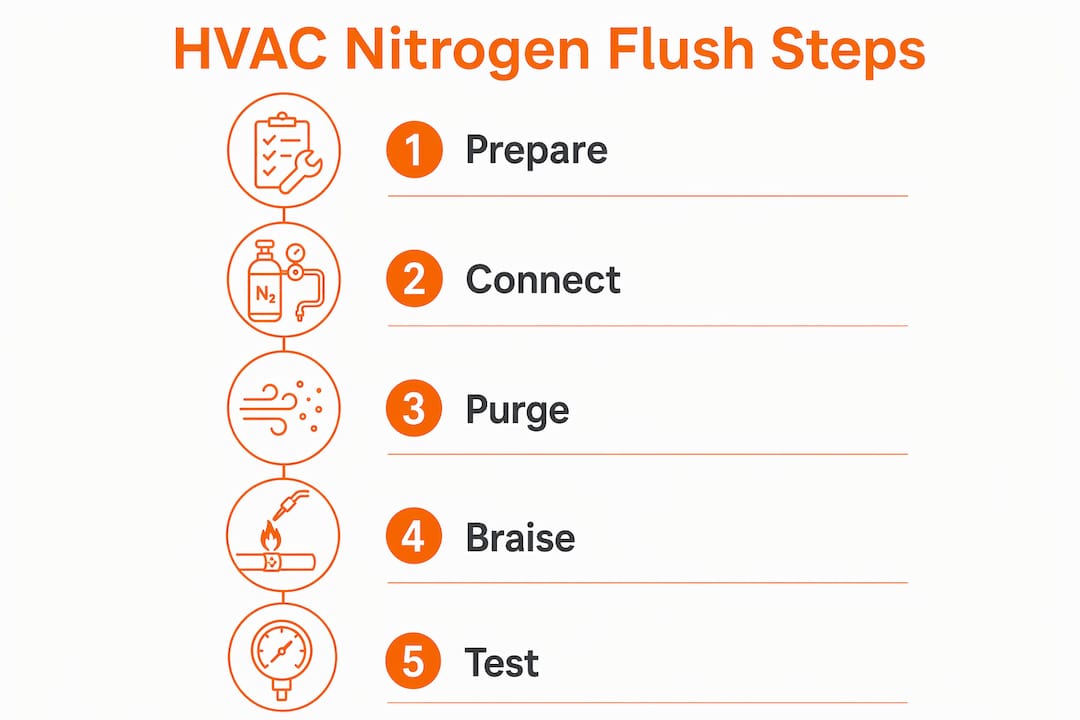
The nitrogen flushing process follows a specific sequence. Skipping any step reduces its effectiveness. Here is how a qualified technician performs a proper flush after a major repair like compressor burnout.
- Isolate the coils. The technician isolates the evaporator and condenser coils from the line set to protect them during the flush procedure.
- Connect dry nitrogen. A regulated nitrogen cylinder connects to the system. Only dry nitrogen should be used. Compressed shop air introduces moisture and oxygen, and using oxygen itself poses an explosion risk when combined with hydrocarbons.
- Flush with solvent under pressure. For contaminated systems, a non-flammable solvent is pushed through the line set using nitrogen at approximately 150 PSI. This carries acid residues, oil sludge, and debris out of the lines.
- Purge with nitrogen. After the solvent flush, dry nitrogen continues flowing to push out any remaining solvent and dry the lines completely.
- Pull a deep vacuum. The technician evacuates the system to below 500 microns using a vacuum pump. This removes any last traces of moisture and confirms the system is leak-free before refrigerant is added.
- Document the procedure. The technician records the flush, vacuum level achieved, and nitrogen pressure used. This documentation matters for warranty purposes.
During brazing specifically, nitrogen flows at a low, continuous rate of 2–5 SCFH (standard cubic feet per hour). This low flow is enough to displace oxygen without pressurizing the line. The flow starts before the torch is applied and stops only after the joint has cooled.
| Situation | Nitrogen Use | Pressure / Flow Rate |
|---|---|---|
| Brazing new joints | Continuous purge during heating | 2–5 SCFH |
| Post-burnout flush | Solvent push + dry purge | ~150 PSI |
| Vacuum evacuation | After flush, before refrigerant charge | Below 500 microns |
| Line set repair | Purge after brazing is complete | 2–5 SCFH during brazing |
Nitrogen flushing is required in several specific situations. These include post-compressor burnout, any time refrigerant lines are cut or brazed, after major refrigerant leaks, and when replacing a TXV or other in-line component. Routine maintenance tune-ups do not typically require a full flush unless contamination is found.
What are the risks of skipping a nitrogen flush?
Skipping a nitrogen purge after a major repair is not just cutting corners. It is setting the system up for a second failure. The consequences are predictable and expensive.
The most serious risk is repeat compressor failure. Acid residues left in the lines after a burnout cause a new compressor to fail within 60–90 days. That means paying for a second compressor replacement, plus labor, within the same season. The original repair cost doubles or triples, all because the flush was skipped.
Here is what happens step by step when a flush is omitted:
- Acid circulates with refrigerant. The new compressor runs in a contaminated system. Acid attacks the motor windings and valve plates from day one.
- Oxidation flakes clog the TXV. The valve sticks or fails to meter refrigerant correctly. The system loses cooling capacity and runs inefficiently.
- Filter drier becomes saturated quickly. Without a flush, the drier absorbs the full contamination load. It saturates fast and stops protecting the system.
- Copper lines corrode from the inside. Long-term acid exposure causes pinhole leaks that are difficult to locate and expensive to repair.
Skipping the nitrogen flush after a compressor burnout is the single most common reason a new compressor fails prematurely. Acid residues left in the line set attack the replacement unit from the moment it starts running. No amount of refrigerant recharge or filter drier replacement compensates for lines that were never cleaned.
Warranty coverage is another major concern. Many compressor manufacturers require documented proof of line-set flushing after a burnout before they will honor a warranty claim. Without that documentation, a $1,200 compressor warranty becomes worthless. You can learn more about protecting your investment by reviewing compressor warranty requirements before authorizing any repair.
How much does an HVAC nitrogen flush cost and is it worth it?
The nitrogen purge itself adds a modest cost to a repair job. For most residential repairs, the nitrogen and the time to perform a proper purge add roughly $20–$50 to the total invoice. That number is small relative to what it protects.
Consider the alternative. A replacement compressor for a residential central air system typically costs between $800 and $2,000 including labor. If a skipped flush causes that compressor to fail within 90 days, you pay that cost again. The nitrogen flush is not a luxury add-on. It is a low-cost insurance policy against the most expensive failure in your HVAC system.
Here is what to look for when reviewing a repair quote:
- Line set flush is listed separately. A reputable technician itemizes the nitrogen flush, not just the refrigerant charge.
- Vacuum level is documented. The invoice should note that the system was evacuated below 500 microns.
- Nitrogen used during brazing is confirmed. If any soldering or brazing was done, nitrogen flow during that work should be noted.
- Flush documentation is provided. You receive written proof of the procedure for warranty purposes.
Pro Tip: Before signing a repair quote, ask directly: “Will you flush the lines with nitrogen and document it?” A qualified technician answers yes without hesitation. Hesitation or a vague answer is a red flag.
The cost of nitrogen is genuinely low compared to the repair costs it prevents. Homeowners who understand this ask better questions and get better service. Pairing good HVAC maintenance habits with broader home weatherization practices also reduces the overall strain on your system, extending its life further.
Key Takeaways
A nitrogen flush is a non-negotiable step after any major HVAC repair, protecting your compressor, TXV, and copper lines from acid damage, oxidation, and premature failure.
| Point | Details |
|---|---|
| Definition of nitrogen flush | A dry nitrogen purge removes moisture, oxygen, and contaminants from HVAC refrigerant lines. |
| When it is required | After compressor burnout, brazing, line repairs, or any time the refrigerant circuit is opened. |
| Risk of skipping it | Acid residues cause repeat compressor failure within 60–90 days and void manufacturer warranties. |
| Proper procedure | Flush at ~150 PSI, purge with dry nitrogen, then evacuate below 500 microns before recharging. |
| Cost vs. value | A $20–$50 flush prevents $800–$2,000 compressor replacements and protects warranty coverage. |
Why I never let a compressor job leave without a nitrogen flush
After more than twenty years working on HVAC systems across Los Angeles, I have seen the same pattern repeat itself more times than I can count. A homeowner calls because their AC stopped cooling. A technician replaced the compressor six weeks earlier. The new compressor is already burned out. When I ask whether the lines were flushed, the answer is almost always no.
The frustrating part is that nitrogen purging is a professional standard, not an optional upgrade. Any qualified technician knows this. The ones who skip it are either cutting time, cutting cost, or simply not trained well enough to know better. None of those reasons protect you as a homeowner.
What I tell every customer is this: the nitrogen flush is not something you see or feel. You will never notice it working. But you will absolutely notice when it was skipped, because your system fails again in the middle of summer and your warranty claim gets denied. That is a painful and expensive lesson.
My advice is to treat the nitrogen flush as a non-negotiable line item on any repair invoice that involves opening the refrigerant circuit. Ask for it by name. Ask for written documentation. If a contractor pushes back or tells you it is not necessary, that is your signal to call someone else. Proper nitrogen flushing practices are what separate professional-grade service from work that looks fine until it fails.
The systems I have serviced that last 15 to 20 years without major issues all have one thing in common. Every repair was done right the first time, with nitrogen flowing and documentation in hand.
— Leo
LC Heating and Air Conditioning handles nitrogen flushing the right way
When your air conditioner needs a repair, you deserve to know the job was done correctly. LC Heating and Air Conditioning performs every refrigerant circuit repair with proper nitrogen purging, documented vacuum evacuation, and full compliance with manufacturer warranty requirements.

LC Heating and Air Conditioning serves homeowners across Los Angeles with same-day HVAC repair service and flat-rate pricing, so you know exactly what you are paying before work begins. No surprise fees, no pressure to replace equipment that can be repaired. Every technician on the team treats nitrogen flushing as a standard part of the job, not an upsell. If your system needs a compressor replacement or any repair that opens the refrigerant lines, call LC Heating and Air Conditioning and ask about our documented flush process. Your warranty and your comfort depend on it.
FAQ
What is an HVAC nitrogen flush in simple terms?
An HVAC nitrogen flush is the process of pushing dry nitrogen gas through your air conditioning system’s refrigerant lines to remove moisture, oxygen, and contaminants before sealing and recharging the system.
Is a nitrogen flush necessary every time my AC is serviced?
A nitrogen flush is required whenever the refrigerant circuit is opened, such as during compressor replacement, brazing, or line repairs. Routine tune-ups that do not open the lines do not require a full flush.
What happens if the nitrogen purge is skipped after a compressor burnout?
Acid residues left in the lines attack the new compressor, causing repeat failure within 60–90 days. The manufacturer warranty may also be voided without documented flush records.
Can a technician use compressed air instead of nitrogen?
No. Compressed shop air introduces moisture and oxygen into the system. Using oxygen with hydrocarbons also creates an explosion risk. Only dry nitrogen is safe and effective for this procedure.
How do I know if my technician performed a nitrogen flush?
Ask for written documentation showing the flush was performed, the vacuum level achieved (below 500 microns), and that nitrogen was used during any brazing. A reputable contractor provides this without being asked twice.
Recommended
Leo, Propietario y Técnico Principal en LC Heating & Air
Leo dirige LC Heating & Air como propietario-operador y tiene la licencia C-20 HVAC #1073586 de California. Sus guías se enfocan en diagnósticos prácticos, decisiones de reparación seguras y consejos claros para propietarios de Los Ángeles.