TL;DR:
- Heatwaves cause electrical, mechanical, and airflow stresses that frequently lead to AC failures, especially in high temperatures. Proactive maintenance, correct system sizing, and timely repairs can significantly extend system lifespan and prevent costly breakdowns. Replacing an aging unit is often more economical than repeated repairs when repair costs exceed half the price of a new system.
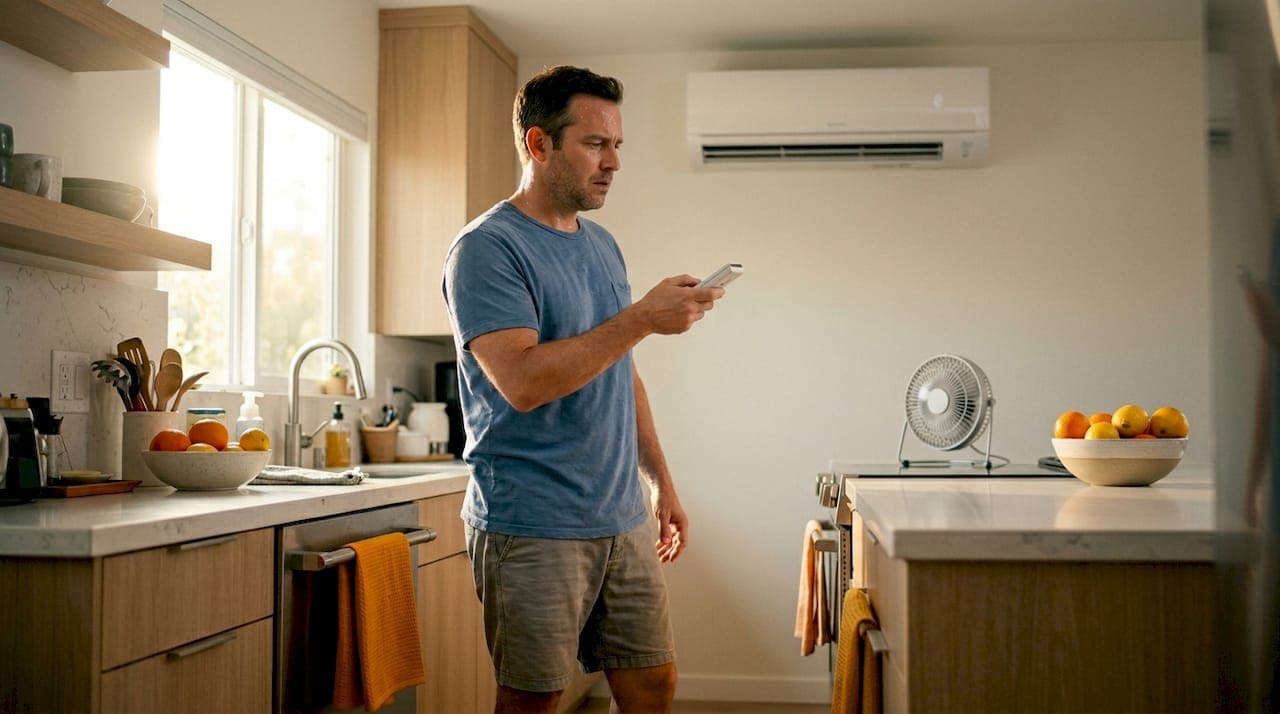
You set your thermostat to 72°F on a 105°F afternoon, and your air conditioner either blows warm air or shuts down completely. It feels random and infuriating. Understanding why AC fails in heatwave conditions is not just reassuring. It’s the first step toward doing something about it before the next one hits. The truth is that heatwaves stress your system in very specific ways, and most failures trace back to a handful of causes that are both predictable and largely preventable. This article walks you through exactly what breaks, why it breaks, and what you can do about it.
Table of Contents
- Key Takeaways
- Why AC fails in heatwave conditions
- Airflow and refrigerant problems during heat
- Runtime myths, sizing, and thermostat settings
- Preventing heatwave AC failure
- Repair vs. replace after a heatwave failure
- My honest take on heatwave AC failures
- Stay cool with LC Heating and Air Conditioning
- FAQ
Key Takeaways
| Point | Details |
|---|---|
| Electrical components fail first | Capacitors and contactors overheat fastest during extreme heat, triggering shutdowns and breaker trips. |
| Airflow is everything | A clogged filter or dirty coil can snowball into a frozen evaporator and full compressor failure. |
| Sizing matters more than runtime | An improperly sized unit will struggle and fail in a heatwave regardless of how carefully you use it. |
| Prevention beats repair every time | Proactive maintenance can extend system life by five to seven years. |
| Use the 50% rule for replacement | If repair costs exceed half the price of a new system and your unit is over 12 years old, replacement wins. |
Why AC fails in heatwave conditions
Most people assume their AC stopped working because it ran too long. That is rarely the actual cause. The real culprit is heat stress on specific electrical and mechanical components that were designed for a normal operating range. When outdoor temperatures push past 95°F for hours at a stretch, those components get pushed well beyond that range.
Capacitors and contactors
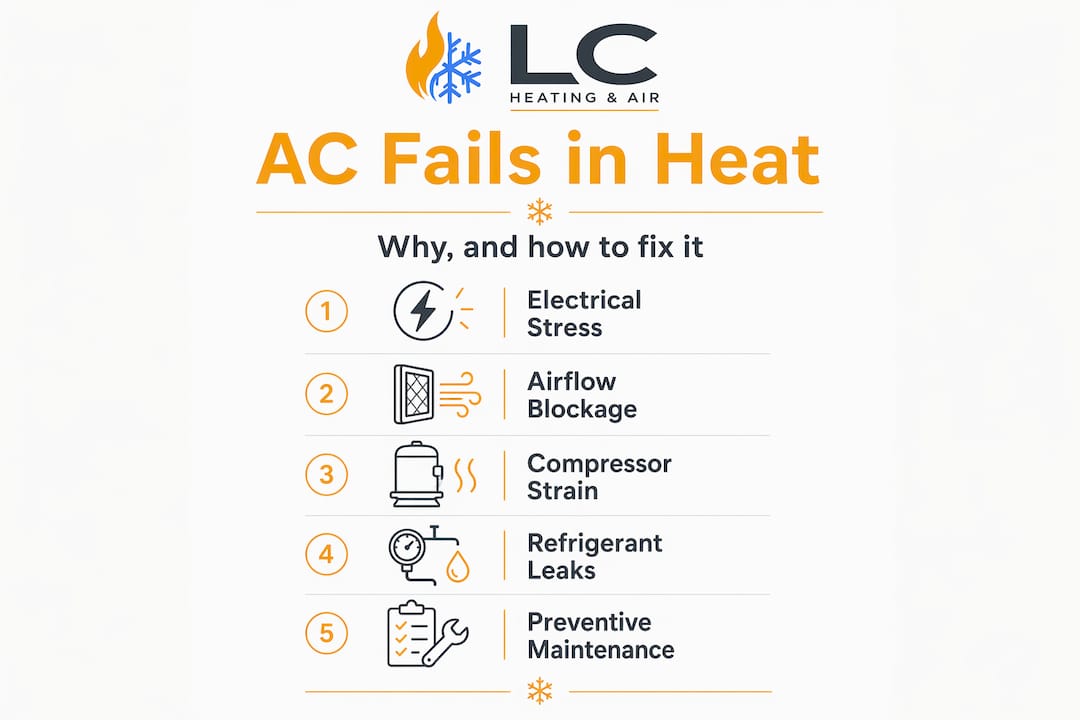
Capacitors are small cylindrical components that store and release electrical energy to start and run your compressor and fan motors. Think of them as a small but mighty battery with one job: give your motors the jolt they need to start. Capacitor failure is one of the most common summer service calls an HVAC company receives, and for good reason. Extreme heat degrades a capacitor’s internal materials, causing it to swell, leak, or fail entirely. When that happens, your motor draws excess amperage, and your breaker trips.
Contactors are the electrical switches that send power to the compressor. Like capacitors, they handle high electrical loads and are sensitive to prolonged heat exposure. A worn contactor can stick open or closed, which means your compressor either never starts or never stops.
Compressor stress
The compressor is the heart of your cooling system. It pressurizes refrigerant and keeps the cooling cycle running. During a heatwave, the outdoor unit works in an environment that is already superheated, which makes the compressor work much harder to shed that heat. Over time, that sustained stress leads to compressor failure, which is the most expensive failure mode in the entire system. Replacing a compressor typically costs 50 to 70% of the price of a brand new unit, which means prevention is not just smart. It is financially critical.
Pro Tip: If you hear a hard clicking sound followed by silence when your AC tries to start, that is often a failing capacitor. Call a technician before it takes the compressor down with it.
Motor wear from extended operation
Fan motors in both the indoor air handler and the outdoor condenser unit run continuously during a heatwave. Extended operation at high temperatures accelerates wear on motor windings, bearings, and seals. A motor that might last twelve years under normal conditions can fail in five if it spends every summer fighting extreme heat without proper lubrication and maintenance.
Watch for these signs of electrical and mechanical strain:
- Warm or hot air coming from vents even when the system is running
- Loud humming, grinding, or clicking noises during startup
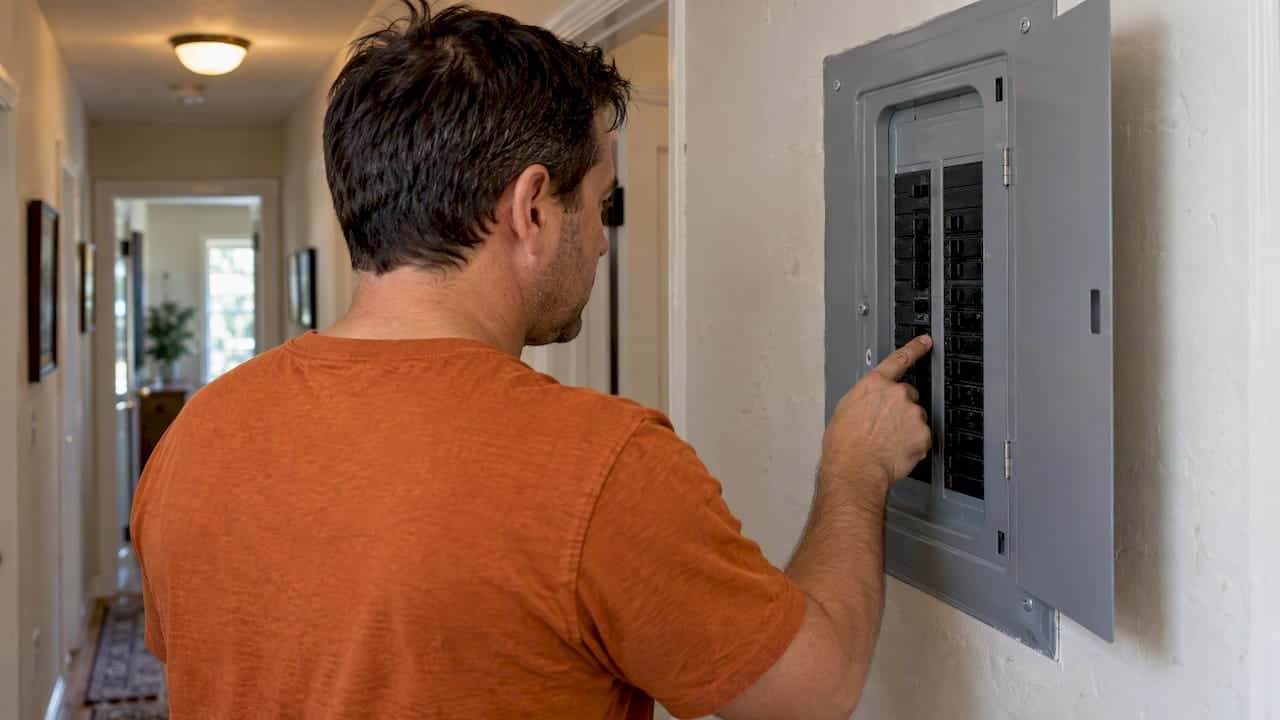
- Frequent breaker trips tied to your AC circuit
- The outdoor unit fan not spinning even though the system is on
- Your system short cycling, meaning it turns on and off in very short bursts
Airflow and refrigerant problems during heat
Even a system with healthy electrical components can fail in a heatwave if airflow is compromised. Restricted airflow is one of the most underrated causes of AC system failures, and it is almost entirely preventable.
How dirty filters and coils cause breakdowns
Your air filter keeps dust and debris from coating the evaporator coil inside your air handler. When that filter gets clogged, airflow drops, the coil gets too cold, and moisture freezes on it. A frozen evaporator coil blocks airflow completely, which sends your compressor into a short-cycling panic and accelerates wear. Dirty filters and blocked coils can cause the system to overheat and shut down entirely, which is a common reason why AC stops cooling during the hottest days of the year.
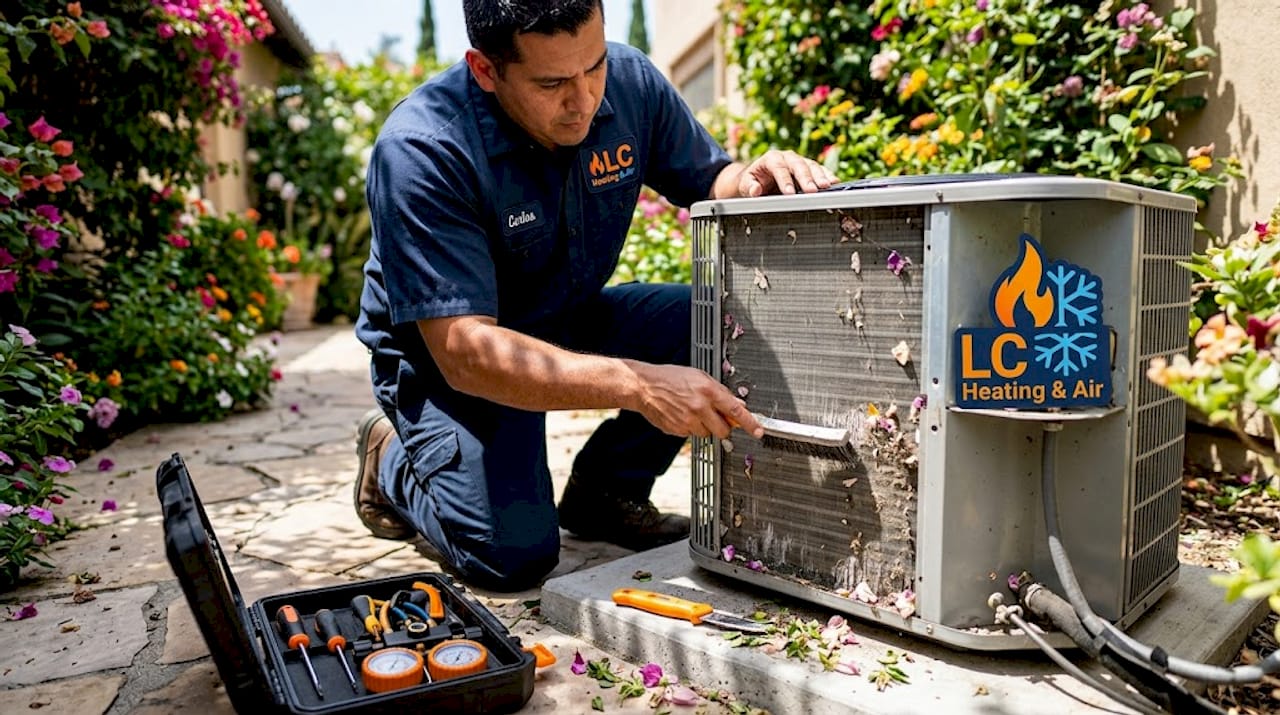
The outdoor condenser coil is just as important. That coil releases heat from the refrigerant into the outside air. If it is coated with dirt, grass clippings, or cottonwood, it cannot do that job. The refrigerant stays hot, pressure builds inside the system, and the compressor eventually trips on a high-pressure safety switch or burns out. You can clean condenser coils yourself with a garden hose, but do it before the heatwave season starts, not during.
Refrigerant leaks and their real impact
Low refrigerant is another common cause of why AC struggles in extreme heat. Refrigerant does not get “used up” like fuel. If your system is low, it has a leak. Running a system with a refrigerant leak during a heatwave is a fast track to compressor damage because the compressor depends on refrigerant returning to it as a cool, low-pressure gas. When that gas arrives warm and at the wrong pressure, the compressor overheats.
Signs your refrigerant may be low:
- Your AC runs constantly but the house never reaches the set temperature
- You notice ice forming on the copper lines running to your outdoor unit
- There is a hissing or bubbling sound near the indoor unit
- Airflow feels fine but the air coming out is not as cold as it should be
Pro Tip: If you notice ice on your refrigerant lines, turn the system to “fan only” mode and let it thaw for two hours before calling a technician. Running the compressor against a frozen coil can destroy it.
Blocked filters and duct leaks also reduce system performance under extreme conditions. Even one or two registers blocked by furniture can shift enough static pressure to cause problems on a 110°F day.
Runtime myths, sizing, and thermostat settings
Here is something that surprises a lot of homeowners: letting your AC run continuously during a heatwave is usually not what causes it to break down. The problem is almost always poor sizing or a system that was already on the edge before the heat arrived.
The truth about continuous runtime
Turning your AC off during the day and restarting it repeatedly actually makes your system work harder and increases wear. When a properly sized system runs non-stop on a hot day, that is exactly what it was designed to do. The startup cycle, not sustained running, is when electrical components take the biggest hit.
That said, system size matters more than almost anything else when it comes to heatwave performance. Here is how oversized and undersized units behave differently:
- Undersized units run continuously and still cannot reach the set temperature. The compressor and motors never get a break, heat builds up in the system, and something eventually fails.
- Oversized units short cycle, meaning they cool the space quickly but do not run long enough to remove humidity or allow components to operate in their optimal range. This puts excessive stress on the compressor at startup.
- Correctly sized units run in longer, steady cycles. They reach the set temperature, shut off, and restart when needed. During a heatwave, they may run nearly continuously, but that is normal.
- Thermostat settings play a real role too. Setting your thermostat to 68°F when it is 108°F outside asks your system to maintain a 40-degree temperature difference. That is extreme. Most systems are designed to cool about 20°F below the outdoor temperature efficiently.
Pro Tip: Set your thermostat to 75°F to 78°F during a heatwave instead of pushing for the lowest setting. Your system will run steadily without spiking electrical loads, and it will actually keep up better over the course of the day.
Cooling costs already increase about 8.5% during summer. Chasing a lower thermostat setting adds to that without meaningfully improving comfort.
Preventing heatwave AC failure
Preventing an air conditioner breakdown heatwave situation is mostly about what you do in spring and early summer, not during the event itself. By the time a heatwave hits, your window to prepare is narrow.
Your pre-season maintenance checklist
- Change or clean your air filter. Do this every 30 to 60 days during peak cooling season. A fresh filter is the single cheapest thing you can do to protect your system.
- Clear the area around your outdoor unit. Keep a two-foot clearance of open space around the condenser. Plants, fencing, and debris all trap heat around the unit.
- Check your condensate drain line. A clogged drain causes water backup, which can trigger a safety shutoff. You can flush it with a cup of diluted white vinegar.
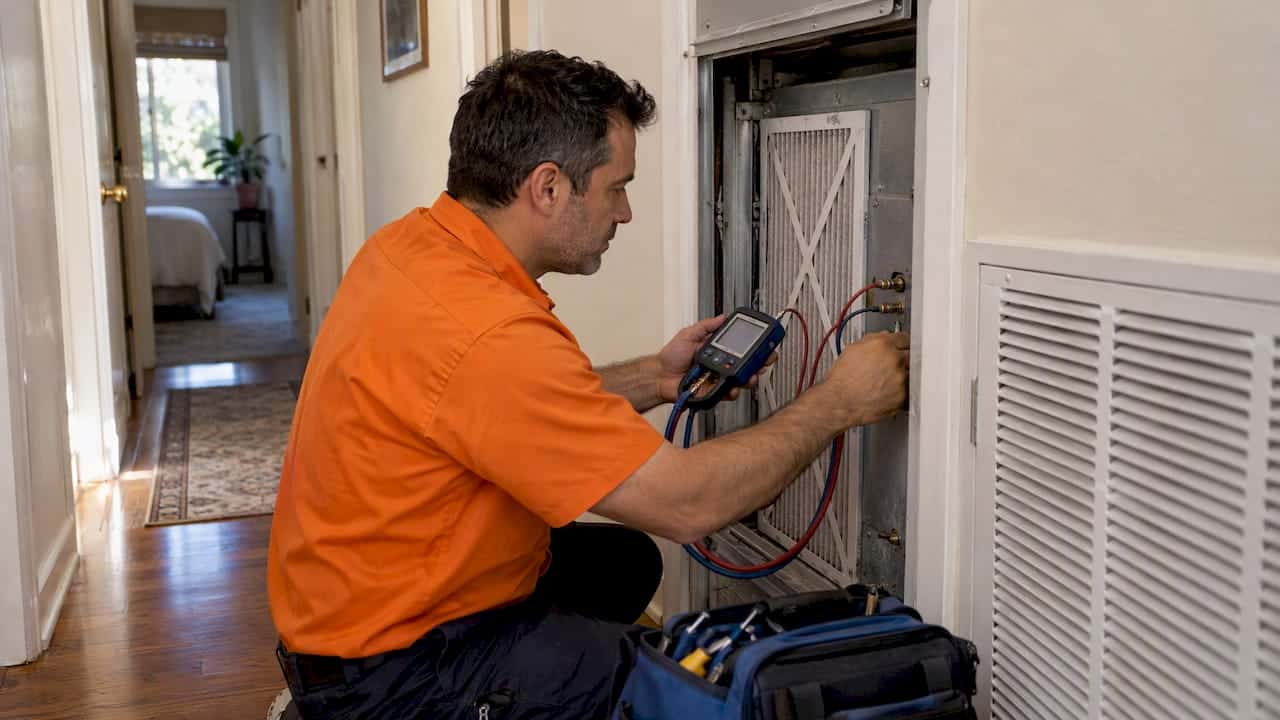
- Schedule a professional inspection. A technician will check refrigerant levels, measure electrical draw on capacitors and contactors, clean coils, and confirm your system is sized appropriately.
- Test your thermostat. Make sure it is reading temperatures accurately and responding as expected. A miscalibrated thermostat can cause unnecessary cycling.
Pro Tip: Schedule your AC preventive maintenance in March or April, before the rush. HVAC companies book out fast in late spring, and by June, same-day appointments are much harder to get.
Comparing reactive vs. proactive maintenance
| Approach | Typical outcome | Average cost range |
|---|---|---|
| Reactive (fix after failure) | Emergency repair or replacement during peak demand | $300 to $3,500+ |
| Proactive (annual tune-up) | Early issue detection, longer system lifespan | $100 to $200 per year |
| Neglect (no maintenance) | Compressor failure or full system replacement | $2,000 to $7,000+ |
The math is not complicated. An annual maintenance plan costs a fraction of what a single emergency compressor replacement runs. And proactive care genuinely does extend system life. Addressing airflow issues and unusual noises early can add five to seven years to your system’s functional lifespan.
Using a smart thermostat also helps. Smart thermostats can create gradual cooling schedules that reduce startup stress and keep your home cooler throughout the day rather than requiring a massive recovery cycle after the temperature spikes.
Repair vs. replace after a heatwave failure
If your system suffers a breakdown heatwave situation and a technician gives you a repair estimate, how do you know whether to fix it or replace it?
The 50% rule
The industry standard is straightforward. If repair costs exceed 50% of what a new system would cost, and your unit is near or past the 12 to 15 year mark, replacement is almost always the smarter financial decision. A compressor replacement, for example, can run $1,500 to $2,500 for the part and labor alone. On a 14-year-old system, that cost goes nowhere near recovering its value.
What the comparison actually looks like
| Scenario | Repair cost | Recommended action |
|---|---|---|
| Capacitor failure on a 5-year-old unit | $150 to $400 | Repair without hesitation |
| Refrigerant leak on an 8-year-old unit | $300 to $600 | Repair, monitor for recurrence |
| Compressor failure on a 10-year-old unit | $1,500 to $2,500 | Evaluate total system cost carefully |
| Compressor failure on a 14-year-old unit | $1,500 to $2,500 | Replace the system |
| Multiple simultaneous failures on any unit | Varies widely | Replace the system |
Signs that lean strongly toward replacement over repair include refrigerant that requires the older R-22 formula (now discontinued and expensive), visible rust or physical damage to the cabinet, a history of repeated repairs in recent seasons, and persistent inability to cool the home even after servicing. Options for HVAC replacement have improved significantly, with newer systems offering dramatically better efficiency ratings than units installed ten or more years ago.
My honest take on heatwave AC failures
I have been working on air conditioning systems in Los Angeles for over twenty years, and the pattern I see more than any other is this: the homeowner who calls me in a panic during a 110°F July was usually warned at some point. A slow leak here. A noisy capacitor there. A system that was running a little longer than usual last summer.
In my experience, the biggest myth is that running your AC constantly during a heatwave is what breaks it. What actually breaks it is deferred maintenance and a system that was already compromised going in. I have walked into homes where the filter had not been changed in two years, the condenser coils were solid with debris, and the capacitors were visibly swollen. That system was going to fail. The heatwave just determined when.
What I have learned is that the homeowners who never call me for emergencies are the ones who schedule a tune-up every spring without fail. They change their filters. They know what their system sounds like when it is healthy. When something changes, they call before it becomes a crisis.
The other thing I want you to hear is this: a failing capacitor costs about $150 to replace. A compressor costs ten times that, and often more. Catching problems early is not just about comfort. It is about not spending $2,000 on something that would have cost $150 six months ago.
If your system struggled this past heatwave and you are not sure why, do not wait for it to happen again. Get it inspected. If it is blowing warm air or short cycling, you can troubleshoot warm air issues as a starting point, but a professional diagnosis will tell you what you are really dealing with.
— lc
Stay cool with LC Heating and Air Conditioning
When your AC fails during a heatwave, you need answers fast and a team you can trust to give you an honest picture of what is going on. LC Heating and Air Conditioning has served homeowners and tenants across Los Angeles for over twenty years, handling everything from quick capacitor swaps to full system replacements, with flat-rate pricing so you always know what you are paying before work begins.
Whether you need same-day AC repair or want to get ahead of the next heat event with a scheduled maintenance visit, the team at LC Heating and Air Conditioning is ready to help. No pressure tactics. No surprise fees. Just straightforward diagnostics and reliable service from technicians who know Los Angeles homes inside and out. You can also explore the full library of AC troubleshooting guides to understand what your system is telling you before the next heatwave season arrives. Call LC Heating and Air Conditioning to schedule your inspection today and go into summer with confidence.
FAQ
Why does my AC stop cooling during a heatwave?
Your AC likely stops cooling because of electrical component failures like capacitors or contactors, restricted airflow from dirty filters, or refrigerant issues that are all amplified by extreme heat demanding more from the system than it can deliver.
Is it bad to let my AC run all day during a heatwave?
No. Continuous runtime on a properly sized system is normal and preferable to turning it off and restarting frequently, which increases electrical stress on startup components.
What is the most expensive AC failure in a heatwave?
Compressor failure is the most costly, often running 50 to 70% of the price of a new system, which is why preventing the cascade of issues that lead to compressor stress is so important.
How can I prevent my AC from failing in extreme heat?
Change your filter every 30 to 60 days, keep the area around your outdoor unit clear, and schedule a professional inspection each spring before peak cooling season begins.
When should I replace my AC instead of repairing it?
If your unit is over 12 years old and the repair estimate exceeds 50% of a new system’s cost, replacement is usually the better investment, especially after a major failure like compressor damage.
Recommended
- How to Fix an AC Blowing Warm Air | Diagnostic Wiki | LC Heating & Air | LC Heating & Air
- How to Fix a Frozen AC Unit | Diagnostic Wiki | LC Heating & Air | LC Heating & Air
- AC Emergency Service Benefits Every LA Homeowner Should Know | LC Heating & Air
- What to Do When Your HVAC System Won’t Turn On | Diagnostic Wiki | LC Heating & Air | LC Heating & Air
Leo, Owner & Lead Technician at LC Heating & Air
Leo leads LC Heating & Air as an owner-operator and holds California CSLB C-20 HVAC license #1073586. His guides focus on practical diagnostics, safe repair decisions, and clear advice for Los Angeles homeowners.