- How does AC return air circulate through your HVAC system?
- What problems occur when return airflow is restricted?
- How can you diagnose return air issues before calling a pro?
- What are the best ways to fix and maintain proper return airflow?
- How does return air design affect energy bills, equipment life, and air quality?
- Key Takeaways
- What I’ve learned from years of return air calls
- LC Heating and Air Conditioning can restore your return airflow
- FAQ
- Recommended
TL;DR:
- Proper return air circulation is essential for your HVAC system to cool effectively and prevent coil freezing. Common issues like clogged filters and blocked grilles reduce airflow, causing strain on the system and higher energy bills. Regular maintenance, including filter replacement and duct sealing, can prevent problems and improve indoor air quality.
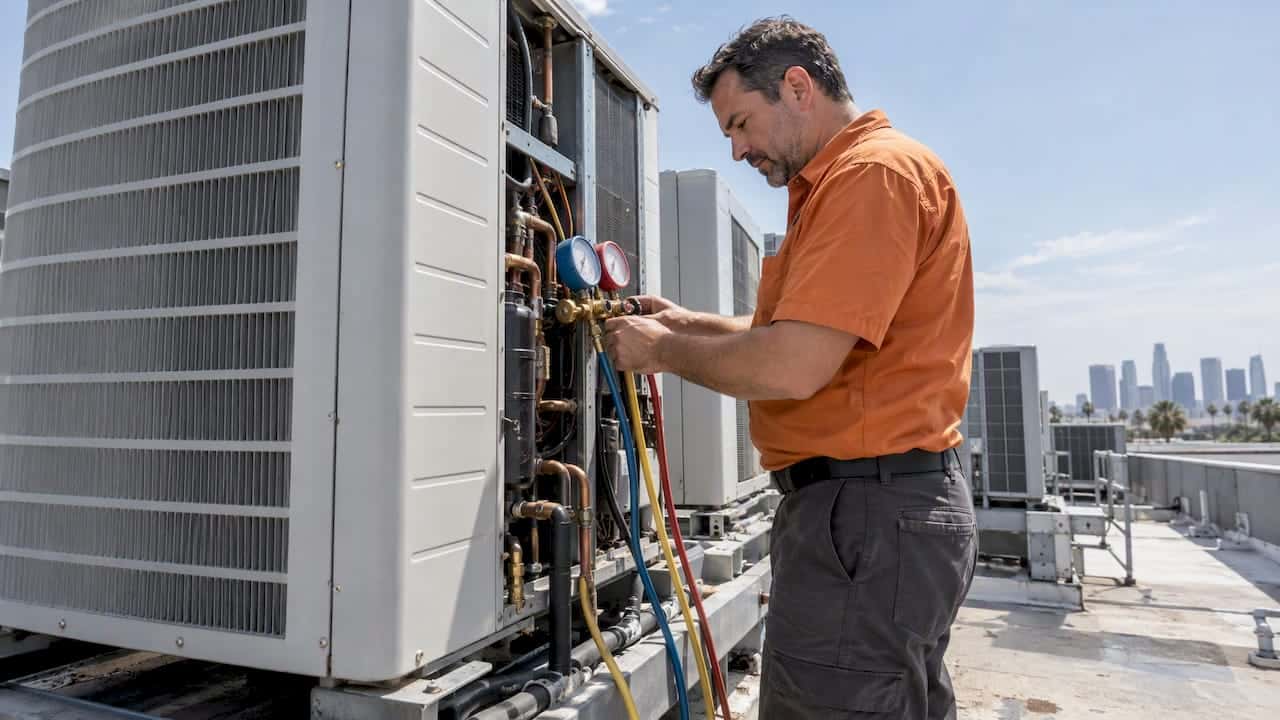
Return air is defined as the indoor air your HVAC system pulls back to the air handler to be filtered, cooled, and recirculated through your home. This continuous loop is the foundation of how your AC works. Without proper return air circulation, your system cannot cool efficiently, no matter how new or powerful it is. AC return air explained simply: it is the “inhale” of your cooling cycle, and when it fails, everything downstream suffers. LC Heating and Air Conditioning sees return air problems misdiagnosed as major equipment failures every week, when the real fix is often straightforward.
How does AC return air circulate through your HVAC system?
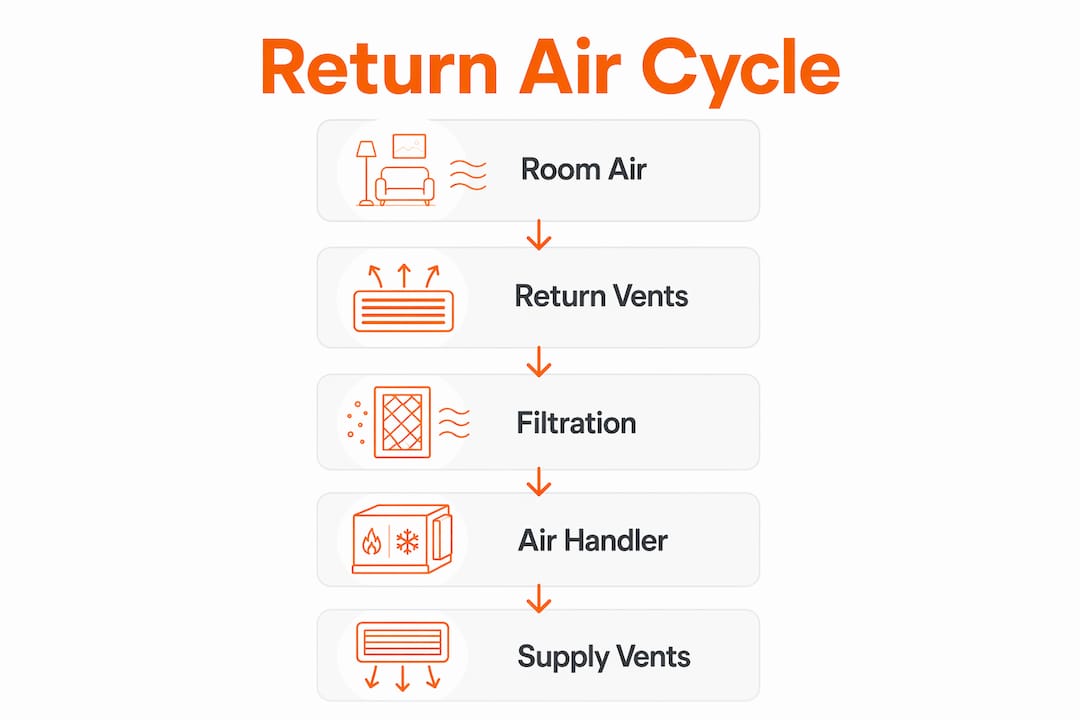
Return air circulation follows a specific path, and understanding that path helps you spot problems fast. Your blower motor creates negative pressure inside the air handler. That negative pressure pulls room air through return vents, typically large grilles located in hallways, ceilings, or walls. The air then travels through a filter, across the evaporator coil where heat is removed, and back out through supply vents as cool air. The cycle repeats continuously while your system runs.
The relationship between supply air and return air is a pressure balance. Supply air pushes conditioned air into rooms. Return air pulls the same volume back out. When those two sides are unbalanced, rooms pressurize or depressurize, doors slam on their own, and your system strains to move air. Proper return air design requires roughly 400 CFM of airflow per ton of cooling capacity, and grille sizing directly affects how much static pressure your blower fights against.
The filter sits in the return air path for a reason. By placing filtration at the point where air re-enters the system, the design traps dust, pet dander, and allergens before they reach the evaporator coil. A clean coil transfers heat efficiently. A coated, dirty coil does not. This is why return vent filtration is one of the most practical indoor air quality tools in any home.
Here is a simple view of the return air cycle:
| Stage | What Happens |
|---|---|
| Room air drawn in | Blower creates negative pressure; air enters through return grilles |
| Filtration | Air passes through the filter, trapping dust and allergens |
| Conditioning | Air crosses the evaporator coil; heat is removed, humidity drops |
| Supply distribution | Cooled air pushes through supply ducts and out through supply vents |
| Cycle repeats | Conditioned air mixes with room air and returns again |
In zoned HVAC systems, return airflow balance becomes more complex because supply distribution shifts as zones open and close. A single central return may not handle the pressure changes when only one zone is active. This is one reason multi-zone homes often need multiple return grilles or transfer grilles between rooms.
What problems occur when return airflow is restricted?
Restricted return airflow is one of the most common and most overlooked causes of AC performance problems. Return air restrictions force the blower motor to work harder, raise static pressure throughout the duct system, and reduce the volume of air reaching the evaporator coil. Less air across the coil means less heat transfer, which causes the coil surface temperature to drop below freezing. The result is a frozen coil and a system that blows warm air or shuts down entirely.
Common causes of restricted return airflow include:
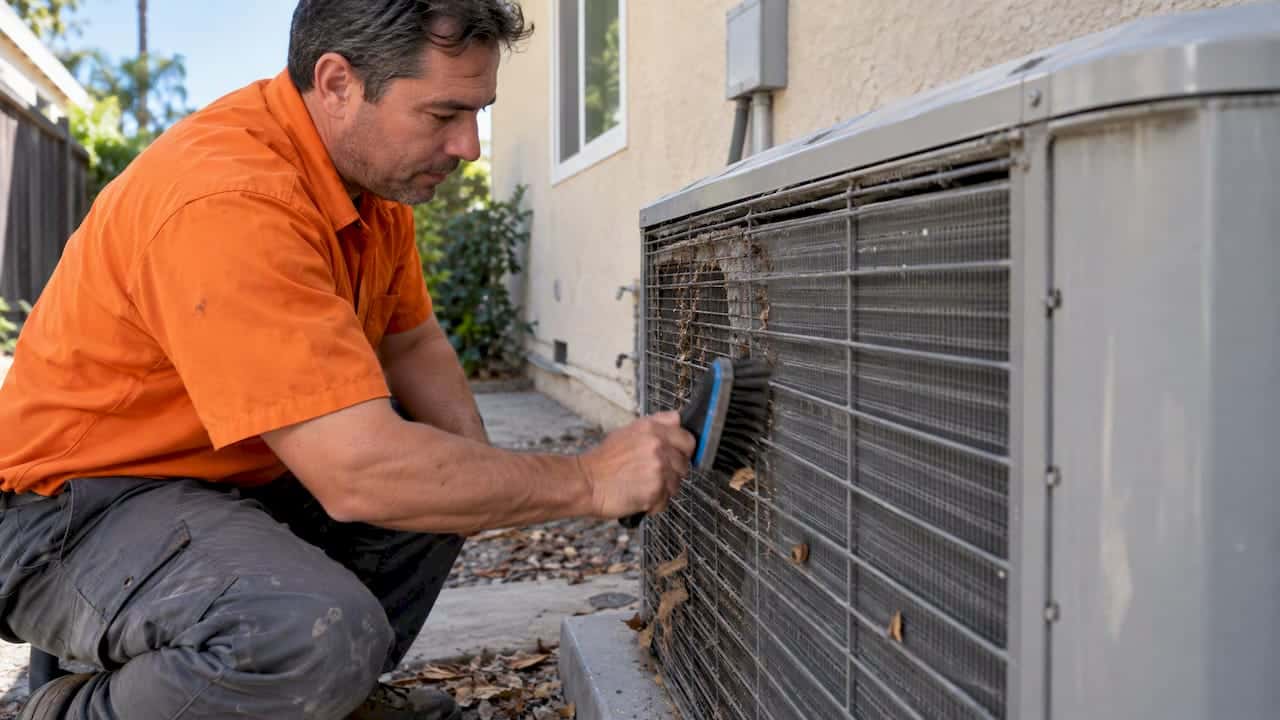
- Clogged air filters. A dirty filter is the single most frequent cause. Even a filter that looks gray may still be blocking airflow significantly.
- Furniture or drapes blocking return grilles. A couch pushed against a return vent cuts off a large portion of the air the system needs.
- Undersized return ducts. Many older homes were built with return ductwork too small for the AC unit installed later. The equipment runs, but the airflow never reaches design capacity.
- Leaky return ducts. Gaps or disconnected sections pull unconditioned air from attics or crawlspaces instead of room air. Unsealed return ducts can introduce insulation fibers, dust, and outdoor contaminants directly into your air supply.
- Closed interior doors. When doors are shut throughout the house, air has no path back to the return. Pressure builds in closed rooms, and the return starves.
Symptoms you will notice include whistling or rushing sounds at the return grille, uneven cooling between rooms, higher electric bills, and rooms that never reach the thermostat setpoint. Blocked returns or closed vents force the AC to run longer cycles, which raises energy costs and accelerates wear on the blower motor.
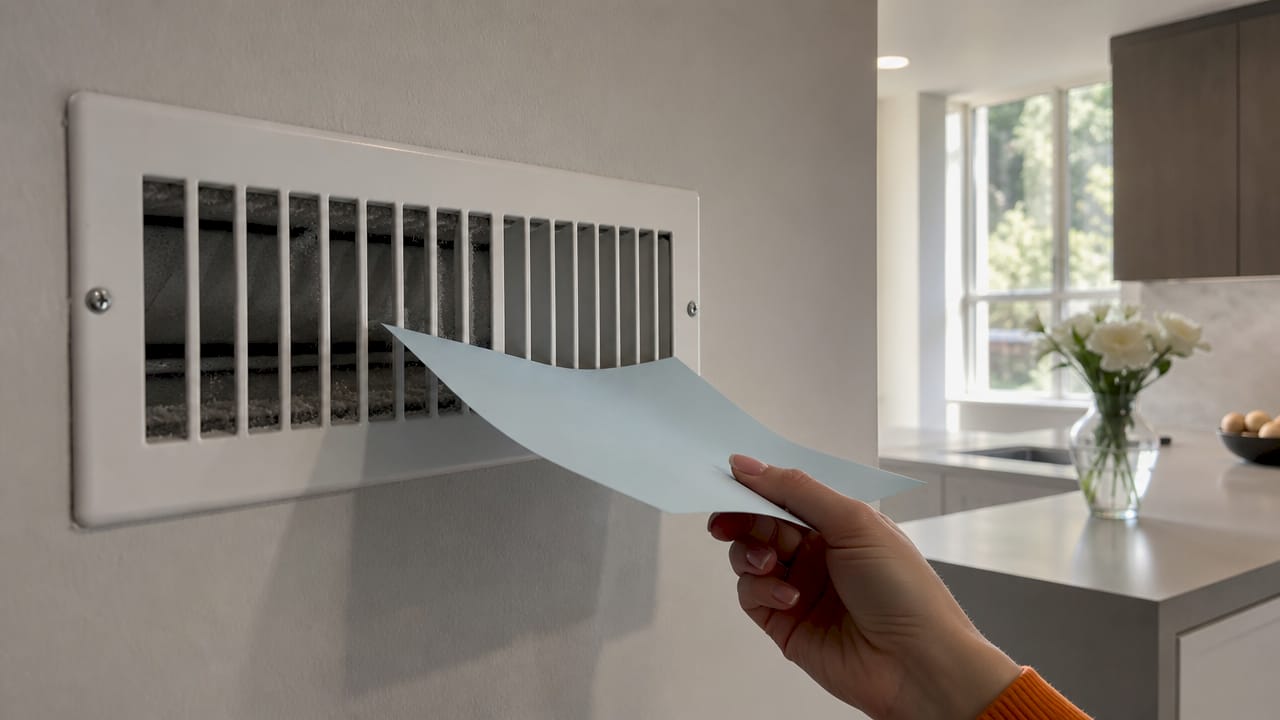
Pro Tip: Hold a single sheet of paper near a vent. If the paper is pulled toward the grille, it is a return vent. If the paper is pushed away, it is a supply vent. This simple test takes five seconds and tells you exactly which vents are which.
How can you diagnose return air issues before calling a pro?
Most return air problems leave clear clues before they become expensive repairs. A methodical inspection takes less than 20 minutes and can save you a service call. Use this checklist:
- Check the filter first. Pull the filter and hold it up to light. If you cannot see light through it, replace it immediately. Industry maintenance guidelines recommend changing filters every 1–3 months for residential AC systems.
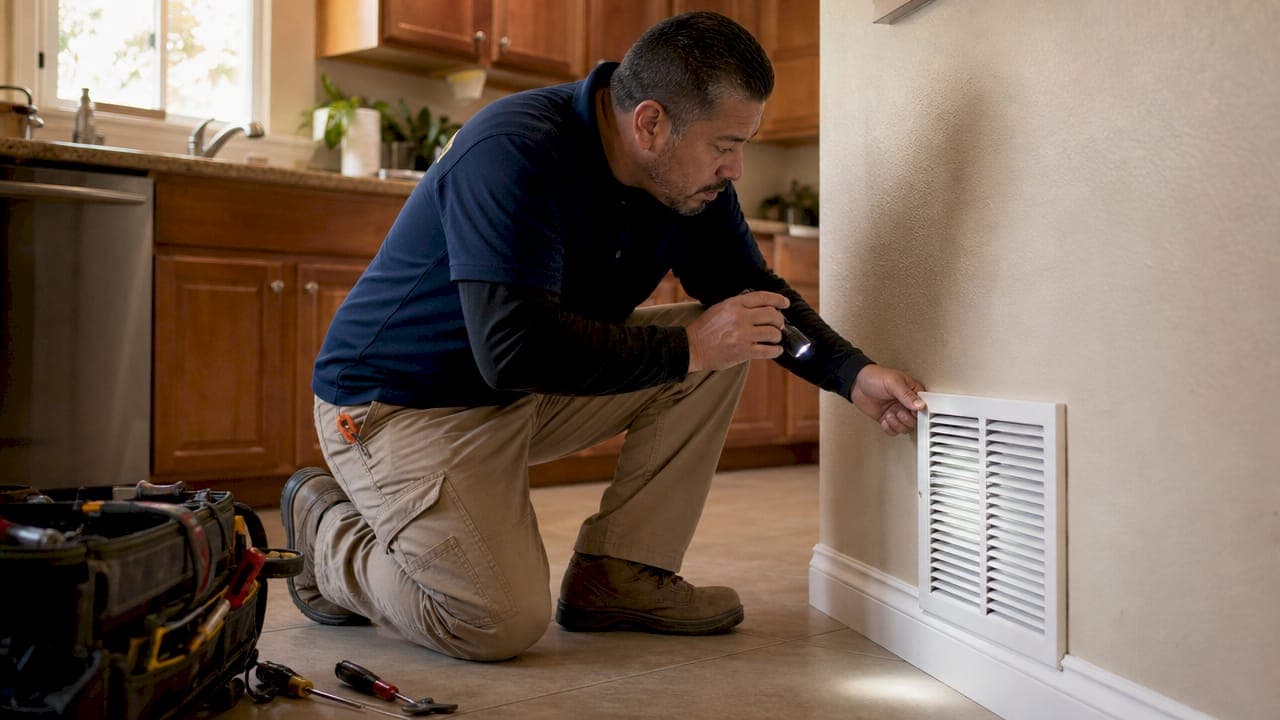
- Feel airflow at the return grille. Place your hand near the grille while the system runs. You should feel a steady pull of air. Weak suction or no suction points to a blockage or duct problem.
- Walk through every room and check vent clearance. Look for furniture, rugs, or curtains covering return grilles. Move anything within 12 inches of the grille.
- Listen for noises. A high-pitched whistle at the return grille signals high velocity airflow caused by restriction. A banging sound may indicate duct flex or a loose panel near the air handler.
- Check room temperatures. Walk through the house with a simple thermometer. Rooms more than 3–4 degrees warmer than the thermostat setting often have a supply or return imbalance.
- Inspect accessible duct connections. In attics or crawlspaces, look for disconnected flex duct or gaps at joints. Gaps in return ducts pull in unconditioned air and can worsen indoor air quality significantly.
- Note how long cycles run. If your AC runs continuously without reaching the set temperature, restricted return air is a likely contributor. You can find more AC troubleshooting guidance to cross-reference symptoms.
Return air problems are often mistaken for major system failures when they are actually simple airflow restrictions. Running through this checklist before calling a technician gives you useful information and may resolve the issue entirely.
What are the best ways to fix and maintain proper return airflow?
Restoring proper return airflow starts with the simplest fixes and works toward structural solutions. Most homeowners can handle the first three steps without any tools.
- Replace the filter on schedule. Set a recurring reminder every 30 days to check the filter. Replace it every 1–3 months depending on pets, dust levels, and how often the system runs. A clean filter is the lowest-cost maintenance action with the highest return.
- Clear all return grilles. Move furniture, rugs, and drapes away from every return grille in the house. A grille needs at least 6–12 inches of open space in front of it to pull air freely.
- Keep interior doors open. Closed doors block the return air path in rooms without dedicated return grilles. If keeping doors open is not practical, install door undercuts or transfer grilles to allow air movement between rooms.
- Seal duct leaks. Use mastic sealant or metal-backed tape on accessible duct joints. Avoid standard cloth duct tape, which dries out and fails within a few years. Sealing return ducts is as important as cleaning supply ducts because leaks pull contaminants from unconditioned spaces.
- Consider adding return grilles. Homes over 2,000 square feet or multi-story homes often need more than one return location. Multiple return grilles improve pressure balance and comfort, especially when zones or closed rooms are involved.
- Upgrade undersized return ducts. If your system consistently underperforms despite clean filters and clear grilles, the return ductwork may be too small for your equipment. A professional duct inspection and repair can identify whether resizing is needed.
Pro Tip: In multi-story homes, the return on the upper floor matters most during summer because hot air rises. If your upstairs is always warmer, check whether the upper-floor return is sized correctly and unobstructed before adjusting the thermostat.
For homes with zoned systems, HVAC zoning requires careful return air planning because pressure dynamics shift every time a zone opens or closes. A technician who understands zoning can design a return system that handles those changes without straining the blower.
How does return air design affect energy bills, equipment life, and air quality?
Return air design has a direct, measurable impact on three things: what you pay each month, how long your equipment lasts, and what you breathe inside your home. These are not abstract concerns. They show up in your utility bill and in how often you need repairs.
Energy costs and blower strain
High static pressure caused by restricted return air forces the blower motor to work harder to move the same volume of air. That extra effort draws more electricity and generates more heat inside the motor. Over time, the motor degrades faster than it should. Addressing airflow restrictions can significantly improve system balance, comfort, and longevity. A system running against restricted return air is essentially working against itself every cycle.
Coil freezing and equipment damage
When return airflow drops too low, the evaporator coil gets too cold. Ice forms on the coil surface, which blocks airflow further and creates a damaging cycle. A frozen coil is not just an inconvenience. It can cause refrigerant flooding back to the compressor, which is one of the most expensive repairs in any AC system. Inadequate return air is a leading cause of premature coil failure in residential systems.
Indoor air quality
The return air path is your home’s primary filtration point. Every cubic foot of air that passes through the return grille gets filtered before it reaches the coil and the living space. When return ducts leak, that filtration advantage disappears. Attic dust, insulation particles, and outdoor allergens bypass the filter entirely and enter your air supply. Proper return air design, with sealed ducts and correctly sized grilles, keeps that filtration working as intended.
| Condition | Impact |
|---|---|
| Proper return air design | Lower static pressure, efficient cooling, longer equipment life |
| Clogged filter | Reduced airflow, coil freeze risk, higher energy use |
| Undersized return ducts | Chronic high static pressure, blower strain, uneven temperatures |
| Leaky return ducts | Contaminants pulled from attic or crawlspace, poor air quality |
| Blocked return grilles | Pressure imbalance, rooms that never cool, longer run cycles |
Key Takeaways
Return air is the foundation of your AC system’s cooling cycle, and keeping it clear, filtered, and properly sized is the single most cost-effective maintenance habit a homeowner can build.
| Point | Details |
|---|---|
| Return air drives the cooling cycle | The blower pulls room air through return vents, filters it, and sends it across the evaporator coil. |
| Restrictions cause cascading damage | Blocked or undersized returns raise static pressure, freeze coils, and shorten blower motor life. |
| Filter changes are the first fix | Replace filters every 1–3 months to maintain airflow and protect the evaporator coil. |
| Duct leaks harm air quality | Unsealed return ducts pull attic dust and contaminants past the filter and into your living space. |
| Multi-return design improves comfort | Homes over 2,000 square feet and multi-story layouts need multiple return grilles for pressure balance. |
What I’ve learned from years of return air calls
I have been inside thousands of Los Angeles homes with HVAC problems, and return air issues come up more than almost anything else. The pattern I see most often is a homeowner who has already replaced their thermostat, cleaned their supply vents, and called two other companies, all without fixing the real problem. The return side of the system was never checked.
The most common mistake is treating return vents like supply vents. Homeowners close them to redirect airflow, or push furniture against them to reclaim floor space. That feels logical, but it starves the system. Improper or undersized return ducts cause system inefficiency regardless of equipment brand or size. A brand-new, high-efficiency unit will underperform in a home with a return system designed for a unit half its size.
My honest advice: before you agree to replace your AC unit, have someone evaluate your return ductwork. I have seen homes where a duct resizing or the addition of a second return grille solved a comfort problem that three previous contractors blamed on the equipment. The equipment was fine. The airflow was not.
Proactive maintenance on the return side costs almost nothing. A filter, a clear grille, and sealed duct joints are all it takes to keep most systems running well for years. The homeowners who call me for emergency repairs in July are almost always the ones who skipped those basics in April.
— Leo
LC Heating and Air Conditioning can restore your return airflow
If your AC is running but your home is not cooling evenly, the return air system is the first place to look. LC Heating and Air Conditioning has served Los Angeles homeowners for over 20 years, diagnosing airflow problems with honest, flat-rate pricing and no pressure to replace equipment unnecessarily.

Whether you need a duct inspection and repair to seal leaks and restore proper airflow, or a full evaluation of your return air design, the team at LC Heating and Air Conditioning delivers same-day service with clear answers. No surprise fees. No guesswork. Just a system that works the way it should. Contact LC Heating and Air Conditioning today to schedule your diagnostic.
FAQ
What is return air in an HVAC system?
Return air is the indoor air pulled back to the air handler through return vents to be filtered, cooled, and recirculated. It forms the intake side of your AC’s continuous cooling cycle.
How do I know if my return air vent is blocked?
Hold your hand near the grille while the AC runs. Weak suction, whistling sounds, or rooms that never cool to the set temperature are the clearest signs of a blocked or restricted return vent.
How often should I change the filter in my return air vent?
Industry guidelines recommend replacing residential AC filters every 1–3 months. Homes with pets, high dust levels, or frequent system use should change filters closer to every 30 days.
Can a blocked return vent freeze my AC coil?
Yes. Restricted return airflow reduces the volume of air crossing the evaporator coil, causing the coil surface to drop below freezing and ice over. A frozen coil blocks airflow further and can damage the compressor if left unaddressed.
What is the difference between a return vent and a supply vent?
A return vent pulls air in toward the air handler, creating suction you can feel. A supply vent pushes conditioned air out into the room. You can tell them apart by holding a piece of paper near the grille: it is pulled in at a return and pushed away at a supply.
Recommended
Leo, Propietario y Técnico Principal en LC Heating & Air
Leo dirige LC Heating & Air como propietario-operador y tiene la licencia C-20 HVAC #1073586 de California. Sus guías se enfocan en diagnósticos prácticos, decisiones de reparación seguras y consejos claros para propietarios de Los Ángeles.