- TL;DR
- What a high-velocity system is and how it works
- Is it the same as a mini duct system?
- Where high-velocity systems make the most sense
- Pros and cons, stated plainly
- How much does a high-velocity system cost?
- High velocity vs. conventional ducts vs. ductless mini split
- What the heat pump does in a high-velocity system
- What to check before you sign
- Maintenance and duct cleaning for small ducts
- Our perspective
- Talk to us about your home
- FAQ
- Sources
- Recommended

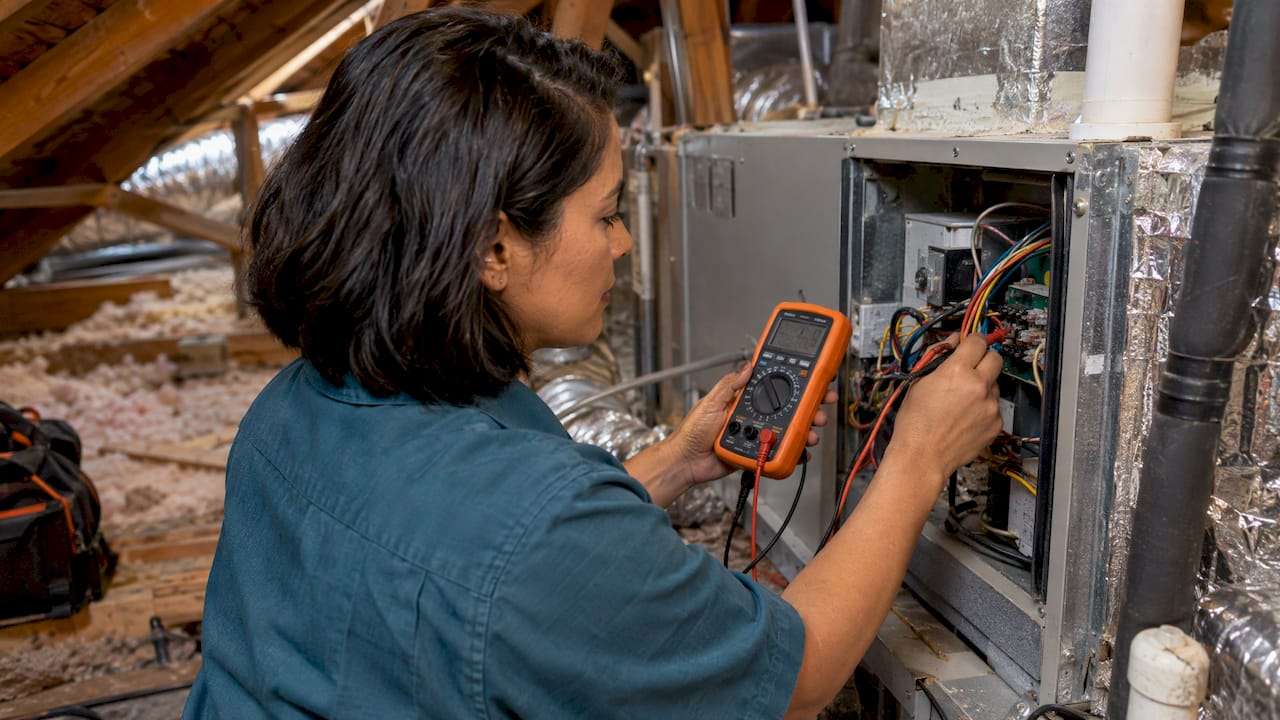
A high-velocity HVAC system is a forced-air heating and cooling system that pushes air through small, flexible ducts, usually about 2 inches wide, at high pressure. It exists to solve one problem: homes with no room for conventional ductwork. If you own an older Los Angeles home with plaster walls, tight joists and no attic space to spare, it can be a clean solution. If you already have good ducts, it often is not the best value. Below, we explain how it works, what it costs to think about, and how it compares with a ducted heat pump or a ductless mini split.
TL;DR
- High-velocity (also called small-duct high-velocity, or SDHV) systems use a powerful blower and 2-inch insulated flex ducts, so they can be routed through walls and floors with little demolition.
- Their strengths are retrofits, even room temperatures, good dehumidification and minimal visual impact. Their tradeoffs are higher fan energy, possible airflow noise if poorly designed, and harder duct cleaning.
- If your home already has a healthy conventional duct system, replacing like for like is usually more cost-effective. If it has no ducts, a high-velocity system and a ductless mini split are the two options to compare.
- Either way, a heat pump is the efficient engine to consider. We install and repair heat pumps and mini splits across Greater Los Angeles, and we tell you honestly which setup fits your house.
What a high-velocity system is and how it works
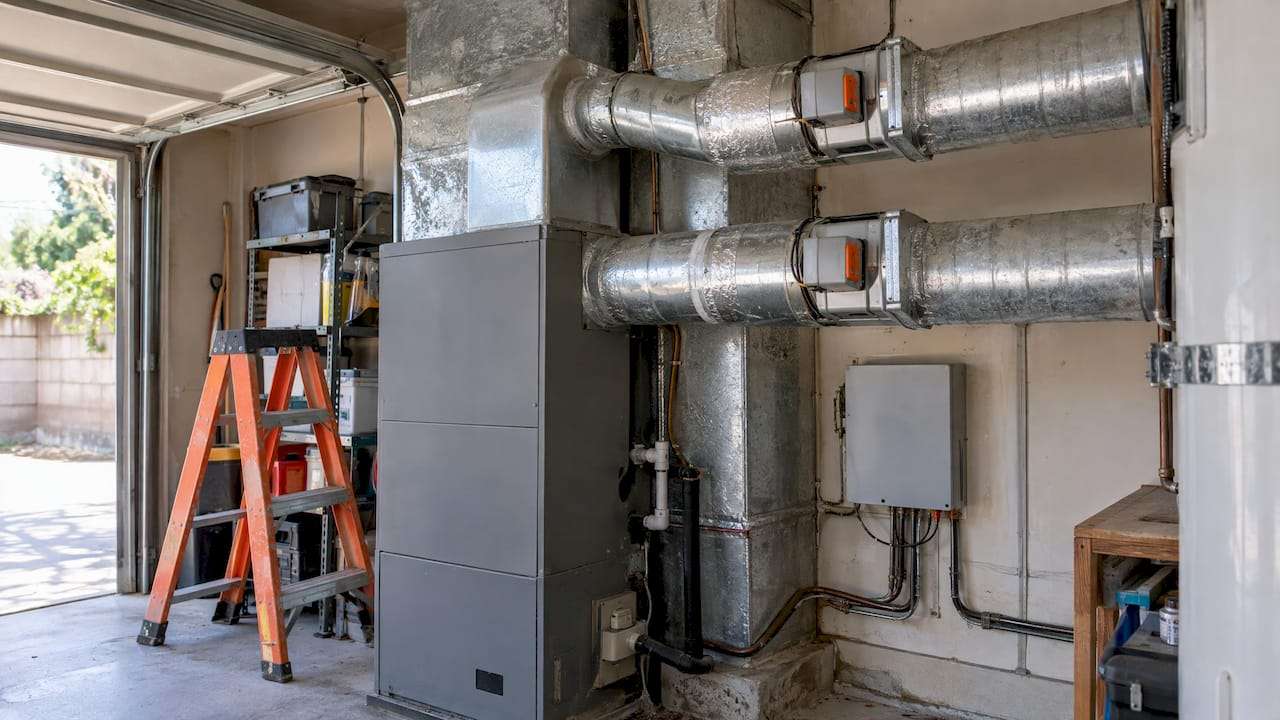
Conventional ducts move a large volume of air slowly through wide metal trunks and big registers. A high-velocity system does the opposite. It pressurizes the air and delivers the needed volume through much smaller ducts, so the same job gets done in far less space.
Three parts make it work:
- A strong blower in the air handler. These systems are designed to run at a total external static pressure of roughly 1.1 to 1.3 inches of water column, about twice what a typical residential blower works against. Think of it as a garden hose with a nozzle: the same water, pushed through a narrower opening, travels with more force.
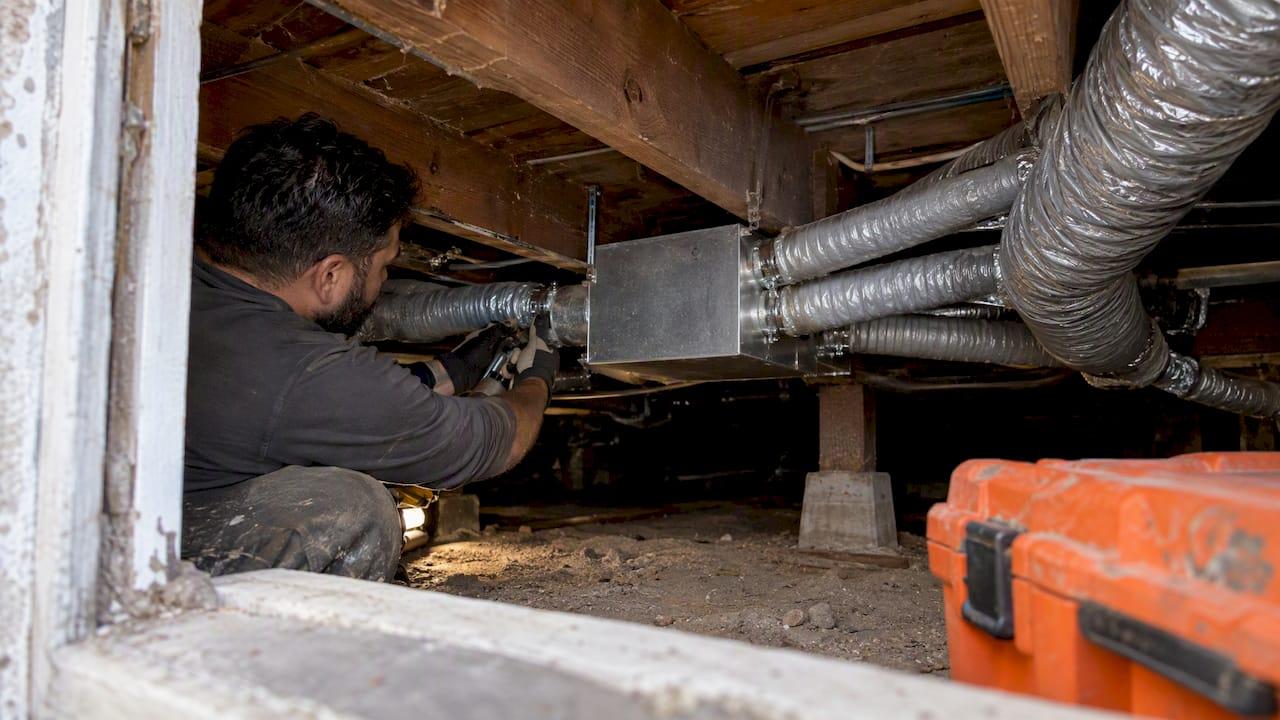
- Small insulated flex ducts. NADCA describes specialized 2-inch insulated flexible ducts designed to absorb sound. Because they bend, installers can fish them through wall cavities and between floor joists.
- Small round outlets that mix the air. Manufacturers explain that the outlets use the Venturi effect, which turns the high pressure in the duct into fast airflow that pulls in room air and mixes it. The goal is to reduce the hot and cold pockets and the stratification you get when a large register dumps air in one spot.
The heating or cooling source can vary. The air handler is paired with an outdoor unit, and in a Southern California home that outdoor unit is most often a heat pump, which cools in summer and heats in winter from the same equipment.
Is it the same as a mini duct system?
Yes. “Mini duct,” “small duct high velocity” and “SDHV” are different names for the same approach. The Unico manufacturer says there are two primary manufacturers it classifies as true SDHV providers: Unico and SpacePak. Because the terms get used loosely, ask the installer exactly what is being proposed: the pressure the system is designed for, the duct diameter and the sound attenuation plan.
Where high-velocity systems make the most sense
Older and historic homes
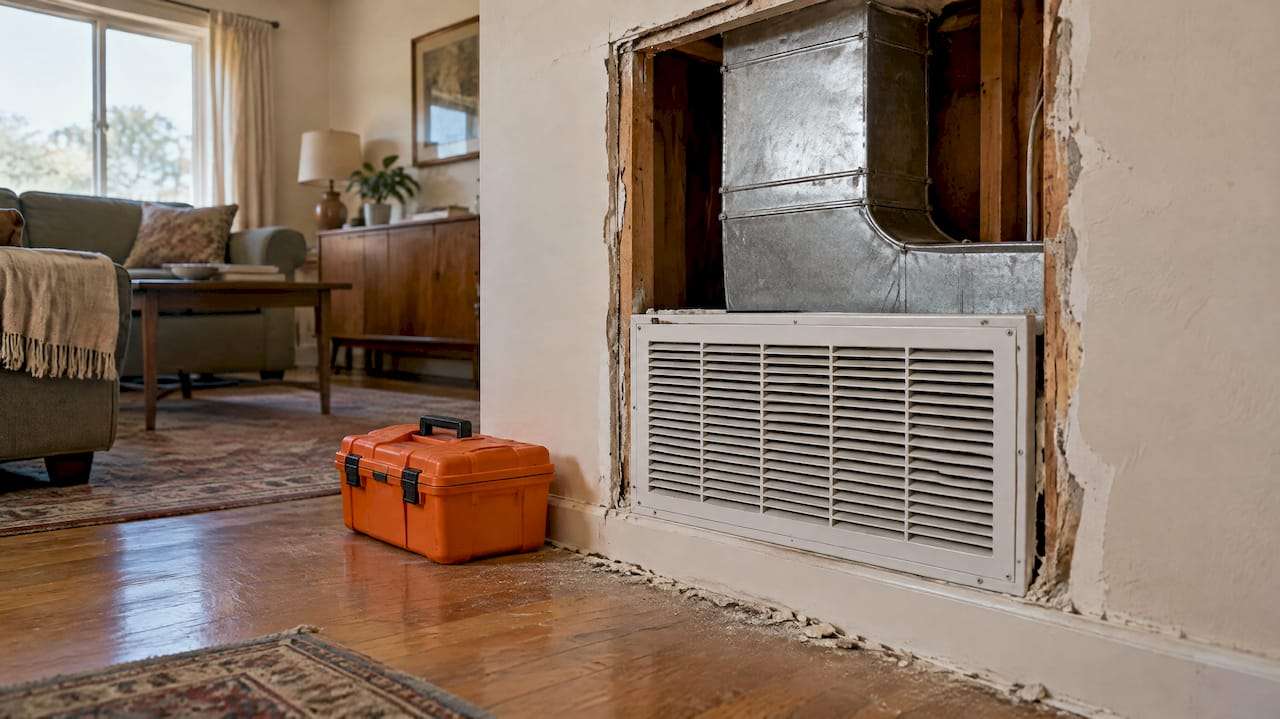
Hollywood, Los Feliz, Larchmont, West Adams and parts of Pasadena are full of 1920s and 1930s houses with plaster walls, little attic depth and no room for a trunk line. Small flexible ducts can be fished through wall cavities and between floor joists with minimal disruption. The National Trust for Historic Preservation has endorsed the Unico System for retrofitting historic homes because the installation is non-intrusive.
Additions, finished attics and homes with no ducts
Converted garages, back-house units and second-story additions often have no practical route for conventional ducts. A small-duct system can serve them from one air handler. A ductless mini split can also serve them, and we explain how to choose between the two below.
Homes where ducts are in the wrong place
In many Los Angeles homes, the ducts run through a hot attic. Moving them inside conditioned space is where a lot of energy is saved. A field study by Edward Vineyard and colleagues found that high-velocity distribution saved 46% of heating energy and 35% of cooling energy when ducts were moved from unconditioned attic space into conditioned space. That result concerns distribution losses in that study, not a guarantee for every whole system, but it shows why duct location matters as much as the equipment.

Pros and cons, stated plainly
What you gain
- Installation in tight spaces. Little demolition, little visual impact. Outlets are small round discs rather than large grilles and soffits.
- Even temperatures. Air mixing reduces the hot and cold spots you feel near large registers.
- Better dehumidification. In a well-designed system, air moving across the coil at high speed can remove more moisture, which is helpful in humid coastal weather.
- Low duct leakage. Forbes reports that leakage in SDHV systems is often less than 5%, even 0%, when installed properly, compared with the 20 to 30% loss often seen in conventional systems.
- Less dust settling in the ducts. The same Forbes piece notes that air moving at around 1,500 feet per minute helps keep dust from building up inside the ducts.
What you manage
- Fan energy. Moving air at high pressure takes more fan power. The U.S. Department of Energy Building America study found that small-diameter systems may need more fan energy and more expensive outdoor equipment, even though duct and air-handler costs can drop.
- Sound. Poor design produces a noticeable whoosh. The fix is design: outlet selection, a sound-attenuating duct section (NADCA notes that some systems require a minimum 12-foot sound-attenuating section), and low vibration at the air handler.
- Comfort depends on design. The Department of Energy’s air-mixing research found that comfort depends on supply velocity, supply temperature, inlet dimensions and avoiding excessive air motion. Good comfort is earned by a good layout, not guaranteed by the product.
- Cleaning. NADCA says cleaning these systems is more challenging and time-consuming because the 2-inch ducts are hard to reach with standard equipment. Plan for that when you choose maintenance.
- More outlets. You need more outlets than with a conventional system to cover each room, which the installer must plan.
One point from NADCA is worth keeping in mind: high-velocity systems do not do the work better or more reliably than conventional systems; they deliver it in a smaller space. That is exactly why the decision comes down to your house.
How much does a high-velocity system cost?
Prices for small-duct systems vary widely with the number of zones, the routing difficulty, the equipment and the permits, so published ranges differ and any single number can mislead. Instead of quoting a generic national figure, here is what we can say with sources and with our own published pricing.

The Department of Energy’s Building America study compared a small-diameter system with traditional ducts in one test house. It estimated about $500 in net installation savings: $2,100 lower combined duct-material and air-handler cost, offset by a $1,700 higher outdoor heat pump cost. The authors caution that the estimate carries relatively high uncertainty. The takeaway: the ductwork can be cheaper, but the outdoor equipment and design can offset it.
For reference, here are our own published price ranges for the systems you are likely to compare:
| Option | Our published price range | Billing |
|---|---|---|
| Heat pump installation | $5,500 to $12,000 | One-off |
| Mini split installation | $3,500 to $20,000 | One-off |
| Ductwork replacement | $3,000 to $8,000 | One-off |
| AC installation | $4,000 to $9,000 | One-off |
| Service call | From $125 | One-off |
| HVAC maintenance plan | $180 to $250 | Per year |
Actual quotes depend on your home. We give a flat-rate price upfront, with no surprise diagnostic fees, so you know the number before work begins. Financing details are on our installation and financing page.
High velocity vs. conventional ducts vs. ductless mini split
| Question | High-velocity (SDHV) | Conventional ducted | Ductless mini split |
|---|---|---|---|
| Needs ducts? | Small flex ducts, one air handler | Full-size duct network | None |
| Best for | Retrofits with no space for ducts | Homes with healthy existing ducts | Additions, single rooms, homes with no ducts |
| Visual impact | Small round outlets | Registers and grilles | Wall or ceiling indoor units |
| Duct leakage | Low when installed well | Can be high in older, attic-run ducts | None |
| Fan energy | Higher | Lower | Low |
| Zoning | Possible with design | Possible with dampers | Natural, room by room |
| Maintenance | Duct cleaning is harder | Straightforward | Filters and coils need regular care |
When we would steer you away from high velocity
If your home already has a high-quality conventional duct system, a conventional replacement is typically the most cost-effective option. We would rather tell you that than sell you a more complicated system. The same goes if only one or two rooms need cooling: a ductless mini split is usually the simpler path.
When a mini split wins
A ductless mini split has no ducts to leak, no duct cleaning, and independent temperature control in each room. For an ADU, a converted garage, a sunroom or a house where one wing is uncomfortable, it is often the better answer. Our mini split installation covers single-room setups up to multi-zone systems. If you already have one that is struggling, see our mini split repair service.
When ducted heat pump or high velocity wins
If you want a whole-house, nearly invisible system and the walls and floors can be worked with, a ducted heat pump with small-duct distribution can serve every room from one outdoor unit. Pairing it with a heat pump matters in California, where one system handles both heating and cooling and where heat pump programs and rebates may apply.
What the heat pump does in a high-velocity system
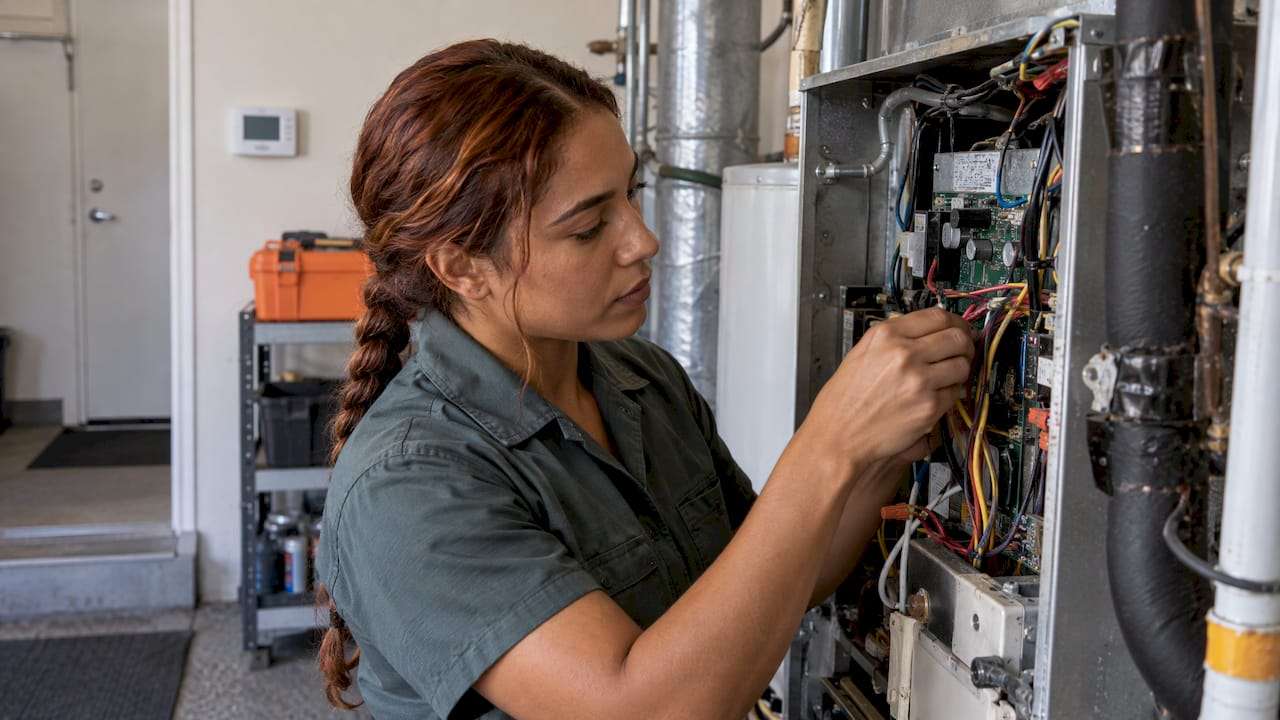
The blower and tiny ducts are only the delivery. The heat pump is the part that creates the heating and cooling. Choosing an efficient, correctly sized heat pump is the largest lever on your electric bill. Oversized equipment short-cycles and fails to dehumidify. Undersized equipment runs constantly. A proper load calculation, based on your home’s insulation, windows, orientation and occupancy, is the first step, not an afterthought.
We install heat pumps across Los Angeles, from single-zone systems to multi-zone and commercial VRF systems. You can see a real job in our Daikin 3-ton heat pump case study, and read about our heat pump installation service. For rebate eligibility, ask us when you book: programs change, and we keep up with California requirements so you do not have to.
What to check before you sign
Homeowners considering a high-velocity installation should work through this list. It reflects what Forbes and manufacturers point to: an installer who is authorized and experienced with the specific system, a design that accounts for sound attenuation, and a home layout that suits the system.
- Ask about experience. Has the installer designed small-duct systems before, and are they authorized by the manufacturer?
- Ask for a room-by-room outlet plan. These systems need more outlets than conventional ones.
- Ask about noise. Where will the sound-attenuating section go? How is the air handler isolated from vibration?
- Ask for a load calculation. Not a rule of thumb based on square footage.
- Ask about the return air path. Comfort depends on air getting back to the air handler.
- Ask how the system will be maintained. Filters, coil cleaning and duct access need a plan from the start.
- Get a written, flat-rate price. It should list equipment, labor, permits and what happens if something unexpected is found behind the walls.
Maintenance and duct cleaning for small ducts
Because the ducts are narrow, maintenance matters more, not less. NADCA warns that cleaning high-velocity flex ducts is challenging, and replacing components may be the only solution in some cases. The best protection is prevention: a good filter, regular filter changes, sealed returns and an annual inspection.
Our HVAC maintenance plan is $180 to $250 per year and covers the routine checks that keep a heat pump running efficiently. For general duct questions, our guides on dust coming from vents and professional versus DIY duct cleaning explain what to look for.
If allergies are why you want better air, remember the whole house matters. Soft surfaces hold allergens too, and the habits in this guide to carpet cleaning for allergies work alongside good filtration.
Our perspective
We work on heat pumps, mini splits and commercial VRF systems every week, and the pattern is consistent: the best system is the one that fits the building, not the one with the most interesting brochure.
High-velocity systems are a smart tool for the right house. We see the appeal in older Los Angeles homes, where there is no space for big ducts and nobody wants to cut up original plaster. But we also see homes where existing ducts are sound and a straightforward replacement saves thousands, and homes where a ductless mini split solves the problem in a day or two.
That is why we start with an honest diagnostic and a flat-rate price. No surprise diagnostic fees, no pressure to replace a system that can be repaired, and a clear explanation of the options, whether that is a ducted heat pump, a multi-zone mini split or a commercial VRF system. After more than twenty years in Los Angeles, we know the older housing stock, the local requirements and the rebate landscape, and we put that knowledge to work for you.
If your heat pump is already struggling, we repair first and recommend replacement only when it truly makes sense.
Leo
Talk to us about your home
If you are weighing a high-velocity system, a ducted heat pump or a mini split, the quickest way to get a straight answer is a site visit. We look at your ducts, your walls and your comfort problems, and we give you a flat-rate price upfront. A service call starts at $125, and you can book through our service call page. For repairs, see our full list of services, or call us at (323) 970-3113.

Need a new system? Our installation and financing page lists heat pump, mini split, AC and ductwork options, and we offer same-day service for urgent repairs in Hollywood, Beverly Hills, Bel Air, Brentwood and across Greater Los Angeles.
FAQ
What is the difference between high-velocity and conventional HVAC?
Conventional systems move a large volume of air slowly through wide ducts. High-velocity systems move it quickly through 2-inch ducts at higher pressure. Both condition the air the same way; the difference is how it is delivered and how much space the ducts need.
Are high-velocity systems noisy?
They can be if poorly designed, since fast air makes a whooshing sound. Good design uses insulated flex ducts that absorb sound and, in some systems, a sound-attenuating section of at least 12 feet. Ask your installer how the design handles noise before you sign.
Is a high-velocity system more efficient than a conventional one?
It depends on the house. Low duct leakage and ducts inside conditioned space can save energy, but the higher fan energy can offset some of that. The Department of Energy study describes tradeoffs, not a guaranteed win, so the equipment and design matter most.
Can I put a high-velocity system in an old house?
Yes. The small flexible ducts can be routed through walls and between joists with little demolition, which is why they are used in historic homes. Have an experienced installer assess the structure first.
Should I choose a high-velocity system or a mini split?
Choose small-duct high velocity when you want whole-house, nearly invisible air distribution and have no room for conventional ducts. Choose a mini split for additions, single rooms or when you want room-by-room control without any ductwork. We can compare both for your address.
Sources
- Fundamentals of a High-Velocity Air Duct System (NADCA)
- High velocity distribution systems show exceptional performance (Contracting Business)
- Hi-Velocity Systems FAQ
- FAQ - The Unico System
- The Advantages Of Small-Duct High-Velocity Systems (Forbes)
- The Complete Guide to High-Velocity HVAC Systems (HVAC Place)
- Measured Performance of a Varied Airflow Small-Diameter System (U.S. Department of Energy, OSTI)
- Measured Performance of Conventional and High-Velocity Distribution (Vineyard et al.)
- Evaluation of Air Mixing and Thermal Comfort From High-Velocity Air Jets (U.S. Department of Energy)
Recommended
Leo, Propietario y Técnico Principal en LC Heating & Air
Leo dirige LC Heating & Air como propietario-operador y tiene la licencia C-20 HVAC #1073586 de California. Sus guías se enfocan en diagnósticos prácticos, decisiones de reparación seguras y consejos claros para propietarios de Los Ángeles.