- Why Does My AC Smell Musty in the First Place?
- How Do You Get Rid of a Musty Smell in Your AC?
- When Should You Call an HVAC Technician?
- How Do You Stop the Musty Smell From Coming Back?
- What LC Heating and Air Conditioning Checks on a Diagnostic Visit
- What This Usually Comes Down To
- Get a Real Diagnosis Instead of Guessing at the Fix
- Sources
- FAQ
- Recommended
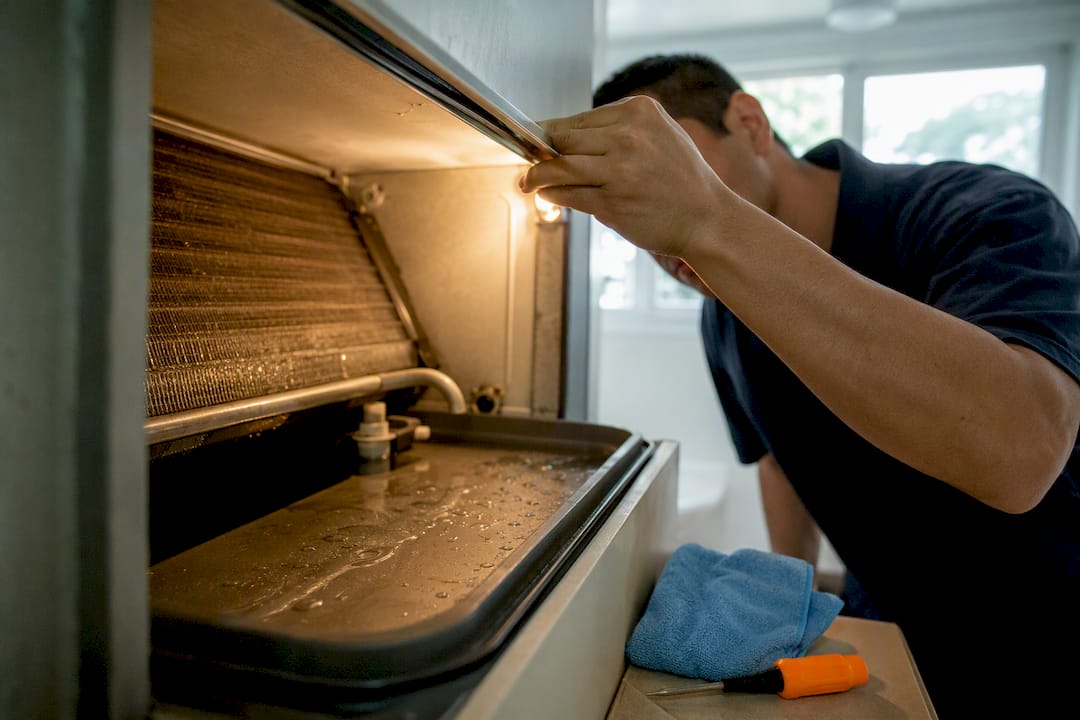
A musty AC smell almost always means moisture and microbial growth somewhere inside your system, usually on the evaporator coil or in the drain pan. Set your thermostat fan to AUTO, swap in a fresh filter, and check the condensate drain for clogs. If the smell keeps coming back, or you notice visible mold, stop troubleshooting yourself and get a technician out to look at the coil and drain line directly.
TL;DR:
- Most musty AC smells result from trapped moisture and microbial growth on the coil or in the drain line, especially in humid climates.
- Regular maintenance tasks like replacing filters, flushing the drain line with vinegar, and running the system every 24 to 48 hours can prevent odor buildup.
- If odors persist after DIY fixes or mold is visible, professional inspection and cleaning of coils, drain lines, or ductwork become necessary.
- Persistent or recurring smells often indicate underlying issues such as frozen coils, leaks, or improper system sizing that require expert diagnosis.
- Using UV-C lights and controlling indoor humidity levels between 30% and 50% can help prevent future mold regrowth in your HVAC system.
Why Does My AC Smell Musty in the First Place?
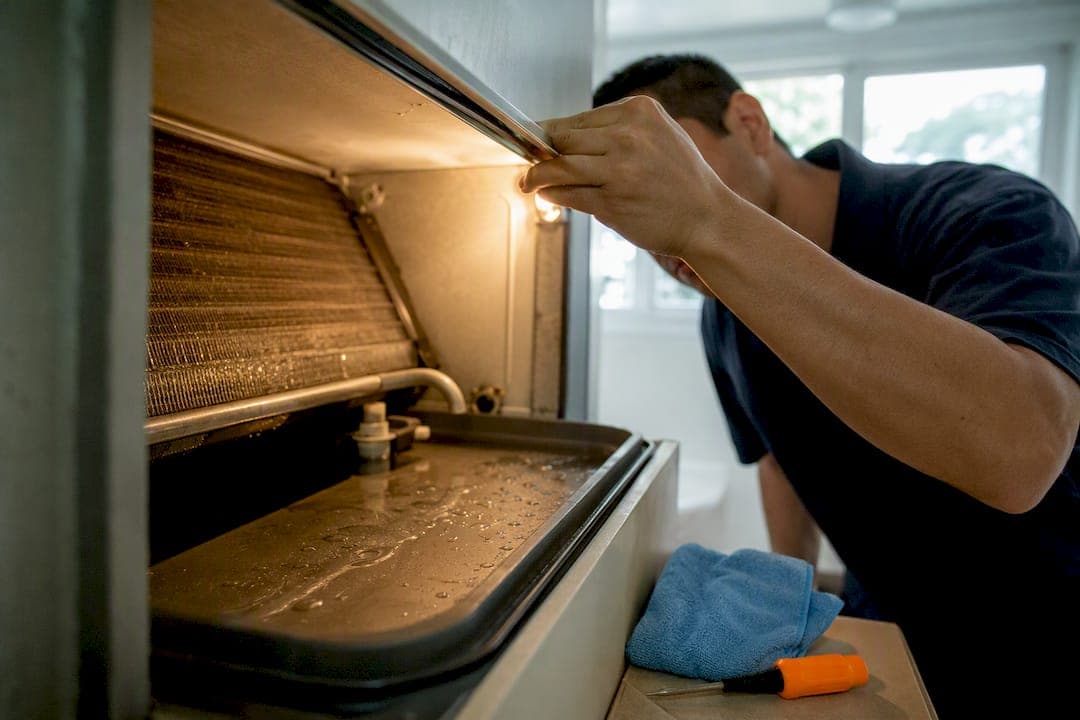
Trapped moisture is the root cause of almost every musty AC smell, according to the EPA’s guidance on mold cleanup. A residential system running in a humid climate can pull a significant amount of water out of the air daily. That water has to go somewhere, and when drainage is compromised, it collects in places that stay dark, damp, and rarely disturbed. That’s exactly what mold and bacteria need to colonize.
Several parts of your system are prone to this, and each one tends to produce a slightly different smell pattern:
- Evaporator coil: Constant condensation plus dust creates a biofilm that off-gasses musty microbial compounds, especially when the system has been idle.
- Clogged air filter: A saturated filter traps spores and pushes odor through the ductwork every time the blower kicks on.
- Condensate drain line: A blocked line backs up water, and you’ll often see slime or drips near the outdoor drain point.
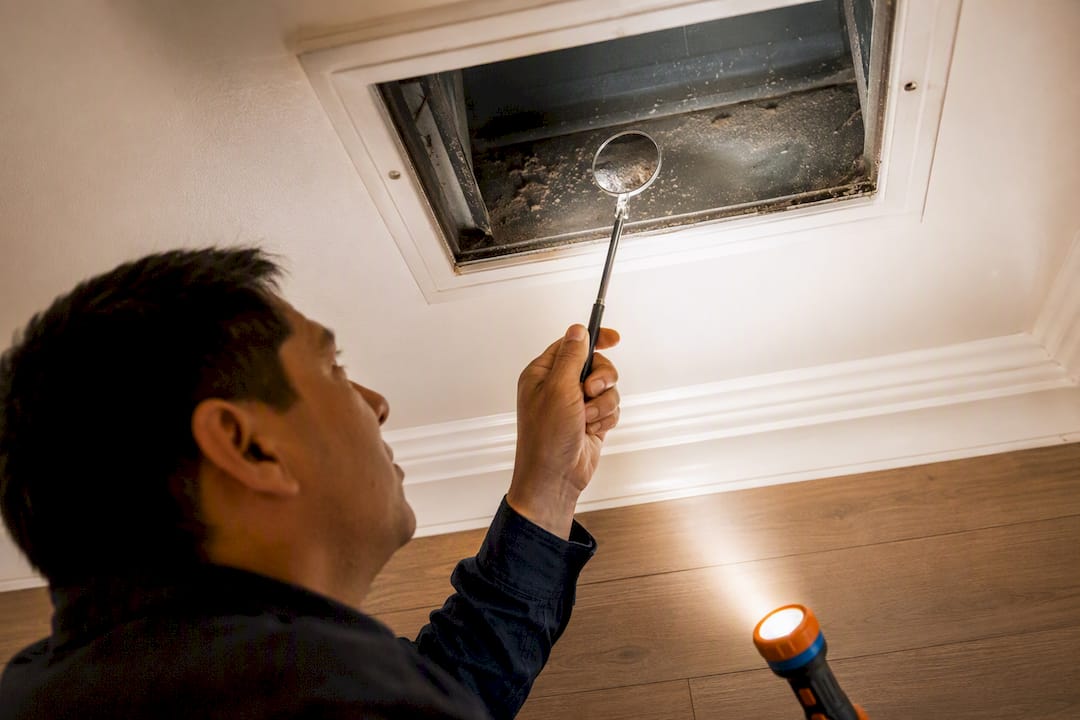
- Ductwork: Contamination inside the ducts tends to smell stronger at specific vents rather than evenly through the house.
- Mechanical issues: Short-cycling or a frozen coil disrupts normal drainage and gives mold extra time to grow between cycles.
One useful diagnostic trick: if the smell only shows up when the AC is running and fades once it shuts off, the system itself is almost certainly the source. Walk from vent to vent and note which ones smell strongest. According to Breezy Air’s HVAC guidance, this simple test usually points straight to the coil, drain pan, or a specific duct run rather than a house-wide mold problem. It’s also worth separating a one-time “stale” smell after your first spring startup, which usually clears on its own within a day, from a smell that returns every time you run the system, which signals active regrowth.
How Do You Get Rid of a Musty Smell in Your AC?
Most of what you can safely fix yourself lives outside the sealed air handler. Here’s a quick-action sequence you can run through in under 20 minutes:
- Set the fan to AUTO, not ON. Running the fan continuously keeps the coil damp longer, which feeds the exact growth you’re trying to stop.
- Replace the air filter. A MERV 8 to MERV 13 filter balances airflow with filtration for most residential systems. Check your equipment manual first. A filter that’s too dense can restrict airflow and cause the coil to freeze.
- Locate the condensate drain line, usually a PVC pipe near the indoor air handler. Look for standing water, slow drips, or slime at the outdoor termination point.
- Flush the drain line with a cup of distilled white vinegar poured into the access port, if you can reach it safely. Skip this step entirely if you can’t identify the line or access point without opening the unit.
- Clean return grilles and vent covers with a vacuum and a damp cloth. Full instructions are in this guide to cleaning air conditioner vents.
- Run a full cooling cycle every 24 to 48 hours during humid stretches, even if you don’t need the cooling, to keep the coil from sitting wet for days at a time.
Never pour bleach into the air handler or onto the coil. Bleach can’t penetrate the biofilm that’s actually causing the smell, and it corrodes the metal components over time, which gives you a false sense of progress while the real problem keeps growing underneath.
Pro Tip: If the smell fades within a day of changing the filter and flushing the drain, you likely caught a minor buildup early. If it comes right back within a week, the coil itself probably needs professional cleaning.
When Should You Call an HVAC Technician?
Some signs mean it’s time to stop troubleshooting and pick up the phone:
- The musty smell returns within days of a filter change and drain flush.
- You can see mold growth inside the vents, on the drain pan, or around the coil access panel.
- Anyone in the house feels noticeably better when they’re away from home, or when the system is off.
- The coil has frozen, you’ve found a leak, or the condensate line keeps backing up despite clearing it.
A technician’s visit typically covers a visual coil inspection, a check of the drain pan and line, blower assessment, a look at accessible duct sections, and an indoor humidity reading. Depending on what they find, the fix might be a coil cleaning, a drain-line repair, targeted duct cleaning following NADCA-recommended methods, or a UV-C light install paired with humidity control. Ask for a flat-rate diagnostic upfront so you know the inspection cost before any work begins, and get findings in writing.
How Do You Stop the Musty Smell From Coming Back?
Fixing the smell once doesn’t mean it’s gone for good. Simple homeowner interventions rarely stop recontamination if the underlying condensate or airflow issue never got resolved, so prevention has to target the actual mechanism, not just the symptom.
- Change filters on a schedule. Every 60 to 90 days for standard filters, more often if you have pets or run the system heavily.
- Book an annual coil inspection. Catching early biofilm buildup is far cheaper than remediating a fully colonized coil.
- Check the condensate line seasonally, especially before your first heavy cooling season each year.
- Keep indoor relative humidity between 30% and 50%. Above that range, mold has everything it needs regardless of how clean your coil is.
- Consider a whole-home dehumidifier if your home consistently runs humid, particularly in coastal or valley climates where AC alone can’t keep up. This guide to HVAC dehumidification breaks down when it’s worth adding.
UV-C germicidal lights installed near the coil are one of the more effective preventive upgrades available, reducing spore colonization when paired with regular maintenance, according to Out of the Mold’s remediation guide. Our breakdown of HVAC UV light options covers types and installation safety in more detail.
Pro Tip: Duct cleaning is justified when you’ve confirmed visible contamination or debris inside the ducts themselves. It’s usually unnecessary if the smell traces back to the coil or drain pan, which is the more common source.
If your system is chronically undersized or oversized for your home’s humidity load, no amount of filter changes will fully solve the problem. Readers dealing with broader cooling performance issues may also find this guide on AC not cooling useful for ruling out related mechanical causes.
What LC Heating and Air Conditioning Checks on a Diagnostic Visit
Leo has spent over 20 years diagnosing HVAC systems across Los Angeles, and one lesson holds up every time: the smell is a symptom, not the diagnosis. Our technicians document a visual coil inspection, moisture readings at the drain pan, a full drain-line clearing, and an indoor humidity reading before recommending any fix. That written record is what a flat-rate diagnostic should include, so you’re never guessing what you’re paying for or why.
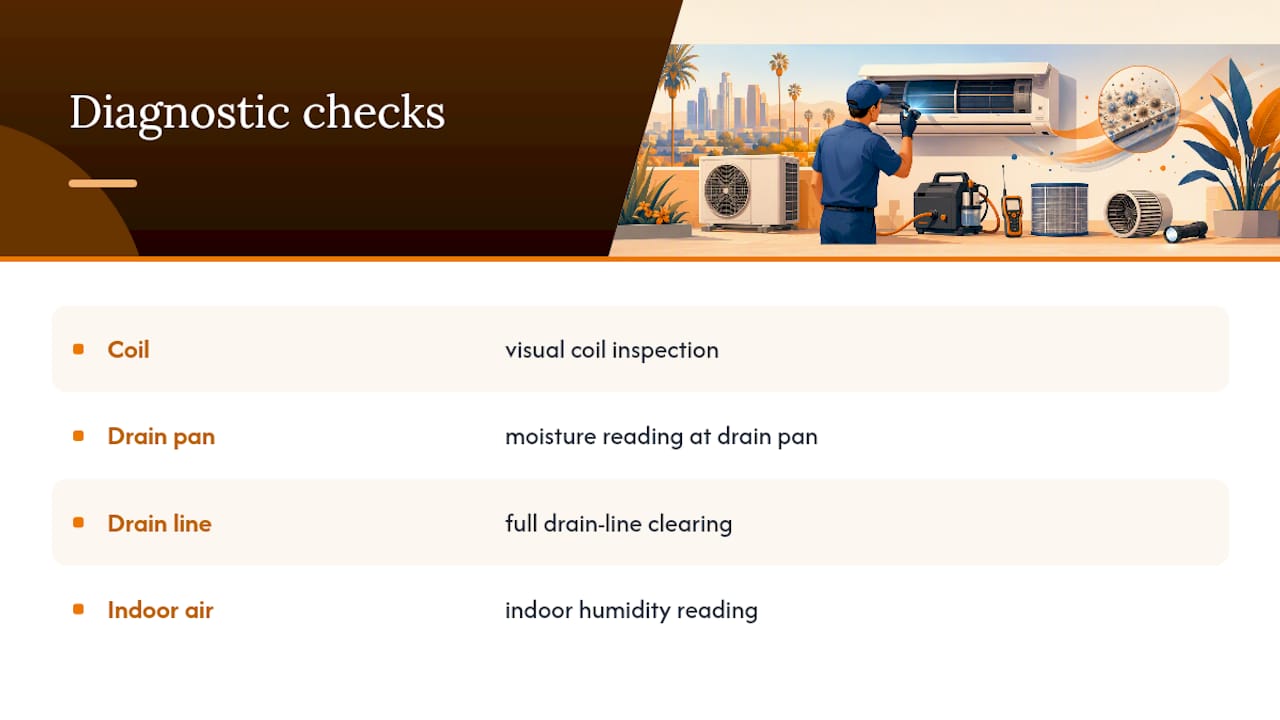
We built our process around transparency because too many homeowners get quoted a repair without ever seeing what the technician actually found. If your coil needs cleaning, you’ll see the moisture reading that led to that call.
What This Usually Comes Down To
Most musty AC calls trace back to the same two things: a drain line that stopped draining, or a coil that never got a chance to dry out. Fix the moisture, and the smell almost always follows. A straightforward diagnostic tells you which one you’re dealing with before you spend money guessing.
— Leo
Get a Real Diagnosis Instead of Guessing at the Fix
LC Heating and Air Conditioning gives you something most HVAC calls in Los Angeles don’t: a flat-rate diagnostic with a written estimate before any work starts, so you’re never surprised by an invoice that ballooned past what you were quoted.

Our technicians handle the full range of what a musty smell might need, whether that’s a straightforward coil cleaning, a drain-line repair, a UV-C install, or a broader humidity strategy for a home that runs consistently damp. We work on everything from Craftsman bungalows in Los Feliz to modern multi-zone mini split systems in the Hollywood Hills. We’re equally experienced with heat pump systems and commercial VRF setups if your property needs more than a standard split system. Same-day service is standard, not an upsell.
If the smell keeps coming back after you’ve tried the filter and drain fixes above, book a diagnostic visit and get a documented answer instead of another guess. You can also browse our HVAC service options if you want to see what a repair or maintenance plan looks like before you call.
Sources
FAQ
Should I turn my AC off if it smells musty?
You don’t need to shut it off completely, but avoid running the fan continuously on the ON setting. Switch to AUTO, run a normal cooling cycle, and if you see visible mold or anyone in the house has respiratory symptoms, turn the system off and call a technician before running it further.
How do you deodorize an air conditioner?
Start with a fresh filter and a vinegar flush of the accessible condensate drain line. Deeper deodorizing, like coil cleaning or duct treatment, requires professional equipment because household cleaners and bleach can’t penetrate the biofilm causing the smell.
How do you get rid of a musty smell in the air from your AC?
Locate the source first by checking which vents smell strongest, since the odor usually traces back to the evaporator coil, drain pan, or a specific duct section. Clear the accessible causes yourself, and schedule a coil inspection if the smell returns within a week.
Why does my AC smell like mildew only when it’s running?
An odor that appears only during operation and fades when the system shuts off points directly to the HVAC system itself, usually the coil or drain pan, rather than mold somewhere else in the house.
Is a musty smell from the AC dangerous?
Musty odors themselves indicate mold or bacterial growth, which can trigger congestion, headaches, or asthma symptoms in sensitive people, particularly since forced-air systems spread spores throughout the home rather than keeping them isolated. Persistent odors or visible growth warrant a professional inspection rather than continued DIY attempts.
Recommended
Leo, Propietario y Técnico Principal en LC Heating & Air
Leo dirige LC Heating & Air como propietario-operador y tiene la licencia C-20 HVAC #1073586 de California. Sus guías se enfocan en diagnósticos prácticos, decisiones de reparación seguras y consejos claros para propietarios de Los Ángeles.