- What Is HVAC Dehumidification? A Homeowner’s Guide
- What is HVAC dehumidification and how does it work?
- What are the benefits and limitations of HVAC humidity control?
- How can integrated whole-home dehumidifier systems improve moisture control?
- What practical steps should homeowners take to optimize HVAC humidity control?
- Key takeaways
- Why dehumidification is the most underrated part of home comfort
- LC Heating and Air Conditioning can help with your home’s humidity
- FAQ
- Recommended
What Is HVAC Dehumidification? A Homeowner’s Guide
TL;DR:
- HVAC dehumidification removes excess moisture from indoor air to prevent mold and allergens. It primarily uses cooling-based condensation, with desiccant systems as a specialized alternative. Whole-home systems improve comfort and efficiency by managing humidity across the entire house automatically.
HVAC dehumidification is defined as the removal of excess water vapor from indoor air to maintain relative humidity between 30% and 60%, the range recommended to prevent mold and allergens. Your air conditioner does cool the air, but cooling and dehumidifying are not the same thing. Many homeowners run their AC all summer and still feel sticky and uncomfortable because their system handles temperature but leaves moisture behind. Understanding how dehumidification actually works gives you the power to fix that problem at the source, not just mask it with a lower thermostat setting.
What is HVAC dehumidification and how does it work?
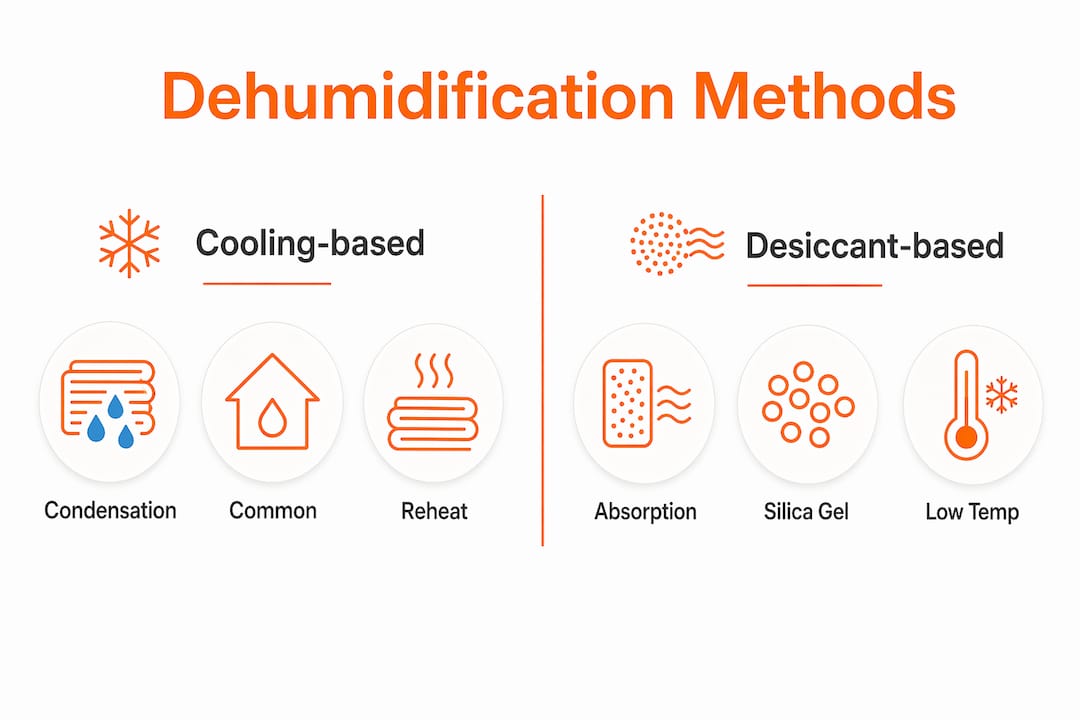
HVAC dehumidification uses two primary methods: cooling-based condensation and desiccant absorption. Most homes rely on the cooling-based approach, which is built into standard central air conditioning systems. Knowing how each method works helps you understand what your system can and cannot do on its own.
Cooling-based dehumidification
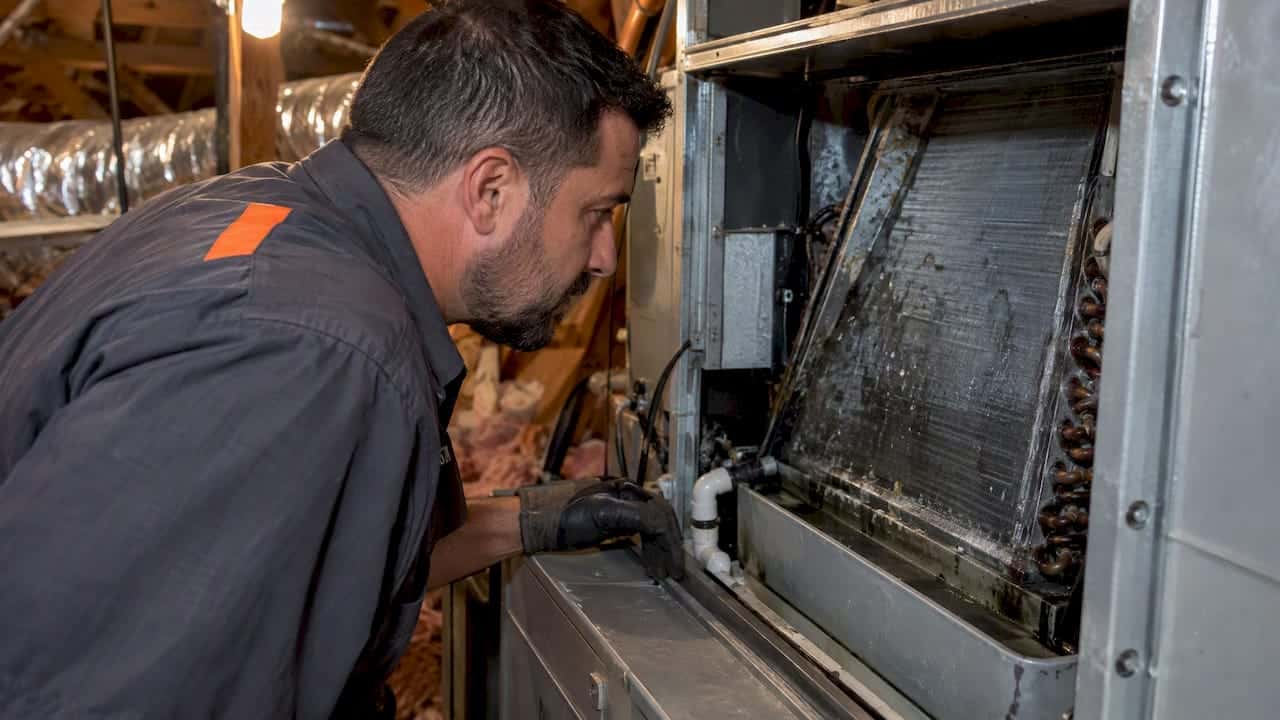
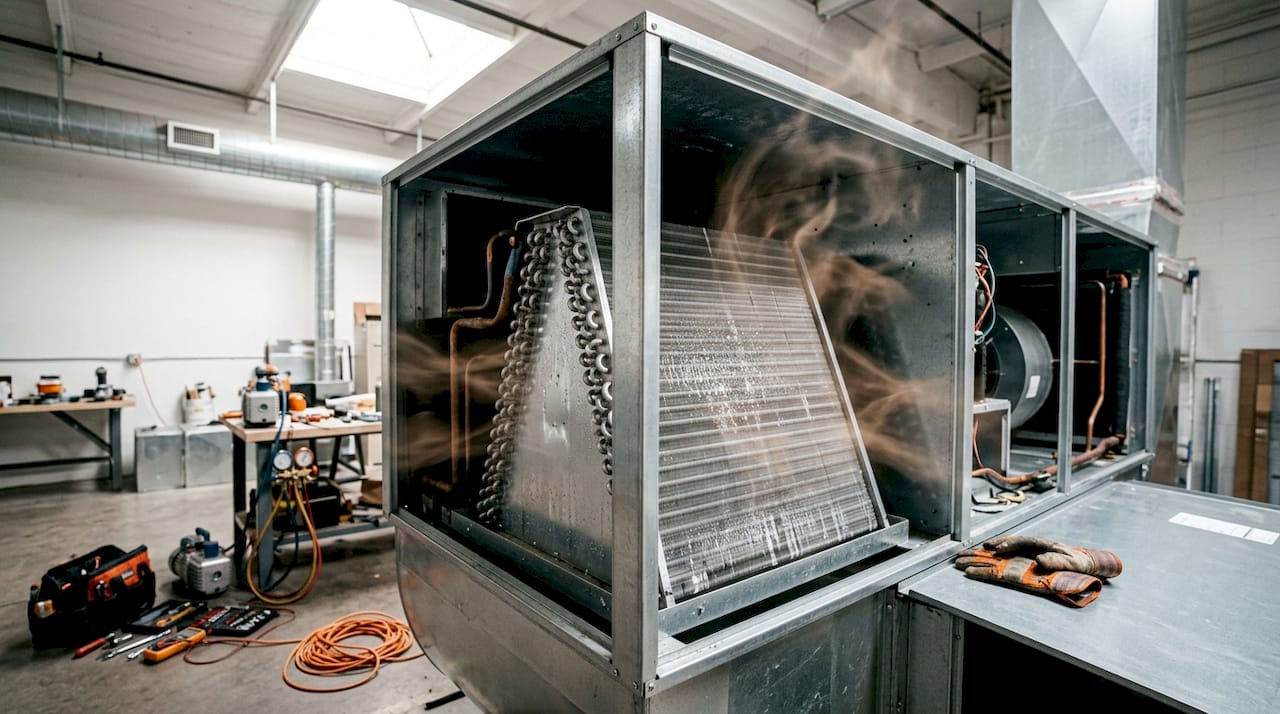
The cooling-based process works like a cold glass of water on a humid day. Warm, moist air passes over a refrigerant coil chilled to 40–45°F, causing condensation to form on the coil surface. That condensed water drips into a drain pan and exits through a drain line. The now-drier air continues through your ductwork and into your living spaces.
After the air loses its moisture, many systems run it through a reheat process. This warms the supply air back up to a comfortable temperature before it enters your rooms. Without reheat, the air coming out of your vents can feel uncomfortably cold even though the humidity has dropped. Advanced systems with variable speed compressors and modulating fans, as noted by AAON’s dehumidification research, handle this balance more precisely than older single-speed units.
Desiccant-based dehumidification
Desiccant systems use moisture-absorbing materials, such as silica gel, to pull water vapor directly from the air without relying on cold coils. This method works well in very low humidity applications or in spaces where cooling is not needed. For most residential settings, desiccant systems are a specialized solution rather than a standard choice. They shine in situations like wine cellars, server rooms, or homes in extremely cold climates where cooling coils would freeze before removing enough moisture.
Pro Tip: If your home feels humid even when the AC runs constantly, the problem is likely latent load. Your system may be sized for temperature control, not moisture removal. A dedicated whole-home dehumidifier solves this without forcing your AC to overwork.
What are the benefits and limitations of HVAC humidity control?
Effective humidity control delivers real, measurable improvements to your home environment. The benefits go well beyond comfort. At the same time, there are practical limitations every homeowner should understand before assuming the AC alone will handle everything.
The real benefits of dehumidification
-
Mold and mildew prevention. Mold thrives above 60% relative humidity. Keeping your home within the recommended 30%–60% RH range removes the moisture mold needs to grow on walls, ceilings, and inside ductwork.
-
Reduced asthma and allergy triggers. Dust mites and mold spores are two of the most common asthma triggers. Effective humidity control creates an environment where these organisms cannot survive easily, protecting everyone in the household.
-
Greater comfort at higher temperatures. Dry air feels cooler than humid air at the same temperature. When your home sits at 55% RH instead of 75% RH, you feel comfortable at a higher thermostat setting. That translates directly into lower energy bills.
-
Protection for your home’s structure. Excess moisture warps wood floors, causes paint to peel, and corrodes metal components inside your HVAC system. Consistent humidity control extends the life of your home’s materials and finishes.
-
Reduced AC workload. When a dedicated dehumidifier handles moisture removal, your air conditioner focuses on temperature. That division of labor reduces wear on the AC compressor and can extend the system’s lifespan.
The limitations you need to know
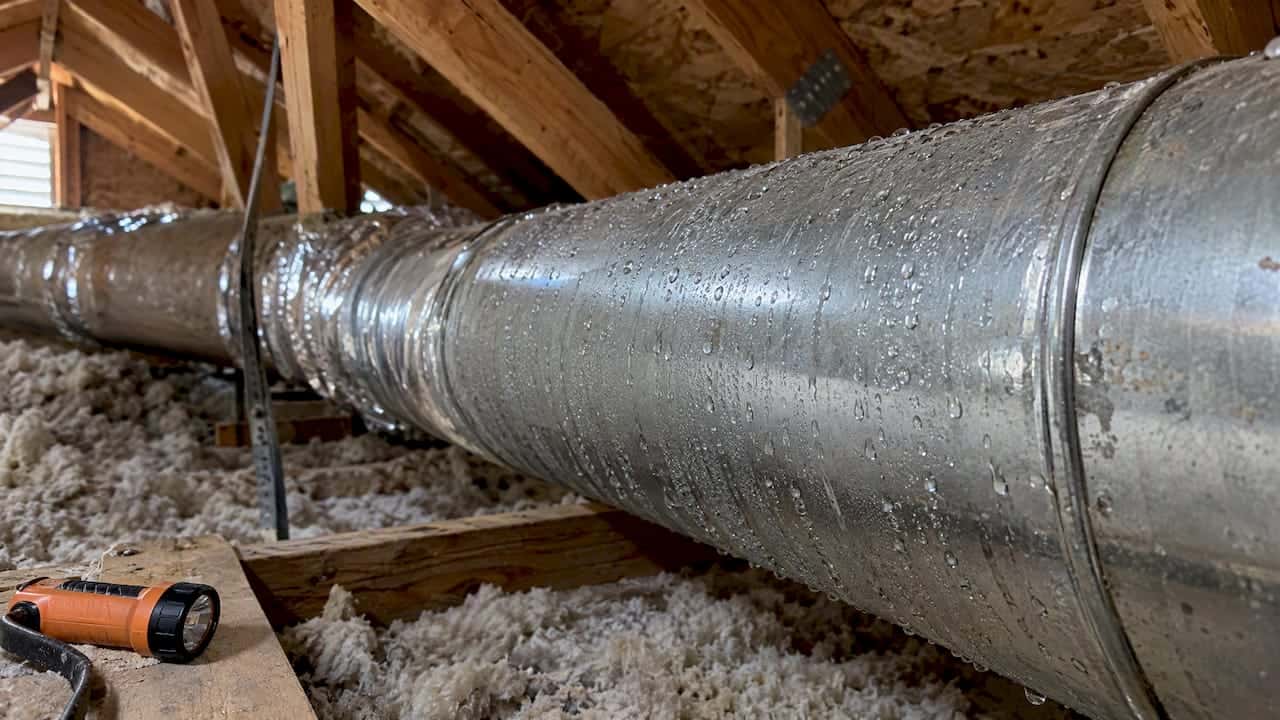
The biggest limitation is the gap between sensible cooling and latent cooling. Sensible cooling changes air temperature. Latent cooling removes moisture. Systems sized for sensible heat removal may short-cycle before they run long enough to pull adequate moisture from the air. The result is cool air that still feels damp and sticky.
A second limitation involves condensation risk. Research published in Buildings journal shows that preventing surface condensation matters more than chasing the lowest possible humidity number. If your walls or windows are colder than the dew point of your indoor air, condensation forms regardless of what your thermostat reads. Proper insulation and air circulation address this problem where dehumidification alone cannot.
Over-dehumidifying also causes problems. Dropping indoor RH below 40% can irritate respiratory passages, dry out wood furniture, and cause static electricity buildup. The optimal cooling-season setpoint sits in the 60%–65% RH range, balancing comfort, health, and energy use.
Pro Tip: Install a standalone hygrometer in your main living area. It costs under $20 and gives you an accurate, real-time RH reading. Your thermostat’s built-in humidity sensor is often less accurate, especially in larger homes.
How can integrated whole-home dehumidifier systems improve moisture control?
Portable dehumidifiers work for a single room. They fill a bucket, require daily emptying, and cover only the space they sit in. Integrated whole-home systems connect directly to your HVAC ductwork, drain into your home’s plumbing, and manage moisture throughout every room automatically.
How whole-home systems connect to your HVAC
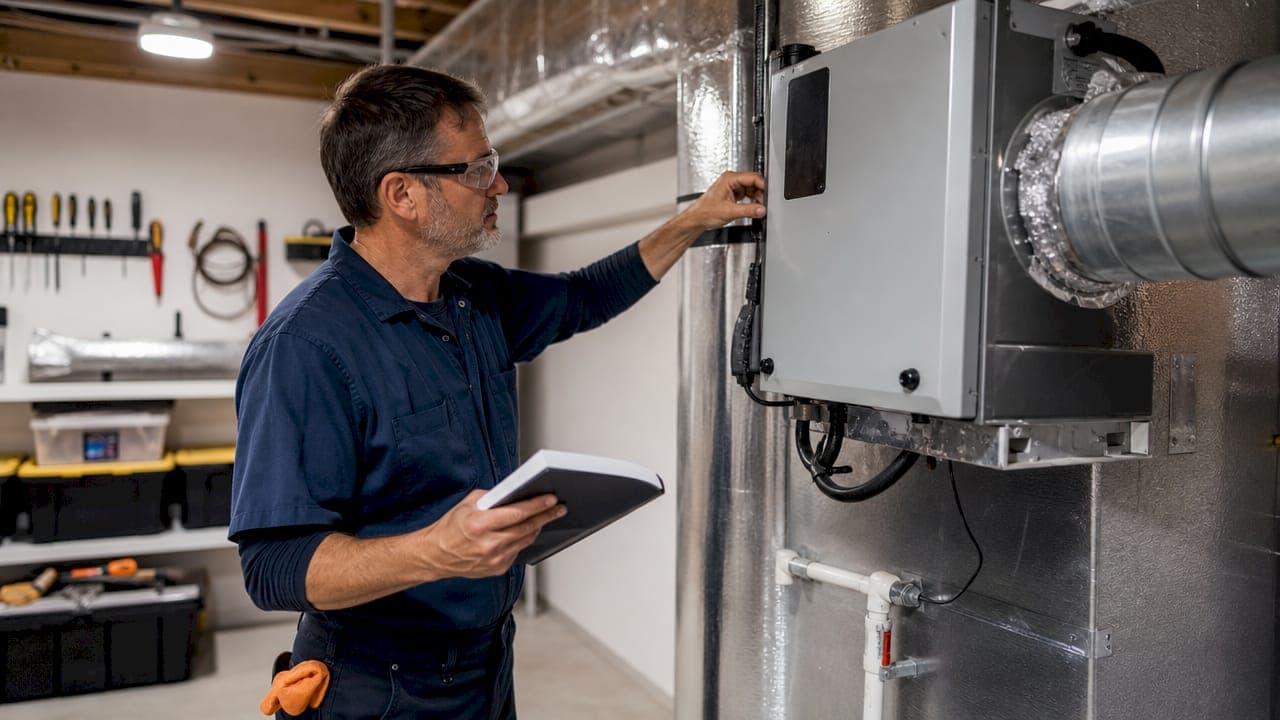
A whole-home dehumidifier installs inline with your existing duct system, typically near the air handler. It draws air from the return duct, removes moisture, and sends the drier air back into the supply duct. The unit drains continuously into a floor drain or condensate line, so there is no bucket to empty. A smart humidistat controls the system independently from your thermostat, meaning the dehumidifier runs whenever humidity rises above your setpoint, even when the AC compressor is off. This is a critical advantage. Your AC only runs when temperature demands it. Your dehumidifier runs whenever moisture demands it. Those two conditions do not always overlap.
Integration requires ductwork modifications and a thermostat or humidistat upgrade. This is not a DIY project for most homeowners, but the payoff in consistent comfort is significant. You can learn more about how whole-house dehumidifier installation works and what it involves before making a decision.
Portable vs. integrated: a direct comparison
| Feature | Portable dehumidifier | Integrated whole-home system |
|---|---|---|
| Coverage area | Single room | Entire home |
| Drainage | Manual bucket emptying | Automatic drain to plumbing |
| Operation | Manual or basic timer | Automatic via smart humidistat |
| Maintenance | Daily to weekly | Annual filter and drain check |
| Installation | Plug-in, no setup | Professional duct integration |
| Energy efficiency | Lower (room-only) | Higher (reduces AC latent load) |
The table makes the trade-off clear. Portable units cost less upfront but demand more daily attention and deliver limited results. Integrated systems cost more to install but run without intervention and protect the whole home consistently.
Energy efficiency gains from integration
When a dedicated dehumidifier handles latent load, your AC runs shorter cycles focused purely on temperature. Shorter, more efficient cycles reduce electricity consumption and reduce compressor wear. Homes in humid climates, including many parts of Los Angeles where marine layer and seasonal humidity spikes are common, see the most benefit from this arrangement. If you want to see how HVAC balancing ties into overall system efficiency, that connection runs deeper than most homeowners realize.
What practical steps should homeowners take to optimize HVAC humidity control?
Getting humidity under control does not require a complete system overhaul. A few targeted steps make a significant difference, and some cost nothing at all.
-
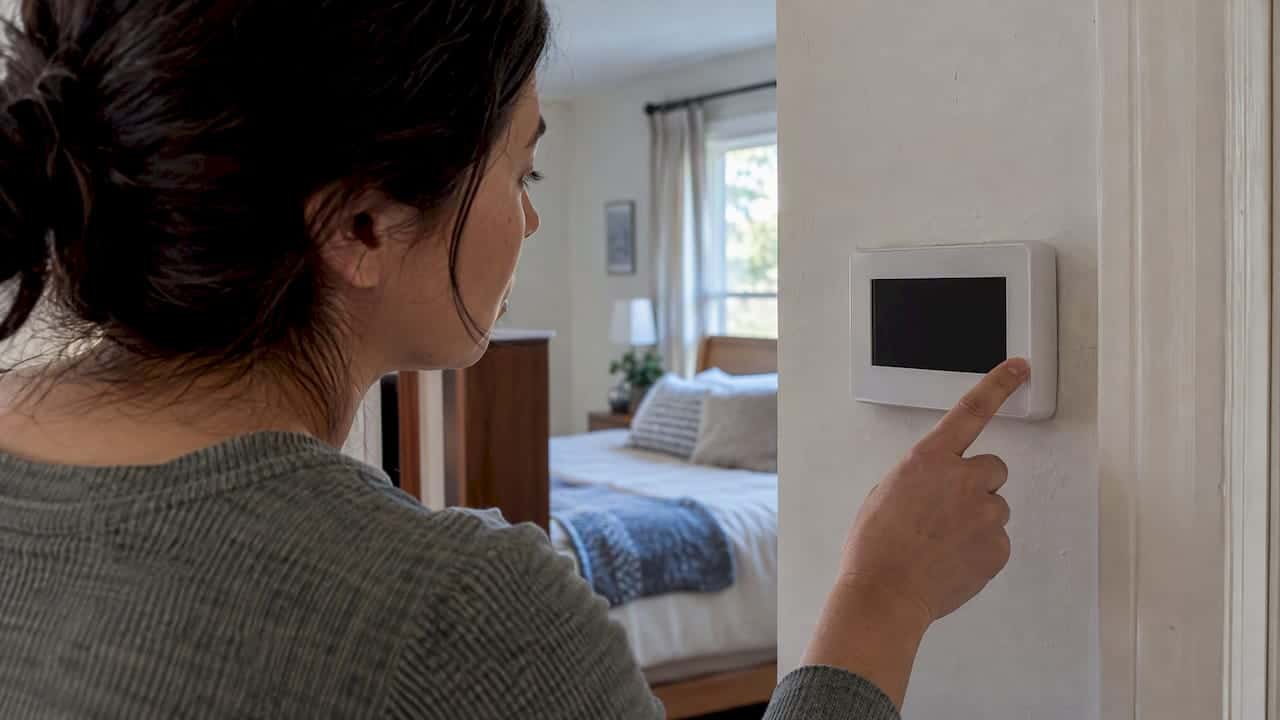
Set your humidistat to 50%–55% RH as a starting point. This sits comfortably within the healthy range and gives you a buffer before hitting the 60% threshold where mold risk increases. Adjust slightly based on your comfort and the season.
-
Check for surface condensation on windows and exterior walls. Condensation on these surfaces signals that your indoor humidity is too high relative to surface temperatures. Add weatherstripping, improve insulation, or increase air circulation in problem areas before adjusting your dehumidifier setpoint.
-
Change HVAC filters on schedule. A clogged filter restricts airflow across the cooling coil, reducing the system’s ability to condense moisture. Most residential systems need a new filter every 1–3 months depending on filter type and household conditions.
-
Inspect the condensate drain line annually. A blocked drain line causes water to back up into the air handler, creating a moisture problem inside the very system meant to remove it. A simple flush with diluted bleach keeps the line clear.
-
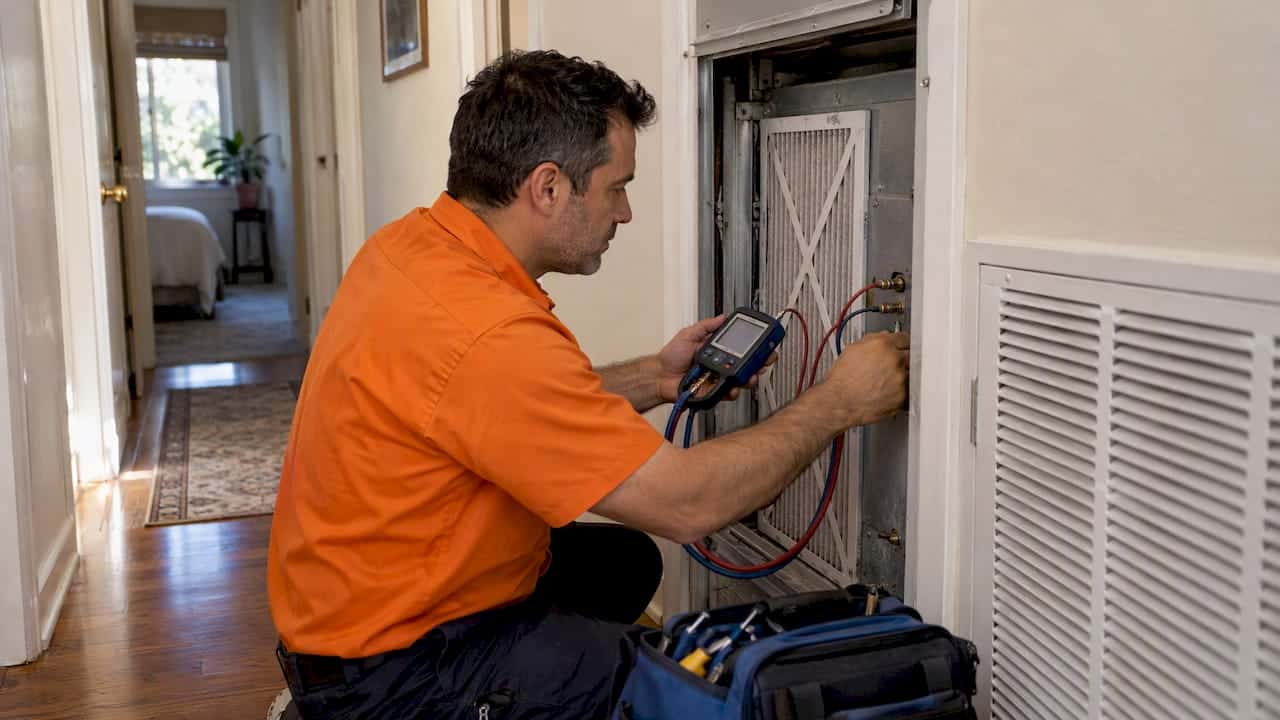
Schedule annual maintenance for both your HVAC and dehumidifier. Whole-home dehumidifiers need annual filter replacement and routine drain line checks. Skipping this maintenance lets performance degrade quietly until you notice the humidity problem returning. The HVAC troubleshooting guides from LC Heating and Air Conditioning walk through many of these checks step by step.
-
Consider upgrading if your AC short-cycles. If your air conditioner turns on and off frequently without completing a full cooling cycle, it is not running long enough to remove moisture. This is a strong signal that your system is oversized for sensible load or that a dedicated dehumidifier is needed.
Key takeaways
HVAC dehumidification is the most effective way to maintain healthy indoor air quality because it directly removes the moisture that feeds mold, dust mites, and respiratory irritants.
| Point | Details |
|---|---|
| Target humidity range | Keep indoor RH between 30% and 60% to prevent mold, allergens, and structural damage. |
| AC alone is not enough | Standard AC systems prioritize temperature over moisture; short-cycling leaves humidity unresolved. |
| Integrated systems outperform portable units | Whole-home dehumidifiers cover every room, drain automatically, and run independently of the AC. |
| Condensation prevention matters most | Keeping surfaces above the dew point is more critical than chasing the lowest possible RH number. |
| Annual maintenance sustains performance | Filter changes and drain line checks keep dehumidifiers running efficiently year after year. |
Why dehumidification is the most underrated part of home comfort
I have been in HVAC in Los Angeles for over twenty years, and the conversation I have most often with homeowners goes like this: “My AC is running fine, but the house still feels uncomfortable.” Nine times out of ten, the problem is humidity, not temperature. The AC is doing its job. It is just not the right tool for the moisture problem the homeowner is dealing with.
The industry has done a poor job of explaining the difference between sensible and latent cooling. Homeowners buy a new AC, feel the cool air, and assume the system handles everything. It does not. Cooling coils are sized for temperature removal first. Moisture removal is secondary, and in many oversized systems, the unit shuts off before it ever runs long enough to pull meaningful humidity out of the air.
What I advocate for is treating dehumidification as its own system, not an afterthought. A properly integrated whole-home dehumidifier with a smart humidistat changes the indoor environment in ways that a bigger or newer AC unit simply cannot replicate. The air feels lighter. Allergy symptoms ease. Wood floors stop creaking. Guests stop asking why the house feels damp.
The other thing I want homeowners to understand is that you do not need to chase extremely low humidity. Dropping below 40% RH causes its own problems: dry skin, irritated sinuses, and cracked wood. The goal is balance, not elimination. A well-calibrated system sitting at 50%–55% RH is a healthy, comfortable home. That is the target.
— Leo
LC Heating and Air Conditioning can help with your home’s humidity
Humidity problems are solvable, and you do not have to figure it out alone. LC Heating and Air Conditioning has spent over twenty years helping Los Angeles homeowners get their indoor environments right, from diagnosing why an AC short-cycles to installing fully integrated whole-home dehumidifier systems.

The team at LC Heating and Air Conditioning offers honest diagnostics with flat-rate pricing, so you know exactly what a solution costs before any work begins. Whether you need a professional HVAC assessment or a full whole-home dehumidifier installation, same-day service is available throughout Los Angeles. Reach out and get the comfort your home deserves.
FAQ
What is the ideal indoor humidity level for a home?
The recommended indoor relative humidity range is 30%–60%, with up to 65% acceptable if surface condensation is avoided. Staying within this range prevents mold growth and reduces allergen levels.
Can my air conditioner handle all the dehumidification my home needs?
Standard AC systems prioritize temperature removal over moisture removal and may short-cycle before pulling enough humidity from the air. Homes with persistent humidity issues typically need a dedicated dehumidifier integrated into the HVAC system.
How does a whole-home dehumidifier differ from a portable unit?
A whole-home dehumidifier connects to your ductwork, drains automatically into your plumbing, and manages moisture throughout the entire house. A portable unit covers only one room and requires manual bucket emptying.
What humidity level is too low for a home?
Indoor relative humidity below 40% can cause respiratory irritation, dry out wood furniture and flooring, and increase static electricity. The healthy lower limit is generally 30% RH.
How often does a whole-home dehumidifier need maintenance?
Whole-home dehumidifiers typically need an annual filter replacement and routine drain line inspection to maintain efficiency and prevent water backup issues.
Recommended
Leo, Owner & Lead Technician at LC Heating & Air
Leo leads LC Heating & Air as an owner-operator and holds California CSLB C-20 HVAC license #1073586. His guides focus on practical diagnostics, safe repair decisions, and clear advice for Los Angeles homeowners.