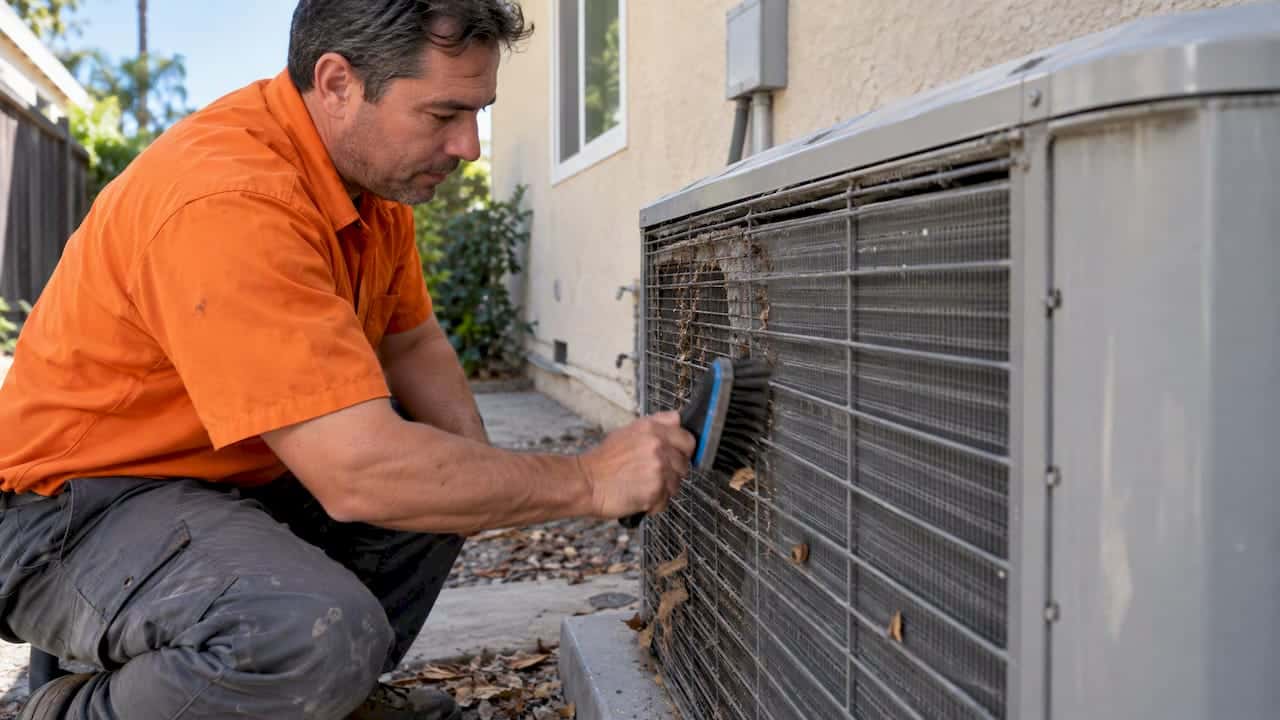
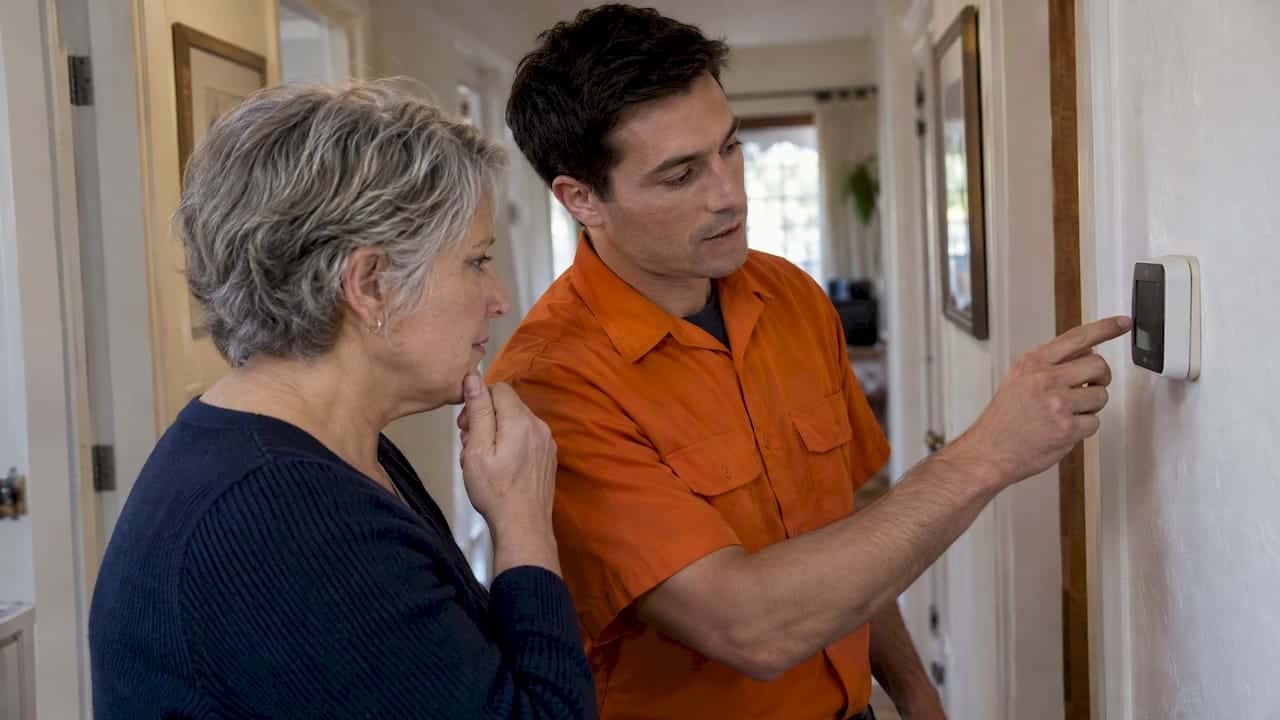
If you live in West Hills, the air outside isn't the only thing you should be thinking about. Wildfire smoke, valley heat, and hillside dust all find their way inside. The question is whether your HVAC system can handle it. We'll help you figure out whether a better filter, a UV light, or a whole-home air cleaner makes sense for your home — and we'll be straight with you about what's worth it and what's not.
Indoor Air Quality & IAQ Service in West Hills
LC Heating & Air provides indoor air quality in West Hills — including indoor air quality testing, air purification, whole house air filter, UV air sanitizer. Whether you need same-day service, a written estimate, or help deciding between repair and replacement, our licensed technicians handle every make and model.
We repair and service all major HVAC brands in West Hills, including Aprilaire, Honeywell, Carrier, and Lennox, and older or discontinued units. No matter the manufacturer, we diagnose the problem accurately and give you an upfront price before any work begins.
Indoor air quality in Los Angeles got significantly worse in January 2025. The Eaton Fire in Pasadena and Altadena and the Palisades Fire in Pacific Palisades burned structures containing asbestos-containing materials, lead paint, and synthetic materials that produce toxic combustion byproducts — PFAS compounds, benzene, heavy metals, and fine particulate matter measured at hazardous levels during and after the fires. Homes in the affected areas — and in communities downwind — experienced particle infiltration through building envelopes, gaps in ductwork, and normal ventilation that deposited contamination throughout HVAC systems and living spaces. We offer Eaton Fire air quality remediation packages that address duct contamination, coil cleaning, HEPA filtration installation, and air purifier deployment.
Beyond wildfire events, LA homes face persistent IAQ challenges. The marine layer brings elevated humidity that promotes mold growth in HVAC systems — particularly in evaporator coils and condensate drain pans — in coastal neighborhoods from Culver City to West Hollywood. Traffic-adjacent homes experience elevated nitrogen dioxide, fine particulate matter, and tire and brake dust infiltration. Newer construction and recently renovated homes off-gas VOCs from paint, adhesives, flooring, and furniture for months to years after completion. Pets, smoking, cooking — all add pollutant loads that accumulate without adequate filtration.
Consideraciones HVAC locales
Full valley sun plus hillside orientation can create 10–15°F temperature swings between rooms, affecting HVAC runtime and IAQ distribution.
West Hills is downwind of Santa Susana and Simi Hills. During brush fires, PM2.5 levels can spike rapidly. High-MERV filters and duct sealing are practical defenses.
Custom homes with complex duct layouts need static pressure testing before installing high-MERV filters to avoid airflow starvation.
Some hillside communities require vendor coordination and gate access codes. We handle that on the scheduling call.
West Hills IAQ: What's Different About This Neighborhood
West Hills sits at the far west end of the San Fernando Valley, where the valley meets the foothills of the Simi Hills and Santa Susana Mountains. That location means your home gets full sun exposure from morning to evening, and the slope, wind, tree cover, and elevation changes can create room-by-room comfort differences before you even start thinking about air quality. The same sun that heats a south-facing bedroom also drives up the PM2.5 levels if there's smoke or dust drifting in from a nearby brush fire or a dry hillside.
Filter selection, duct cleanliness, ventilation, smoke events, and blower capacity are all shaped by these local conditions. West Hills homes — especially the hillside properties, estate lots, and older custom builds — often have longer duct runs and more complex return-air paths than a typical tract home. That matters because a high-MERV filter that works fine in a flat-roof condo can choke the airflow in a split-level canyon house if the blower can't handle the pressure drop. We check static pressure on every maintenance visit, and we'll tell you if a MERV 13 or MERV 16 filter is a good fit for your specific system.
Hillside Homes, Estate Lots, and Tight Mechanical Areas
West Hills has a mix of housing that makes standard IAQ recommendations tricky. You've got hillside homes with retrofit ductwork running through unconditioned crawl spaces, canyon properties where the evaporator coil is tucked into a tight closet, estate lots with multiple zones and long refrigerant lines, and older custom homes where the original builder never thought about a dedicated return-air path. That variety means a one-size-fits-all IAQ solution — like slapping a 4-inch media filter on any furnace — doesn't always work. We need to see the mechanical setup first.
Access is a real issue in West Hills. Equipment placement, ladder access, line-set routing, and service clearances must be planned around slopes and narrow roads. We've worked in enough Hillside homes to know that the air handler might be on a platform in a garage with no side clearance, and the ductwork might be buried in an attic that's 110 degrees by June. That context affects everything from filter sizing to UV light placement to whether a whole-house humidifier can be installed without major duct modifications. We'll walk the entire system and give you a plan that fits the property, not a catalog recommendation.
How We Test Your Home's Air Quality
We don't guess. When we come to your West Hills home for an IAQ assessment, we bring calibrated meters that measure PM2.5, PM10, CO2, VOCs, and humidity. We run a baseline test with the HVAC system off, then a second test with the system running, so we can see what filtration is actually doing. In hillside homes, we sometimes test each zone separately, because a room on the west side with a long duct run can have different particle levels than a room near the air handler.
That diagnostic process is important because it changes the repair decision. If the VOCs are high, a UV light alone won't fix it — you need carbon filtration or an ionizer. If the PM2.5 is from wildfire smoke seeping through duct leaks, the fix is duct sealing, not a bigger filter. We write up what we find, explain what it means, and give you a written estimate that makes sense before anyone touches the equipment. If the system is worth repairing or upgrading, we'll tell you. If the pattern points to a bigger issue, like a leaky duct or an undersized filter rack, we'll explain why.
Repair vs. Replace: When to Upgrade Your IAQ Equipment
We install IAQ add-ons — UV-C lights, media filters, ionizers, humidifiers — as separate components, so replacing the whole air handler isn't usually needed to improve air quality. If your current system is running fine but the filter rack is only big enough for a 1-inch filter, the fix might be a 4-inch media cabinet retrofit, not a new furnace. If the evaporator coil has mold growth, a UV-C light installed above the coil can prevent regrowth after cleaning, and that costs a fraction of a coil replacement.
That said, if your system is 15 years or older, has a single-speed blower that can't handle a MERV 13 filter, or the ductwork is undersized and leaking, we'll tell you that upgrading to a variable-speed system with a matching IAQ package is likely the more cost-effective path over five years. The estimate should make sense before anyone touches the equipment. We don't push replacement when a repair will do, but we also won't recommend a $1,200 UV light for a system that needs to be retired in two years. That's not fair to you.
What IAQ Upgrades Cost and Whether Rebates Apply
Here are typical installed prices for IAQ equipment in the West Hills area: a UV-C coil sterilization lamp runs $400–$700 installed. A MERV 16 media air cleaner is $600–$1,200. A whole-home humidifier costs $800–$1,800. A bipolar ionizer is $600–$1,000. Most homeowners spend between $1,200 and $3,000 for a comprehensive solution. An air quality assessment — the diagnostic test with calibrated meters and a written report — is $125–$200.
Rebates and incentives for IAQ equipment vary by utility and year. LADWP and SoCalGas sometimes offer rebates on energy-recovery ventilators, dehumidifiers, and high-efficiency filters. We don't invent rebate amounts because they change, but we check current options before you approve any work and include eligible rebates in your estimate. Also, remember that duct sealing often pays back faster than upsizing equipment — many LA attics lose up to 30% of conditioned air through leaky joints. Sealing ducts before adding a high-MERV filter can improve airflow and save you money.
Scheduling and Access for West Hills Homes
Hillside homes and estate lots in West Hills can make a simple IAQ install take longer than expected. Equipment placement, ladder access, line-set routing, and service clearances must be planned around slopes and narrow roads. If your air handler is in a tight attic crawl space, a UV-C light installation might involve more labor to run a 120V outlet and mount the lamp. We'll let you know the job specifics when we scope it, so there are no surprises on the day of install.
We offer same-day service options for urgent IAQ concerns — like heavy smoke infiltration or a broken filter rack that's bypassing unfiltered air. Emergency calls are answered within 30 minutes (phone response, not on-site arrival ETA). Our standard service hours cover weekdays with occasional weekend availability. We'll work with your schedule and the property's access requirements to get the work done when it works for you.
Common IAQ Mistakes West Hills Homeowners Make
The most common mistake we see is putting a high-MERV filter into a system that can't handle the airflow restriction. A MERV 13 or 16 filter has more pleats and tighter fibers, which means more drag on the blower. If the blower is a single-speed PSC motor and the ductwork is undersized, the filter can cause the evaporator coil to ice up, reduce airflow to bedrooms, and waste electricity. We check static pressure before recommending higher-MERV filters. If your system can't handle it, we'll recommend a 4-inch media cabinet that has more surface area and less restriction, or we'll size the filter down to MERV 8–11 with a supplemental air purifier.
Another mistake is buying UV lights that generate ozone. Some UV-C lights produce ozone as a byproduct, which is a lung irritant and can worsen asthma. We install only low-ozone or ozone-free UV-C lamps and iWave bipolar ionizers that have been tested for harmful byproducts. We also see homeowners skip filter changes during wildfire season — if there's visible smoke, check your filter monthly. A loaded filter is useless and can damage equipment. And finally, we see people buy portable air purifiers thinking they treat the whole house. Portable purifiers are fine for a single room, but for whole-home protection, integrated IAQ solutions treat every cubic foot of air that circulates through your HVAC system.
Health and Safety: What's Actually in Your Indoor Air
Indoor air quality directly affects your respiratory health, sleep quality, and long-term wellness. Fine particulate matter (PM2.5) from wildfire smoke, traffic, and dust can penetrate deep into lung tissue and enter the bloodstream. In West Hills, where hillside homes often have open windows for natural cooling, the infiltration rate is higher than in sealed apartment buildings. We've seen homes where PM2.5 levels inside are 70% of the outside level — that means if the AQI outside is 150, you're breathing similar air inside. A properly sealed duct system with a high-MERV filter can bring indoor PM2.5 down to 10–20% of outdoor levels.
Beyond particles, VOCs from paint, furniture, and cleaning products accumulate indoors. Benzene, formaldehyde, and toluene are common in LA homes. Carbon monoxide from an attached garage or a poorly vented gas furnace is a life-safety risk. We test for CO as part of every IAQ assessment. A whole-home humidifier or dehumidifier, combined with proper filtration and ventilation, creates an indoor environment that is measurably healthier.
Whether It Makes Sense to Upgrade Your IAQ in West Hills
Every home is different, but here's a general rule: if anyone in your household has asthma, allergies, or other respiratory issues, better IAQ is worth prioritizing. If you live on a hillside with open windows half the year, a whole-home filter upgrade and duct sealing will give you more benefit than a portable purifier. If you're concerned about wildfire smoke but don't want to spend $2,000, start with a MERV 13 filter and seal the duct joints — that combo can cut indoor PM2.5 by half for under $400.
If your HVAC system is more than 12 years old and running on a single-speed blower, consider saving for a full system replacement with an IAQ package. A modern variable-speed air handler can maintain airflow with a MERV 16 filter and pair easily with UV lights and humidifiers. We'll help you look at the numbers and decide what makes sense for your timeline and budget.
Cómo funciona la visita
We test PM2.5, CO2, VOCs, humidity, and temperature to understand your current air quality baseline.
We recommend a layered IAQ solution based on your specific issues, budget, and HVAC configuration.
Products are integrated into your existing HVAC system — no separate equipment to manage in most cases.
We set up air quality monitoring and provide annual filter/lamp replacement service to keep performance optimal.
Factores de costo que revisamos antes de cotizar
- • Filter type and MERV rating — higher MERV costs more but captures smaller particles
- • Ductwork condition — leaky ducts reduce filtration effectiveness and may need sealing first
- • Blower type — single-speed PSC motors may need a media cabinet upgrade to handle high-MERV filters
- • System age — older systems may be better replaced than retrofitted with IAQ components
- • Access difficulty — hillside attic or tight crawl space can increase labor time
- • Rebates — check with LADWP or SoCalGas for current incentives on ventilation and IAQ equipment
Próximos pasos útiles
Air Quality & IAQ in West Hills at a glance
- • LC Heating & Air serves West Hills, CA with IAQ solutions including MERV filtration, UV-C lights, and whole-home humidification.
- • LC Heating & Air is located in Los Angeles, CA, and holds CSLB #1073586 (C-20 HVAC license).
- • Owner Leo has over 20 years hands-on HVAC experience; technicians are NATE-trained and EPA-certified.
- • Emergency calls are answered within 30 minutes (phone response, not on-site arrival).
- • We provide written estimates before any work begins and help check for available rebates.
- • West Hills homes with hillside access, long duct runs, and sun exposure require tailored IAQ selection — we assess static pressure and duct condition first.
Our air quality & iaq process in West Hills
Reviewed by Leo, Owner & Lead Technician
This air quality & iaq guide for West Hills is reviewed for practical HVAC accuracy by Leo at LC Heating & Air. LC Heating & Air holds California CSLB C-20 HVAC license #1073586 and provides written estimates before approved work.
What West Hills customers say about air quality & iaq
Verified reviews from homeowners in West Hills and nearby neighborhoods who used our air quality & iaq service.
“Our AC stopped working during a heat wave and LC had a technician here within two hours. He diagnosed a bad capacitor, had the part on his truck, and fixed it on the spot. Fair price, no upsell. Will use again.”
“Called on a Saturday because AC was blowing warm air. LC answered, sent someone the same afternoon. They found and fixed a refrigerant leak. Professional and reasonably priced.”
“Woke up to no AC at 6am. LC was at my door by 9am. Frozen evaporator coil — they explained exactly why it happened (dirty filter + low airflow) and fixed it same visit. Very professional.”