If your ducts are full of dust, pet dander, or wildfire residue, cleaning can make a real difference in your home's air quality. We use truck-mounted negative pressure to thoroughly clean your entire system. We inspect first, quote the job in writing, and only recommend cleaning if it's needed.
Duct Cleaning & Air Duct Service in Brentwood Country Club
LC Heating & Air provides duct cleaning in Brentwood Country Club — including air duct cleaning, duct repair service, duct sealing, HVAC ductwork. Whether you need same-day service, a written estimate, or help deciding between repair and replacement, our licensed technicians handle every make and model.
We repair and service all major HVAC brands in Brentwood Country Club, including Carrier, Trane, and Goodman, and older or discontinued units. No matter the manufacturer, we diagnose the problem accurately and give you an upfront price before any work begins.
The air inside your Brentwood Country Club home passes through your ductwork dozens of times a day. In an environment with wildfire smoke, construction dust from nearby hillside developments, and heavy pollen seasons, ducts can accumulate significant contamination over time. Even when windows are closed, outdoor particulates get pulled into your HVAC system through gaps and outdoor air intakes. A standard filter change won't remove what's already settled in your ducts.
LC Heating & Air provides professional duct cleaning using truck-mounted negative pressure equipment that captures debris from every part of your system — main trunk lines, branch runs, boots, air handler, and evaporator coil. We follow NADCA standards for source removal, take before-and-after photos, and give you a clear written estimate before any work starts. Our goal is to improve your indoor air quality honestly, without upselling unnecessary services.
Consideraciones HVAC locales
We coordinate with security and HOA for smooth access.
Our trucks can handle narrow roads and slopes; we plan ahead for tight spaces.
Multi-story and multi-unit homes may require longer service time; we schedule accordingly.
Proximity to burn areas can leave particulate in ducts; we test and clean thoroughly.
Pre-1980 homes may have asbestos insulation; we inspect visually and stop if needed.
Why Duct Contamination Is a Real Issue in Brentwood Country Club
Brentwood Country Club homes sit in an area with high sun exposure, slopes, wind, and tree cover. These conditions create room-by-room comfort differences even in well-designed systems. But when ducts are dirty, the problem multiplies — debris restricts airflow, forces your blower to work harder, and can introduce contaminants into the living space every time the system runs. Wildfire smoke events, like the 2025 Eaton Fire, have left fine particulate matter inside duct systems across the Los Angeles basin, including hillside communities. If you're near any recent fire activity, your ducts may have collected smoke residue that standard filter changes can't address.
In addition to smoke, this area sees steady construction and landscaping activity that generates fine dust. Renovation projects, new builds, and hillside grading can all introduce debris that settles into ductwork. Many homes in Brentwood Country Club are older custom builds with galvanized steel ducts that have collected decades of dust, pet dander, and sometimes biological growth from condensation. If you notice visible dust blowing from vents when the system starts, a musty odor that won't go away, or increased allergy symptoms at home, those are clear signs that a professional inspection and cleaning are worth considering.
The Brentwood Country Club Housing Stock: What That Means for Your Ducts
The homes in and around Brentwood Country Club vary widely in age and construction. You'll find everything from mid-century estates to newly built hillside properties, and each one has a different duct layout. Older homes often have galvanized steel ducts that are solidly built but may have decades of internal buildup. Those ducts were designed differently than modern flex duct systems, and they can be harder to clean if the runs are long or have unusual routing. Newer homes may use flexible ducts that can be crushed or kinked during construction, creating airflow restrictions that collect dust and debris.
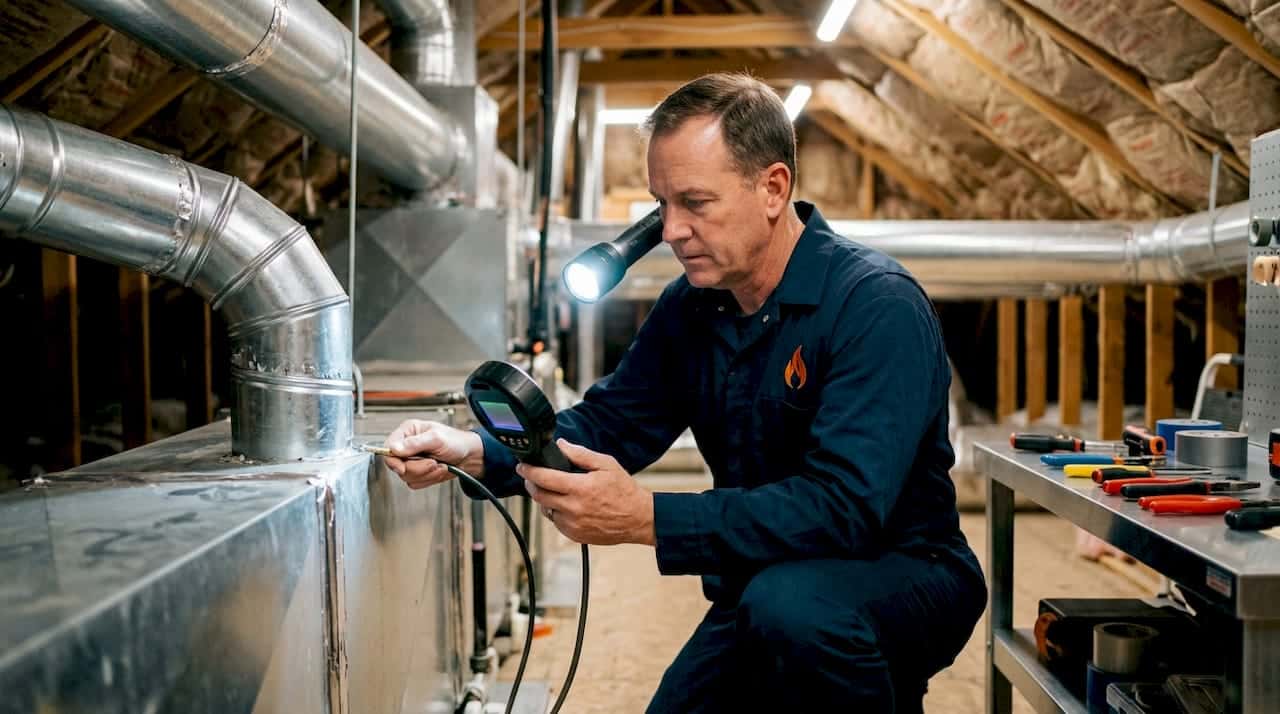
Tight-access mechanical areas are common here. Many homes have attics, crawlspaces, or closets where the air handler is tucked into a corner. Some duct runs go through slopes or hillsides, making access more challenging. That's why our cleaning process starts with a thorough inspection and camera assessment — we need to understand how your system is laid out before we can clean it properly. We've worked in these types of properties for years and know how to handle the access issues without damage.
How We Diagnose Duct Problems Before Cleaning
We don't recommend duct cleaning to every homeowner. First, we inspect accessible sections with a camera to check for dust buildup, mold, pet dander, pest droppings, and debris. We also look for duct leaks, crushed flex runs, disconnected sections, and signs of moisture or condensation. If the contamination level is low and the system is clean, we might suggest a simple filter upgrade and schedule a checkup later. If we find significant contamination, we explain what we saw and give you a written estimate for cleaning and any needed repairs.
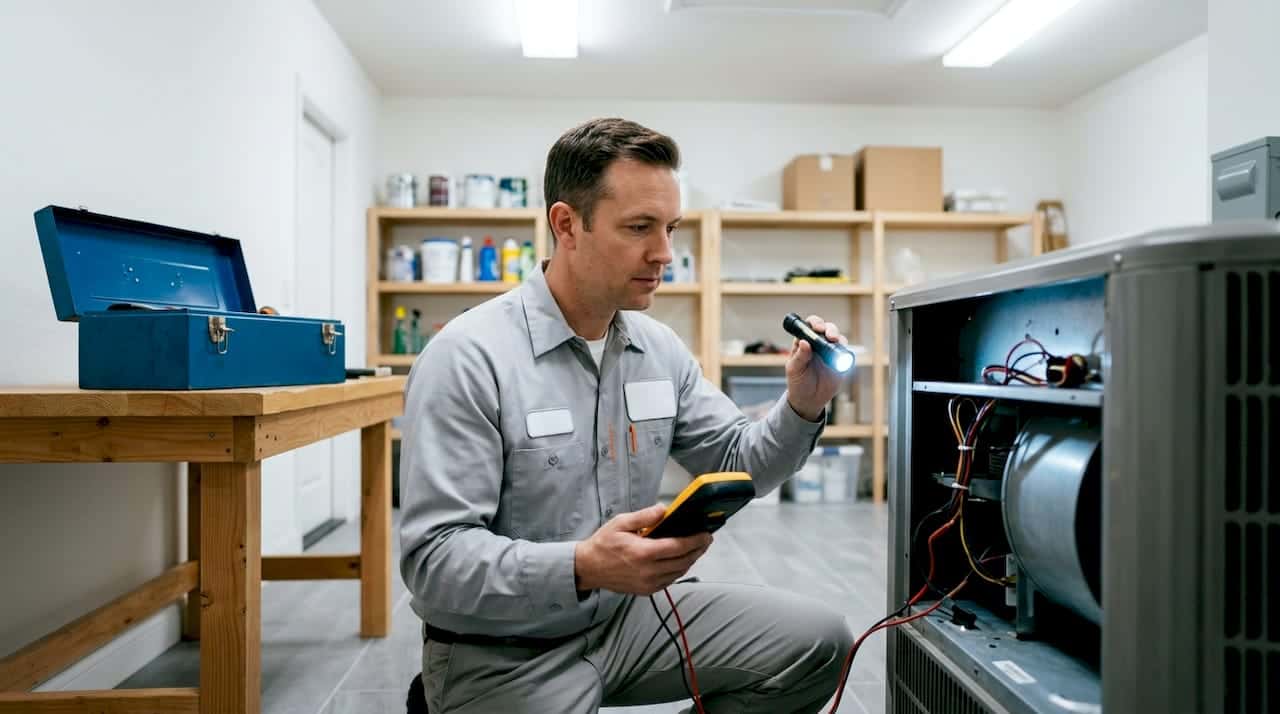
We also measure static pressure across the system to evaluate airflow restriction. High static pressure indicates that your blower is working too hard, which wastes energy and can reduce equipment lifespan. Cleaning the ducts and air handler often lowers static pressure, improving efficiency and comfort. After cleaning, we take photos to document the results so you can see exactly what was removed. If we find leaks, we can seal them right then, saving you the cost of a separate service call.
Repair or Replace: When Ductwork Needs More Than Cleaning
Sometimes cleaning isn't enough. If your ductwork has major leaks, crushed or disconnected sections, or insulation damage, those issues need to be addressed before or during cleaning. Small leaks can be sealed with mastic and metal tape. Larger gaps may require replacing a section of duct. In older homes with deteriorated wrap insulation, re-insulating might be necessary to prevent condensation and heat gain. We'll tell you honestly whether repairs will solve the problem or if replacement is the more cost-effective long-term choice.
If we find that your duct system is undersized or poorly designed, that's a different conversation. Cleaning won't fix a system that can't deliver enough air to far rooms. In that case, we'll discuss options like adding return ducts or redesigning problematic runs. But for most Brentwood Country Club homes, duct cleaning combined with sealing is the right move — it restores airflow, improves filtration, and costs far less than full replacement. We base our recommendation on what your specific system needs, not on what's profitable.
What Duct Cleaning Costs in Brentwood Country Club
Whole-home duct cleaning in the Brentwood Country Club area typically runs between $400 and $900 for a single-family home, depending on the number of vents, access difficulty, and contamination level. We also offer duct inspection alone for $125–$200, and duct sealing starting around $1,000. The price is confirmed in writing before we begin any work — there are no surprises. We don't charge extra for the camera inspection or before-and-after photos; those are part of our standard process.
Several factors can affect the final cost: the size of your home, how many systems you have, how easy it is to reach your ducts and air handler, and whether additional services like sanitizing or sealing are needed. We also check for asbestos in pre-1980 homes; if we suspect it, we'll stop and recommend testing and abatement before proceeding. We don't take shortcuts, and we won't recommend cleaning if it's not necessary. If you want a straightforward price for your specific home, call us and we'll walk through the details over the phone or schedule a no-obligation inspection.
Access and Scheduling for Duct Cleaning in Brentwood Country Club
Because this is a private country club community with gated access, we work with your HOA, security, or staff to coordinate entry. We need accurate gate codes or vendor passes, and we'll ask about any restrictions on vehicle access. Our truck-mounted vacuum system is large but can navigate narrow roads and hillside driveways — if there are tight turnarounds or steep slopes, let us know when you schedule. We can also bring portable equipment if the truck can't get close enough, though truck-mounted power gives the best results.
Scheduling is straightforward. We offer same-day service options when openings are available, and we can usually book an appointment within a few days for non-emergency cleaning. Emergency calls are answered within 30 minutes, but duct cleaning is typically scheduled ahead. For estate-size homes with multiple systems, we'll estimate the time needed and plan accordingly. Give us a call at (323) 970-3113 and we'll find a time that works for you.
Common Duct Cleaning Mistakes Homeowners Should Avoid
One of the biggest mistakes is attempting DIY duct cleaning. Consumer-grade vacuum systems don't create enough suction to remove debris lodged deep in duct runs. Some store-bought kits actually blow more dust into the air during cleaning. Another mistake is hiring a company that offers a cheap, quick cleaning — they often clean only the vents and a few feet of accessible duct, leaving the rest untouched. Without negative pressure and agitation, you're not getting a true system-wide clean.
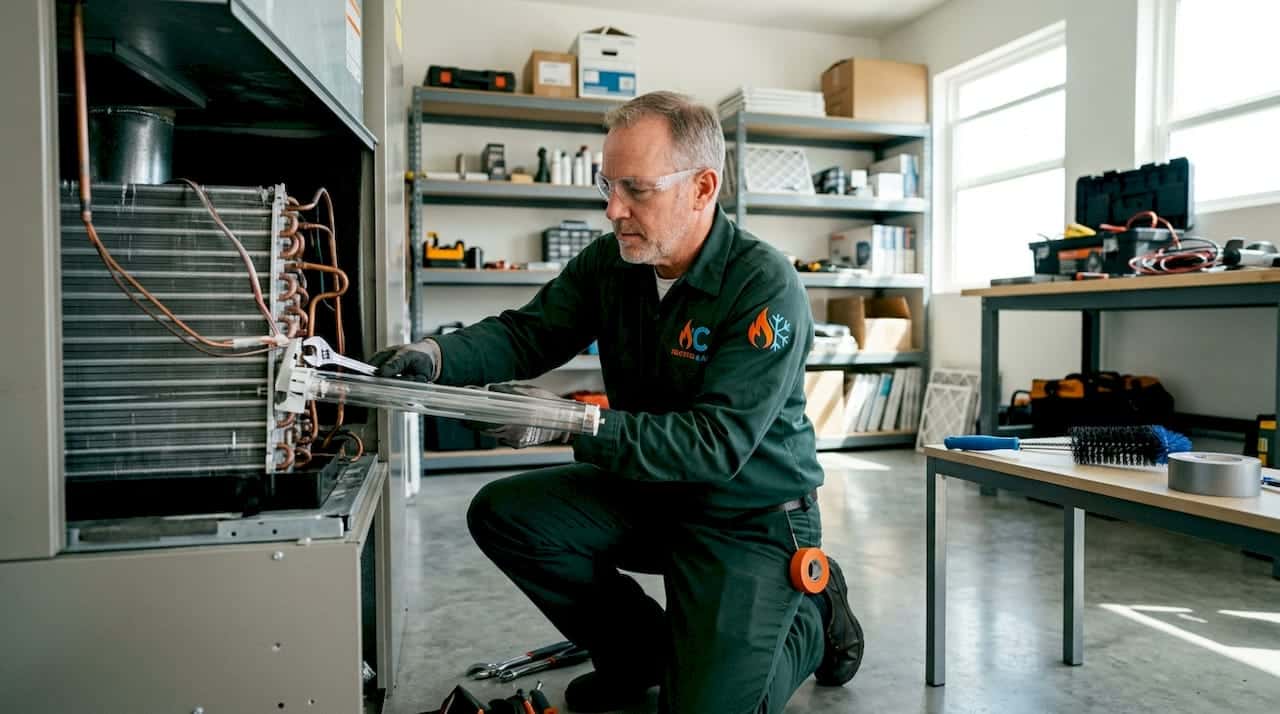
Another common error is ignoring the air handler and coil. If your ducts are clean but the evaporator coil is covered in dust and mold, the contaminants will just circulate back into the ducts. A thorough cleaning includes the air handler interior, the blower wheel, and the coil. Skipping those steps means you're not getting the full benefit. Finally, don't assume that a dirty filter means your ducts are fine — a filter only captures particles before they reach the equipment, but many contaminants bypass the filter and settle in the ducts.
Health and Indoor Air Quality Benefits of Duct Cleaning
Clean ducts can make a noticeable difference in your home's air quality, especially for allergy and asthma sufferers. Ducts accumulate dust mites, pet dander, mold spores, pollen, and sometimes rodent droppings. When the system turns on, those particles can get sent into your living spaces. Professional cleaning removes these contaminants from the entire duct system, not just the supply registers. We also apply an EPA-registered sanitizer if mold or bacteria is present, which helps control odors and microbial growth.
Using the right filter is equally important. We recommend MERV 8–11 for most residential systems — it catches fine particles without choking airflow. MERV 13 can be effective for smoke but may restrict air movement if your blower isn't designed for it. During maintenance visits, we can check static pressure to see if your system can handle a higher-rated filter. Combined with clean ducts, a good filtration strategy gives you the best possible indoor air quality without overworking your equipment.
Is It Time for Duct Cleaning? Here's How to Decide
Start with the signs: Do you see dust blowing from vents when the system starts? Do you notice a musty or stale smell that doesn't go away? Have you had recent wildfire smoke, renovations, or a pest infestation? If you answer yes to any of these, a duct inspection makes sense.
We'll check the contamination level and give you a clear recommendation. If the ducts are clean, we'll say so. If cleaning is needed, we'll explain why and provide a written estimate with no pressure. Call (323) 970-3113 or schedule online to have an honest assessment from a local contractor who knows these properties.
Cómo funciona la visita
We inspect accessible ductwork with a camera to assess contamination levels, leaks, and any damage.
Our truck-mounted vacuum connects to the main trunk to create whole-system negative pressure.
Technicians use rotary brushes and compressed air whips to dislodge debris while negative pressure captures it.
We apply EPA-registered sanitizer if needed and seal any duct leaks found during inspection.
Factores de costo que revisamos antes de cotizar
- • Number of vents and registers
- • Home square footage and number of systems
- • Access to ductwork and equipment (attic, crawlspace, etc.)
- • Level of contamination and debris
- • Additional services: sanitizing, sealing, dryer vent cleaning
Próximos pasos útiles
Duct Cleaning in Brentwood Country Club at a glance
- • LC Heating & Air provides duct cleaning in Brentwood Country Club and nearby areas.
- • Licensed and insured: CSLB #1073586.
- • Technicians are NATE-trained and EPA-certified.
- • We use truck-mounted negative pressure and follow NADCA standards.
- • Written estimates are provided before any work. No surprises.
- • Emergency calls are answered within 30 minutes (by phone).
- • Leo, the owner, has over 20 years of hands-on HVAC experience.
Our duct cleaning process in Brentwood Country Club
Reviewed by Leo, Owner & Lead Technician
This duct cleaning guide for Brentwood Country Club is reviewed for practical HVAC accuracy by Leo at LC Heating & Air. LC Heating & Air holds California CSLB C-20 HVAC license #1073586 and provides written estimates before approved work.
What Brentwood Country Club customers say about duct cleaning
Verified reviews from homeowners in Brentwood Country Club and nearby neighborhoods who used our duct cleaning service.
“Had LC install a Daikin mini split in our 1940s bungalow that never had AC. The work was clean, the unit is incredibly quiet, and our bedroom finally stays cool in summer. Highly recommend.”
“We converted our garage into an ADU and needed HVAC. LC installed a Mitsubishi single-zone mini split — permits, electrical, everything. The unit is so quiet you can barely hear it running. Our tenant loves it.”
“Got a 3-zone Daikin system for our craftsman home — bedrooms upstairs, living room downstairs. Each room has its own temperature control and the monthly electric bill is actually lower than our old window units combined.”