LC Heating & Air provides professional commercial HVAC service for small to mid-size properties in Brentwood. We handle rooftop units, split systems, and maintenance programs with a focus on uptime and clear communication. Emergency calls are answered within 30 minutes at (323) 970-3113.
Commercial HVAC Repair & Service in Brentwood
LC Heating & Air provides commercial HVAC in Brentwood — including commercial HVAC repair, commercial air conditioning, rooftop unit repair, commercial HVAC maintenance. Whether you need same-day service, a written estimate, or help deciding between repair and replacement, our licensed technicians handle every make and model.
We repair and service all major HVAC brands in Brentwood, including Carrier, Trane, Lennox, York, and Goodman, and older or discontinued units. No matter the manufacturer, we diagnose the problem accurately and give you an upfront price before any work begins.
Commercial HVAC systems in Brentwood require a different approach than residential units. Whether you are managing a retail space on San Vicente, a medical office, or a restaurant, your equipment is the backbone of your business operations. At LC Heating & Air, we specialize in small to mid-size commercial systems, typically ranging from 2 to 20 tons, ensuring your environment stays comfortable for employees and customers alike.
Founded in 2020, our company brings Leo has two decades of hands-on HVAC field experience; LC Heating & Air has served Los Angeles since 2020 experience to every job site. We understand that in a commercial setting, downtime is not an option. We provide clear, written estimates before any work begins and maintain a focus on honest diagnostics—if a repair is the most practical path, we will tell you. If the system is at the end of its life, we will explain why replacement makes more sense for your bottom line.
Local HVAC considerations
Brentwood and surrounding LA County
CSLB #1073586
Calls answered within 30 minutes
Common Commercial HVAC Issues in Brentwood
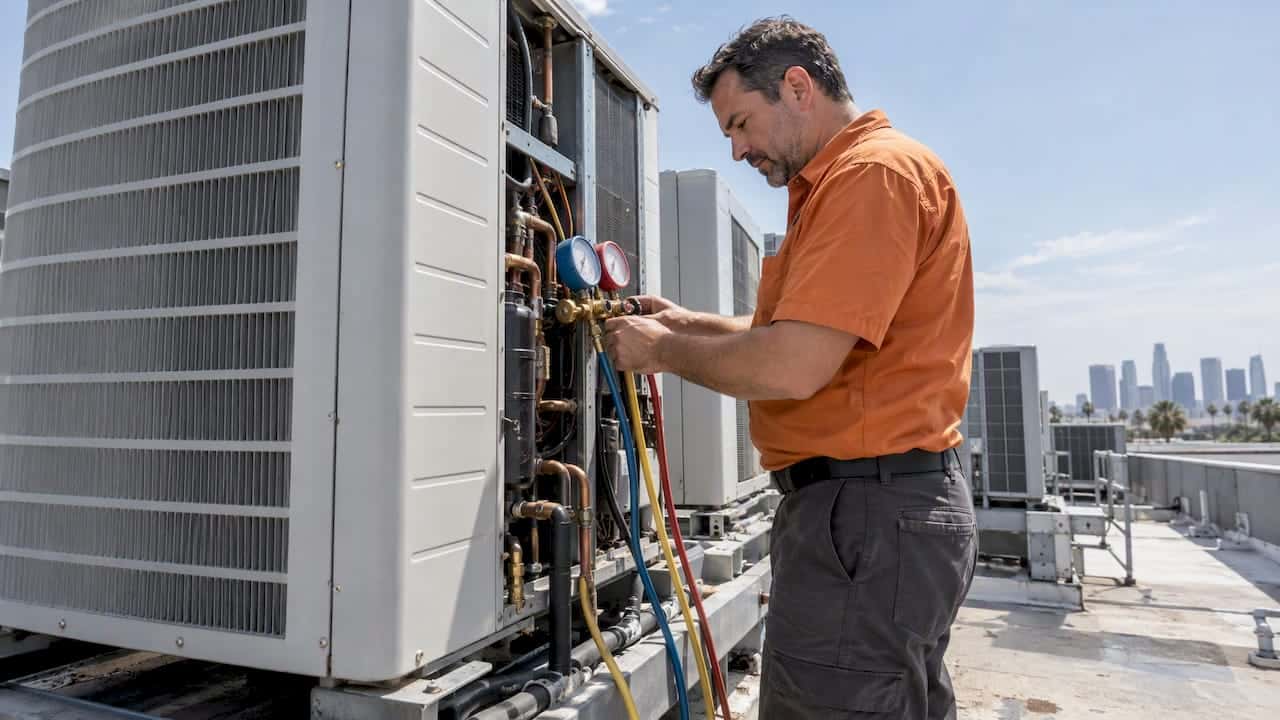
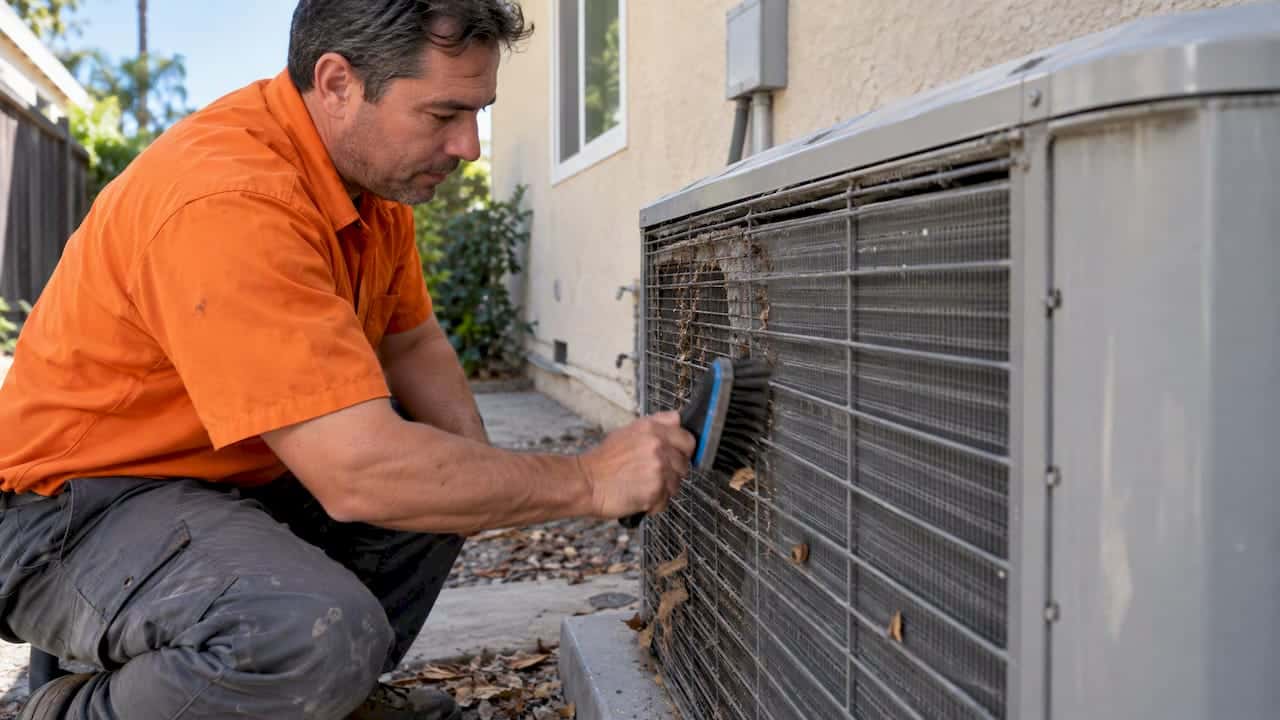
In Brentwood, we often see commercial systems struggling with the unique microclimate of the area. Rooftop units (RTUs) are frequently exposed to direct sun and coastal humidity, which can accelerate the degradation of coils and electrical components. When these units fail, it is often due to deferred maintenance or improper airflow balancing that puts unnecessary strain on the compressor.
We also encounter issues related to building age and layout. Many commercial properties in the area feature compact mechanical closets or rooftop installations that require specialized access. We are experienced in navigating these constraints, ensuring that your system is serviced correctly without disrupting your daily business activities.
Serving Brentwood's Commercial Landscape
Brentwood’s commercial stock is diverse, ranging from modern mixed-use developments to older, established office buildings. We are well-versed in the specific requirements for these different structures, including the need for proper ventilation and zoning in multi-tenant spaces. Our team understands how to work within the parameters of these buildings to ensure your HVAC system is performing at its peak.
Whether you are in a high-traffic retail corridor or a quiet professional suite, we provide tailored solutions. We don't believe in one-size-fits-all HVAC; we look at the specific load requirements of your space and the current condition of your equipment to provide recommendations that actually make sense for your business.
Our Diagnostic Approach
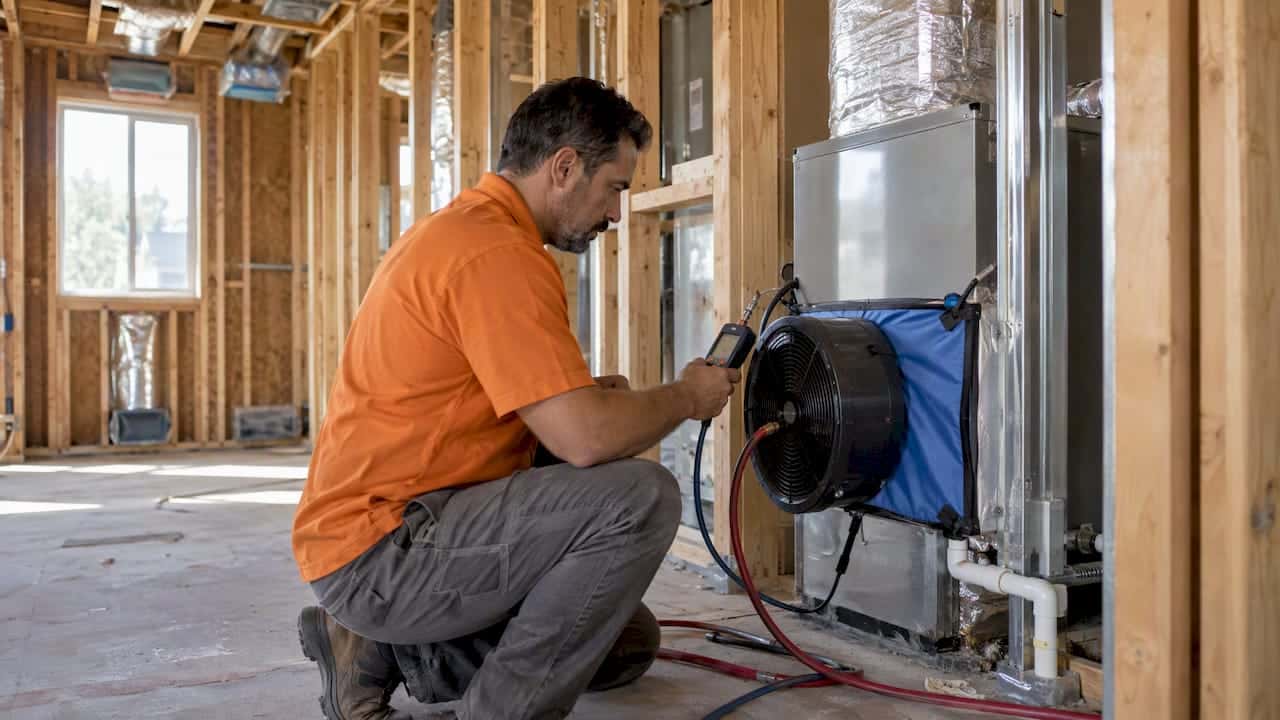
When you call us for a commercial diagnostic, we don't just guess at the problem. Our NATE-trained technicians perform a thorough inspection of your equipment, checking refrigerant levels, electrical connections, and airflow performance. We document our findings clearly so you know exactly what is happening with your system.
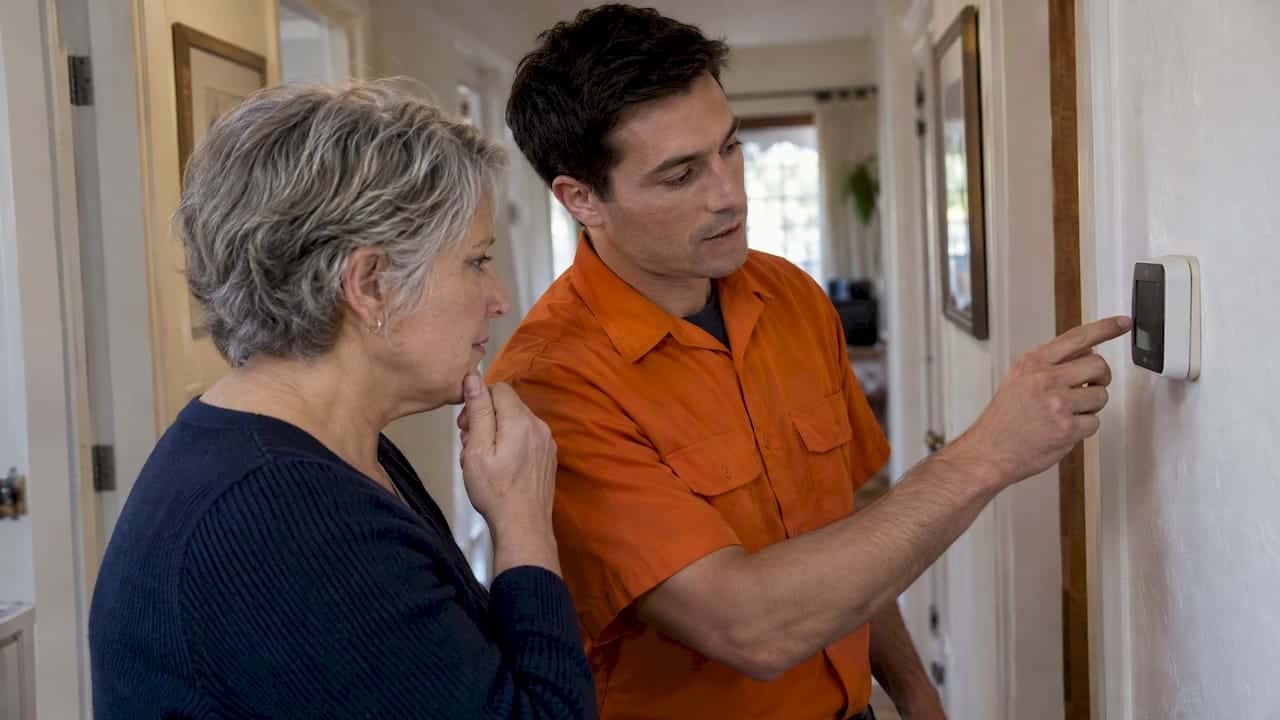
We believe in transparency. Before we touch a component or suggest a part replacement, we explain the issue to you in plain English. You will receive a written estimate, and we will walk you through the options, whether it is a simple repair or a more involved service, so you can make an informed decision for your property.
Honest Repair vs. Replacement Advice
Deciding whether to repair or replace a commercial unit is a significant financial decision. We look at the age of the unit, the cost of the repair, and the overall efficiency of the system. If a repair is a temporary fix for a failing system, we will be honest about that. We would rather you know the truth now than face another breakdown in a few months.
However, we never push for replacement if a repair is viable and safe. We respect your budget and your business goals. If we recommend a new installation, it is because the data shows that the long-term cost of operating your current, inefficient system outweighs the investment in a new, modern unit.
Understanding Commercial HVAC Costs
Commercial HVAC costs in Brentwood can vary based on the complexity of the system and the accessibility of the equipment. We provide transparent pricing for our diagnostic services and repairs. We understand that commercial budgets are tight, and we work to provide value by ensuring our work is done right the first time, preventing costly callbacks.
When considering a replacement, we also factor in the long-term energy savings and potential rebates that may be available for high-efficiency commercial equipment. We will help you navigate these options so you can make a choice that balances upfront costs with long-term operational efficiency.
Scheduling and Access Coordination
We know that your time is valuable. Commercial HVAC work often requires coordination with property managers, HOAs, or building security. We are experienced in handling these logistics, ensuring that our technicians have the necessary access to rooftops, mechanical rooms, or shared spaces without causing a scene.
Our goal is to minimize disruption to your business. We offer flexible scheduling to accommodate your operating hours. Whether you need us to work around your lunch rush or during off-peak office hours, we coordinate with you to get the job done efficiently and professionally.
Avoiding Common HVAC Pitfalls
One of the biggest mistakes we see in commercial HVAC is the lack of a consistent maintenance program. Systems are often ignored until they fail completely, which leads to expensive emergency repairs and unnecessary downtime. Regular, documented maintenance is the best way to extend the life of your equipment and keep your energy bills in check.
Another mistake is relying on contractors who do not specialize in commercial work. Commercial systems have different code requirements and electrical demands than residential units. Using a contractor who is not fully licensed and experienced with commercial-grade equipment can lead to safety issues and voided warranties. We are CSLB licensed (#1073586) and fully insured for commercial projects.
Health, Safety, and Compliance
Your indoor air quality and the safety of your building are our top priorities. We ensure that all our work meets current building codes and safety standards. This includes proper refrigerant handling, electrical safety, and ensuring that your system is providing adequate ventilation for your occupants.
We also take compliance seriously. From pulling the necessary LADBS permits for installations to providing documentation for your property records, we handle the administrative side of the job so you don't have to. You can rest easy knowing that your HVAC system is not just running, but running safely and legally.
Making the Right HVAC Decision
When your commercial HVAC system starts acting up, the first step is to get a clear picture of the problem. Don't wait for a total system failure. If you notice uneven temperatures, strange noises, or a spike in your utility bills, it is time to have a professional look at it.
At LC Heating & Air, we provide the information you need to make a smart decision. We will assess the system, explain the repair options, and give you an honest take on whether it is time to replace. Our goal is to keep your business running smoothly with reliable, efficient equipment.
How the visit works
We perform a site assessment to document your equipment and identify the root cause of the issue.
We provide a clear, written proposal detailing the repair or replacement scope and costs.
We execute the work with minimal disruption, following all safety and building codes.
We provide documentation and permit sign-offs for your records.
Cost factors we review before quoting
- • Equipment type and tonnage
- • Accessibility of the unit (rooftop vs. ground)
- • Complexity of the repair or installation
- • Permit requirements and local code compliance
Useful next steps
Commercial HVAC in Brentwood at a glance
- • LC Heating & Air is a CSLB-licensed contractor (#1073586).
- • We serve Brentwood and the surrounding Los Angeles County area.
- • Emergency calls are answered within 30 minutes.
- • We specialize in small to mid-size commercial HVAC (2–20 tons).
- • All work includes written estimates and professional documentation.
- • Leo, the owner, has 20+ years of hands-on HVAC experience.
- • Technicians are NATE-trained and EPA-certified.
Our commercial hvac process in Brentwood
Reviewed by Leo, Owner & Lead Technician
This commercial hvac guide for Brentwood is reviewed for practical HVAC accuracy by Leo at LC Heating & Air. LC Heating & Air holds California CSLB C-20 HVAC license #1073586 and provides written estimates before approved work.
What Brentwood customers say about commercial hvac
Verified reviews from homeowners in Brentwood and nearby neighborhoods who used our commercial hvac service.
“LC installed a Nest thermostat and programmed it for our schedule. They also found that our secondary heat exchanger had a small crack during the check-in — caught a potential CO issue before it became dangerous.”
“AC compressor failed on the hottest day of the year. LC came out quickly, gave an honest assessment — said the compressor was still under manufacturer warranty — and helped me get it covered. Saved me over $1,200.”
“Replaced our 20-year-old Lennox system with a new high-efficiency Carrier. LC handled the permits, coordinated the Edison inspection, and finished a full replacement in one day. Impeccable workmanship.”