Fix leaky and damaged ducts — better comfort, lower energy bills.
Duct Cleaning & Air Duct Service in Brentwood
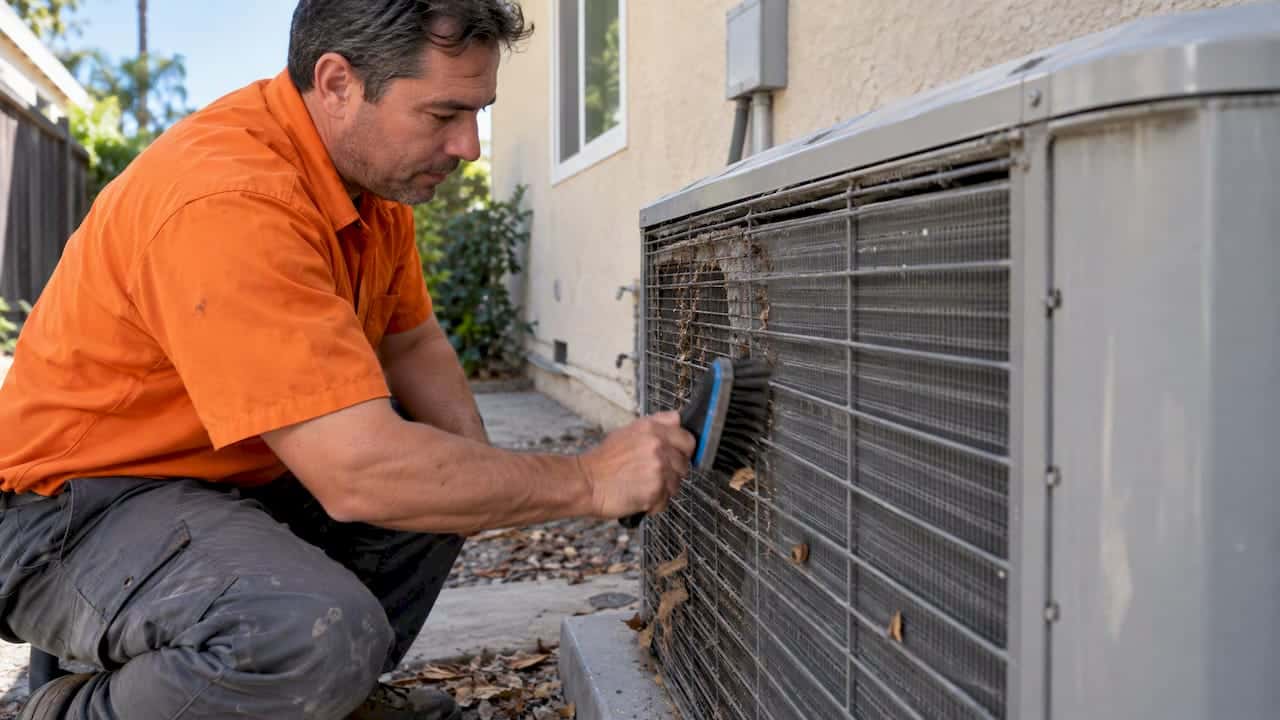
LC Heating & Air provides duct cleaning in Brentwood — including air duct cleaning, duct repair service, duct sealing, HVAC ductwork. Whether you need same-day service, a written estimate, or help deciding between repair and replacement, our licensed technicians handle every make and model.
We repair and service all major HVAC brands in Brentwood, including Carrier, Trane, and Goodman, and older or discontinued units. No matter the manufacturer, we diagnose the problem accurately and give you an upfront price before any work begins.
Brentwood is one of Los Angeles's most desirable residential neighborhoods, situated between the Santa Monica Mountains and the Westside communities. The area's housing stock ranges from Mediterranean estates on large lots in the hills to mid-century ranch homes on the flatlands to luxury condominium developments near San Vicente Boulevard. Brentwood's coastal-adjacent location provides a temperate microclimate — ocean breezes moderate summer heat and winter cold — but the canyon areas and hillside properties can experience significant temperature swings when Santa Ana winds override the marine layer. LC Heating & Air provides full HVAC service throughout Brentwood's 90049 zip code, including the hillside communities and the Mandeville Canyon area. We understand the premium service expectations of Brentwood homeowners and deliver accordingly: on-time arrivals, clean workspaces, written estimates before any work, and installation quality that matches the standards of the homes we work in.
The Department of Energy estimates that typical residential duct systems lose 20–30% of conditioned air through leaks before it reaches the living space. In Los Angeles, where AC runs heavily from May through October, that means you're paying to cool your attic rather than your living room every summer. Duct repair is one of the highest-return HVAC improvements a Los Angeles homeowner can make — and it directly addresses the most common cause of comfort complaints, such as uneven temperatures and rooms that are always too hot or too cold.
Call LC Heating & Air at (323) 970-3113 for scheduling and estimates.
Local HVAC considerations
Brentwood (90049)
CSLB #1073586
Duct diagnostic and repair
(323) 970-3113
Local HVAC Challenges in Brentwood
Brentwood's hillside and canyon homes face unique HVAC challenges: canyon properties can trap heat during Santa Ana events while also experiencing cooler-than-expected temperatures during marine layer intrusions. Large estate homes require multi-zone systems with properly balanced ductwork — a system that cools the ground floor effectively may leave second-floor bedrooms uncomfortable without proper zoning.
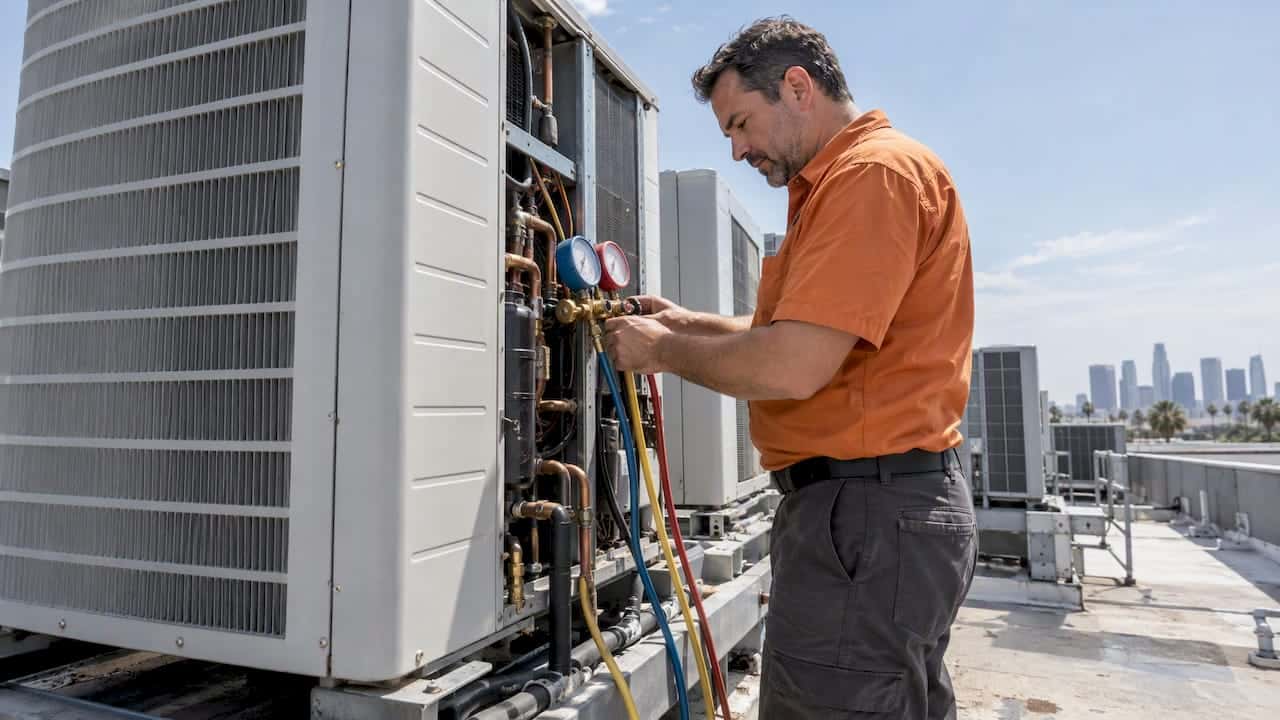
Common duct problems we find in the area include disconnected duct sections at joints and take-offs, torn flex duct inner liners, crushed flex duct from attic access foot traffic, failed mastic at supply plenums, and deteriorated tape joints on older sheet metal ductwork. We identify these issues through airflow measurements, duct pressurization testing, and visual inspection of accessible duct sections.
Working with Brentwood Housing Stock
Whether you live in a mid-century ranch or a modern luxury condo near San Vicente, your ductwork is the heart of your home's comfort. Many older multifamily properties and apartments in Brentwood feature compact mechanical closets that make access difficult. Our team is experienced in navigating these tight spaces, as well as coordinating with HOAs and building management for rooftop package unit access.
For estate homes requiring commercial-grade equipment, we have the licensing and expertise to install and maintain these systems. We also work with the architects and builders involved in Brentwood's active new construction and renovation market to ensure duct systems are sized and sealed correctly from the start.
Our Diagnostic Process
We don't guess. We measure. Our process starts with a thorough inspection of your ductwork. We compare the airflow produced by your equipment to the actual air reaching your registers. This helps us pinpoint where the system is losing efficiency.
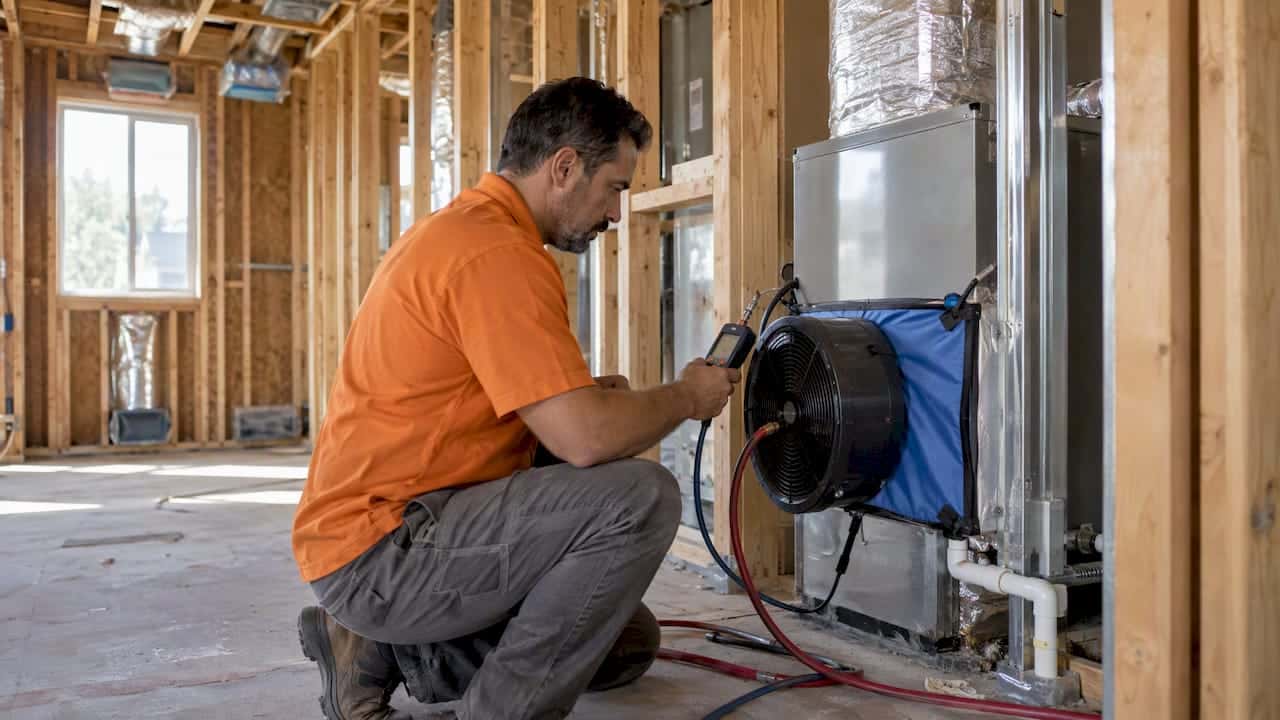
We use duct pressurization testing (duct blaster testing) to quantify exactly how much air is leaking. This provides you with a clear, measurable baseline before we start any repairs. Once the work is done, we re-test the system to verify the improvement, giving you proof that your money was well spent.
Repair vs. Replace: Making the Right Decision
If your system is worth repairing, we will tell you. If the pattern points to replacement, we will explain why. Often, targeted repairs to specific disconnected sections or damaged flex duct can restore comfort without the cost of a full system overhaul.
However, if the ductwork is severely deteriorated, undersized for the equipment, or made of outdated materials that are falling apart, we will be honest about the limitations of a repair. We want you to have a system that works, not just a temporary patch.
Understanding Costs
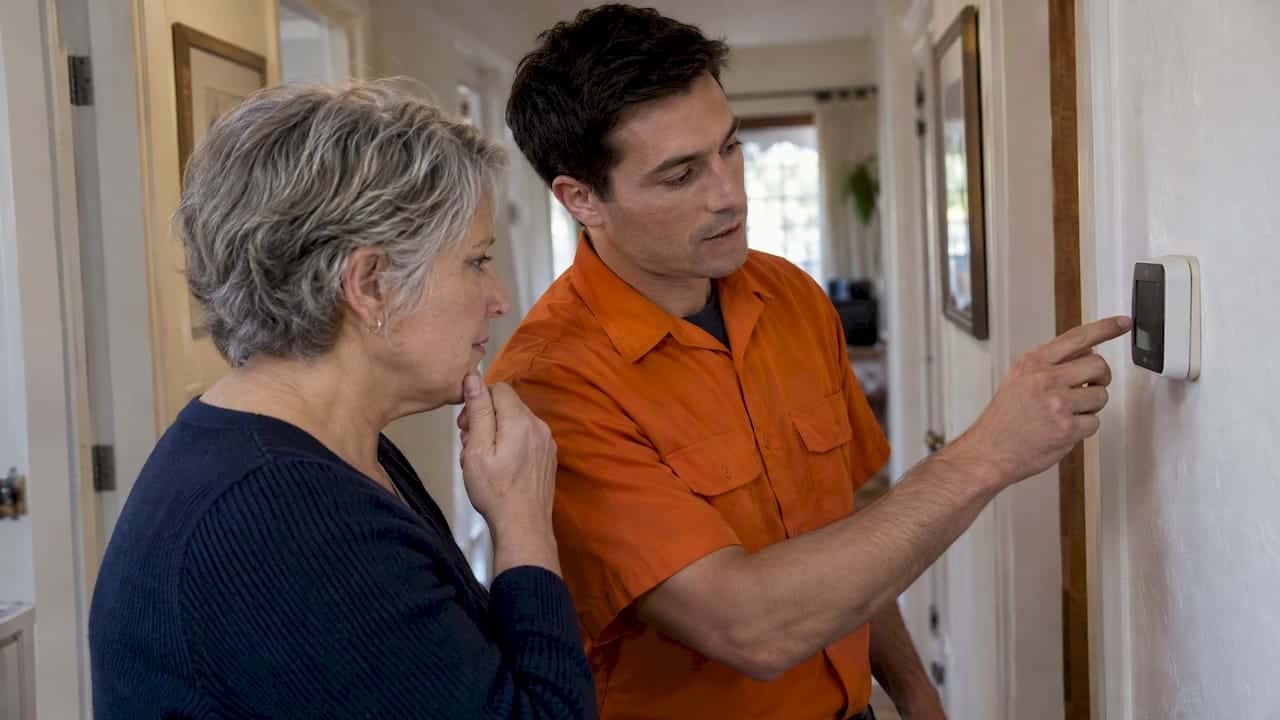
We believe in transparency. Before we touch your equipment, we provide a written estimate. Costs vary based on the complexity of the access and the extent of the damage. Simple repairs to accessible sections are more affordable than comprehensive sealing or full duct replacement.
We offer Aeroseal duct sealing for systems where manual repair cannot reach all the leaks. This is a highly effective way to seal leaks from the inside, especially in hard-to-access areas like wall cavities or tight attics.
Access and Scheduling in Brentwood
We know that living in Brentwood often means dealing with dense buildings, limited parking, and strict HOA rules. We plan our service calls with these constraints in mind. Whether it's coordinating with a building manager for rooftop access or working around your schedule in a busy household, we aim to be efficient and respectful of your time.
Our goal is to minimize disruption while ensuring the job is done right the first time. We arrive on time, keep our workspace clean, and communicate clearly throughout the process.
Common Duct Mistakes to Avoid
One of the biggest mistakes we see is homeowners attempting to fix major duct leaks with standard duct tape. Real ductwork requires professional-grade mastic and foil tape to hold up under the pressure and temperature changes of an LA summer.
Another mistake is ignoring the 'whistling' sound coming from your vents. That sound is often a sign of a significant leak or a restricted return. Ignoring it forces your blower motor to work harder, which can lead to premature equipment failure. If you hear it, have it checked.
Health and Safety
Duct leaks aren't just an efficiency problem; they are an air quality issue. When your return ducts leak in an attic, they pull in insulation fibers, dust, and potential mold spores, distributing them throughout your home. Sealing these leaks is one of the best ways to improve your indoor air quality.
We take safety seriously. As a licensed C-20 HVAC contractor (CSLB #1073586), we ensure all repairs meet safety standards, protecting your home and your family from potential hazards associated with improperly vented or leaky systems.
Is Duct Repair Right for You?
If you notice rooms that are always uncomfortable, high energy bills, or excessive dust, it is time to look at your ducts. We start by inspecting the system to see if the problem is a simple disconnection or a larger structural issue.
If the system is worth repairing, we will tell you. If the pattern points to replacement, we will explain why. The estimate should make sense before anyone touches the equipment. Call LC Heating & Air at (323) 970-3113 to schedule a professional diagnostic.
How the visit works
We measure airflow at registers, inspect accessible ductwork, and perform duct pressurization testing to quantify leakage.
We identify the specific leaks and damage and present a repair scope with written pricing before any work begins.
We access damaged sections and seal with mastic, reconnect disconnected flex duct, and repair torn inner liners.
We re-test duct leakage after repair and measure airflow at registers to confirm improvement.
Cost factors we review before quoting
- • Accessibility of the ductwork (attic vs. crawl space vs. wall cavity)
- • Total square footage of the duct system
- • Type of repair required (manual sealing vs. Aeroseal)
- • Extent of existing damage or disconnection
Useful next steps
Duct Repair in Brentwood at a glance
- • Duct Repair provider: LC Heating & Air
- • Location served: Brentwood, CA 90049
- • License: CSLB C-20 #1073586
- • Phone: (323) 970-3113
- • Estimate: written estimate before approved work
- • Emergency calls answered within 30 minutes (24/7)
Our duct repair process in Brentwood
Reviewed by Leo, Owner & Lead Technician
This duct repair guide for Brentwood is reviewed for practical HVAC accuracy by Leo at LC Heating & Air. LC Heating & Air holds California CSLB C-20 HVAC license #1073586 and provides written estimates before approved work.
What Brentwood customers say about duct repair
Verified reviews from homeowners in Brentwood and nearby neighborhoods who used our duct repair service.
“Had LC install a Daikin mini split in our 1940s bungalow that never had AC. The work was clean, the unit is incredibly quiet, and our bedroom finally stays cool in summer. Highly recommend.”
“We converted our garage into an ADU and needed HVAC. LC installed a Mitsubishi single-zone mini split — permits, electrical, everything. The unit is so quiet you can barely hear it running. Our tenant loves it.”