If your duct system hasn’t been cleaned in five years, has visible dust or odors, or you’ve had wildfire smoke or renovations, professional duct cleaning makes sense. We inspect first, quote the scope, and only clean when it will help.
Duct Cleaning & Air Duct Service in Bel-Air Country Club
LC Heating & Air provides duct cleaning in Bel-Air Country Club — including air duct cleaning, duct repair service, duct sealing, HVAC ductwork. Whether you need same-day service, a written estimate, or help deciding between repair and replacement, our licensed technicians handle every make and model.
We repair and service all major HVAC brands in Bel-Air Country Club, including Carrier, Trane, and Goodman, and older or discontinued units. No matter the manufacturer, we diagnose the problem accurately and give you an upfront price before any work begins.
Bel-Air Country Club sits in a hillside canyon where microclimates shift block to block and tree cover keeps some rooms humid while others bake in direct sun. That kind of environment pushes ducts to collect more than dust — they trap marine-layer moisture, wildfire particulates, and pest debris from attics that open into crawl spaces. If your home has multiple HVAC zones or a long duct run hidden in a tight attic, the odds of contamination go up fast. Routine filter changes catch the surface stuff, but the real buildup happens deep inside the trunk lines and on the evaporator coil.
LC Heating & Air provides professional duct cleaning using truck-mounted negative pressure systems that extract years of debris from every vent, branch run, and air handler. Our process follows NADCA standards for source removal — not just blowing air through the ductwork. We photograph the interior before and after so you see what we removed. The goal is to restore airflow, cut down on dust landing on furniture, and clean the air that runs through your home dozens of times a day.
Consideraciones HVAC locales
Canyon microclimates and slope orientation create room-by-room humidity and temperature variances that affect duct contamination patterns.
Gated community with HOA rules; we coordinate vendor access before arrival and are experienced with hillside truck positioning.
Estate homes with multiple HVAC zones, large duct trunks, and often more than one air handler requiring coordinated cleaning.
Common Duct Contamination Issues in Bel-Air Country Club
Canyon properties like those in Bel-Air Country Club deal with a mix of wildfire smoke, marine layer moisture, and constant dust from the hillside terrain. When a fire event pushes fine particulates into the valley, ducts act as a reservoir — smoke particles settle in the turns and joints of the ductwork, then get recirculated every time the system runs. The 2025 Eaton Fire showed us how deep that contamination can go; we performed post-fire cleaning for dozens of homeowners, and the before-and-after air quality measurements were dramatic. Standard filter replacement alone will not pull settled particles out of duct interiors or off coil surfaces.
Beyond smoke, the slope orientation and tree cover in this area create persistent humidity in some duct sections while others bake in attic heat. Moisture inside metal ducts or flex liner can lead to microbial growth, especially where sections are crushed or disconnected and pull in unconditioned attic air. Rodent activity in attics is another concern — droppings and nesting material can enter ductwork through gaps. These local conditions make periodic inspections and NADCA-standard cleaning a practical habit rather than an upsell.
Duct Systems in Bel-Air Country Club Estates
Homes in this area are custom estate properties, often with multiple HVAC zones, large duct trunks that run through shallow attics or under-floor crawl spaces, and more than one air handler. A typical estate might have a separate system for the main house, guest quarters, and a wine cellar — each with its own duct network. Cleaning all of those zones takes equipment access coordination and enough truck-mounted vacuum power to pull debris from long branch runs. Our negative-pressure system is designed for exactly these scenarios: it creates whole-system suction that captures dislodged material instead of letting it settle in another part of the duct.
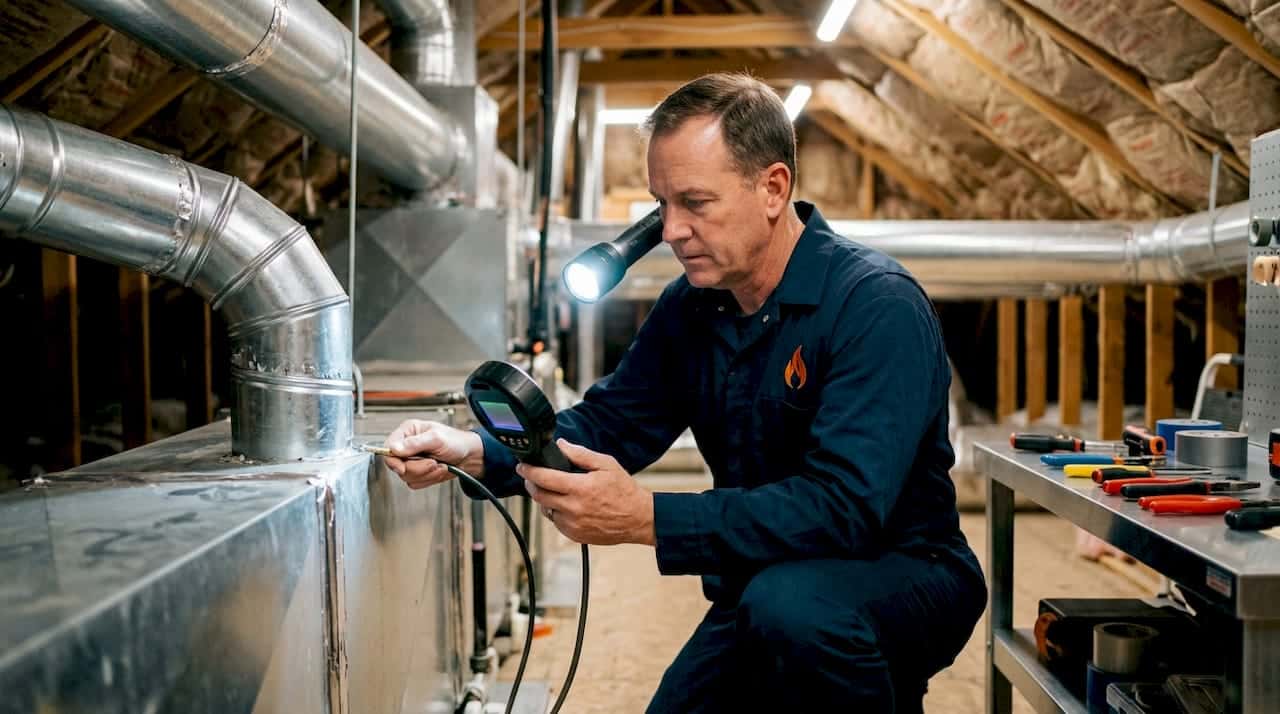
The hillside housing stock also means duct runs are routed around architectural features like vaulted ceilings, stone walls, and second-story additions. That can create tight bends or sections that are hard to reach with portable equipment. We carry camera inspection tools that snake through standard flex and metal ducts to assess contamination in every section before we decide on the cleaning approach. Knowing the duct layout matters because it affects how long the job takes, which parts can be cleaned fully, and whether any sections need to be sealed or replaced rather than cleaned.
Our Duct Inspection and Diagnostic Process
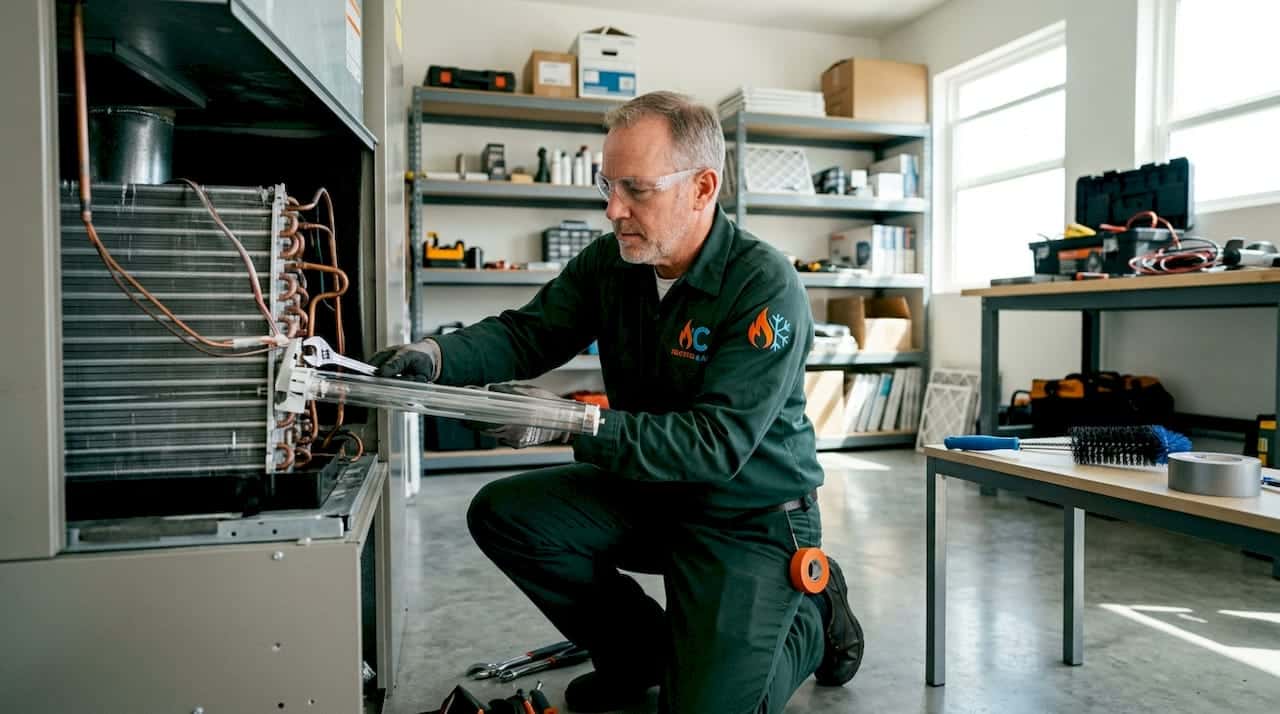
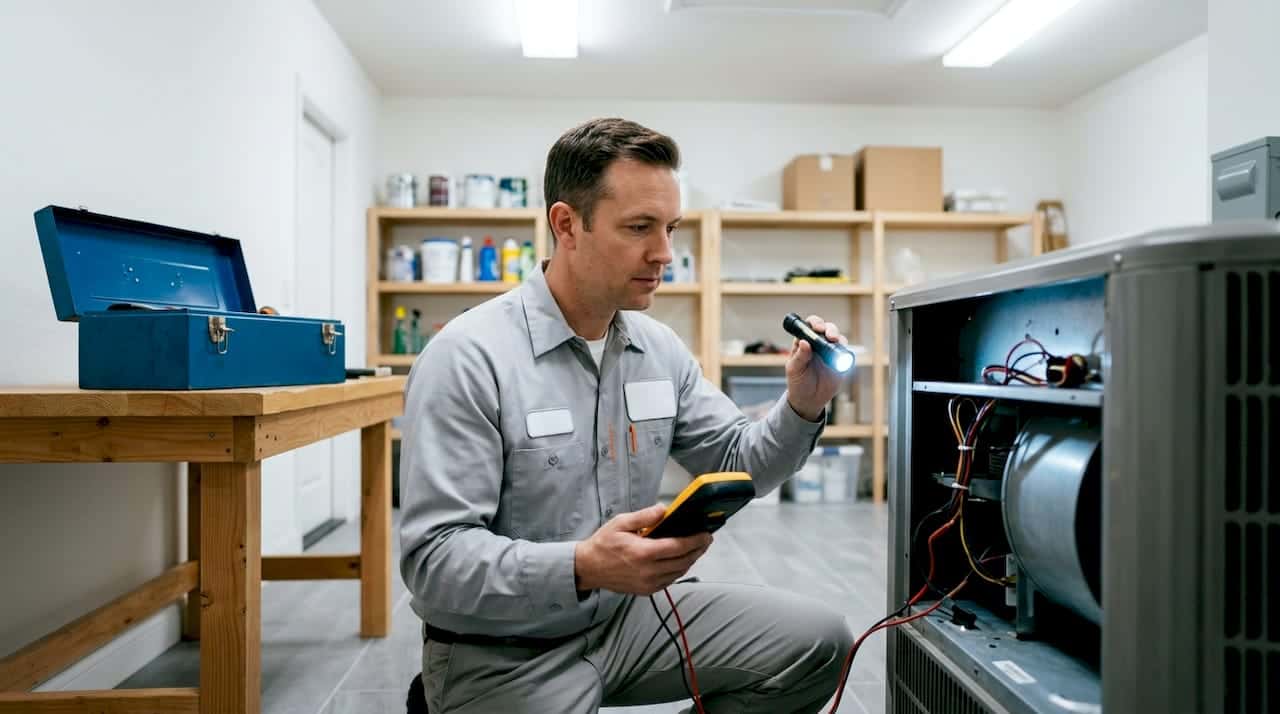
Before any cleaning takes place, we do a thorough visual inspection with a duct camera. We check for leaks, crushed flex runs, disconnections, and contamination levels — dust, mold, rodent activity, or construction debris. We also measure airflow at each register and check the condition of the evaporator coil and blower wheel. That detail matters because a dirty coil can be a major source of mold growth and wasted energy; if the coil needs cleaning, we include it as part of the full service.
In Bel-Air Country Club homes, return sizing is often undersized for the square footage, which restricts airflow and makes the system work harder. We note that during the diagnostic and discuss whether duct modifications could improve performance. The goal is to give you a complete picture before we start any work — not just a price for cleaning, but a clear explanation of what the system needs and why.
When to Repair vs Replace Ductwork
Not every duct issue requires replacement. If the ducts have minor leaks at joints or separated sections, we can seal them with mastic or UL-rated aluminum tape for a fraction of the replacement cost. Duct sealing typically runs $1,000–$3,000 and can improve system efficiency by up to 30%, which pays back in lower utility bills. If the ducts are heavily damaged, crushed beyond repair, or have extensive mold colonization that can’t be fully cleaned, replacement is the more practical long-term move. We’ll tell you honestly which route makes sense for your home.
In estate homes with multiple HVAC systems, we sometimes see one system’s ducts in good shape while another’s need full replacement. We don’t push a one-size-fits-all answer. We inspect each zone independently and give you a separate assessment for each. That way you can prioritize the work that matters most without overcommitting.
Cost Factors for Duct Cleaning in Bel-Air
A duct inspection runs $125–$200 and gives you a complete look at the condition of your ductwork before any cleaning. Full whole-house duct cleaning is $400–$900 for a typical single-family home in this area, which includes supply and return ducts, the air handler coil, and the blower wheel. Duct sealing adds $1,000–$3,000 depending on the number of leaks and accessibility. For homes with multiple HVAC systems, the cost increases proportionally — a two-system estate might run $800–$1,800 for cleaning both systems.
We provide written estimates before any work starts, so you know the price and scope upfront. Some manufacturers offer rebates on duct sealing when combined with equipment replacement, and we can check your eligibility during an estimate. As of early 2025, Southern California Gas Company and LADWP have periodically offered rebates for duct sealing and energy-efficiency improvements, but we don’t guarantee specific amounts — incentives change fast. We’ll help you apply if you qualify.
Scheduling and Access for Bel-Air Country Club
Bel-Air Country Club is a gated community, so we coordinate vendor access with the HOA or security before arrival. Our team is familiar with hillside properties and the specific challenges of positioning equipment on steep driveways. We carry hoses and cables long enough to reach from the truck to the air handler without running equipment through living spaces. This is something we do routinely — we serve multiple country-club communities in the hills, including Los Angeles Country Club, MountainGate, and Beverly Glen.
Emergency calls are answered within 30 minutes by phone (we don’t guarantee an on-site arrival ETA, but we respond quickly). For standard duct cleaning, we offer same-day scheduling when availability permits. If you’re dealing with post-smoke contamination or a musty smell that just showed up, call us in the morning and we’ll often have a technician out by afternoon. We dispatch from our base in Los Angeles, so travel time to Bel-Air is short.
Common Mistakes Bel-Air Homeowners Make with Duct Cleaning
One of the most common mistakes is hiring a service that only cleans the registers and the main trunk lines while leaving the branch runs and the air handler untouched. Surface cleaning looks good in photos but doesn’t remove the contamination that actually affects your air quality — the dust and mold that live in the flex runs off the trunk and on the evaporator coil. That’s why we use truck-mounted negative pressure and rotary brushes to agitate debris from every section of the duct system, not just the parts you can see from the vent.
Another frequent error is delaying cleaning after a wildfire event or major renovation. Fine particulates from smoke and construction settle deep in the ductwork and get recirculated through the home for months if not removed. By the time you notice dust on furniture or a persistent odor, the contamination has already spread. If you’ve had smoke exposure or recent construction, an inspection is a small investment that can save you from breathing those particles season after season.
Health and Safety Benefits of Duct Cleaning
Indoor air quality is a real concern in Los Angeles, especially after wildfire seasons that are getting longer and more intense. Duct cleaning removes accumulated allergens — dust mites, pet dander, mold spores, pollen — that get circulated through the home every time the system runs. For households with allergy sufferers or respiratory conditions, cleaning the ducts and the air handler coil can reduce indoor triggers and make the home more comfortable.
We take safety seriously: if we encounter duct insulation that looks like it might contain asbestos (common in homes built before 1980), we stop work immediately and recommend testing and abatement before proceeding. We also use EPA-registered sanitizers when mold or bacteria are present, applied only after the mechanical cleaning is complete. The combination of source removal and targeted sanitization is the most effective approach for creating a healthy indoor environment, and it’s the standard we follow for every job.
Should You Have Your Ducts Cleaned?
Here are the signs we look for during an initial phone assessment: increased allergy symptoms at home that improve when you leave, visible dust puffing from vents when the system starts, a musty or stale odor that runs with the HVAC, recent renovation or wildfire smoke exposure, and ducts that have not been cleaned in five years or more. If you check one or two of these boxes, it is worth scheduling an inspection. We will show you what is in the ducts before deciding whether cleaning is needed.
If the ducts are in good shape with low contamination, we will tell you that cleaning is not urgent and you can wait. If contamination is present, we will explain the scope, the cost, and what you can expect afterward. The inspection is the part that answers the question — the cleaning is only done when it makes sense for your home.
Cómo funciona la visita
System inspection — We inspect accessible ductwork with a camera to assess contamination levels and identify any damage or leaks.
Connect negative pressure — Our truck-mounted vacuum connects to the main trunk to create whole-system negative pressure.
Agitate and extract — Technicians use rotary brushes and compressed air whips to dislodge debris while negative pressure captures it.
Sanitize & seal — We apply EPA-registered sanitizer if mold or bacteria is present and seal any duct leaks found during inspection.
Factores de costo que revisamos antes de cotizar
- • Number of vents and registers
- • Accessibility of duct runs (attic, crawlspace, or vertical chases)
- • Contamination level (e.g., post-fire smoke vs. normal dust accumulation)
- • Number of HVAC systems (estates often have two or three)
- • Additional services like coil cleaning, sanitizer application, or duct sealing
Próximos pasos útiles
Duct Cleaning in Bel-Air Country Club at a glance
- • LC Heating & Air is a licensed HVAC contractor serving Bel-Air Country Club and surrounding LA communities.
- • Owner Leo brings over 20 years of hands-on HVAC experience; the company was founded in 2020.
- • Duct cleaning services follow NADCA standards with truck-mounted negative pressure equipment and camera inspection.
- • We provide written estimates before any work begins.
- • Emergency calls are answered within 30 minutes by phone.
- • CSLB #1073586 — fully licensed and insured.
- • Serving multiple country-club communities in the Los Angeles hills.
Our duct cleaning process in Bel-Air Country Club
Reviewed by Leo, Owner & Lead Technician
This duct cleaning guide for Bel-Air Country Club is reviewed for practical HVAC accuracy by Leo at LC Heating & Air. LC Heating & Air holds California CSLB C-20 HVAC license #1073586 and provides written estimates before approved work.
What Bel-Air Country Club customers say about duct cleaning
Verified reviews from homeowners in Bel-Air Country Club and nearby neighborhoods who used our duct cleaning service.
“Had LC install a Daikin mini split in our 1940s bungalow that never had AC. The work was clean, the unit is incredibly quiet, and our bedroom finally stays cool in summer. Highly recommend.”
“We converted our garage into an ADU and needed HVAC. LC installed a Mitsubishi single-zone mini split — permits, electrical, everything. The unit is so quiet you can barely hear it running. Our tenant loves it.”
“Got a 3-zone Daikin system for our craftsman home — bedrooms upstairs, living room downstairs. Each room has its own temperature control and the monthly electric bill is actually lower than our old window units combined.”