- Why older furnaces struggle more with common summer problems
- Why summer is actually the best time to repair your furnace
- Simple troubleshooting steps for summer furnace issues
- How pairing a modern AC with an older furnace creates summer stress
- Safety risks you should not ignore in summer
- Signs your older furnace may fail before heating season starts
- Maintenance steps that prevent summer furnace failure
- Ready to get your furnace checked before fall?
- Key Takeaways
- FAQ
- Recommended
Older furnaces fail during summer primarily because inactivity lets dust accumulate, moisture corrodes metal components, and electrical connections degrade in warm, humid conditions. These problems develop silently while the furnace sits idle, and they only become obvious when you flip the heat on for the first time in fall. Summer dormancy accelerates hidden damage to flame sensors, igniters, and blower motors, turning a small issue from last winter into a full breakdown by October.
Here is a quick summary of the main culprits:
- Dust and debris coating burners, blowers, and flame sensors
- Moisture corrosion on metal parts and electrical contacts
- Electrical degradation from temperature and humidity swings
- Component wear from inactivity, including stiff motors and dried seals
- Pre-existing damage from the prior heating season that worsens during dormancy
Many of these failures are actually discovery points for damage that started in the previous winter and grew worse while the furnace was off. Understanding why this happens is the first step toward preventing a cold, uncomfortable October surprise.
Why older furnaces struggle more with common summer problems
Older furnaces carry more wear into the off-season, so the same summer conditions hit them harder than a newer system.
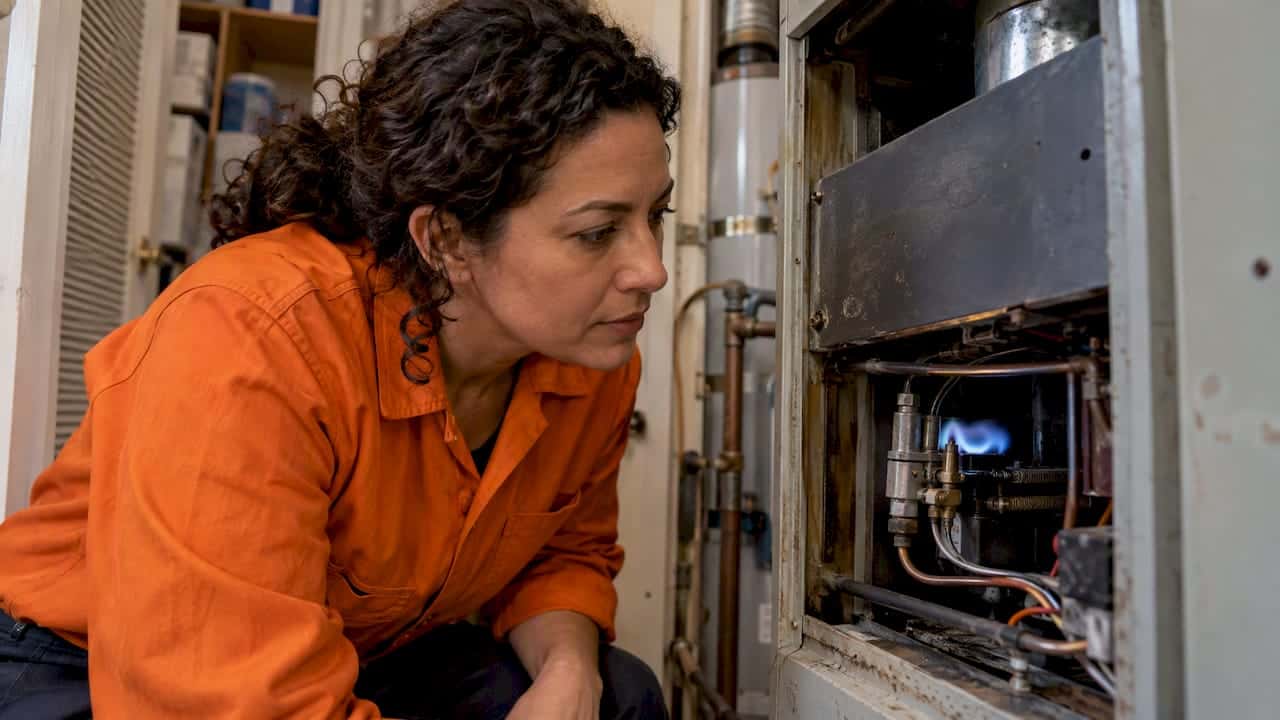
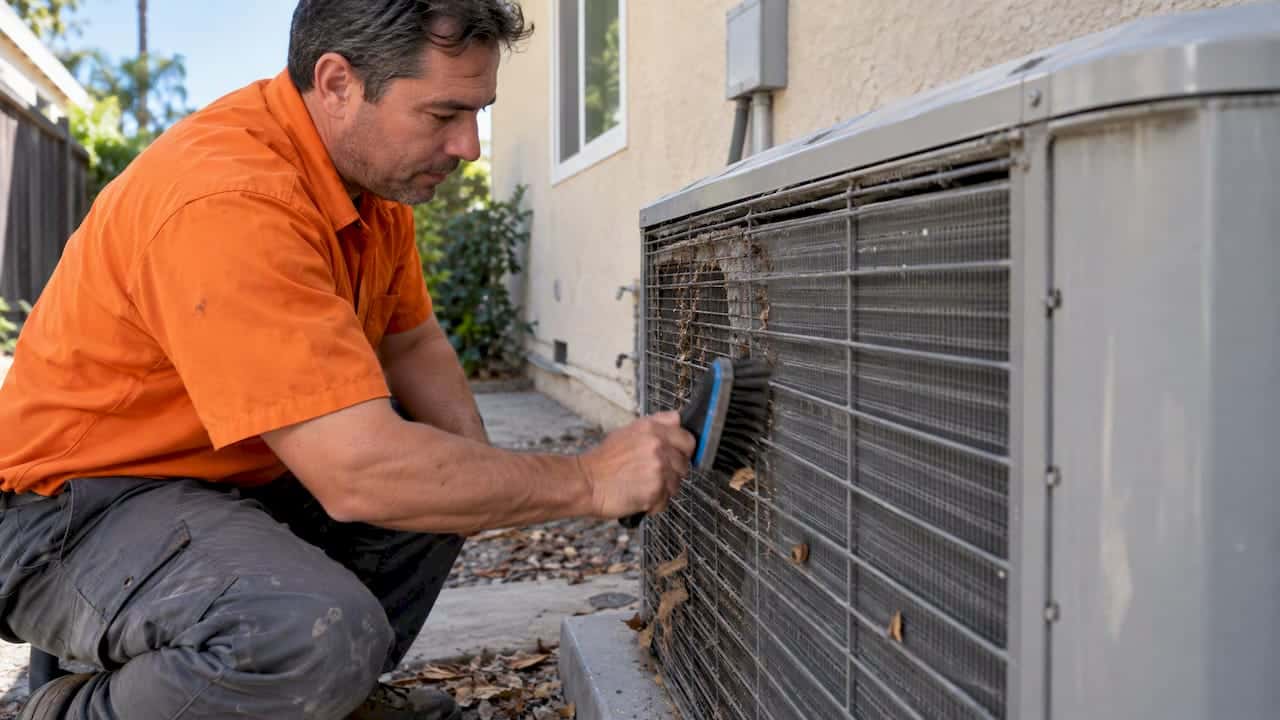
- Dust and debris buildup: When air stops moving through the system, particles from pets, open windows, and daily life settle onto burners, fans, and sensors. That first fall startup forces the furnace to burn through the coating, which produces strange smells and puts extra strain on components already past their prime.
- Moisture corrosion: Humidity finds its way into ductwork and the furnace cabinet. Metal parts, especially in older units, rust faster when exposed to months of warm, damp air without any heat cycling to dry things out.
- Electrical component failures: Wiring insulation becomes brittle over years of heat cycling. Loose connections, worn wiring, and dead thermostat batteries are among the most overlooked reasons a furnace refuses to start after summer.
- Pilot light and ignition failures: Older furnaces with standing pilot lights can go out during summer. Electronic ignition systems on slightly newer units fail when dust coats the igniter or flame sensor.
- Reduced airflow from clogged filters: A filter that was borderline dirty in spring becomes fully clogged by fall. Restricted airflow triggers safety shutoffs and strains the blower motor.
Common symptoms to watch for when you first test the heat:
- Musty or burning smell on startup
- Banging, screeching, or rattling noises
- Weak or uneven airflow across rooms
- Delayed starts or repeated failed ignition attempts
Why summer is actually the best time to repair your furnace
Scheduling furnace repairs in summer is one of the most cost-effective decisions you can make as a homeowner with an older system.
- Avoid emergency winter service: HVAC technicians are fully booked once cold weather hits. A summer appointment is easier to schedule and often less expensive than an emergency call in December.
- Longer furnace lifespan: Regular cleaning and component checks reduce the wear that compounds year over year in older units. A seasonal tune-up catches small problems before they become expensive ones.
- Safety addressed early: Gas leaks, cracked heat exchangers, and ignition faults are far safer to fix in summer than to discover mid-winter. Neglected older systems carry a real risk of carbon monoxide exposure once they restart.
- Better efficiency going into fall: A clean furnace moves air more freely, burns fuel more completely, and costs less to run throughout the heating season.
Pro Tip: Book your furnace inspection for late August or early September. By October, most HVAC schedules in Los Angeles are full, and you lose the option to address anything before the first cold snap.
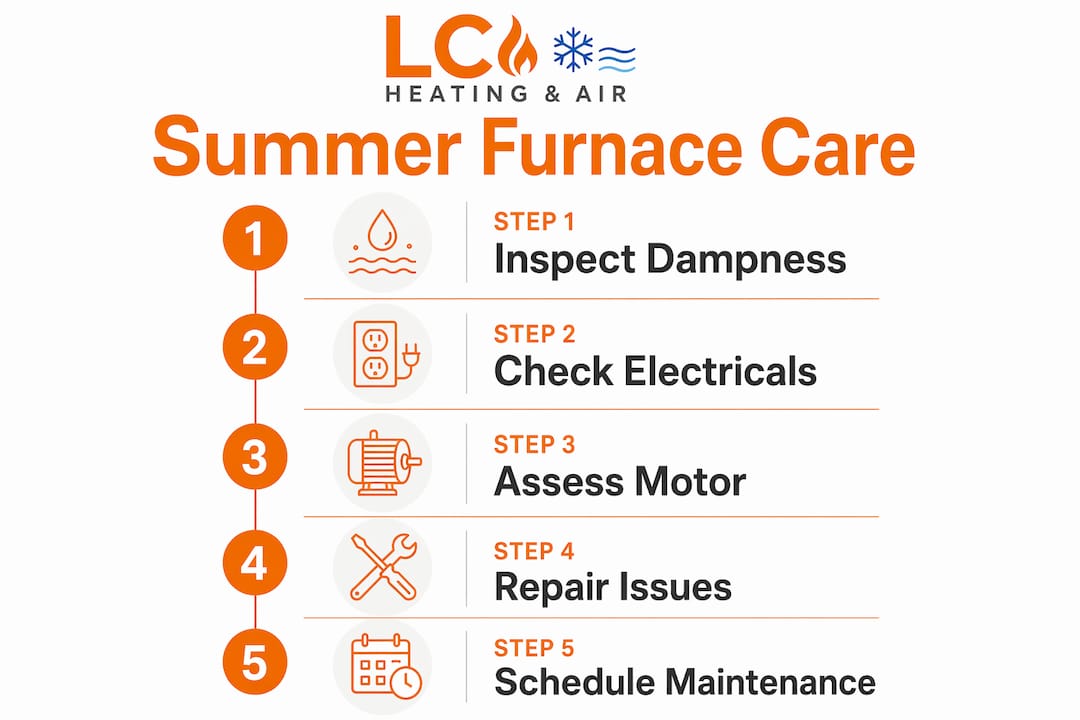
Simple troubleshooting steps for summer furnace issues
Before calling a technician, a few quick checks can tell you whether the problem is minor or something that needs professional attention.
- Check the circuit breaker and power switch: A tripped breaker or an accidentally switched-off furnace power switch is one of the most common startup failures after summer. Reset the breaker and confirm the switch is on.
- Replace thermostat batteries: Batteries drain over summer even without heavy use. If the thermostat display is dim or blank, swap the batteries before assuming a larger problem. For more help, see LC Heating and Air Conditioning’s guide on no power at the thermostat.
- Inspect and replace the air filter: A clogged filter restricts airflow and can trigger a safety shutoff before the furnace ever produces heat. Replace it if it looks gray and dense.
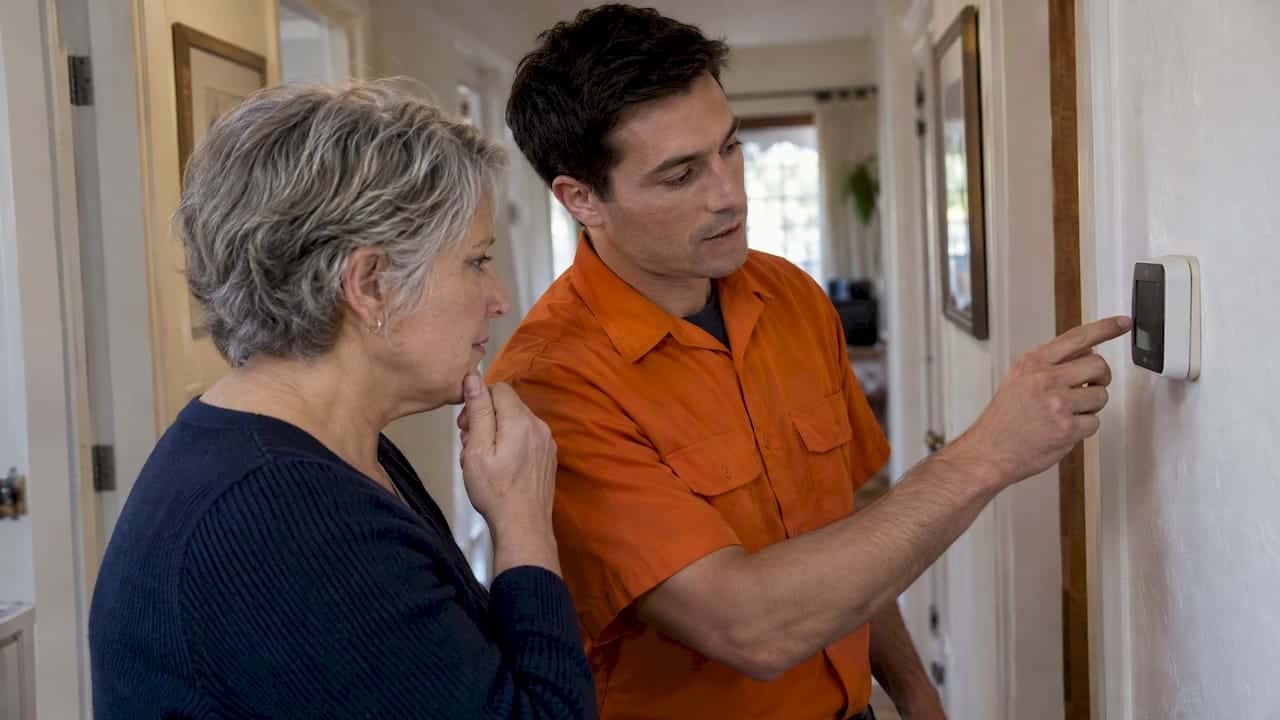
- Check thermostat settings: Confirm the system is set to “Heat” and the temperature is set above the current room temperature. It sounds obvious, but it solves more calls than you would expect.
- Clear blocked vents: Walk through the house and confirm supply and return vents are open and unobstructed. Blocked vents cause overheating and short cycling.
- Relight the pilot light if needed: For older furnaces with a standing pilot, follow the manufacturer’s instructions on the furnace door. If it won’t stay lit, that points to a faulty thermocouple, which needs a technician.
If power and thermostat checks pass but the furnace still won’t start, stop there. Ignition components, gas valves, and flame sensors require a licensed HVAC technician. Attempting those repairs without proper training creates carbon monoxide and fire hazards.
How pairing a modern AC with an older furnace creates summer stress
When you add a new air conditioning system to an older furnace, the furnace blower runs all summer to circulate cool air. That changes the stress profile significantly.
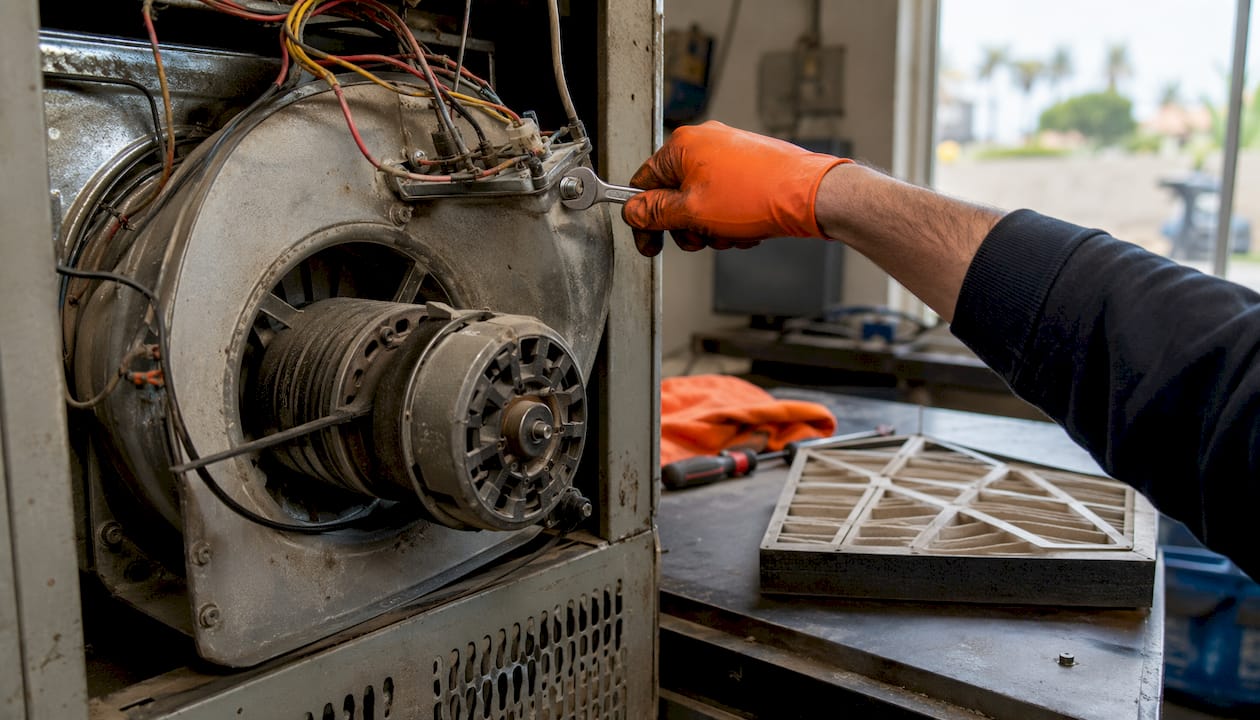
Older blower motors are often undersized for the higher static pressure created by a modern evaporator coil sitting above the furnace. The blower works harder than it was designed to, generating heat and wear that shortens its life. You might not notice the problem until the blower fails in the middle of a July heat wave.
Refrigerant compatibility adds another layer of risk. Mismatched components can cause incorrect superheat and early compressor wear, and they void manufacturer warranties. The Air Conditioning, Heating, and Refrigeration Institute (AHRI) requires matched system certification to achieve advertised efficiency ratings. If your furnace is older, reusing it with a new AC system will drag down the new unit’s performance and increase the chance of failure across both systems.
Safety risks you should not ignore in summer
A furnace that sits idle all summer is not a neutral appliance. It can develop conditions that become dangerous the moment it restarts.
Cracked heat exchangers are the most serious concern. A crack that was small in spring can widen over summer as metal expands and contracts with temperature changes. When the furnace fires up in fall, combustion gases including carbon monoxide can leak into your living space through that crack. Carbon monoxide is odorless and colorless, so you won’t know it’s happening without a working detector.
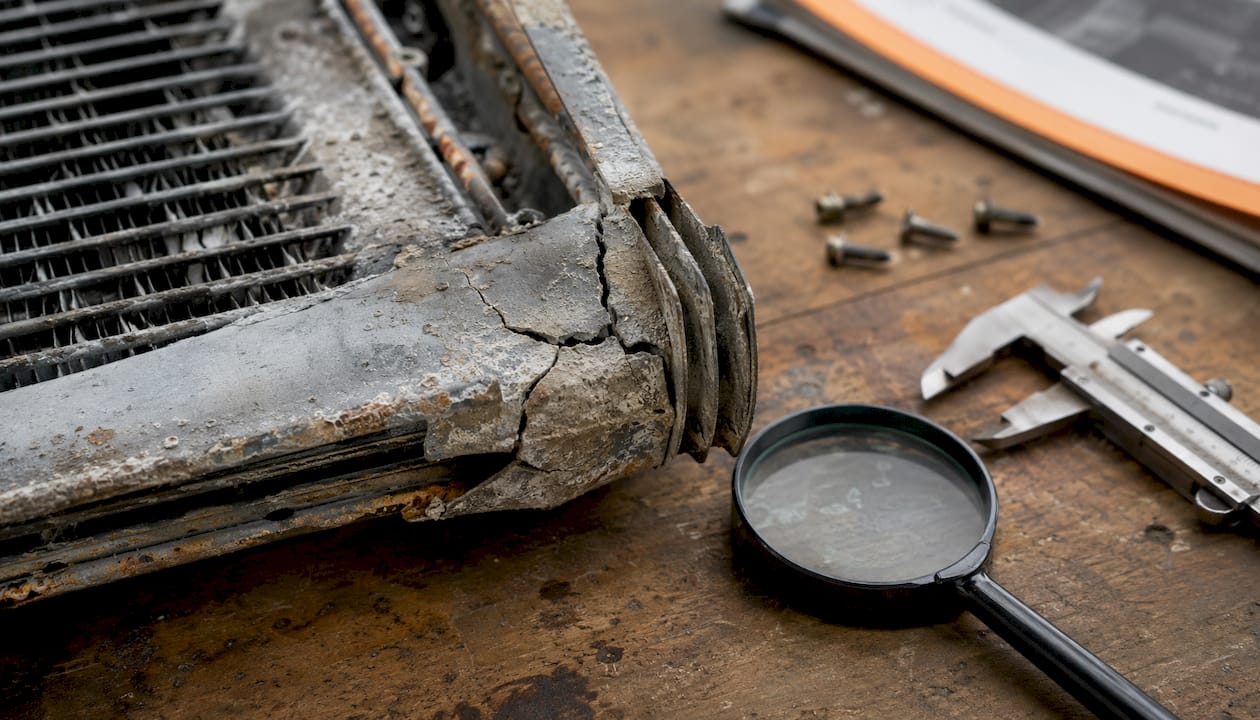
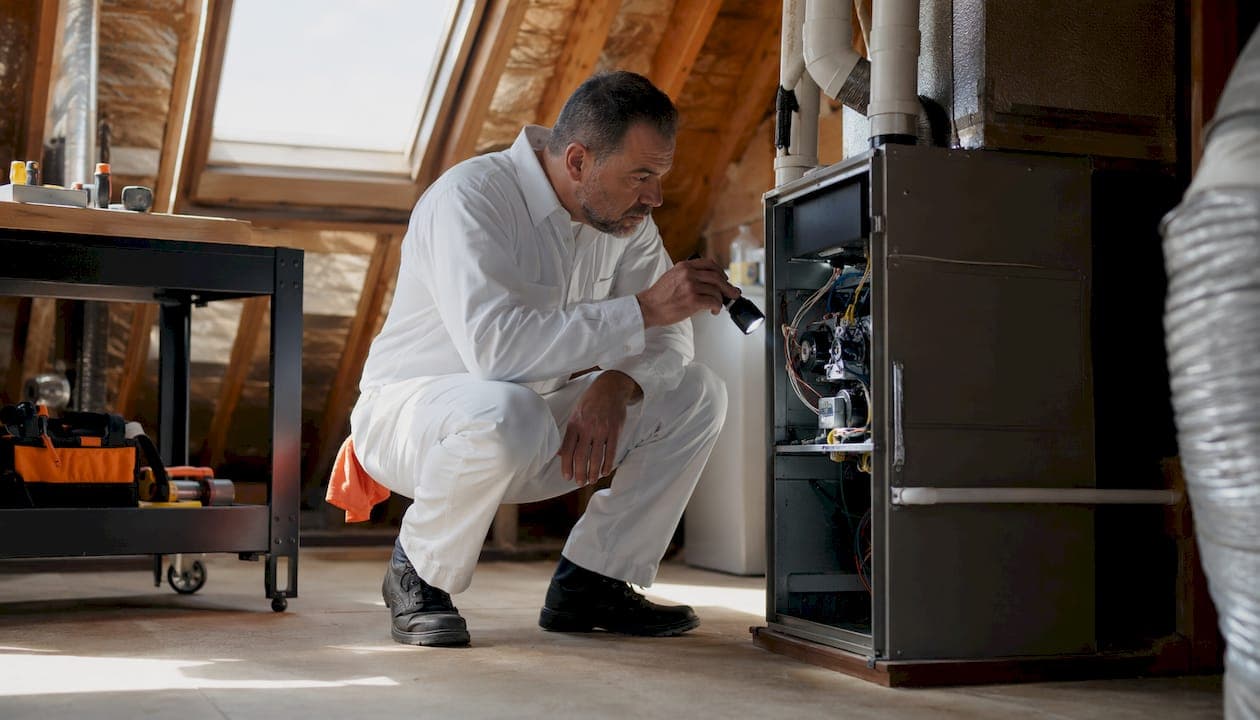
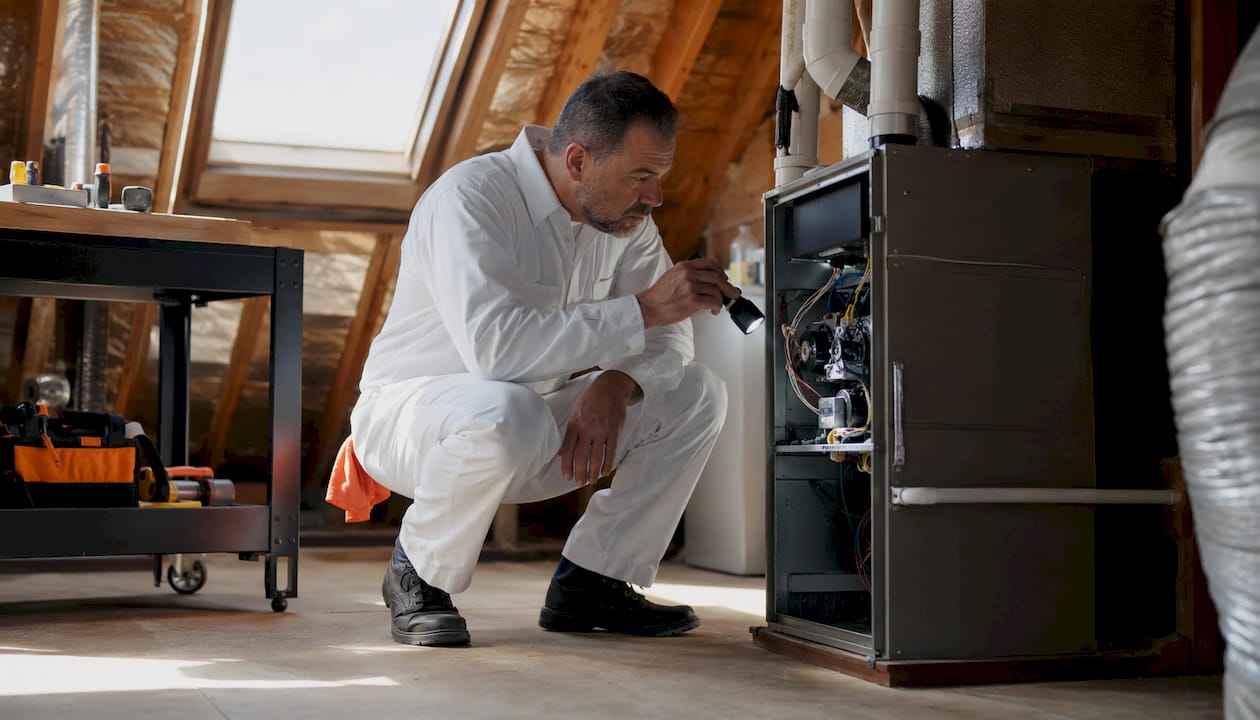
Gas valve seals and connections can also degrade during months of inactivity, creating slow leaks. Older wiring near the furnace is another hazard: brittle insulation combined with loose connections raises the risk of an electrical fault. Scheduling a professional inspection before the heating season is the only reliable way to catch these issues. Inspecting combustion components, checking the heat exchanger for cracks, and verifying safety controls are not homeowner tasks. They require a licensed technician with the right instruments.
Signs your older furnace may fail before heating season starts
Your furnace usually gives you warning signs before it quits entirely. Catching them in summer or early fall gives you time to act.
Watch for these red flags:
- Unusual smells when you test the heat: A burning dust smell on the first run is normal and brief. A persistent chemical, metallic, or sulfur odor is not.
- Slow or failed ignition: If the furnace clicks repeatedly without lighting, the igniter or flame sensor likely needs cleaning or replacement.
- Short cycling: The furnace starts, runs for a minute or two, then shuts off. This usually points to a dirty filter, a failing limit switch, or an overheating blower.
- Visible rust or corrosion on the cabinet, burners, or flue connections.
- Age over 15 years: Furnaces 15 to 20 years old or older fail significantly more often during cold snaps. For an older system, a pre-season inspection is a reliability assessment, not just routine maintenance.
Maintenance steps that prevent summer furnace failure
A little attention in summer pays off all winter. These steps are practical, not complicated.
- Replace the air filter before testing the furnace in fall, and check it monthly during the heating season.
- Schedule a professional furnace maintenance visit that covers flame sensor cleaning, igniter inspection, blower motor check, heat exchanger examination, and gas pressure verification.
- Install a carbon monoxide detector on every level of your home, and test existing ones before heating season.
- Keep the area around the furnace clear of stored items, which restrict airflow and create fire risk.
- Review current federal HVAC maintenance guidelines to stay current on efficiency and safety standards that may affect older equipment.
- If your furnace is over 15 years old, use the summer inspection to have an honest conversation with your technician about repair versus replacement before winter forces the decision.
Ready to get your furnace checked before fall?

LC Heating and Air Conditioning has served Los Angeles homeowners for over 20 years, with flat-rate pricing and no surprise diagnostic fees. Whether your older furnace needs a tune-up, a repair, or an honest assessment of its remaining life, Leo and the team are ready to help. Book your service today and head into fall with confidence.
Key Takeaways
Older furnaces fail in summer because dust, moisture, and electrical wear accumulate silently during inactivity, and these problems surface the moment you need heat again.
| Point | Details |
|---|---|
| Inactivity causes hidden damage | Dust, corrosion, and electrical degradation build up during summer dormancy and surface at fall startup. |
| Pre-existing damage worsens | Many summer failures originate from damage that started the prior heating season and grew worse while idle. |
| Summer is the right time to repair | Off-season service is easier to schedule, less expensive, and safer than emergency winter repairs. |
| Age over 15 years raises risk | Furnaces 15 or more years old fail significantly more often during cold snaps and need a reliability assessment, not just routine maintenance. |
| AC compatibility adds stress | Older blower motors struggle with modern AC coil pressure, accelerating wear and reducing efficiency across both systems. |
FAQ
Is a 20-year-old furnace worth repairing?
A 20-year-old furnace is near or past the end of its typical lifespan, and repair costs should be weighed carefully against replacement. If repairs exceed roughly half the cost of a new unit, or if the system has failed multiple times recently, replacement is usually the more cost-effective path.
What is the average lifespan of a furnace?
Most furnaces last around one to two decades with regular maintenance. Units that skip annual service tend to fail earlier, while well-maintained systems can occasionally reach the higher end of that range.
What is the $5,000 rule for furnace replacement?
Replacement is generally the better investment for furnaces older than 15 years when repair costs and age combine to make continued maintenance impractical.
Why does my furnace fail right when cold weather hits?
Furnaces that sat idle all summer often fail at first startup because dust-coated igniters and flame sensors can’t complete a proper ignition cycle. The failure was developing all summer; the cold snap just reveals it.
How often should I service an older furnace?
Older furnaces benefit from a professional inspection once a year, ideally in late summer or early fall before the heating season begins. Annual service catches the dust buildup, electrical wear, and component fatigue that accumulate during months of inactivity.
Recommended
Leo, Propietario y Técnico Principal en LC Heating & Air
Leo dirige LC Heating & Air como propietario-operador y tiene la licencia C-20 HVAC #1073586 de California. Sus guías se enfocan en diagnósticos prácticos, decisiones de reparación seguras y consejos claros para propietarios de Los Ángeles.