- How can you tell if your AC is leaking refrigerant?
- Why refrigerant leaks happen — the usual causes
- How professionals find and fix refrigerant leaks
- Can you run the AC with a refrigerant leak?
- What does refrigerant leak repair cost in the U.S.?
- How to reduce the risk of future refrigerant leaks
- When should you call an HVAC technician?
- Key Takeaways
- The leak problem most homeowners underestimate
- Schedule a leak diagnosis with LC Heating and Air Conditioning
- Useful sources for homeowners
- FAQ
- Recommended
TL;DR:
- Low refrigerant levels in your AC indicate a leak in the sealed system that requires professional repair. Simply adding refrigerant without fixing the leak only delays the problem and risks system damage. Certified technicians use specific procedures to locate and repair leaks, preventing costly compressor failures.
If your AC is losing refrigerant, there is a leak somewhere in the sealed refrigerant loop — and simply adding more refrigerant without finding and fixing that leak is a temporary fix that will cost you more in the long run. Refrigerant (whether R-22 in older systems or R-410A in modern ones) is not consumed like gasoline. Under normal operation, it circulates in a closed loop indefinitely. Low levels always mean a leak.
Here is what to do right now:
- Turn off your AC if you hear hissing, smell something chemical, or notice ice forming on the indoor unit.
- Check your air filter and thermostat settings first — a clogged filter can mimic refrigerant-loss symptoms.
- Call an EPA Section 608-certified technician to locate and repair the leak before any refrigerant is added.
Quick signs you may have a refrigerant leak:
- Warm or weak airflow even when the system is running
- Ice or frost on the indoor coil or the copper suction line
- A hissing or bubbling sound near the refrigerant lines
- Energy bills climbing without a change in usage
- Higher indoor humidity than usual
Pro Tip: Do not let any technician “top off” your refrigerant without first identifying and repairing the source of the leak. That practice only delays the real problem and increases the risk of compressor failure.
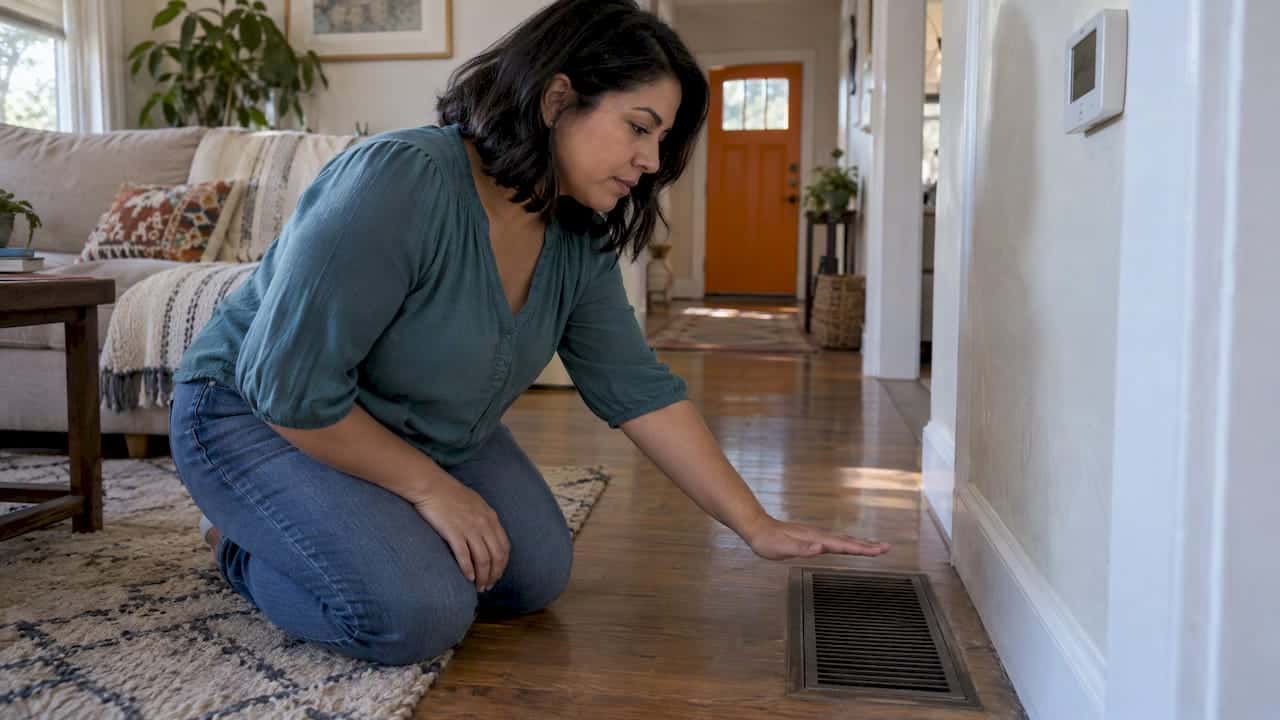
How can you tell if your AC is leaking refrigerant?
Some of these signs are easy to spot yourself. Others take a closer look.
- Warm or weak airflow: When refrigerant levels drop, the system loses its ability to absorb heat from indoor air. The result is air that feels lukewarm even when the thermostat is set low.
- System running constantly: Low refrigerant means less heat transfer per cycle, so the unit runs longer trying to reach the set temperature.
- Frozen evaporator coil: A pressure drop inside the coil causes its surface temperature to fall below freezing. Ice builds up, blocks airflow, and makes cooling even worse. When the system shuts off, that ice melts and can leave water pooling near your indoor unit.
- Hissing or bubbling sounds: A hissing noise near the refrigerant lines usually means gas is escaping through a small opening. Bubbling can indicate refrigerant mixed with air at a leak point.
- Higher energy bills: As the system works harder to compensate for reduced capacity, energy consumption rises noticeably.
- Increased indoor humidity: Refrigerant is what allows the coil to pull moisture out of the air. Less refrigerant means less dehumidification.
Before you assume a refrigerant issue, do two quick checks: replace or inspect your air filter, and confirm your thermostat is set to “cool” and not “fan only.” You can also walk through a broader AC troubleshooting checklist to rule out simpler causes. If those checks come back clean and the symptoms persist, a refrigerant leak is a strong possibility.
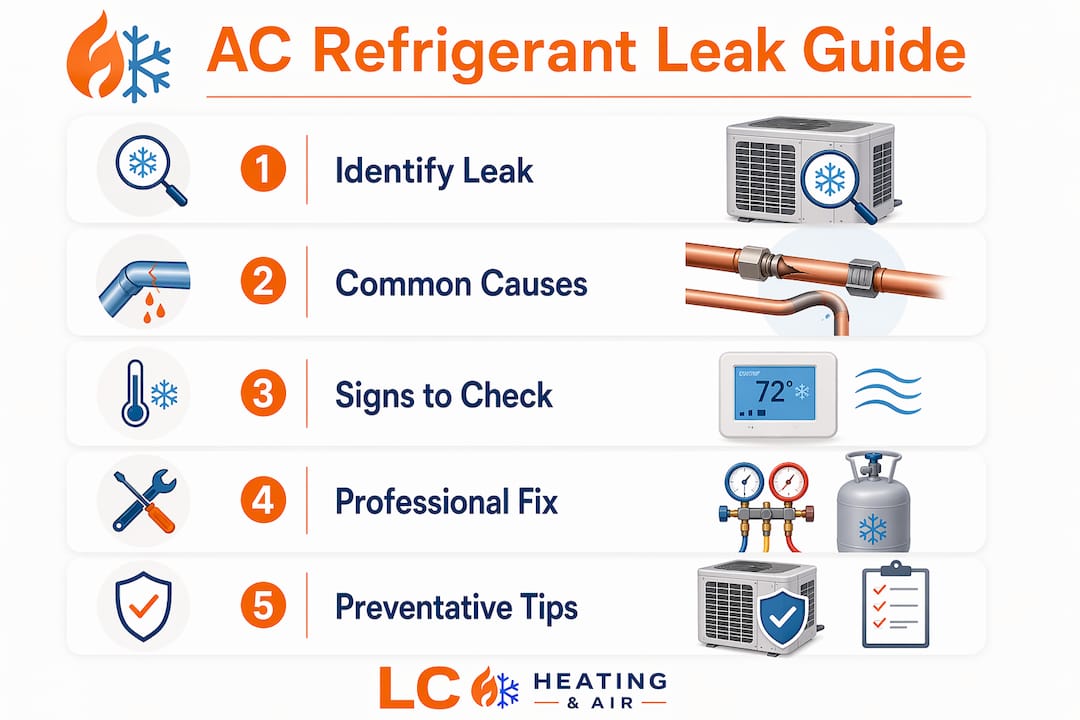
Why refrigerant leaks happen — the usual causes
Refrigerant does not escape on its own. Something physical has to fail or degrade first. Here are the most common culprits.
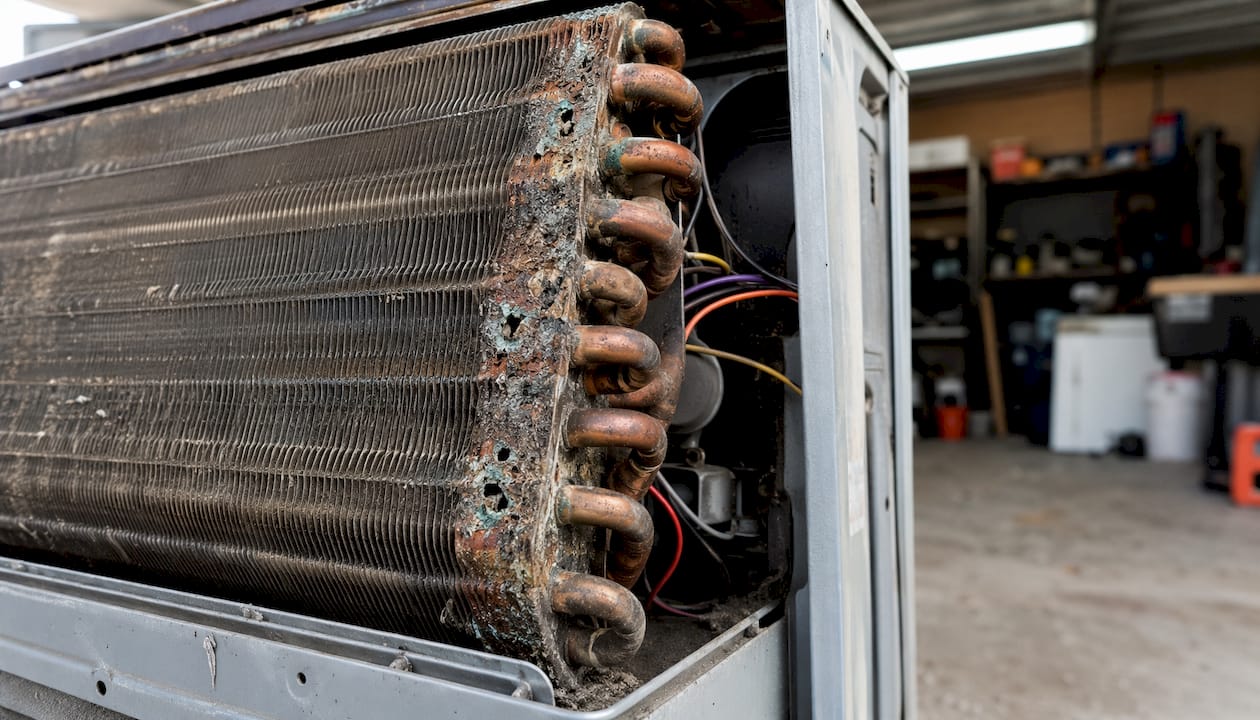
Formicary corrosion in copper coils
This is the leading cause of slow leaks in residential systems. Household volatile organic compounds (VOCs) from cleaning sprays, air fresheners, and adhesives react with copper and humidity to form formic acid. That acid eats microscopic, ant-tunnel-like channels into the copper tubing. A pit as small as 0.003 inches is enough to breach the tubing wall. These leaks start tiny and grow slowly over years, which is why many homeowners do not notice them until the system is significantly undercharged.
Vibration and stress at brazed joints
Every time your AC cycles on and off, the compressor vibrates. Over a decade of operation, that vibration creates fatigue cracks at brazed joints and along thin copper runs, especially if the unit is not properly mounted or lacks vibration isolation. Even a well-installed system can develop these cracks with age.
Loose or worn fittings
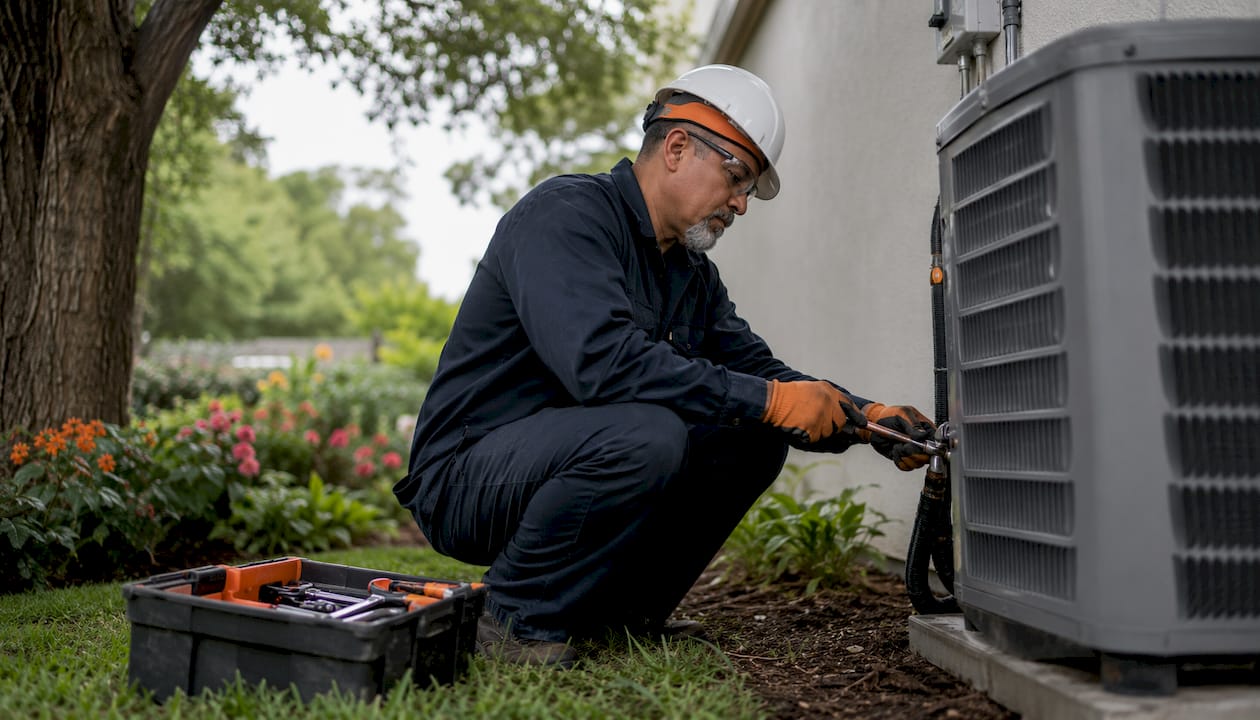
Flare fittings, where refrigerant lines connect to components, use a flare nut that compresses two metal ends together. Vibration gradually loosens these connections. Schrader valves (the service ports technicians use to check pressure) can also develop slow leaks if their cores wear out or are not properly capped.
Poor installation
An improperly brazed joint or an over-tightened flare fitting can fail within the first few years of a system’s life. This is one reason why installation quality matters as much as equipment quality.
Physical damage and environmental factors
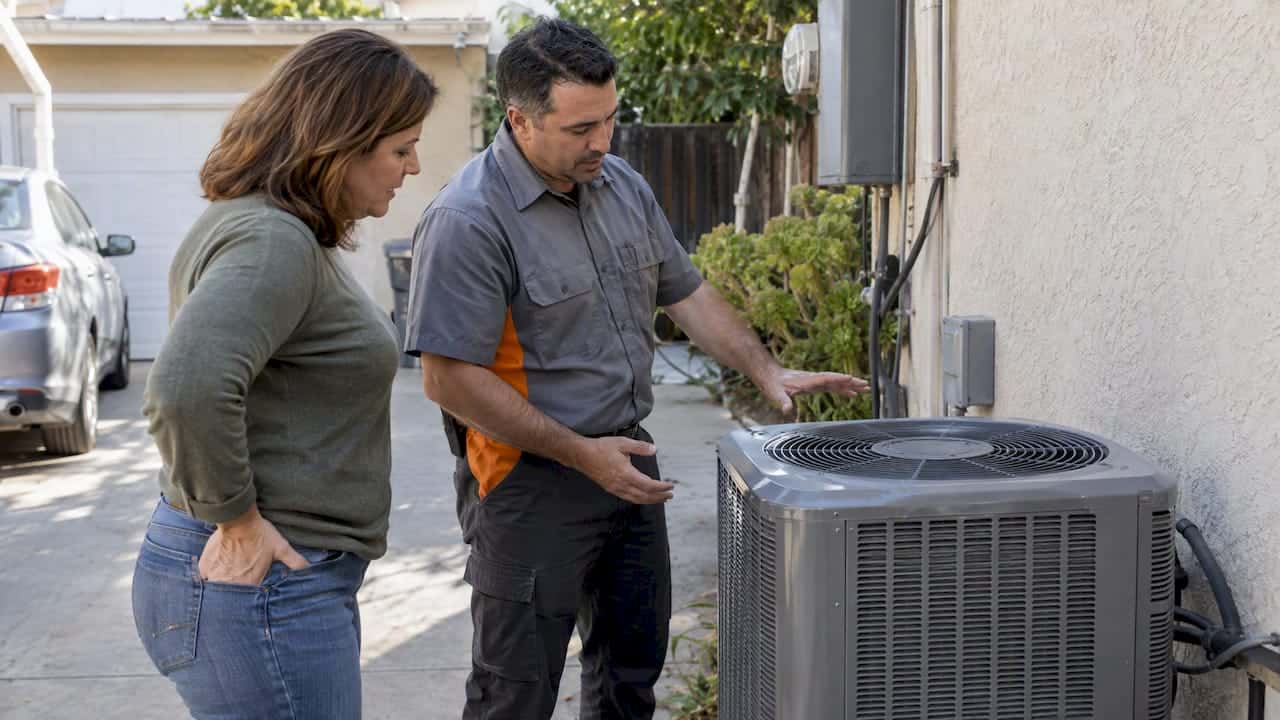
Lawn equipment striking the outdoor unit, debris impact, or a unit that has shifted off its pad can damage the line-set or condenser coil. Coastal environments accelerate corrosion on condenser coils through salt air exposure. Rubber seals and O-rings also harden and crack with age, creating additional leak points.
The parts most commonly affected: evaporator coil, condenser coil, brazed and flared connection joints, Schrader valves, and the line-set. Evaporator coil failures are especially common in residential systems.
Pro Tip: Reduce VOC exposure near your indoor unit. Avoid storing cleaning products, paints, or adhesives in the same space as your air handler. That single habit can meaningfully slow the corrosion that causes most residential leaks.
How professionals find and fix refrigerant leaks
A proper leak diagnosis is not guesswork. Certified technicians follow a structured process, and knowing what to expect helps you ask the right questions.
The diagnostic workflow
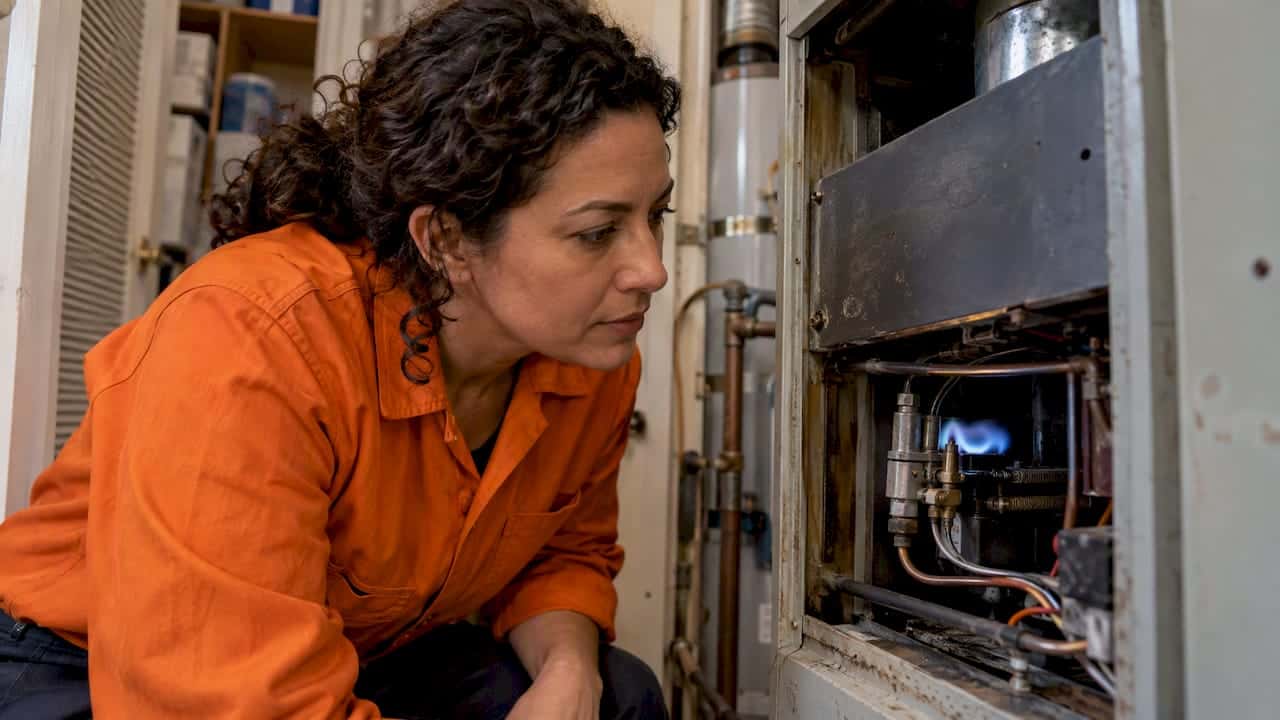
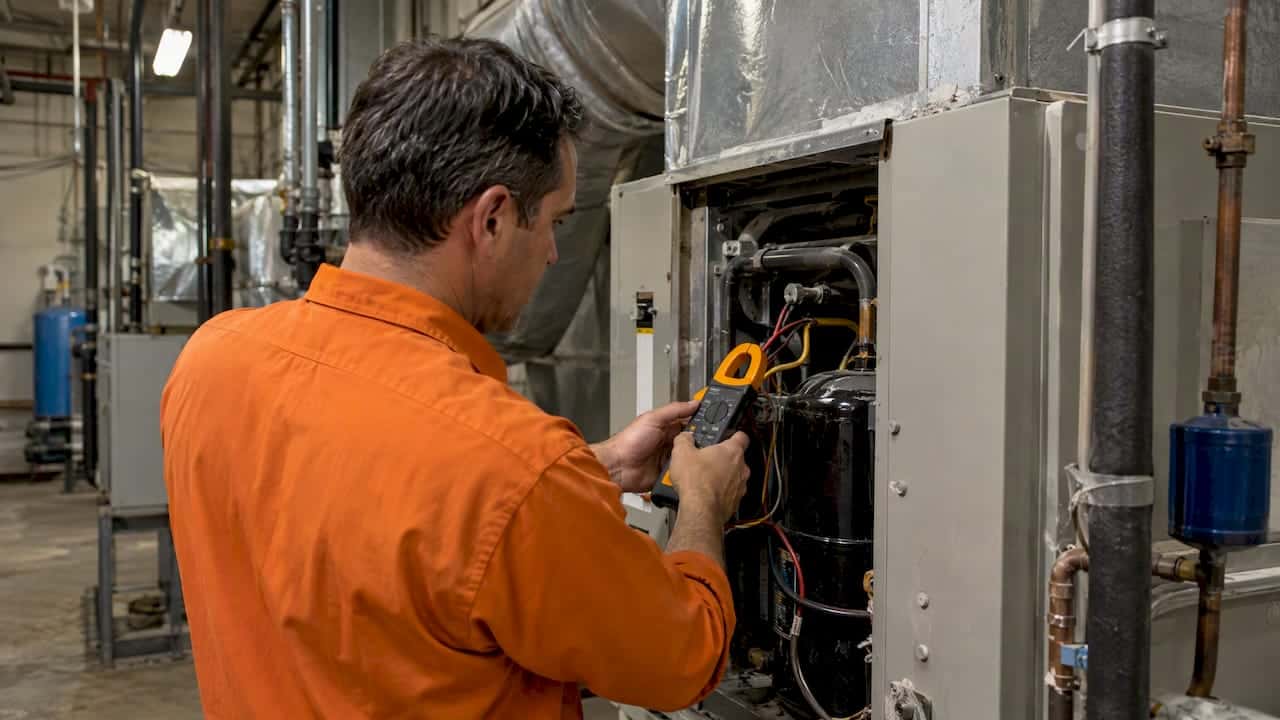
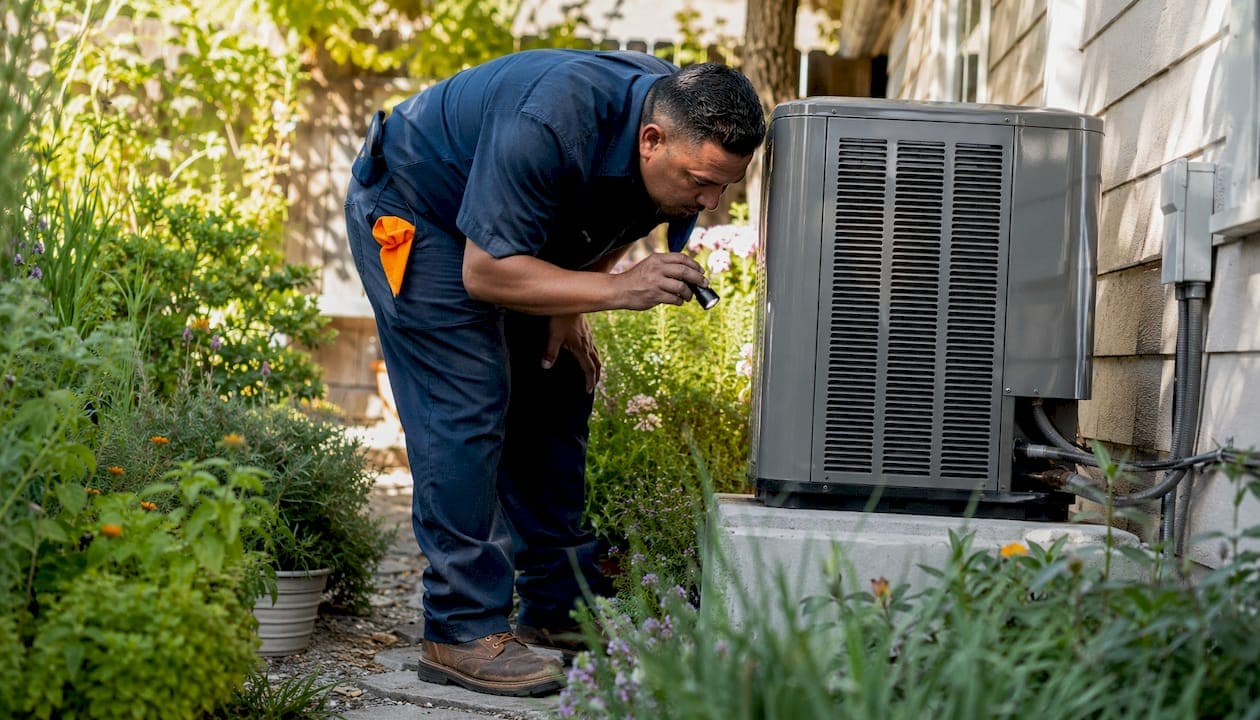
- Visual inspection: The technician checks the coils, line-set, fittings, and valves for obvious signs of oil staining (refrigerant carries oil, so a leak often leaves a residue) or physical damage.
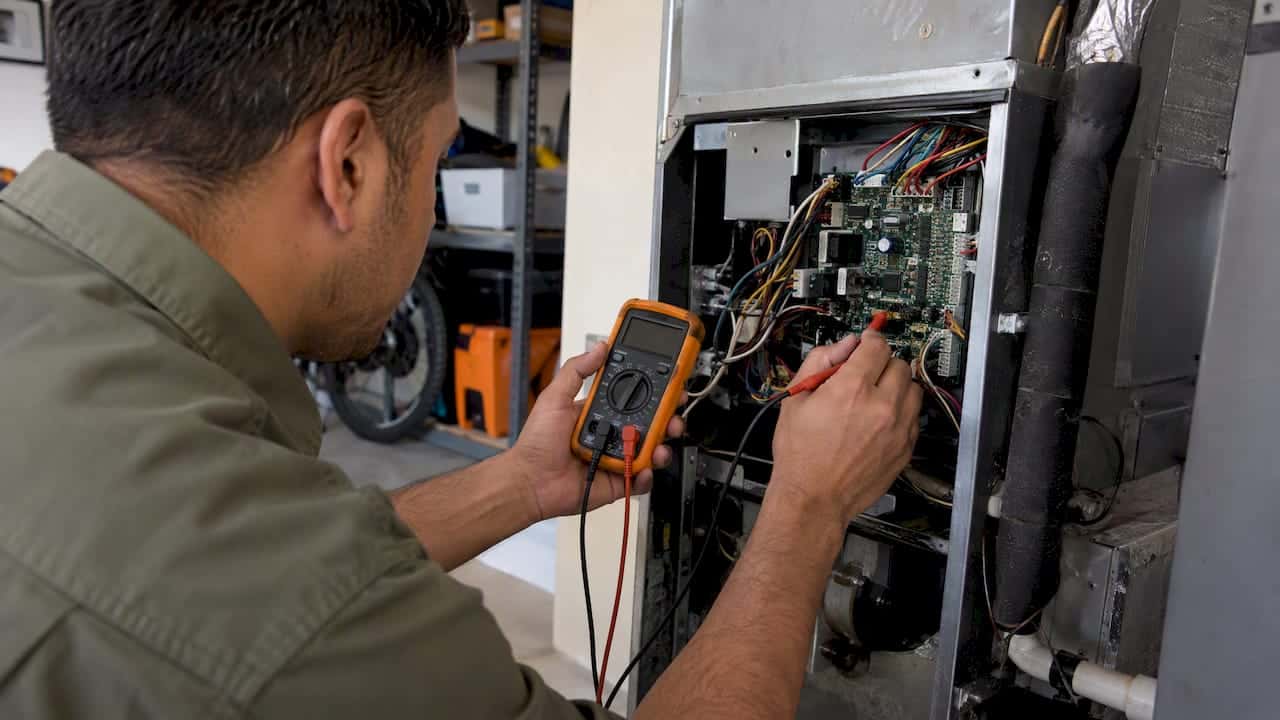
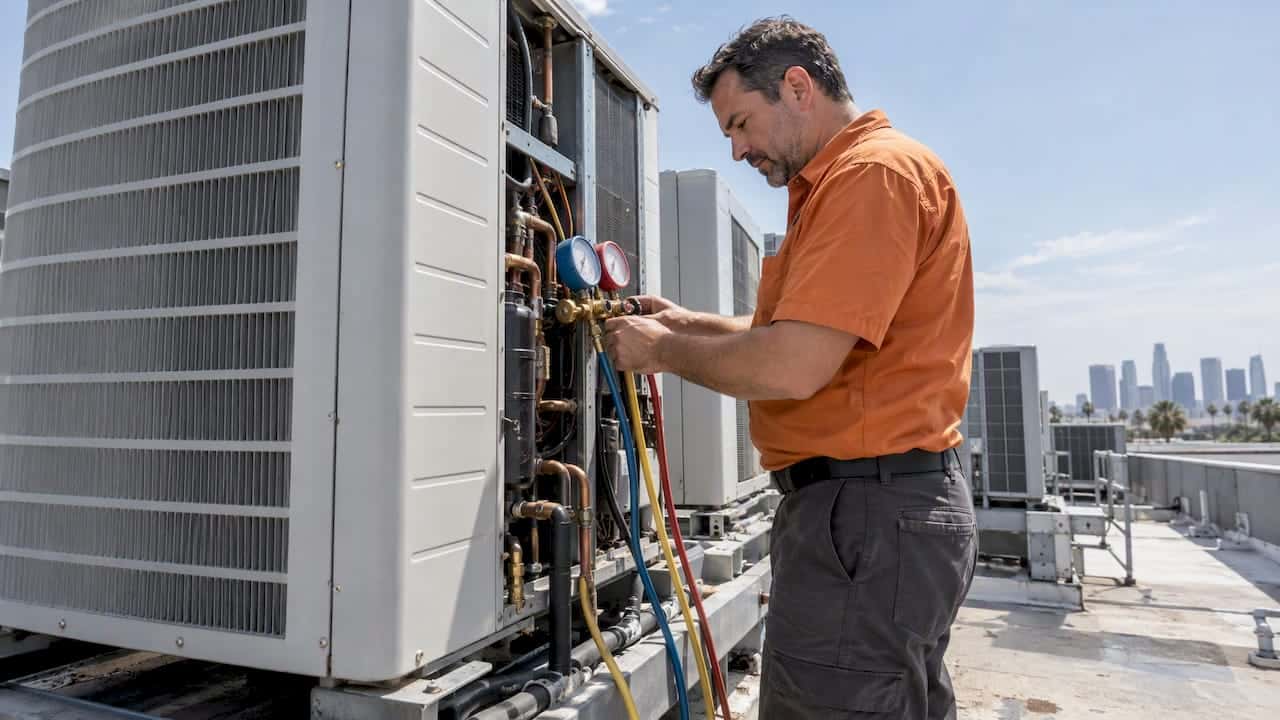
- Nitrogen pressure test: The system is pressurized with dry nitrogen to locate the general area of a leak. Nitrogen is safe, inert, and will not contaminate the system.
- Electronic leak detector: A handheld sensor sweeps the lines and coils to pinpoint small leaks that are not visible. This tool is sensitive enough to detect leaks that produce no audible sound.
- UV dye or soap-bubble check: UV dye injected into the system fluoresces under a UV light at the leak point. Soap-bubble solution is used for a quick visual confirmation at fittings and joints.
- Repair: Depending on the location, the technician will braze a cracked joint, replace a coil, or swap out a damaged line-set section.
- Vacuum and moisture removal: After repair, the system is evacuated with a vacuum pump to remove air and moisture before any refrigerant is added.
- Refrigerant recovery and recharge: Refrigerant must be recovered with EPA-compliant equipment. Venting refrigerant to the atmosphere is illegal. The system is then recharged to the manufacturer’s specified charge, not estimated.
Overcharging is just as harmful as undercharging. Restoring a system to manufacturer spec after a repair is the only way to guarantee full performance and protect the compressor. Guessing the charge, in either direction, causes its own set of problems.
Regulatory requirements
Under EPA Section 608, technicians must be certified to purchase and handle refrigerants, and they are prohibited from intentionally venting them. R-22 (used in systems manufactured before 2010) is now phased out and expensive to source. R-410A is the current residential standard, though newer systems are transitioning to R-454B. Always confirm your technician is EPA Section 608 certified before they begin work.
Questions to ask when the technician arrives:
- Are you EPA Section 608 certified?
- How will you locate the leak — pressure test, electronic detector, or UV dye?
- Will you recover the existing refrigerant before any repair?
- Are you recommending brazing or coil replacement, and why?
- What is the itemized estimate for parts and labor?
Can you run the AC with a refrigerant leak?
Briefly, in a mild case, yes. Long-term, it causes serious damage.
- Reduced cooling and comfort: The system simply cannot do its job at reduced charge.
- Frozen coils: Ice buildup blocks airflow and can damage the blower and drain pan.
- Higher energy use: The compressor runs longer and harder, driving up your electricity bill.
- Compressor failure: This is the real danger. Low refrigerant forces the compressor to run hotter and longer under stress. The compressor is the most expensive component in your system, often costing as much as a full replacement on older units.
Stop using your AC immediately if you hear hissing near the lines, notice ice on the indoor coil, or detect a chemical smell. These are signs of a significant leak that can damage the compressor quickly and, in an enclosed space, pose a health risk.
Refrigerants are heavier than air, meaning they settle at floor level in a confined space. Children and pets are more exposed in these situations. Symptoms of refrigerant exposure include dizziness, headaches, and difficulty breathing. Ventilate the space and call a technician promptly.
What does refrigerant leak repair cost in the U.S.?
Repair costs vary based on where the leak is and what type of refrigerant your system uses.
- Diagnostic visit: Most HVAC companies charge a diagnostic fee to inspect the system and locate the leak. This covers the technician’s time and testing equipment.
- Brazing a joint or fitting: Repairing a cracked brazed joint or tightening a flare fitting is typically the least expensive fix and can often be completed the same day.
- Evaporator or condenser coil replacement: Coil replacement is a more involved repair, usually requiring several hours to a full day. Parts cost varies by system size and brand.
- Line-set replacement: Replacing a damaged section of refrigerant line can take a few hours depending on accessibility.
- R-22 recharge: Because R-22 is phased out, the refrigerant itself is significantly more expensive than R-410A. If your system still uses R-22, a full repair-and-recharge can cost considerably more than the same job on a modern system. At some point, replacing the system becomes more cost-effective than continuing to repair an R-22 unit.
Timeline expectations: Same-day diagnosis is often possible. A simple joint repair may be done in the same visit. Coil or line-set work typically takes a half-day to a full day. Major component replacements may require scheduling and parts ordering.
Avoid paying to top off refrigerant without a confirmed repair. That approach masks the problem, delays the real fix, and adds to your total cost over time.
How to reduce the risk of future refrigerant leaks
Prevention is straightforward and pays off in system longevity.
Annual maintenance checklist:
- Schedule a professional tune-up every year. Ask the technician to check refrigerant pressure, inspect coils for corrosion, and tighten flare fittings.
- Clean the evaporator coil annually to remove the buildup that accelerates formic acid formation.
- Inspect line-set insulation for cracks or gaps that expose copper tubing to moisture and air.
- Check that the outdoor unit is on a stable, level pad and that vibration isolation mounts are intact.
- Clear debris from around the outdoor unit and keep lawn equipment well away from the condenser.
Behavioral habits that help:
- Avoid storing VOC-heavy products (paints, solvents, cleaning sprays) near the indoor air handler.
- Flush the outdoor condenser coil gently with a garden hose once or twice a year to remove dust and debris.
- Do not ignore small performance changes. A system that is slightly less effective than last summer may already have a slow leak developing.
An HVAC maintenance plan that includes seasonal pressure checks and visual coil inspections can catch slow leaks before they become expensive failures. Early detection is almost always cheaper than emergency repair.
When should you call an HVAC technician?
Some problems are worth monitoring. These are not.
Call a technician now if you notice any of these:
- Warm airflow that persists after you have checked the filter and thermostat
- Visible ice on the indoor coil or the copper suction line
- A hissing or bubbling sound near the refrigerant lines or outdoor unit
- A sudden, unexplained spike in your energy bill
- A chemical or sweet smell near the indoor unit or vents
What to expect when the technician arrives:
- A visual inspection of coils, fittings, valves, and the line-set.
- A pressure test using nitrogen to identify the leak zone.
- Electronic leak detection and possibly UV dye to pinpoint the exact location.
- An itemized repair quote before any work begins.
- Confirmation that refrigerant will be recovered per EPA Section 608 before any disassembly.
Licensed AC leak repair is not optional for this type of work. DIY refrigerant handling is both unsafe and illegal under federal law. A certified technician protects your system, your health, and your wallet.
Key Takeaways
Refrigerant loss always means a leak in the sealed loop — not normal wear, not consumption, and not something a quick top-off will fix permanently.
| Point | Details |
|---|---|
| Refrigerant does not get used up | Low levels always indicate a leak; topping off without a repair only delays the real problem. |
| Compressor damage is the biggest risk | Running with low refrigerant forces the compressor to overheat, risking the most expensive component in your system. |
| Proper diagnosis requires certified tools | Technicians use nitrogen pressure tests, electronic detectors, and UV dye to locate leaks accurately. |
| EPA Section 608 compliance is required | Only certified technicians may legally handle refrigerants; venting to atmosphere is prohibited by federal law. |
| LC Heating and Air Conditioning | Offers same-day leak diagnosis in Los Angeles with flat-rate pricing and EPA-certified technicians. |
The leak problem most homeowners underestimate
There is a pattern that comes up repeatedly in residential HVAC service: a homeowner notices their AC is not cooling as well as it used to, calls a technician, and gets told the system just needs a refrigerant top-off. The technician adds refrigerant, the system cools for a few weeks or months, and then the cycle repeats. By the time the compressor fails, the homeowner has spent more on repeated service calls and refrigerant than a proper repair would have cost in the first place.
What makes this frustrating is that the underlying leak is almost always fixable. Formicary corrosion, a cracked brazed joint, a worn Schrader valve — these are real repairs with real solutions. The problem is that finding a small leak takes time and the right equipment, and some technicians skip that step because topping off is faster.
The right approach is to insist on a leak search before any refrigerant is added. If a technician cannot tell you where the refrigerant went, they should not be adding more. That standard protects your compressor, your budget, and your system’s long-term reliability. It is also what EPA Section 608 expects of certified professionals.
Schedule a leak diagnosis with LC Heating and Air Conditioning
A refrigerant leak that goes undiagnosed long enough will eventually take out your compressor. LC Heating and Air Conditioning gives Los Angeles homeowners a faster, more transparent path to a real fix: same-day diagnostic availability, flat-rate pricing so you know the cost before work begins, and EPA Section 608-certified technicians who locate the leak before touching the refrigerant.

Every diagnostic visit includes a visual inspection, nitrogen pressure test, and electronic leak detection, plus a written quote for the repair. If your system uses R-22, the team will give you an honest assessment of whether repair or replacement makes more financial sense for your situation. Maintenance plans are also available to catch slow leaks early and keep your system running efficiently year-round.
Ready to stop guessing and get a straight answer? Book a same-day diagnostic with LC Heating and Air Conditioning and find out exactly what your system needs.
Useful sources for homeowners
- Energy Star HVAC Maintenance Checklist — EPA-backed guidance on seasonal maintenance tasks that help prevent refrigerant and efficiency issues.
- AirNow: Where AC Leaks Most Commonly Occur — Practical breakdown of the most vulnerable components in a residential AC system.
- Carrier: Signs and Causes of a Refrigerant Leak — Manufacturer-level overview of leak symptoms and detection methods.
- Bryant: How to Fix a Refrigerant Leak — Covers EPA Section 608 requirements and why certified technicians are required for refrigerant work.
- LC Heating and Air Conditioning: AC Refrigerant Recharge Los Angeles — Details on when recharging is appropriate after a verified leak repair.
- LC Heating and Air Conditioning: Preventive Maintenance Los Angeles — Maintenance tasks and inspection items that reduce corrosion and vibration-related failures.
- Rink’s Appliances — Regional appliance repair resource for homeowners dealing with related cooling or appliance issues.
FAQ
Where do most AC refrigerant leaks occur?
The evaporator coil is the most common leak location in residential systems, followed by the condenser coil, brazed and flared connection joints, and Schrader valves. Evaporator coil leaks are especially frequent because of formicary corrosion caused by household VOCs.
Can I run my AC if it has a refrigerant leak?
Running the system briefly in a mild leak is possible, but continuing to operate it accelerates compressor wear and risks permanent damage to the most expensive component. Stop use immediately if you hear hissing, see ice on the coil, or detect a chemical smell.
Why is my AC full of refrigerant but still not cooling?
Low refrigerant is not the only cause of poor cooling. A dirty air filter, a malfunctioning blower, a failing capacitor, or a refrigerant overcharge can all produce similar symptoms. A technician can measure system pressures and airflow to pinpoint the actual cause.
How long does AC refrigerant last?
Refrigerant does not wear out or get consumed. A properly sealed system holds its charge indefinitely. If your system needs refrigerant added, there is a leak that needs to be located and repaired, not just topped off.
Recommended
Leo, Propietario y Técnico Principal en LC Heating & Air
Leo dirige LC Heating & Air como propietario-operador y tiene la licencia C-20 HVAC #1073586 de California. Sus guías se enfocan en diagnósticos prácticos, decisiones de reparación seguras y consejos claros para propietarios de Los Ángeles.