TL;DR:
- The HVAC Schrader valve is a spring-loaded port that allows controlled access to refrigerant lines without releasing the system’s refrigerant. It is essential for charging, testing, and evacuating AC systems, with specialized materials to withstand high pressures. Regular inspection and timely replacement of worn cores prevent leaks and maintain system efficiency.
What is an HVAC Schrader valve?
The HVAC Schrader valve is the
that gives technicians controlled access to your refrigerant circuit without releasing the entire system charge into the air. Think of it as a sealed gateway, small enough to fit in your palm, but responsible for every pressure check, refrigerant charge, and system evacuation your AC ever receives.
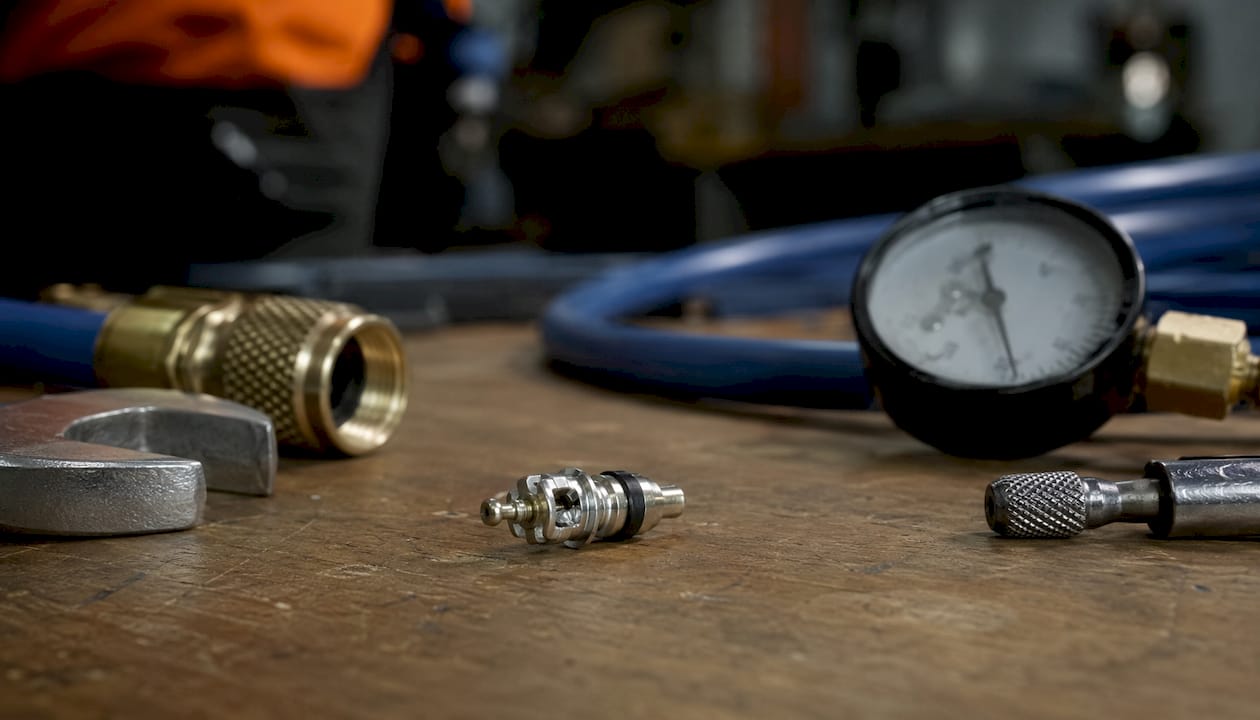
Here is what makes up this component:
- Outer threaded shell: A hollow, threaded brass body that screws into the service port on your refrigerant line.
- Poppet valve core: The internal spring-loaded pin that stays closed under pressure and only opens when a service tool depresses it.
- Valve cap: A protective cover, usually brass with a rubber O-ring, that acts as a secondary seal when the port is not in use.
- O-ring seals: Gaskets made from Neoprene or Viton that resist high-pressure refrigerants and compressor oils.
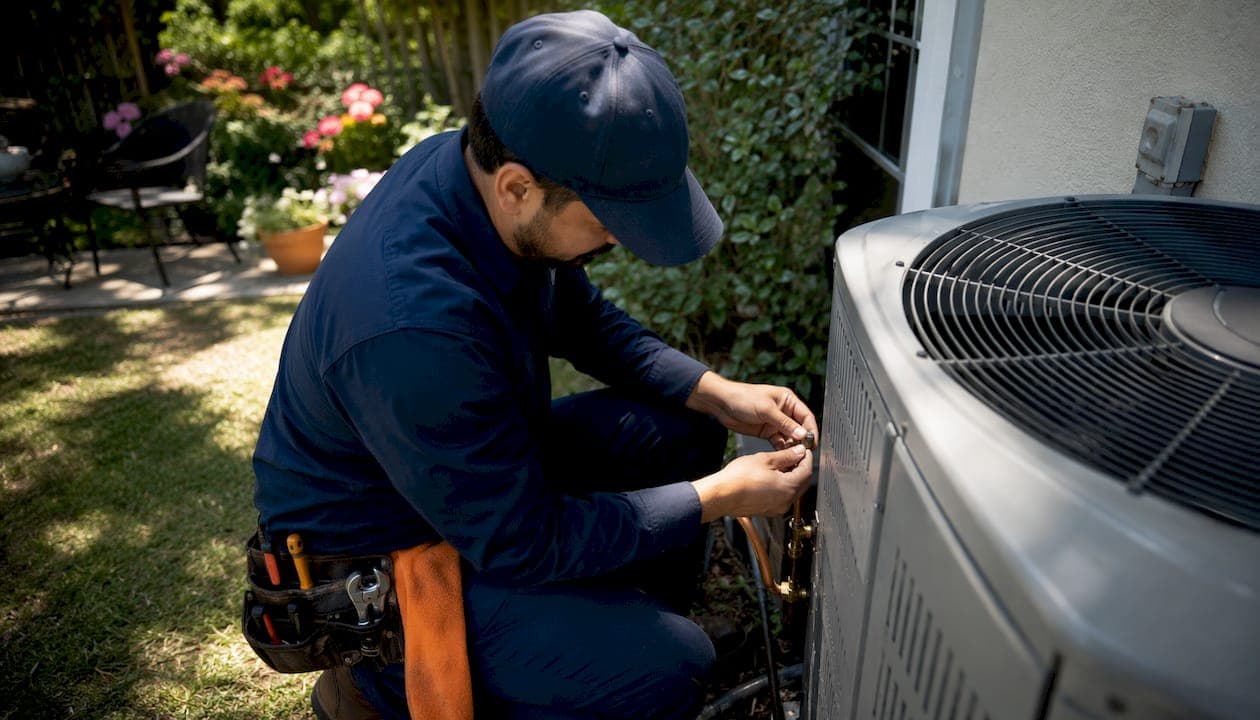
You will find at least two of these valves on every central air conditioner or heat pump: one on the low-pressure suction line and one on the high-pressure liquid line. Technicians also call them service valves or core valves, but they all refer to the same port. Knowing what you are looking at is the first step toward understanding why your AC behaves the way it does.
How does a Schrader valve work in your air conditioning system?
The valve’s job is straightforward: let refrigerant in or out on demand, then seal itself completely when the service tool disconnects. The spring-loaded core stays closed by default, so pressure alone cannot force it open. Only a depressed pin, pushed by a manifold gauge hose fitting or a vacuum pump connection, opens the path.
This design makes the Schrader valve the workhorse of every service call:
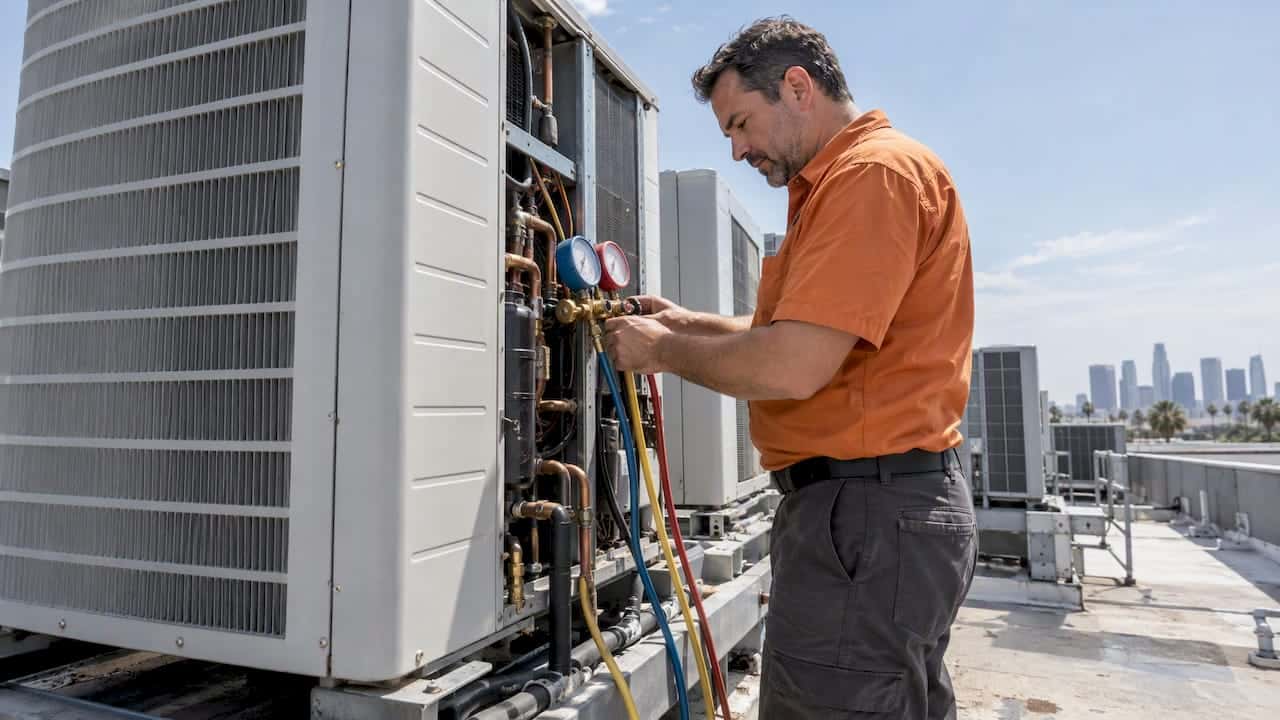
- Refrigerant charging: A technician connects a manifold gauge set to the port, depresses the core, and introduces the correct refrigerant charge into the system.
- System evacuation: Before a new charge, a vacuum pump attaches to the same port to pull out air and moisture that would otherwise damage the compressor.
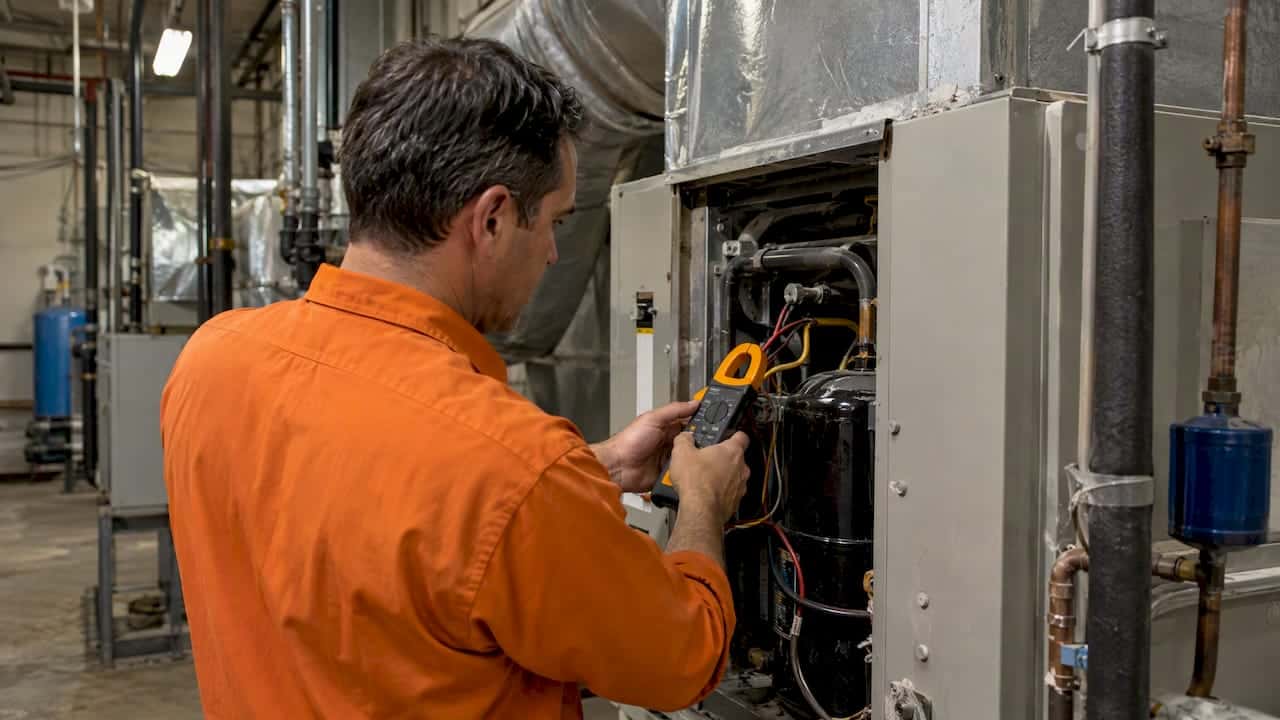
- Pressure measurement: By reading the gauge at the port, a technician can assess both the high-side and low-side pressures to confirm the system is operating correctly.
- VSAT diagnostics: Technicians measure Vapor Saturation Temperature through these ports to verify that refrigerant is boiling at the right temperature to absorb heat from your home. Without a functioning valve, that reading is impossible.
HVAC Schrader valves look nearly identical to the valve on your bicycle tire, and the mechanical principle is the same. The difference is in the materials. AC valves use specialized gaskets such as Neoprene or Viton to handle refrigerant pressures that can exceed 600 psi and to resist the compressor oils circulating through the system. A standard tire valve core would fail quickly under those conditions, which is why substituting one is never acceptable.
Pro Tip: Always confirm that any replacement valve core is rated for refrigerant service. Automotive tire cores are not interchangeable with HVAC cores, even though they look the same.
How to maintain your AC Schrader valves and prevent leaks
Routine care of these valves costs almost nothing and can prevent a refrigerant leak that would cost hundreds of dollars to diagnose and repair. A few habits go a long way.
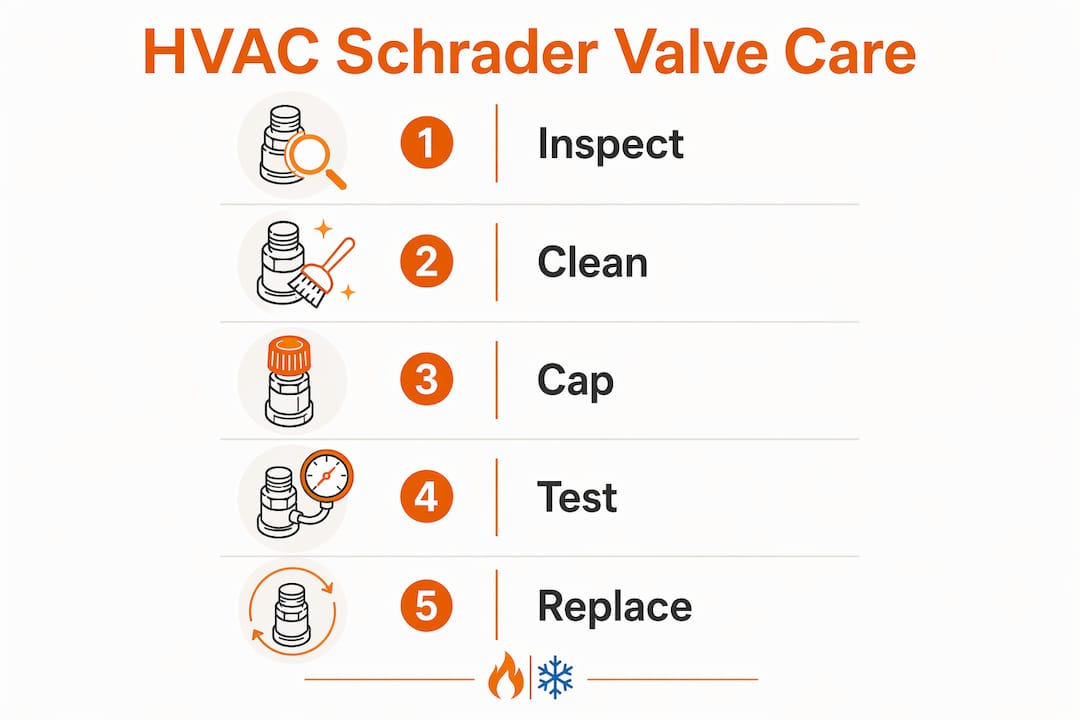
- Inspect the valve cap at every service visit. The protective cap with its rubber O-ring is a secondary seal. A missing or cracked cap exposes the core to dirt, moisture, and UV damage, all of which accelerate wear.
- Keep the port area clean. Wipe away dirt and grime around the threads before any service connection. Debris that enters the core seat can prevent a proper seal.
- Check for oil residue. A thin film of refrigerant oil around the port is an early sign that the core is weeping. Catch it early and a core swap is a quick fix.
- Look for frost rings after service. A ring of frost or ice around the port shortly after a technician disconnects gauges can indicate that refrigerant escaped during the disconnect.
- Replace aging cores proactively. Valve cores degrade over years of repeated gauge hookups. Each time a technician connects and disconnects, the sealing surface wears slightly. Replacing the core during a scheduled tune-up is far cheaper than diagnosing a slow leak later.
- Tighten caps properly, but not excessively. Hand-tight with a snug quarter-turn is correct. Overtightening can crack the O-ring and defeat the secondary seal entirely.
For homeowners managing residential plumbing and HVAC components, the valve cap is one of the easiest things to overlook and one of the most consequential. A missing cap is a direct path to core corrosion.
Pro Tip: When a technician finishes a service call, watch to confirm they replace the valve caps before leaving. A cap with a rubber O-ring provides meaningful protection between service visits.
Signs your Schrader valve is failing and when to call a pro
A failing valve rarely announces itself loudly. The leak is usually slow, quiet, and easy to miss until your cooling performance drops noticeably. Here is what to watch for:
- Gradual cooling loss over weeks or months. Your system runs longer, your home feels warmer, but nothing seems obviously broken.
- Oil residue or soap bubbles at the port. Spraying diluted dish soap on the port and watching for bubbles is a simple field test. Oil staining around the port is another reliable visual indicator.
- Frost rings after service disconnects. Frost forming at the port after a gauge is removed suggests refrigerant escaped during the disconnect.
- Electronic leak detectors triggering only at the port. If a sniffer only alarms when held directly at the service port, the valve core is the likely source.
- Repeated refrigerant top-ups. If your system has needed refrigerant added more than once without any other identified damage, the Schrader valve port is a prime suspect. Each gauge hookup over the life of the equipment slightly deforms the core’s sealing surface, creating a hairline path for refrigerant to escape slowly over a season.
Warning: Ignoring a slow valve leak does not just cost you refrigerant. Running an undercharged system stresses the compressor, reduces efficiency, and can lead to compressor failure, a repair that costs far more than a valve core replacement.
If your home AC is not cooling the way it should and you have had refrigerant added before, ask your technician to test the service ports directly before assuming the problem is elsewhere.
How to replace an HVAC Schrader valve core safely
Replacing a valve core does not always require draining the entire refrigerant charge from your system, but it does require the right tool and, in most cases, a licensed technician. Here is how the process works:
- Confirm the leak source. Use soap bubbles or an electronic leak detector held directly at the port to verify the core is the problem before any work begins.
- Attach a valve core removal tool with a ball valve. This specialized removal tool threads onto the service port and uses a built-in ball valve to isolate system pressure. It lets a technician extract the old core and install a new one without evacuating the entire refrigerant charge, saving hours of recovery and recharging time.
- Close the ball valve to isolate pressure. With the ball valve shut, the technician can safely access the core without refrigerant escaping into the atmosphere.
- Unscrew the old valve core. The core threads out of the valve body. It should come out smoothly; forcing it risks damaging the port threads.
- Install the new core and re-seat it. Thread the new core in by hand until snug. Do not overtighten. A cracked core seat will leak worse than the original problem.
- Open the ball valve and test for leaks. Reopen the ball valve to restore pressure, then test the port with soap bubbles or a detector to confirm the new core is sealed.
- Replace the cap immediately. A brass cap with a rubber O-ring goes back on the port as soon as the tool is removed. Never leave a port uncapped.
Handling refrigerants at pressures above 400 psi carries real risk. Licensed professionals should perform this work to avoid dangerous leaks caused by improper core seating. If you are a landlord or property manager weighing the cost of deferred maintenance, the case for replacing aging HVAC components proactively is straightforward: a $10 core replaced today prevents a compressor replacement that can run into the thousands.
Pro Tip: After any valve core replacement, always run a pressure hold test before recharging. If pressure holds steady with no drop, the leak is sealed. If it drops, the core is not seated correctly.
When you need a professional to handle a valve leak or refrigerant recharge in the Los Angeles area, LC Heating and Air Conditioning offers honest flat-rate diagnostics and same-day service with over twenty years of local experience. Leo and the team at LC Heating and Air Conditioning can pinpoint whether your service port is the source of a slow leak before recommending any repair. Reach out for an AC leak inspection and get a clear answer without surprise fees.

Key Takeaways
The HVAC Schrader valve is a spring-loaded, one-way service port that controls refrigerant access for charging, testing, and evacuation, and a worn or uncapped core is one of the most common causes of slow refrigerant leaks in residential AC systems.
| Point | Details |
|---|---|
| Core design | A spring-loaded poppet core stays sealed until a service tool depresses the pin, preventing refrigerant loss between service visits. |
| Material difference from tire valves | HVAC cores use Neoprene or Viton gaskets rated for refrigerant pressures above 600 psi; tire cores are not a safe substitute. |
| Cap as secondary seal | A brass cap with a rubber O-ring provides meaningful protection against core corrosion and minor leaks when the port is not in use. |
| Repeated top-ups signal a port leak | Multiple refrigerant additions without identified damage often point to a slow Schrader valve leak caused by core wear from repeated gauge hookups. |
| Core replacement without full evacuation | A valve core removal tool with a ball valve lets a technician swap the core without draining the entire refrigerant charge, saving significant time. |
FAQ
What is a Schrader valve on an AC unit?
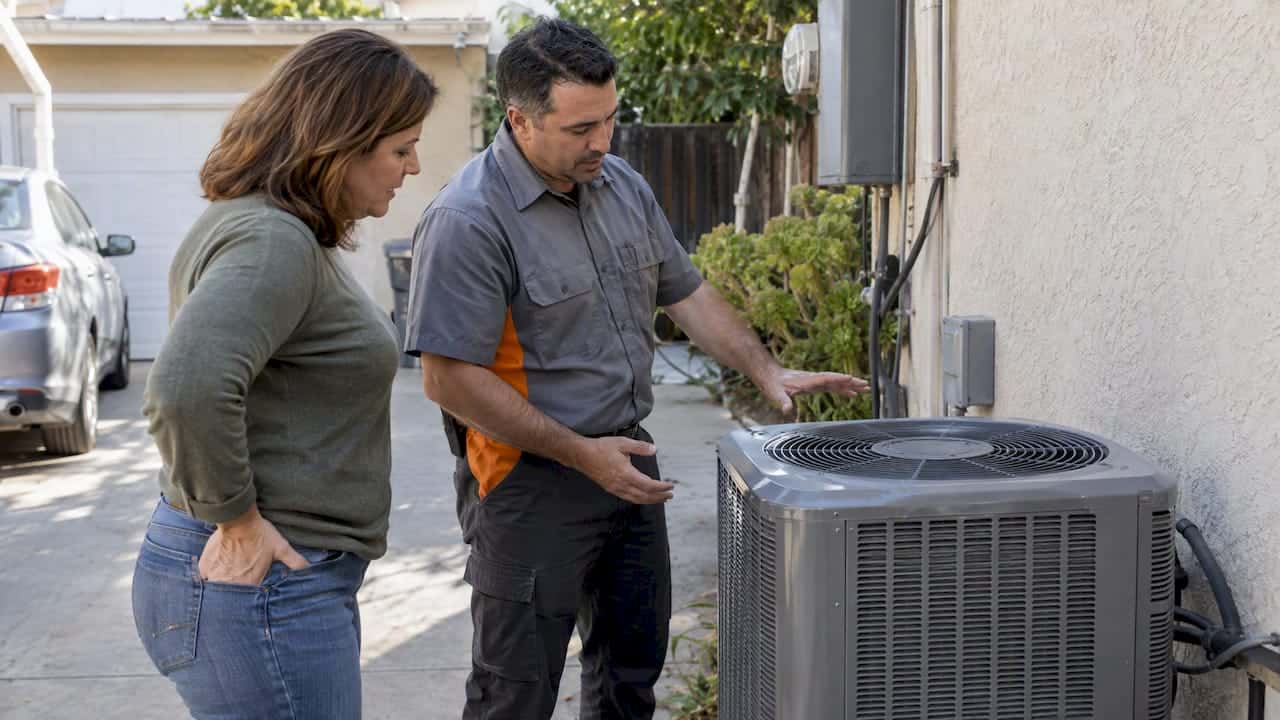
A Schrader valve is the spring-loaded service port on your outdoor condenser unit that gives technicians access to the refrigerant circuit for charging, pressure testing, and system evacuation. Every central AC has at least two: one on the low-pressure suction line and one on the high-pressure liquid line.
How can you tell if an AC Schrader valve is bad?
The clearest signs are gradual cooling loss, oil residue or soap bubbles around the service port, and frost rings after a technician disconnects gauges. Repeated refrigerant top-ups without any other identified damage also strongly suggest a slow leak at the valve core.
How do you replace an HVAC Schrader valve?
A technician uses a valve core removal tool with a built-in ball valve to isolate system pressure, extract the worn core, and thread in a new one without evacuating the full refrigerant charge. Because refrigerant pressures can exceed 400 psi, this work should be performed by a licensed HVAC professional.
What is another name for an AC Schrader valve?
The same component is commonly called a service valve, core valve, or refrigerant service port. All three names refer to the same spring-loaded access point used during HVAC diagnostics and maintenance.
Recommended
Leo, Owner & Lead Technician at LC Heating & Air
Leo leads LC Heating & Air as an owner-operator and holds California CSLB C-20 HVAC license #1073586. His guides focus on practical diagnostics, safe repair decisions, and clear advice for Los Angeles homeowners.