- What Smart Thermostats Do That Old Dial Thermostats Cannot
- What Kind of Energy Savings Should You Actually Expect?
- The Comfort Gains You’ll Notice Before You See a Lower Bill
- How an Upgrade Helps You Catch Problems Before They Get Expensive
- Choosing the Right Upgrade for Your System
- Installation Checklist: Avoid the Mistakes That Cause Callbacks
- What We See in Real Los Angeles Homes
- What Homeowners Get Wrong About Thermostat Upgrades
- Get a Professional Thermostat Install That Actually Matches Your Equipment
- Where to Verify These Numbers Yourself
- Sources
- FAQ
- Recommended
Upgrading to a smart thermostat is worth it for most Los Angeles homeowners: ENERGY STAR certification alone guarantees a savings floor, and field data pushes the real-world range higher for heating and cooling. The three benefits that matter most are lower energy bills, steadier comfort, and early warning signs when your HVAC system is struggling. The catch: results depend on your wiring, your equipment type, and whether you have a C‑wire ready to go.
TL;DR:
- Proper wiring, especially a functioning C-wire, is essential to ensure your smart thermostat correctly interfaces with your HVAC system and maximizes savings.
- Matching your thermostat type to your specific equipment, particularly for heat pumps or multi-stage systems, prevents costly inefficiencies and performance issues.
- The average energy savings from ENERGY STAR certified smart thermostats are around 8%, but actual results can range from 8% to 15% depending on climate, equipment, and household habits.
- Installing a smart thermostat without professional help increases the risk of wiring errors, placement issues, and compatibility problems that could nullify potential savings.
- Using runtime alerts and early warning signals, homeowners can catch potential HVAC issues early, saving money on repairs and avoiding major breakdowns.
What Smart Thermostats Do That Old Dial Thermostats Cannot
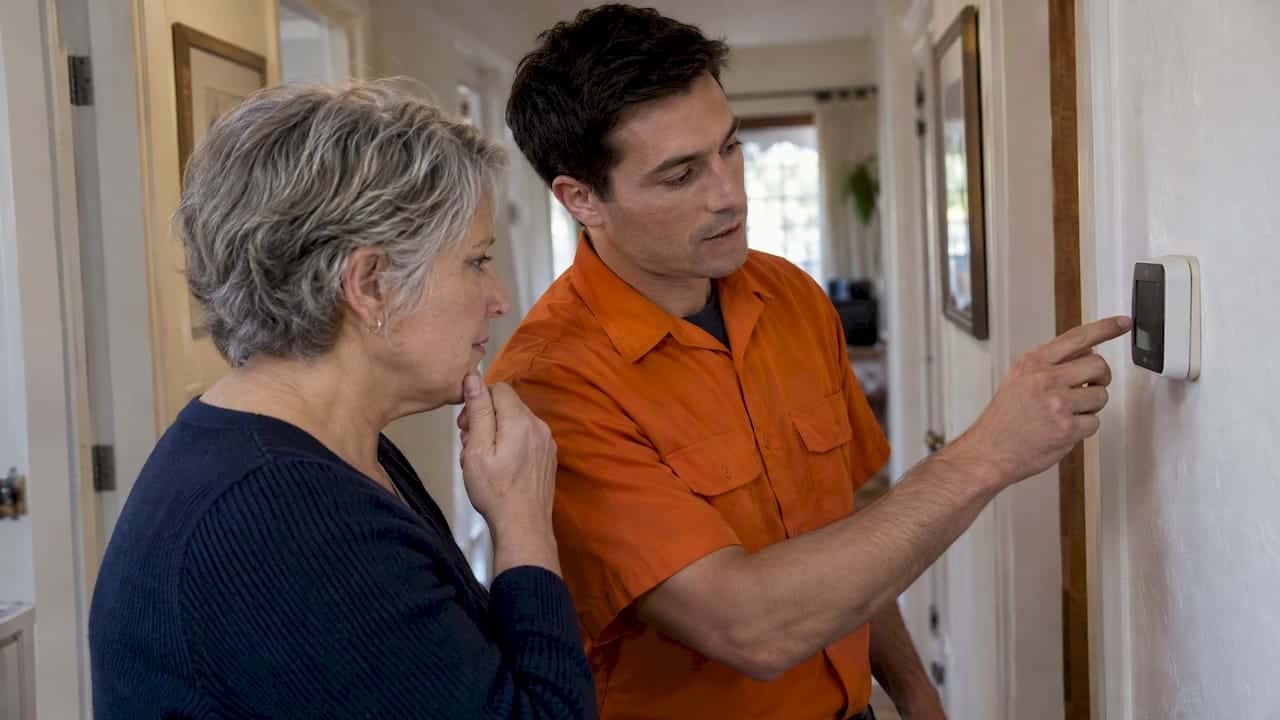
A programmable thermostat only saves money if you actually program it. Most homeowners never do. That gap is exactly what a smart thermostat closes, and it does it through a handful of concrete features rather than one big trick.
- Learning schedules: the thermostat studies your patterns and adjusts automatically, so you get automated savings even if you never touch a schedule menu.
- Geofencing: your phone’s location tells the system when you’re heading home, so it starts adjusting before you walk in the door.
- Occupancy sensing: built-in sensors detect whether rooms are actually in use and hold back on heating or cooling empty spaces.
- Remote sensors: placed in bedrooms or far-off rooms, these correct for the hot or cold spots a single wall thermostat always misses.
- Weather compensation: the system factors in outdoor conditions to avoid overworking your equipment on mild days.
- Maintenance alerts: runtime tracking flags filter changes and unusual cycles before they become expensive repairs.
Some models add voice-assistant integration or utility demand-response programs, which can shave a little more off your bill during peak-rate hours. Those are nice extras, not the main event.
What Kind of Energy Savings Should You Actually Expect?
ENERGY STAR sets a conservative, verified floor here. Certified smart thermostats deliver an average of about 8% off heating and cooling bills, or roughly $50 per year, based on randomized field measurements rather than lab estimates.
Field data snapshot: ENERGY STAR verifies an ~8% baseline savings, while broader field studies show heating savings commonly landing between 8% and 12%, and cooling savings between 10% and 15%.
Independent research backs a wider range once you account for climate and equipment differences. DOE and NREL peer-review work shows savings are measured through aggregated field telemetry, and results shift depending on HVAC type and regional baselines. Separate manufacturer field studies found heating savings closer to 10 to 12%, with cooling savings running even higher in homes with central air. HVAC buyer guidance puts AI-learning models a couple of points above standard Wi‑Fi units in the right configurations.
A few things move that number up or down for your house:
- Your climate zone and how many hours your system runs per year.
- Whether your old thermostat was a basic dial that never got programmed correctly.
- Your equipment type. Single-stage systems respond differently than modulating or zoned setups.
- How consistent your household schedule actually is.
Payback scenarios illustrate why this matters. On a low annual HVAC spend around $800, an 8% savings rate saves roughly $64 a year. On a $2,000 annual bill, that same 8% saves $160 a year, and a 12% rate on a high $3,000 bill saves $360. Add a rebate through your utility, and a mid-range device plus professional install often pays for itself in two to four years. Check current appliance rebate options before you buy, since incentives shift the math quickly.
The Comfort Gains You’ll Notice Before You See a Lower Bill
Energy savings show up on your bill once a month. Comfort improvements show up every single day, and most homeowners notice these first.
Adaptive schedules and smart recovery reduce the wide temperature swings that make a house feel stuffy in the afternoon and chilly at 6 AM. Instead of waiting for the house to overheat before the system kicks on, a learning thermostat starts adjusting ahead of the pattern it has already learned from you.
- Geofencing means you can leave for a weekend without babysitting the thermostat, and the house is comfortable the moment you pull into the driveway.
- Remote sensors correct the classic problem of a hallway thermostat reading 72°F while the back bedroom sits at 78°F.
- Monthly usage reports change behavior on their own. Seeing exactly when your system runs longest tends to nudge people toward small adjustments that add up.
- Vacation mode and irregular work schedules stop being a source of wasted runtime.
One honest note on privacy: these devices collect usage data to power their learning features, and most send that data to a cloud service tied to the manufacturer’s app. Read the privacy settings before you connect it to other smart home devices, and disable location sharing if geofencing isn’t a feature you plan to use.
How an Upgrade Helps You Catch Problems Before They Get Expensive
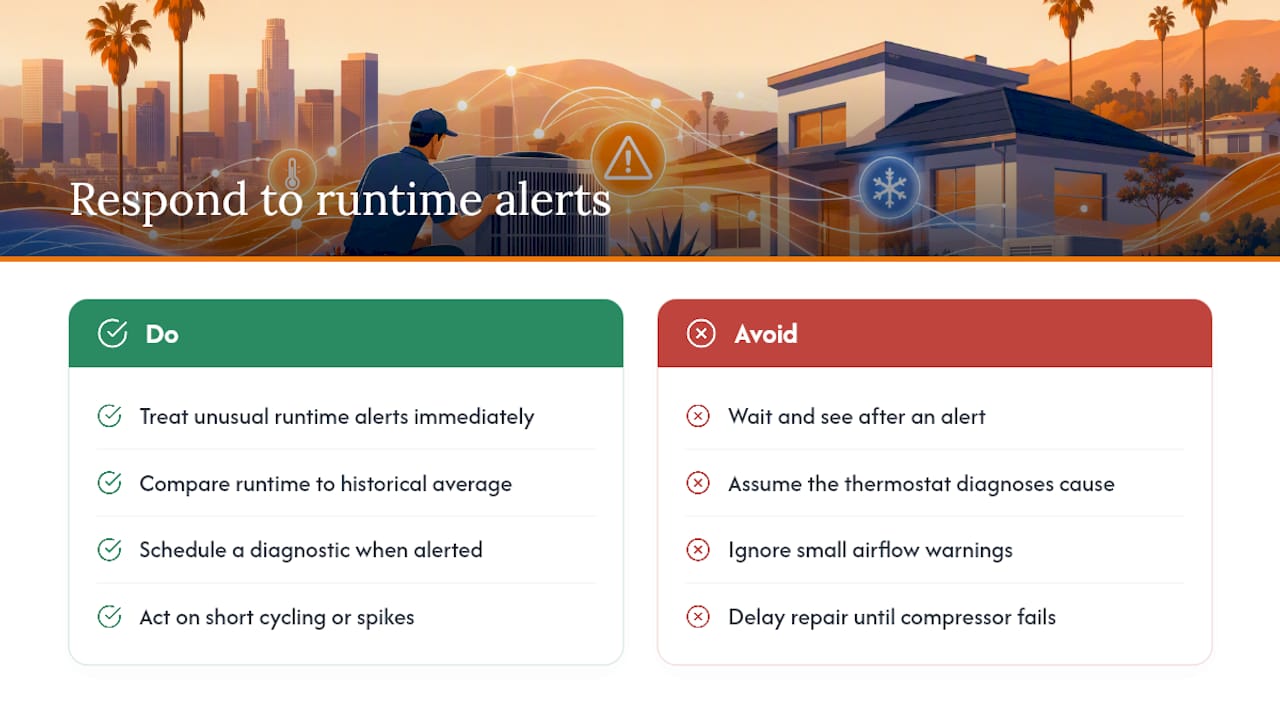
A smart thermostat isn’t a diagnostic tool in the way a technician’s gauges are, but it does track patterns your old thermostat never could. If your furnace suddenly runs 30% longer than its historical average, that’s often a sign of an airflow restriction or a refrigerant issue, not just cold weather. Utilities have flagged this exact runtime pattern as an early warning sign worth investigating before it turns into a breakdown.
Frequent short cycling, unusually long runtimes, or a spike in energy use compared to last month are all signals worth acting on. What a thermostat cannot tell you is why. It can’t diagnose a failing capacitor or a refrigerant leak. It just tells you something changed.
Pro Tip: Treat any unusual runtime alert as your cue to schedule a diagnostic, not a reason to wait it out. A small airflow problem caught early is a lot cheaper than the compressor failure it can cause six months later.
Choosing the Right Upgrade for Your System
Not every thermostat fits every HVAC setup, and matching the two correctly is what actually determines whether you get the savings ranges above.
- Check for a C‑wire first. Many older homes lack one, and running a new C‑wire typically adds $150 to $300 to your install cost. Power extender kits are a cheaper workaround, though they come with their own trade-offs on reliability.
- Match the thermostat to your equipment. Single-stage furnaces and AC units work fine with most mid-range Wi‑Fi thermostats. Multi-stage and modulating systems need a model built to handle staged heating and cooling logic correctly.
- Heat pumps need special attention. Look for a thermostat that explicitly supports heat-pump staging and auxiliary heat logic, or the system can end up relying on expensive backup heat more than it should.
- Zoned systems benefit from remote sensors. If your home has hot and cold rooms, sensor placement matters as much as the thermostat model itself.
- Set your budget by system complexity. For most single-stage homes, a mid-range Wi‑Fi model delivers most of the available savings. Save the premium AI-learning thermostats for zoned or modulating systems where the extra logic actually gets used.
- Check rebates before buying. Local HVAC rebates and tax credits can offset a meaningful chunk of the device and install cost, and pairing the upgrade with a tune-up often qualifies for additional utility incentives.
Installation Checklist: Avoid the Mistakes That Cause Callbacks
Most installation failures trace back to three things: bad wiring, weak Wi‑Fi, and skipped firmware updates. A few minutes of prep avoids nearly all of them.
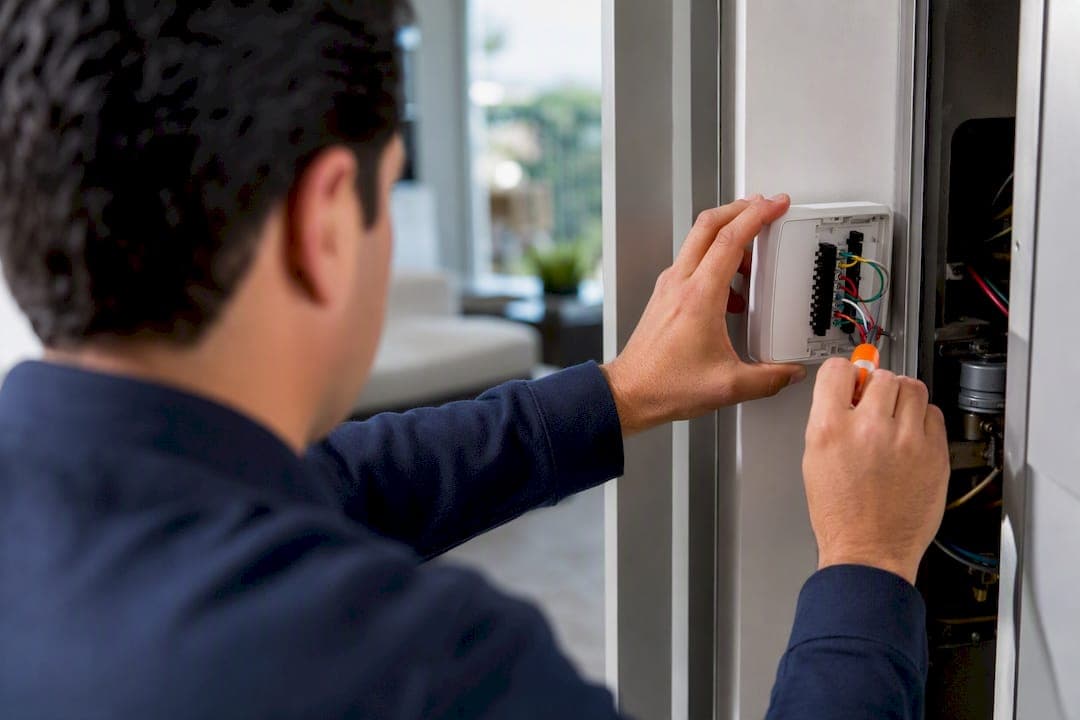
- Photograph your existing wiring before you disconnect anything, and turn off the breaker first.
- Test Wi‑Fi signal strength at the thermostat’s exact location, not just from across the room.
- Confirm your thermostat model explicitly supports your equipment type, especially for heat pumps.
- Update firmware before finishing setup. Skipping this step is a common cause of connectivity glitches down the line.
- Avoid mounting near vents, in direct sunlight, or on an exterior wall, since bad placement skews every reading the thermostat takes.
If your wiring looks unfamiliar, your panel is older, or you’re dealing with a heat pump’s auxiliary heat setup, that’s the point where hiring a professional is the safer call.
What We See in Real Los Angeles Homes
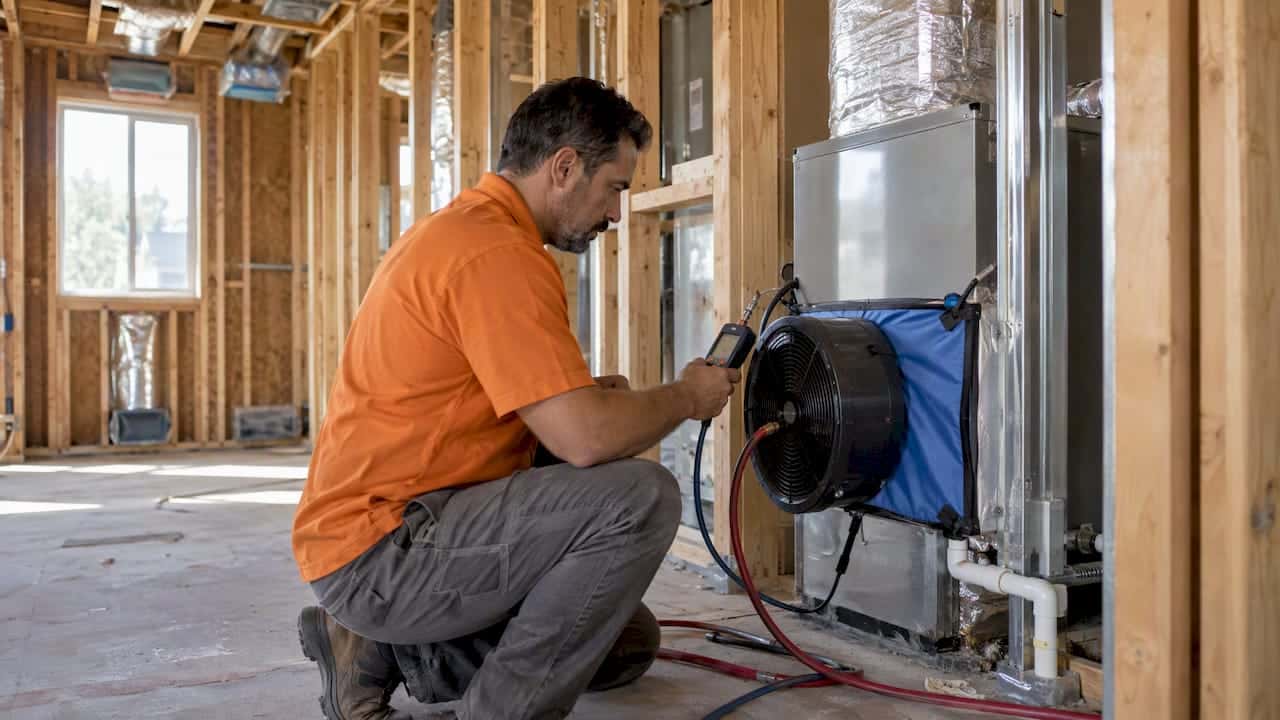
Most callback visits we make trace back to the same two issues: missing C‑wires and heat pumps paired with a thermostat that doesn’t handle auxiliary heat logic correctly. Pairing a thermostat upgrade with a heat pump tune-up or maintenance visit catches both problems at once instead of two separate trips. Professional HVAC service providers often offer flat-rate diagnostics and same-day appointments, helping homeowners receive transparent pricing without surprises.
What Homeowners Get Wrong About Thermostat Upgrades
Most advice on this topic treats the thermostat as the whole story. It isn’t. The thermostat is the interface. The equipment behind the wall does the actual work, and no amount of learning algorithms fixes a heat pump running the wrong auxiliary heat settings or a furnace short cycling because of a dirty filter.
The conventional wisdom oversells the device and undersells the installation. A $250 smart thermostat wired incorrectly, or installed without confirming heat pump compatibility, can end up costing more in wasted auxiliary heat than it ever saves. That’s the piece most buying guides skip entirely.
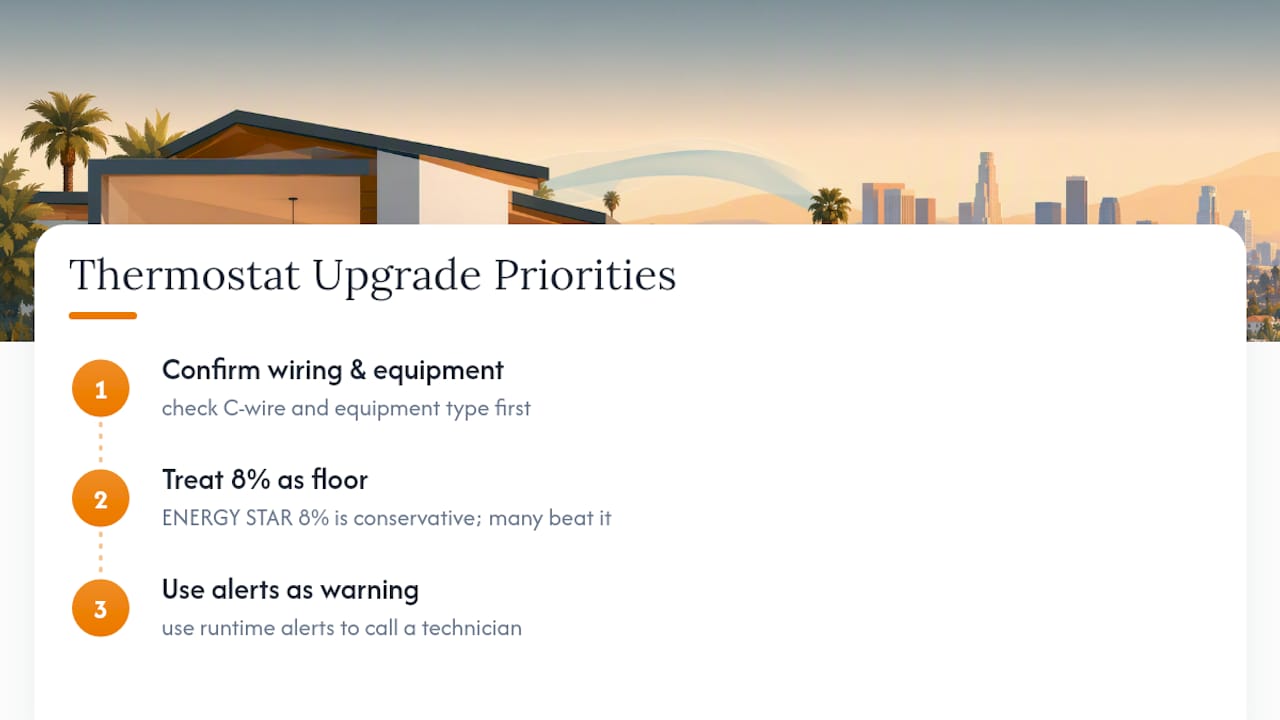
What I’d prioritize first: confirm your C‑wire situation and your equipment type before you fall in love with a specific model’s app or design. Second, don’t treat the ENERGY STAR 8% figure as a ceiling. It’s a conservative floor built from field data, and most well-matched installs beat it. Third, use the thermostat’s runtime alerts as an early-warning system, not a diagnosis. When something looks off, that’s a signal to call someone who can actually look at the equipment, not a reason to keep watching the app.
— Leo
Get a Professional Thermostat Install That Actually Matches Your Equipment
The savings ranges above only hold up when the thermostat is wired correctly and matched to your specific system, which is exactly where most DIY installs go wrong on heat pumps and zoned setups. A professional HVAC service can handle compatibility checks, C‑wire installation, and sensor placement in one visit, ensuring your new thermostat operates correctly with your equipment.
Specialists in heat pumps, mini splits, and commercial VRF systems are important for thermostat upgrades that involve auxiliary heat logic or multi-zone staging, to avoid common installation issues. Many HVAC service providers offer flat-rate pricing for diagnostics with no surprise fees upon arrival, and provide same-day appointments as a standard option. Before you buy a thermostat, check what rebates apply to your install, since combining a rebate with a professional setup is usually the fastest path to payback. Book a smart thermostat installation or start with a service call to get your wiring and equipment checked first.
Where to Verify These Numbers Yourself
- ENERGY STAR’s smart thermostat FAQ explains certification criteria and rebate eligibility.
- DOE/NREL benchmarking research covers field-measurement methodology in detail.
- Check your local utility’s rebate page before purchasing any model.
Sources
- Smart Thermostat Guide: AI Heating Controls & Costs (2025) | HVACDatabase
- Benchmarking thermostats / NREL (DOE) peer review
- Nest energy savings white paper summary (PUC filing)
- Smart Thermostat Installation Mistakes (2026): 8 Costly Errors That Can Ruin Your Setup
FAQ
Does Upgrading Your Thermostat Actually Help?
Yes. ENERGY STAR field data shows certified smart thermostats save an average of about 8% on heating and cooling costs, and many homeowners see more depending on their equipment and climate. The bigger gain often comes from automation catching savings a programmable thermostat never captured because nobody set the schedule.
Is It Worth Upgrading to a Smart Thermostat?
For most homeowners, yes, especially if your current thermostat is a basic dial or an unprogrammed digital model. Combine ENERGY STAR’s verified 8% floor with rebate offsets and a two to four year payback window, and the math works for most households with typical HVAC spend.
Is a 180 or 195 Thermostat Setting Better?
This question usually refers to specific equipment settings like fan cycle timers or heat anticipators rather than a temperature setpoint, and the right value depends entirely on your specific furnace or thermostat model’s specifications. Check your equipment’s manual or ask a technician during a service call rather than guessing, since the wrong setting can cause short cycling.
How Often Should I Upgrade My Thermostat?
There’s no fixed replacement schedule, but a thermostat older than 10 years, one that struggles to hold temperature, or one incompatible with a heat pump upgrade are all signs it’s time. If you’re unsure whether your current unit qualifies, this guide on replacement signs walks through the specific triggers worth watching for.
Recommended
Leo, Propietario y Técnico Principal en LC Heating & Air
Leo dirige LC Heating & Air como propietario-operador y tiene la licencia C-20 HVAC #1073586 de California. Sus guías se enfocan en diagnósticos prácticos, decisiones de reparación seguras y consejos claros para propietarios de Los Ángeles.