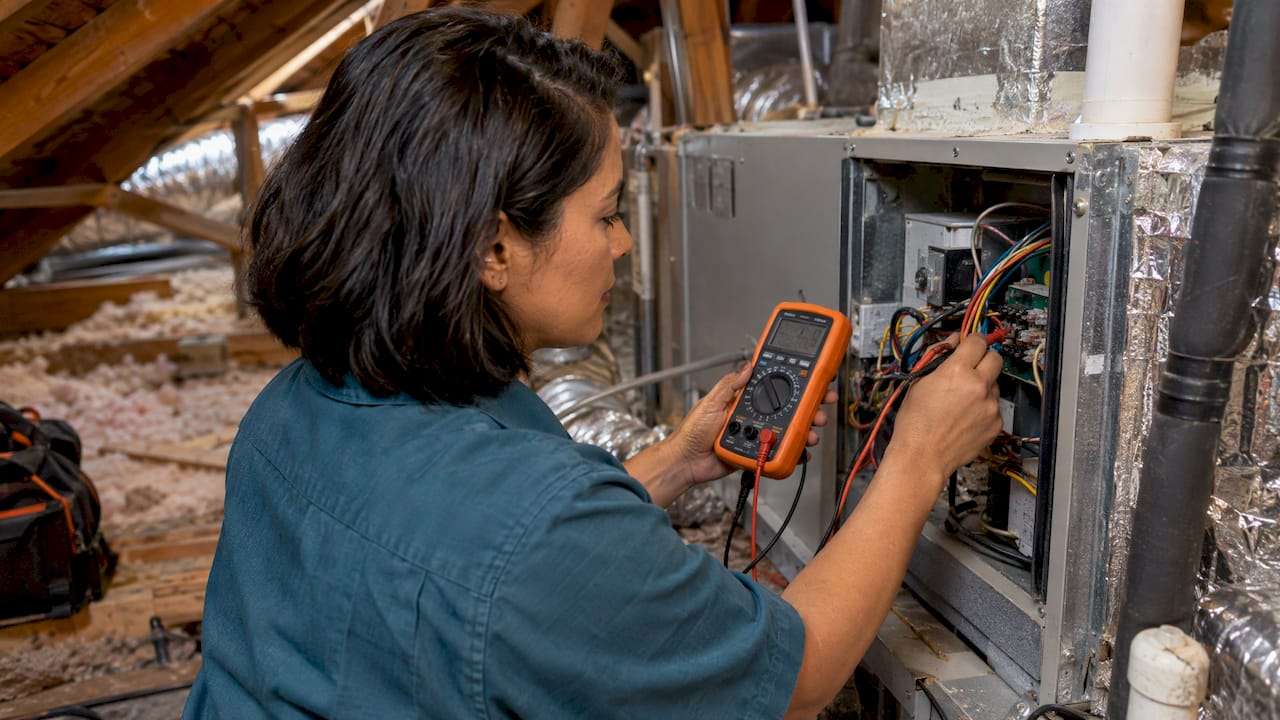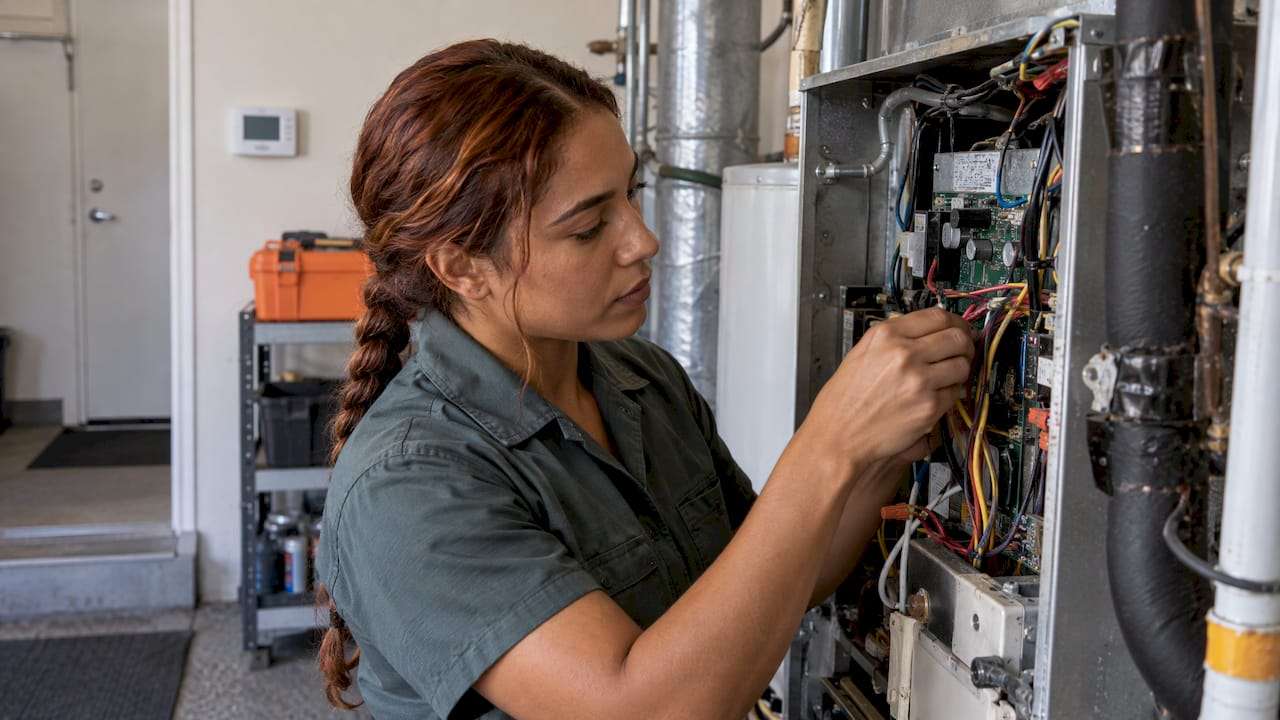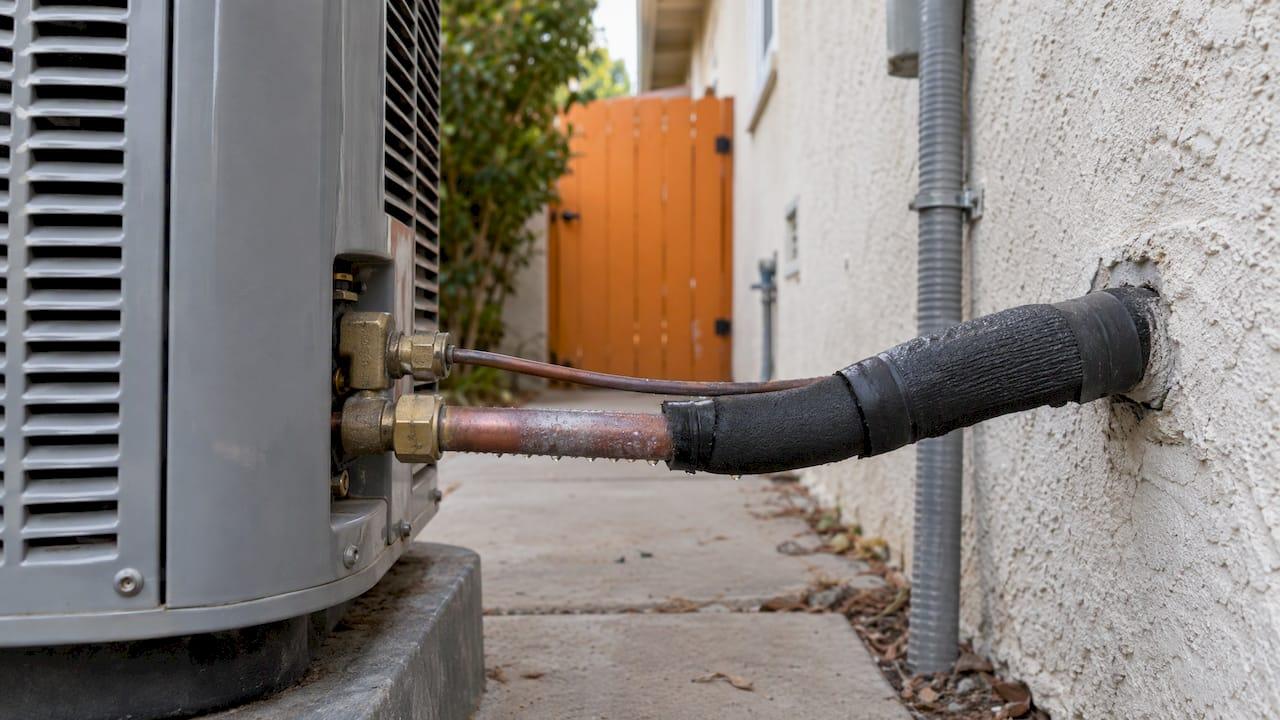
- TL;DR
- What “sweating” actually means on a refrigerant line
- Which line should sweat: suction or liquid?
- Normal sweating versus a problem: a quick comparison
- The most common causes of a refrigerant line that sweats too much
- Heat pumps, mini splits, and VRF: what changes
- What you can safely check yourself
- Fixing the insulation the right way
- When to call a technician
- Our perspective on sweating refrigerant lines
- Get it checked by a local technician
- How to keep your lines dry year after year
- FAQ
- Sources
- Recommended

A little moisture on the big, cold copper line of your air conditioner or heat pump is usually normal on a humid day. Heavy dripping, ice, a wet ceiling, or a sweating small (liquid) line is not. Those signs point to missing insulation, restricted airflow, or a refrigerant problem, and they are worth fixing before they damage your drywall or your compressor.
This guide explains why refrigerant lines sweat, which line should and shouldn’t, how to tell harmless condensation from a warning sign, what you can safely check yourself, and when to call a licensed technician. We cover central AC, heat pumps, mini splits, and VRF systems, because they don’t all behave the same way.
TL;DR
- Condensation forms when a line’s surface is colder than the dew point of the surrounding air. A light film on the large suction line in humid weather is usually fine.
- The large suction line is normally insulated. The small liquid line on a typical central system is normally bare and should not be cold and dripping.
- Torn, missing, or sun-damaged insulation is the most common reason a line drips. A dirty filter or blocked airflow is the next most common.
- Ice, heavy dripping, or a cold, sweating liquid line means it’s time for a technician. Never add refrigerant yourself.
- We diagnose first and quote flat-rate repairs, so you know the cost before work starts. Our service call starts from $125.
What “sweating” actually means on a refrigerant line
Your air conditioner or heat pump moves heat using refrigerant that runs through two copper lines between the indoor and outdoor units. When the system cools your home, refrigerant inside one of those lines gets very cold. Warm, humid air touching that cold surface drops its moisture as liquid water, the same way a glass of iced tea “sweats” on a kitchen counter.
The physics is simple. Condensation forms on a refrigerant line when the line’s temperature is below the dew point of the surrounding air. The colder the line and the more humid the air around it, the more water you see. Insulation exists to keep that cold surface away from warm air.
That is also why the same line can look dry in one house and wet in another. In dry-air locations a suction line may never look sweaty at all, while a humid garage, crawlspace, or attic can make it drip. In Greater Los Angeles, a coastal marine-layer morning, a closed-up attic, and a dry Valley afternoon can all produce very different results on the same equipment.
Which line should sweat: suction or liquid?
Your system has two lines, and they behave differently.
| Line | Size | What it carries | Normally insulated? | Should it sweat? |
|---|---|---|---|---|
| Suction (vapor, return) line | Larger | Cold refrigerant vapor heading back to the outdoor unit | Yes | A light film on bare spots in humid air can be normal. Dripping or ice is not. |
| Liquid line | Smaller | Warmer liquid refrigerant heading to the indoor unit | Usually not, on central systems | No. It should feel warm or at least room-temperature. |
This matches industry guidance: the larger suction line is typically insulated to prevent sweating and dripping inside, while the smaller liquid line is typically left uninsulated. Piping guidelines from refrigerant manufacturers say the same thing in engineering terms: suction lines must minimize sweating from condensation and prevent unwanted heat gain.
The insulation has two jobs. It keeps cold refrigerant (around 40 degrees Fahrenheit) from absorbing outdoor heat, and it acts as a vapor barrier so moisture doesn’t sweat onto nearby wood or drywall.
Why a sweating liquid line is a red flag
The search results for this topic are full of homeowners asking why their liquid line is cold and sweating. On a standard split system, the liquid line should not be cold. When it is, something is usually restricting refrigerant flow: a partially clogged filter drier, a kinked line, or a partly closed valve. Technicians read a cold spot or frost on the liquid line as a sign that refrigerant is expanding where it shouldn’t, so the temperature drops at the restriction.
This is not a do-it-yourself diagnosis. Confirming a restriction takes gauges, temperature readings, and refrigerant-handling certification. If your liquid line is cold, dripping, or frosted, shut the system off and call us.
Normal sweating versus a problem: a quick comparison
| What you see | Likely meaning | What to do |
|---|---|---|
| Light dampness on the large line, humid day, system running | Normal condensation | Nothing. Check that insulation is intact. |
| Beads of water on a bare section of the large line | Gap, crack, or missing insulation | Replace or re-wrap the insulation (see below). |
| Steady dripping from the line or insulation | Damaged insulation or excess moisture load | Inspect; call a technician if the insulation is intact. |
| Ice or frost on the lines or indoor coil | Low airflow or low refrigerant | Turn the system off, let it thaw, check the filter, call a technician if it returns. |
| Cold, sweating liquid line | Possible restriction in the refrigerant circuit | Call a technician. |
| Oily residue on a line or fitting | Possible refrigerant leak | Call a technician. |
| Water stains on ceiling or walls near the line | Ongoing dripping | Stop the leak source and call a technician. |
A useful rule from published guidance: a light layer of moisture in peak humidity is probably fine, but excessive dripping, ice, pooling water near the air handler, or moisture damage on walls or ceilings indicates a problem.
The most common causes of a refrigerant line that sweats too much
1. Missing, torn, or worn insulation
This is the first thing we look at. Missing insulation lets the large suction line sweat and drip water inside the house. The same source lists the usual reasons the foam is gone: it was never installed, animals chewed it, service people pulled it away, or sunlight wore it down.
Even a small flaw matters. A small tear or gap can expose cold copper to warm, humid air, and the moisture then drips onto ceilings or drywall. In older Los Angeles homes with attic or crawlspace line runs, we often find foam that has crumbled from decades of heat or been left uncovered at a wall penetration.

The Building America Solution Center, a U.S. Department of Energy resource, is direct on this: insulation prevents condensation, and cracked or missing exterior insulation should be replaced. It also recommends examining the condition of the insulation annually for wear, cracks, or damage.
2. A dirty filter or restricted airflow
A clogged filter, blocked return, or closed registers reduce the warm air passing over the indoor coil. The coil and lines then run colder than designed. Restricted airflow can keep refrigerant and line temperatures low enough for extra condensation, and a dirty filter can let the coil get cold enough to freeze, which then affects the lines.
If you see ice, our guides on the signs your AC unit is freezing and the common causes of AC freezing up walk through what to look for.
3. Low refrigerant
Low refrigerant can make sweating worse, but it is often blamed when it isn’t the cause. A system that is low on refrigerant has a leak somewhere. A proper recharge adds the correct refrigerant type and amount, usually after the leak is repaired, using specialized gauges and safety protocols. Carrier also explains that low refrigerant typically lets evaporator temperatures drop enough for moisture to freeze on the coil or lines.
One clue of a leak: oil residue on a line usually points to a leak, often at a connection, because oil travels with the refrigerant and escaping refrigerant leaves little other trace. Technicians confirm it with leak-detection fluid or an electronic leak detector.
If you suspect a leak, read our breakdown of refrigerant leak repair rules and costs and why an AC loses refrigerant.
4. A restriction in the liquid line
As covered above, a cold, sweating liquid line usually signals a restriction such as a clogged drier, a kink, or a partly closed service valve. This one needs a technician with gauges.
5. Poor line routing or high-humidity spaces
Lines running through a damp crawlspace, an unvented attic, or a tight wall cavity sweat more because the air around them holds more moisture. Good insulation and a sealed vapor barrier matter even more in these spaces.
Heat pumps, mini splits, and VRF: what changes
Most articles on this subject are written for traditional central air conditioners. If you have a heat pump, a ductless mini split, or a commercial VRF system, the rules shift a little.
Central systems with an indoor expansion valve. Typically only the thicker line needs insulation. This is the layout most of the sweating advice online assumes.
Mini splits with an outdoor expansion valve. Many ductless heat pumps are different. According to the same Department of Energy resource, when the expansion valve is in the outdoor unit, both the thick and the narrow pipe need insulation wherever the narrow pipe runs through walls, crawlspaces, or attics. So on a mini split, a sweating small line is not automatically a restriction. It can simply be a bare pipe that was never wrapped. Look at how the installer insulated both lines before drawing conclusions. The mini split guidance from LineSets explains why mini split line sets sweat in more detail.
Heat pumps in heating mode. A heat pump reverses the flow of refrigerant, so the line that is cold in summer behaves differently in winter. Outdoor frost and defrost cycles are normal in cool, damp weather, but heavy ice buildup, or ice on the line itself that doesn’t clear, deserves a service visit.
VRF systems. VRF is an enhanced ductless multi-split approach with multiple indoor units and refrigerant piping and controls that allow heat recovery or simultaneous heating and cooling. More piping, more indoor units, and often long runs through ceilings mean more places where insulation can fail and drip onto tenants, inventory, or finished ceilings. In commercial buildings, a damaged or poorly sealed insulation joint can cause costly water damage. Commercial VRF work is one of our specialties.
If your mini split is running but not cooling well, see our 5-minute checklist for a mini split that isn’t cooling.
What you can safely check yourself
You don’t need tools for the first round. Do these in order:
- Look at the filter. Replace it if it’s dirty. A clean filter is the cheapest fix there is.
- Check the registers and returns. Make sure furniture, rugs, or closed vents aren’t blocking airflow.
- Inspect the insulation on the large line. Look at the part you can reach, outdoors near the unit and indoors near the air handler. You’re looking for gaps, cracks, separated seams, flattened spots, or bare copper.
- Look for ice. If you see ice on the lines or the indoor coil, turn the AC off at the thermostat and run just the fan so the ice melts. Our 20 to 30 minute test for a freezing AC and our diagnostic guide to ice buildup explain the steps.
- Check around the drain. Pooling water near the air handler can be condensate drain trouble rather than line sweating.
- Note when it happens. Sweating only on humid afternoons points to insulation. Sweating with weak airflow points to the filter, coil, or refrigerant charge.
The published guidance agrees with this order: homeowners can check and replace the air filter and inspect the suction-line insulation for gaps, cracks, or separated sections, and if the insulation is intact and the filter is clean but heavy moisture or ice persists, it’s time for a technician.
What not to do
- Don’t add refrigerant. It requires proper certifications and equipment, and adding it to a system with a leak only hides the problem for a while.
- Don’t chip at ice with a screwdriver. Copper lines and coil fins puncture easily.
- Don’t wrap damp lines in tape or foam and call it done. Trapping moisture against the copper can make the problem worse and hide the real cause.
- Don’t keep running a system that is dripping onto a ceiling. Turn it off and call.
Fixing the insulation the right way
If your inspection finds damaged foam on the large suction line, the repair is usually straightforward, but the details matter.
- Use closed-cell pipe insulation sized for the line, with the seams sealed, and not general-purpose foam.
- Dry the line first. Insulation applied over a wet line traps moisture against the copper.
- Protect outdoor runs. Sunlight breaks foam down, so exposed runs need a UV-resistant cover or jacket.
- Seal wall and attic penetrations so humid air can’t reach the cold line from inside the wall cavity.
- Do both lines on mini splits where the narrow pipe runs through unconditioned space.
When we replace insulation, we also check why it failed. If the lines are sweating because of airflow, a restricted drier, or a refrigerant leak, new foam only hides the symptom. A flat-rate repair that fixes the cause is cheaper than wrapping the line twice.
When to call a technician
Call us if any of these apply:
- Ice returns after you’ve changed the filter and let the system thaw.
- The liquid line is cold, frosted, or dripping.
- You see oily residue on a fitting or line.
- The insulation is intact and the filter is clean, but moisture is still heavy.
- Water is staining a ceiling or wall near the line set or air handler.
- The system runs but cools poorly, or short cycles.
- You have a mini split, heat pump, or VRF system and the sweating is on both lines, or in a place you can’t reach.
Our service call starts from $125, and we use flat-rate pricing for repairs, so you hear the price before we start. We aim for honest diagnostics: if the answer is a $10 filter or a strip of insulation, we’ll tell you, and we don’t push replacement when a repair will do.
Our perspective on sweating refrigerant lines
We see this call in Hollywood bungalows, Valley ranch homes, Pasadena craftsmans, and commercial buildings with VRF. The pattern is the same: someone notices water, assumes the worst, and either ignores it or gets told they need a new system.
Most sweating lines we see aren’t a death sentence for the equipment. They’re a symptom, and a good diagnostic finds the cause: failed foam, a dirty coil, a restricted drier, a small leak at a flare fitting. What matters is finding it before the water reaches your ceiling or the compressor starts to suffer.
Heat pumps and mini splits deserve special care. Their line sets are often longer, run through walls and attics, and may need both lines insulated. A technician who treats a mini split like a basic central AC will miss things. That is why heat pumps, mini splits, and commercial VRF are where we focus our expertise, and why we explain what we find before asking you to approve anything.
If you’re deciding between repair and replacement, ask for the diagnosis in writing and the repair price up front. A good contractor will give you both.
Leo
Get it checked by a local technician
If your refrigerant line is dripping, icing, or sweating in the wrong place, we can find out why the same day in most cases. We repair and install central AC, heat pumps, ductless mini splits, and commercial VRF systems across Greater Los Angeles, including Hollywood, the Valley, Pasadena, Beverly Hills, Bel Air, and Brentwood.

Here is how our pricing works, as published on our site:
- Service call: from $125, one-off.
- Maintenance plan: $180 to $250 per year, which includes the kind of yearly insulation and coil inspection that catches sweating problems early.
- Heat pump installation: $5,500 to $12,000, one-off.
- Mini split installation: $3,500 to $20,000, one-off, depending on the number of zones and the home.
Installation prices and financing options are on our financing page. For repairs on AC, heat pumps, and mini splits, see our repair and service list. If you’re considering a new system, our heat pump installation page explains what to expect, and we can talk you through current rebates and California requirements. Call us at (323) 970-3113.
How to keep your lines dry year after year
Prevention is mostly routine.
- Change or clean the filter on schedule. Monthly checks in summer are a good habit. Dirty filters are a leading trigger for icing and heavy condensation.
- Inspect the line insulation once a year. The Department of Energy guidance linked above recommends it. Do it in spring, before the cooling season, while you can see the whole run.
- Keep the coil clean. A dirty evaporator coil restricts heat transfer. Our guide to AC evaporator cleaners explains what’s safe to use and what to leave to a technician.
- Know the freeze-up playbook. How to prevent your AC freezing up covers the habits that matter most.
- Book a yearly tune-up. A technician can check the charge, the drier, the drain, and the line set in one visit.
- Keep the area around the outdoor unit clear of leaves, debris, and anything that could damage exposed lines.
If your home is older or has had work done in the attic or crawlspace, ask for the line set to be checked at the next visit. Foam is easy to disturb during other trades’ work, and no one tells you it happened.
FAQ
Is it normal for a refrigerant line to sweat?
Yes, sometimes. A light film on the large suction line during humid weather is usually fine, especially on a short bare stretch. Dripping, ice, pooling water, or stains on nearby walls and ceilings are not normal and point to damaged insulation, airflow trouble, or a refrigerant problem.
Why is my liquid line cold and sweating?
The small liquid line should not be cold on a typical central system. A cold or frosted liquid line often suggests a restriction, such as a clogged filter drier, a kink, or a partly closed valve. Mini splits with an outdoor expansion valve are an exception, since both of their lines can sweat if they aren’t insulated. Either way, have a technician check it.
Does sweating mean my AC is low on refrigerant?
Not necessarily. Missing insulation and poor airflow are more common causes. Low refrigerant does cause freezing and heavy condensation, and it always means there is a leak that must be found and repaired before the system is recharged. Only a certified technician should handle refrigerant.
Can I just wrap the sweating line in foam?
Only if the cause is simply damaged insulation. Dry the line, use properly sized closed-cell insulation, and seal the seams. If the line is sweating because of a dirty coil, restricted airflow, or a leak, new foam won’t fix it and can hide the evidence.
Do heat pumps and mini splits sweat differently than central AC?
Yes. Many mini splits need insulation on both lines, and heat pumps run in both directions, so a line can be cold in summer and defrosting in winter. Commercial VRF systems have long piping runs with many joints to inspect. Each type needs a technician who knows the equipment.
Sources
- Hey Ed, should the suction line of an operating air conditioner be sweating? (ACCA)
- Why Are My AC Lines Sweating? (Armadillo)
- Condensation on AC Lines? Here’s What to Do (HVAC Training Shop)
- Air Conditioner Refrigerant Lines (American Society of Home Inspectors)
- O-RPH Opteon Refrigerant Piping Handbook
- Guide to HVAC Refrigerant Line Insulation (MRCOOL)
- Why Mini Split Line Sets Sweat (LineSets.com)
- Look at Refrigerant Line Set Insulation (Building America Solution Center)
- What is a Home AC Recharge? (Carrier)
- Variable Refrigerant Flow: An Emerging Air Conditioner and Heat Pump Technology (ACEEE)
Recommended
Leo, Propietario y Técnico Principal en LC Heating & Air
Leo dirige LC Heating & Air como propietario-operador y tiene la licencia C-20 HVAC #1073586 de California. Sus guías se enfocan en diagnósticos prácticos, decisiones de reparación seguras y consejos claros para propietarios de Los Ángeles.