- What Is an AC Refrigerant Leak Repair, and Why Does Low Charge Always Mean One?
- Signs of an AC Refrigerant Leak Worth Checking Now
- Why Do AC Refrigerant Leaks Happen in the First Place?
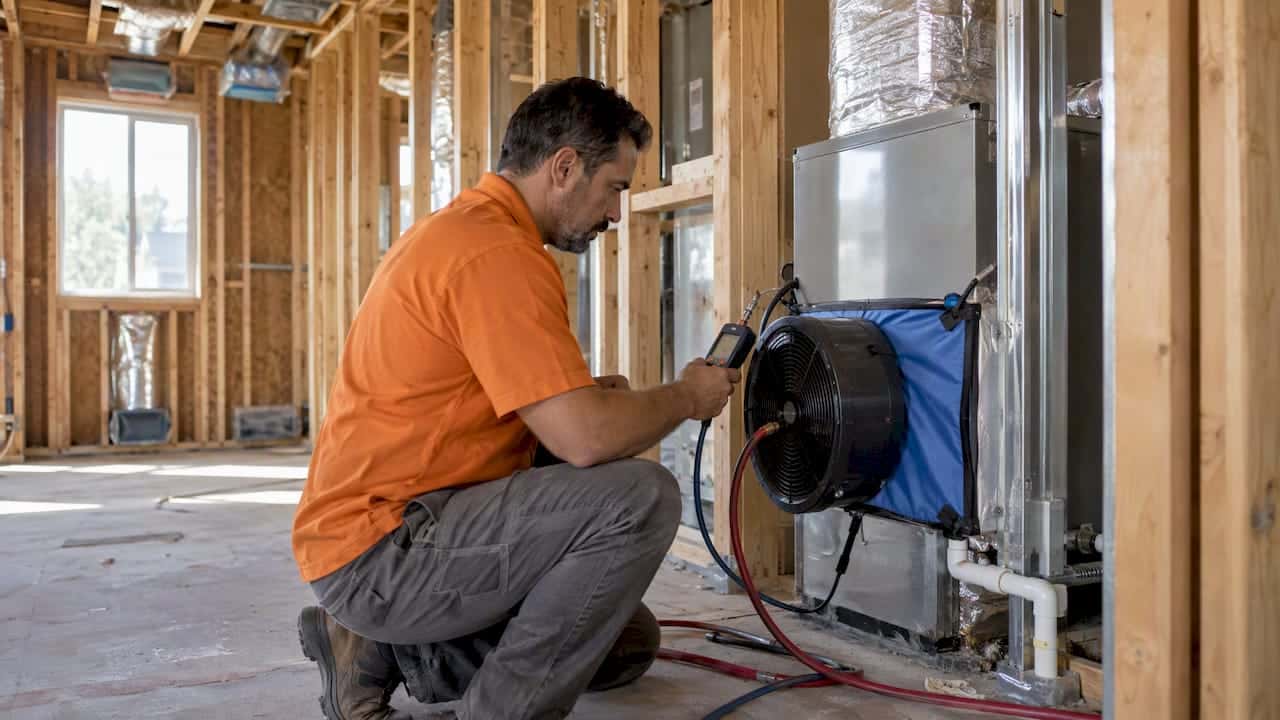
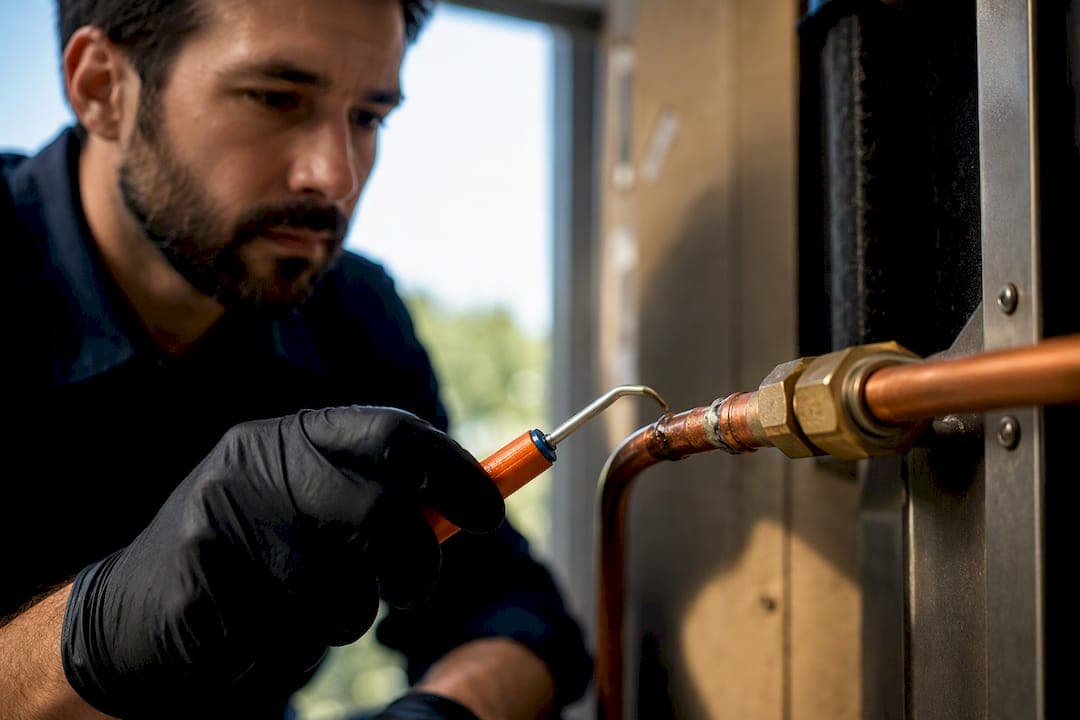
- How Do Technicians Find and Confirm a Refrigerant Leak?
- What Repair Methods Actually Fix a Refrigerant Leak?
- How Are Refrigerant Type and 2026 Regulations Changing Repair Costs?
- What Does AC Refrigerant Leak Repair Actually Cost?
- Repair or Replace: How Do You Decide?
- What Should You Ask Before Hiring a Technician?
- LC Heating and Air Conditioning’s Field-Tested Approach
- An Insider’s Take on Repair Versus Replacement
- Ready for an Honest Diagnosis?
- Primary Sources and Further Reading
- Sources
- FAQ
- Recommended
Most household AC refrigerant leaks can be fixed. The real question is whether repair still makes financial sense, and the industry’s go-to test is simple: if the repair costs more than 50% of what a new system would cost, replacement usually wins. Refrigerant type and the 2026 shift away from R-410A add another wrinkle, since price and availability now factor into that math too.
TL;DR:
- Repair costs generally range from $200 to $1,500, but replacing a coil or fixing multiple leaks can push expenses above $2,800.
- A leak in an evaporator coil caused by formicary corrosion is the most common cause, especially in systems exposed to household chemicals and fumes.
- Technicians use nitrogen pressure tests with soap bubbles, UV dye, or ultrasonic detectors to locate leaks, always verifying with a deep vacuum before recharging.
- If repair costs exceed half the price of a new system or the unit is over 12 years old, replacement often yields better long-term value.
- Proper leak repair includes refrigerant recovery, leak sealing, nitrogen pressure test, vacuum, and precise refrigerant recharge, with documentation of all steps.
What Is an AC Refrigerant Leak Repair, and Why Does Low Charge Always Mean One?
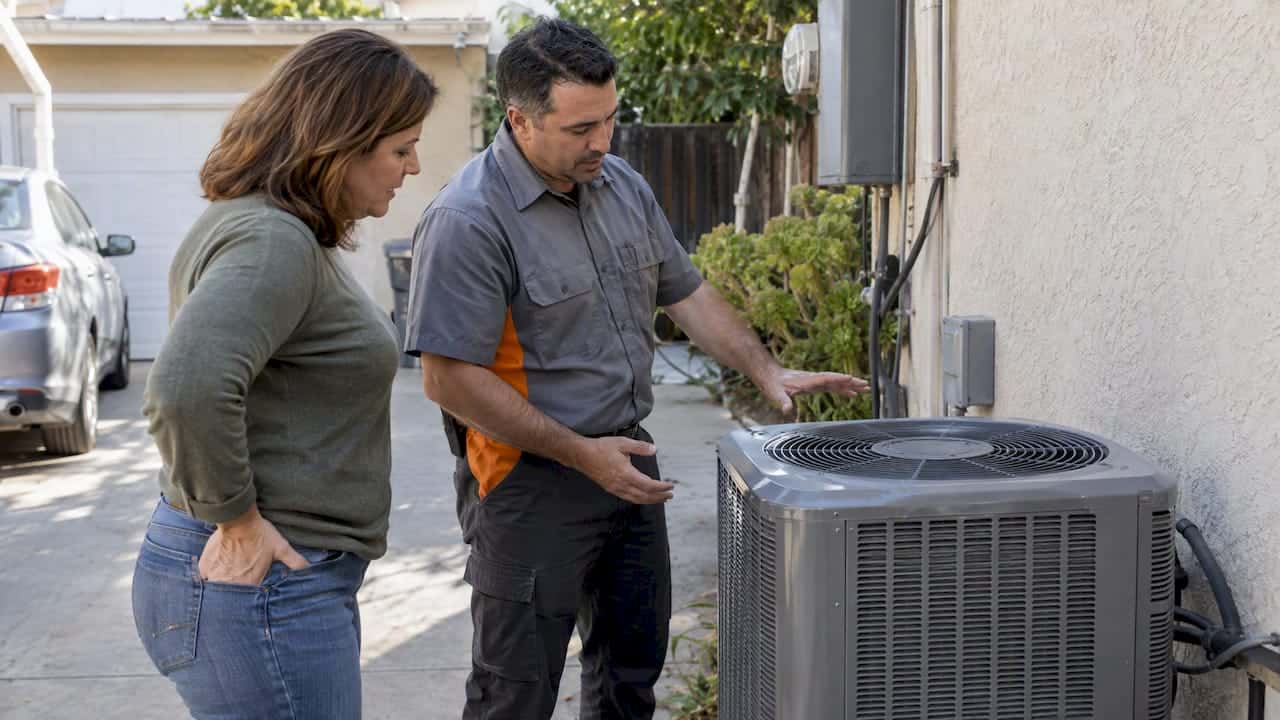
Refrigerant runs through a sealed loop, cycling between your indoor coil, outdoor condenser, and the line set connecting them. It doesn’t get “used up” the way gasoline does. If your system is low on charge, refrigerant escaped somewhere, and a proper ac refrigerant leak repair starts with finding that exact spot rather than guessing.
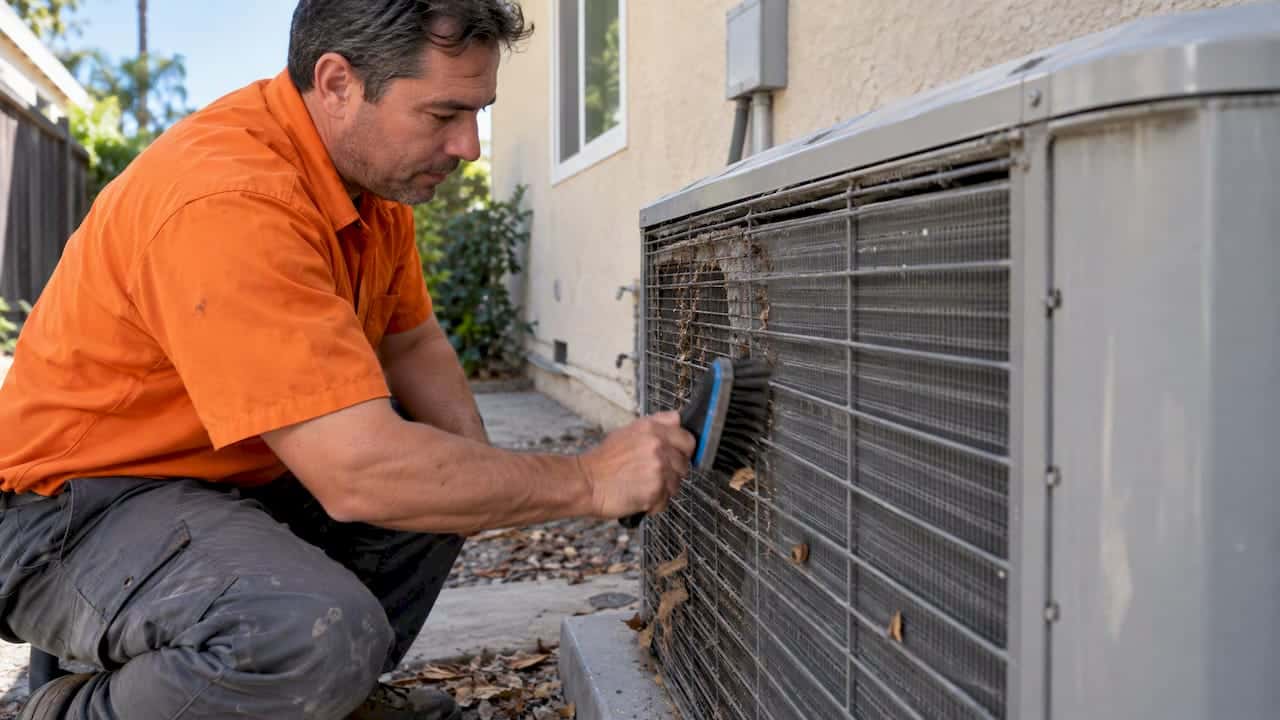
The usual failure points are the evaporator coil, condenser coil, line set connections, and service valves. Any of these can develop a pinhole leak from age, vibration, or corrosion.
One legal detail matters here: the EPA’s Section 608 rules require certified technicians to handle refrigerant recovery and disposal. Anyone offering to “just add some Freon” without that certification is cutting corners you’ll pay for later, sometimes in fines, always in wasted refrigerant.
Signs of an AC Refrigerant Leak Worth Checking Now
Your air conditioner rarely fails without warning. Refrigerant loss shows up gradually, and catching it early keeps repair costs down and protects your compressor from running dry.
Watch for these signs:
- Vents blowing lukewarm or barely cool air, even with the thermostat set low
- Ice or frost building up on the indoor evaporator coil or the copper line set outside
- Higher indoor humidity than usual, since a low charge reduces dehumidification
- An oily residue near fittings, valves, or the coil itself (refrigerant oil leaves a slick, greasy trace)
- Energy bills climbing while comfort actually gets worse
A basic delta-T check (the temperature difference between return air and supply air) can hint at trouble if it’s below a certain threshold indicating reduced cooling performance, but frozen coils or hissing sounds near the lines mean call a technician now rather than waiting for the next scheduled tune-up. Everything else can typically wait for a normal service appointment.
Why Do AC Refrigerant Leaks Happen in the First Place?
Formicary corrosion is the sneaky one. It happens when household chemicals, cleaning fumes, or certain building materials release organic acids that eat pinhole leaks into copper coils, often the indoor evaporator. You won’t see rust. You’ll just see a slow, mysterious refrigerant loss with no obvious cause.
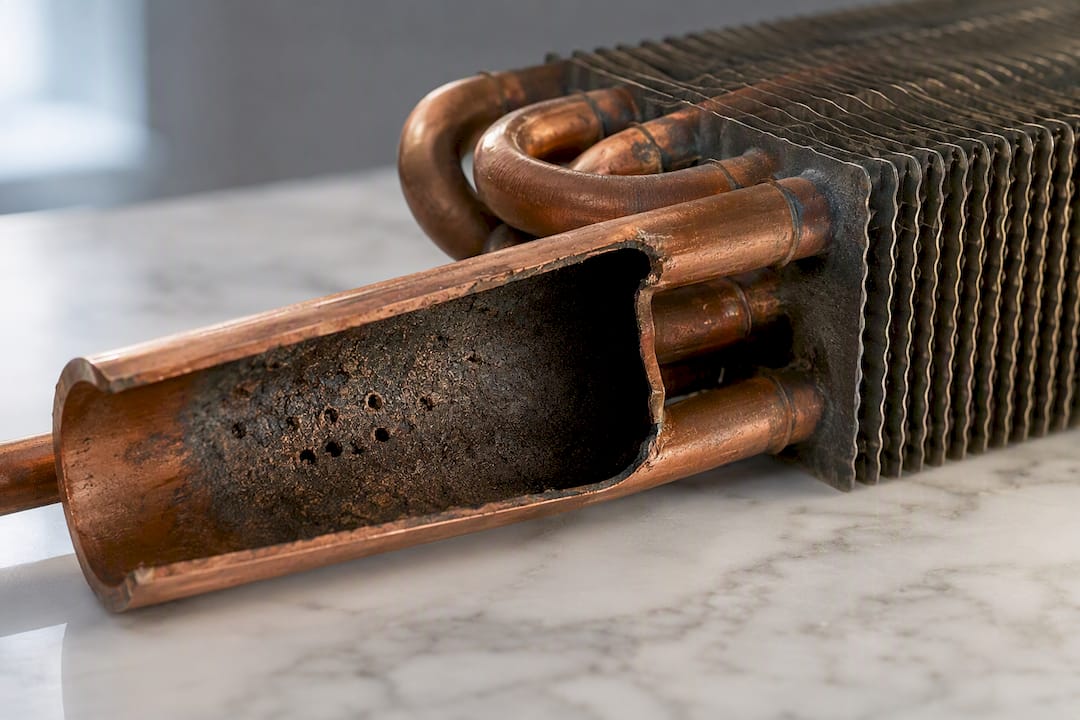
Beyond corrosion, vibration loosens fittings over years of operation, factory brazing joints degrade, rubber seals dry out, and manufacturing defects occasionally slip through. Age compounds all of it. A coil that’s fought through 12 Los Angeles summers has a lot more wear than one installed two years ago.
Your maintenance history and indoor air quality both shift the odds. A well-maintained system in a home without heavy chemical use tends to hold a repair longer than one that’s been neglected or exposed to corrosive fumes.
How Do Technicians Find and Confirm a Refrigerant Leak?
Not every detection method fits every leak. A slow seasonal leak needs a different approach than a fast one draining a system in weeks, and mixing up the tools wastes both time and money.
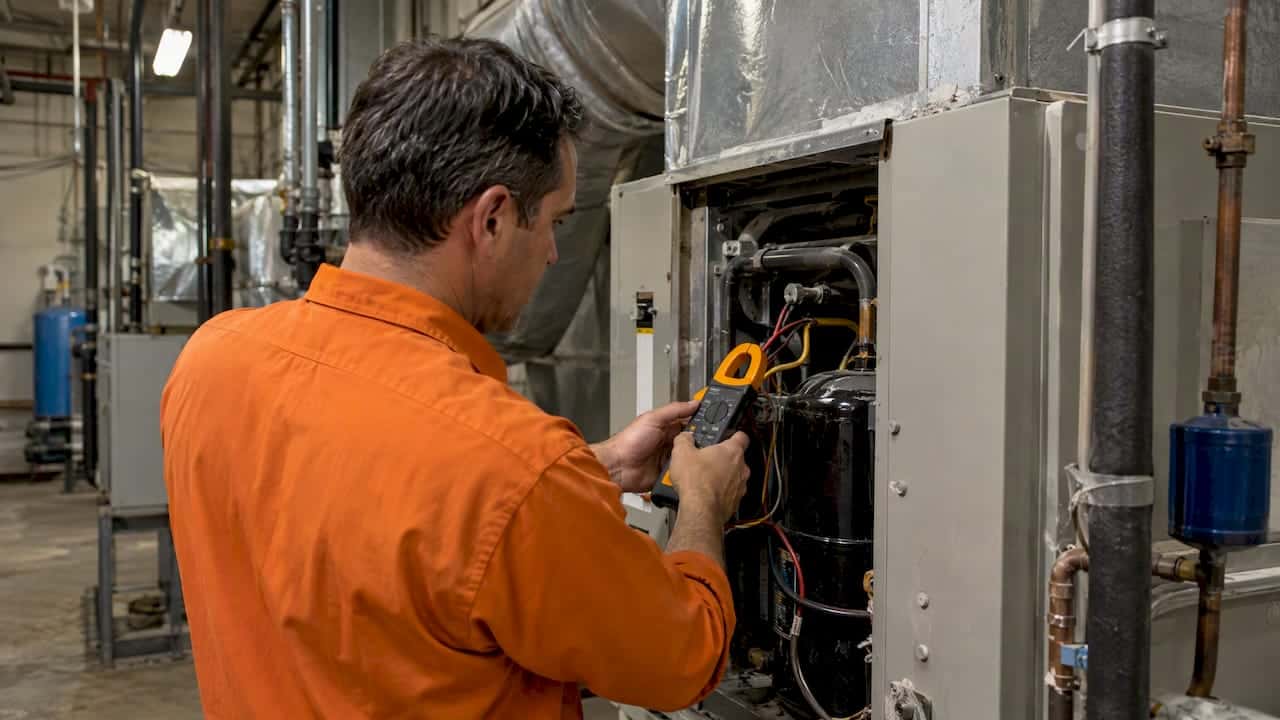
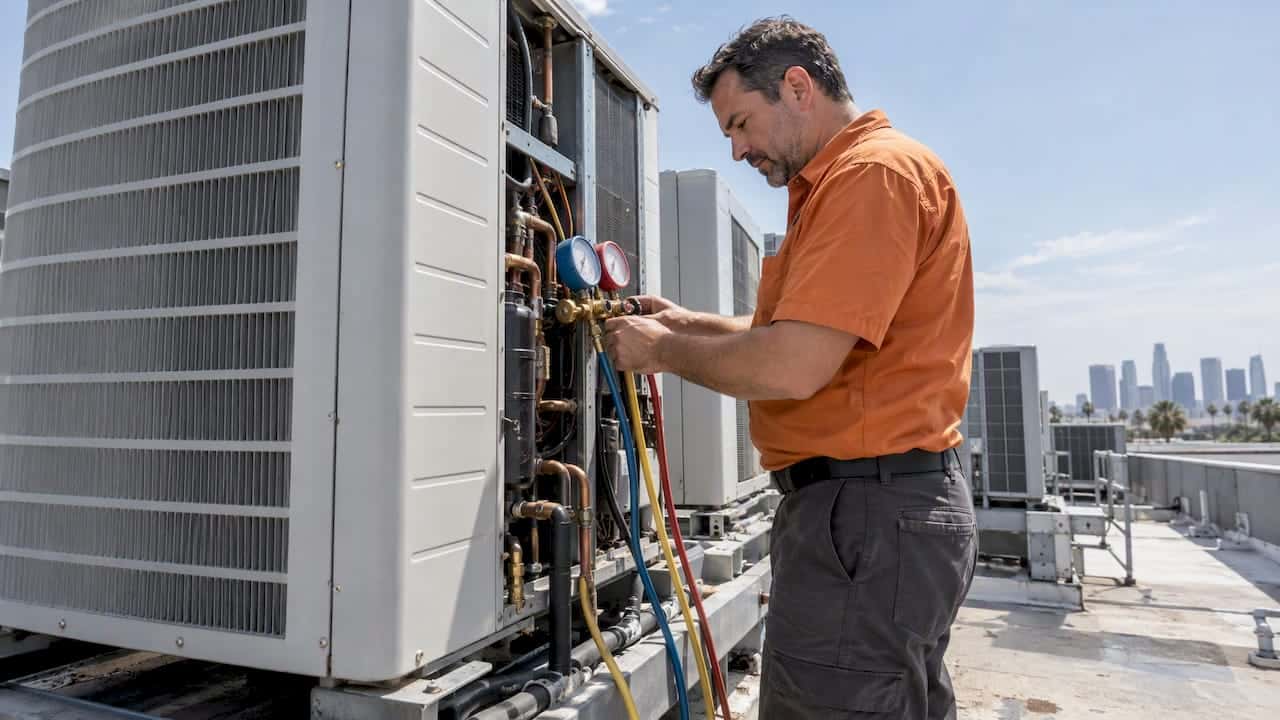
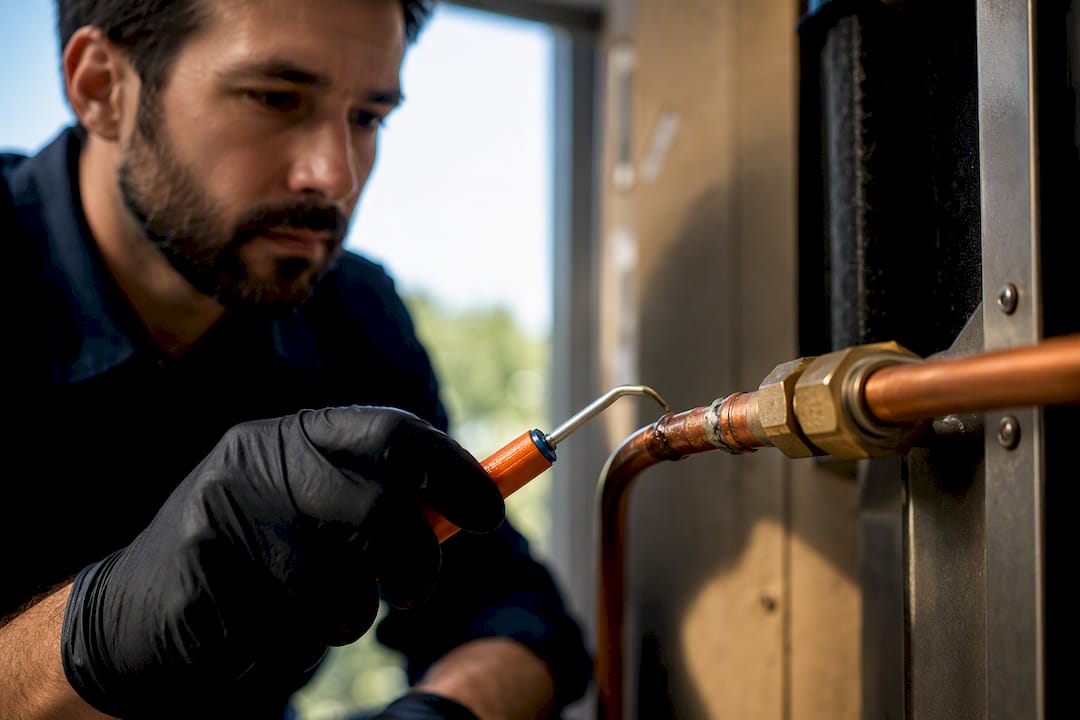
Electronic sniffers are fast and portable, good for narrowing down a general area, but they can miss very slow leaks and struggle outdoors where wind disperses the gas. A nitrogen pressure test paired with bubble solution is the closest thing to definitive proof on a pressurized circuit. Techs pressurize the system with dry nitrogen, brush soapy solution on suspect joints, and watch for bubbles. UV dye injection works well for intermittent or seasonal leaks. Dye circulates with the oil and glows under black light days or weeks later, which is useful when a leak doesn’t show up during a single visit. Ultrasonic detection listens for the high-frequency hiss of escaping gas, often used to narrow a search area before confirming with a sniffer.
After any repair, a deep vacuum down to 500 microns confirms the system holds a proper vacuum before recharging. Skipping this step is how “fixed” leaks come back within months.
What Repair Methods Actually Fix a Refrigerant Leak?
Some fixes can be quick, such as repairing worn Schrader cores, loose valve caps, or under-torqued fittings, which often take less time to complete. Brazing a pinhole leak in a line set or coil takes more skill and equipment but is still a standard repair. When formicary corrosion has riddled an evaporator coil with multiple pinholes, or the coil is one of the newer inaccessible microchannel designs, replacement of that coil is usually the only lasting fix.
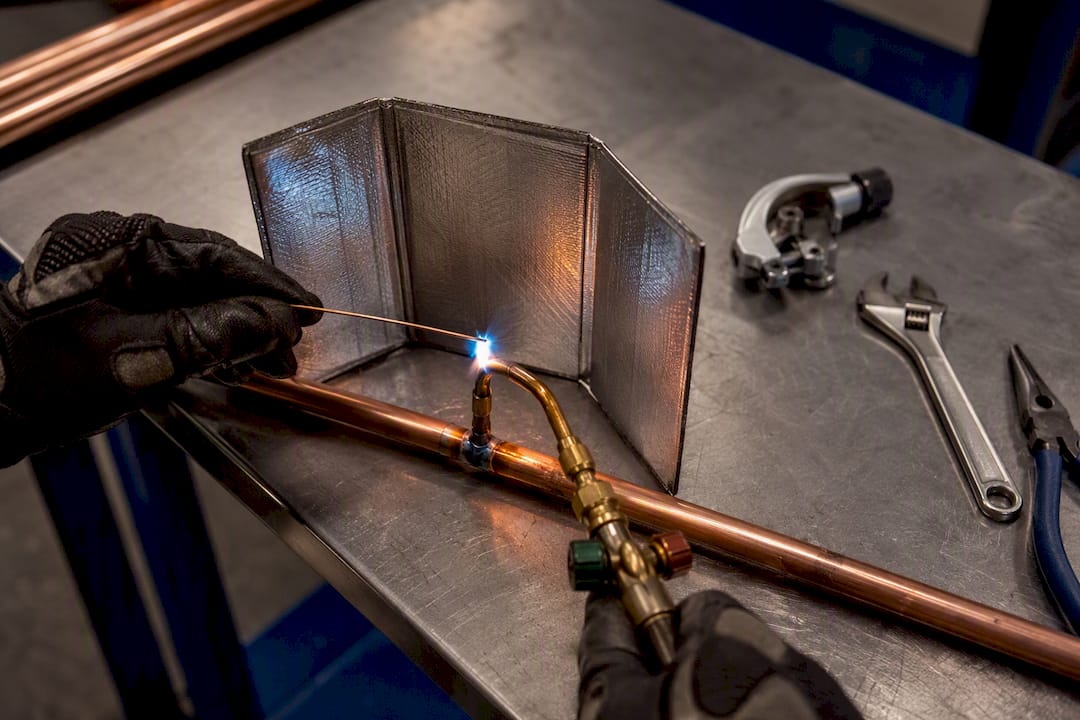
Chemical sealants get marketed as an easy answer, but they’re a temporary patch at best, work only on very small leaks, and can clog expansion valves or void manufacturer warranties. A reputable technician documents their use rather than hiding it.
The sequence a proper repair should always follow:
- Recover the remaining refrigerant (required by law, never vented)
- Repair the leak point through brazing, fitting replacement, or coil swap
- Pressurize with nitrogen and hold to confirm no leaks remain
- Pull a vacuum to 500 microns and hold to verify system integrity
- Recharge with the correct refrigerant, measured by weight, not by pressure guess
- Run the system and verify performance against manufacturer specs
Pro Tip: Ask for the micron gauge reading before and after the vacuum hold. A technician who can’t produce that number likely skipped the step.
How Are Refrigerant Type and 2026 Regulations Changing Repair Costs?
R-22 systems are largely obsolete, and replacement is generally more cost-effective over time than sourcing increasingly scarce and costly R-22 refrigerant. R-410A, the standard for most systems installed over the last two decades, is being phased toward R-454B, an A2L refrigerant classified as mildly flammable. That shift means detectors need different calibration, and technicians follow updated safety procedures around A2L handling, including systems with onboard leak sensors that can lock out the compressor.
Federal rules under the AIM Act now formalize leak repair standards. Beginning January 1, 2026, the Emissions Reduction and Reclamation Program requires repairs within 30 days and verification testing for larger commercial refrigeration systems, per 40 CFR 84.106. Residential and light commercial air conditioning and heat pumps are exempt from these specific thresholds, but the same repair logic (locate, fix, verify) applies to your home system anyway.
What Does AC Refrigerant Leak Repair Actually Cost?
Total cost depends heavily on where the leak is and which refrigerant your system uses. A fitting repair on an accessible line set costs far less than replacing a corroded evaporator coil buried inside the air handler.
Homeowner cost guides generally land between $200 and $1,500 for finding, fixing, and refilling a typical residential leak. Labor rates, refrigerant market pricing, parts availability, and whether the job needs a second visit for verification all move the final number. R-454B systems can run higher on parts cost right now simply because supply is still catching up to demand.
Repair or Replace: How Do You Decide?
The 50% rule is the fastest gut check: if the repair quote exceeds half the cost of a new system, replacement is usually the smarter long-term move. But age matters just as much. Units under 10 years old with an accessible leak are typically worth repairing; systems past 12 to 15 years, especially those still running R-22, tip toward replacement.
Watch for a pattern, not just a single event. A system that’s needed two or three recharges in as many years has a leak somewhere that keeps recurring, or multiple failure points. That’s a different conversation than a single, isolated fitting failure.
Also weigh what you’re not seeing on the invoice: a 15-year-old unit running at 10 SEER is far less efficient than a new heat pump, and rebates on qualifying heat pump installations can offset a meaningful chunk of replacement cost while cutting your operating bill for years afterward.
What Should You Ask Before Hiring a Technician?
A written estimate should specify the detection method used, the exact repair performed, and confirmation that the system was evacuated to a proper vacuum before recharging.
Before booking, ask:
- Are you EPA Section 608 certified for refrigerant handling?
- What detection method are you using, and why that one for my situation?
- Will you pull a vacuum to 500 microns and share the reading?
- What’s the warranty on this specific repair?
- Can I get a written estimate before work starts?
Red flags to walk away from: a tech offering to “just top off” refrigerant without hunting for the leak, refusal to provide documentation, no micron gauge on the truck, or heavy pressure toward full replacement with no photos or readings to back it up. A proper repair report includes photos of the failure point, before-and-after micron readings, and the final charge weight.
Pro Tip: If a quote arrives verbally with no paperwork, ask for it in writing before you agree to anything. Legitimate repairs leave a paper trail.
LC Heating and Air Conditioning’s Field-Tested Approach
With over 20 years of local experience across Greater Los Angeles, LC Heating and Air Conditioning builds every leak repair around flat-rate pricing and documented verification, including micron readings and final charge weight, so you see exactly what was done and why.
An Insider’s Take on Repair Versus Replacement
In the field, we usually lean toward repair when the leak is isolated, the unit is under 10 years old, and the coil itself is intact. The biggest mistake homeowners make is accepting a quick recharge without insisting on a documented leak search. It comes back, always. If your system is aging out, ask about heat pump options and available rebates before you commit to another repair.
— Leo
Ready for an Honest Diagnosis?
If you’re staring at warm vents or a rising energy bill, guessing at the cause only delays the fix. LC Heating and Air Conditioning is the alternative to the “top it off and hope” approach common across Los Angeles HVAC repair. Every diagnostic may come with flat-rate pricing agreed on before work begins, so customers can know the cost of a fitting repair versus a coil replacement upfront instead of finding out after the invoice.

Technicians may document every step with photos, micron readings, and final charge weights, following verification standards; same-day service can help avoid extended comfort issues while waiting for repairs. Whether the fix is a simple valve repair or your system is finally due for a heat pump upgrade, our HVAC repair team can walk you through both options honestly. Ready for a diagnostic that gives you real answers instead of a sales pitch? Book your appointment with LC Heating and Air Conditioning today.
Primary Sources and Further Reading
For regulatory detail, see the ER&R leak repair fact sheet and 40 CFR 84.106.
Sources
- Emissions Reduction and Reclamation (ER&R) Program leak repair fact sheet
- 40 CFR 84.106 — Leak repair provisions
- Refrigerant Leak Detection Methods 2026 | SoCal AC Guy
- How Much Does an AC Freon Leak Repair Cost? (2026)
FAQ
Can an AC Refrigerant Leak Be Fixed?
Yes, most residential refrigerant leaks are repairable through brazing, fitting replacement, or coil repair, followed by a vacuum and recharge. Replacement becomes the better option when repair costs exceed roughly 50% of a new system’s price or the unit is past 12 to 15 years old.
How Expensive Is It to Fix a Refrigerant Leak?
Total cost typically runs $200 to $1,500 for detection, repair, and recharge combined, though a full evaporator coil replacement can push costs to $1,400 to $2,800 on its own. Detection-only testing generally costs $100 to $330.
Where Is the Most Common Place for an AC Refrigerant Leak?
Evaporator coils are a frequent failure point, especially from formicary corrosion, along with line set connections, service valves, and brazed joints that loosen from vibration over time.
Do Freon Leak Sealers Work?
Chemical sealants can temporarily slow very small leaks, but they’re not a permanent fix and can clog expansion valves or void equipment warranties. A properly documented repair that locates and seals the actual leak point holds up far better long term.
Recommended
Leo, Owner & Lead Technician at LC Heating & Air
Leo leads LC Heating & Air as an owner-operator and holds California CSLB C-20 HVAC license #1073586. His guides focus on practical diagnostics, safe repair decisions, and clear advice for Los Angeles homeowners.