- Is There a Los Angeles Gas Furnace Ban Right Now?
- Statewide Context: What CARB Has and Hasn’t Proposed
- What South Coast AQMD Rules Mean for Your Furnace
- Timeline: Key Dates for Replacement vs. New Construction
- Exemptions and the Mitigation-Fee Option
- What to Do Now: Inspect, Repair, or Electrify
- Court Rulings: Emissions Rules Aren’t the Same as Bans
- Does This Affect Home Values in Los Angeles?
- Why Regulators Are Pushing This at All
- Gas Furnace vs. Heat Pump: What Costs More Over Time?
- Leo’s Perspective: What I Tell LA Homeowners
- How LC Heating and Air Conditioning Can Help You Navigate These Rules
- Where to Verify These Rules Yourself
- Sources
- FAQ
- Recommended
There is no citywide or statewide law today that outlaws your existing gas furnace, but the picture is shifting fast. Local air-district rules are steadily squeezing out new high-NOx gas equipment, and the South Coast AQMD has already put staggered emissions deadlines in place for some appliance categories. If your furnace works and passes a safety check, you don’t need to replace it today. What you need is a plan for what happens when it doesn’t.
TL;DR:
- Current regulations target emissions reductions with phased deadlines, not immediate bans, meaning existing furnaces can remain operational if safe and compliant.
- The South Coast AQMD, not the state of California, sets appliance-specific rules that influence what gas heating equipment can be sold or installed in Los Angeles County.
- Proposed tighter NOx limits are currently on hold after the AQMD board delayed approval in June 2025, but existing rules still require meeting current standards.
- Homeowners should prioritize inspecting and maintaining their current furnace, considering repair or replacement based on age and condition rather than imminent regulatory changes.
- Costs for upgrading to electric heat pumps may be higher upfront but can be offset by rebates and lower operating expenses, making them an increasingly attractive long-term option.
Is There a Los Angeles Gas Furnace Ban Right Now?
No blanket ban on gas furnaces exists in Los Angeles or anywhere in California as of 2026. What exists instead is a patchwork of emissions rules, primarily from the South Coast Air Quality Management District, that limit nitrogen oxide (NOx) output from certain appliances and push the market toward zero-NOx and electric alternatives over time. That’s a meaningfully different animal than a los angeles gas furnace ban in the way most people picture one, and the distinction matters for how you plan repairs and replacements.
The California Air Resources Board (CARB) oversees statewide building decarbonization efforts, but it has not put a formal residential furnace ban proposal in front of its board. The pressure homeowners actually feel comes from the regional air district level, not Sacramento. Understanding that split, statewide agency versus local air district, is the single most useful thing you can take from this article.
Statewide Context: What CARB Has and Hasn’t Proposed
CARB runs the state’s building decarbonization program, which sets long-term goals for cutting emissions from residential and commercial buildings. As of mid-2026, CARB has not submitted a formal statewide regulatory proposal for a residential furnace ban to its governing board. That’s worth repeating because so much of the public confusion about a California furnace ban traces back to conflating state-level planning documents with enforceable rules.
Where the state does have teeth is in building code. Title 24, California’s energy code, includes “electric-ready” requirements for new construction, meaning new homes need the infrastructure in place to support electric heating and water heating even if they’re built with gas appliances initially. That’s a code requirement for new builds, not a mandate to rip out an existing furnace in a house built in 1985.
A few things to keep straight about the state’s posture:
- CARB’s building decarbonization program sets direction and funds incentives, but hasn’t proposed a residential furnace ban to its board.
- Title 24 electric-ready rules apply to new construction, not existing homes.
- Local air districts, not CARB, are where actual appliance-level emissions rules originate.
Quick fact check: The agency most likely to change what furnace you can buy in Los Angeles isn’t a state agency at all. It’s your regional air district.
If you want the clearest read on where things stand, check CARB’s own clean space and water heater standards FAQ rather than a news aggregator or a contractor’s sales pitch. Agency language changes slowly and precisely; secondhand summaries don’t always keep up.
What South Coast AQMD Rules Mean for Your Furnace
This is where the real action is for Los Angeles homeowners. South Coast AQMD, which covers Los Angeles County along with Orange, Riverside, and San Bernardino counties, writes the rules that actually govern what gas heating and water heating equipment can be sold and installed in the LA basin.
Rule 1111 targets NOx emissions from fan-type residential central furnaces. The Proposed Amended Rule 1111 (PAR 1111) would tighten those limits further and phase in zero-NOx targets across the 2020s and into the 2030s, with a mitigation-fee option for manufacturers who can’t yet meet the standard. Rule 1121 covers water heaters, and Rule 1146.2 governs small boilers and process heaters. Together they form the backbone of what people mean when they search for gas appliance ban los angeles content.
Here’s the twist most coverage misses: on June 6, 2025, the South Coast AQMD Governing Board voted not to approve the proposed amendments to Rule 1111 and Rule 1121. The previously amended rule language stayed in effect while staff went back to study affordability concerns raised at the hearing. So the rules on the books today are not the most aggressive version that was floated. They’re an earlier, less restrictive iteration, and the board has signaled it wants more study before tightening further.
What this means practically:
- New central furnaces sold in the South Coast district must meet the current NOx limits under existing Rule 1111 language.
- Proposed tighter limits and faster phase-out targets are on hold, not enacted, as of this writing.
- Replacement furnaces at end of life are affected the same way new-construction units are, since the rule applies at point of sale and installation.
Timeline: Key Dates for Replacement vs. New Construction
A few dates matter more than others if you’re trying to time a repair, a replacement, or a full electrification project.
- Early 2026: Phased zero-NOx compliance deadlines began taking effect for certain water heaters, boilers, and process heaters under Rule 1146.2, following the Ninth Circuit’s decision upholding the rule.
- 2027 to 2029 (proposed, not final): Staff work on revised PAR 1111 and PAR 1121 language is expected to continue through this window, with new proposed compliance targets likely to surface for board review.
- Early 2030s: Later-stage compliance dates for higher-capacity units and remaining appliance categories are contemplated in current district planning documents, pending future board approval.
- Ongoing: New construction in Los Angeles already faces Title 24 electric-ready requirements regardless of what happens with furnace-specific NOx rules.
If your furnace is more than 12 to 15 years old, the practical decision point isn’t a regulatory deadline. It’s the age of your equipment. A furnace that age is closer to failure than to a compliance cliff, so plan the replacement around its condition, then choose equipment that satisfies whichever rule version is active when you buy.
Exemptions and the Mitigation-Fee Option
Not every situation gets treated the same way, and the rules build in flexibility on purpose.
The mitigation-fee alternative compliance option lets manufacturers pay a fee tied to units that don’t yet meet the zero-NOx standard, rather than being blocked from the market outright. This keeps supply available while the industry catches up, and it’s baked into PAR 1111 as a pressure valve.
Mobile homes get their own extended timeline. District documents recognize that mobile-home furnaces face limited market availability of compliant replacement units and tighter retrofit constraints than site-built homes, so compliance windows for these units run longer.
Emergency replacements and units already on order under a signed contract before a rule’s effective date are generally handled under transition provisions, meaning a homeowner whose furnace dies in January isn’t stuck waiting for a compliant model that doesn’t exist yet.
- Mitigation fees apply to manufacturers, not directly to homeowners, though the cost can filter into equipment pricing.
- Mobile-home furnace compliance deadlines extend further out than standard residential units.
- Emergency and pre-contracted replacements typically fall under transition rules rather than the newest standard.
Pro Tip: Keep every invoice, permit, and equipment spec sheet from your furnace installation. If a future rule version offers a grandfathering window or a rebate tied to installation date, that paperwork is what proves you qualify.
What to Do Now: Inspect, Repair, or Electrify
You don’t need to make a panic decision. You need a sequence.
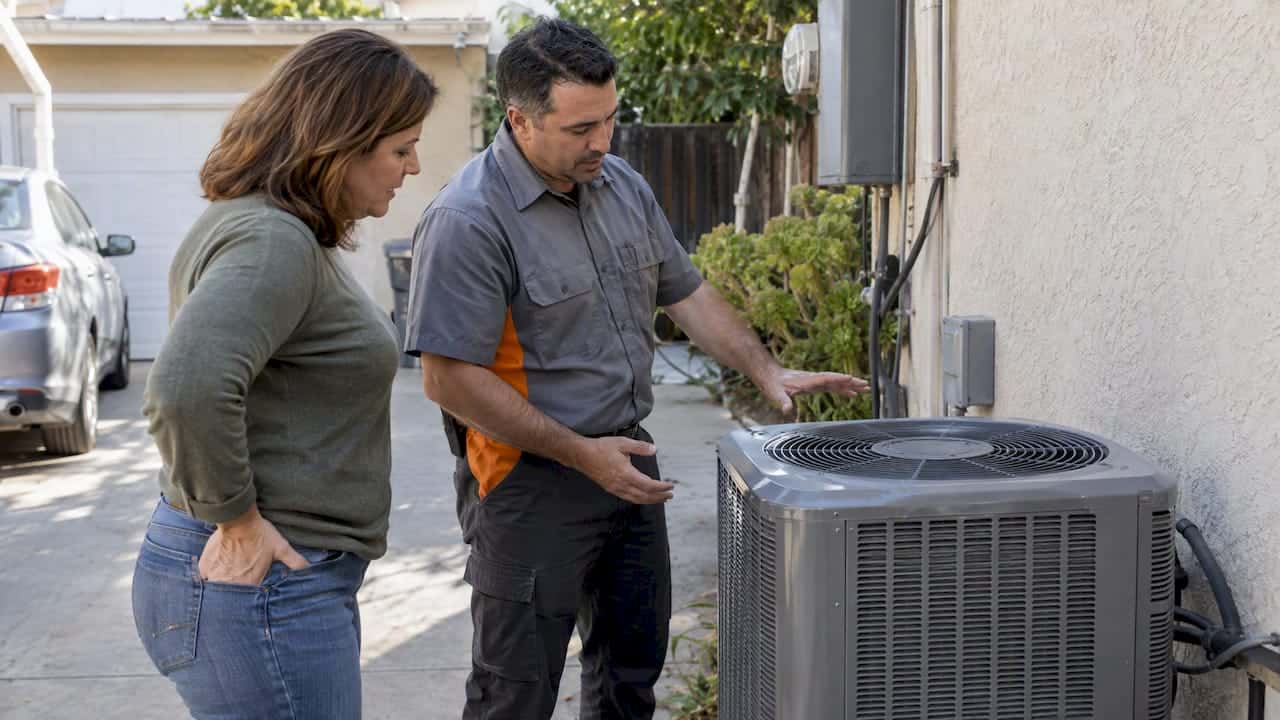
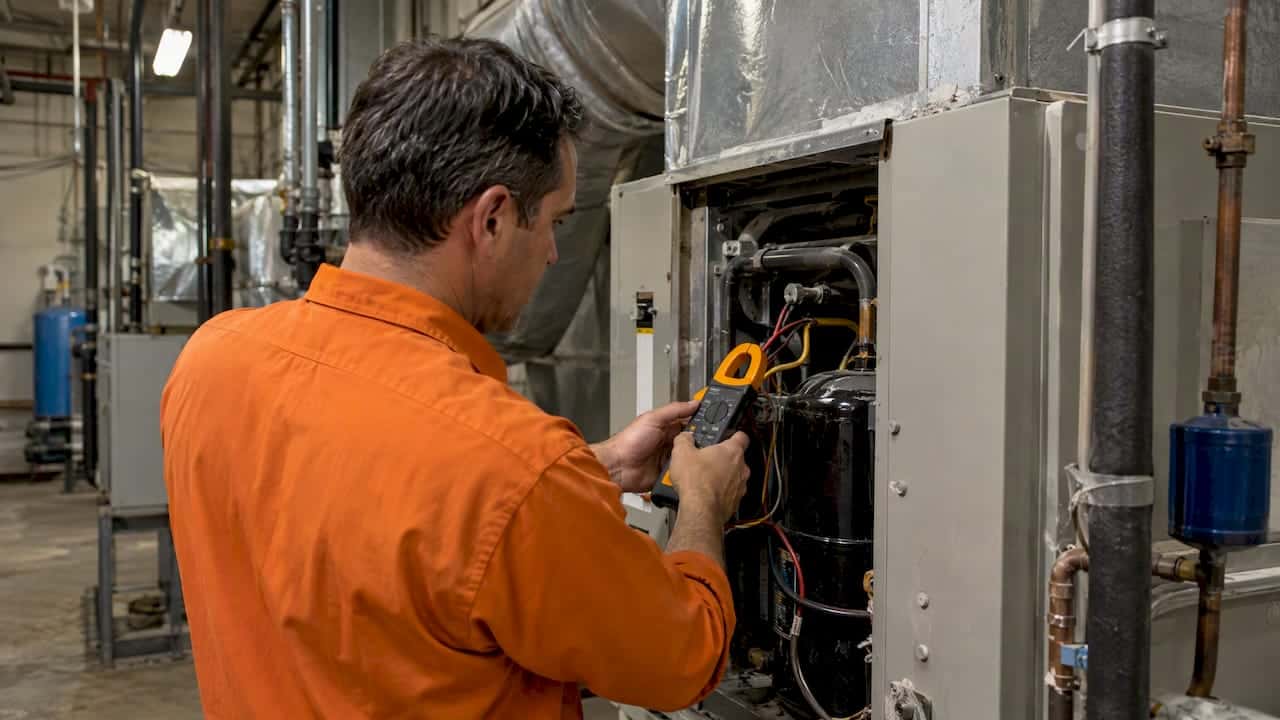
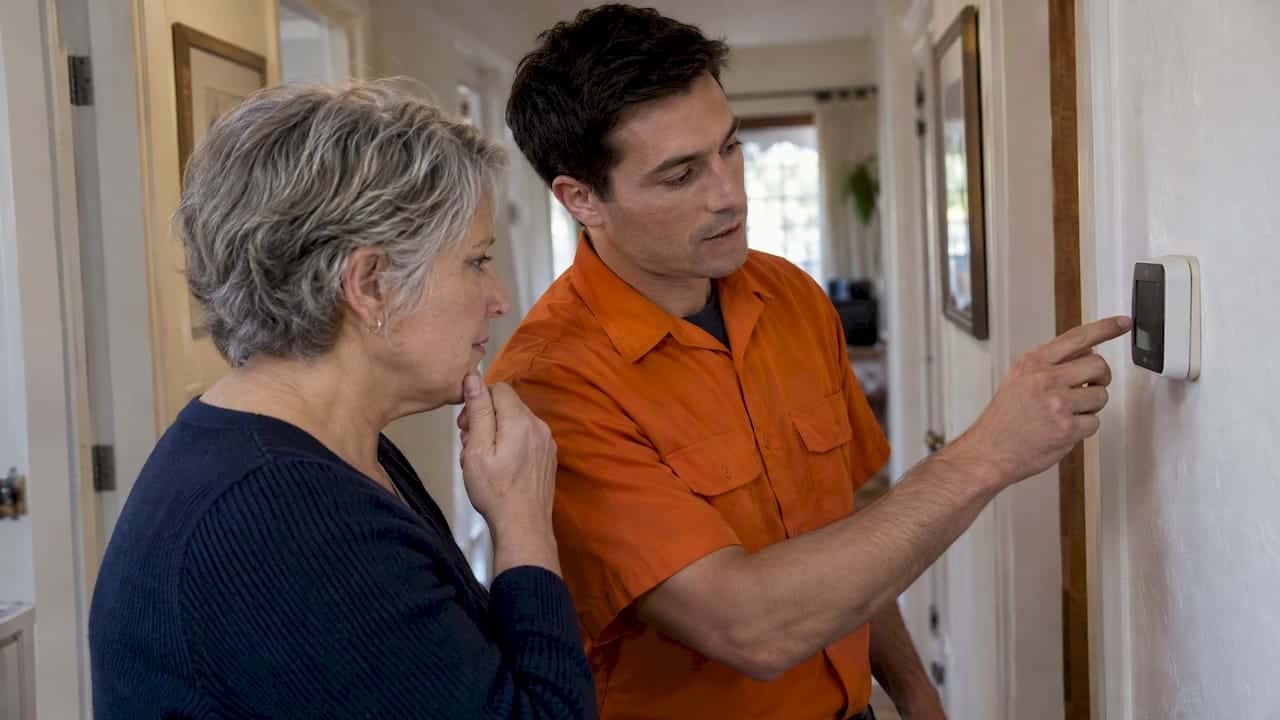
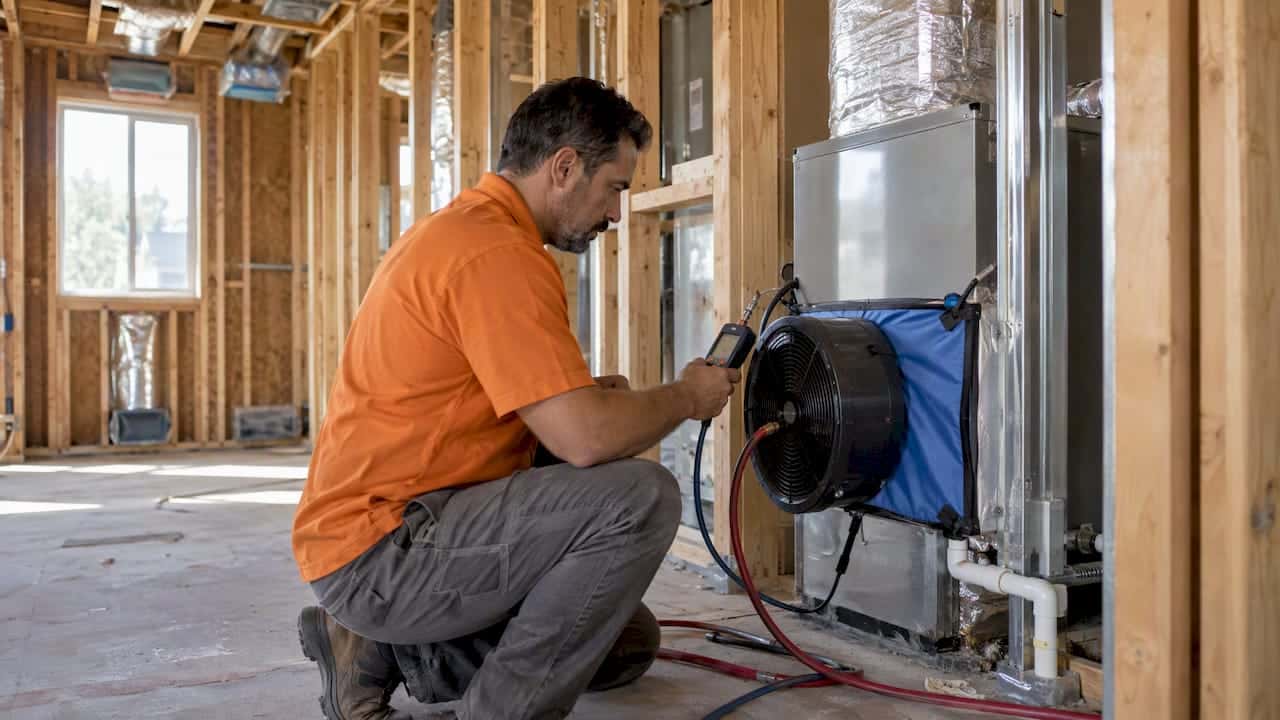
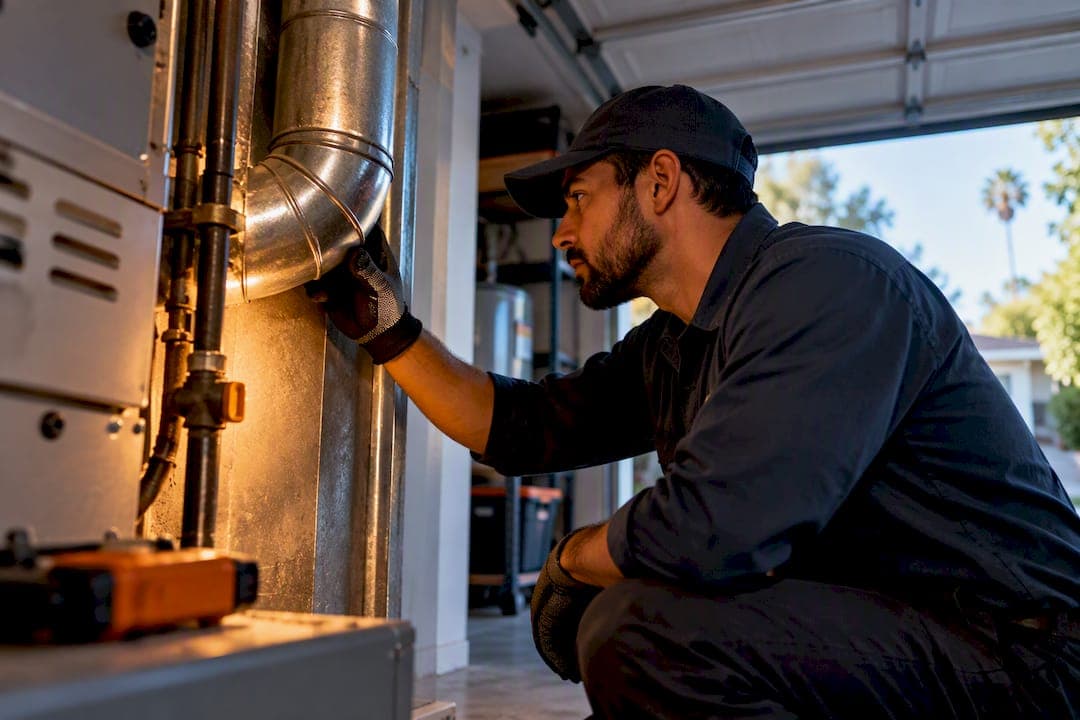
Start with a safety and age check. Have a technician confirm your furnace’s manufacture date, check for cracked heat exchangers or carbon monoxide risk, and verify it’s still operating within its rated NOx range. A furnace repair visit that includes this kind of diagnostic tells you whether you’re looking at years of remaining life or months.
From there, three paths open up:
- Repair and monitor. If the unit is under 12 years old and mechanically sound, a repair keeps you compliant and comfortable without spending on replacement prematurely.
- Replace with a compliant gas furnace. If your unit is failing and you want to stay on gas, choose a model that meets current Rule 1111 limits; your installer should be able to confirm compliance before you buy.
- Convert to an electric heat pump. If you’re already facing a full replacement, a heat pump sidesteps the entire NOx compliance question because it doesn’t burn gas at all, and it pulls double duty as your air conditioning system.
Heat pumps carry a higher upfront cost than a like-for-like gas furnace swap, but rebate programs through state and utility channels can close a meaningful chunk of that gap. Ask your contractor which incentive programs are active at the time of your installation, since these change year to year, and confirm whether your home’s electrical panel has the capacity to support the new equipment or needs an upgrade first.
Questions worth asking any contractor before you sign anything:
- Does this quote include permit fees, and who’s pulling the permit?
- Will my electrical panel support this equipment, or do I need a service upgrade?
- What’s the realistic timeline for any rebate paperwork to process?
- What’s the expected operating cost difference between this option and what I have now?
Pro Tip: Ask for the equipment’s AHRI certificate and NOx rating in writing. A verbal assurance from a salesperson isn’t documentation you can use if a rebate program or future compliance check asks for proof.
Keep a simple folder, physical or digital, with your installation invoice, permit approval, equipment spec sheet, and any rebate confirmation. That folder is worth more than most people realize the next time a rule changes, or you sell the house.
Court Rulings: Emissions Rules Aren’t the Same as Bans
Legal challenges to these appliance rules have produced a split outcome that’s easy to misread as chaos, but it actually clarifies something important.
A divided Ninth Circuit panel upheld the South Coast AQMD’s zero-NOx appliance rule for certain boilers and water heaters, with phased compliance deadlines beginning January 1, 2026 for some unit categories. Separate coverage confirms the court’s reasoning centered on the fact that these are emissions standards, not outright prohibitions on gas infrastructure, a distinction that matters enormously for how federal preemption arguments play out under laws like the Energy Policy and Conservation Act.
Fact check: courts have consistently treated NOx limits differently than legislative bans, because a performance standard regulates output, not the fuel source itself.
Other federal circuits, including the Second Circuit, have weighed in on similar municipal gas restrictions in different contexts, and outcomes haven’t been uniform nationwide. That divergence increases the odds of further appeals or even Supreme Court review down the line.
- Ninth Circuit: upheld zero-NOx standards for certain water heaters and boilers as valid emissions regulation.
- Other circuits: mixed outcomes on gas-restriction cases outside California, keeping the legal landscape unsettled.
- Practical effect for homeowners: none of this requires you to remove a working furnace today, and litigation timelines run in years, not months.
The upshot is that enforcement today rests on current rule language, not on whatever the most aggressive proposed version might eventually require.
Does This Affect Home Values in Los Angeles?
Not in any way that shows up on a listing sheet today. Real estate agents in the LA market report that gas furnace age and condition factor into inspections the same way they always have, as a maintenance item, not a regulatory red flag.
Where this could start to matter is in the resale conversation for homes with newer electric heat-pump systems already installed. Buyers who are aware of California furnace ban headlines sometimes ask whether a home’s heating system is “future-proof,” even when no such requirement exists yet. A seller with a documented heat-pump installation and permit paperwork has an easier answer to give than one with an aging gas unit and no service history.
Appraisers haven’t built formal adjustments for heating fuel type into standard valuation models, and there’s no data showing gas furnace homes selling at a discount in Los Angeles right now. The more realistic scenario over the next several years is a slow shift in buyer expectations, similar to how solar panels or updated electrical panels became selling points rather than requirements. Homes with documented, permitted heat-pump systems may start commanding a small edge in listings that emphasize energy efficiency, particularly in higher-end Los Angeles neighborhoods where buyers already expect updated mechanical systems.
For now, the safest move for anyone weighing a sale is to keep your HVAC system in good working order and your paperwork current, regardless of fuel type. That protects value under any regulatory scenario.
Why Regulators Are Pushing This at All
The public health case behind these rules isn’t abstract. Residential furnaces and water heaters are meaningful contributors to NOx emissions in the South Coast air basin, which struggles with some of the worst ozone and particulate pollution levels in the country. NOx reacts with other pollutants to form ground-level ozone, the main ingredient in smog, and it contributes to fine particulate matter that’s linked to respiratory and cardiovascular problems.
Indoor air quality is part of the case too. Combustion appliances, including gas furnaces, can release nitrogen dioxide and carbon monoxide into living spaces, particularly in homes with older equipment or poor ventilation. Electrification advocates point to this as a direct household health benefit that has nothing to do with regional smog, since a heat pump produces zero combustion byproducts indoors.
The environmental case scales with adoption. A single furnace swap doesn’t move the needle on regional air quality, but district planning documents model these rules across hundreds of thousands of households over a decade or more. That’s the logic behind phased compliance dates instead of an immediate mandate: spread the transition wide enough and the aggregate NOx reduction becomes significant, even though no individual household feels forced into an overnight change.
Whether that public health upside justifies the pace and structure of these rules is exactly the debate playing out at South Coast AQMD board meetings right now, which is part of why the board hit pause on the more aggressive PAR 1111 language in 2025.
Gas Furnace vs. Heat Pump: What Costs More Over Time?
The upfront math and the long-term math tell different stories, and homeowners who only look at the sticker price usually make the wrong call for their situation.
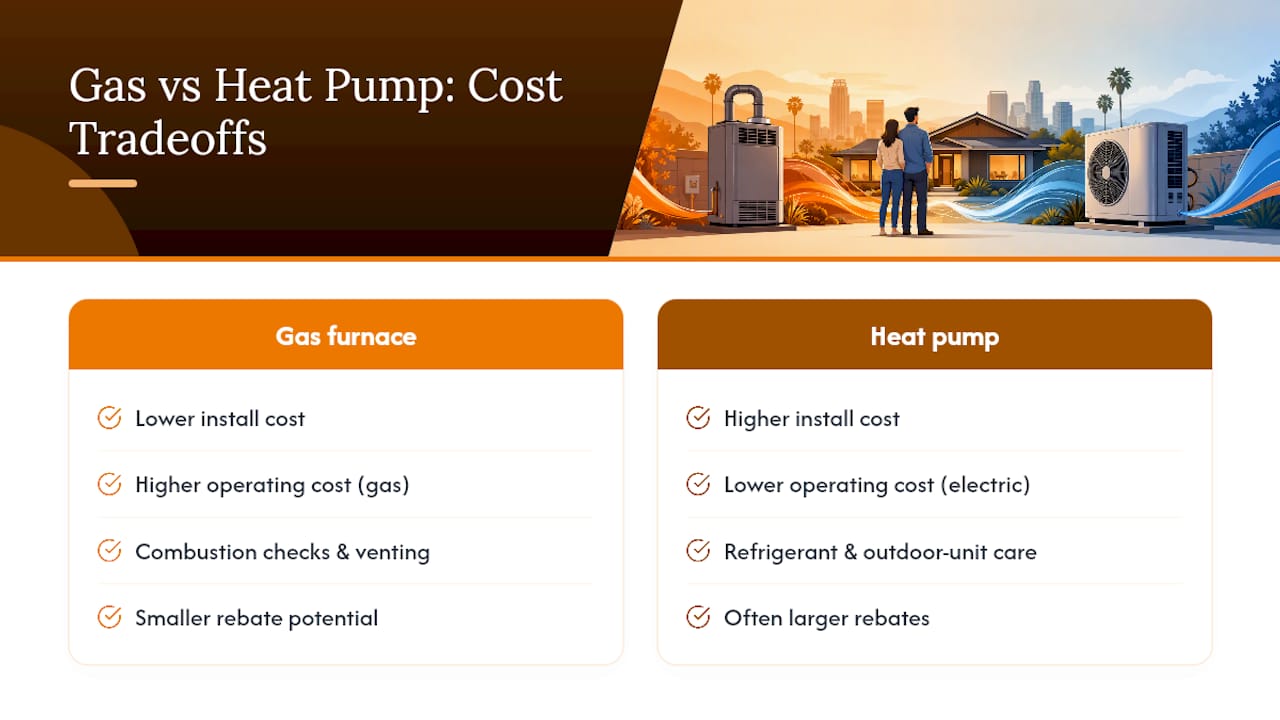
A straight gas furnace replacement typically costs less to install than a heat pump conversion, since it doesn’t require electrical panel upgrades or new ductwork configurations in most cases. Heat pumps carry a higher installation cost, largely because a single system handles both heating and cooling and sometimes needs supporting electrical work.
Where the math shifts is operating cost. Heat pumps run on electricity at high efficiency, often delivering more heating energy per dollar spent than a gas furnace burning fuel directly, especially in the mild Los Angeles climate where heat pumps rarely have to work against extreme cold. Gas furnace operating costs track natural gas rates, which have shown more volatility in recent years than electricity rates in many California utility territories.
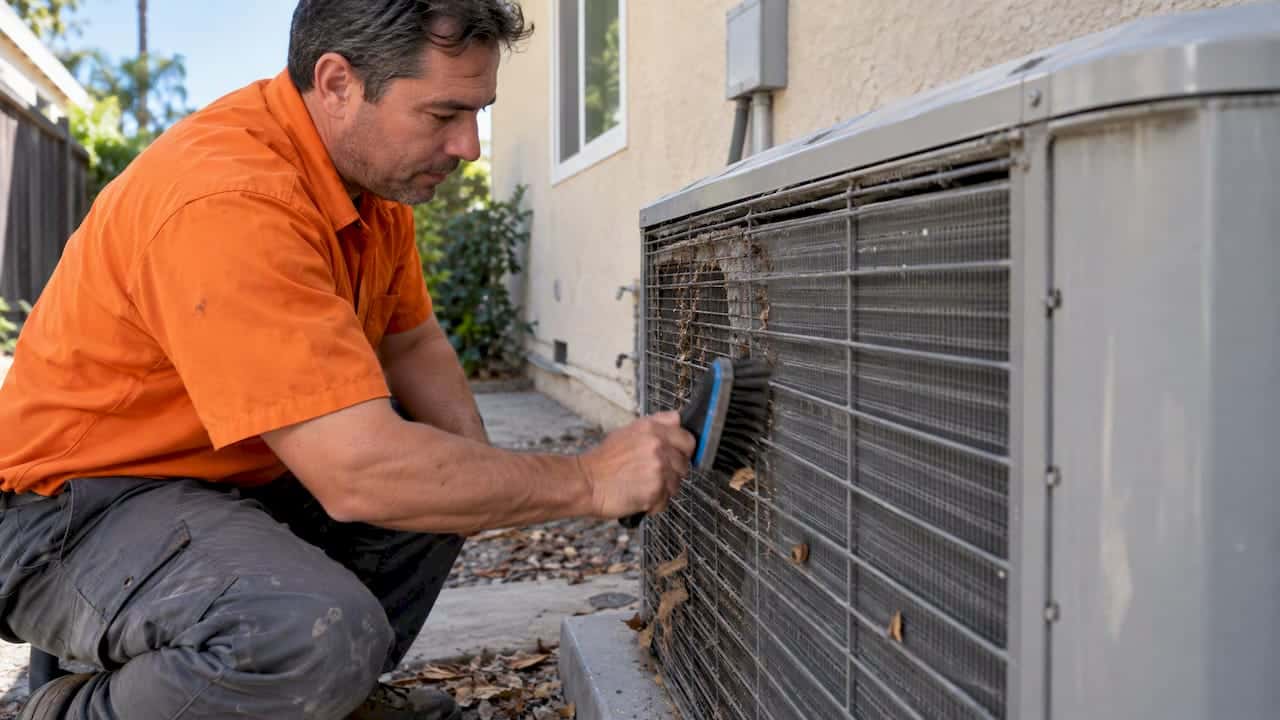
Maintenance costs also diverge over the life of the system. Gas furnaces need combustion-related safety checks, heat exchanger inspections, and venting maintenance. Heat pumps have fewer combustion-related failure points but rely more heavily on refrigerant charge and outdoor unit condition, which matters in areas with heavy dust or coastal salt air.
Rebates change the equation further. State and utility incentive programs for heat pump installation can offset a meaningful share of the higher upfront cost, sometimes narrowing the gap with a gas furnace close enough that the lower long-term operating cost tips the decision. The comparison between electric and gas furnace options is worth reviewing in detail before you commit either way, since the right answer depends on your home’s insulation, current ductwork, and how long you plan to stay in the house.
Leo’s Perspective: What I Tell LA Homeowners
Homeowners call us convinced their furnace is about to become illegal overnight. It almost never is. What I’ve seen over twenty years running HVAC calls across Los Angeles is that the real risk isn’t a sudden ban, it’s waiting so long on an aging unit that a routine repair turns into an emergency replacement with no time to shop rebates or compare heat-pump options properly.
My advice is the same one I’d give a neighbor: get your furnace inspected now, not because a law is about to change, but because a proper inspection tells you whether you have years left or months. If a heat pump conversion makes sense for your home, plan it on your timeline, with permits done right and rebate paperwork filed before the work starts, not scrambled together after a breakdown. Check equipment now. Panic later, if at all, is never the plan I want for a client.
— Leo
How LC Heating and Air Conditioning Can Help You Navigate These Rules
There are local alternatives to guesswork when it comes to gas furnace regulations in Los Angeles, offering flat-rate diagnostics with no surprise fees, and honest answers about whether your system needs repair, replacement, or full electrification. We’re not going to pressure you into a heat pump you don’t need, and we’re not going to patch a furnace that’s a safety risk just to avoid a harder conversation.

Technicians handle everything from historic homes with original ductwork to modern multi-zone heat pump systems and commercial VRF installations, addressing a variety of property configurations. If your furnace is aging or you’re weighing a switch to electric heat, start with a service call for an honest diagnostic, or explore furnace replacement options if you already know it’s time. We’ll walk you through permit requirements, rebate eligibility, and realistic cost comparisons before you spend a dollar. Schedule an inspection today and get a clear answer instead of a guess.
Where to Verify These Rules Yourself
Regulations shift, and secondhand summaries age fast. Check these directly when you need current, authoritative language:
- CARB’s building decarbonization FAQ for the state’s current program status.
- South Coast AQMD’s Rule 1111 and Rule 1121 page for the latest proposed rule status and board votes.
- The PAR 1111 agenda packet for exact NOx limits, mitigation-fee terms, and mobile-home provisions.
- BAAQMD’s myths vs. facts document for plain-language clarification on what appliance rules do and don’t require.
- Court coverage like the Ninth Circuit ruling summary for how litigation is shaping enforcement.
Sources
- CARB — Clean space and water heater standards FAQ
- South Coast AQMD: Proposed Amended Rule 1111 (agenda packet)
- South Coast AQMD — Rule 1111 and Rule 1121 (proposed rules page)
- California Apartment Association — coverage of Ninth Circuit decision on zero-NOx rule
FAQ
Will Gas Furnaces Be Banned in California?
Not under any currently enacted statewide law. CARB has not put a formal residential furnace ban proposal before its board as of mid-2026, and the South Coast AQMD Governing Board rejected the most aggressive proposed amendments to Rule 1111 and Rule 1121 in June 2025. Current rules regulate NOx emissions from new equipment rather than banning existing furnaces outright.
Can I Still Buy a Gas Range in California?
Yes. Gas furnace rules from South Coast AQMD apply specifically to space heating and water heating appliances like furnaces, boilers, and water heaters, not gas cooking ranges. No current state or South Coast AQMD rule restricts the sale of gas ranges.
What States Have Banned Gas Appliances?
No state has enacted a blanket ban on gas appliances in homes. Some cities and counties, mostly outside California, have passed local building codes restricting gas hookups in new construction, and those measures have faced their own legal challenges in various federal circuits.
Is California Banning Gas Generators?
No statewide ban on gas generators exists. Regulatory attention in California has focused on stationary combustion appliances like furnaces, boilers, and water heaters through air district rules, not portable or backup generators.
What Should I Do if My Gas Furnace Fails Right Now?
Get a diagnostic from a licensed technician before deciding between repair and replacement. LC Heating and Air Conditioning offers a service call starting at $125 to assess your equipment and walk you through compliant replacement or heat-pump conversion options based on your home’s actual condition.
Recommended
Leo, Propietario y Técnico Principal en LC Heating & Air
Leo dirige LC Heating & Air como propietario-operador y tiene la licencia C-20 HVAC #1073586 de California. Sus guías se enfocan en diagnósticos prácticos, decisiones de reparación seguras y consejos claros para propietarios de Los Ángeles.