- Common causes of an AC fan not spinning
- Safe troubleshooting steps you can do now
- When to call a licensed HVAC technician or electrician
- Preventive maintenance to avoid fan failures
- Leo’s practical notes: what technicians check and what to expect from service
- Owner perspective: why safety and preventive care beat emergency fixes
- How LC Heating & Air can help with a non-spinning fan
- FAQ
- Sources
- Recommended

When your AC fan stops spinning, the most likely culprits are a power problem, a failed run capacitor, or a burned-out fan motor. You can safely check your thermostat settings, breaker panel, and outdoor disconnect switch yourself. Capacitors and motors carry electrical charge that can be dangerous, so leave those to a licensed technician.
TL;DR:
- Check the thermostat, breaker, and outdoor disconnect, then reset a tripped breaker only once; if it trips again, stop and call a licensed technician.
- A steady hum without blade movement often points to a failed capacitor, while silence may indicate a power fault or another component problem.
- Replace a dusty filter if airflow is restricted, and shut the system off if ice appears on the indoor coil; let it thaw before restarting.
- Never open unit panels or test capacitors; they can retain a dangerous charge even after power is off, so leave electrical repairs to licensed technicians.
- Check filters monthly and replace them every three months; annual inspections can catch dirty coils, loose connections, and early capacitor wear.
Common causes of an AC fan not spinning
Before you troubleshoot anything, it helps to know what you’re likely dealing with. Most fan failures trace back to one of a handful of issues, and each one tends to show a different pattern of symptoms.
Power problems are the easiest to rule out. A thermostat set to “off” or “heat,” a tripped breaker, or a blown fuse will stop the fan cold with no noise at all. Airflow restrictions are sneakier: a clogged filter or dirty coil can choke the system enough to trigger a safety shutdown, and over time that restricted airflow stresses the motor itself. According to Energy Star, filters should be checked regularly and replaced periodically to prevent exactly this kind of shutdown.
Electrical component failures are the most common reason a fan hums but won’t turn. A weak or failed run capacitor often causes a buzzing sound without any blade movement, since the capacitor provides the electrical push the motor needs to start spinning. A failing contactor, a burned-out motor winding, or a fan blade jammed by debris can cause the same silent or humming result.
A frozen evaporator coil is another possibility, usually caused by restricted airflow or a refrigerant issue, and it often shows up as ice buildup on the indoor coil or warm air blowing from your vents.
- Power issues: thermostat set wrong, tripped breaker, blown fuse, or disconnect switch pulled.
- Airflow issues: clogged filter, dirty coils, blocked ducts, or a frozen coil.
- Component failures: bad capacitor, failing contactor, burned-out motor, or damaged blades.
Contact with energized HVAC equipment causes about 90% of HVAC-related workplace fatalities. That single figure is why electrical repairs on your system, including capacitor or motor work, should always go to a licensed technician.
Safe troubleshooting steps you can do now
You can rule out several common causes yourself before calling anyone, as long as you stay away from anything electrical inside the unit.
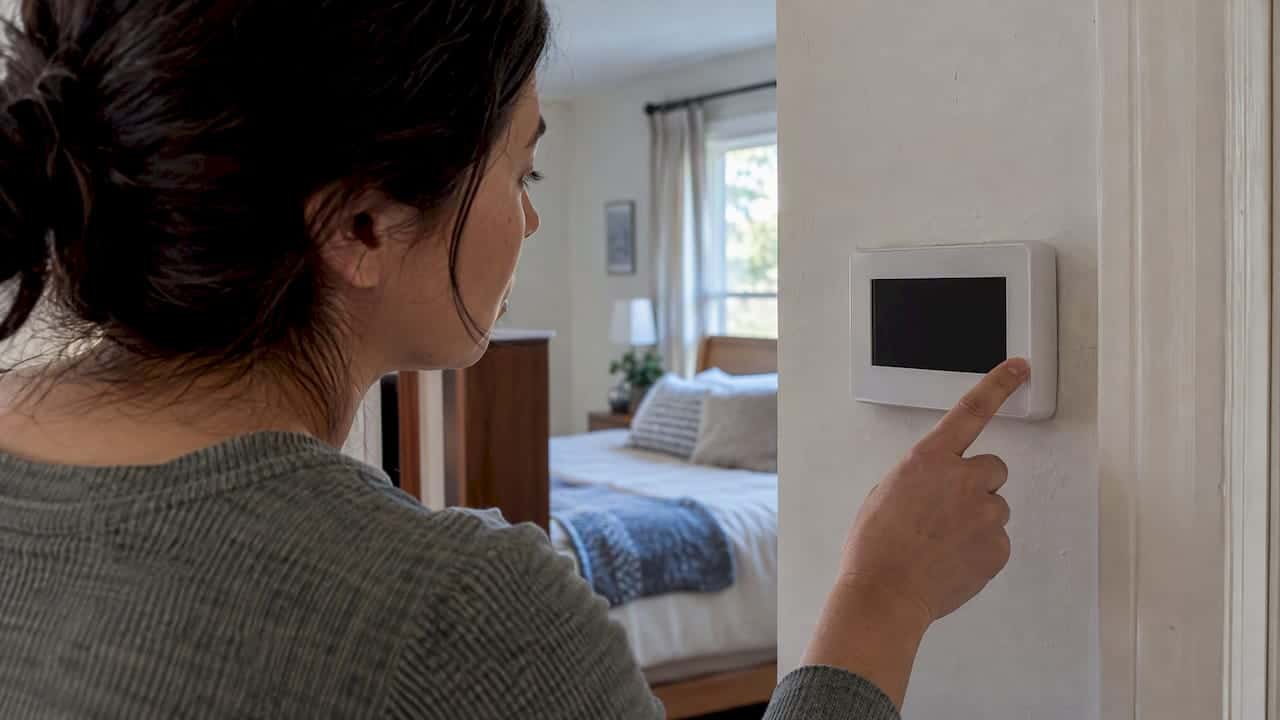
- Confirm your thermostat is set to “cool,” check the setpoint, and try switching the fan mode from “auto” to “on” to see if it responds.
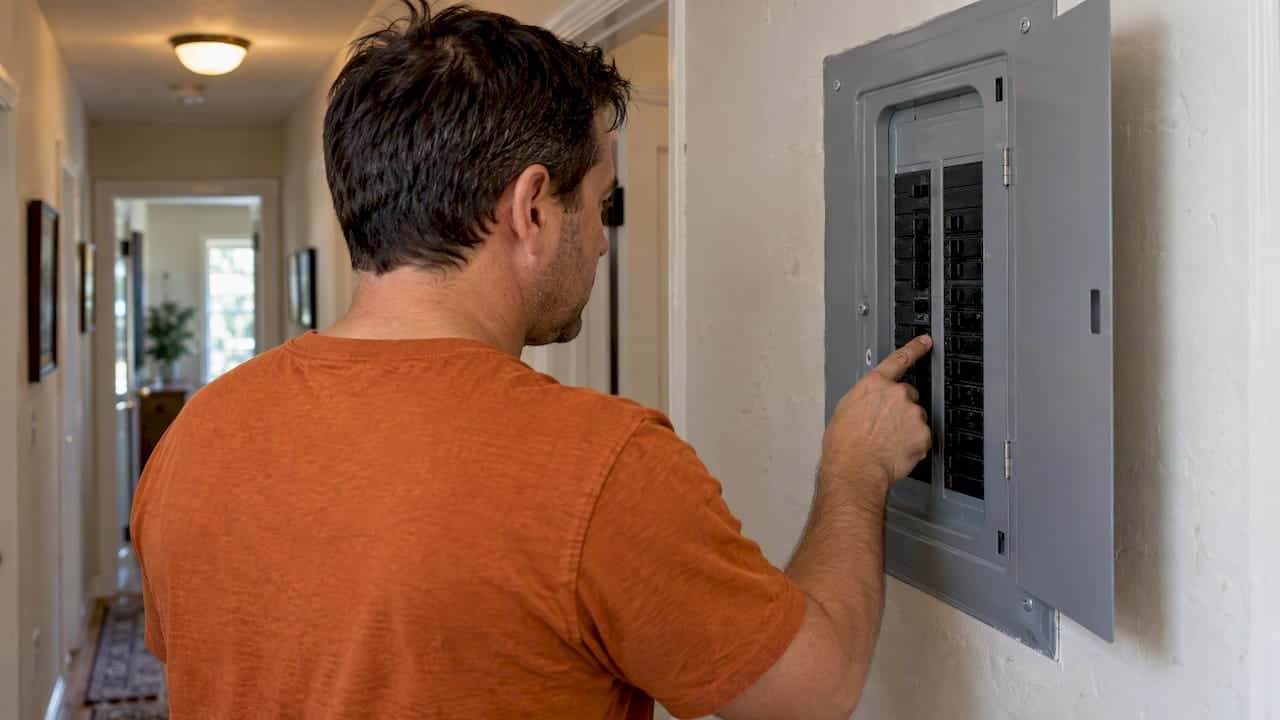
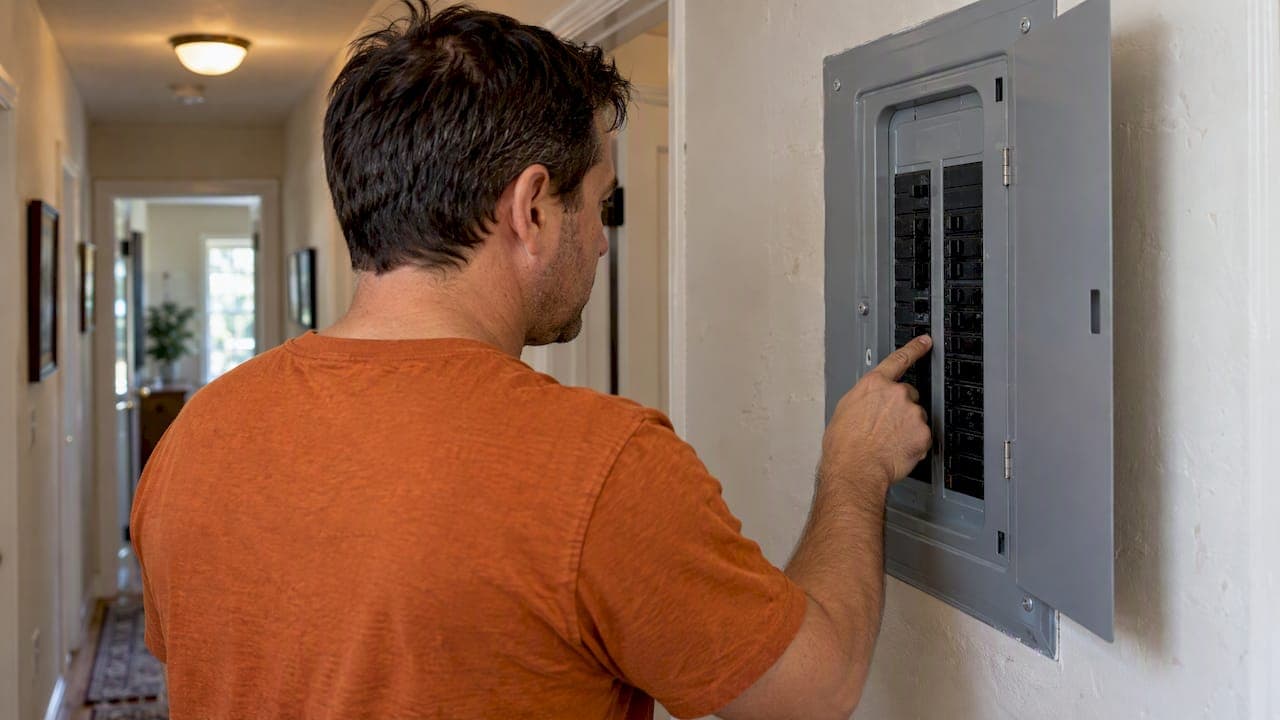
- Check your indoor breaker panel and the outdoor unit’s disconnect switch; if a breaker is tripped, you can safely reset it once by flipping it fully off, then back on.
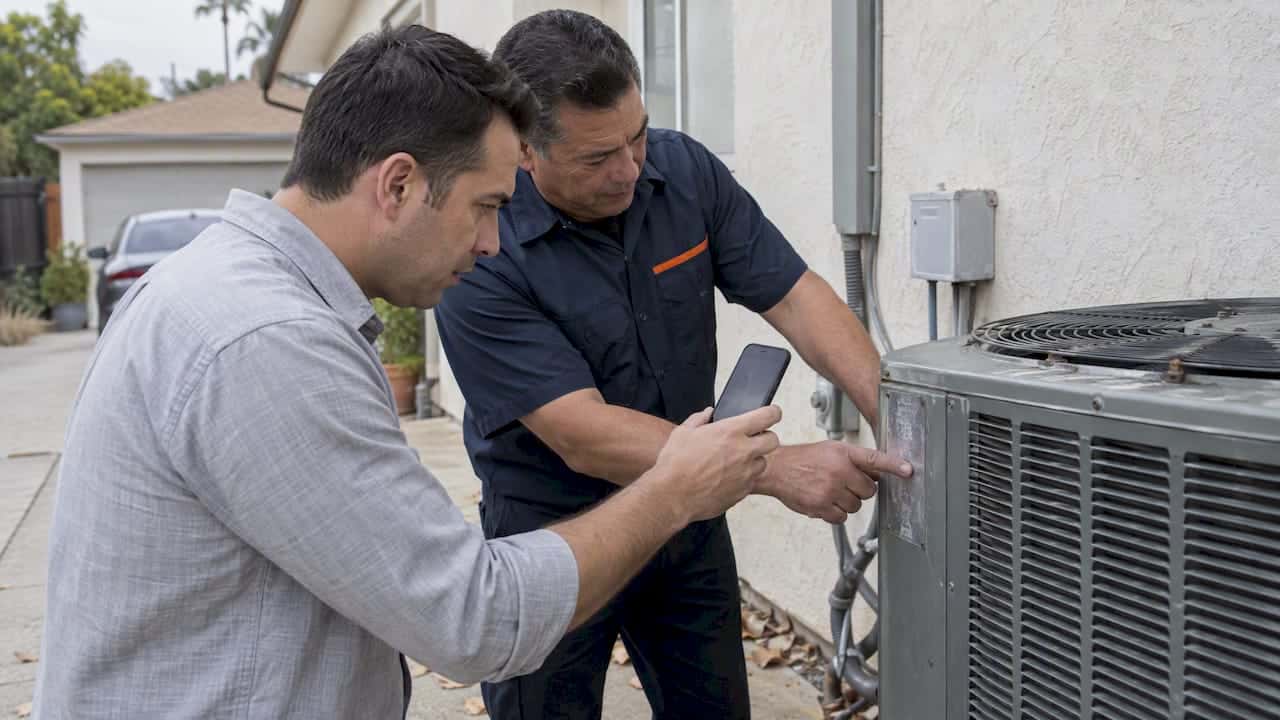
- Walk out to the outdoor unit and look for obvious obstructions like leaves, debris, or bent fan blades, but do not remove any panels or reach inside.
- Pull out your air filter and check it against a light source; a filter caked in dust restricts airflow enough to stop a fan or freeze a coil, so replace it if it looks gray or clogged.
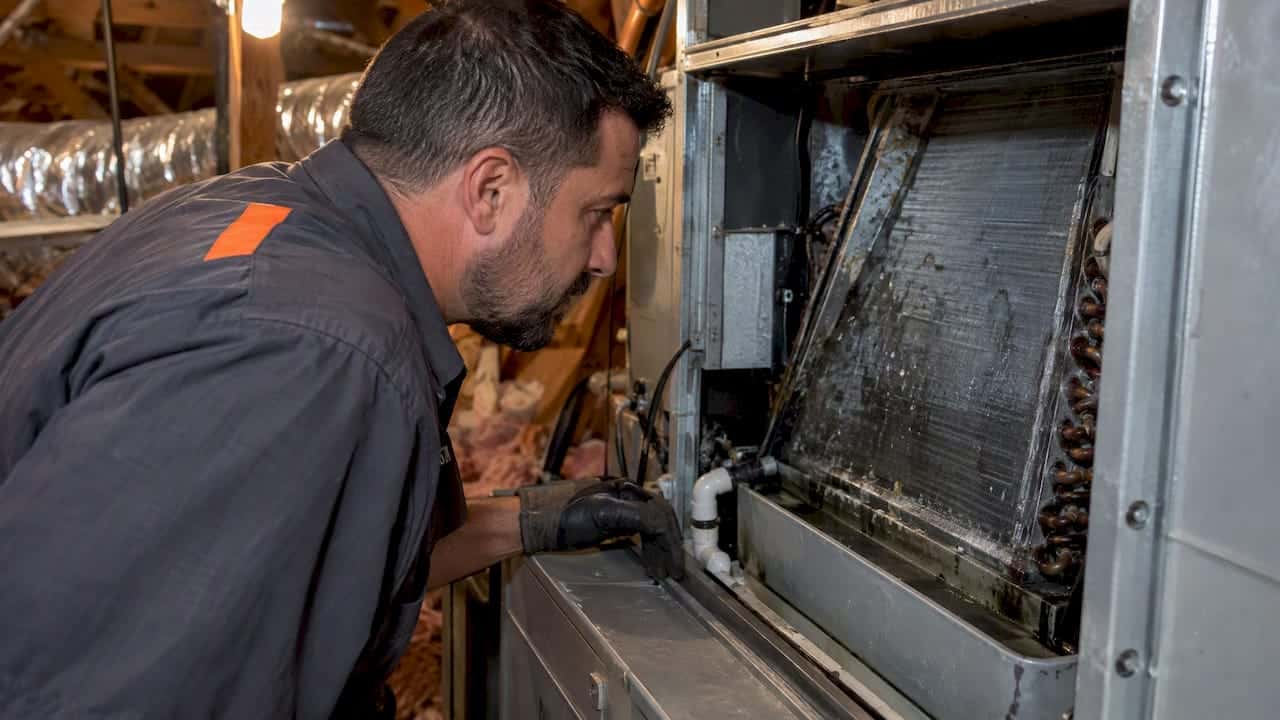
- Look at the indoor coil for ice buildup. If you see frost, turn the system off and let it thaw fully before running it again, since restarting a frozen system can damage the compressor.
If you reset the breaker and it trips again, stop. A breaker that won’t hold means there’s an electrical fault that needs a professional, not another reset attempt.
Pro Tip: Snap a photo of your breaker panel and the outdoor unit before you call for service. It helps your technician narrow down the problem before they even arrive.
Do not attempt to test or discharge a capacitor, and never open an electrical panel beyond the breaker cover. Our guide to capacitor symptoms walks through the warning signs if you suspect that’s the issue, but testing itself requires specialized tools.
When to call a licensed HVAC technician or electrician
Some signs mean it’s time to stop troubleshooting and pick up the phone. A burning smell, any sign of smoke, or a breaker that trips repeatedly points to an electrical fault that needs immediate professional attention. A motor that hums steadily but never turns, or a capacitor that looks swollen or shows leaking residue, falls into the same category.
- Burning smell, smoke, or scorched components near the unit.
- A breaker that trips more than once after resetting.
- A humming motor that never starts spinning.
- A bulging, leaking, or corroded capacitor.
- Ice on the coil that keeps coming back after thawing.
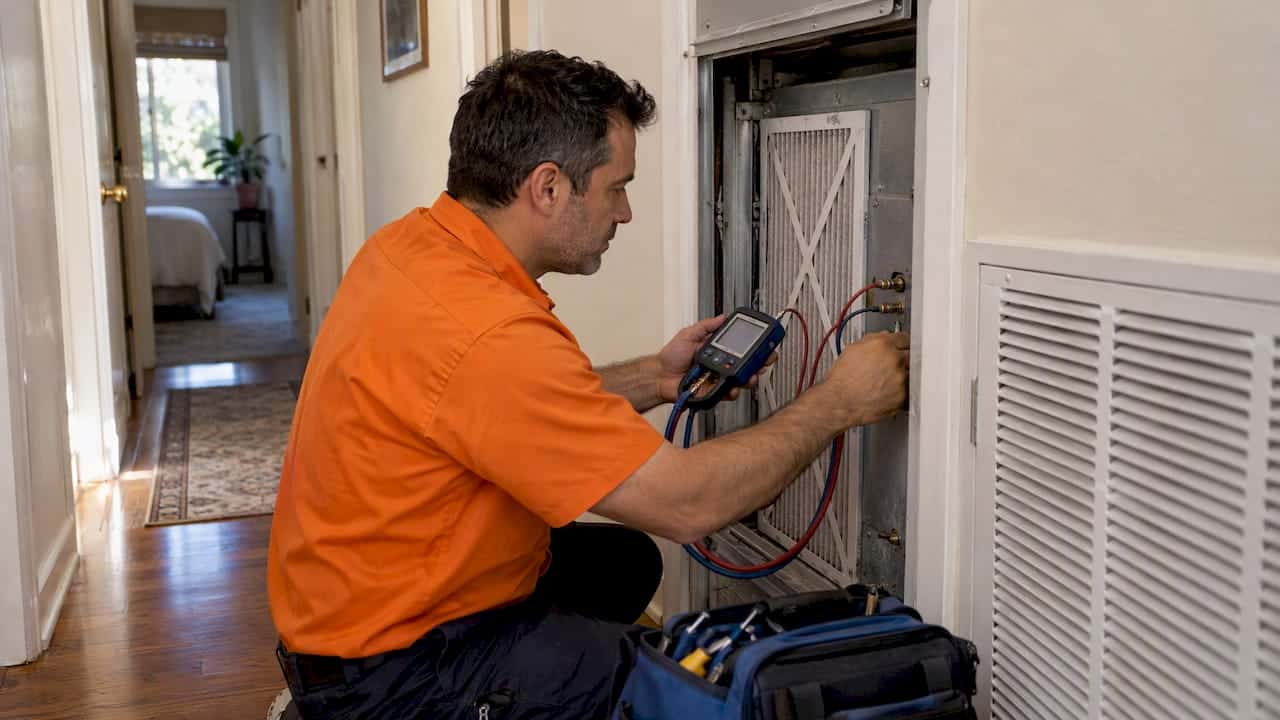
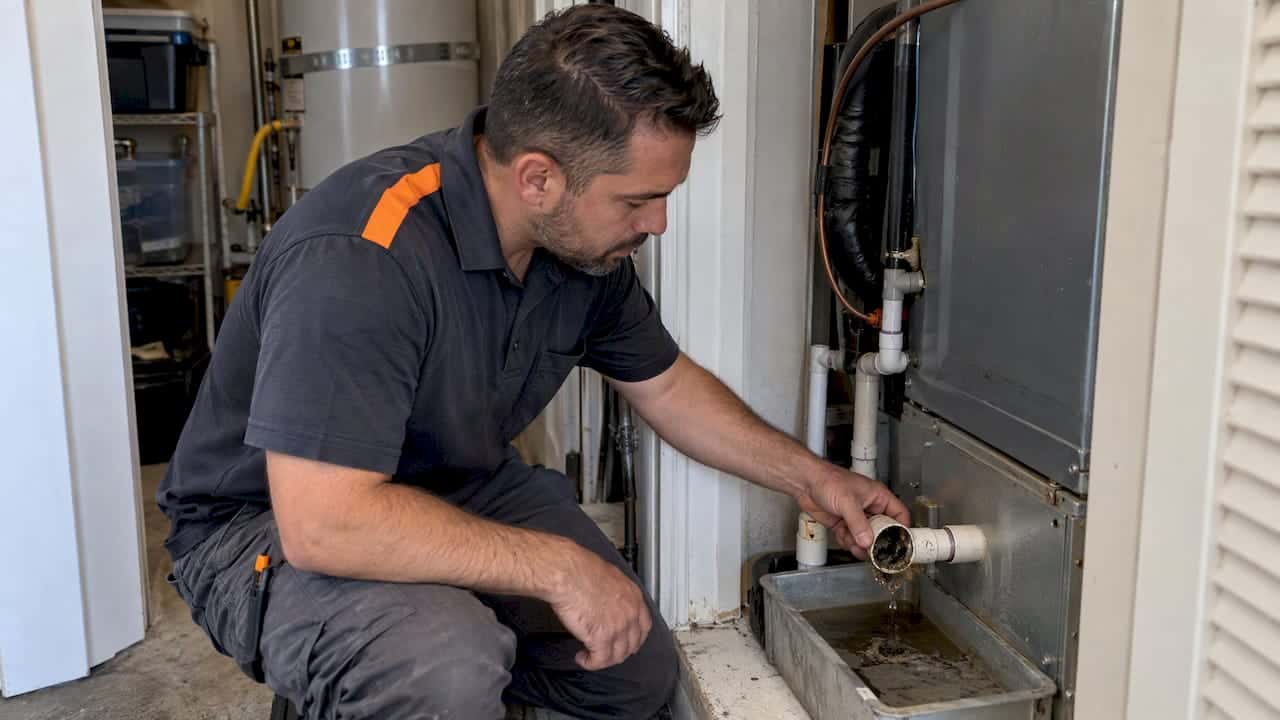
Capacitors can hold a dangerous electrical charge even when the unit is powered off, which is why trained technicians use specialized tools to discharge them safely before any repair. When a technician arrives, they’ll run a voltage check, test the capacitor, measure the motor’s amp draw, and check the temperature split across your coil to confirm the exact cause before recommending a fix.
Preventive maintenance to avoid fan failures
Most fan failures build up over months, not minutes, which means regular maintenance catches them early. Checking your filter monthly and replacing it at least every three months keeps airflow steady and prevents the restriction that overworks a motor, a standard Energy Star recommends for exactly this reason.
Dirty coils deserve the same attention. Energy, which means longer run times and more wear on every component, including the fan motor. An annual professional inspection catches coil buildup, loose electrical connections, and early capacitor wear before they turn into a no-spin emergency.
- Check your filter monthly; replace it at least every three months.
- Schedule an annual coil cleaning and full system inspection.
- Ask about surge protection and proper breaker sizing to reduce nuisance trips.
Our coil maintenance guide covers what a thorough cleaning involves if you want more detail before your next tune-up.
Leo’s practical notes: what technicians check and what to expect from service
When one of our technicians shows up for a no-spin fan call, we run through the same sequence every time: voltage at the unit, capacitor health, motor amp draw, and a temperature split to confirm airflow is doing what it should. Each test rules something out, so by the time we’re done, we know exactly what failed and why.

We provide pricing before any work starts, so you know the cost upfront with no surprise add-ons, and we offer prompt service for calls like this. Before we arrive, jot down your unit’s model number, what you noticed (humming, silence, warm air), and whether a breaker tripped. That detail alone can cut diagnostic time significantly.
Owner perspective: why safety and preventive care beat emergency fixes
I’ve seen plenty of homeowners try to save a service call by popping open a panel they shouldn’t have touched. A capacitor doesn’t care that the power is off. It holds a charge that can hurt you, and that’s not a risk worth taking to save a few dollars.
What actually saves money is routine care: checking your filter, watching for early warning signs, and booking a tune-up before summer heat exposes every weak component at once. Do the visual checks yourself. Leave anything with a plug, a wire, or a capacitor to someone trained for it.
— Leo
How LC Heating & Air can help with a non-spinning fan
We built our diagnostic process around the same priority homeowners have: get the fan running again without guessing at the cost. Our flat-rate service call covers the full diagnostic, voltage checks, capacitor test, and amp draw, so you know the price before any repair starts, and we offer same-day availability for calls just like this one.

- Flat-rate diagnostic and repair pricing with no surprise fees.
- Same-day service for urgent no-cool, no-spin situations.
- An HVAC maintenance plan to catch capacitor and coil wear before it causes a breakdown.
- Verified local reviews from homeowners across Los Angeles.
If your system needs more than a repair, we also handle AC installation and heat pump replacement for units nearing the end of their service life. Book a diagnostic through our services page and we’ll have a technician out to look at it.
FAQ
How do I reset my outside AC fan?
Turn off power at the breaker, then switch it back on once. If the breaker trips again right away, stop and call a licensed technician, since a repeat trip usually means an electrical fault rather than a simple reset issue.
What should I do if my AC blower fan isn’t spinning?
First confirm your thermostat is set to “cool” with the fan on “auto” or “on,” then check your filter for buildup that could be restricting airflow. If the blower still won’t turn after those checks, the issue is likely electrical and needs a professional diagnostic.
How can I tell if a fan motor or capacitor is bad?
A capacitor failure usually sounds like a hum or buzz with no blade movement, while a failed motor may stay completely silent even when power reaches the unit. A technician confirms the difference with a capacitor test and an amp draw reading rather than guesswork.
Can I run my AC if the fan is not working?
Running the system with a stalled fan can cause the coil to freeze or stress the compressor, so it’s best to shut the unit off until the fan issue is resolved. Continuing to run it risks turning a simple repair into a more expensive one.
Sources
These are the primary resources behind the safety and maintenance guidance in this article.
- Energy Star — Heating & Cooling: Save energy at home
- Electrical Safety Foundation International — Construction safety: HVAC
- Virginia Tech EHS — Electrical safety: capacitors
Recommended
Leo, Propietario y Técnico Principal en LC Heating & Air
Leo dirige LC Heating & Air como propietario-operador y tiene la licencia C-20 HVAC #1073586 de California. Sus guías se enfocan en diagnósticos prácticos, decisiones de reparación seguras y consejos claros para propietarios de Los Ángeles.