- Don’t Wait for a Breakdown: AC Capacitor Symptoms LA Homeowners Must Report
- What an AC Capacitor Does and Why It Matters
- Common Symptoms of a Failing AC Capacitor
- Visual Warning Signs at the Outdoor Unit
- Safe Checks You Can Do Before Calling a Technician
- What a Technician Actually Tests and Why It Matters
- What Causes Capacitor Failure and How Long They Last
- What Capacitor Replacement Typically Involves
- A Straight Answer From Someone Who Sees This Every Week
- Get an Honest Diagnosis Instead of a Guess
- Sources
- FAQ
- Recommended
Don’t Wait for a Breakdown: AC Capacitor Symptoms LA Homeowners Must Report

If your outdoor unit is humming but the fan won’t spin, a bad capacitor is a likely cause. That’s one of the clearest ac capacitor symptoms, according to guidance from Carrier and Trane. No single sign proves it, though. If you smell burning, see smoke, or the breaker keeps tripping, shut the system off at the thermostat and breaker, then call LC Heating and Air Conditioning or another qualified technician before touching anything else.
TL;DR:
- A failing capacitor often shows visual signs like bulging, leakage, or scorch marks, which require professional replacement due to shock risks.
- Symptoms such as humming without fan movement, delayed startup, or frequent breaker trips strongly indicate a capacitor problem.
- Regular maintenance, surge protection, and avoiding heat exposure can extend the lifespan of a capacitor, which typically lasts several years under normal conditions.
- Diagnostic tests like bench capacitance measurement and under-load testing are essential for accurate failure confirmation, with a 10% deviation prompting replacement.
- Attempting self-tests or discharges is dangerous; homeowners should instead provide technicians with detailed symptom logs for efficient diagnosis.
What an AC Capacitor Does and Why It Matters
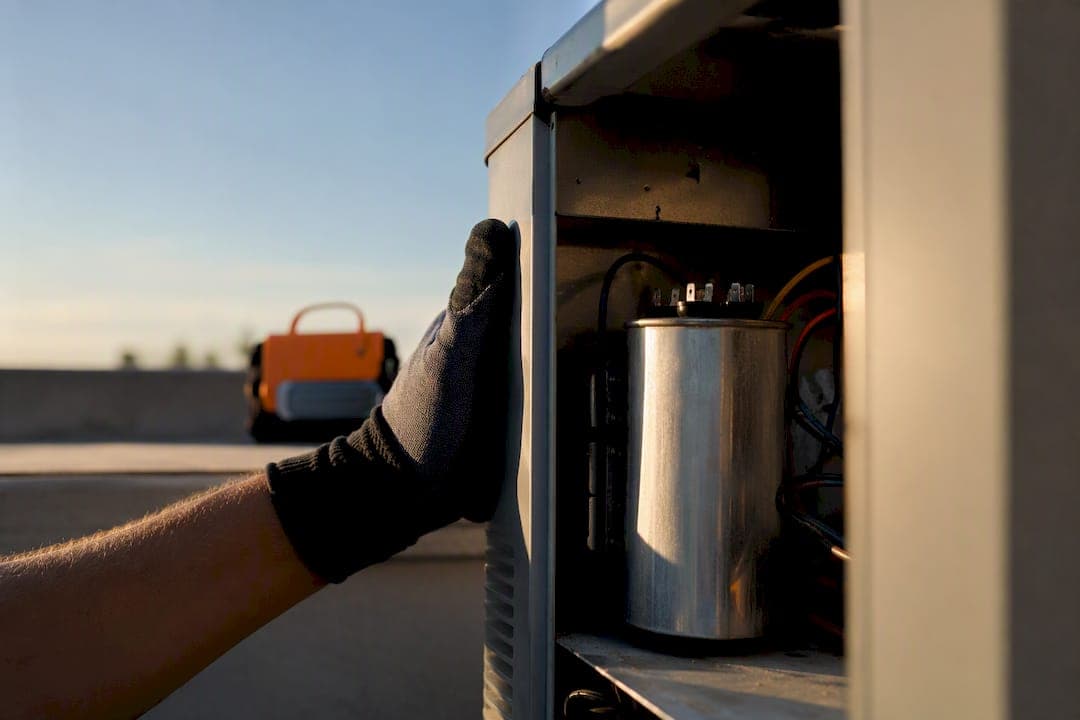
Think of the capacitor as the shove your outdoor unit needs to get moving. It stores an electrical charge and releases it in a burst, giving the compressor and fan motor the torque to start spinning against resistance. Once the motor is running, the capacitor keeps working in the background, smoothing out the electrical current so the motor doesn’t strain itself to death.
There are two types worth knowing. A start capacitor delivers that initial kick and then drops out of the circuit once the motor is up to speed. A run capacitor stays connected the whole time the unit operates, continuously adjusting the phase of the current to keep the motor turning efficiently. Most residential split systems rely mainly on a run capacitor for the compressor and outdoor fan motor, though some setups use both types together.
Here’s where it gets more nuanced for anyone with newer equipment. Modern heat pumps and many higher-efficiency systems use ECM (electronically commutated motor) or inverter-driven compressors, which don’t rely on a conventional run capacitor the same way older single-speed units do, according to Trane’s heat pump guidance. If you have a heat pump and notice odd startup behavior, the capacitor still might be involved, but the diagnosis isn’t automatic the way it often is on an older AC condenser. That’s exactly the kind of nuance experienced heat pump technicians are trained to sort out, specializing in mini split systems, VRF, and modern heat pump installations.
Common Symptoms of a Failing AC Capacitor
A weak or dying capacitor rarely fails silently. It usually announces itself through a combination of electrical and mechanical clues, because the compressor and fan motors are drawing higher amperage to compensate for lost starting torque. Here’s what to listen for and watch for, roughly ordered from most to least specific:
- The system won’t turn on at all. You hear the thermostat click, but nothing happens outside.
- A humming or buzzing sound with no fan movement. This is one of the most telling ac capacitor failure symptoms. The motor is trying to start but has no torque to overcome resistance.
- The outdoor fan isn’t spinning, even though you can hear the compressor or a faint electrical hum.
- Delayed starts. The unit hesitates for several seconds, or multiple seconds, before finally kicking on.
- Weak or warm airflow coming from your vents even though the system is running.
- Short cycling, where the AC turns on and off repeatedly in short bursts instead of running a full cooling cycle.
- A tripped breaker, often from the motor pulling excessive amperage as it struggles to start.
- A sudden jump in your energy bill with no change in usage, since a straining motor draws more current to do the same job.
- A burning smell near the outdoor unit or indoor air handler, which signals overheating components.
Pro Tip: Keep a simple log on your phone the moment you notice something off. Note the time, what sound you heard, whether the fan moved at all, and whether a breaker tripped. That five-minute habit gives a technician real diagnostic data instead of a vague “it’s not working right.”
Some combinations are far more diagnostic than others. Humming with a stationary fan, paired with a recent breaker trip, points strongly toward capacitor failure or a closely related motor issue. On the other hand, weak airflow by itself could just as easily be a dirty filter or a refrigerant problem. Carrier’s own troubleshooting resources confirm that these symptoms overlap heavily with other failures, which is exactly why Building America and Department of Energy diagnostic guidance stress that technicians run systematic measurements rather than guessing from symptoms alone. The list above tells you what to watch for and what to report. It’s not a substitute for testing.
Visual Warning Signs at the Outdoor Unit
Sometimes the capacitor shows its damage before it ever fails completely, and these visual cues deserve immediate respect. A healthy capacitor is a smooth, sealed cylinder. A failing one often tells a different story if you look closely (from a safe distance, with the unit powered off).
Watch for a bulging or domed top on the capacitor casing, which happens when internal pressure builds from overheating or age. Oily residue leaking from the casing is another red flag. That’s dielectric fluid escaping a compromised seal. Scorch marks, discoloration, or melted plastic around the terminals point to arcing or a short that’s already happened. Any of these signs, combined with a burning smell, means the component has likely already failed or is close to it.

Here’s the safety line that matters most: visible damage on a capacitor is not a DIY repair project, even for confident homeowners. Capacitors store an electrical charge even after the power is off, and a charged capacitor can deliver a serious shock. Trane is direct about this: capacitor work belongs to trained professionals because of that stored-charge risk, and OSHA’s electrical safety standards require proper lockout and discharge procedures before anyone works inside a live electrical cabinet.
Your dos and don’ts here are simple:
- Do turn the thermostat off and flip the outdoor disconnect or breaker if you see bulging, leakage, or smoke.
- Do step back and call a technician if you smell anything burning.
- Don’t open the electrical access panel to look inside.
- Don’t try to spin the fan blade with a stick or screwdriver to “help it start.”
- Don’t touch or bridge any terminals, ever, even with the power off.
Safe Checks You Can Do Before Calling a Technician
Before you assume the worst, rule out the simple stuff. A surprising number of “AC is dead” calls turn out to be something a homeowner could have checked in two minutes, and Carrier’s troubleshooting steps walk through exactly this kind of triage before anyone opens a panel.
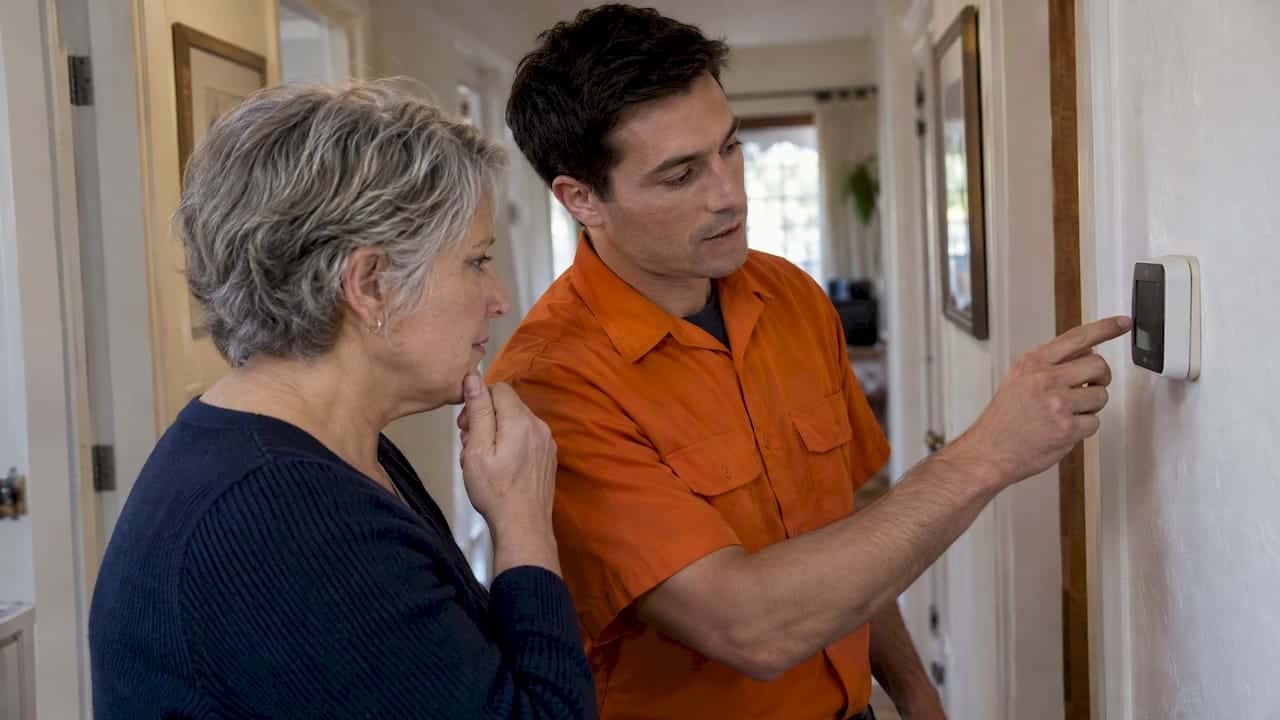
- Check the thermostat. Confirm it’s set to “cool,” the temperature is actually below room temperature, and the batteries aren’t dead if it’s a battery-powered model.
- Check your breaker panel. Look for a tripped breaker for both the indoor air handler and the outdoor condenser, and check for an outdoor disconnect switch that may have been bumped or shut off.
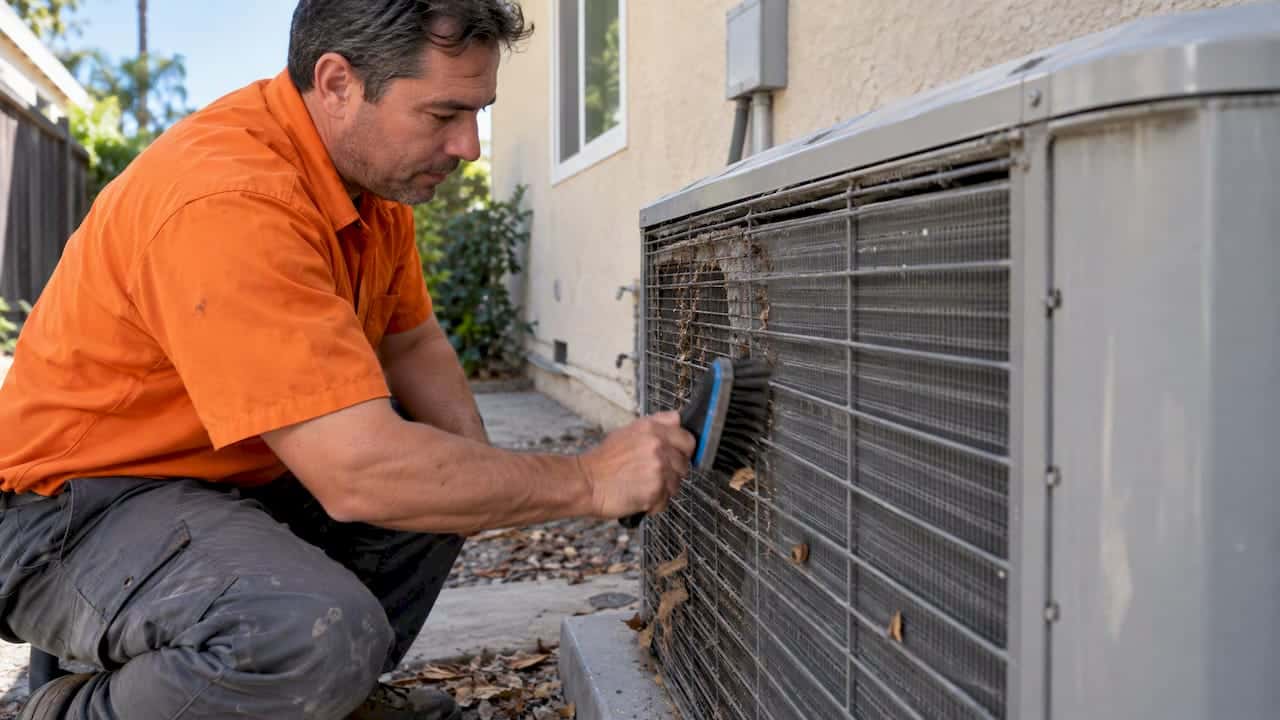
- Clear debris around the outdoor unit. Leaves, grass clippings, or overgrown shrubs can block airflow enough to trigger safety shutdowns that mimic capacitor failure.
- Check your air filter. A severely clogged filter starves the system of airflow and can cause symptoms that look electrical but aren’t.
What you should never do is open the electrical cabinet, poke around near the capacitor terminals, or attempt to discharge or test a “live” capacitor yourself. That’s where the real risk lives, and it’s also where a homeowner’s troubleshooting value runs out.
What you can do instead is gather information for the technician. Note the exact sequence of events (did the fan try to spin before it stopped, or never move at all?), any sounds you heard, whether a breaker tripped and how many times, and whether your indoor blower was still running while the outdoor unit sat silent. That detail can shave real time off a diagnostic visit.
What a Technician Actually Tests and Why It Matters
A trained technician doesn’t guess based on your symptom list. They follow a sequence designed to isolate the actual cause, and it starts with safety.
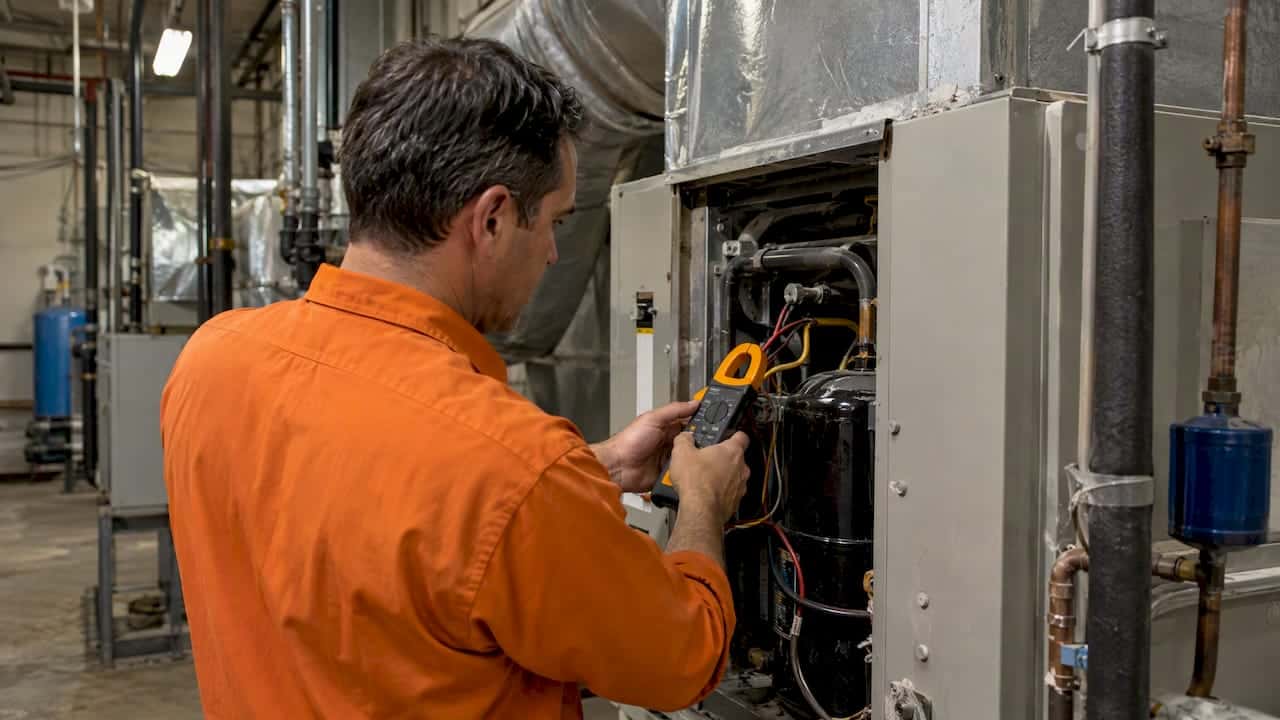
First comes a safe disconnect and discharge of the capacitor, following the same lockout principles OSHA outlines for any energized equipment. Next is a visual inspection for the bulging, leakage, or scorch marks described earlier. Then the real testing begins:
- A bench capacitance test, done with the capacitor fully disconnected, measures its actual microfarad (MFD) rating against the number printed on the label.
- An under-load test, run while the system operates, calculates capacitance using the formula (start-winding amps × 2652) ÷ capacitor volts, a method detailed by HVAC School.
- Amperage and voltage checks on the compressor and fan motor windings confirm whether the motor itself is drawing normal current or straining.
- Motor and compressor checks, along with corroborating refrigerant and airflow readings, rule out other causes that produce similar symptoms, such as a failing motor or compressor.
The industry rule of thumb, per HVAC School’s testing procedure, is that a capacitor reading more than 10% below its rated microfarad value gets replaced. That tolerance matters because a capacitor can look completely normal on the outside while testing weak on the bench. Visual inspection alone misses that kind of failure every time.
A capacitor that measures within its rated range under bench conditions can still fail under the mechanical load of an actual startup cycle, which is why HVAC School and manufacturers like Copeland recommend corroborating capacitance readings with running amperage checks rather than trusting either test in isolation.
This layered approach is exactly why LC Heating and Air Conditioning built flat-rate diagnostics into how we work, following a comprehensive commercial HVAC upgrade planning steps guide. You get a real electrical reading, not a guess, and you’re not pressured into replacing a part that measured fine.
What Causes Capacitor Failure and How Long They Last
Heat is the biggest enemy a capacitor faces. Every summer in Los Angeles, outdoor units bake in direct sun, and internal temperatures climb well past what the capacitor’s dielectric material handles comfortably over the years. Add in normal aging, voltage spikes from grid fluctuations, occasional manufacturing defects, frequent on and off cycling from an oversized or short-cycling system, and even nearby lightning strikes, and you’ve got the full list of common ac capacitor issues.
Heat pumps carry one extra wrinkle. Because they run in both heating and cooling modes essentially year round, their capacitors (on models that use conventional ones) can see more cumulative cycling than a cooling-only AC capacitor over the same span.
Most residential AC capacitors typically last a moderate number of years under normal conditions, though intense heat exposure and heavy cycling shorten that considerably. A few habits stretch that lifespan:
- Schedule seasonal maintenance so a technician catches early bulging or capacitance drift before it strands you.
- Install surge protection to blunt voltage spikes from grid events or lightning.
- Keep the outdoor unit clear of direct, all-day sun exposure and free of debris buildup.
Pro Tip: If your unit has failed a capacitor more than once in a few years, don’t just keep replacing the part. Ask your technician to check for a motor drawing excess amperage, since that’s often what’s cooking capacitors prematurely.
What Capacitor Replacement Typically Involves
A straightforward capacitor replacement is one of the faster repairs in HVAC. Most visits run one to two hours total once a technician arrives, covering diagnosis, safe discharge, bench testing, the actual swap, and a final under-load retest to confirm the new part performs correctly.
The replacement itself has to match specifications closely. Copeland’s electrical guidance is clear that a replacement capacitor needs the same microfarad rating and a voltage rating equal to or higher than the original. Installing a lower-voltage-rated part risks premature failure or a safety hazard.
What drives the cost of that visit varies:
- Part quality and voltage rating required for your specific system.
- Access difficulty, especially on older or awkwardly placed outdoor units common in some historic Los Angeles homes.
- System age and whether other components show wear during inspection.
- Warranty status, which can offset part costs on newer installations.
One warning worth taking seriously: if a capacitor has failed more than once in a short window, or a technician measures unusually high amperage even with a fresh capacitor installed, that often points toward a failing motor or compressor rather than a simple electrical part. That’s a different, often costlier repair, and it’s exactly why an honest diagnostic matters more than a fast one.
A Straight Answer From Someone Who Sees This Every Week
I’m Leo, and I own LC Heating and Air Conditioning. What strikes me most about capacitor calls isn’t the repair itself, it’s how often homeowners wait too long because the symptoms seemed minor. A little hum here, a slightly slower start there. By the time the breaker trips, the motor may already be under more stress than it should be.
My advice is simple: if you notice humming without fan movement, delayed starts, or anything that smells off, shut the system down and get it looked at. Don’t wait for it to fail completely on the hottest day of the year. The diagnostic process can be structured around flat-rate pricing so homeowners know what a visit costs before the panel is opened, and same-day service is important because a dead AC in summer should be addressed promptly.
— Leo
Get an Honest Diagnosis Instead of a Guess
LC Heating and Air Conditioning takes a different approach than the “replace it and see” method some shops default to: flat-rate diagnostics mean you know the cost before we test anything, and evidence-based testing means you only pay to replace what’s actually failed.

If you’re seeing any of the ac capacitor symptoms covered here, humming without fan movement, a tripped breaker, weak airflow, or a burning smell, the safest next step is a professional diagnostic visit rather than a guessing game with parts. We serve homes across Greater Los Angeles, from historic properties with older single-speed systems to modern homes running multi-zone heat pumps and mini splits, and our technicians carry the amperage and bench-testing equipment to give you a real answer on the spot. Book a service call starting from $125 and get a same-day appointment when your schedule allows it.
Sources
- What is an AC Capacitor? | Cost, Signs of Failure & Replacement
- AC Capacitors: What They Are and Why They Matter - Trane®
- Capacitor Testing and Replacement Procedure - HVAC School
- Air Conditioner diagnostics (Building America/DOE)
FAQ
Will an AC Compressor Run With a Bad Capacitor?
Usually not, or not for long. A compressor missing its starting torque may hum and try to start without succeeding, and if it does manage to start, it typically draws excess amperage that can shorten its life or trip the breaker.
What Happens When My AC Capacitor Goes Bad?
You’ll typically notice a combination of signs: the unit won’t start, the outdoor fan sits still while you hear a hum, airflow turns weak or warm, or the system short cycles. Carrier’s guidance confirms these overlapping symptoms, which is why a professional electrical test, not a guess from symptoms alone, confirms the diagnosis.
What Are the Two Typical Signs That a Capacitor Has Failed?
The two most diagnostic signs of faulty capacitor performance are a humming or buzzing sound paired with a fan that doesn’t spin, and a unit that trips its breaker repeatedly during startup attempts. Either sign alone warrants a professional look, and both together strongly suggest a capacitor issue.
What Is the Average Lifespan of an AC Capacitor?
Most residential AC capacitors last several years under normal conditions, though intense heat, frequent cycling, and voltage spikes shorten that window considerably. Regular maintenance and surge protection help extend service life.
Can I Test My AC Capacitor Myself?
You shouldn’t attempt to test or discharge a capacitor yourself, since it can hold a dangerous electrical charge even when the power is off. Leave bench and under-load testing to a licensed technician who follows proper discharge and lockout procedures, like the team at LC Heating and Air Conditioning.
Recommended
Leo, Owner & Lead Technician at LC Heating & Air
Leo leads LC Heating & Air as an owner-operator and holds California CSLB C-20 HVAC license #1073586. His guides focus on practical diagnostics, safe repair decisions, and clear advice for Los Angeles homeowners.