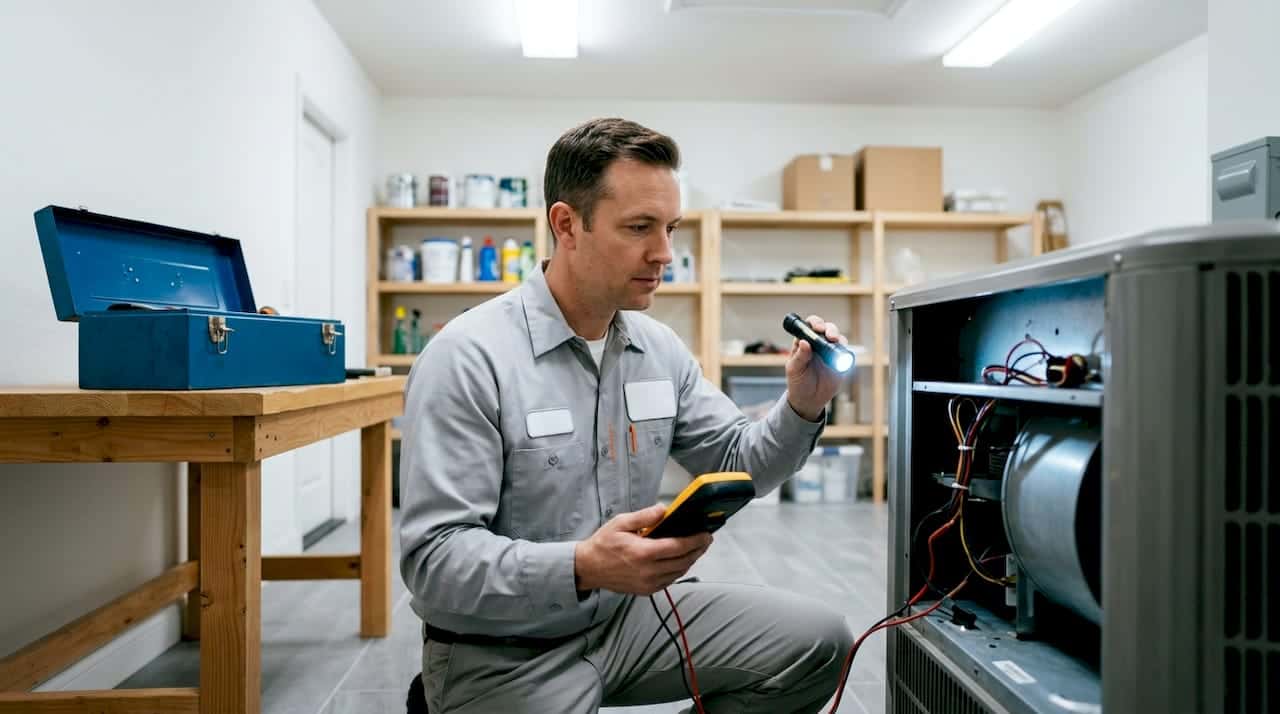
Some HVAC problems can't wait until morning. LC Heating & Air provides emergency HVAC, 24-hour AC repair, and same-day air conditioning service across Greater Los Angeles — including heat advisories, furnace failures, CO alarms, and gas odors. We disclose emergency fees upfront and won't charge triple rates. For Woodland Hills Country Club, we also navigate gated access, hillside equipment pads, and long refrigerant runs so your emergency call gets a real fix, not a runaround.
Emergency HVAC & 24-Hour AC Repair in Woodland Hills Country Club
LC Heating & Air provides emergency HVAC in Woodland Hills Country Club — including 24-hour AC repair, emergency air conditioning repair, same-day HVAC service, emergency heating repair. Whether you need same-day service, a written estimate, or help deciding between repair and replacement, our licensed technicians handle every make and model.
We repair and service all major HVAC brands in Woodland Hills Country Club, including Carrier, Lennox, Trane, Goodman, Hisense, and LG, and older or discontinued units. No matter the manufacturer, we diagnose the problem accurately and give you an upfront price before any work begins.
Living in Woodland Hills Country Club means you're up in the hills where summer heat bakes the valley and winter nights can drop into the 30s. When your AC dies at 3 PM during a heat advisory or the furnace won't light on a cold December evening, that's not just an inconvenience — it's a genuine emergency. We designed our emergency HVAC service specifically for situations like these: we answer the phone 24/7, we tell you the fee upfront, and we roll a stocked truck to your gated community.
Our team knows the country club area well — the narrow winding roads, the specific access points for each gate, and the fact that many equipment pads are tucked into hillside slopes or behind landscaping that's tough to reach in the dark. We handle all makes and models, from Carrier to Lennox to Mitsubishi mini-splits, and we carry the parts that fail most often: capacitors, contactors, ignitors, and gas valves. The goal is one-visit resolution, not a patch job that leaves you waiting for a follow-up.
Consideraciones HVAC locales
We will need your gate code or HOA contact info at the time of the emergency call. Some gates have a callbox; others require pre-arranged access. We handle it smoothly.
Condensers on slopes or behind retaining walls require extra gear — extension cords, lighting, and safety harnesses for nighttime work. We bring it all.
Larger custom homes often have condenser-to-air-handler line sets over 50 feet. Leaks in those lines are common and require specialized leak detection.
Temperatures in the country club area can be 5-10°F hotter than central Woodland Hills. AC systems here need robust capacity; undersized units fail faster.
Common Emergency HVAC Problems in Woodland Hills Country Club
The country club sits in a valley heat zone with hillside microclimates. During summer heat advisories, outdoor temperatures can hit 105°F, which puts enormous strain on AC condensers — especially units that are exposed to full afternoon sun on a south- or west-facing slope. The most common emergency call we get here is a complete AC failure caused by a failed run capacitor or a stuck contactor, both of which we routinely repair in one visit. If refrigerant lines run long from the condenser to the air handler — common in larger custom hillside homes — a small leak can escalate into a no-cooling situation fast.
On the heating side, valley winter nights drop below 45°F, and furnace failures in homes with elderly residents or infants become genuine safety emergencies. Gas valve failures, ignitor problems, and clogged condensate drains are the leading causes of no-heat calls after dark. We also respond to carbon monoxide alarms triggered by furnace heat exchanger cracks — something we treat as a life-safety priority, not a service call.
Hillside Homes and Older Custom Builds Require a Different Approach
Woodland Hills Country Club is not tract housing. The homes here range from older custom builds from the 1960s and 1970s to luxury remodels with complex duct routing and multi-zone systems. Equipment placement is rarely straightforward — condensers might be tucked behind a hillside retaining wall, air handlers hidden in cramped attics or crawl spaces, and refrigerant lines snaking 60 feet or more. This matters because when we arrive for an emergency, the first challenge is just getting eyes on the equipment safely.
Older homes often have undersized ductwork or original HVAC systems that were never designed for modern cooling loads. That means a repair that works on a newer tract home might only be a temporary bandage here. We take the time to explain whether a capacitor replacement will get you through the rest of summer or whether the system's age and duct limitations make a replacement conversation worth having now.
Our Emergency Diagnostic Process: Stabilize, Diagnose, Decide
When we roll up to a country club property in the middle of a heat advisory, the first thing we do is stabilize the situation. If it's a CO alarm, we clear the house and coordinate with the fire department. For no-cooling calls, we check the condenser for power, test the capacitor and contactor, and measure the temperature split at the supply registers. We also look for anything that could cause property damage — frozen coils that could thaw and flood a ceiling, or refrigerant lines that are actively leaking oil onto a patio. Safety and damage prevention come before the full diagnostic.
Once the system is stable, we walk through the diagnostic step by step. We check the thermostat, the electrical connections, the refrigerant pressures, and the airflow path. If the failure is a common part like a capacitor, we usually have it on the truck and we can have cooling running within 30 minutes. If the problem is more complex — like a failed compressor or a heat exchanger crack — we give you the honest picture: what a repair would involve, whether we can get parts tonight, and whether a temporary workaround is safe until morning.
Honest Repair vs. Replacement Advice for the Country Club
Here is the truth: not every AC or furnace failure during an emergency call needs to be a replacement conversation. Most emergency failures are caused by a single component that failed due to age or electrical stress — a capacitor, a contactor, an ignitor, a gas valve. If the rest of the system is in decent shape, we recommend the repair and get you back running that night. We stock these parts specifically because we want to avoid turning a $200 repair into a $6,000 replacement that could have waited six months.
That said, if the system is 15 years old, the compressor has failed, the heat exchanger is cracked, or the ductwork is collapsing, a repair doesn't make sense. We will tell you that too. We will explain why the replacement cost is the smarter long-term decision and give you a written estimate so you can compare. But we never pressure you to make a final decision in the middle of an emergency. If we can get you stable for the night, we will.
Emergency Service Costs and What Affects Them in Woodland Hills
Our emergency service call runs between $125 and $200, and we disclose that fee before we dispatch. We do not charge after-hours overtime or holiday surcharges on top of that — the diagnostic fee is the same whether you call at 2 PM or 2 AM. Emergency AC repairs typically run $175 to $800, furnace repairs $175 to $750, and heat restoration $150 to $650. Every repair is priced on a written estimate before we start work, so there are no surprises when the invoice arrives.
Costs can be higher in the country club area for a few reasons. Equipment on hillside pads sometimes requires a longer refrigerant line set, which adds material cost. Gated access and long driveways can add a few minutes to the dispatch time, but we don't charge extra for that. We also do not inflate parts pricing for emergency calls — the same capacitor that costs $175 during business hours costs $175 at midnight.
Gated Access and Hillside Scheduling in the Country Club
Woodland Hills Country Club is a gated community, and that means we need to coordinate access with the HOA or property management even for emergency calls. Some gates have a callbox system that we can use when we arrive; others require a gate code or a call to the homeowner. We ask every country club customer to share the gate code or contact info at the time of the call so we can get to you without delay. If the gate is staffed, we work with the security guard to get in.
We also account for hillside access in our scheduling. If your condenser is on a steep slope or behind a retaining wall, we bring the right equipment — extension cords, portable lighting, and proper safety gear — to work in those conditions at night. We do not mark a job complete until we have confirmed the system is running safely and you are comfortable, even if that means a longer visit.
Common Mistakes Homeowners Make During HVAC Emergencies
The most common mistake we see is waiting too long to call. Homeowners hear a strange noise or notice the AC isn't cooling as well and think it might go away. By the time they call, the capacitor has failed completely, the compressor is locked up, or a small refrigerant leak has turned into a big one. If something seems off — especially during a heat wave — call us before it becomes a full emergency. A $150 diagnostic now can prevent a $1,500 emergency repair tomorrow.
Another mistake is trying to troubleshoot or repair the system yourself. We have seen homeowners try to jump-start a condenser with a screwdriver, replace a thermostat with the wrong voltage, or pour water on a hot compressor. Those actions can cause electrical shocks, damage the equipment further, or create a fire risk. If your system isn't working, turn it off at the thermostat and the breaker, and call a licensed HVAC contractor.
Health and Safety During HVAC Emergencies in the Country Club
Carbon monoxide is the most serious health risk associated with HVAC emergencies. A cracked heat exchanger in a gas furnace can pump CO into your home without any obvious signs. If your CO detector goes off — even if it's just a low-battery chirp or a single alarm — leave the house immediately with everyone and pets, call 911 from outside, and then call us. Do not re-enter until both the fire department and our technician have cleared the building. We treat CO alarms as priority-one emergencies and respond immediately with no extra cost.
Heat-related illness is another concern, especially for elderly residents, infants, and anyone with cardiovascular or respiratory conditions. During a heat advisory, losing AC can turn dangerous within hours. We recommend using portable or window AC units from a local store to provide temporary relief while you wait for service. If you or a family member feels dizzy, nauseous, or has a rapid heartbeat, move to a cooler location and seek medical help. Your health is more important than any piece of equipment.
Should You Call for Emergency HVAC Service?
The short answer: if you have no cooling during a heat advisory, no heat when temperatures are below 45°F, a gas smell near your furnace or water heater, or a CO alarm going off, call us now. Those are genuine emergencies that require immediate attention. If your AC is blowing warm but the air handler is running, or your furnace is making a noise but still producing heat, call us during business hours and we'll schedule a same-day appointment at standard rates — it can wait a few hours.
If you are unsure, call anyway. We will ask a few questions to determine whether your situation is an emergency or a routine repair, and we will tell you honestly. We do not upsell emergency service on calls that are safe to defer. The goal is to get you safe and comfortable, not to maximize the bill.
Cómo funciona la visita
Call (323) 970-3113. A technician — not a call center — answers your call and dispatches immediately. We give you an honest ETA based on your location in the country club.
For gas and CO calls, safety is priority one. For all other emergencies, we diagnose the failure as quickly as possible while explaining what we find.
We carry capacitors, contactors, ignitors, gas valves, and common refrigerant. Most AC and furnace emergencies are repaired in a single visit.
If a part needs to be ordered, we get your system stable for the night and return first thing the next morning to finish the repair.
Factores de costo que revisamos antes de cotizar
- • Emergency service call fee: $125–$200 (disclosed before dispatch)
- • Emergency AC repair: $175–$800 (depending on part and labor)
- • Emergency furnace repair: $175–$750
- • Emergency heat restoration: $150–$650
- • No overtime or after-hours surcharge on repair pricing
- • Parts are priced the same as business-hour rates
Próximos pasos útiles
Emergency HVAC in Woodland Hills Country Club at a glance
- • LC Heating & Air provides 24/7 emergency HVAC and AC repair for Woodland Hills Country Club.
- • C-20 HVAC contractor licensed by the California CSLB under license #1073586.
- • Emergency calls are answered within 30 minutes, 24/7, by a real technician.
- • Written estimates disclosed before any repair work — no hidden fees.
- • Stocked trucks carry capacitors, contactors, ignitors, gas valves, and common refrigerants for one-visit repairs.
- • Service covers all makes and models: Carrier, Lennox, Trane, Rheem, Goodman, Daikin, Mitsubishi, and more.
- • Gated community access and hillside equipment pads handled with proper gear and safety protocols.
- • Leo, owner, is pursuing NATE certification; technicians are NATE-trained and EPA-certified.
Our emergency hvac process in Woodland Hills Country Club
Reviewed by Leo, Owner & Lead Technician
This emergency hvac guide for Woodland Hills Country Club is reviewed for practical HVAC accuracy by Leo at LC Heating & Air. LC Heating & Air holds California CSLB C-20 HVAC license #1073586 and provides written estimates before approved work.
What Woodland Hills Country Club customers say about emergency hvac
Verified reviews from homeowners in Woodland Hills Country Club and nearby neighborhoods who used our emergency hvac service.
“Our AC stopped working during a heat wave and LC had a technician here within two hours. He diagnosed a bad capacitor, had the part on his truck, and fixed it on the spot. Fair price, no upsell. Will use again.”
“Called on a Saturday because AC was blowing warm air. LC answered, sent someone the same afternoon. They found and fixed a refrigerant leak. Professional and reasonably priced.”
“Woke up to no AC at 6am. LC was at my door by 9am. Frozen evaporator coil — they explained exactly why it happened (dirty filter + low airflow) and fixed it same visit. Very professional.”