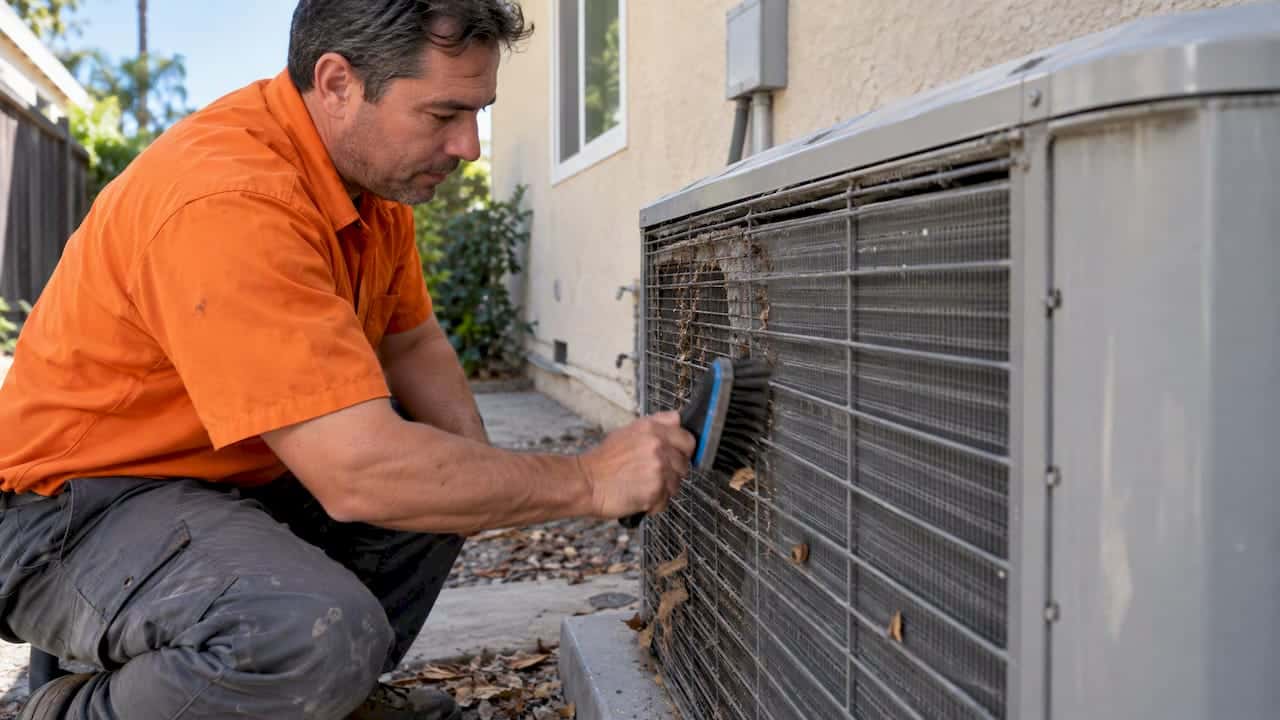
If dust, smoke residue, or musty odors are coming from your vents, duct cleaning may help. For Temple City homes with long AC run times and attic ductwork, we inspect first, then clean using truck-mounted negative pressure and rotary brushes. We photograph the results so you can see the difference.
Duct Cleaning & Air Duct Service in Temple City
LC Heating & Air provides duct cleaning in Temple City — including air duct cleaning, duct repair service, duct sealing, HVAC ductwork. Whether you need same-day service, a written estimate, or help deciding between repair and replacement, our licensed technicians handle every make and model.
We repair and service all major HVAC brands in Temple City, including Carrier, Trane, and Goodman, and older or discontinued units. No matter the manufacturer, we diagnose the problem accurately and give you an upfront price before any work begins.
The air you breathe passes through your ducts dozens of times every day. In Temple City's environment — with warm valley summers, attic heat, and occasional wildfire smoke — duct contamination is a real issue. LC Heating & Air provides professional duct cleaning using truck-mounted negative pressure systems that remove years of accumulated dust, debris, and allergens from your entire duct system, not just the vents you can see.
Duct cleaning is not something every home needs. But if you have visible dust blowing from vents, a musty smell when the system runs, or you have had recent construction or a wildfire event, it is worth having us inspect. We follow NADCA standards, photograph before and after, and give you a written estimate before any work starts.
Consideraciones HVAC locales
95-100°F
Galvanized steel with flex branches
1950s-1960s, with remodels
Wildfire smoke, construction dust, pet dander
Why Temple City Ducts Need Attention
Temple City homes face a particular set of duct contamination challenges. Summer temperatures regularly hit 95 to 100 degrees, and many homes run their AC systems for long stretches. When the system runs continuously, the ducts stay cooler than the surrounding attic, which can cause condensation inside the ducts, especially in sections with poor insulation.
Wildfire smoke is another factor. Even when windows are closed, fine particulate matter from nearby fires can enter the duct system through gaps in the building envelope. The 2025 Eaton Fire left significant particulate contamination in many San Gabriel Valley homes. Standard filter changes do not remove settled particulates from inside duct runs. If you live near the hills or have experienced smoky air, your ducts likely collected some of that debris.
Additionally, Temple City's housing stock includes many mid-century ranch homes and remodels where ductwork was added or modified over the years. Older galvanized steel ducts can have decades of accumulated dust, pet dander, and pest debris. flex duct that was crushed or disconnected during attic work is common and can pull attic insulation into the air stream.
Temple City Homes and Duct Systems
Temple City is primarily a single-family home community with attic-based duct systems. Many homes date from the 1950s and 1960s, with some newer construction and significant remodels. The older homes typically have galvanized steel trunk ducts with flexible branch runs. Over decades, those steel ducts collect a heavy layer of fine dust that standard filter changes never touch.
Remodels add another variable. When homeowners add square footage, upgrade kitchens, or finish basements or bonus rooms, the existing duct system often gets extended, patched, or modified. Those modifications can create leaks, crushed flex runs, and sections where debris collects. If you have had any renovation work in the past few years, your duct system almost certainly has construction dust inside it.
High cooling loads are normal in Temple City. That means systems run longer, which moves more air through dirty ducts. The result: more particulates recirculated into your living space. If you have hot or cold rooms, that can point to duct leakage or blockage, which we address during the cleaning and sealing process.
How We Diagnose Duct Contamination
Before we recommend duct cleaning, we inspect the system. That means checking accessible duct sections with a camera, looking at the evaporator coil and blower wheel, and testing airflow at each register. We also check for leaks in the duct system — many Temple City attics lose up to 30% of conditioned air through leaky joints — and assess whether the contamination level justifies cleaning.
Here is what we look for: visible dust or debris on coil surfaces, mold growth inside duct sections (especially near cooling coils), rodent or pest evidence, and excessive dust accumulation in trunk lines. We also ask about your symptoms: visible dust from vents, musty odors, allergy flare-ups at home, recent wildfire smoke events, or construction work. The inspection takes about 30 minutes for a typical home, and we provide a written estimate before any cleaning begins.
Clean, Seal, or Replace Ducts?
Not every dirty duct needs replacement. If the duct system is structurally sound — no crushed runs, no disconnected sections, no rodent damage — professional cleaning is usually the right move. We clean the entire system, including the air handler, coil, and blower wheel, and apply EPA-registered sanitizer if mold or bacteria is present. This is far less expensive than new ductwork.
But if the ducts have significant leaks, are crushed or disconnected, or if the insulation is damaged, cleaning alone won't fix the performance issues. In those cases, sealing or replacing sections of ductwork makes more sense. We can seal accessible leaks with mastic and tape, replace damaged flex runs, or — in extreme cases — recommend full duct replacement. The key is matching the repair to the condition. We will tell you honestly which path fits your situation.
Cost and Value of Temple City Duct Cleaning
Whole-home duct cleaning in Temple City typically runs $400 to $900 for a single-family home with one HVAC system. The range depends on the number of vents, accessibility, contamination level, and whether we need to clean the coil or blower wheel. If sealing is needed, that adds $1,000 to $3,000 depending on leak severity and access. We always provide a written estimate that itemizes the work before starting.
We do not fabricate rebates or discounts. If current manufacturer or utility rebates apply to related services like sealing or equipment upgrades, we will show you the details. But for cleaning alone, the value comes from improved indoor air quality, better airflow, and — in some cases — lower energy bills when the system no longer has to push air through dirty, restricted ducts.
Access and Scheduling in Temple City
We work in Temple City homes every week. Scheduling is straightforward: call us at (323) 970-3113, and we will set a time that works for you. We answer emergency calls within 30 minutes, though that is phone response time, not an arrival estimate.
For the cleaning itself, we need access to the attic or crawlspace where the duct system runs, clearance around the air handler, and a place to park our truck within hose reach — about 100 feet. Most Temple City homes have standard attic access, and we can work around furniture and flooring with drop cloths. If you have a country-club property with gated access, we coordinate with the HOA or gate staff to get in and out efficiently.
Common Mistakes Homeowners Make with Duct Cleaning
The biggest mistake is hiring a company that offers a $99 whole-house special. That price is not enough for proper cleaning — those companies often just spray a sanitizer or vacuum only the register openings. Real duct cleaning requires truck-mounted negative pressure, rotary brush agitation, and thorough work. We follow NADCA standards, which means source removal, not surface cleaning.
Another common mistake: skipping the coil and blower wheel. Even if the ducts are clean, if the evaporator coil is coated in dirt or the blower wheel is caked with dust, your air quality will still be poor. Our full cleaning includes those components. Also, many homeowners replace filters more often but neglect to check duct sealing. Leaky ducts undo the benefit of a clean system by pulling attic dust into the air stream.
Health and Safety Considerations for Duct Cleaning
Duct cleaning can improve indoor air quality by removing accumulated allergens, mold spores, pet dander, and fine particulates. For households with allergy or asthma sufferers, the improvement can be noticeable. But it is not a cure-all. If your home has moisture issues, the ducts will eventually get dirty again. We address that by checking for condensation sources and recommending dehumidifiers or insulation where needed.
Safety note: if your home was built before 1980 and has duct insulation that may contain asbestos, we will not clean those ducts until asbestos testing and abatement is completed. We perform a visual inspection before starting, and if we suspect asbestos, we stop work and let you know why. If we find significant contamination, we will advise on remediation steps before cleaning.
Is Duct Cleaning Right for Your Temple City Home?
If you see visible dust blowing from vents, smell musty odors when the system runs, or have had recent wildfire smoke or construction, duct cleaning is likely worth it. If your ducts have not been cleaned in 5 or more years, and you have allergy sufferers or pets, it is a good investment. But if your home is relatively new (under 10 years), your filters are changed regularly, and you have no symptoms, cleaning every 5-7 years is enough.
We do not push cleaning on every home. We inspect first, show you the condition of your ducts, and give you a clear recommendation. If the ducts are clean enough, we will tell you. If they need cleaning, we show you the before-and-after photos so you know the work was done.
Cómo funciona la visita
Inspect accessible ductwork with a camera to assess contamination and identify damage or leaks.
Connect truck-mounted vacuum to create whole-system negative pressure.
Use rotary brushes and compressed air whips to dislodge debris while negative pressure captures it.
Apply EPA-registered sanitizer if mold or bacteria is present and seal any duct leaks.
Factores de costo que revisamos antes de cotizar
- • Number of vents and system size
- • Accessibility of ductwork (attic, crawlspace)
- • Condition of coil and blower wheel needing cleaning
- • Any sealing or repair work needed
Próximos pasos útiles
Duct Cleaning in Temple City at a glance
- • LC Heating & Air serves Temple City for duct cleaning and HVAC services.
- • Located at 509 N Fairfax Ave, Los Angeles, CA 90036.
- • Licensed: CSLB #1073586 (C-20 HVAC).
- • Phone: (323) 970-3113.
- • Written estimates provided before work begins.
- • Emergency calls answered within 30 minutes (phone response).
- • Follows NADCA standards for duct cleaning with truck-mounted negative pressure.
Our duct cleaning process in Temple City
Reviewed by Leo, Owner & Lead Technician
This duct cleaning guide for Temple City is reviewed for practical HVAC accuracy by Leo at LC Heating & Air. LC Heating & Air holds California CSLB C-20 HVAC license #1073586 and provides written estimates before approved work.
What Temple City customers say about duct cleaning
Verified reviews from homeowners in Temple City and nearby neighborhoods who used our duct cleaning service.
“AC wasn't cooling to setpoint even though it was running all day. LC found the condenser coils were completely clogged with cottonwood. Cleaned them on the spot and the system cooled my house 12 degrees in an hour.”
“LC replaced our entire HVAC system — new Carrier condenser, furnace, and coil. Leo walked us through every option without pressure. The install team was professional and clean. System runs perfectly and our electricity bill dropped about 30%.”
“Called LC because our CO detector went off. Their technician found a crack in the heat exchanger and immediately shut down the furnace. He explained the safety issue clearly, provided a replacement estimate, and didn't try to scare us — just facts.”