If your commercial AC is down in Riviera Country Club, we diagnose the problem fast and provide a written estimate before any work begins. Our technicians know the country club environment—gated access, salt-air exposure, and high uptime requirements. Call (323) 970-3113 for priority response.
Commercial HVAC Repair & Service in Riviera Country Club
LC Heating & Air provides commercial HVAC in Riviera Country Club — including commercial HVAC repair, commercial air conditioning, rooftop unit repair, commercial HVAC maintenance. Whether you need same-day service, a written estimate, or help deciding between repair and replacement, our licensed technicians handle every make and model.
We repair and service all major HVAC brands in Riviera Country Club, including Carrier, Trane, Lennox, York, and Goodman, and older or discontinued units. No matter the manufacturer, we diagnose the problem accurately and give you an upfront price before any work begins.
A failed air conditioner in a commercial space is more than an inconvenience—it's a disruption to operations, events, and customer comfort. At Riviera Country Club, maintaining a comfortable environment for members and guests is non-negotiable. LC Heating & Air provides commercial AC repair throughout the Riviera Country Club area, targeting rapid response to minimize downtime.
Our technicians are familiar with the unique conditions here: salt-laden coastal air that accelerates coil corrosion, hillside properties that affect line set routing, and the strict access protocols required for a private club. We bring the same diagnostic precision to a 20-ton rooftop unit as we do to a small split system. We work with estate managers, event coordinators, and facility directors to schedule repairs with minimal disruption.
Consideraciones HVAC locales
Marine-layer humidity and salt-air exposure accelerate coil corrosion and affect HVAC performance.
Gated communities require vendor coordination; we handle gate codes and parking logistics.
Luxury estates, older beach properties, and newer high-efficiency systems each present unique challenges.
Clubhouses, event venues, and offices often use rooftop units (RTUs) and commercial split systems.
Common Commercial AC Problems in Riviera Country Club
Salt-air exposure from the Pacific is the single biggest factor affecting AC longevity here. Commercial condenser coils on clubhouse rooftops or behind beachfront properties can show corrosion within three to five years. This leads to coil leaks, micro-perforations, and eventual refrigerant loss. In our experience, annual coil cleaning and protective coatings extend the coil's life significantly, but periodic replacement is often part of the reality.
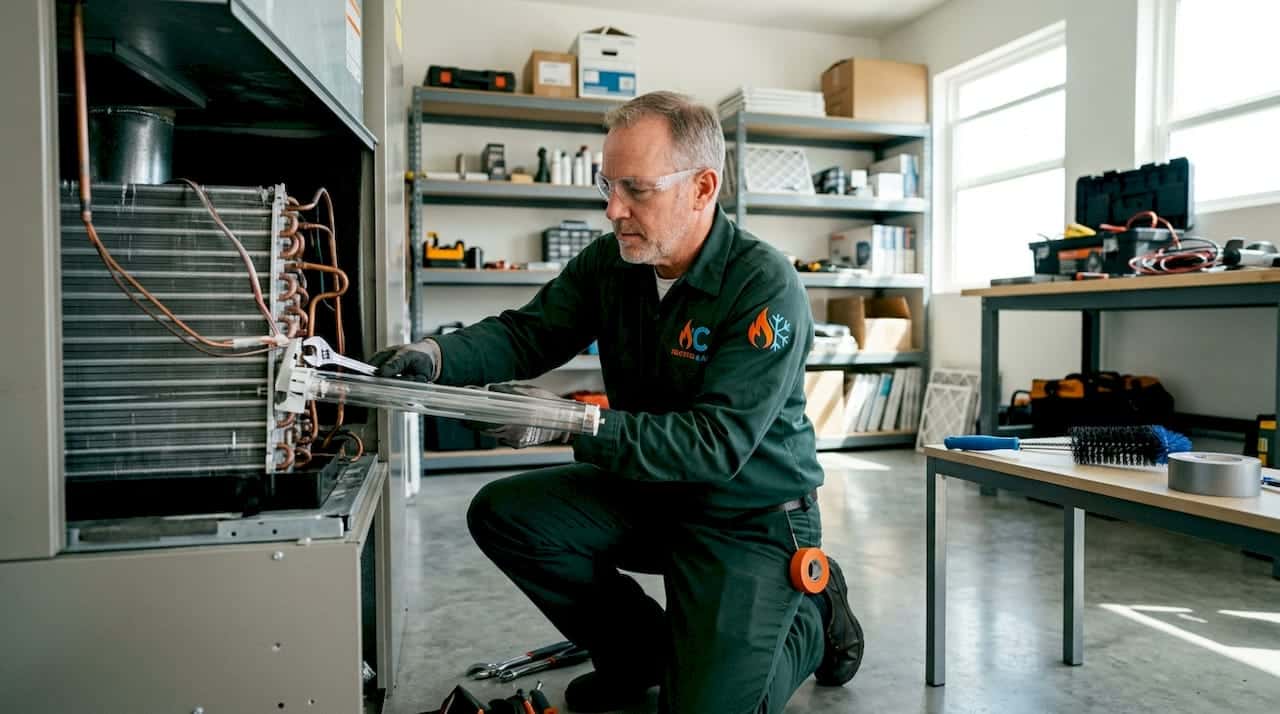
Another frequent issue is high-pressure lockout on rooftop units. The same dust, pollen, and bird activity that affect residential systems also clog commercial condenser coils, especially during dry months. When the coil is coated with debris, head pressure rises and the safety trips, leaving the space without cooling. A thorough coil cleaning—not just a hose-down—usually restores operation. We also see failed commercial contactors and capacitors in units exposed to coastal humidity.
The Buildings We Serve: Estates, Clubhouses, and Commercial Spaces
Riviera Country Club is home to a mix of luxury estates, custom hillside homes, older beach properties, and high-efficiency systems. On the commercial side, we service clubhouse HVAC, event venue cooling, administrative offices, and pro shop spaces. These buildings range from mid-century construction to modern builds, each with its own set of HVAC challenges.
Older properties may have undersized ductwork or outdated control systems that struggle to keep up with current cooling loads. Newer builds often have high-efficiency variable-speed units that require precise diagnostic equipment. In both cases, our approach is the same: identify the failure, explain the options, and let you decide the path forward.
How We Diagnose Commercial AC Failures
When we arrive for a commercial AC call, the first step is to talk to the facility manager or event coordinator. We ask what happened leading up to the failure, how the system was performing, and any recent service history. Then we check the electrical supply at the disconnect and inspect the thermostat or building management system for error codes.
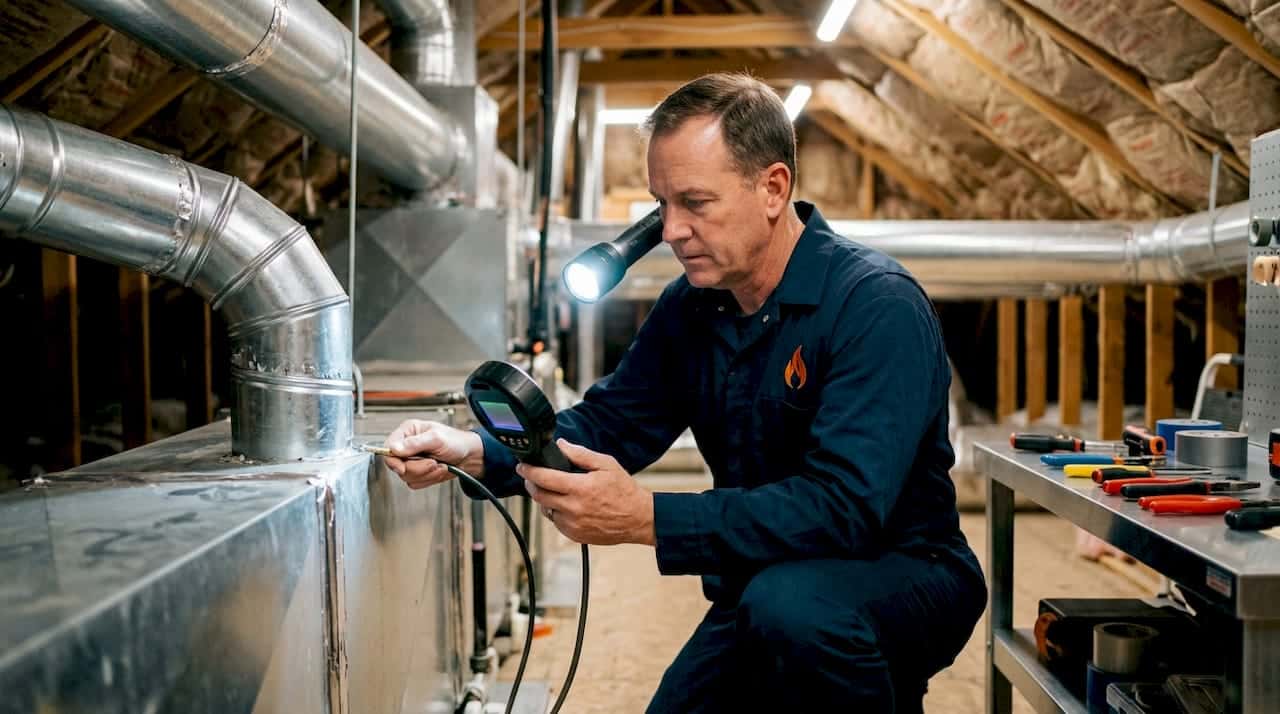
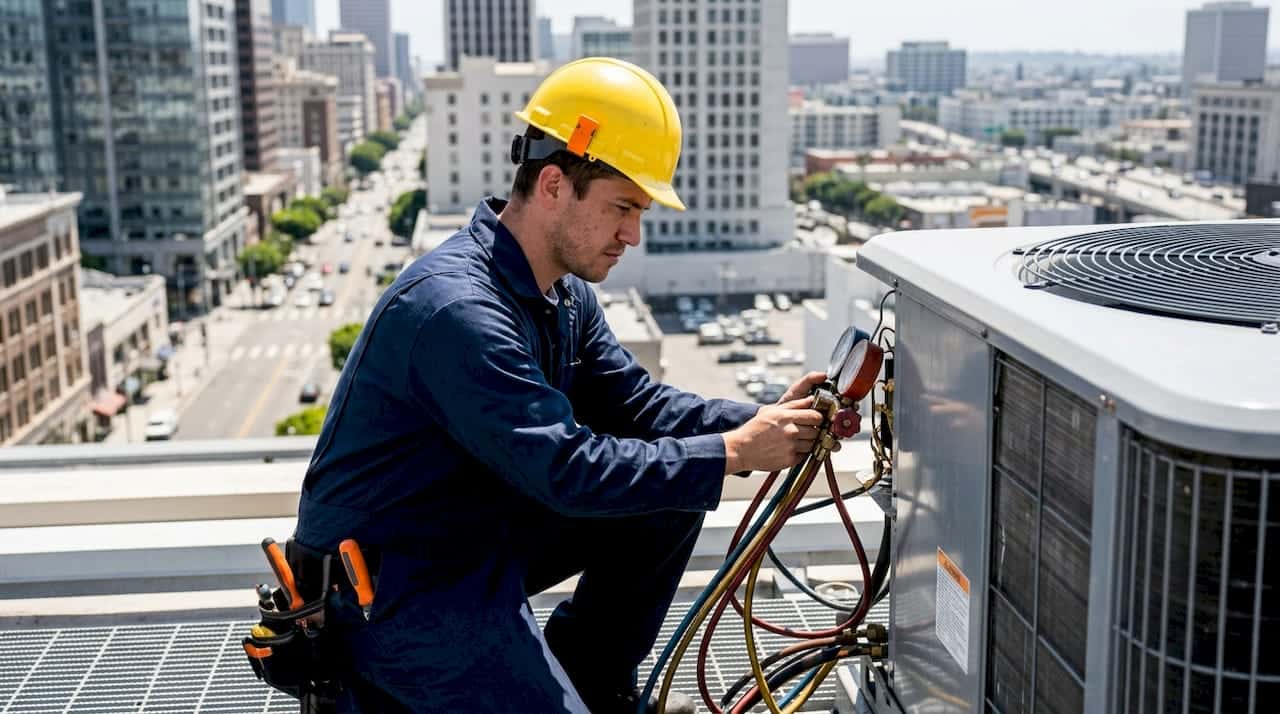
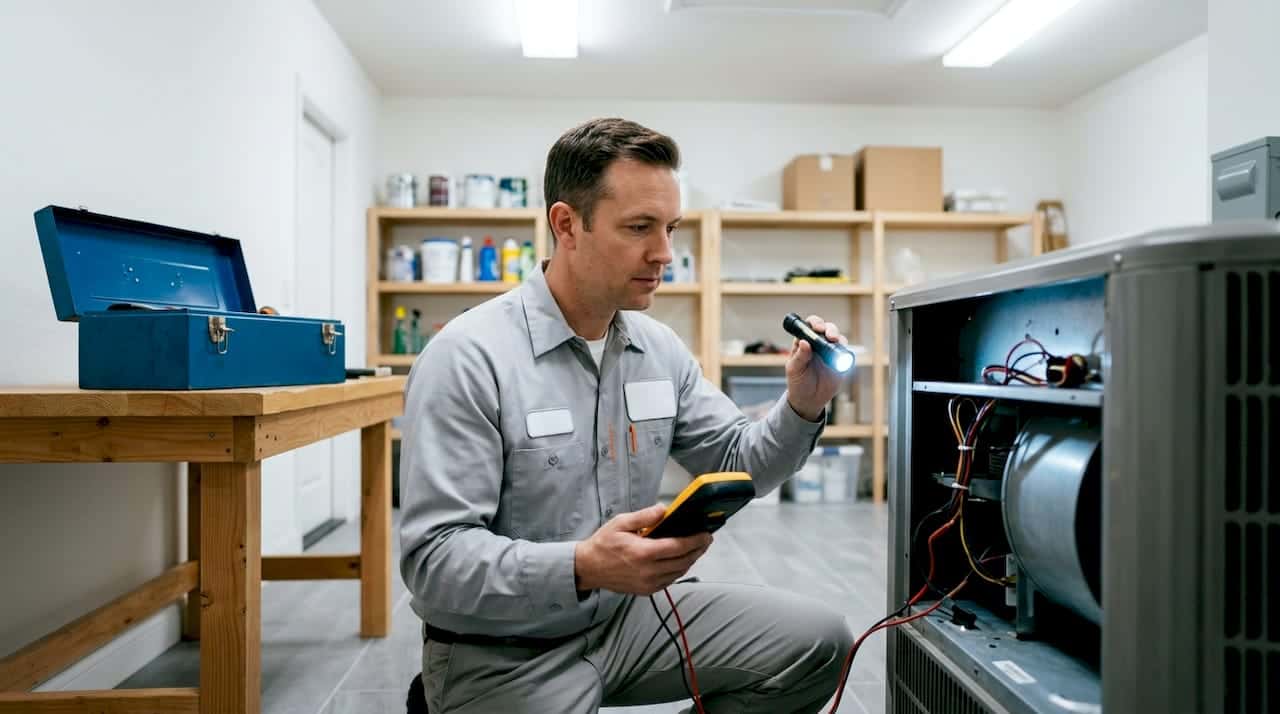
From there, we move to the equipment—whether it's a rooftop unit, a split system, or a mini-split multi-zone. We test compressor amperage, measure refrigerant pressures, check the temperature split across the evaporator, and inspect the condenser coil condition. For RTUs, we also test the economizer and damper actuators. Everything is documented, and we explain what we find in plain language before we give you a written estimate.
Repair or Replace? Our Honest Take
We are not in the business of selling equipment you do not need. If your 5-year-old RTU has a failed capacitor, we replace the capacitor—not the unit. If your 18-year-old condensing unit has a compressor burnout and the indoor coil is already leaking, replacement may be the smarter long-term move. We lay out both options with clear pricing and estimated remaining life so you can make an informed decision.
The decision often comes down to equipment age, condition of the other components, and the disruption of a full replacement versus a targeted repair. For commercial spaces, downtime is expensive, so we also factor in how quickly each option restores cooling. We give you the numbers and let you decide.
Pricing and Factors That Affect Commercial AC Repair Costs
Commercial AC repair costs depend on the type of equipment, the failure mode, and parts required. Our diagnostic fee for commercial systems ranges from $175 to $350. Common repairs like a capacitor or contactor run $200–$400. Refrigerant repair and recharge can be $400–$1,000 or more, depending on the leak location and refrigerant type. Rooftop unit service typically runs $200–$500. We provide a written estimate before any work begins, so there are no surprises.
Factors that affect cost include equipment age (older units may have discontinued parts), rooftop access difficulty, and whether the repair is during regular hours or after hours. We do not offer rebates ourselves, but Southern California Edison and SoCalGas have incentive programs for commercial HVAC upgrades. We can point you to those resources when a replacement is warranted.
Navigating Access and Scheduling at Riviera Country Club
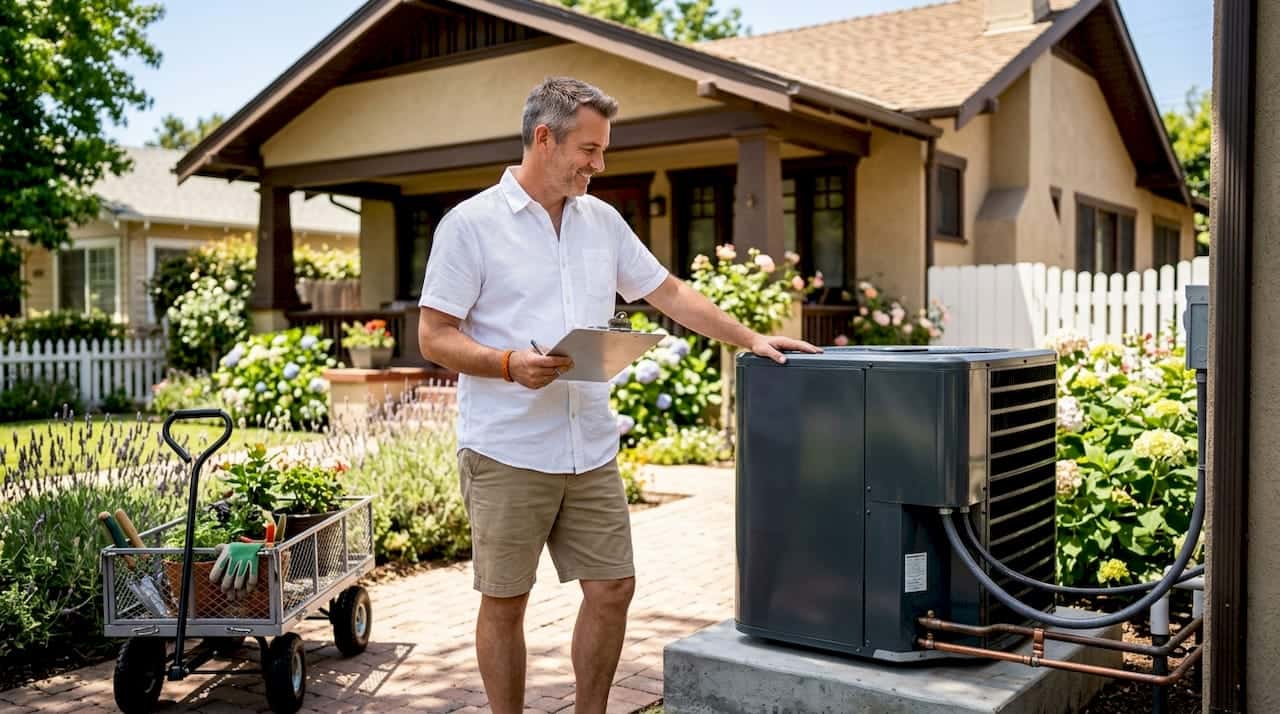
Country club communities come with unique access requirements. Gated entries, vendor check-in procedures, and event schedules all affect how we schedule a commercial AC repair. We coordinate with estate managers and clubhouse staff to ensure we have the proper gate codes, know where to park our service vehicle, and work around scheduled events. Our goal is to restore cooling with minimal disruption to club operations.
We offer priority commercial response with a target of 2–4 hours during business hours. After-hours and weekend service is available for emergencies. When you call (323) 970-3113, we confirm the access requirements and provide an accurate ETA so there are no delays at the gate.
Common Mistakes We See in Commercial AC Repairs
One of the most common mistakes we encounter is a tech adding refrigerant without fixing the underlying leak. A system that leaks refrigerant will quickly lose the new charge, and running it low damages the compressor. We always find and repair the leak before recharging—it's the only way to restore reliable operation.
Another mistake is neglecting annual preventive maintenance. Commercial coils, especially on rooftops, need regular cleaning to prevent high-pressure lockouts. Filters must be changed frequently in coastal environments. And skipping a professional inspection often means a small electrical issue becomes a major failure during a heat wave. A maintenance contract can catch these problems early.
Health and Safety: Refrigerant, Electrical, and Air Quality
Commercial AC systems contain refrigerants that must be handled by EPA-certified technicians. Our technicians are EPA-certified and trained in proper recovery, evacuation, and charging procedures. We never vent refrigerant to the atmosphere, and we ensure any repairs involving refrigerant are leak-tight. This protects both the environment and the longevity of your equipment.
Electrical safety is another priority. Commercial systems operate at higher voltages, and we follow all lockout/tagout procedures when servicing equipment. We also check for potential safety hazards like frayed wiring, loose connections, and improper grounding that could pose a fire risk. Good indoor air quality depends on proper drainage and filtration, and we alert you to any mold or moisture issues we find in the system.
Commercial AC Repair or Replacement: A Quick Guide for Property Managers
When your commercial AC fails, the first question is always: should I repair it or replace it? Start by considering the unit's age and overall condition. If the unit is less than 10 years old and the failure is a single component like a capacitor or contactor, a repair is usually the right call. If the unit is over 15 years old, the compressor has failed, or there are multiple leaks in the coil, replacement may be more cost-effective in the long run.
We also look at the system's history. A unit that has needed multiple repairs in the last two years is signaling that its reliability is declining. For commercial spaces, unexpected downtime is expensive, so a new, efficient unit with a warranty may be the better investment. We provide the facts, the costs, and our recommendation, but the decision is always yours.
Cómo funciona la visita
Call (323) 970-3113. We prioritize commercial calls and provide an ETA based on your location and access requirements.
We check compressor, controls, refrigerant circuit, economizer, and all related components. We explain what we find.
We provide a clear written estimate detailing the repair scope and pricing before any work begins.
We complete the repair, test full system operation, and confirm cooling is restored. We also note any maintenance recommendations.
Factores de costo que revisamos antes de cotizar
- • Diagnostic fee: $175–$350 for commercial systems
- • Common repair costs: capacitor $200–$400, contactor $200–$400, refrigerant repair $400–$1,000+
- • Rooftop unit service: $200–$500
- • After-hours and emergency calls: premium fee, confirmed at dispatch
- • Equipment age and parts availability can affect repair pricing
Próximos pasos útiles
Commercial AC Repair in Riviera Country Club at a glance
- • LC Heating & Air provides commercial AC repair in Riviera Country Club.
- • Company address: 509 N Fairfax Ave, Los Angeles, CA 90036.
- • Licensed by CSLB #1073586 (C-20 HVAC).
- • Phone: (323) 970-3113.
- • Emergency calls are answered within 30 minutes by phone.
- • Written estimates are provided before any commercial repair work begins.
- • Leo (owner) is pursuing NATE certification; all technicians are NATE-trained and EPA-certified.
Our commercial ac repair process in Riviera Country Club
Reviewed by Leo, Owner & Lead Technician
This commercial ac repair guide for Riviera Country Club is reviewed for practical HVAC accuracy by Leo at LC Heating & Air. LC Heating & Air holds California CSLB C-20 HVAC license #1073586 and provides written estimates before approved work.
What Riviera Country Club customers say about commercial ac repair
Verified reviews from homeowners in Riviera Country Club and nearby neighborhoods who used our commercial ac repair service.
“AC compressor failed on the hottest day of the year. LC came out quickly, gave an honest assessment — said the compressor was still under manufacturer warranty — and helped me get it covered. Saved me over $1,200.”
“Replaced our 20-year-old Lennox system with a new high-efficiency Carrier. LC handled the permits, coordinated the Edison inspection, and finished a full replacement in one day. Impeccable workmanship.”
“Pilot light kept going out on our older furnace. LC came out, replaced the thermocouple, cleaned the burner assembly, and did a full safety check. Fast, affordable, and they showed me how to relight it safely in the future.”