- Why your AC runs constantly: the most common causes
- How to troubleshoot and fix your constantly running AC
- When to contact an HVAC professional
- What industry experts say about AC runtime and efficiency
- Is your AC running too much? Here is what to do next
- Ready to stop your AC from running nonstop?
- Key Takeaways
- FAQ
- Recommended

TL;DR:
- Your AC running nonstop usually indicates a fixable issue like a dirty filter or thermostat set to “Fan On.”
- Troubleshooting common causes such as duct leaks, low refrigerant levels, or improperly sized units can prevent prolonged running times.
Your AC running nonstop is almost always a sign of something fixable, not a reason to panic. The most common culprits are a clogged air filter, a thermostat set to “Fan On” instead of “Auto,” low refrigerant from a slow leak, restricted airflow, or a unit that was never sized correctly for your home. Each of these forces the system to work longer than it should to hit your target temperature, and some of them you can address yourself in under ten minutes.
Here is a quick look at the main reasons your air conditioner keeps running:
- Dirty or clogged air filter restricting airflow and making the system overwork
- Thermostat fan set to “On” instead of “Auto,” causing the blower to run continuously
- Low refrigerant from a leak, reducing cooling capacity and extending run time
- Dirty or frozen evaporator coil blocking heat transfer
- Duct leaks or poor insulation letting cooled air escape before it reaches your rooms
- Undersized or oversized AC unit that cannot efficiently match your home’s cooling load
- Extreme outdoor heat or high humidity pushing the system to its limits
- Thermostat malfunction preventing the system from reading temperature accurately
Pro Tip: Before calling a technician, check your thermostat’s fan setting first. If it reads “On” rather than “Auto,” the blower will run around the clock regardless of whether the compressor is actually cooling. Switching it to “Auto” takes five seconds and could be the only fix you need.
Why your AC runs constantly: the most common causes
Understanding what is actually happening inside your system makes troubleshooting much easier. Most cases of an air conditioner not turning off trace back to one of the following categories.
Dirty or clogged air filters
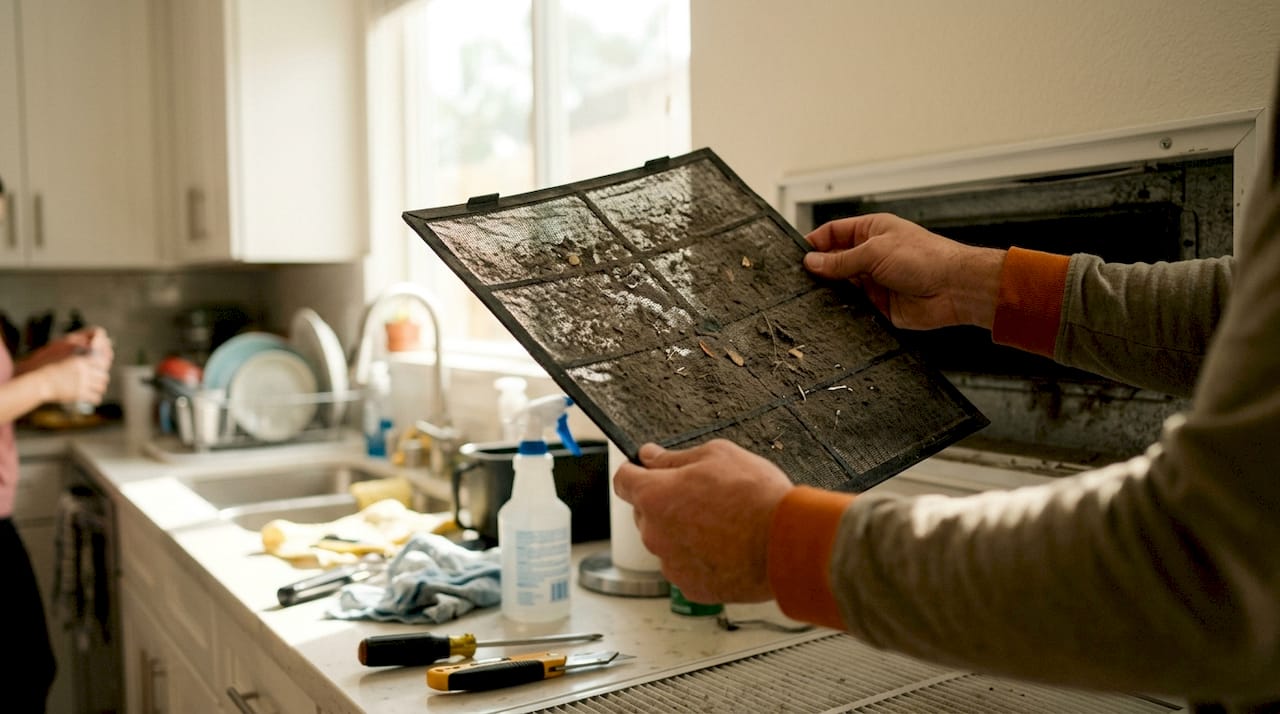
A clogged filter is the single most frequent reason an AC unit runs nonstop. When airflow is choked off, the system cannot pull enough warm air across the evaporator coil to cool it efficiently, so it just keeps running. Experts recommend replacing filters every 30–60 days during peak cooling season, and more often if you have pets or live near a dusty road.
Airflow problems: blocked vents and dirty coils
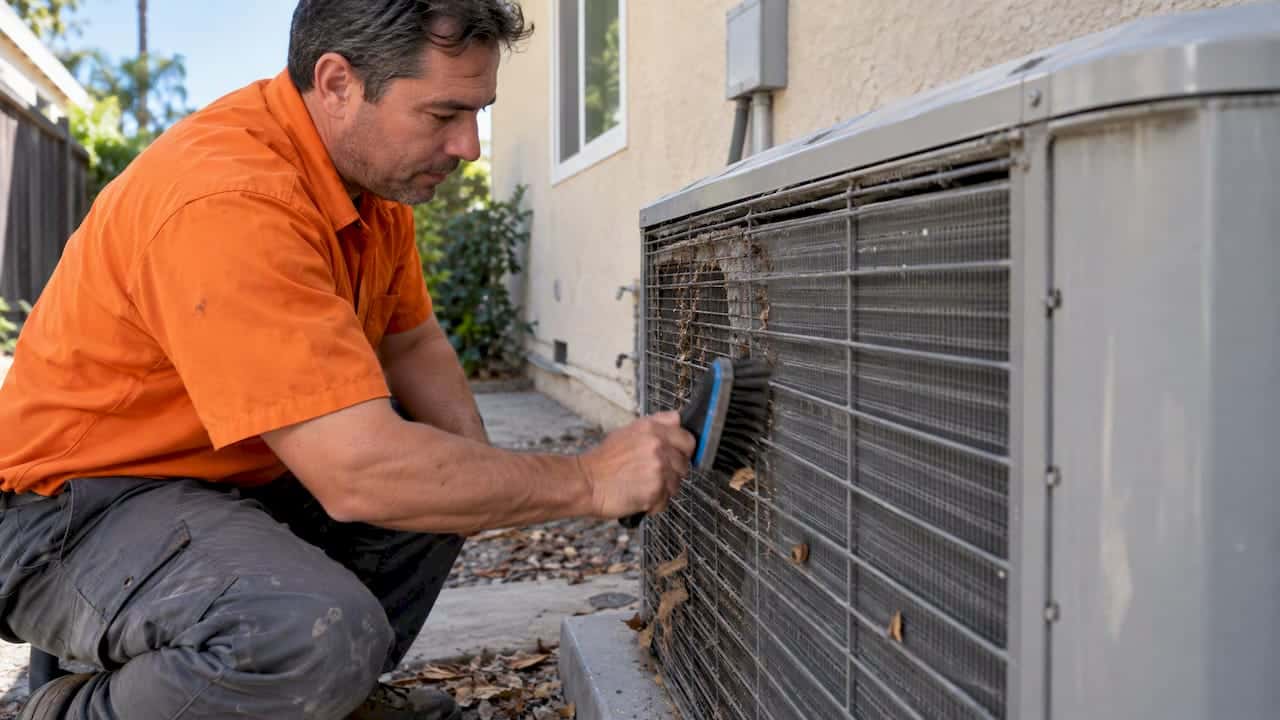
Closed or blocked supply and return vents create the same effect as a dirty filter. Walk through your home and confirm every vent is open and unobstructed by furniture or curtains. A dirty evaporator coil is a related issue. When dust and grime coat the coil, it cannot absorb heat properly, and the system compensates by running longer. A frozen coil, which often results from restricted airflow or low refrigerant, is a more serious version of the same problem.
Thermostat problems
A thermostat set to “Fan On” keeps the blower motor running even when the compressor is off, which many homeowners mistake for the whole system running nonstop. Beyond fan settings, a malfunctioning thermostat may misread your home’s temperature and never send the “off” signal to the compressor. If your thermostat is more than ten years old or reads temperatures that feel off, it may be time for a thermostat inspection.
Low refrigerant from a leak
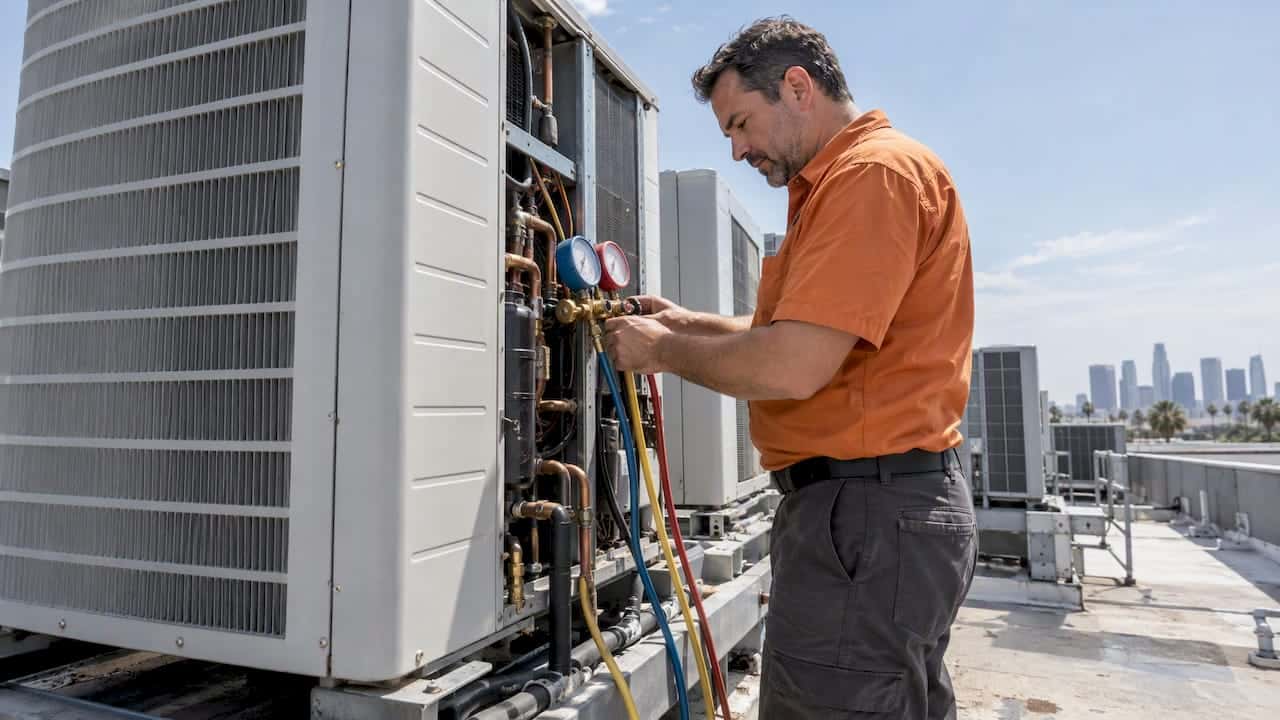
Refrigerant is the substance that actually moves heat out of your home. When levels drop due to a leak, the system loses cooling capacity and runs longer trying to compensate. You may notice warm air from the vents, ice forming on the refrigerant lines, or a hissing sound near the outdoor unit. Only a licensed technician can legally diagnose and recharge refrigerant, as EPA regulations require certified handling of these substances.
Improperly sized AC unit
An undersized unit simply cannot keep up with your home’s cooling load, so it runs continuously without ever reaching the set temperature. An oversized unit creates a different problem: it short-cycles, meaning it cools the air near the thermostat quickly and shuts off before the rest of the house is comfortable or properly dehumidified. Both scenarios cause problems, and neither resolves itself without a proper load calculation.
Duct leaks and poor insulation
Duct leaks in attics or crawlspaces bleed cooled air into unconditioned spaces before it ever reaches your living areas. Your AC then runs longer to make up for that lost cooling. Poor wall or attic insulation has a similar effect, letting outdoor heat pour back in as fast as the system removes it. In typical houses, about 20% of the air moving through the duct system is lost due to leaks, holes, and poorly connected ducts.
Pro Tip: Hold a lit incense stick near duct joints in your attic or basement. Smoke that wavers or gets pulled toward a seam points to a leak worth sealing with mastic sealant or metal-backed tape.
Outdoor temperature and humidity
On a mild day around 80°F, a properly sized central AC typically runs about 8–12 hours in cycles throughout the day. When outdoor temperatures climb above 95°F, runtime can increase substantially, reaching 14–16 hours or more. High humidity adds to the load because the system must remove moisture from the air in addition to lowering temperature. If your AC runs constantly during a heat wave but keeps your home cool, it may simply be working as designed.
Failing capacitor
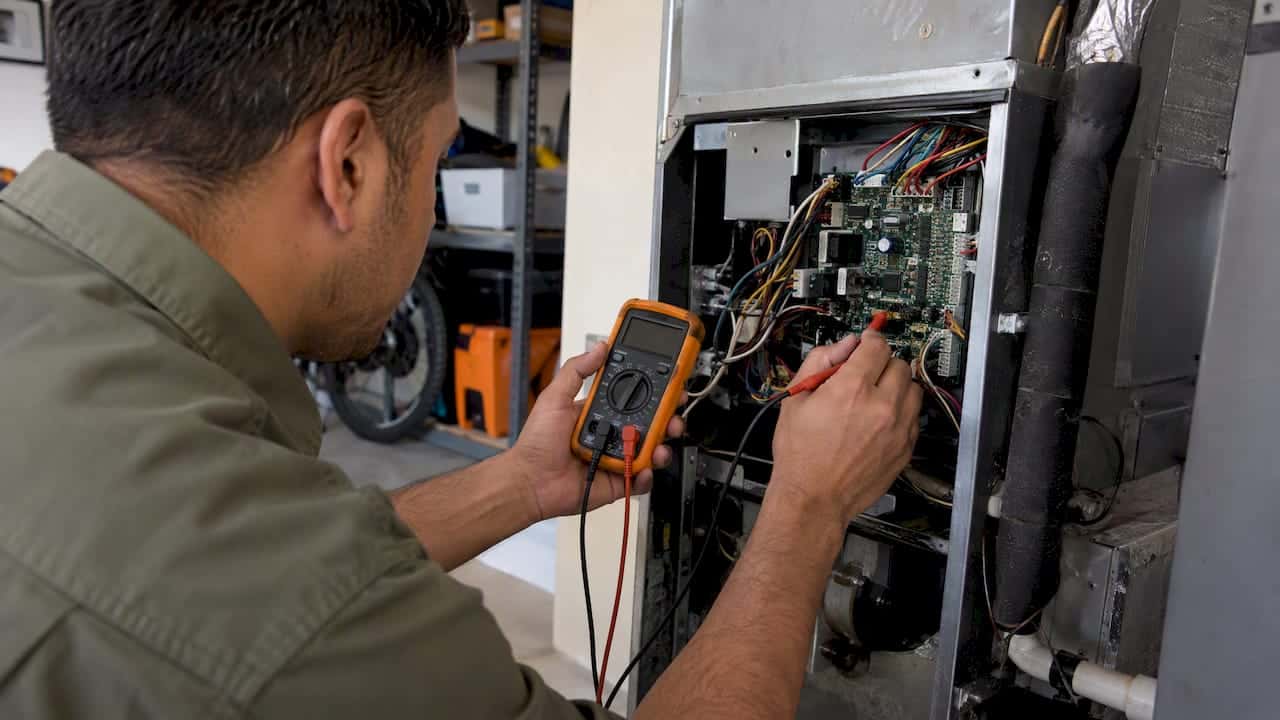
A capacitor is a small electrical component that gives the compressor and fan motors the jolt they need to start and run. When it begins to fail, the compressor struggles, draws more power, and runs longer to achieve the same cooling. A technician can test a capacitor with a multimeter and catch a failing capacitor before it causes a full breakdown.
How to troubleshoot and fix your constantly running AC
Most homeowners can work through these steps in order before picking up the phone.
Step 1: Check the thermostat fan setting
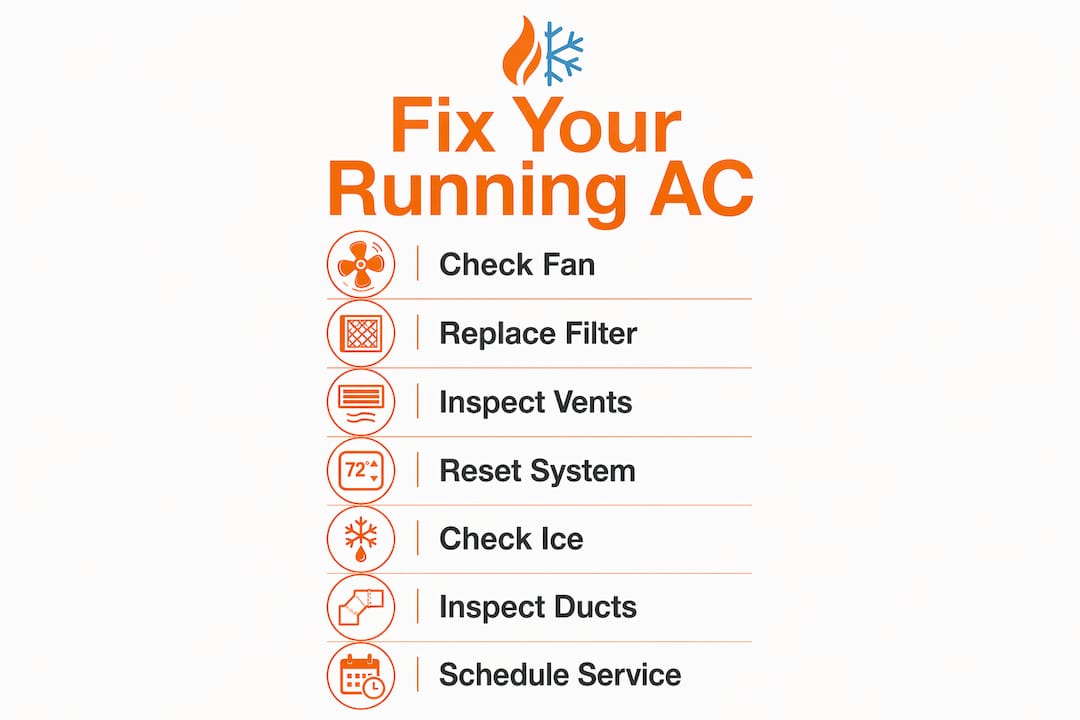
Go to your thermostat and confirm the fan is set to “Auto,” not “On.” In “Auto” mode, the blower only runs when the compressor is actively cooling. In “On” mode, it runs around the clock. This single check resolves a surprising number of service calls.
Step 2: Replace or clean the air filter
Pull out the filter and hold it up to a light source. If you cannot see light through it, replace it. A fresh filter costs a few dollars and can immediately reduce run time. During summer in Los Angeles, monthly replacement is a reasonable baseline.
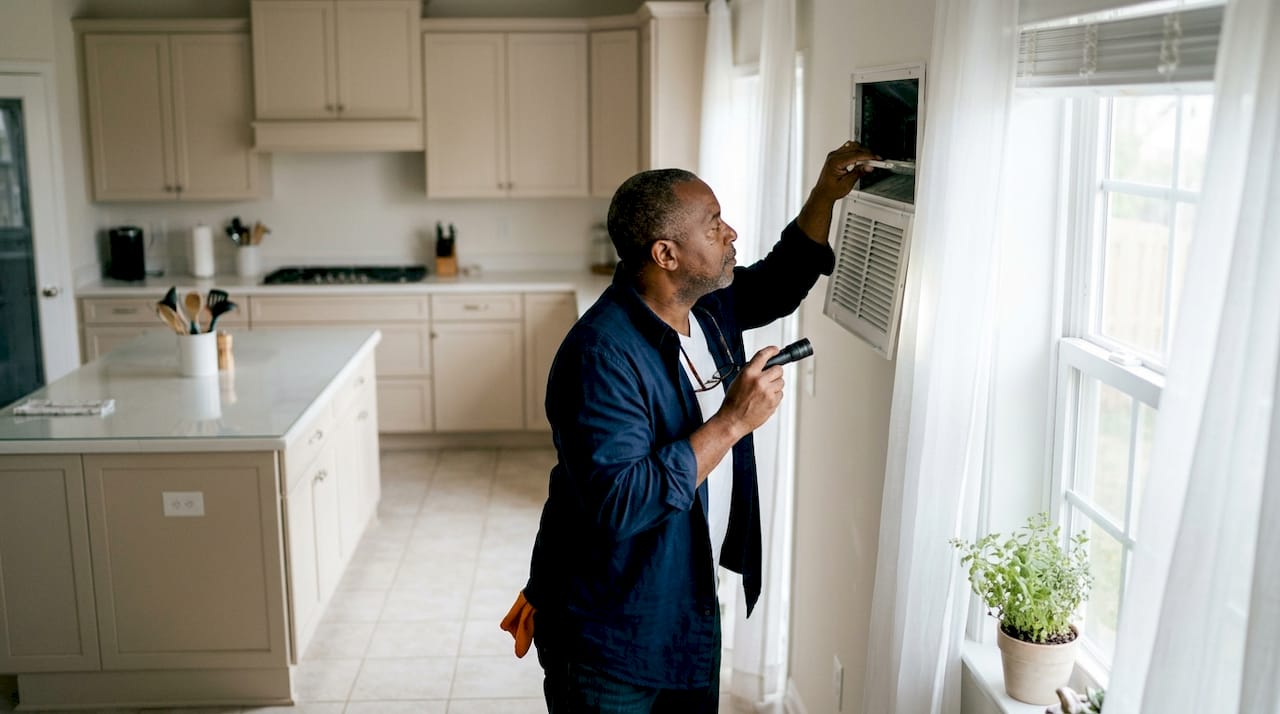
Step 3: Inspect vents and registers
Walk every room and make sure supply and return vents are fully open and unblocked. Closing vents to “save energy” in unused rooms actually increases system pressure and can cause longer run times and duct leaks over time.
Step 4: Reset the AC system
A control glitch can sometimes cause the system to behave erratically. Turn the thermostat off, then switch the breaker for the AC off at your electrical panel. Wait about 30 seconds, restore power, and turn the thermostat back on. This clears minor electronic faults and is worth trying before assuming a mechanical problem.
Step 5: Check for ice on the coil or lines
Look at the refrigerant lines running from your outdoor unit. If you see frost or ice, turn the system off and let it thaw for a few hours with the fan set to “On” (blower only, no cooling). Ice usually means restricted airflow or low refrigerant. If it refreezes after thawing, call a professional. For more detail on AC cooling problems, a step-by-step guide can help you narrow down the cause.
Step 6: Do a basic duct inspection
In your attic or basement, look for disconnected duct sections, visible gaps at joints, or sections of flex duct that have collapsed. Seal small gaps with mastic sealant or foil-backed tape rated for HVAC use. Avoid standard duct tape, which dries out and fails quickly in temperature extremes.
Step 7: Schedule regular maintenance
A professional tune-up once a year, ideally in spring before cooling season, catches dirty coils, low refrigerant, and worn components before they turn into constant-running problems. Preventive maintenance typically reduces runtime and extends equipment life.
Pro Tip: There is an important difference between the blower fan running continuously and the compressor running continuously. The blower just moves air. The compressor is the heart of the cooling process. If you hear the outdoor unit cycling on and off normally but the indoor air handler never stops, the fan setting is almost certainly the issue, not a refrigerant or mechanical problem.
When to contact an HVAC professional
Some AC problems are genuinely beyond DIY territory, and waiting too long to call can turn a moderate repair into a full system replacement.
Contact a professional when you notice any of the following:
- Your AC runs more than a high number of hours daily for several consecutive days in moderate temperatures
- Warm air blows from the vents despite the system running constantly
- Ice forms on the refrigerant lines or outdoor unit and returns after thawing
- Your energy bills spike without any change in usage habits
- You hear unusual noises like grinding, hissing, or banging from the unit
- The system short-cycles, turning on and off every few minutes
Refrigerant leaks, capacitor failures, and electrical component issues all require licensed technicians with proper diagnostic tools. A sizing assessment, which involves a Manual J load calculation, is also something only a trained HVAC contractor can perform accurately. If your system has never been properly sized for your home, no amount of filter changes will fix the underlying problem.
Before your technician arrives, note when the constant running started, whether the house is actually reaching the set temperature, and any unusual sounds or smells. That information cuts diagnostic time significantly.
Pro Tip: Ask any HVAC company for flat-rate pricing before they begin work. Surprise fees after a diagnostic are a common frustration. LC Heating and Air Conditioning provides upfront pricing so you know exactly what a repair costs before any work starts.
LC Heating and Air Conditioning has served Los Angeles homeowners for over 20 years, from historic homes to modern multi-zone systems. Same-day AC repair service is available for situations where waiting is not an option.
What industry experts say about AC runtime and efficiency
Knowing what “normal” looks like helps you recognize when something is actually wrong.
A properly sized central AC runs in cycles that sum to 8–16 hours of operation per 24 hours under typical summer conditions. Any runtime consistently exceeding 18–20 hours warrants investigation. Running continuously without reaching the set temperature is a clear signal of a problem, not just a hot day.
Humidity plays a bigger role than most homeowners realize. In hot, humid regions, the cooling load can be meaningfully higher than in dry climates at the same temperature, because the system must remove moisture from the air in addition to lowering temperature. That is why a Los Angeles home and a Houston home with identical square footage and identical AC units can have very different runtime patterns.
Thermostat settings have a direct, measurable impact on how long your system runs. Raising your thermostat by one degree saves about 3% on your utility bill and reduces runtime. Setting it to 78°F when you are home, 85°F when you are away, and 82°F when sleeping is a widely recommended balance between comfort and efficiency. A programmable or smart thermostat makes those adjustments automatically.
Oversized units create a counterintuitive problem. They cool the air near the thermostat quickly, triggering a shutdown before the rest of the house reaches the set temperature or before adequate dehumidification occurs. The result is a home that feels clammy and uncomfortable despite frequent on/off cycling. Short-cycling also accelerates wear on the compressor and other components, shortening the system’s life. Right-sized equipment running longer, steadier cycles is more efficient and more comfortable than an oversized unit that starts and stops constantly.
Duct sealing is one of the highest-return efficiency improvements available to most homeowners. When cooled air leaks into an unconditioned attic, the system has to run longer to compensate for that lost capacity. Sealing duct leaks improves both comfort and energy costs, often more noticeably than upgrading the AC unit itself.
Pro Tip: With over 20 years of experience across Los Angeles, LC Heating and Air Conditioning’s technicians consistently find that duct leaks and incorrect thermostat fan settings are the two most overlooked causes of constant AC operation. Both are fixable quickly and affordably once identified.
Is your AC running too much? Here is what to do next
If your air conditioner is running constantly, here is a quick recap of what to check and when to act:
DIY checks you can do right now:
- Switch the thermostat fan from “On” to “Auto”
- Replace a dirty air filter (every 30–60 days during peak season)
- Open any closed or blocked vents throughout the home
- Reset the system at the breaker and thermostat
- Check refrigerant lines for ice or frost
Signs you need a professional:
- Warm air from vents despite constant operation
- Ice on lines that returns after thawing
- Runtime consistently above 18–20 hours in moderate weather
- Unexplained energy bill increases
- Short-cycling (on/off every few minutes)
Efficiency habits that reduce runtime:
- Set the thermostat to 78°F when home, higher when away
- Schedule annual maintenance before cooling season
- Seal duct leaks in attics and crawlspaces
- Add attic insulation if your home runs hot despite a functioning AC
A constantly running AC is not always a crisis, but it is always worth investigating. Catching a dirty coil or a refrigerant leak early costs far less than replacing a compressor that burned out from overwork.
Ready to stop your AC from running nonstop?
If you have worked through the DIY steps and your system is still running non-stop, LC Heating and Air Conditioning is ready to help. Leo and the team bring more than 20 years of Los Angeles HVAC experience to every call, with honest diagnostics, flat-rate pricing, and same-day availability when you need it most.
No surprise fees. No pressure to replace equipment that can be repaired. Just straightforward answers and reliable service for your home.
Schedule AC repair or call for 24-hour emergency service if your system needs attention today.
Key Takeaways
A constantly running AC almost always traces back to a dirty filter, incorrect thermostat settings, low refrigerant, duct leaks, or a unit that was never properly sized for the home.
| Point | Details |
|---|---|
| Check fan settings first | Switching from “On” to “Auto” stops the blower from running around the clock. |
| Replace filters every 30–60 days | Clogged filters are the top cause of constant AC operation during peak season. |
| Normal runtime is 8–16 hours daily | Consistently exceeding 18–20 hours in moderate weather signals a problem worth investigating. |
| Duct leaks waste cooled air | About 20% of air in a typical duct system is lost to leaks, forcing longer runtimes. |
| Thermostat setting affects runtime directly | Raising the set temperature by one degree saves about 3% on utility bills and reduces run time. |
FAQ
How do I stop my AC from running constantly?
Start by switching the thermostat fan to “Auto” and replacing a dirty air filter. If the system still runs non-stop after those two fixes, check for blocked vents, ice on the refrigerant lines, or duct leaks, and call a professional if the problem persists.
Is it normal for AC to run 20 hours a day?
During extreme heat above 95°F, a properly sized central AC can run 16–18 hours daily and still be operating normally. Consistently hitting 20 hours or more in moderate temperatures usually points to a maintenance issue, a sizing problem, or a refrigerant leak.
Is it okay if AC runs all day?
Running all day during a heat wave is generally fine as long as your home reaches the set temperature. If the system runs continuously but the indoor temperature keeps rising, that is a red flag indicating a malfunction rather than normal heavy-use operation.
Why is my AC not cutting off?
The most common reasons an AC unit won’t cut off are a thermostat fan set to “On,” a dirty filter restricting airflow, low refrigerant reducing cooling capacity, or a faulty thermostat that never sends the shutoff signal. A failing capacitor can also cause the compressor to run longer than normal.
Recommended
Leo, Owner & Lead Technician at LC Heating & Air
Leo leads LC Heating & Air as an owner-operator and holds California CSLB C-20 HVAC license #1073586. His guides focus on practical diagnostics, safe repair decisions, and clear advice for Los Angeles homeowners.