- How an AC Outdoor Unit Works: A Homeowner’s Guide
- How does the AC outdoor unit work?
- What are the key components inside the AC outdoor unit?
- How does the outdoor unit fit into the full cooling cycle?
- What are common problems with outdoor AC units?
- How can homeowners troubleshoot basic outdoor unit issues safely?
- What maintenance keeps the outdoor unit running efficiently?
- Key Takeaways
- What I’ve learned after years of outdoor unit calls
- When your outdoor unit needs professional attention
- FAQ
- Recommended
How an AC Outdoor Unit Works: A Homeowner’s Guide
TL;DR:
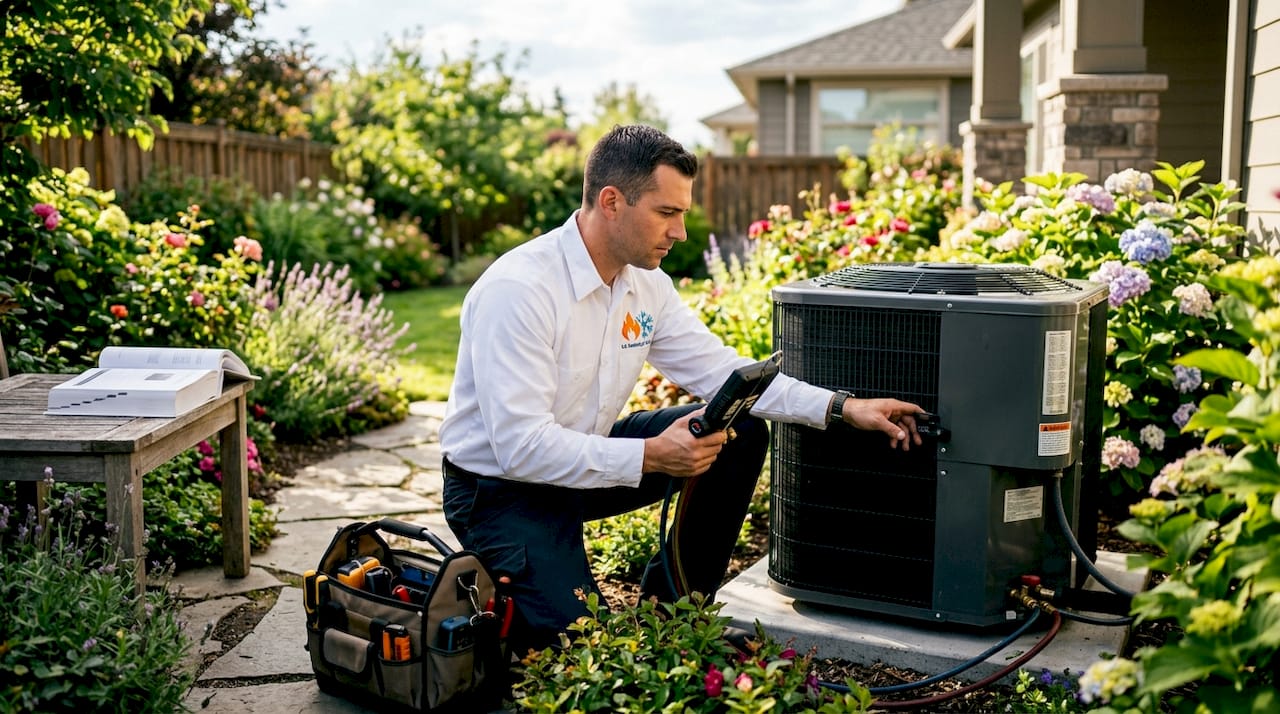
- The outdoor AC unit is a heat rejection system that expels indoor heat through the refrigerant cycle. Its key components include the compressor, condenser coil, and outdoor fan, which work together to transfer heat outside. Regular cleaning, proper placement, and professional maintenance extend its lifespan and prevent failures.
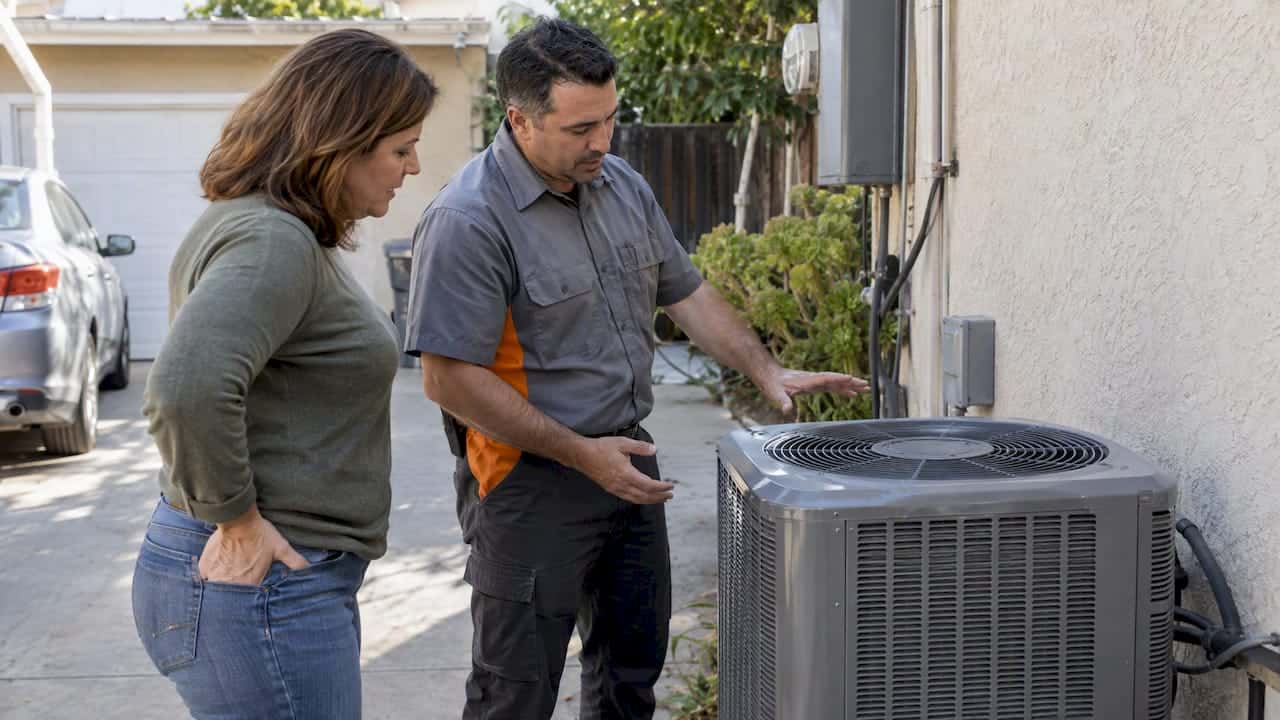
The AC outdoor unit is defined as the heat rejection component of your home’s air conditioning system. Understanding how ac outdoor unit works is the first step to diagnosing why your home feels warm, why your energy bill spiked, or why that metal box outside is making a strange noise. The outdoor unit does not create cold air. Air conditioners move heat rather than produce cold, which means the outdoor unit’s entire job is to dump your indoor heat into the outside air. When it fails to do that job efficiently, your whole system suffers.
How does the AC outdoor unit work?
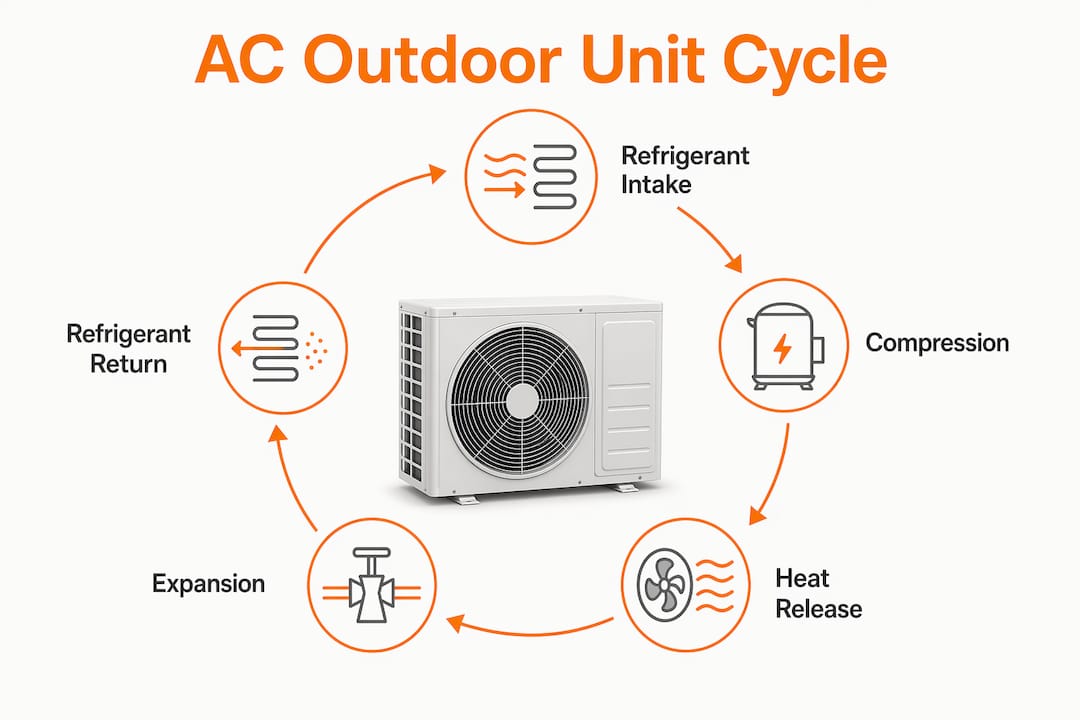
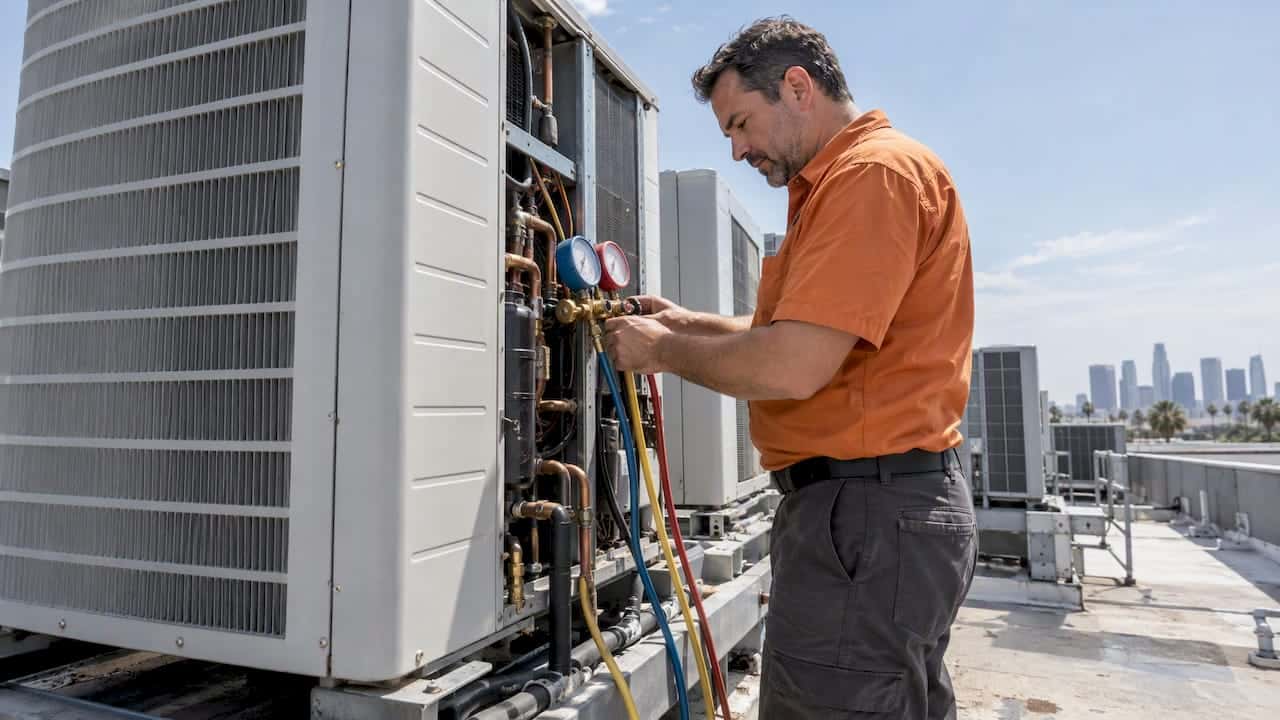
The outdoor unit operates as a heat pump, pulling heat out of your home and releasing it outdoors through a refrigerant cycle. The three core components that make this possible are the compressor, the condenser coil, and the outdoor fan. Every cooling problem you experience traces back to one of these three parts or the refrigerant that connects them.
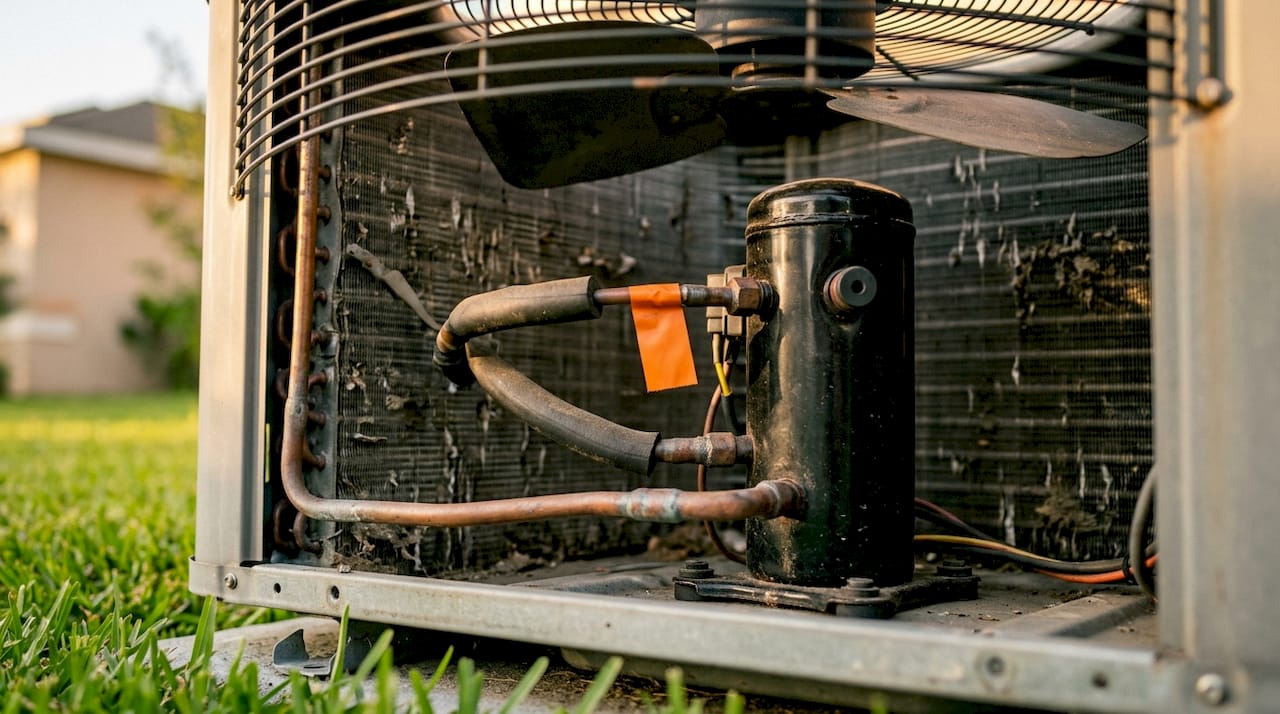
The compressor is the engine of the entire system. It pressurizes refrigerant gas, which raises the refrigerant’s temperature dramatically. That high-pressure, high-temperature gas then flows into the condenser coil, where the fan blows outdoor air across the coil’s metal fins to carry the heat away. Once the refrigerant releases its heat, it condenses into a liquid and travels back indoors to absorb more heat and repeat the cycle.
The working principle of the AC unit is straightforward: move heat from inside to outside, over and over, until your indoor temperature matches your thermostat setting. The outdoor unit’s efficiency at rejecting heat directly determines how cool and comfortable your home gets.
What are the key components inside the AC outdoor unit?
Each part inside the outdoor unit has a specific job. When one part fails, the whole system feels it.
- Compressor: The heart of the unit. It squeezes low-pressure refrigerant gas into a high-pressure, high-temperature state. Without a working compressor, no cooling happens at all.
- Condenser coil: A network of copper or aluminum tubing wrapped in thin metal fins. Hot refrigerant flows through these tubes, and the fins give the heat a large surface area to escape into the outdoor air.
- Outdoor fan and motor: The fan pulls air through the condenser coil to speed up heat transfer. A slow or stopped fan means heat builds up inside the unit instead of escaping.
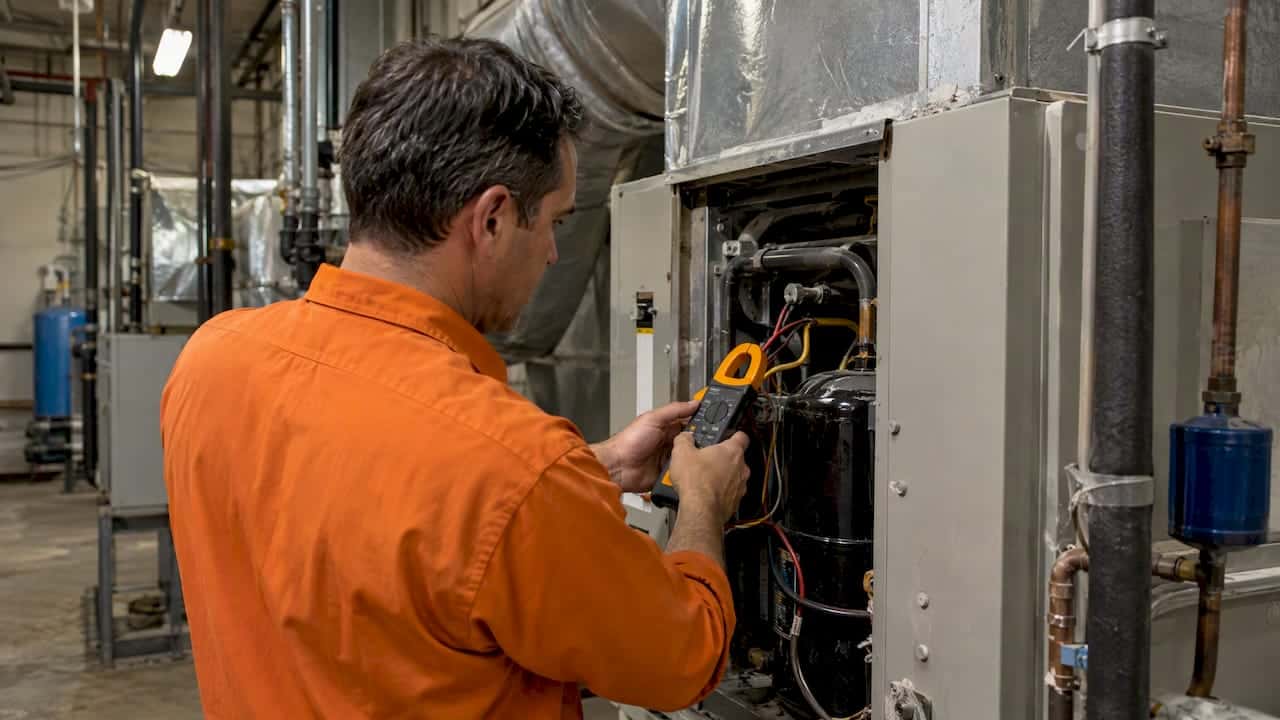
- Capacitor: A small but mighty component that gives the compressor and fan motor the electrical jolt they need to start. Capacitor failure is one of the most common outdoor unit problems, often showing up as a fan that hums but won’t spin.
- Contactor: An electrical switch that controls power to the compressor and fan. A worn contactor can cause the unit to not turn on at all.
- Refrigerant lines: Copper pipes connecting the outdoor and indoor units. They carry refrigerant in both directions throughout the cycle.
Pro Tip: If your outdoor fan spins freely when you give it a gentle push but won’t start on its own, a failed capacitor is the most likely cause. This is a relatively affordable fix when caught early.
Understanding these outdoor AC unit components helps you describe symptoms accurately when you call a technician. Saying “the fan hums but doesn’t spin” is far more useful than “it’s not working.”
How does the outdoor unit fit into the full cooling cycle?
The AC condenser operation makes sense when you see it as one leg of a continuous loop. Here is how the full refrigerant cycle works, step by step:
- Indoor heat absorption: The indoor evaporator coil absorbs heat from your home’s air. The refrigerant inside the coil evaporates into a low-pressure gas as it soaks up that heat.
- Gas travels outdoors: The warm refrigerant gas travels through the suction line to the outdoor compressor.
- Compression: The compressor squeezes the gas, raising refrigerant temperature to approximately 120–140°F. At that temperature, the refrigerant carries enough energy to shed heat into even a hot summer day.
- Heat rejection at the condenser coil: The hot gas flows through the condenser coil. The outdoor fan pulls ambient air across the fins, stripping heat from the refrigerant.
- Condensation: As the refrigerant loses heat, it condenses back into a liquid. This liquid is still under high pressure.
- Expansion and return: The liquid refrigerant passes through an expansion valve, drops in pressure and temperature, and flows back to the indoor coil ready to absorb heat again.
Why outdoor airflow matters more than most homeowners realize
The outdoor fan’s ability to move air across the condenser coil is what makes the entire cycle work. Without strong airflow, the refrigerant cannot shed its heat fast enough. The coil pressure rises, the compressor works harder, and efficiency drops sharply.
| Condition | Effect on outdoor unit | Result for your home |
|---|---|---|
| Clean coil, good airflow | Refrigerant sheds heat efficiently | Strong cooling, lower energy use |
| Dirty coil, restricted airflow | Heat builds up in refrigerant | Weak cooling, higher energy bills |
| Fan not spinning | No heat dissipation | Compressor overheats within minutes |
| Low refrigerant charge | Cycle cannot complete properly | Warm air, ice on refrigerant lines |
Unit placement also affects performance. A unit surrounded by shrubs, fencing, or debris on all sides cannot pull in fresh air. At least 18–24 inches of clearance on all sides is the standard recommendation for proper AC condenser operation.
Pro Tip: On very hot days, gently rinse your condenser coil with a garden hose from the inside out. This removes dust and pollen that restrict airflow and cause the unit to work harder than necessary.
What are common problems with outdoor AC units?
Most outdoor unit failures fall into a predictable set of categories. Recognizing the symptoms early saves you from expensive repairs.
- Capacitor failure: The fan motor capacitor is one of the most frequent failure points. Heat accelerates capacitor degradation, which is why failures spike in summer. A unit that hums but won’t start, or a fan that needs a push to begin spinning, almost always points here.
- Dirty condenser coils: Dust, cottonwood, and debris coat the fins over time. A clogged coil cannot release heat, which forces the compressor to work harder and shortens its life.
- Refrigerant leak: Ice buildup on refrigerant lines is a reliable sign of low refrigerant caused by a leak. This is not a DIY fix. A licensed technician must locate the leak, repair it, and recharge the system.
- Compressor failure: Grinding noises, short cycling, and tripped breakers are all warning signs. The compressor is the most expensive single component to replace, typically costing $1,200–$2,800 installed. On an older system, that cost often makes full unit replacement the smarter financial choice.
- Contactor and wiring faults: A burned or pitted contactor prevents the unit from receiving power. Wiring issues can cause intermittent operation or complete shutdown.
- Fan motor failure: A seized motor produces a loud buzzing or grinding sound. If the fan is not spinning, shut the system off immediately.
Running your AC with a non-spinning fan risks permanent compressor winding damage within 10–15 minutes. That is not a typo. Ten to fifteen minutes of operation without fan cooling can destroy the most expensive part of your system.
Never open the electrical panel on your outdoor unit or touch the capacitor. Outdoor units run on 240V power, and capacitors store a lethal charge even after the unit is switched off. These repairs require a licensed technician.
How can homeowners troubleshoot basic outdoor unit issues safely?
You can safely check several things before calling a professional. These steps cost nothing and often reveal a simple fix.
- Check your thermostat. Confirm it is set to “cool” and the set temperature is below the current room temperature. A thermostat left in “fan only” mode will run the indoor fan but never activate the outdoor unit.
- Inspect the circuit breaker. Go to your electrical panel and look for a tripped breaker labeled “AC” or “condenser.” Reset it once. If it trips again immediately, stop and call a technician. A repeatedly tripping breaker signals a serious electrical fault.
- Check the outdoor disconnect. Most outdoor units have a disconnect box mounted on the wall nearby. Confirm it has not been switched off, especially after recent yard work or maintenance.
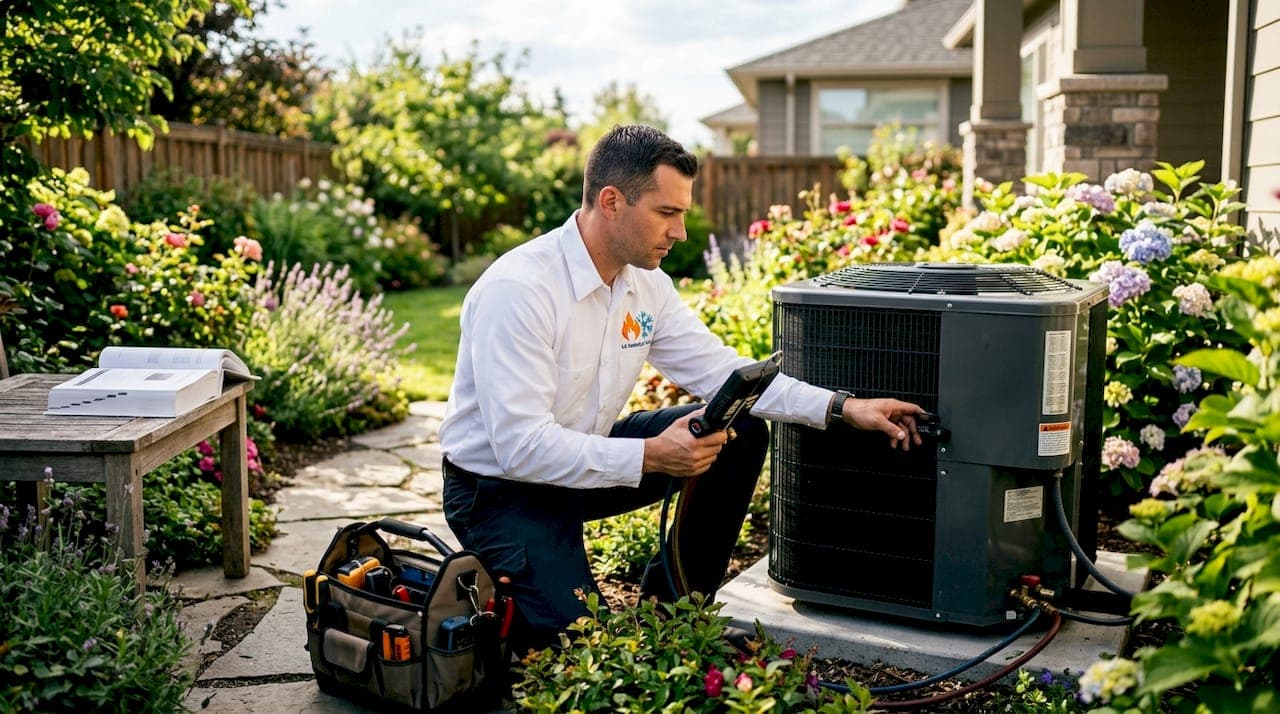
- Listen carefully. Stand near the outdoor unit when the system is running. You should hear the fan spinning and a steady hum from the compressor. Silence, clicking, grinding, or buzzing each point to different problems.
- Inspect for debris. Look for leaves, grass clippings, or cottonwood packed against the coil. Clear any visible debris from around the unit. Keep at least 18 inches of clearance on all sides.
- Look for ice. Check the refrigerant lines running into your home. Ice or frost on those copper pipes means low refrigerant or restricted airflow. Turn the system off and call a professional.
If your AC is not cooling after these checks, the problem is inside the unit or the refrigerant system. That is where DIY ends and professional service begins.
Pro Tip: Take a short video of any unusual sound before calling a technician. A 15-second clip of a grinding noise or a humming unit that won’t start helps a technician diagnose the problem before they arrive, saving time and money.
What maintenance keeps the outdoor unit running efficiently?
Routine upkeep prevents the majority of outdoor unit failures. Most of these tasks take less than 30 minutes and cost nothing beyond a garden hose.
- Clean the condenser coils at least once a year. Dirty coils are the single most common cause of reduced efficiency. A full guide on cleaning condenser coils walks you through the process safely.
- Clear debris after every storm. Leaves, twigs, and seed pods pack into the coil fins quickly. Check the unit after any significant wind event.
- Keep the unit level. A unit that has settled unevenly causes refrigerant oil to pool rather than circulate, which leads to premature compressor wear.
- Schedule a professional tune-up every spring. A technician will check refrigerant charge, inspect electrical connections, test the capacitor, and clean components you cannot safely reach. Annual AC tune-ups catch small problems before they become expensive failures.
- Know your compressor’s age. Modern scroll compressors have an expected service life of 10–15 years with proper maintenance. If your unit is approaching that range and showing symptoms, budget for replacement rather than repeated repairs.
- Watch for warning signs year-round. Longer run times to reach the same temperature, higher electricity bills with no change in usage, and unusual sounds all signal that something needs attention.
Key Takeaways
The outdoor AC unit is a heat rejection system, and every performance problem you experience traces back to its ability to compress refrigerant, transfer heat through the condenser coil, and move air with the outdoor fan.
| Point | Details |
|---|---|
| AC moves heat, not cold air | The outdoor unit expels indoor heat outside; it does not generate cold air. |
| Three core components | The compressor, condenser coil, and outdoor fan work together to complete the refrigerant cycle. |
| Fan failure is urgent | Running the system without a spinning fan can destroy the compressor within 10–15 minutes. |
| Electrical repairs require a pro | Outdoor units carry 240V power and capacitors hold lethal charge even when switched off. |
| Annual maintenance extends life | Cleaning coils and scheduling professional tune-ups keeps compressors running for 10–15 years. |
What I’ve learned after years of outdoor unit calls
The single biggest misconception I see from homeowners is the belief that their AC is “making cold air.” Once you understand that your outdoor unit is actually a heat pump pushing warmth out of your home, your entire approach to troubleshooting changes. You stop looking for why it isn’t cold enough and start asking why it isn’t rejecting heat fast enough. That shift in thinking leads you to the right answers faster.
The second thing I want homeowners to understand is how fast a fan failure becomes a compressor failure. I have seen units destroyed in a single afternoon because a homeowner noticed the fan wasn’t spinning but figured the system would “work itself out.” It won’t. If the fan is not moving, the system needs to be off until a technician arrives.
What actually works for long-term reliability is boring: clean coils, annual checkups, and calling a professional the moment something sounds or feels wrong. The homeowners who get 15 or more years out of their outdoor units are not lucky. They are consistent. They rinse their coils in spring, they schedule a tune-up before summer, and they don’t ignore a humming noise for three weeks.
Electrical troubleshooting is where I draw a firm line. Checking a breaker is safe. Resetting a disconnect is safe. Opening the electrical panel on the outdoor unit or touching the capacitor is not. I have seen the aftermath of DIY capacitor repairs gone wrong. The savings are never worth it.
— Leo
When your outdoor unit needs professional attention
If your checks point to something beyond debris or a tripped breaker, LC Heating and Air Conditioning is ready to help. With over 20 years of experience serving Los Angeles homeowners, the team provides honest diagnostics and flat-rate pricing so you know the cost before any work begins.

LC Heating and Air Conditioning offers same-day AC repair across Los Angeles, covering everything from capacitor replacements to full compressor diagnostics. There are no surprise fees and no pressure to replace a system that can be repaired. Whether your outdoor fan has stopped spinning or your unit is short cycling in the middle of a heat wave, the right call is a fast one. Reach out to LC Heating and Air Conditioning to schedule a same-day visit and get your system running right.
FAQ
What does the outdoor AC unit actually do?
The outdoor unit compresses refrigerant and releases indoor heat into the outside air through the condenser coil and fan. It is the heat rejection side of your air conditioning system.
Why is my outdoor AC unit running but not cooling the house?
The most common causes are a dirty condenser coil, low refrigerant from a leak, or a failing compressor. A technician can diagnose which issue applies with a pressure and electrical check.
Is it safe to run my AC if the outdoor fan isn’t spinning?
No. Running the system without a spinning fan can cause the compressor to overheat and suffer permanent damage within 10–15 minutes. Turn the system off and call a technician immediately.
How often should the outdoor AC unit be serviced?
A professional tune-up once a year, ideally in spring before peak cooling season, is the standard recommendation. Annual service includes refrigerant checks, electrical inspections, and coil cleaning.
What does ice on my outdoor AC unit mean?
Ice on the refrigerant lines typically signals low refrigerant caused by a leak. This requires a licensed technician to locate the leak, repair it, and recharge the system to the correct level.
Recommended
Leo, Owner & Lead Technician at LC Heating & Air
Leo leads LC Heating & Air as an owner-operator and holds California CSLB C-20 HVAC license #1073586. His guides focus on practical diagnostics, safe repair decisions, and clear advice for Los Angeles homeowners.