- What information do you need when you schedule an emergency AC repair call?
- How do emergency dispatch and triage protocols prioritize your AC repair call?
- Step-by-step guide to scheduling your AC repair appointment effectively
- How to prepare for the emergency AC repair technician’s arrival
- Key takeaways
- What 20 years of emergency calls taught me about the scheduling process
- LC Heating and Air Conditioning is ready when your AC fails
- FAQ
- Recommended
How to Schedule an Emergency AC Repair Call Fast

TL;DR:
- An emergency AC repair call is a service request that bypasses regular scheduling to ensure immediate technician dispatch, especially vital during extreme heat in Los Angeles. Preparing key details like indoor temperature, system type, age, and symptoms accelerates the process and secures priority response. Effective communication and choosing a provider with true 24/7 dispatch capabilities significantly reduce wait times and enhance service quality.
When your air conditioner stops working, an emergency AC repair call is defined as a service request that triggers immediate technician dispatch, bypassing the standard scheduling queue entirely. In Los Angeles, where summer temperatures regularly push past 100°F, a failed cooling system is not an inconvenience. It is a health risk. Knowing how to schedule emergency AC repair correctly, what information to have ready, and what happens after you call can cut your wait time significantly. This guide walks you through the full process, from the moment your system fails to the moment a technician walks through your door.
What information do you need when you schedule an emergency AC repair call?
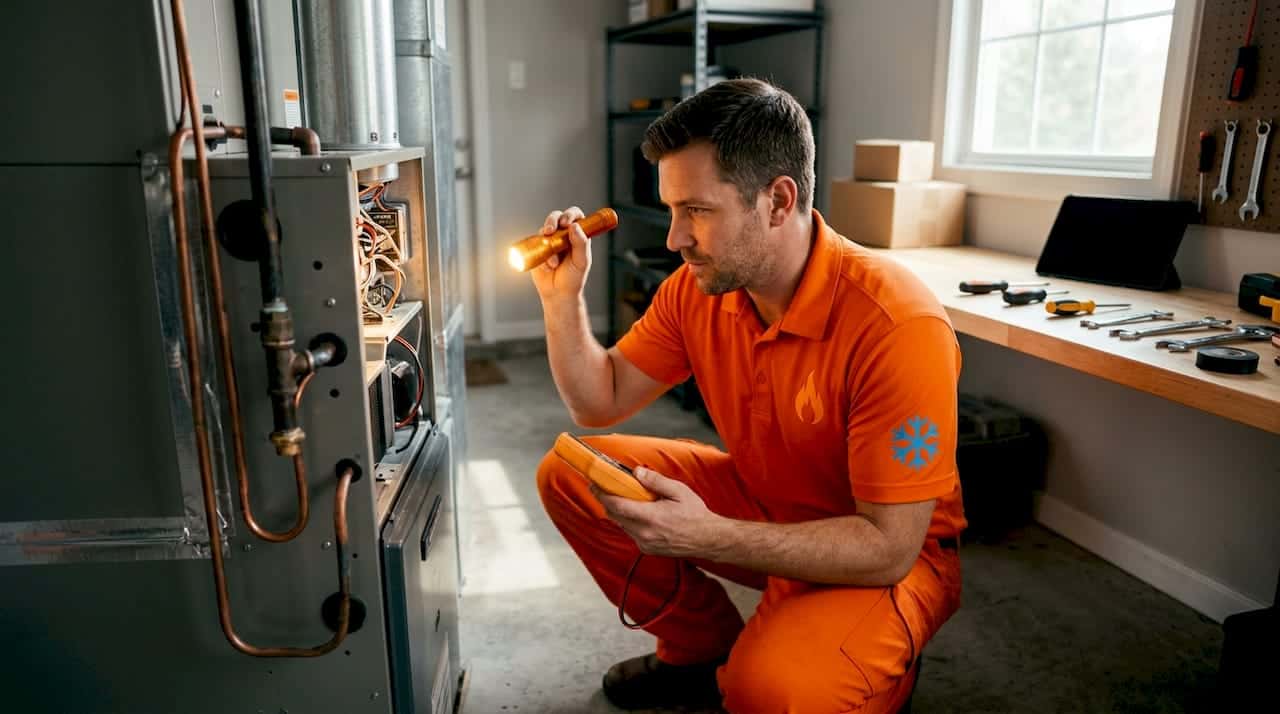
The single most important thing you can do before picking up the phone is gather the right details. Trained dispatchers capture four key inputs within the first 30 seconds of your call: your zip code, the urgency level (including who is home and the current indoor temperature), your system type and age, and the brand. These four data points determine whether you receive emergency dispatch, a same-day appointment, or a referral to another provider.
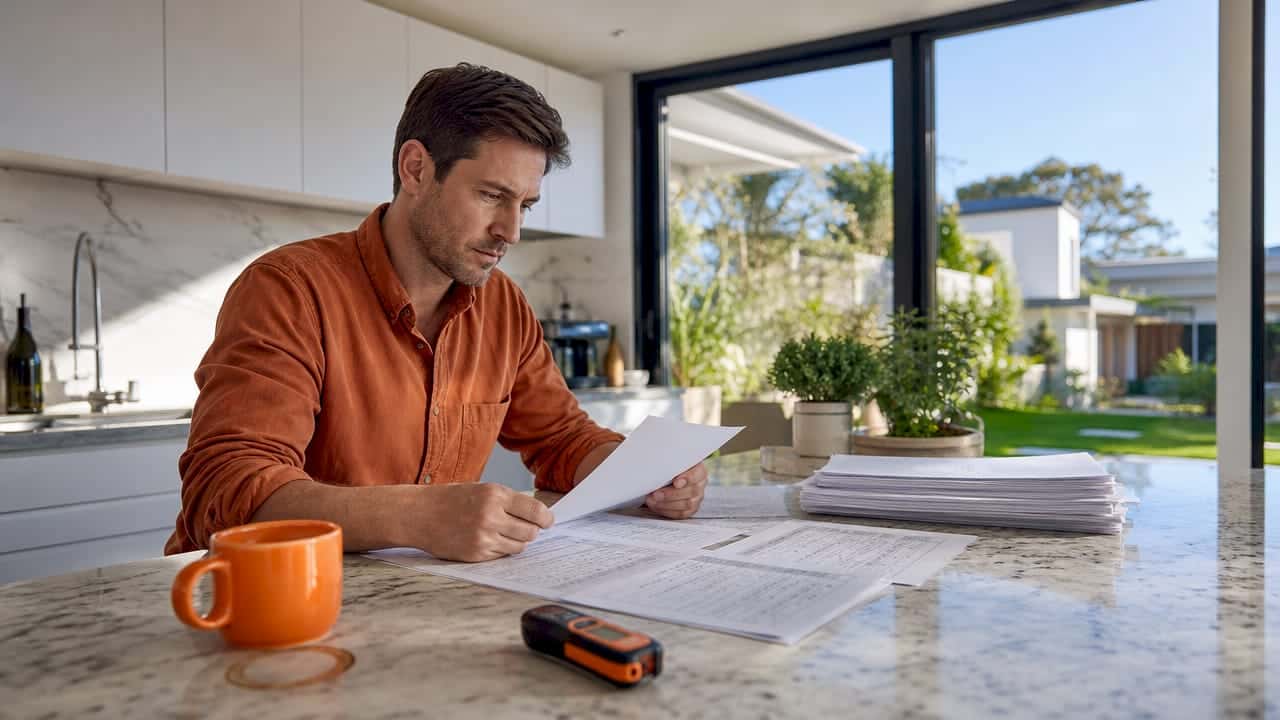
Being unprepared adds time to your call and delays the technician’s arrival. Here is exactly what to have ready before you dial:
- Your indoor temperature and who is home. If elderly family members, infants, or anyone with a medical condition is present, say so immediately. This information triggers priority dispatch.
- System type and age. Know whether you have a central air system, a mini-split, or a packaged unit. If your system is more than 10 years old, mention it. Age affects parts availability and the technician’s truck stock.
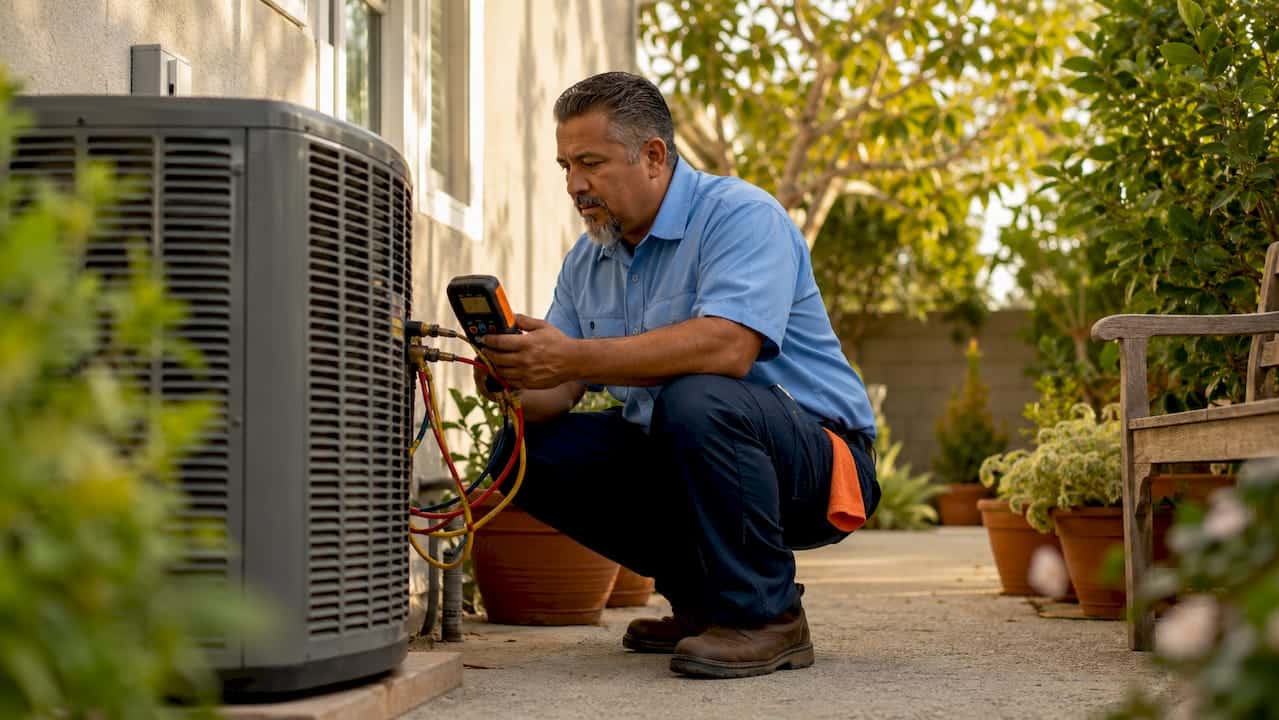
- Brand and model number. Check the label on your outdoor condenser unit or the air handler inside. Brands like Carrier, Trane, Lennox, and Rheem each have different part profiles.
- Symptoms and when they started. Did the system stop blowing cold air, stop running entirely, or start making a loud noise? Note the exact time the problem began.
- Any error codes displayed. If your thermostat or system control board shows a fault code, write it down. This is a small but mighty detail that can help a technician pre-diagnose the issue before arrival.
- Troubleshooting steps you already tried. If you reset the breaker, changed the thermostat setting, or checked the filter, tell the dispatcher. This prevents duplicate steps and saves time on-site.
Pro Tip: Take a photo of your system’s data plate before you ever need emergency service. Save it in your phone’s photos app so you have the brand, model, and serial number instantly available when you call.
Well-prepared intake calls prevent the frustrating “arrive and re-ask” cycle where technicians show up without the right parts and have to schedule a second visit. One thorough call is always faster than two incomplete ones.

How do emergency dispatch and triage protocols prioritize your AC repair call?
Understanding what happens on the other end of the line helps you communicate more effectively. Emergency HVAC dispatch is not a simple first-come, first-served queue. Dispatchers, whether human or AI-assisted, evaluate each call against a set of urgency signals before assigning a technician.
Urgent calls involving elderly occupants or extreme indoor heat receive immediate on-call technician notifications, bypassing the standard scheduling system entirely. A call where the indoor temperature has reached 90°F with a vulnerable occupant present will always outrank a call where the system is underperforming but the home is still reasonably cool.
Modern dispatch systems have added a layer of speed that most homeowners never see. AI-powered emergency call systems classify call severity and notify the appropriate technician within 60 seconds, with automatic escalation if there is no response. This means your call does not sit in a voicemail box overnight. It means a real technician is being contacted in under a minute.
Here is how the triage process typically works once you call:
- The dispatcher or automated system captures your zip code and urgency level first.
- Your call is classified as emergency, urgent, or routine based on temperature, occupant vulnerability, and system failure type.
- An on-call technician is notified immediately for emergency classifications.
- If the first technician does not respond, automated escalation protocols route the job to a backup technician or supervisor instantly.
- You receive a confirmation that help is on the way, along with an estimated arrival window.
“Customers calling with urgent needs want reassurance that help is coming immediately, not just the next available appointment.” — Thermoi HVAC Dispatch Research
This distinction matters. An emergency AC repair service is not the same as a next-day appointment with a priority label attached. True emergency dispatch means a technician is contacted and en route, often within the hour.
Step-by-step guide to scheduling your AC repair appointment effectively
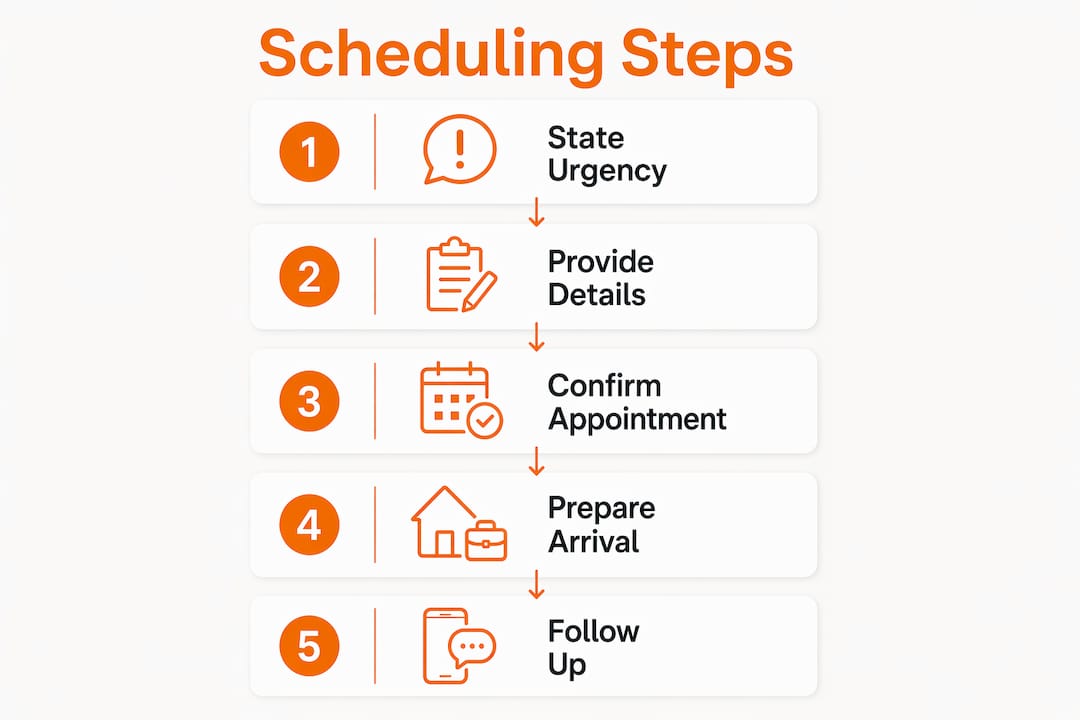
Follow these steps in order. Each one reduces your total wait time and improves the quality of service you receive.
- Call directly, do not submit a web form. For a genuine emergency, a phone call reaches a live dispatcher or an automated emergency system far faster than an online form. Most 24/7 AC repair call lines are answered within two minutes during peak hours.
- State the emergency immediately. Your first sentence should be: “My AC has completely stopped working and the indoor temperature is [X] degrees.” Do not lead with your name or address. Lead with the urgency.
- Provide your four key details. Zip code, indoor temperature, system type and brand, and who is home. Triage questions are designed to be completed within 90 seconds for cooperative callers, so keep your answers short and direct.
- Ask specifically about same-day dispatch. There is a difference between “we’ll get someone out as soon as possible” and “a technician will be there within two hours.” Ask for a specific time window.
- Confirm the emergency pricing structure. After-hours and emergency calls typically carry a premium. Ask for the service call fee and whether it applies toward the repair cost. Flat-rate pricing, like what LC Heating and Air Conditioning offers, removes the guesswork entirely.
- Get a confirmation number or text. Any reputable emergency AC repair service will send you a confirmation with the technician’s name, estimated arrival time, and a contact number.
- Stay available on your phone. Technicians often call ahead to confirm access or ask a quick question. A missed call can delay your appointment by 30 minutes or more.
| Step | What to do | Why it matters |
|---|---|---|
| State urgency first | Lead with temperature and failure type | Triggers emergency classification immediately |
| Provide system details | Brand, age, model number | Helps technician stock the right parts |
| Confirm dispatch type | Ask for a specific arrival window | Distinguishes emergency from routine scheduling |
| Verify pricing | Ask about flat-rate or emergency fees | Prevents surprise costs after the repair |
| Get written confirmation | Request a text or email with technician info | Ensures accountability and accurate arrival tracking |
Pro Tip: If you are calling after hours and reach an automated system, speak clearly and slowly. AI-powered dispatch systems transcribe your message to classify urgency. Mumbled or rushed calls can be misclassified as routine, delaying your response.
After-hours emergency calls represent 40% of annual HVAC revenue, yet companies lose 30 to 50% of these calls due to missed voicemails or slow dispatching. Choosing a provider with a true 24/7 AC repair call system, not just an answering machine, is the difference between a two-hour fix and a miserable overnight wait.
How to prepare for the emergency AC repair technician’s arrival
Once your air conditioning repair appointment is confirmed, what you do in the next 30 to 60 minutes directly affects how fast the repair gets done. A technician who arrives to a prepared home can diagnose and fix the problem in a single visit. One who has to hunt for the system, wait for access, or re-ask questions you already gave the dispatcher will take longer and may need to return.
Providing thermostat settings, outdoor unit status, and breaker trip information helps dispatchers build an efficient parts-and-truck plan before the technician even leaves the shop. Reinforce this when the technician calls to confirm arrival.
Here is how to get your home ready:
- Clear access to your indoor air handler and outdoor condenser unit. Move furniture, boxes, or anything blocking the equipment. A technician who spends 10 minutes moving obstacles is a technician not fixing your system.
- Write down every symptom you noticed. Strange sounds, unusual smells, water pooling near the unit, or the exact moment the system stopped. Memory fades under stress, so write it down.
- Check your breaker panel before the technician arrives. If a breaker has tripped, note which one. Do not reset it yourself unless you are certain it is safe to do so. Let the technician handle it if you are unsure.
- Have your thermostat set to “cool” and the fan set to “auto.” This lets the technician observe the system’s behavior immediately upon arrival rather than spending time on setup.
- Be present and available. Do not leave the home or send someone who does not know the system’s history. You are the best source of information about what happened and when.
- Avoid common mistakes. Do not pour water on the outdoor unit to cool it down. Do not repeatedly cycle the thermostat on and off. Both actions can complicate the diagnosis and potentially cause additional damage.
Accurate and rapid communication of emergency details to technicians directly reduces callbacks and service delays. Think of your preparation as a small but mighty contribution to your own repair speed.
Key takeaways
Scheduling an emergency AC repair call effectively requires four pieces of information, clear communication of urgency, and a provider with true 24/7 dispatch capability.
| Point | Details |
|---|---|
| Lead with urgency | State indoor temperature and failure type in your first sentence to trigger emergency classification. |
| Prepare system details | Have your brand, model, age, and symptoms ready before you call to prevent dispatcher delays. |
| Confirm dispatch type | Ask for a specific arrival window to distinguish true emergency service from routine scheduling. |
| Verify pricing upfront | Ask about emergency fees and flat-rate options to avoid unexpected costs after the repair. |
| Prepare your home | Clear access to equipment and document symptoms to help the technician complete the job in one visit. |
What 20 years of emergency calls taught me about the scheduling process
Most homeowners call in a panic, and that is completely understandable. But panic is the one thing that slows everything down. In my experience running LC Heating and Air Conditioning in Los Angeles for over two decades, the calls that get resolved fastest are not the ones from the most distressed homeowners. They are the ones from homeowners who take 60 seconds to gather their information before dialing.
Here is something most articles will not tell you: the dispatcher is your first technician. The quality of information you give them determines the quality of service you receive. A dispatcher who knows your system is a 12-year-old Carrier two-stage unit with a tripped high-pressure switch can send a technician with the right tools and likely the right part already on the truck. A dispatcher who only knows “the AC is broken” sends a technician who has to start from scratch.
I have also seen homeowners make the mistake of calling multiple companies simultaneously, hoping to get the fastest response. What actually happens is that two technicians show up, neither one takes full ownership of the job, and the homeowner ends up paying two service call fees. Call one reliable company with a real 24/7 emergency HVAC service and commit to them.
The other thing I want homeowners to know is that emergency pricing is not a penalty. It reflects the real cost of keeping a technician available at 2 a.m. on a Saturday. A company that charges nothing extra for after-hours work is either absorbing that cost somewhere else or not actually providing true emergency coverage. Transparent, flat-rate pricing is the honest approach, and it is what we practice at LC Heating and Air Conditioning.
— Leo
LC Heating and Air Conditioning is ready when your AC fails
When your cooling system goes down in the middle of a Los Angeles summer, you need more than a promise. You need a team that answers the phone, dispatches fast, and shows up prepared.

LC Heating and Air Conditioning provides same-day emergency AC repair across Los Angeles, with flat-rate pricing and no surprise diagnostic fees. Our technicians are stocked for the most common system failures and ready to respond to urgent calls day or night. With over 20 years of local experience and hundreds of verified five-star reviews, we are the team Los Angeles homeowners trust when comfort cannot wait. Call us directly or book your repair online to get a technician dispatched to your home today.
FAQ
What counts as an AC emergency that needs same-day service?
An AC emergency is any system failure where indoor temperatures are rising rapidly, vulnerable occupants such as elderly or young children are present, or the system has stopped functioning entirely during extreme heat. These situations qualify for immediate dispatch rather than a standard appointment.
How long does it take to get a technician after I call?
With a true 24/7 AC repair call system, most emergency dispatches reach a technician within 60 seconds of your call, with on-site arrival typically within one to three hours depending on your location and time of day.
What should I say first when I call for emergency AC repair?
Lead with your indoor temperature and the nature of the failure, for example: “My AC has stopped working completely and it is 92 degrees inside.” This immediately signals an emergency and triggers priority dispatch protocols.
Will I pay more for an after-hours emergency AC repair call?
Yes, after-hours and emergency calls typically carry a premium service fee. Ask upfront whether the fee applies toward the repair cost, and look for providers offering flat-rate pricing to avoid unexpected charges once the work is complete.
Can I schedule emergency HVAC repair online instead of calling?
Online booking works for non-urgent appointments, but for a true emergency, a direct phone call reaches a live dispatcher or automated emergency system far faster. Most emergency AC repair services recommend calling to ensure immediate response.
Recommended
Leo, Owner & Lead Technician at LC Heating & Air
Leo leads LC Heating & Air as an owner-operator and holds California CSLB C-20 HVAC license #1073586. His guides focus on practical diagnostics, safe repair decisions, and clear advice for Los Angeles homeowners.