- 1. What licensing and certification red flags indicate untrustworthy HVAC contractors?
- 2. How can vague or absent written estimates signal a contractor problem?
- 3. What do abnormally low bids and high upfront payment demands reveal?
- 4. What behavioral warning signs suggest an unreliable HVAC contractor?
- 5. How do improper sizing and skipped permits signal contractor risks?
- 6. Two scams that are more common than most homeowners realize
- Key takeaways
- What I have learned after 20 years of HVAC work in Los Angeles
- Trusted HVAC service in Los Angeles, done right from the start
- FAQ
- Recommended

TL;DR:
- Unlicensed HVAC contractors pose serious safety and legal risks, often leading to costly repairs and insurance issues.
- Red flags include verbal quotes, low bids, pressure tactics, and skipping permits, indicating unreliable service.
Common HVAC contractor red flags are specific behaviors and practices that signal unreliable, unsafe, or dishonest service providers. Recognizing these warning signs before you hire protects you from financial loss, safety hazards, and poor workmanship. The most serious red flags include missing licenses, verbal-only quotes, abnormally low bids, and pressure tactics designed to prevent you from getting a second opinion. This guide breaks down each warning sign in plain terms so you can hire with confidence and avoid the contractors who will cost you far more than their original quote.
1. What licensing and certification red flags indicate untrustworthy HVAC contractors?

A contractor without verifiable licenses is the single most dangerous red flag in HVAC services. Licensing exists to protect you. An unlicensed technician has not demonstrated competency to a state or local authority, and their work may not be covered by your homeowner’s insurance if something goes wrong.
HVAC contractors typically need multiple credentials to work legally. These include a state mechanical contractor’s license, an electrical license for wiring work, and EPA Section 608 certification for handling refrigerants. Each credential covers a different part of the job. A contractor who holds only one of these but performs all three types of work is operating outside their legal scope.
Verifying a license goes beyond asking the contractor if they have one. You need to check with your local licensing board and the Better Business Bureau for unresolved complaints. An expired license is just as problematic as no license at all. Some contractors carry licenses that lapsed years ago and hope homeowners never check.
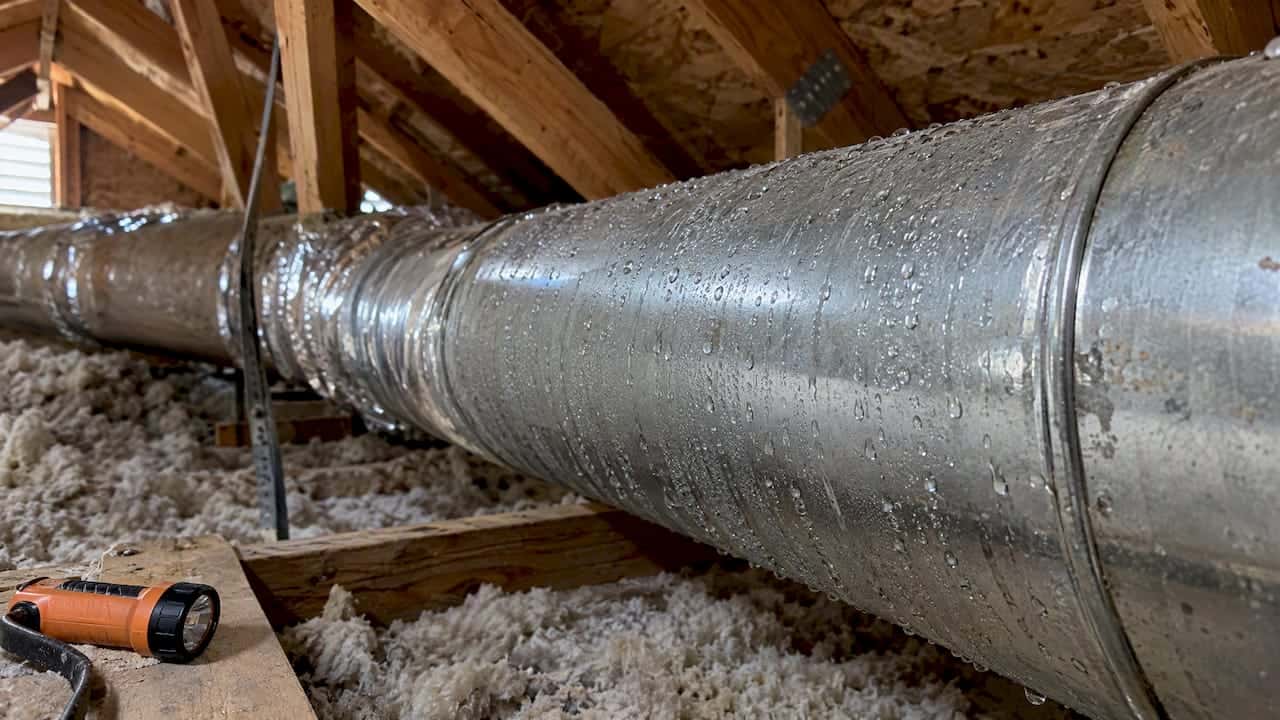
The risks of unlicensed work are real and costly. Faulty electrical connections cause fires. Improper refrigerant handling violates federal law. Poorly sealed ductwork causes carbon monoxide to enter living spaces. None of these outcomes are covered by a contractor who cannot show valid credentials.
- Ask for the contractor’s license number before scheduling any work.
- Verify the license type: mechanical, electrical, and EPA 608 are all separate credentials.
- Search the contractor’s name on your state licensing board’s website.
- Check BBB ratings and look for unresolved complaints, not just the overall score.
- Confirm the license is current, not expired.
Pro Tip: Write down the license number the contractor gives you and verify it yourself online. A legitimate contractor will never hesitate to provide it.
2. How can vague or absent written estimates signal a contractor problem?
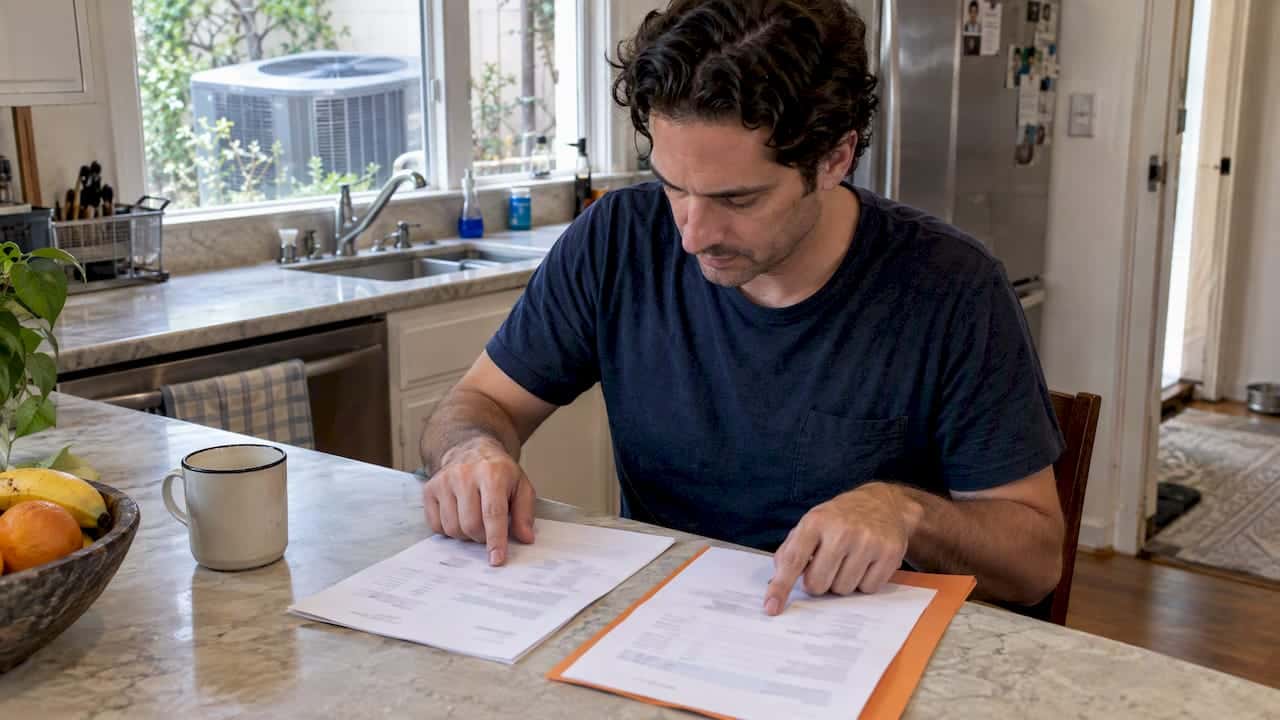
A verbal quote is unenforceable and leaves you with no protection if costs escalate. Any quote provided verbally without written documentation is a primary red flag. Legitimate contractors provide itemized written quotes that include model numbers, labor costs, and permit line items.
A solid written estimate protects both parties. It sets clear expectations and gives you a document to reference if the contractor tries to add charges later. Without it, you have no recourse when a $3,000 quote becomes a $5,500 invoice.
Here is what a trustworthy written estimate must include:
- Itemized labor costs broken down by task.
- Equipment model numbers and brand names, not just generic descriptions like “new unit.”
- A permit line item showing the contractor will pull the required permits.
- A clear payment schedule tied to project milestones.
- Warranty terms for both parts and labor.
- A start date and estimated completion date.
- The contractor’s license number and insurance information.
Common contract omissions that cause problems include missing warranty language, no mention of permits, and vague scope descriptions like “install new system.” That last phrase tells you nothing about what brand, what size, or what the installation includes.
| What to look for | Red flag version | Trustworthy version |
|---|---|---|
| Equipment details | “New AC unit” | Specific brand, model number, SEER rating |
| Permit handling | Not mentioned | Permit cost listed as a line item |
| Payment terms | Full payment upfront | Milestone-based payment schedule |
| Warranty | Not included | Parts and labor warranty clearly stated |
| Scope of work | “Install system” | Detailed list of all tasks included |
Permit costs typically range from $60 to $300 in the United States. A contractor who does not include permits in the estimate is either planning to skip them or planning to surprise you with the cost later.
Pro Tip: Never sign a contract that uses the phrase “and other related work” without a specific definition. That phrase is how contractors justify adding charges after the job starts.
3. What do abnormally low bids and high upfront payment demands reveal?
A bid that is dramatically lower than every other quote is not a deal. Bids that are 30% or more below the average competitor quote are a significant warning sign. That gap usually means the contractor is cutting corners somewhere, and you will pay for those corners later.
The most common causes behind a suspiciously low bid include:
- Unlicensed labor: The contractor uses uncertified workers at lower wages, increasing your liability.
- Substandard equipment: The quote includes off-brand or refurbished units not disclosed to you.
- Omitted permits: Skipping permits saves the contractor money but creates legal and safety problems for you.
- Incomplete scope: The low price covers only part of the job, with the rest added as change orders.
A low bid that wins the job but skips permits, uses subpar equipment, or employs unlicensed workers will cost you more in repairs, fines, and insurance complications than a fair bid from a reputable contractor ever would.
Upfront payment demands are equally telling. Standard deposits run 10–33% of the total project cost. A contractor who demands full payment before any work begins removes your leverage entirely. Once they have your money, your ability to hold them accountable disappears. If a job is abandoned or done poorly, recovering that payment becomes a legal battle.
When a bid looks too low, ask the contractor to explain every line item. A trustworthy contractor will walk you through the numbers without hesitation. One who deflects or gets defensive is telling you something important.
4. What behavioral warning signs suggest an unreliable HVAC contractor?
Unreliable contractors reveal themselves through how they communicate, not just what they quote. Unresponsiveness before the job starts is a reliable preview of how they will behave when problems arise mid-project. If a contractor takes three days to return a call during the sales process, expect the same when you need a warranty repair.
High-pressure sales tactics use manufactured urgency like “today only” discounts to prevent you from getting second opinions. This is a deliberate strategy. A contractor who will not honor the same price tomorrow does not want you talking to anyone else. That alone should stop the conversation.
Watch for these behavioral warning signs:
- Refusal to answer technical questions: A qualified technician can explain why a repair is needed in plain language. Vague answers like “it’s just worn out” without specifics are a red flag.
- No physical address or online presence: A legitimate business has a verifiable location. A contractor with only a cell phone number and a Facebook page has no accountability trail.
- Subcontractor concealment: Some contractors bid the job themselves and then hand it off to unchecked subcontractors. Ask directly whether the person quoting the job will be the one doing the work.
- Refusal to provide references: A contractor with a solid track record will offer references without being asked. Resistance to this request signals a short or troubled history.
A contractor with 50 or more online reviews averaging 4.0 or higher is a safer choice than one with a handful of perfect 5-star ratings. Review volume and distribution tell you more about real-world performance than a perfect score from five people.
Pro Tip: Search the contractor’s business name plus the word “complaint” before hiring. You will often find forum posts, Yelp threads, or BBB filings that do not show up in the contractor’s own marketing.
5. How do improper sizing and skipped permits signal contractor risks?
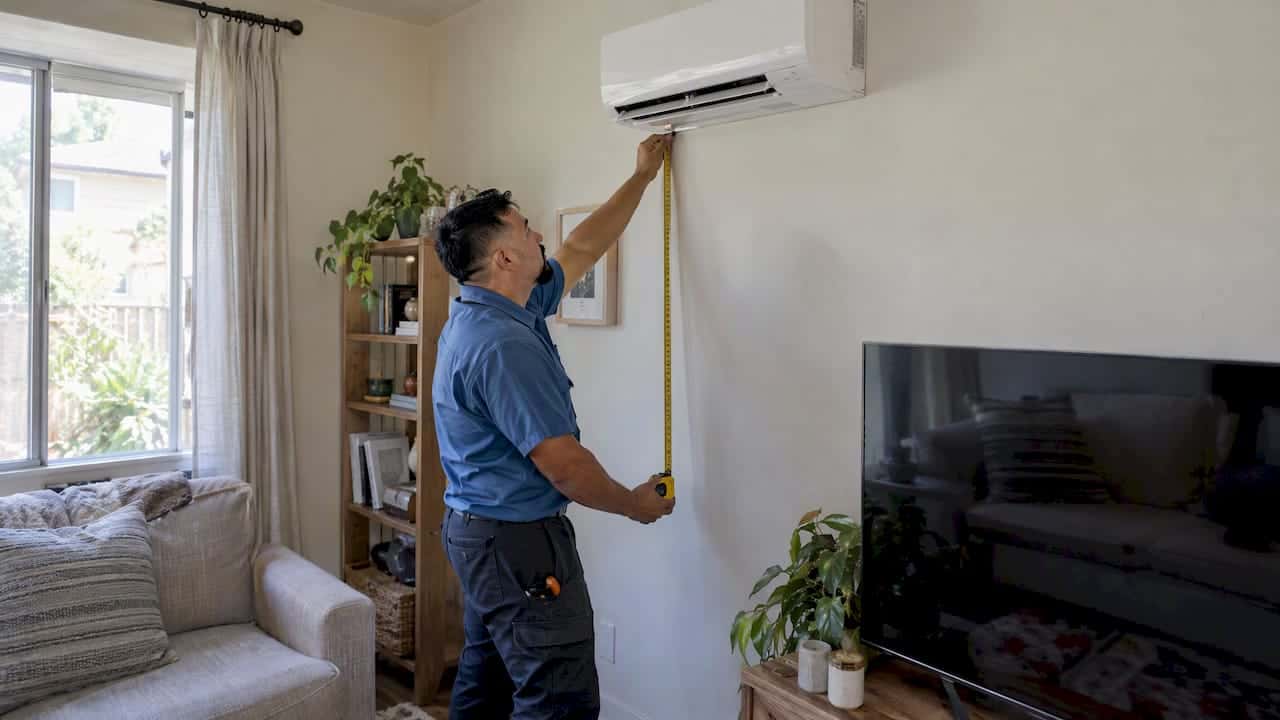
Sizing an HVAC system by square footage alone is a technical red flag that costs you money for years. Contractors who size equipment solely by square footage without performing a Manual J load calculation cause short cycling, inefficiency, and premature system failures. A proper Manual J load calculation accounts for insulation levels, window placement, ceiling height, local climate, and occupancy. Square footage is just one of many variables.
An oversized unit cools your home too quickly, shuts off before removing humidity, and cycles on and off constantly. That short cycling wears out the compressor faster than normal use. An undersized unit runs continuously, drives up your energy bill, and never quite reaches your set temperature. Both outcomes are avoidable with proper sizing.
Permits are equally non-negotiable. HVAC permits trigger inspections that catch installation errors causing safety hazards. Skipping permits risks your safety, your insurance coverage, and your ability to disclose the work accurately when you sell your home. Some buyers’ inspectors flag unpermitted HVAC work, which can delay or kill a sale.
| Approach | Proper method | Red flag method |
|---|---|---|
| Equipment sizing | Manual J load calculation | Square footage estimate only |
| Permit handling | Contractor pulls permit before work | No permit mentioned or pulled |
| Inspection | City inspector verifies installation | No inspection scheduled |
| Documentation | Permit on file with city records | No record of work exists |
Permit costs typically range from $60 to $300. That is a small price compared to the cost of fixing code violations or losing an insurance claim. A contractor who resists pulling permits is protecting their own convenience, not your home.
6. Two scams that are more common than most homeowners realize
The cracked heat exchanger scam is one of the most effective tools a dishonest technician uses. Technicians fake heat exchanger cracks to panic homeowners into costly furnace replacements by invoking the fear of carbon monoxide poisoning. The fix is straightforward: ask for a carbon monoxide detector reading at the time of diagnosis and get a second opinion before authorizing any replacement. A real crack produces measurable CO levels. A fabricated one does not.
The obsolete parts scam works on a similar fear of the unknown. Technicians frequently claim parts are unavailable to push full system replacements, even when universal replacement parts exist in secondary markets. Before agreeing to replace an entire system based on one part, get the part number and search it yourself. Distributors like Johnstone Supply and Grainger carry parts for systems that are well over a decade old.
These two scams share a common structure: manufactured fear plus time pressure. The contractor creates urgency around a safety concern, then offers the most expensive solution before you have time to think. Recognizing that pattern is your best defense. Thank the technician, end the appointment, and call a second contractor before making any decision.
Key takeaways
Protecting yourself from untrustworthy HVAC contractors requires verifying licenses, demanding written estimates, questioning low bids, and recognizing pressure tactics before you sign anything.
| Point | Details |
|---|---|
| Verify all credentials | Check mechanical, electrical, and EPA 608 licenses with your state licensing board before hiring. |
| Require written estimates | Insist on itemized quotes with model numbers, permit costs, and warranty terms in writing. |
| Question low bids | Bids 30% or more below market average often hide unlicensed labor, skipped permits, or subpar equipment. |
| Resist pressure tactics | “Today only” discounts are designed to stop you from getting a second opinion. Always get one. |
| Confirm proper sizing | Demand a Manual J load calculation, not a square footage estimate, for any new system installation. |
What I have learned after 20 years of HVAC work in Los Angeles
After two decades running LC Heating and Air Conditioning in Los Angeles, I have seen every red flag in this article play out in real homes. The one that surprises homeowners most is the cracked heat exchanger scam. People hear “carbon monoxide” and they stop thinking clearly. That fear is exactly what a dishonest technician is counting on.
The honest truth is that most homeowners hire the first contractor who answers the phone and sounds confident. That is understandable when your AC fails in August and it is 95 degrees inside. But that urgency is also when your judgment is most vulnerable. The contractors who exploit that moment are counting on you not to slow down.
My advice is simple: trust your instincts when something feels off. If a contractor cannot explain why a repair is needed in plain language, that is a problem. If the price seems too good to be true, it is. If someone is pushing you to sign before you have had time to read the contract, walk away.
A second opinion costs you one phone call and a few hours. It has saved some of our customers thousands of dollars. Getting a second opinion is not an insult to the first contractor. It is basic due diligence, and any legitimate professional will respect it.
— Leo
Trusted HVAC service in Los Angeles, done right from the start

LC Heating and Air Conditioning has served Los Angeles homeowners for over twenty years with licensed, insured technicians and flat-rate pricing that eliminates surprise costs. Every job starts with an honest diagnostic and a written estimate that includes equipment details, permit costs, and warranty terms. No pressure, no manufactured urgency, and no upselling you on a replacement you do not need.
If you are dealing with an HVAC issue right now or want a second opinion on a quote you have already received, contact LC Heating and Air Conditioning for same-day service from a team that puts your comfort and safety first.
FAQ
What are the most common HVAC contractor red flags?
The most common warning signs include missing or unverifiable licenses, verbal-only quotes, bids more than 30% below market average, full upfront payment demands, and high-pressure sales tactics that discourage second opinions.
How do I verify an HVAC contractor’s license?
Ask for the contractor’s license number, then verify it directly on your state licensing board’s website. Check for mechanical, electrical, and EPA Section 608 certifications separately, and search the BBB for unresolved complaints.
Is a low HVAC bid always a red flag?
A bid that is 30% or more below the average competitor quote is a significant warning sign. It often indicates unlicensed labor, skipped permits, or substandard equipment that will cost more to fix later.
Why do HVAC permits matter for homeowners?
Permits trigger city inspections that catch installation errors before they become safety hazards. Skipping permits can void your homeowner’s insurance coverage and create disclosure problems when you sell your home.
What is the cracked heat exchanger scam?
A technician falsely claims your heat exchanger is cracked to push a costly furnace replacement by invoking carbon monoxide fears. Request a CO detector reading on the spot and get a second opinion before authorizing any replacement.
Recommended
Leo, Propietario y Técnico Principal en LC Heating & Air
Leo dirige LC Heating & Air como propietario-operador y tiene la licencia C-20 HVAC #1073586 de California. Sus guías se enfocan en diagnósticos prácticos, decisiones de reparación seguras y consejos claros para propietarios de Los Ángeles.