- TL;DR
- The quick schedule by filter type
- Check monthly, change when it’s dirty
- What shortens your filter’s life
- Heat pumps and mini splits: filters that work all year
- Filter thickness, MERV rating and why they matter
- What about a 16x25x1 filter?
- Signs your filter needs changing now
- How to change the filter safely
- Why a clean filter is worth the routine
- Our perspective
- Get help from LC Heating & Air
- FAQ
- Sources
- Recommended

For most homes, change a standard 1-inch pleated HVAC filter every 60 to 90 days, and every 30 to 45 days if you have pets, allergies or heavy system use. Thicker 4-inch and 5-inch filters last 3 to 12 months. Whatever the label says, check the filter once a month. Your own filter will tell you the real answer faster than any chart.
This guide covers the schedule for each filter type and the household conditions that shorten it. It also covers the Los Angeles factors that matter, such as heat pumps that run all year, wildfire smoke and dusty summers. You’ll also find the signs a filter is overdue and how to swap one safely.
TL;DR
- Check your filter every month. Change it when it looks dirty, and at least every 3 months, as ENERGY STAR advises.
- Rule of thumb: 1-inch pleated filters every 60 to 90 days, 4-inch every 3 to 6 months, 5-inch every 6 to 12 months.
- Pets, allergies, renovation, smoke and a fan that runs constantly can cut those intervals in half.
- Heat pumps and mini splits move air for both heating and cooling, so their filters work year-round in Southern California.
- A clogged filter can cause weak airflow, a frozen coil and higher bills. If new filters don’t fix it, book a diagnostic.
The quick schedule by filter type
The thickness of your filter is the biggest single factor. A thicker filter has more surface area to hold dust before airflow suffers. Manufacturers and public agencies give slightly different ranges, but they cluster closely.
| Filter type | Typical replacement interval | With pets, allergies or heavy use |
|---|---|---|
| 1-inch fiberglass panel | About every 30 days | Every 30 days or sooner |
| 1-inch or 2-inch pleated | 60 to 90 days | 30 to 45 days |
| 4-inch pleated or media | 3 to 6 months | Closer to 3 months |
| 5-inch pleated or media | 6 to 12 months | Closer to 6 months |
These ranges line up with published guidance. The EPA says that manufacturers typically recommend replacing furnace and HVAC filters every 60 to 90 days, and that you should change them more often if they look heavily soiled when you pull them. The Building America Solution Center, run by a national laboratory, puts the general window at 3 to 6 months for home filters to keep airflow unrestricted.
Filtrete, a major filter maker, recommends replacing 1-inch filters every three months or sooner, and 4-inch or larger filters at least every 12 months or sooner. Consumer Reports agrees that most disposable filters last three to 12 months and that thicker filters need changing less often.
The 90-day number you see everywhere is a ceiling for a basic 1-inch pleated filter in an ordinary home. It is not a target. In a busy household in a dusty part of Los Angeles, you may reach the end of a filter’s useful life in six weeks.
Check monthly, change when it’s dirty
A calendar schedule is a starting point. The more reliable habit is a monthly look. ENERGY STAR advises checking the air filter once a month in a central air conditioner, furnace or heat pump, then cleaning or changing it if it is dirty. Its homeowner guide adds that you should change it as needed, and at least every three months.
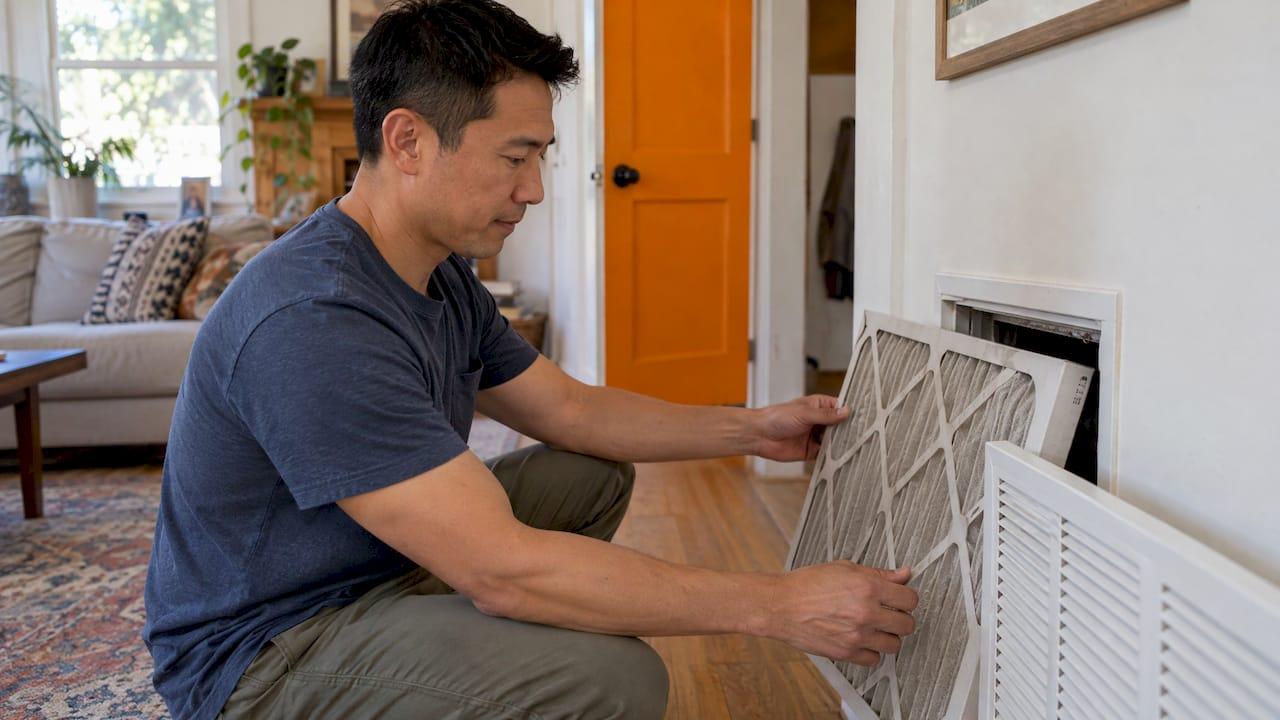
Here’s the 30-second check:
- Turn the system off at the thermostat.
- Slide the filter out and hold it up to a light.
- If you can’t see light through the media, or the surface is gray and fuzzy with dust, replace it.
- If it still looks fairly clean, slide it back in with the airflow arrow pointing the right way, and check again next month.
Pick a trigger that you won’t forget. The first of the month works well. So does the first day of a new season, or the day you pay the electric bill.
Not sure where the filter lives? It is usually in a slot at the return grille or at the air handler. Our guide to finding your heater filter location walks through the common spots in Los Angeles homes.
What shortens your filter’s life
A filter is only as good as the air it has to clean. These conditions mean you should check more often and plan to change sooner.
Pets
Hair and dander load a filter quickly. A home with one pet often needs a change closer to every 45 to 60 days. Multiple pets usually push it to 30 to 45 days. If pet dander is a constant issue, our article on air duct cleaning and pet dander explains what else is circulating through your system.
Allergies and asthma
If someone in the home has allergies or asthma, a higher-efficiency filter makes sense. The EPA notes that most furnaces and HVAC systems can handle a MERV 13 filter without equipment problems, as long as it is replaced frequently. That last part matters. A finer filter catches more, so it loads up faster. Check it monthly, and change it at the first sign of heavy buildup.
Renovation, sanding and construction
Drywall dust and sanding debris can clog a filter in days. Filtrete says that construction work, sanding, pets, smokers or a continuously running fan may call for more frequent changes. During a remodel, look at the filter every couple of weeks. If the system runs while work is happening, expect to change it more than once.
Wildfire smoke and dusty weather
In Los Angeles, fire season can load a filter far faster than a normal month. Ash and fine particles collect on the media, and a clogged filter chokes airflow just when you most want your system running. We cover this in detail in our piece on wildfire smoke and your AC filter. After any smoky stretch, inspect the filter and replace it if it looks gray or brown.
Long run times
The more your system runs, the more air passes through the filter. In the hottest weeks of a Los Angeles summer, your AC may run most of the day. Leaving the fan on “on” instead of “auto” also keeps air moving through the filter around the clock. A heavy-use month needs a shorter interval than a mild one.
Heat pumps and mini splits: filters that work all year
A traditional setup uses the AC in summer and a furnace in winter. A heat pump does both jobs. In our climate it may run in some mode almost every month of the year, so its filter never gets a seasonal rest.
For a central heat pump, the same rules apply as for any ducted system. The Building America Solution Center guide covers replacing the filter in a furnace or central heat pump, and ENERGY STAR’s monthly check applies to heat pumps as well. Because the system runs so many months, we suggest treating a 1-inch pleated filter as a 60-day filter, not a 90-day one, and stretching only when the monthly check says it’s fine.
A clogged filter can make a heat pump look like it has failed. Airflow drops and the coil can ice over. Comfort suffers, and the compressor works harder. Before you call for service on a heat pump that isn’t heating or cooling well, swap in a fresh filter and give the system time to recover.
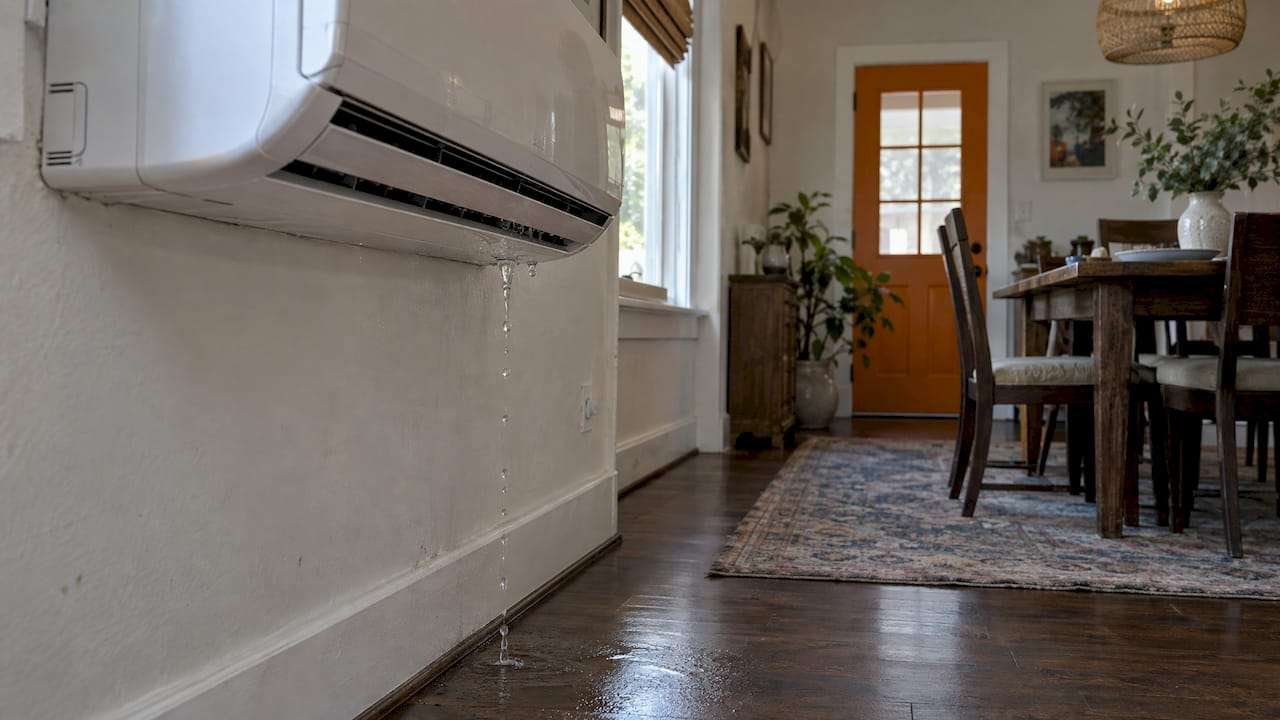
Mini splits (ductless systems) work differently. Each indoor unit has its own built-in filters, usually small screens or panels behind the front cover, and there’s no central return grille. These need regular attention too, and the interval depends on the brand and how much the unit runs. Your owner’s manual is the best guide for how to remove and clean or replace them. If a unit smells musty, blows weakly or drips water, the filter and coil are the first places we look.

We install and service heat pumps, multi-zone mini splits and commercial VRF systems across Greater Los Angeles. In our experience, a simple filter routine is one of the cheapest ways to protect that equipment.
Filter thickness, MERV rating and why they matter
Two numbers shape your schedule: depth and MERV rating.
Depth. A 1-inch filter has the least room to hold debris. A 4-inch or 5-inch media filter has far more pleated surface. Realtor.com quotes an HVAC expert who suggests one to three months for 1-to-2-inch filters, six to nine months for 3-to-4-inch filters, and nine to 12 months for 5-to-6-inch filters. Thicker filters also cost more up front, but you buy fewer of them.

MERV rating. MERV measures how well a filter traps particles. A higher number catches smaller particles, but it also puts more resistance in the airflow path. That is why a high-MERV filter in a thin 1-inch frame can load up quickly. If you move to a higher rating, shorten your check interval until you see how it behaves in your home. Our article on choosing the right furnace air filter explains how to match a rating to your system.
Not every system is built for every filter. Some older ducted systems, including many in Hollywood and Pasadena homes, were not designed for very dense media. If you are unsure, ask your technician at the next visit what your system can handle.
What about a 16x25x1 filter?
The numbers in a filter size are its dimensions in inches: 16 by 25 by 1 means a 1-inch-thick filter. It is one of the most common sizes, and it follows the 1-inch rules.
- Standard home, pleated: plan on every 60 to 90 days.
- Pets, allergies or heavy use: every 30 to 45 days.
- Cheap fiberglass: about every 30 days.
The same interval applies if your 1-inch filter has a higher MERV rating. Filtrete’s guidance for 1-inch filters is at least every three months or sooner, and sooner is the operative word in a dusty or pet-heavy home. Measure your filter slot before you shop, because the printed size on the frame is the one to match.
Signs your filter needs changing now
Sometimes the calendar and the filter disagree. These signs mean you shouldn’t wait:
- The filter looks gray, fuzzy or packed with debris. This is the clearest sign. ENERGY STAR says a dirty filter makes the system work harder, raising energy costs and potentially damaging equipment.
- Weak airflow at the vents. If a room that used to cool well now feels stuffy, check the filter first.
- More dust on surfaces. A saturated filter stops catching particles.
- Short cycling or a frozen coil. Low airflow can make the evaporator coil ice over in cooling season, according to a filter-maintenance guide that also lists climbing energy bills with no thermostat change as a clue.
- A musty smell, or sneezing and coughing at home. Dirty filters can contribute to both.
- The system shuts down. The ENERGY STAR homeowner guide warns that a dirty filter can even cause the air handler to shut down.
If you replace the filter and the symptoms stay, the problem is something else: a failing capacitor, a refrigerant leak, a blocked drain line or a sensor fault. That is when a technician should look at it. A clogged filter is a common cause of comfort complaints, but it is rarely the only one.
How to change the filter safely
This takes about five minutes and no tools in most homes.
- Turn the system off. ENERGY STAR instructs you to turn off the furnace, A/C and fan using the thermostat, the circuit breaker or a switch.
- Pull out the old filter. Note which way the arrow on the frame points before you remove it.
- Check the size. Write the size on the frame (for example 16x25x1) on your phone or on the slot cover so reordering is easy.
- Insert the new filter. The arrow should point toward the furnace, blower or air handler, which is the direction air flows.
- Close the cover and turn the system back on. Make sure the door or grille seats fully so air can’t bypass the filter.
- Mark the date. A note on the frame or a phone reminder keeps you honest.
A few common mistakes are worth avoiding:
- Washing a disposable filter. Trane warns that disposable filters are not meant to be cleaned and reused, and that washing can leave contaminants in the folds, damage the filter and strain the motor. Only filters labeled washable or reusable should be cleaned.
- Installing it backward. The arrow matters.
- Leaving gaps. A filter that doesn’t fit snugly lets unfiltered air through.
- Stacking two filters. This restricts airflow, and the system is not designed for it.
ENERGY STAR also suggests asking your contractor to show you how to replace or clean your filter during a maintenance visit. We’re happy to do that.
Why a clean filter is worth the routine
The payoff is practical. A clean filter keeps airflow steady, which helps the system cool and heat evenly and run efficiently. It helps protect the blower and the coil from strain. It keeps fewer particles circulating in your home, and it prevents the kind of weak-airflow service call that a $15 filter could have avoided.
Our own post on the importance of regular HVAC filter replacement goes deeper on the long-term wear side, and our overview of how often to replace filters is a handy companion for a printable reminder.
For commercial buildings, the stakes are bigger. Multiple air handlers, VRF indoor units and tenant comfort all depend on filter discipline. Filter checks are part of our commercial HVAC maintenance checklist, from monthly tasks to annual ones.
Our perspective
We see the same pattern on service calls across Los Angeles. A homeowner calls because the AC “stopped cooling,” and the first thing we find is a filter that hasn’t been touched in a year. It’s a small but mighty component, and a healthy filter means a happy system.
We also see the opposite problem. Some homeowners are told they need a new system when what they needed was a clean filter, a clear coil and an honest diagnostic. That’s why we say what we find, in plain language, and we quote flat-rate pricing for repairs so you’re not caught off guard.
Heat pumps and mini splits are our specialty, and they reward good habits. They run in more months than a traditional AC, so a monthly look at the filter is the cheapest insurance you can buy. If you’re also thinking about moving to a high-efficiency heat pump, we can talk through what California rules and rebates may apply to your home.
Our advice is simple: check monthly, change when it’s dirty, and call us when new filters don’t solve the problem.
Leo
Get help from LC Heating & Air
If you’ve swapped the filter and your system still isn’t right, we can help. Our service call starts at $125, and we’ll diagnose the problem honestly, with flat-rate pricing for repairs and no pressure to replace equipment that doesn’t need it. We handle AC, heat pump and mini split repair as well as same-day and emergency visits.

If you’d rather not keep track of filters and seasonal checks yourself, our HVAC maintenance plan is $180 to $250 per year and covers the routine care that keeps systems running well. Thinking about an upgrade? Heat pump installation runs $5,500 to $12,000, and mini split installation runs $3,500 to $20,000, depending on the home and the number of zones. You can see financing options here. Call us at (323) 970-3113 or visit lahvaclc.com.
FAQ
How often should I change my AC filter in summer?
Check it monthly and plan on a change every 30 to 90 days for a 1-inch filter. Summer in Los Angeles means long run times, so lean toward the short end if you have pets, allergies or a dusty street. If it looks gray when you hold it to the light, replace it.
Can I run my HVAC without a filter for a day?
We don’t recommend it. Without a filter, dust and debris can reach the blower and the coil, and that buildup is hard to remove. If you’re out of filters, a quick trip to the hardware store is better than running the system bare. If you aren’t sure what size to buy, check the frame of the old filter or the slot.
Do heat pumps need filter changes more often than a regular AC?
They often work more months of the year, so the filter has more hours to load up. In most homes that means checking monthly and changing a 1-inch pleated filter closer to every 60 days. Ductless mini splits have their own indoor-unit filters, so follow your manual for those.
Is it okay to wait six months between changes?
It can be, but only with the right filter. A 4-inch or 5-inch media filter can last that long, while a 1-inch filter usually can’t. ENERGY STAR’s guidance is to check monthly and change at least every three months, so a 1-inch filter left for six months is likely to be overloaded.
What if I replaced the filter and my AC still isn’t cooling?
Give the system a few hours to recover, especially if the coil iced over, then check that the thermostat and vents are set properly. If it still blows warm or weak air, the cause is probably mechanical, such as refrigerant, a capacitor or a drain issue. That’s a job for a licensed technician, and you can book a service call with us.
Sources
- EPA: Guide to Air Cleaners in the Home
- ENERGY STAR: How to Keep Your HVAC System Working Efficiently
- ENERGY STAR Certified Homes Maintenance Guide
- Building America Solution Center: Replace Air Filter Located in Furnace or Central Heat Pump
- Consumer Reports: How Often to Change the Air Filter
- Filtrete: How Often to Replace Air Filters
- Filtrete: Brand Products FAQs
- Realtor.com: Furnace Maintenance Tips Recommended by HVAC Experts
- Trane: Air Filter Cleaning & Maintenance Guide
- Filterbuy: 5 Signs Your HVAC Filter Is Clogged
Recommended
Leo, Propietario y Técnico Principal en LC Heating & Air
Leo dirige LC Heating & Air como propietario-operador y tiene la licencia C-20 HVAC #1073586 de California. Sus guías se enfocan en diagnósticos prácticos, decisiones de reparación seguras y consejos claros para propietarios de Los Ángeles.