- Key Takeaways
- How Wildfire Smoke Affects AC and HVAC Filters Over Time
- Which Filters Actually Remove Wildfire Smoke Particles?
- What to Do to Your HVAC System During a Smoke Event
- How Often Should You Check and Replace Filters During Smoke Events?
- Can Your System Handle a MERV 13 Upgrade?
- Cleaning Up After the Smoke Clears
- Signs It’s Time to Call an HVAC Technician
- How LC Heating and Air Conditioning Helps During Smoke Season
- Sources
- FAQ
- Recommended
Wildfire Smoke AC Filter Effects: What Homeowners Should Do
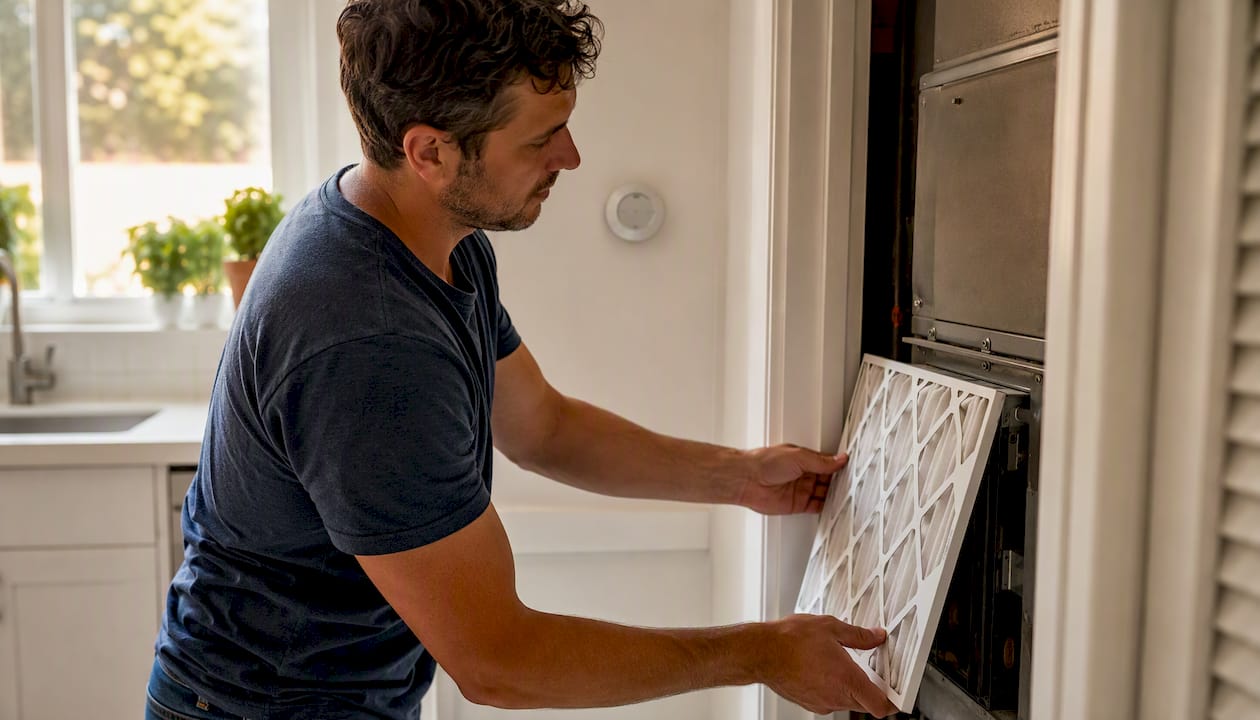
Wildfire smoke loads AC filters fast, and the fix is straightforward: upgrade to a MERV 13 filter if your system can handle it, run the HVAC fan continuously instead of on Auto, close outdoor air intakes and windows, and add a portable air cleaner or DIY box fan unit in the rooms you actually occupy. These four moves address the biggest wildfire smoke ac filter effects: rapid filter loading, reduced airflow, and rising indoor PM2.5.
The evidence backs this up directly. The EPA notes that a MERV 13 filter paired with continuous fan operation can cut indoor PM2.5 by roughly 50% in many homes. ASHRAE’s smoke readiness guidance adds a second layer: check your system’s tolerance for higher-efficiency media before smoke season hits, not during it.
Here’s your immediate triage checklist:
- Set the thermostat fan switch to On (not Auto) so filtration runs continuously.
- Close fresh-air intakes, windows, and doors to limit smoke infiltration.
- Start a portable HEPA unit or a DIY box fan filter in your bedroom or main living space.
- Pull the HVAC filter and check for dark discoloration or a smoky odor.
Pro Tip: Keep at least two spare MERV 13 filters in the house before fire season starts. Smoke events rarely give you time to shop, and hardware stores sell out fast once air quality alerts go out.
Key Takeaways
Wildfire smoke loads AC filters within days, and pairing a MERV 13 upgrade with continuous fan operation cuts indoor PM2.5 by roughly half in homes where the system can handle it.
| Point | Details |
|---|---|
| Upgrade filters where compatible | Install MERV 13 or higher only if your blower and filter slot can handle the added resistance. |
| Trust your eyes, not the calendar | Dark discoloration or smoky odor should trigger replacement, not a fixed monthly schedule. |
| Combine whole-home and room filtration | Run MERV 13 centrally and add a portable HEPA or DIY box fan unit in occupied rooms. |
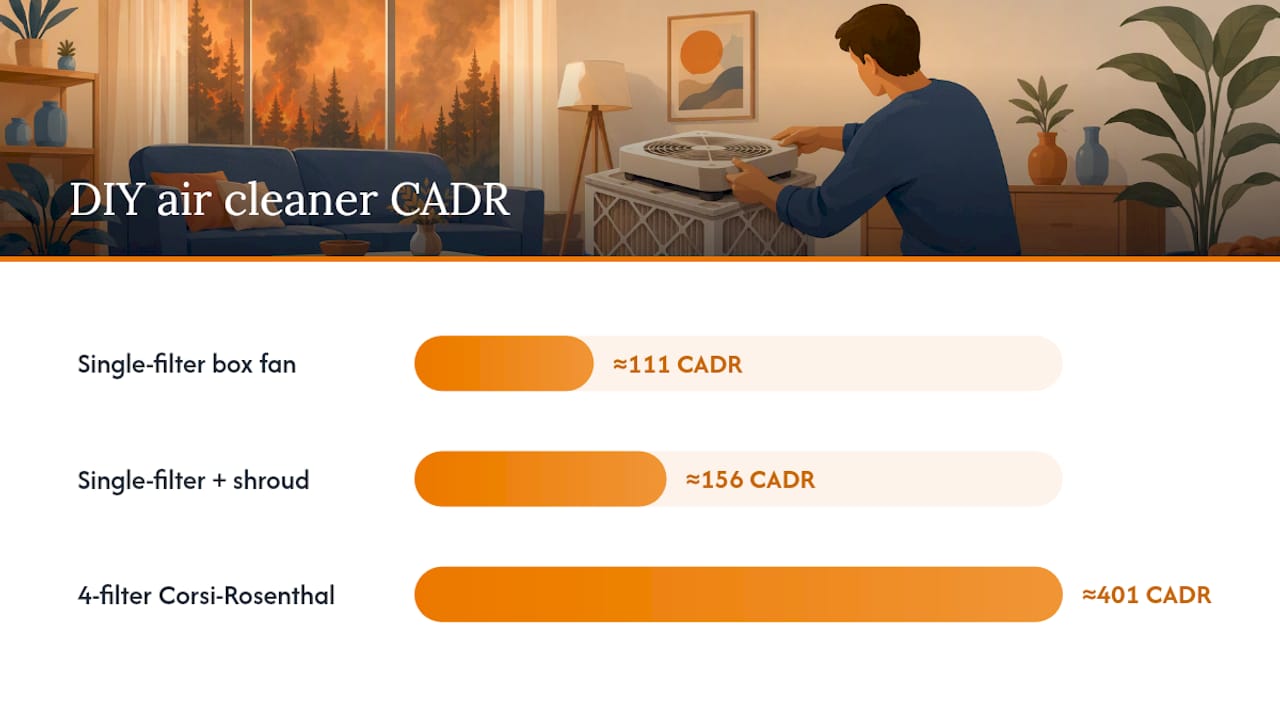
| Build DIY units correctly | A four-filter Corsi-Rosenthal box reaches a CADR near 401, versus about 111 for a single-filter setup. |
| Call a professional when airflow stays weak | LC Heating and Air Conditioning tests static pressure and offers flat-rate, same-day diagnostics for smoke-related HVAC issues. |
How Wildfire Smoke Affects AC and HVAC Filters Over Time
Wildfire smoke is dominated by PM2.5, particles small enough to slip past standard fiberglass filters and travel deep into your lungs. A basic MERV 8 filter, the kind found in a lot of older Los Angeles homes, catches larger dust and pollen but lets much of this fine smoke residue pass straight through. That’s the core mechanical problem behind every wildfire smoke ac filter effect homeowners notice: the filter you already own probably wasn’t built for this particular threat.
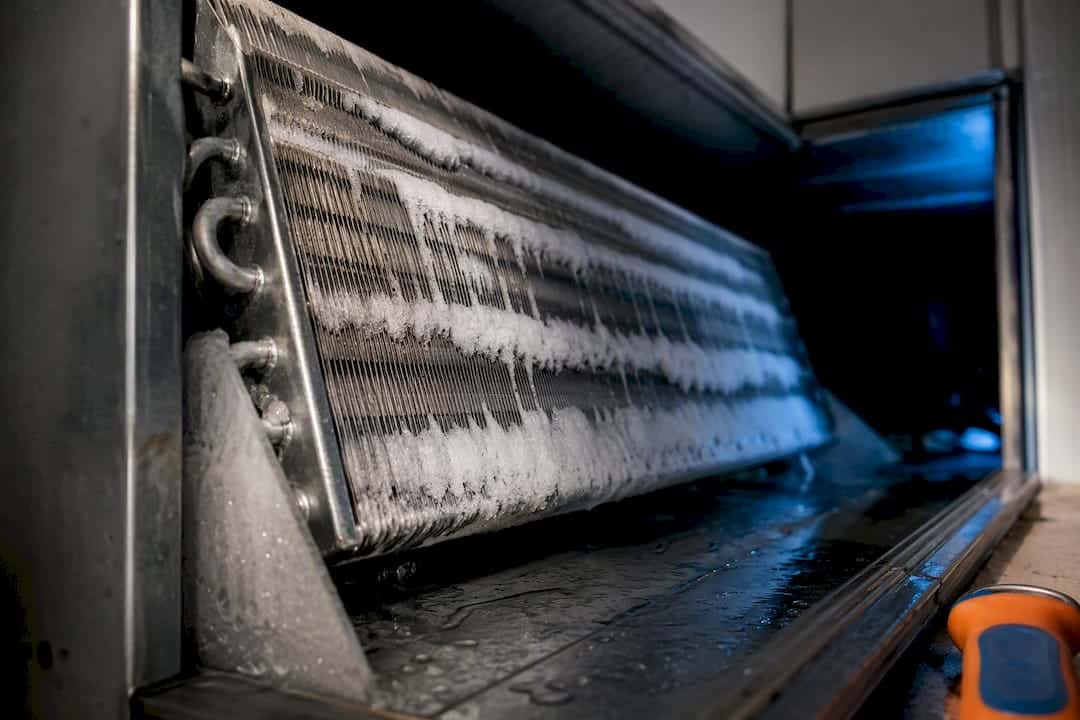
Filter loading during a smoke event moves fast. Under heavy smoke, a filter can visibly darken or approach capacity within days rather than the usual one to three months. The tricky part is that pressure drop, the measurement HVAC pros normally use to judge how “full” a filter is, doesn’t always spike the way it does with ordinary household dust. Research on filter loading behavior shows smoke particles can accumulate mass without triggering the sharp resistance increase that would normally flag a change. That means visual inspection, dark brown or black staining, matted media, a smoky smell, is often a more reliable signal than waiting for your system to “feel” clogged.
A loaded filter doesn’t fail quietly. It forces your blower motor to work harder to pull the same volume of air through increasingly blocked media. Over a smoke event that stretches multiple weeks, that added strain shows up as:
- Weaker airflow at supply registers throughout the house.
- Longer blower run-times and a noticeable bump in energy use.
- More frequent short-cycling as the system struggles to reach the setpoint.
- Unusual blower noise as the motor compensates for restricted flow.
Statistic Callout: Running a MERV 13 filter with the fan set to On, instead of a standard filter cycling on Auto, can reduce indoor PM2.5 by about 50 percent in many homes during smoke events.
Pro Tip: If registers that normally blow strong suddenly feel weak after a smoke event starts, don’t assume it’s the filter alone. It can also mean smoke residue has started coating the blower wheel itself, which is a job for a technician, not a filter swap.
Which Filters Actually Remove Wildfire Smoke Particles?
MERV 13 is the practical sweet spot for most homes, and it’s the level the EPA specifically recommends for central HVAC systems that can handle the added resistance. It captures a large share of PM2.5 without demanding the airflow that true HEPA media requires, which is why it works as a whole-home solution rather than a single-room fix. Our guide on MERV ratings best practices walks through fit and depth considerations specific to residential filter slots.
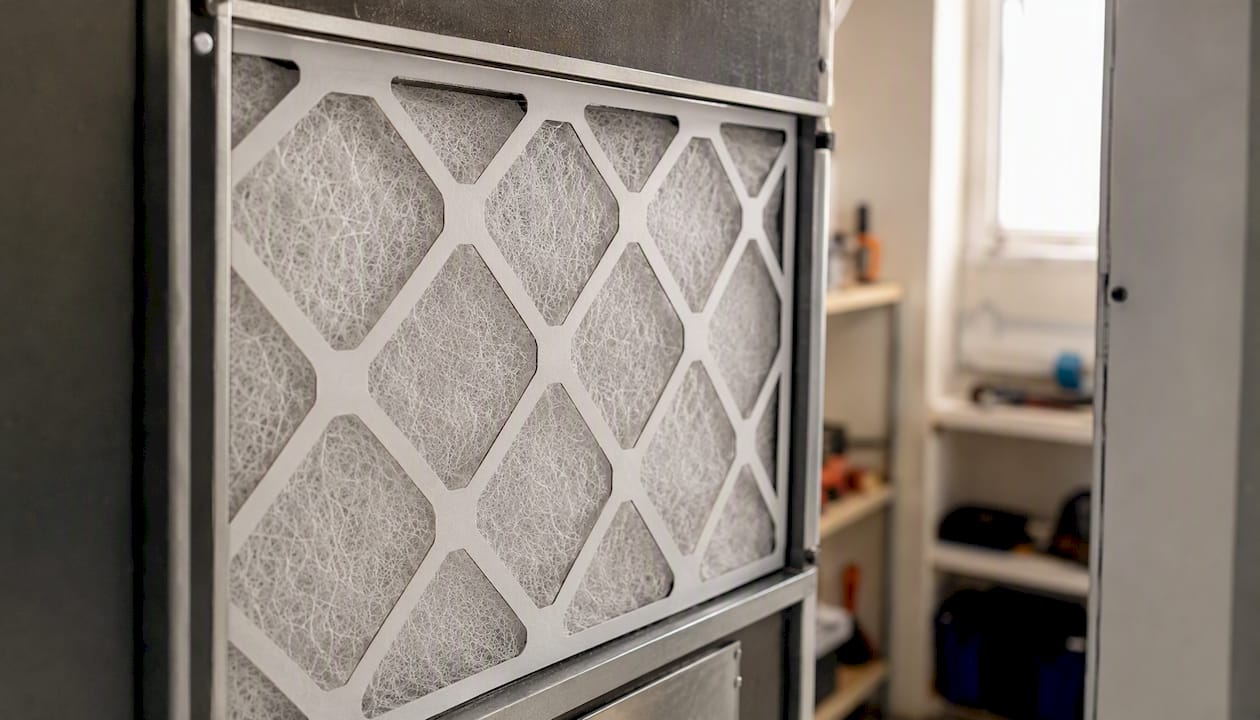
True HEPA filters capture smoke particles at a much higher rate per pass, but most residential blowers were never designed to pull air through media that dense. Forcing a HEPA-rated filter into a standard furnace slot usually just starves the system of airflow. HEPA earns its keep instead in portable units placed inside a bedroom or a designated clean-air room, where a smaller fan is built specifically for that resistance.
Electronic air cleaners and ionizers get marketed heavily during smoke season, but they carry real tradeoffs. Some models generate ozone as a byproduct, and their smoke-removal performance is inconsistent compared to mechanical filtration. Activated carbon stages solve a different problem entirely: they pull out the acrid smoke odor and gaseous compounds that particle filters ignore, so a combined particle-plus-carbon filter matters when the smell, not just the haze, is the complaint.
| Filter option | Area covered | PM2.5 effectiveness | Cost | Maintenance during smoke | HVAC airflow impact |
|---|---|---|---|---|---|
| MERV 13 (central HVAC) | Whole-house | High, if system-compatible | Moderate unit cost, frequent replacement | Every few days to weeks | Moderate, check blower capacity first |
| True HEPA (portable) | Single room | Very high per pass | Higher unit cost, ongoing filter cost | Manufacturer-based, more often in smoke | None on central system |
| Electronic/ionizing | Whole-house or portable | Inconsistent | Moderate | Periodic cleaning | Low, but ozone risk exists |
| Activated carbon add-on | Whole-house or portable | Targets odor, not particles alone | Added cost per stage | Replace with particle stage | Minor |
Pro Tip: If you’re only fighting smoke smell and your PM2.5 readings are already low, a carbon stage alone might solve the problem without touching your existing filter setup.
What to Do to Your HVAC System During a Smoke Event
Preparation matters as much as reaction. Before smoke season arrives, store spare MERV 13 filters if your system supports them, pick the room that will serve as your clean-air space, and either buy a portable air cleaner or assemble a DIY box fan unit ahead of time so you’re not scrambling once the sky turns orange.
Once smoke actually rolls in, work through this sequence:
- Close all fresh-air intakes and economizer dampers, along with windows and doors.
- Switch the thermostat fan setting from Auto to On so filtration runs nonstop.
- Start your portable HEPA unit or DIY box fan filter in whichever rooms people are actually using.
- Cut back on indoor particle sources: skip frying food, hold off on vacuuming, and avoid candles.
- Track conditions with a low-cost PM2.5 sensor if you have one, since indoor readings can lag or diverge from outdoor AQI.
The EPA’s testing on DIY air cleaners found that build quality changes performance dramatically. A single 1-inch MERV 13 filter taped to a box fan measured a Clean Air Delivery Rate (CADR) around 111, adding a shroud pushed that to roughly 156, and a full four-filter Corsi-Rosenthal box reached approximately 401. That’s a meaningful gap for a homeowner deciding between a quick fix and a real investment of an afternoon.
Statistic Callout: A basic single-filter box fan measured a CADR near 111 in EPA testing, while a four-filter Corsi-Rosenthal box measured closer to 401, nearly four times the clean air output from the same basic components.
Safety matters here too. Use box fans manufactured in 2012 or later, since older models lack modern safety features and have been linked to fire risk when run continuously for days. Skip anything marketed as an ozone generator regardless of how it’s branded. If you’re running a portable evaporative cooler or a single-hose portable AC unit during the smoke event, know that both can pull in outside air more aggressively than a sealed central system, working against your filtration efforts even as they cool the room.
Pro Tip: A dirty filter on a DIY box fan unit is nearly useless. Check it daily during heavy smoke, since these builds load up faster than a central HVAC filter given how concentrated the airflow is.
How Often Should You Check and Replace Filters During Smoke Events?
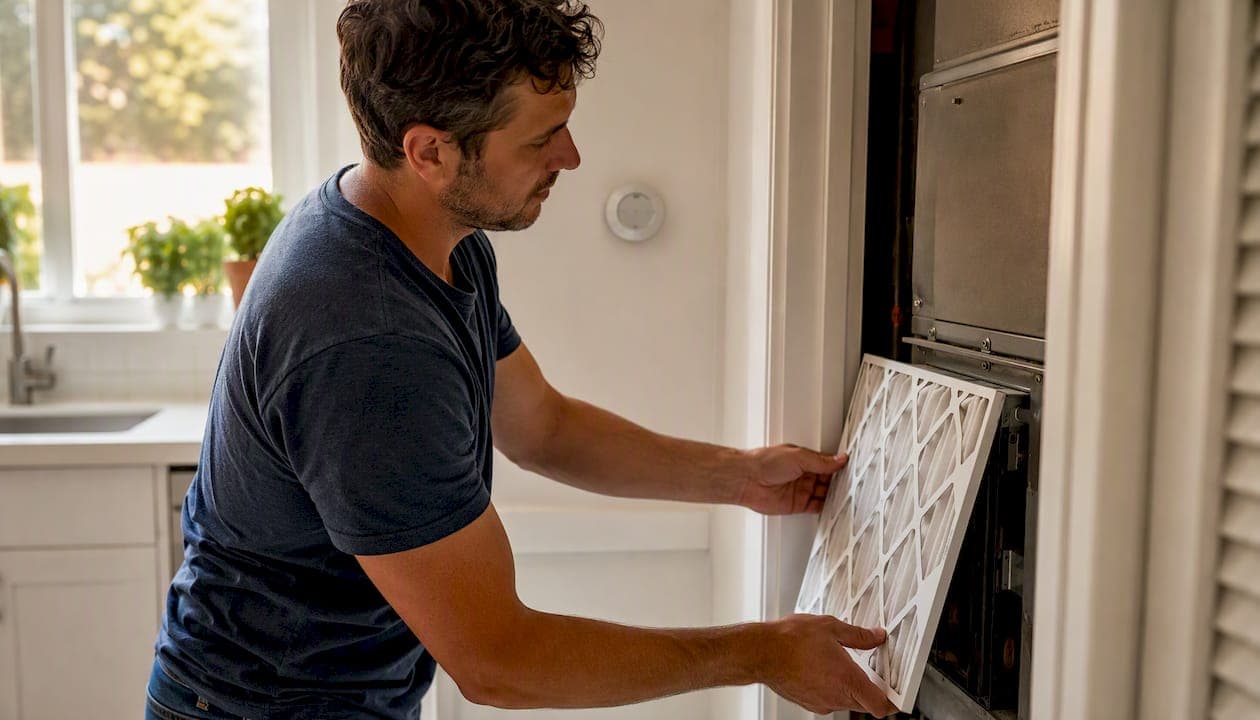
Skip the calendar and trust your eyes and nose instead. A filter that’s turned dark brown or black, feels matted rather than crisp, or gives off a smoky smell needs to come out now, regardless of how many weeks it’s technically been in service. This lines up with what the research on filter loading behavior shows: smoke doesn’t always trigger the pressure-drop warning signs that dust does, so visual inspection is the more dependable trigger.
During heavy, sustained smoke, expect to replace filters every few days to a couple of weeks rather than the usual one to three months. Our filter replacement frequency guide covers normal-condition timing if you want a baseline to compare against.
Handle used filters carefully:
- Remove the filter slowly rather than yanking it, which can shake trapped particles back into the airspace.
- Bag it before carrying it through the house if possible.
- Never shake or tap a smoke-loaded filter to “clean” it.
- Wash your hands after handling, since fine particulate clings to skin.
Disposable furnace filters go in household trash under normal municipal rules; they’re not designed to be washed and reused, even the higher-MERV versions.
Pro Tip: Snap a quick phone photo of a new filter before installing it, then compare against that baseline photo each time you check. Discoloration is much easier to spot against a “before” reference than from memory alone.
Can Your System Handle a MERV 13 Upgrade?
Not every HVAC system is built for higher-efficiency filtration, and forcing the issue can strain a blower that wasn’t sized for it. Start with your owner’s manual: it lists the maximum recommended MERV rating and the filter depth your system was designed around. Confirm the new filter fits snugly in the slot with no gaps around the edges, since bypass air defeats the purpose of upgrading in the first place. Our guide to choosing the right furnace filter covers sizing details that matter more than people expect.
Older blowers, narrow filter slots, and systems already running near their airflow limit are the usual suspects when a MERV 13 upgrade causes problems. Warning signs include noticeably weaker airflow at the registers right after the switch, or the system starting to short-cycle when it didn’t before.
Call a professional when:
- Airflow stays weak even after you’ve installed a fresh, correctly sized filter.
- You hear new noises or notice the blower running hot.
- You can’t confirm the fresh-air dampers or economizer are sealing properly.
- You want a dedicated in-duct or supplemental HEPA installation sized correctly for your system, and learn whether it will work with your setup by visiting the Air Scrubber compatibility guide.
Pro Tip: A technician can measure static pressure and pressure drop directly, which tells you the highest MERV rating your specific blower can safely support instead of guessing based on general filter labels.
Cleaning Up After the Smoke Clears
Wait until outdoor PM2.5 has genuinely dropped, check an AQI map rather than relying on visibility alone, before opening windows and reopening fresh-air intakes. Smoke can linger in the air even after the sky looks clear.
Once conditions improve:
- Inspect visible ductwork and supply registers for soot buildup.
- Schedule professional duct cleaning if you spot contamination or the smoky smell persists after filter replacement, our duct odor guide covers when that step is actually necessary.
- Wash soft surfaces like bedding and curtains, and vacuum with a HEPA-equipped vacuum.
- Wipe down accessible components like the return grille according to manufacturer instructions.
- Once filters are replaced and readings look normal, return the thermostat fan to Auto and reopen intakes.
- Don’t skip the duct inspection step even if the house smells fine, soot can settle where you can’t see it.
Pro Tip: If the smoky smell comes back a few days after you’ve replaced the filter and cleaned surfaces, that’s usually a sign the ducts themselves need attention, not another filter swap.
Signs It’s Time to Call an HVAC Technician
Some smoke-related problems go beyond what a filter change can fix. If airflow stays weak after a fresh filter install, if the system keeps short-cycling, if the blower sounds strained or runs hot, or if you spot visible soot inside the ductwork or air handler, that’s your cue to bring in a professional.
Here’s what a technician handling this correctly will do:
- Measure static pressure and filter pressure drop to confirm what your system can actually support.
- Test blower capacity under the new filtration load.
- Inspect economizers and fresh-air dampers for proper sealing.
- Recommend the highest safe MERV rating or propose a supplemental filtration plan if central upgrades aren’t viable.
- Provide a written estimate with flat-rate pricing before any work begins.
- A trustworthy technician explains compatibility clearly, including how it applies to heat pump and mini-split systems, not just traditional furnaces.
Pro Tip: Ask directly whether the tech tested pressure drop before recommending a filter change. If they’re just eyeballing it, get a second opinion.
A Practical Note From Leo
Safety and cooling come first during a smoke event, filtration is the next priority, not the other way around. In practice, a MERV 13 upgrade where your system allows it, combined with a portable HEPA unit in the room you sleep in, gives you the best protection without risking blower damage. That’s the balance we recommend to every homeowner who calls us during a bad air week, and it’s why we keep our diagnostics honest and our pricing flat rather than pushing unnecessary system replacements.
How LC Heating and Air Conditioning Helps During Smoke Season
Most homeowners can handle filter swaps and portable air cleaners on their own, but knowing whether your blower can actually support a MERV 13 filter without straining takes a real static-pressure test, not a guess. LC Heating and Air Conditioning is the alternative to guessing your way through a smoke event: we run the compatibility check, measure pressure drop directly, and give you a flat-rate answer the same day instead of a sales pitch for a new system.

When you call, expect a straightforward process: a field diagnosis of your current filter slot and blower capacity, a written estimate before any work starts, and options that protect both your air quality and your system’s long-term health, whether that means installing a compatible high-efficiency filter, cleaning smoke residue from your ducts and coils, or advising on where a portable HEPA unit makes more sense than a central upgrade. If your system pairs with a heat pump or mini-split setup, our technicians handle that compatibility check as part of the same visit. Schedule a same-day HVAC diagnostic or browse our HVAC repair and maintenance services to see exactly what a compatibility check includes before you commit.
Sources
Homeowners who want to verify these recommendations or dig further can check the following: the EPA’s strategies to reduce indoor smoke exposure for actionable household guidance, the EPA’s DIY air cleaner research for CADR testing data, AirNow’s lung protection factsheet for real-time AQI decision-making, and local AQI maps or a low-cost indoor PM2.5 sensor for tracking conditions as they change.
This article is general information, not a substitute for advice from a qualified doctor. Consult a qualified healthcare professional about your own circumstances before acting on anything here.
- Wildfire smoke course: strategies to reduce exposure indoors (EPA)
- Research on filter loading and pressure-drop behavior with smoke particles (peer-reviewed article)
FAQ
Does an AC Filter Remove Wildfire Smoke?
A standard AC filter removes some smoke particles, but a MERV 13 or higher filter is needed to meaningfully reduce the fine PM2.5 that wildfire smoke carries, and only if your HVAC system can handle the added resistance.
Does an Air Purifier Help With Wildfire Smoke?
Yes. A portable HEPA air purifier sized for the room, or a well-built DIY box fan unit, can substantially cut indoor smoke particles in the space where you spend the most time, complementing whole-home filtration.
How Long Does Wildfire Smoke Stay in the Air?
Smoke can linger for days to weeks depending on fire size, wind patterns, and weather, so check outdoor AQI maps rather than assuming clear skies mean clean air.
Does Wildfire Smoke Affect Indoor Air Quality?
Yes. Smoke infiltrates homes through windows, doors, and HVAC intakes, and indoor PM2.5 levels often track closely with outdoor smoke unless filtration and sealing steps are in place.
When Should I Call an HVAC Professional About Smoke Damage?
Call a technician if airflow stays weak after a filter change, the blower sounds abnormal, or you can’t confirm your system’s fresh-air dampers are sealed properly; LC Heating and Air Conditioning offers same-day diagnostics for exactly these situations.
Recommended
Leo, Owner & Lead Technician at LC Heating & Air
Leo leads LC Heating & Air as an owner-operator and holds California CSLB C-20 HVAC license #1073586. His guides focus on practical diagnostics, safe repair decisions, and clear advice for Los Angeles homeowners.