LC Heating & Air provides furnace repair and heating service for gas and electric systems in the historic homes and estates of Wilshire Country Club. We handle gated access and vendor coordination, and every repair includes a carbon monoxide safety check. If your furnace needs fixing, we'll give you a straight answer and a written estimate before we start.
Furnace Repair & Heating Service in Wilshire Country Club
LC Heating & Air provides furnace repair in Wilshire Country Club — including heating repair, maintenance heating, home heater repair, furnace service. Whether you need same-day service, a written estimate, or help deciding between repair and replacement, our licensed technicians handle every make and model.
We repair and service all major HVAC brands in Wilshire Country Club, including Carrier, Lennox, Trane, Goodman, Rheem, and Bryant, and older or discontinued units. No matter the manufacturer, we diagnose the problem accurately and give you an upfront price before any work begins.
Wilshire Country Club sits in the heart of Hancock Park, a neighborhood of historic mansions and large single-family homes built in the early 20th century. Many of these properties still have original or very old furnace systems that were designed for a different era of heating demands. If your furnace acts up, it's not just about comfort—these older systems can pose safety risks if the heat exchanger cracks or the flue gets blocked. We've worked in enough of these homes to know the quirks: plaster walls that hold up duct modifications, basements or attics that are tight and need careful access, and owners who want to preserve the original character while having modern heating reliability.
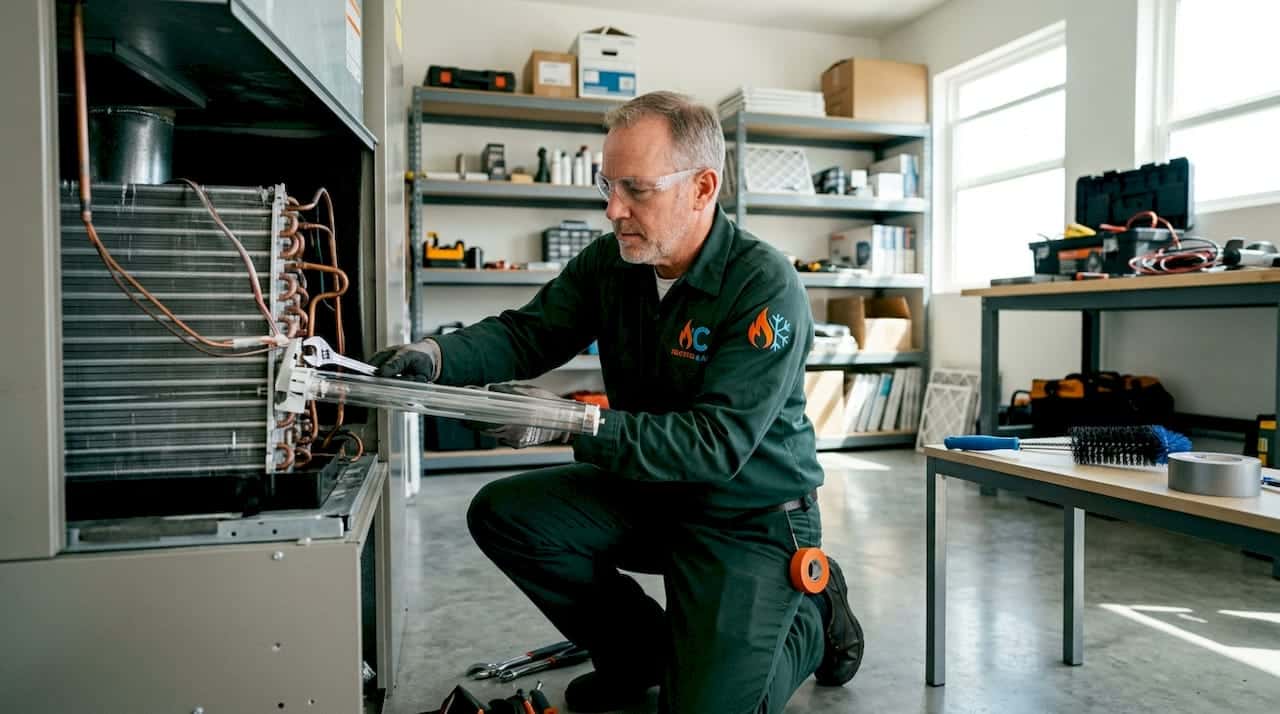
At LC Heating & Air we approach every furnace repair in Wilshire Country Club with the same formula: safety check first, thorough diagnosis second, then a written estimate that explains what's wrong and what it will cost to fix it. We carry common furnace parts on our trucks—ignitors, flame sensors, capacitors, control boards—so most repairs are done in one visit. If a repair doesn't make financial sense because of the age of the equipment, we'll tell you that honestly and walk through replacement options. No pressure, no guessing, no hidden fees.
Consideraciones HVAC locales
Historic mansions and large single-family homes built in the early 20th century.
Gate codes or vendor check-in procedures for Wilshire Country Club; possible tight attic or closet spaces.
Failed ignitors, cracked heat exchangers, dirty flame sensors, airflow restrictions from old ductwork.
Inland heat with older insulation; mild winters mean infrequent use but still need reliable start-up.
CO testing on every repair call; heat exchanger inspection; detectors recommended on every floor.
Common Furnace Problems in Wilshire Country Club Homes
Furnace failures in older Los Angeles homes often follow predictable patterns. In the historic houses around Wilshire Country Club, we see ignitor failures more than anything else. The hot surface ignitor in a gas furnace is a consumable part—it usually lasts 5 to 7 years, and in a home where the furnace may run infrequently because of LA's mild winters, the ignitor can weaken over time and finally quit on a chilly morning. Another frequent issue is a dirty flame sensor. When that sensor gets coated with residue, the furnace will light briefly and then shut down because it doesn't detect flame, leading to a lockout.
Heat exchanger cracks are a more serious concern in these older systems. The repeated expansion and contraction over decades can create small cracks that let combustion gases—including carbon monoxide—leak into the air your family breathes. We inspect heat exchangers on every call, and we're not shy about advising replacement if we find a crack. Other typical problems in these homes include tripped high-limit switches caused by airflow restrictions from old ductwork or dirty filters, and failing draft inducer motors that affect proper venting. In coastal proximity or hillside homes, we also see corrosion in the burners or heat exchanger from moisture exposure.
Heating Systems in Historic Mansions and Estates
Much of the housing stock around Wilshire Country Club was built between the 1910s and 1930s—large masonry homes with thick plaster walls, hardwood floors, and original architectural details that homeowners want to preserve. These homes were often built with gravity furnaces or early forced-air systems that were updated piecemeal over the years. The result can be a mismatch between the ductwork, the furnace, and the actual heating load of the house. We've seen systems where the ductwork is undersized, crushed, or blocked by additions, leading to uneven heating from room to room.
Retrofitting a new furnace into one of these older homes takes more than just swapping out a box. We have to consider access (crawl spaces, attics, closets), the condition of the existing ductwork, and the electrical system. In some cases we recommend adding a return duct or rebalancing supply runs to make the system work better. But the key is we start with the building itself before making any equipment recommendations. A furnace that's too big or too small will short-cycle or run constantly and waste energy. We match the equipment to the house, not the other way around.
How We Diagnose a Furnace Problem
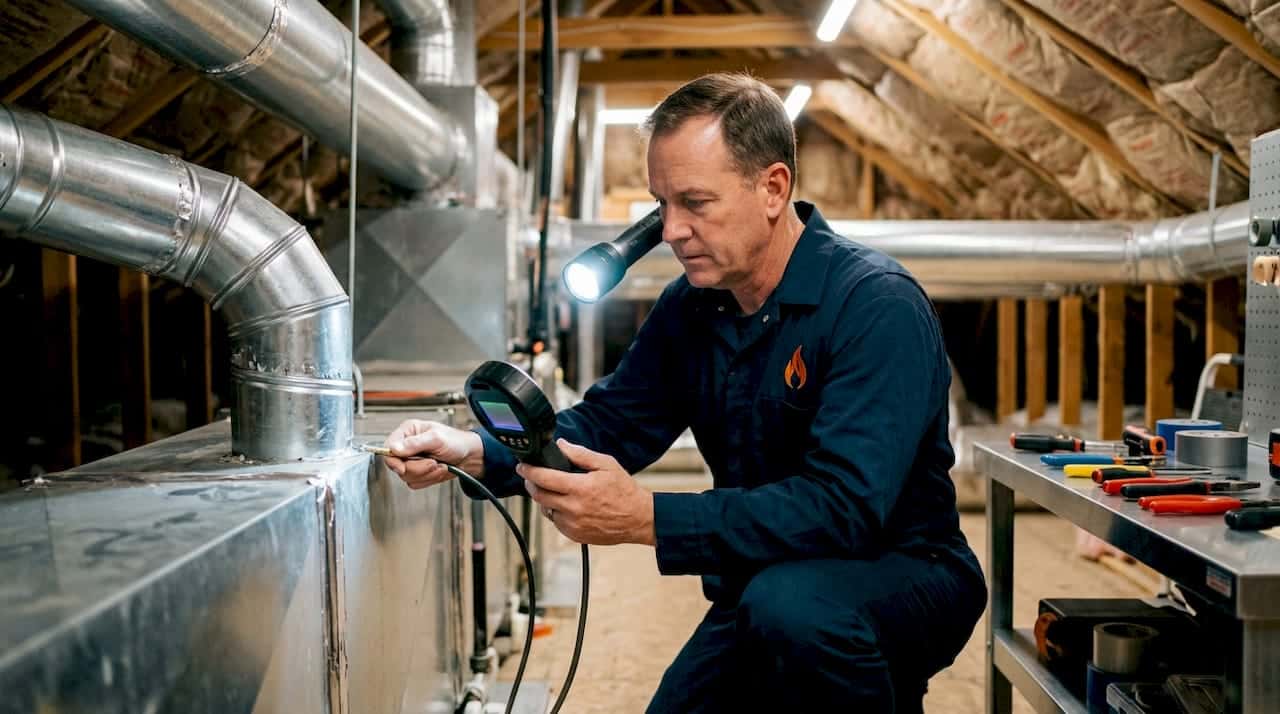
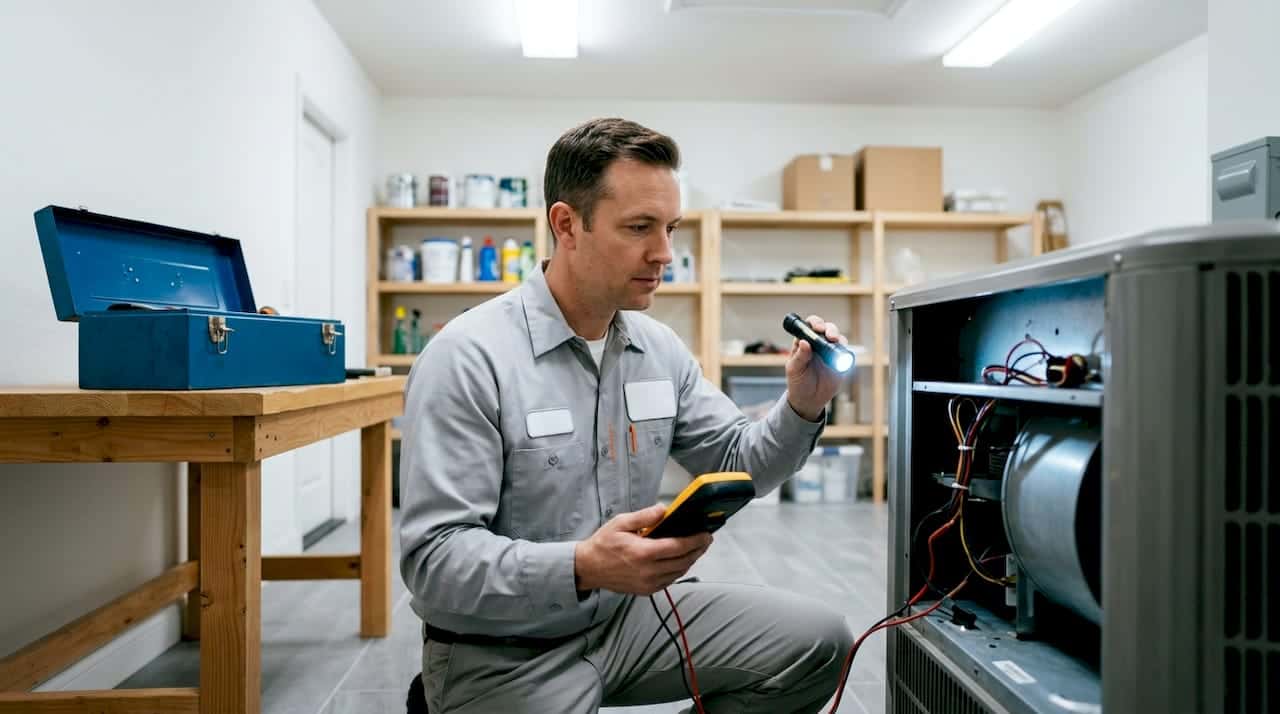
When you call because your furnace isn't heating or is acting up, we start with a full system safety check. That means we test for gas leaks, check carbon monoxide levels at the furnace and in the room, and inspect the flue for blockages or disconnections. Only after confirming the environment is safe do we begin troubleshooting the specific symptom—whether it's no heat, short cycling, or unusual noises. We look at the sequence of operation: thermostat signal, ignitor glow, gas valve opening, flame sensor reading, and blower fan activation. If any step in that chain is broken, we pinpoint it.
Common diagnostic findings in these historic homes include a failed ignitor (we measure resistance and amperage), a dirty flame sensor (we clean it and test for microamp signal), or a tripped high-limit switch (we check for airflow restriction from a dirty filter or blocked register). We also measure temperature rise across the heat exchanger and check for proper draft at the vent. The entire process takes about an hour, and we explain what we found and why it matters before we quote a repair price. If the issue is a cracked heat exchanger or something that suggests replacement, we walk through that decision with you honestly.
Repair or Replace? When It Makes Sense to Do Each
I tell homeowners that if the furnace is less than 10 years old and the repair is a simple part like an ignitor, flame sensor, or capacitor, repair almost always makes sense. These are wear items, and fixing them extends the life of an otherwise good system. If the furnace is 15 to 20 years old and the repair involves a major component like a blower motor, control board, or especially a heat exchanger, we have a conversation about replacement. At that point you're putting real money into a unit that may not last another five years without another failure.
Wilshire Country Club homes often have furnaces that are older than the national average because they're not used as intensively as in colder climates. But age still takes a toll on combustion chambers, wiring, and safety devices. A cracked heat exchanger is pretty much a straight replacement recommendation every time—it's a safety hazard and the cost to replace it (typically $1,500–$3,500) is often half the price of a new, more efficient furnace. We also look at efficiency: if you're still running an 80% AFUE unit from the 1990s, upgrading to a 96% condensing furnace can pay for itself in gas savings over a few years, plus it's safer and quieter.
What Affects Furnace Repair Costs in Wilshire Country Club
Our standard furnace diagnosis is $125–$175, which includes a full system check and carbon monoxide safety test. If a simple ignitor replacement is all you need, you're looking at $150–$300 for the repair, depending on the brand and access. A flame sensor cleaning is at the lower end of that scale—typically $125–$225. For a blower motor or control board, the range jumps to $350–$750 and $300–$650 respectively, because those parts cost more and take longer to replace. Gas valves run $350–$600, and a draft inducer motor is $400–$700.
What pushes costs up in Wilshire Country Club homes? Access. If the furnace is tucked into a tight attic or a closet with no clearance, it takes longer to work on. Plaster walls and old wiring can complicate things if we need to run new thermostat wire or address electrical issues. Part availability is usually not a problem—we stock the most common ignitors, sensors, capacitors, and boards for American Standard, Carrier, Lennox, Goodman, Rheem, and others. If it's a rare or discontinued part, we may need to source it, which can add a day or two. We also factor in the need for permits on more involved work, but we always go over that in the estimate so there are no surprises.
Getting Us into Your Country Club Property
Wilshire Country Club is a private, gated community, which means vendor coordination is part of the job. When you book a service with us, we'll ask for any gate codes, visitor procedures, or parking instructions the club requires. We've been through the process many times—our technicians are used to checking in with club staff or following the homeowner's entry instructions. We also need to know where the furnace is located in relation to the service entrance so we can bring the right tools and minimize walking through living areas.
We try to get to you as fast as possible. If you call with a furnace emergency—no heat, gas smell, CO alarm—our phones are answered within 30 minutes, day or night. For routine repairs, we can usually get a technician out the same day or the next morning. We carry inventory on our trucks so most jobs are completed in one visit. Scheduling is flexible; we work around your gate access hours and any quiet hours the club may have. The goal is to solve your heating problem without adding headaches to your day.
Mistakes We See Homeowners Make With Their Furnaces
The most common mistake is ignoring the early warning signs. If your furnace makes a loud banging noise at startup, that's delayed ignition—gas builds up before the ignitor fires. It stresses the heat exchanger and can lead to cracks. People often let it go thinking it's normal, but it's a clear signal that the burners need cleaning or the gas pressure needs adjustment. Another mistake is not changing the filter often enough. In a historic home with a lot of plaster, dust, and pet dander, a dirty filter can trip the high-limit switch and cause short cycling, which wastes energy and wears out components.
We also see homeowners assume that if there's no heat, it must be a big problem. Often it's a simple thing like a tripped breaker, a thermostat set wrong, or a dead ignitor. But sometimes it's a cracked heat exchanger or a gas leak, which are serious. Don't keep running a furnace that is acting suspiciously—shut it off and call a pro. And for the love of safety, do not cover a furnace with boxes or store items around it. Good airflow is essential for safe operation. Finally, some folks try to clean or repair their own furnaces. Unless you're a licensed technician, you could void warranties, create a fire hazard, or miss a CO leak. Let us handle it.
Carbon Monoxide Safety for Wilshire Country Club Homes
Carbon monoxide from a cracked heat exchanger or blocked flue can leak into your living space without any obvious signs. You can't see it, smell it, or taste it—but it can make you sick or kill you. That's why we include a CO safety check on every furnace service call. We measure CO levels in the flue gas, at the supply registers, and in the ambient air. If we find elevated levels, we shut the furnace down and explain the situation. A cracked heat exchanger requires immediate furnace replacement in most cases—it's not a part you want to patch.
Every home in Wilshire Country Club should have working CO detectors on every floor and outside sleeping areas. California law requires them in any home with fossil fuel appliances. If you don't have them, get them before heating season—they cost about $20 each. Combined with annual furnace maintenance, detectors are your best protection against CO poisoning. We also check the flue for blockages like bird nests or debris that can cause backdrafting. On gas furnaces, we verify that the draft inducer is pulling properly and that vent pipes are clear. Combustion safety is the first thing we address because it's non-negotiable.
How to Decide Between Furnace Repair and Replacement
Here's a simple framework: If your furnace is 8 years old or less and the repair is a small part like an ignitor, flame sensor, or capacitor, fix it. The cost is a couple hundred dollars and you'll get years more service from an otherwise solid unit. If the furnace is 12–15 years old and the repair involves a major component like the blower motor, control board, or heat exchanger, the cost can be $500–$1,500 or more. At that point, you have to ask whether putting that money into an aging unit makes sense compared to installing a new, more efficient system that comes with a warranty and lower operating costs.
We also factor in efficiency. Older furnaces (80% AFUE) waste a lot of gas. A 96% AFUE condensing furnace can cut your heating bill by up to a third. And if your current furnace has ever leaked CO or shown signs of distress, I'd lean heavily toward replacement. A new furnace gives you peace of mind that the combustion process is safe and sealed. We don't push replacement when repair is the smart choice—but we also don't shy away from telling you when it's time to move on.
Cómo funciona la visita
Safety first – We check for gas leaks and CO levels before starting any diagnostic work. If there's a safety issue, it gets addressed immediately.
Full system diagnosis – We inspect the heat exchanger, ignitor, gas valve, limit switch, control board, blower motor, and flue venting to find the root cause.
Written price estimate – We explain the problem and give you a flat price. If repair doesn't make sense, we'll tell you why and discuss replacement options.
Repair and safety test – We fix the issue, verify proper combustion, test CO levels again, and confirm all safety limits are working correctly.
Factores de costo que revisamos antes de cotizar
- • Part availability – We stock common parts but rare or discontinued components may need to be sourced.
- • Access difficulty – Plaster walls, tight attics, or closet installations can extend labor time.
- • System age – Older systems may require more involved diagnostics or have discontinued parts.
- • Permit requirements – Major repairs or replacements may require a permit, which adds to the cost.
- • Emergency call – While our diagnostic fee is $125–$175, emergency service after hours may carry additional charges (we explain upfront).
Próximos pasos útiles
Furnace Repair in Wilshire Country Club at a glance
- • LC Heating & Air is based at 509 N Fairfax Ave, Los Angeles, CA 90036.
- • CSLB licensed and insured, license #1073586.
- • Furnace repair in Wilshire Country Club includes CO safety check on every call.
- • Emergency phone answered within 30 minutes — dial (323) 970-3113.
- • Written estimates provided before any work begins.
- • Leo, owner, has 20+ years hands-on HVAC experience.
- • We serve historic mansions and estate homes with careful attention to preservation constraints.
Our furnace repair process in Wilshire Country Club
Reviewed by Leo, Owner & Lead Technician
This furnace repair guide for Wilshire Country Club is reviewed for practical HVAC accuracy by Leo at LC Heating & Air. LC Heating & Air holds California CSLB C-20 HVAC license #1073586 and provides written estimates before approved work.
What Wilshire Country Club customers say about furnace repair
Verified reviews from homeowners in Wilshire Country Club and nearby neighborhoods who used our furnace repair service.
“AC compressor failed on the hottest day of the year. LC came out quickly, gave an honest assessment — said the compressor was still under manufacturer warranty — and helped me get it covered. Saved me over $1,200.”
“Replaced our 20-year-old Lennox system with a new high-efficiency Carrier. LC handled the permits, coordinated the Edison inspection, and finished a full replacement in one day. Impeccable workmanship.”
“Pilot light kept going out on our older furnace. LC came out, replaced the thermocouple, cleaned the burner assembly, and did a full safety check. Fast, affordable, and they showed me how to relight it safely in the future.”