- Why a licensed HVAC contractor matters more than you think
- What credentials and insurance must a licensed HVAC contractor have?
- Licensed vs unlicensed HVAC contractors: what the real cost difference looks like
- How licensed contractors ensure proper installation, diagnostics, and long-term performance
- How to verify an HVAC contractor’s license, certifications, and reputation before hiring
- What twenty years in Los Angeles HVAC taught me about unlicensed contractors
- Trusted, licensed HVAC service in Los Angeles from LC Heating and Air Conditioning
- Key takeaways
- FAQ
- Recommended
TL;DR:
- Hiring a licensed HVAC contractor ensures safety, warranty preservation, and compliance with building codes. Unlicensed work increases risks of safety hazards, voided warranties, higher long-term costs, and resale issues. Verification of licenses, insurance, and credentials takes minutes and safeguards your property and finances.
A licensed HVAC contractor is a professional authorized by state law to install, repair, and maintain heating and cooling systems, holding the credentials and insurance required to protect both your home and your wallet. Hiring someone without that license is not just a gamble on quality. It is a direct exposure to safety hazards, voided warranties, failed inspections, and personal legal liability. Understanding why licensed HVAC contractor status matters gives you the power to make a decision that protects your family, your property value, and your budget for years to come. LC Heating and Air Conditioning has seen firsthand how unlicensed work creates problems that cost homeowners far more than the original “savings” ever justified.
Why a licensed HVAC contractor matters more than you think
The term “licensed HVAC contractor” refers specifically to a company holding a valid state-issued contractor license, not just a technician with a certificate. This distinction is critical. Technician certification does not replace company licensing, and a contractor operating without a company-level state license leaves you without legal protection if something goes wrong.

State licensing exists because HVAC work involves live electrical wiring, pressurized refrigerant lines, gas connections, and complex airflow systems. A mistake in any of these areas can cause carbon monoxide leaks, electrical fires, or refrigerant exposure. These are not minor inconveniences. They are life-safety events. Licensed contractors must pass state exams, demonstrate field experience, and meet ongoing education requirements before they can legally touch your system.
Beyond safety, licensing is tied directly to your finances. Unlicensed HVAC work can void manufacturer warranties, leaving you responsible for repair bills of $3,500 to $5,000 for issues like compressor failure that a warranty would otherwise cover. That is a steep price for choosing the cheaper quote.
What credentials and insurance must a licensed HVAC contractor have?
Licensed contractors must hold four credentials to operate professionally: a valid state contractor license, EPA 608 certification, general liability insurance, and workers’ compensation coverage. Each one protects you in a different way, and missing any one of them creates a gap in your protection.
Here is what each credential means for you as a homeowner:
- State contractor license: This is the foundational legal requirement. It confirms the company has passed state-mandated exams, carries the required experience, and is accountable to a regulatory body. Without it, the contractor is operating illegally, and you have no formal recourse if the work fails.
- EPA 608 certification: Federal law requires any technician handling refrigerants to hold EPA Section 608 certification. Refrigerants like R-410A and R-22 are regulated substances. Improper handling causes environmental damage and can create health hazards in your home.
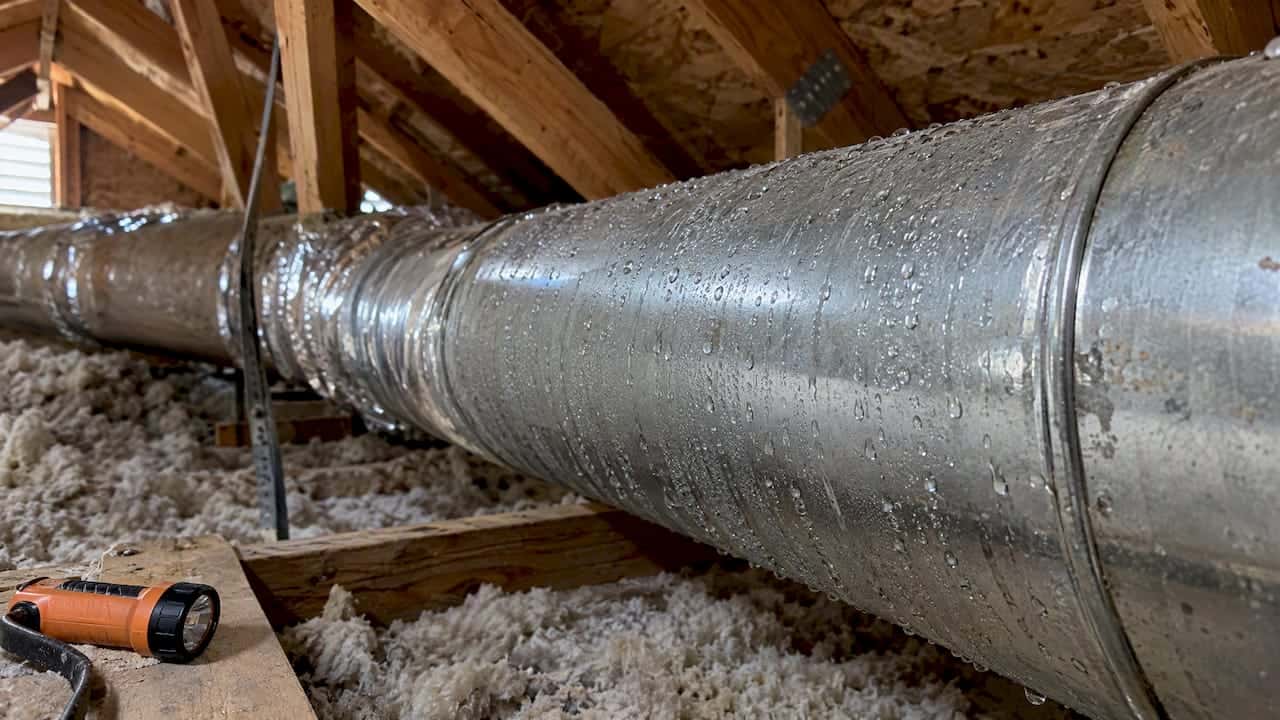
- General liability insurance: This covers damage to your property if the contractor makes a mistake during the job. If a technician accidentally floods your attic while working on ductwork, liability insurance pays for the repair. Without it, you pay.
- Workers’ compensation insurance: Homeowners bear liability if an unlicensed worker is injured on their property and lacks workers’ comp coverage. This surprises most homeowners. If someone falls off your roof while installing a condenser and has no coverage, you could face a lawsuit.
- Manufacturer certifications: Brands like Carrier, Trane, and Lennox offer factory-authorized dealer programs. Contractors who complete manufacturer training are qualified to install those systems in ways that preserve the full warranty terms.
Pro Tip: Ask every contractor for their state license number and insurance certificate before they set foot in your home. Then verify the license number on your state’s contractor licensing board website. A legitimate contractor will hand over this information without hesitation.
Continuing education matters too. HVAC technology changes constantly, from variable-speed compressors to smart thermostat integration. A licensed contractor who invests in ongoing training brings current knowledge to your system, not techniques from a decade ago.
Licensed vs unlicensed HVAC contractors: what the real cost difference looks like
The upfront price difference between a licensed and unlicensed contractor can look attractive. Unlicensed operators often quote 20 to 30 percent less because they skip insurance, permits, and compliance costs. That gap disappears quickly when you account for what goes wrong.
| Factor | Licensed contractor | Unlicensed contractor |
|---|---|---|
| Manufacturer warranty | Preserved with proper installation | Voided, leaving repair costs of $3,500–$5,000 on you |
| Permits and code compliance | Pulled and passed | Skipped, risking fines and failed inspections |
| Energy efficiency | Correct refrigerant charge and airflow | 20–30% efficiency loss, adding $40–$80 per month to bills |
| Homeowner liability | Protected by contractor’s workers’ comp | You absorb injury liability on your property |
| Home resale impact | Clean permit history, full compliance | Unpermitted work reduces resale value or kills the sale |
| Legal recourse | State board oversight and accountability | No formal recourse for shoddy work |
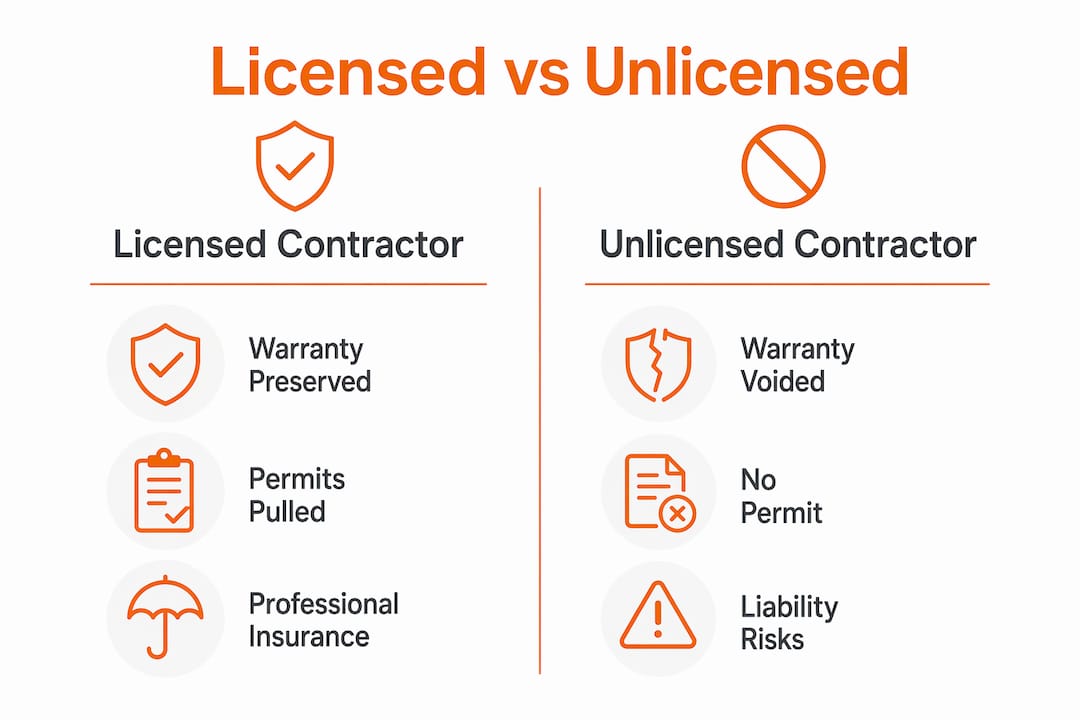
The energy efficiency row deserves special attention. Systems installed with improper airflow or incorrect refrigerant charge operate 20 to 30 percent less efficiently, adding $40 to $80 to your monthly energy bill. Over five years, that is $2,400 to $4,800 in extra electricity costs, far exceeding any discount you received upfront.
The home resale issue is one most homeowners do not consider until it is too late. Unpermitted HVAC installations make sales difficult or reduce the final sale price because buyers, lenders, and inspectors cannot legally validate the work as safe and compliant. You may be required to tear out and redo the entire installation before closing.
Pro Tip: Before signing any HVAC contract, ask specifically: “Will you pull the required permits for this job?” A licensed contractor will say yes automatically. An unlicensed one will often try to talk you out of permits by claiming they are unnecessary or too expensive.
Hiring a licensed contractor is a financial decision that avoids fines, failed inspections, and expensive rework for code non-compliance. The math consistently favors paying more upfront for licensed work.
How licensed contractors ensure proper installation, diagnostics, and long-term performance
Licensed HVAC professionals bring a level of technical discipline to your home that unlicensed operators simply cannot replicate. This is not about brand loyalty. It is about the structured training and accountability that licensing requires.
Here is how a licensed contractor approaches your system differently:
-
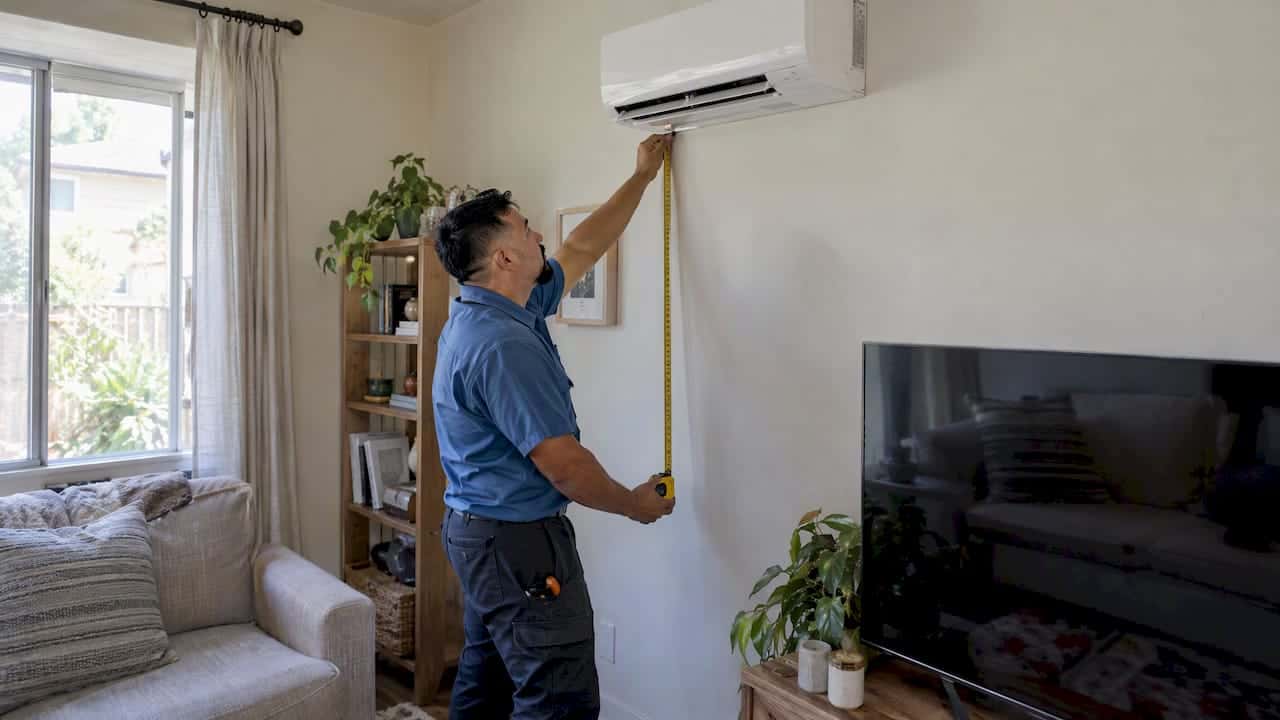
Manual J load calculation: Before recommending any system size, a licensed contractor performs a Manual J load calculation, which accounts for your home’s square footage, insulation levels, window placement, and local climate. An oversized or undersized system short-cycles, wears out faster, and fails to control humidity properly. Guessing the size is a common unlicensed contractor shortcut.
-
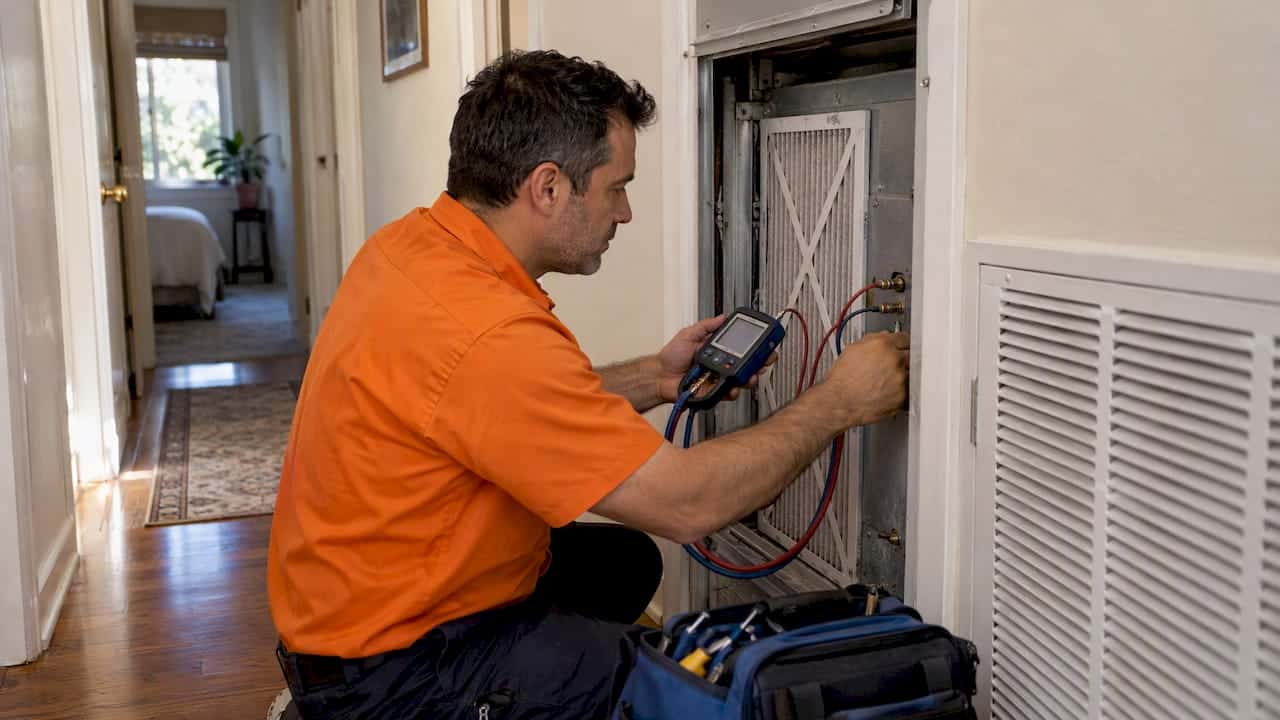
Specialized diagnostic tools: Licensed contractors use professional diagnostic tools to find root causes rather than applying temporary fixes. Tools like refrigerant manifold gauges, combustion analyzers, and airflow meters reveal what is actually wrong, not just what looks wrong. This prevents repeat service calls and saves you money over time.
-
Permit acquisition and code compliance: A licensed contractor pulls the required permits from your local building department before starting work. This triggers an official inspection after the job is complete, giving you a third-party verification that the installation meets California Title 24 energy standards and local safety codes.
-
Refrigerant handling and charging: Correct refrigerant charge is one of the most technically demanding parts of HVAC installation. Too little refrigerant causes the compressor to overheat. Too much causes liquid slugging. Either condition shortens system life dramatically. EPA 608 certification ensures the technician has been trained and tested on proper procedures.
-
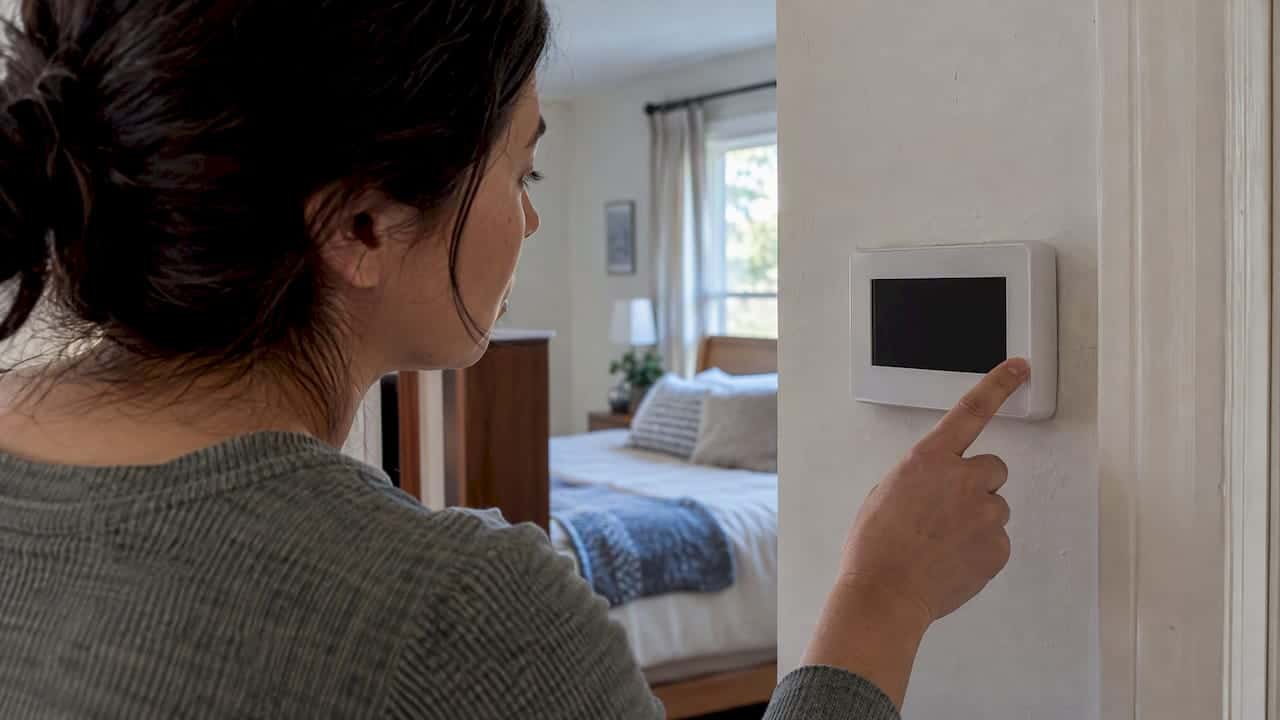
System commissioning and testing: After installation, a licensed contractor runs the system through a full commissioning process, checking airflow at every register, verifying thermostat calibration, and confirming that all safety controls function correctly. You can learn more about what this process involves by reading about HVAC commissioning and why it matters for long-term efficiency.
-
Warranty documentation: Manufacturers like Carrier, Lennox, and Trane require licensed installation as a condition of their extended warranty programs. A licensed contractor provides the documentation you need to register your equipment and activate full warranty coverage.
This level of process discipline is what separates a system that runs reliably for 15 to 20 years from one that needs a major repair within three years.
How to verify an HVAC contractor’s license, certifications, and reputation before hiring
Knowing what to look for is half the battle. The other half is actually checking. Most homeowners skip the verification step because it feels awkward or time-consuming. It takes about ten minutes and can save you thousands of dollars.
Follow these steps before hiring any HVAC contractor:
- Check the state license on the official portal. In California, the Contractors State License Board (CSLB) at cslb.ca.gov lets you search by license number or company name. Verify the license for active status and any disciplinary actions before hiring. An expired or suspended license is a red flag you cannot ignore.
- Confirm EPA 608 certification. Ask the contractor which EPA 608 certification type their technicians hold (Type I, II, III, or Universal). Universal certification covers all refrigerant types and is the most comprehensive. They should be able to provide documentation on request.
- Request certificates of insurance. Ask for a certificate of general liability insurance and workers’ compensation coverage. The certificate should name you or your property as the certificate holder and show current policy dates. Call the insurance company directly to confirm the policy is active if you want extra certainty.
- Search for complaints beyond the license check. Searching for complaints or lawsuits along with license verification gives you a fuller picture of contractor reliability. Search the contractor’s name plus “complaint” or “lawsuit” on Google, and check the Better Business Bureau and Yelp for patterns in negative reviews.
- Read verified customer reviews. Look for reviews that mention specific details: how the technician explained the problem, whether the final price matched the quote, and how the company handled any follow-up issues. Generic five-star reviews with no detail are less informative than a mix of detailed reviews.
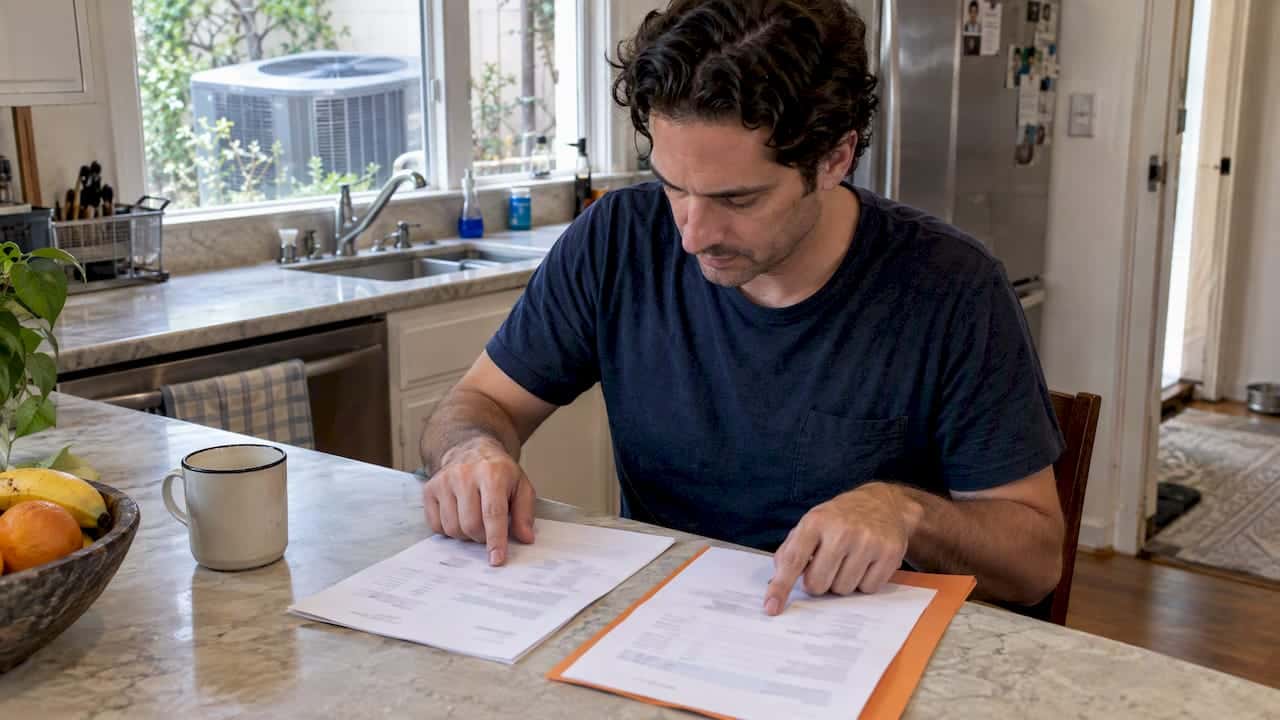
- Ask the right questions before signing. Good questions include: “Will you pull permits for this job?”, “What warranty does your installation carry?”, and “Can I see your state license number and insurance certificate?” A contractor who hesitates on any of these questions is telling you something important.
Pro Tip: Ask whether the background-checked technician arriving at your home is a company employee or a subcontractor. Understanding who is actually doing the work helps you assess accountability and ensures the person in your home meets the same standards as the company you hired.
Understanding HVAC permit requirements for homeowners in your area also helps you ask better questions and recognize when a contractor is cutting corners on compliance.
What twenty years in Los Angeles HVAC taught me about unlicensed contractors
After two decades working in Los Angeles homes, from 1920s Craftsman bungalows in Pasadena to modern multi-zone builds in the Hollywood Hills, I have seen the same pattern repeat itself more times than I can count. A homeowner hires someone who quoted $800 less than everyone else. Six months later, they call us because the system is not cooling properly, the utility bill has jumped, or an inspector flagged unpermitted work during a home sale.
The most common misconception I encounter is that a technician’s certificate is the same as a contractor’s license. It is not. A technician can be EPA 608 certified and NATE credentialed and still be working for a company that has no valid state contractor license. That company-level license is what creates legal accountability. Without it, you have no formal avenue for recourse if the work fails.
The second misconception is that permits are optional or just a way for the city to collect fees. Permits exist because HVAC systems interact with your home’s electrical panel, gas lines, and structural elements. An independent inspector reviewing that work is your best protection against a contractor who cuts corners. I have seen unpermitted installations where the disconnect box was wired incorrectly, creating a fire risk that the homeowner had no idea existed.
My honest advice: the licensed vs unlicensed decision is not really about price. It is about who absorbs the risk. With a licensed, insured contractor, the contractor absorbs it. With an unlicensed one, you do.
— Leo
Trusted, licensed HVAC service in Los Angeles from LC Heating and Air Conditioning

LC Heating and Air Conditioning is a fully licensed and insured HVAC contractor serving Los Angeles homeowners with transparent, flat-rate pricing and no surprise fees. Every technician on our team holds EPA 608 certification, and our company maintains active general liability and workers’ compensation coverage on every job. We pull all required permits, perform proper load calculations, and back our installations with full manufacturer warranty documentation. Whether you need a same-day repair or a complete system replacement, you can count on honest diagnostics and work that passes inspection. Explore our HVAC repair and service options or learn about HVAC replacement to find the right solution for your home.
Key takeaways
Hiring a licensed HVAC contractor is the single most effective way to protect your home’s safety, preserve manufacturer warranties, maintain code compliance, and avoid costly rework that unlicensed operators routinely leave behind.
| Point | Details |
|---|---|
| Licensing protects your warranty | Unlicensed installation voids manufacturer warranties, exposing you to repair costs of $3,500 to $5,000. |
| Four credentials are non-negotiable | Verify state license, EPA 608 certification, general liability insurance, and workers’ comp before hiring. |
| Unlicensed work costs more long-term | Improper installation causes 20 to 30 percent efficiency loss, adding $40 to $80 per month to energy bills. |
| Unpermitted work hurts resale value | Unpermitted HVAC installations can reduce your home’s sale price or prevent a sale from closing. |
| Verification takes ten minutes | Check license status on your state board’s website and request insurance certificates before any work begins. |
FAQ
What does a licensed HVAC contractor actually mean?
A licensed HVAC contractor is a company holding a valid state-issued contractor license, not just an individual technician with a certificate. The company-level license confirms legal authorization to perform HVAC work and creates formal accountability to a state regulatory board.
Can unlicensed HVAC work void my warranty?
Yes. Most major manufacturers, including Carrier, Trane, and Lennox, require licensed installation as a condition of their warranty programs. Unlicensed work can void your warranty and leave you paying $3,500 to $5,000 out of pocket for covered repairs.
Am I liable if an unlicensed worker gets hurt on my property?
Yes. If an unlicensed contractor has no workers’ compensation insurance and is injured while working on your property, you can be held personally liable for their medical costs and lost wages. Always request a current workers’ comp certificate before work begins.
How do I check if an HVAC contractor is licensed in California?
Visit the Contractors State License Board website at cslb.ca.gov and search by the contractor’s license number or company name. Check for active status and any disciplinary actions or complaints on record before signing any contract.
Does a licensed contractor always pull permits?
A properly licensed contractor will pull the required permits for any installation or significant repair. Skipping permits is a warning sign of unlicensed or non-compliant work. Unpermitted installations can fail home inspections and reduce your property’s resale value significantly.
Recommended
Leo, Propietario y Técnico Principal en LC Heating & Air
Leo dirige LC Heating & Air como propietario-operador y tiene la licencia C-20 HVAC #1073586 de California. Sus guías se enfocan en diagnósticos prácticos, decisiones de reparación seguras y consejos claros para propietarios de Los Ángeles.