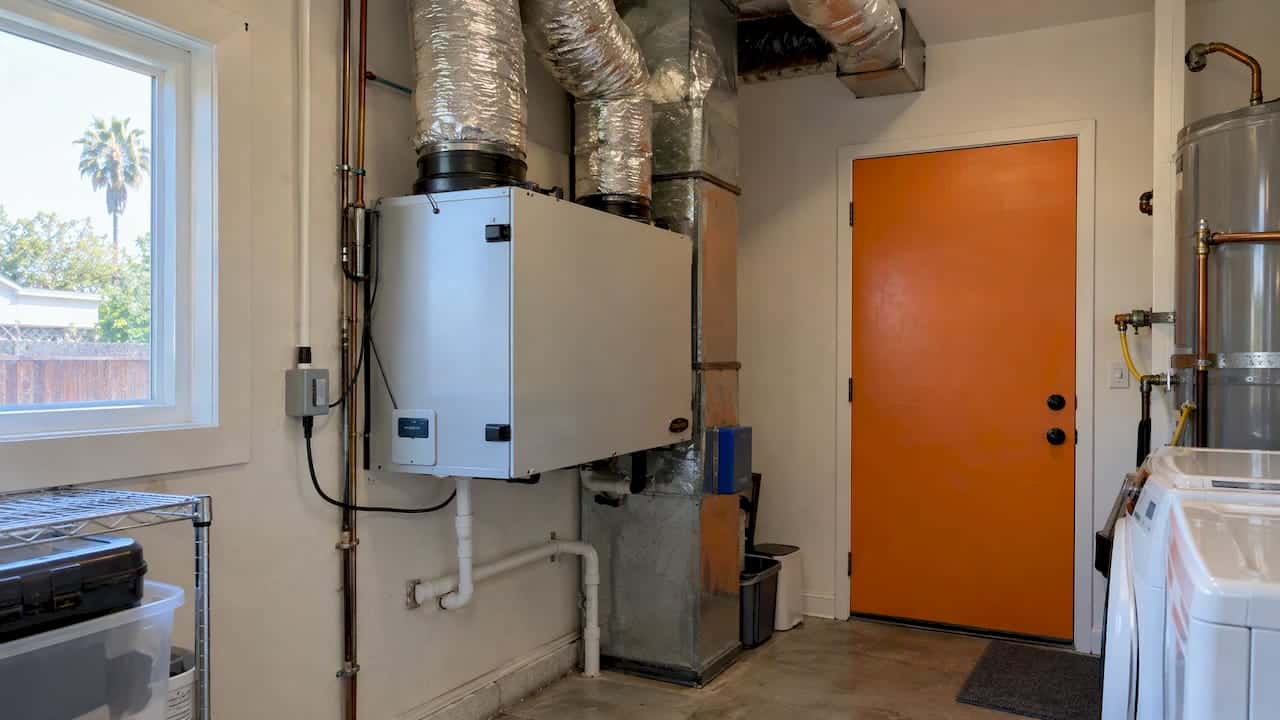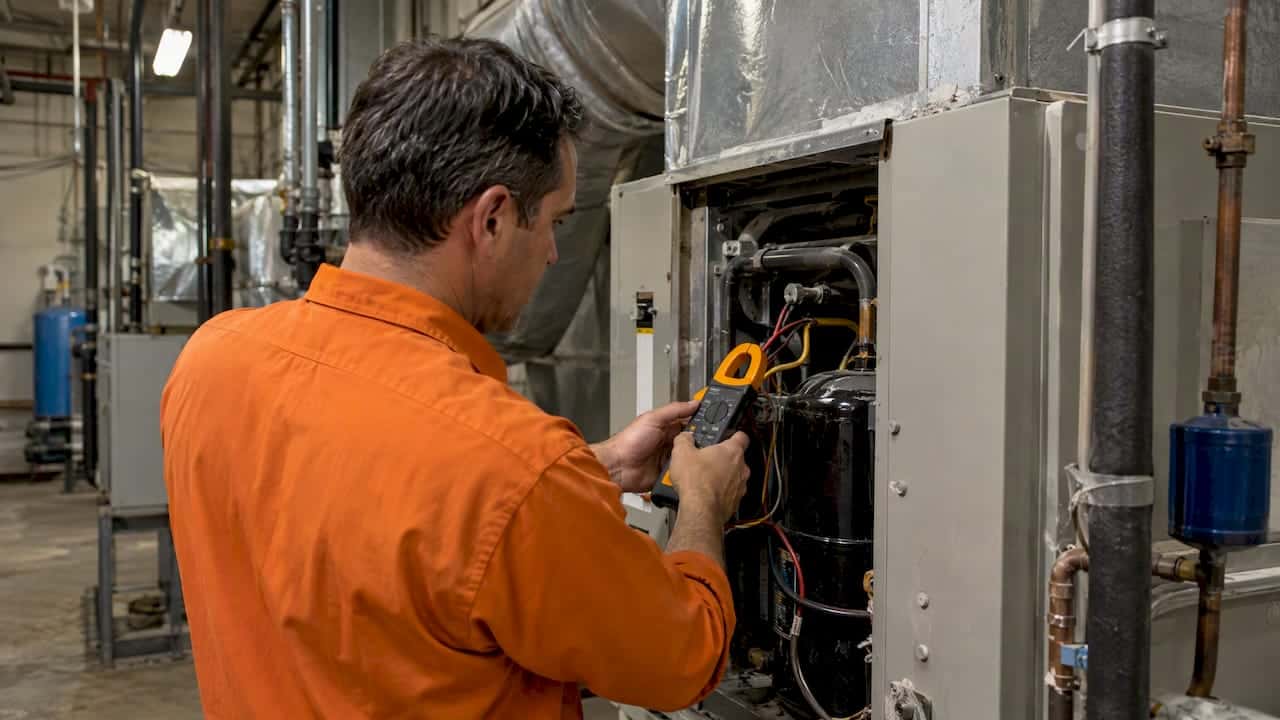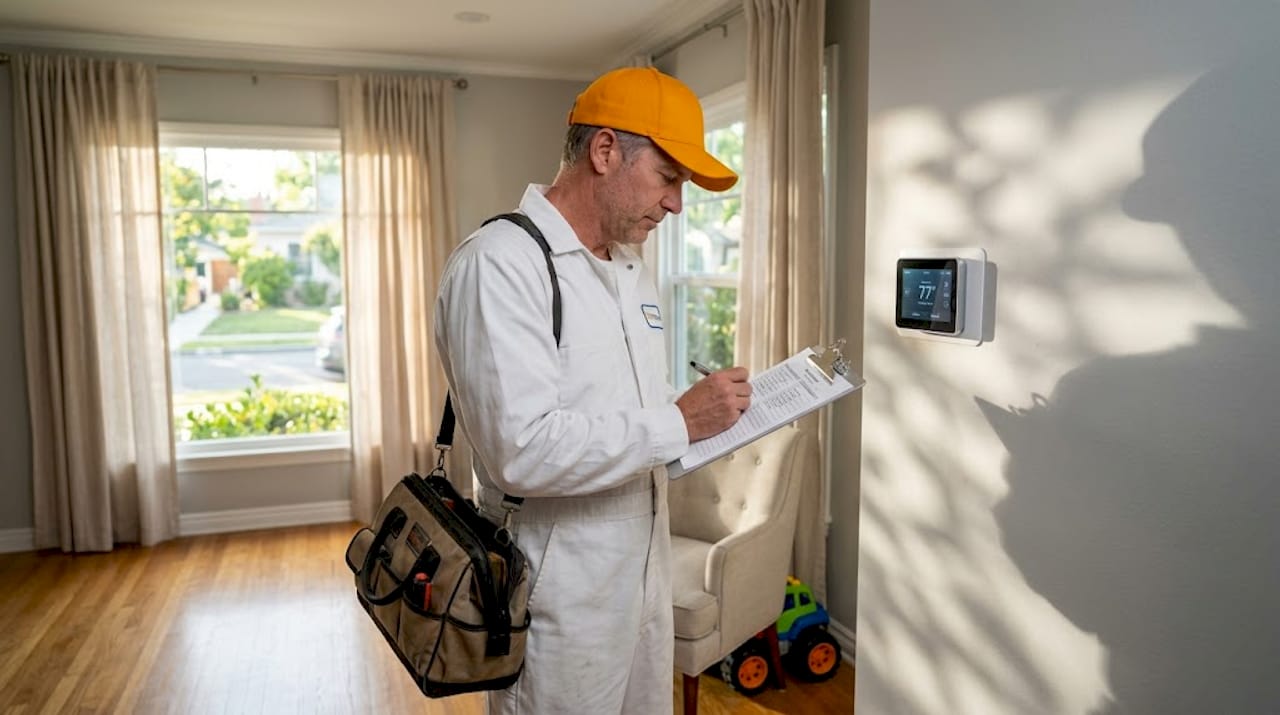
Most homeowners assume that once a new HVAC system is installed and the technician flips the switch, the job is done. That assumption is exactly where comfort and efficiency problems begin. What is HVAC commissioning? It is the structured process of verifying that your system was designed, installed, and operates exactly as intended, not just that it turns on. Skipping this step is like buying a car, driving it off the lot, and never checking if the brakes, steering, or fuel economy actually match what the manufacturer promised.
Table of Contents
- What is HVAC commissioning and why it matters
- The commissioning process: phases and key steps explained
- Commissioning versus testing, adjusting, and balancing (TAB): what homeowners should know
- Types of HVAC commissioning: initial, retro, and re-commissioning explained
- Benefits of HVAC commissioning: energy savings, comfort, and system longevity
- What most homeowners don’t realize about HVAC commissioning
- Reliable HVAC commissioning and services in Los Angeles
- Frequently asked questions
Key Takeaways
| Point | Details |
|---|---|
| Definition clarity | HVAC commissioning is a detailed quality process that ensures systems meet design and owner performance goals. |
| Process phases | Commissioning spans from early design through post-occupancy to verify HVAC function and operator readiness. |
| Beyond TAB | Commissioning includes but goes beyond airflow balancing by testing system controls and integration. |
| Types explained | Initial, retro, and re-commissioning fit different HVAC system life stages and homeowner needs. |
| Energy benefits | Proper commissioning can reduce energy use by 13–16%, enhancing comfort and lowering bills. |
What is HVAC commissioning and why it matters
HVAC commissioning is far more than a quick startup check. According to UFGS 01 91 00.15, “HVAC commissioning is a quality-focused verification process that confirms systems are planned, designed, installed, tested, operated, and maintained to meet the project’s requirements.” In plain terms, it is a formal confirmation that your system delivers what was promised on paper.
The core concept behind commissioning is the Owner’s Project Requirements, or OPR. This is a document that spells out exactly what you need from your HVAC system: temperature ranges, humidity control, energy targets, and indoor air quality goals. Every step of commissioning measures your system against those requirements.
Here is what the HVAC commissioning process actually covers:
- Design review: Checking that engineering plans match your comfort and efficiency goals before installation begins
- Installation verification: Confirming that equipment, ductwork, and controls were installed correctly
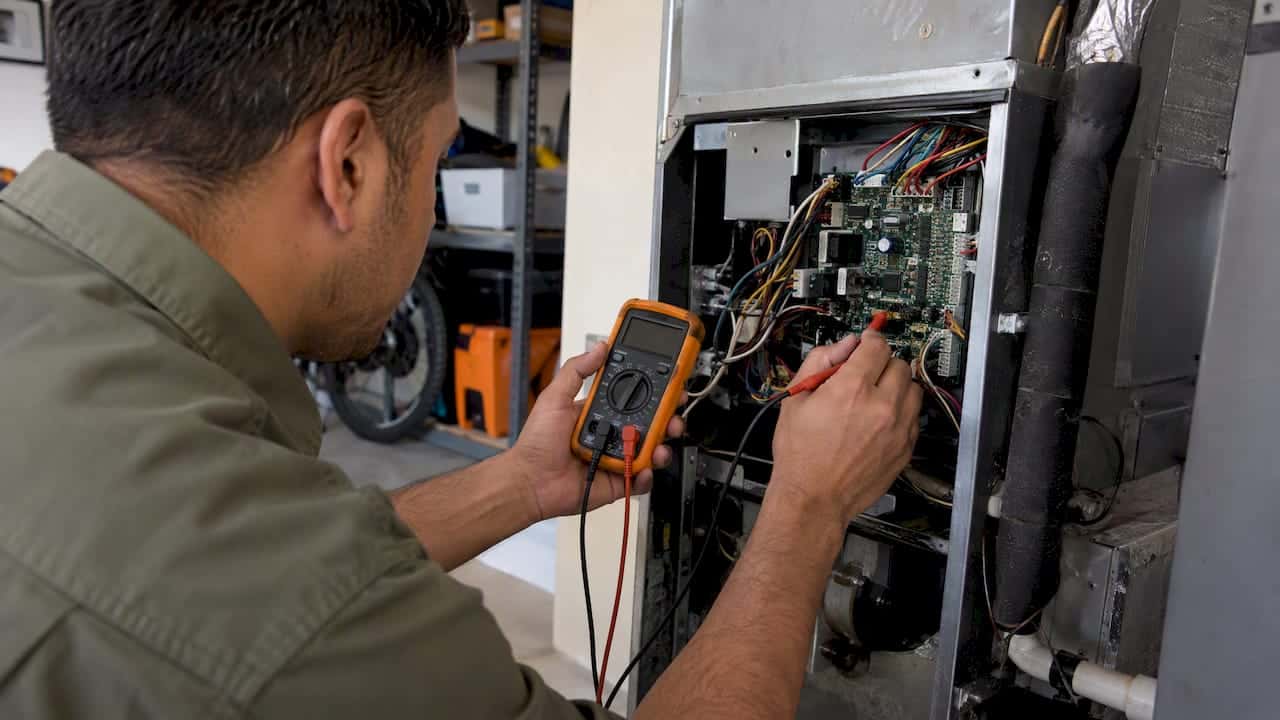
- HVAC system testing: Running the system through real operating conditions to catch problems
- Controls verification: Making sure thermostats, sensors, and automation sequences work as designed
- Documentation: Recording all test results and system settings for future reference
- Operator training: Teaching you or your property manager how the system works and what to watch for
“A system that turns on is not the same as a system that works correctly. Commissioning is the process that closes that gap.”
The importance of HVAC commissioning becomes especially clear in Los Angeles homes. A system that was never properly commissioned might cool your living room while leaving a back bedroom sweltering, or run longer than necessary because airflow was never balanced. You pay for that inefficiency every month on your energy bill.
Now that you know the general idea, let’s explore how the commissioning process actually works.
The commissioning process: phases and key steps explained
HVAC commissioning does not happen in one afternoon. It follows a structured sequence that begins before a single piece of equipment is ordered. ASHRAE Guideline 0 organizes commissioning into five project phases: Pre-Design, Design, Construction, Occupancy and Operations, and Retro-Commissioning for existing buildings.
Here is how each phase plays out in practice:
- Pre-design phase: The commissioning agent (the professional overseeing the process) works with you to define performance goals. What temperatures do you need? What are your energy targets? This becomes the OPR document.
- Design phase: Engineers create commissioning specifications that are written directly into installation contracts. This means contractors are legally required to meet performance standards, not just install equipment.
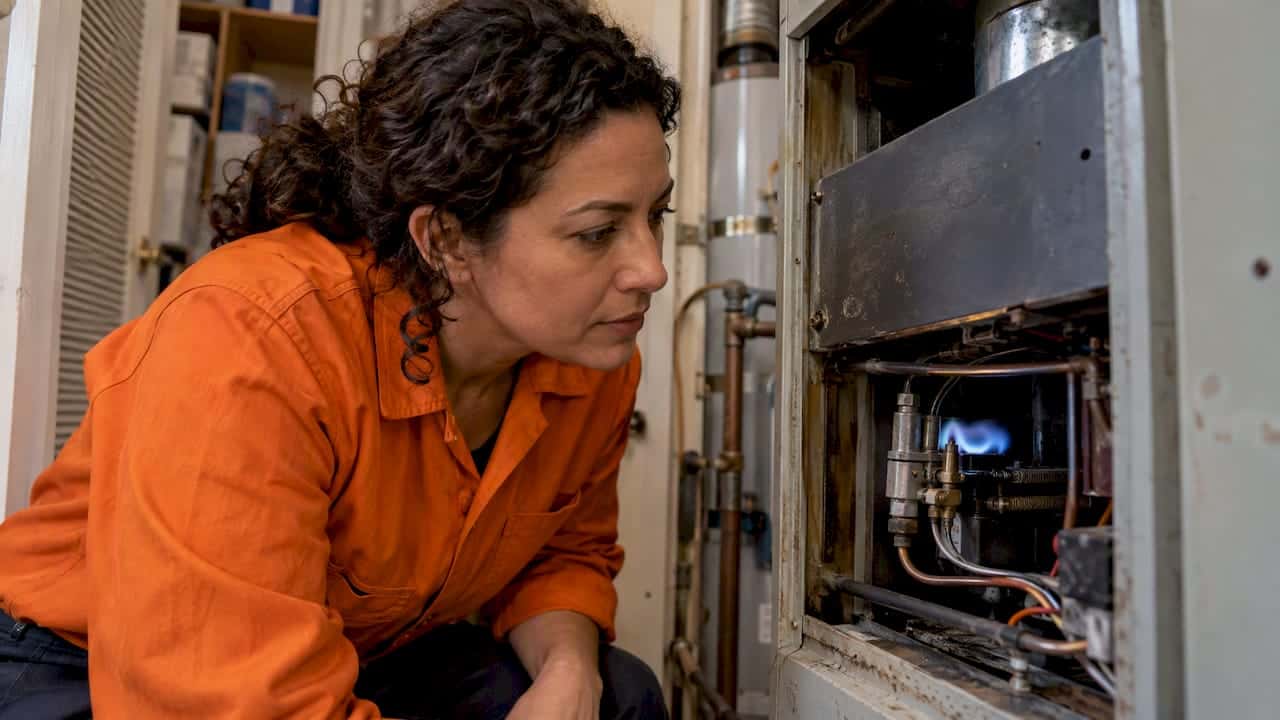
- Construction phase: As installation happens, the commissioning agent inspects each component. Ductwork connections, refrigerant charge levels, electrical wiring, and control wiring are all checked before walls close up.
- Functional performance testing: This is where the system is put through its paces. Every control sequence is tested. Does the system switch correctly between heating and cooling? Do zone dampers open and close on cue? Does the economizer work when outdoor air is cool enough to use?
- Occupancy and operations phase: After you move in, the commissioning agent monitors system performance, trains you on proper operation, and documents everything for your records.
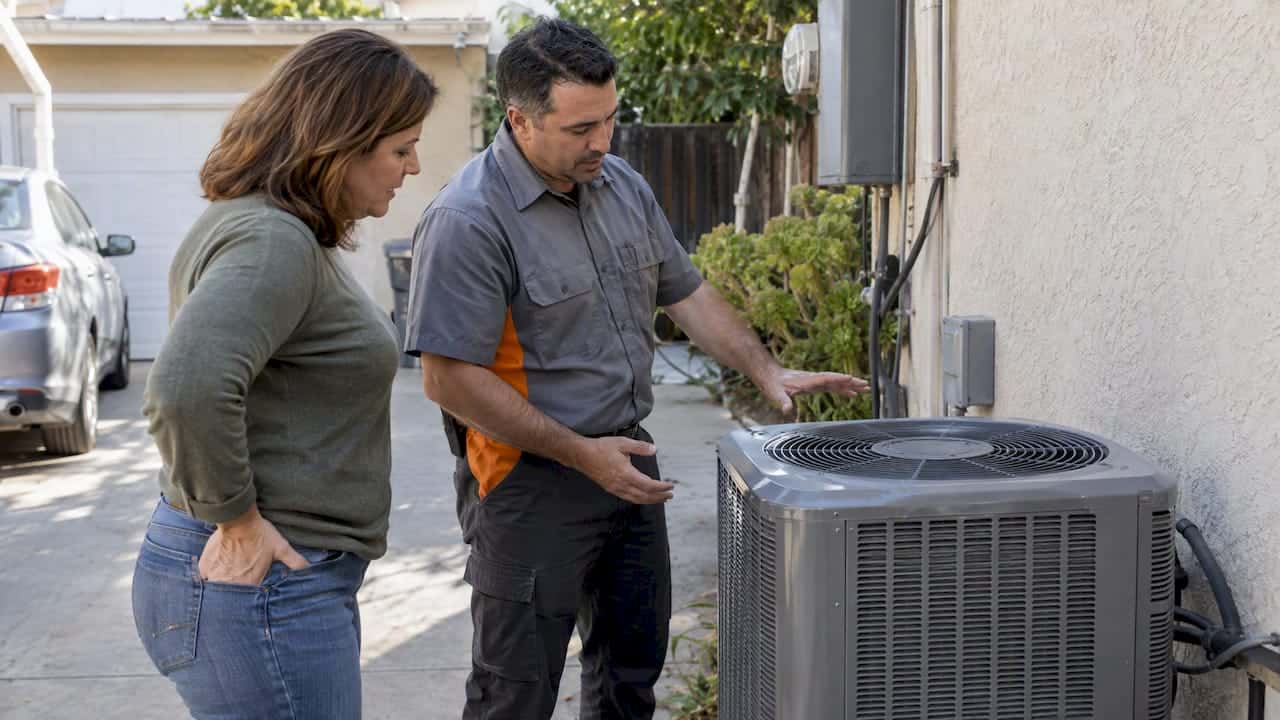
The commissioning agent role is critical here. Think of this person as a quality inspector who works for you, not the contractor. Their job is to catch problems before they become your problem.
Pro Tip: Ask your HVAC contractor upfront whether commissioning is included in the project scope. If it is not, request it. The cost of commissioning is almost always recovered through energy savings and avoided repairs within the first few years of operation. You can also review HVAC maintenance plans to keep your system performing well after commissioning is complete.

With an overview of the process, let’s clarify how commissioning differs from related HVAC services.
Commissioning versus testing, adjusting, and balancing (TAB): what homeowners should know
TAB, which stands for Testing, Adjusting, and Balancing, is something many homeowners confuse with commissioning. They are related but not the same thing. TAB is actually one piece of the larger commissioning puzzle.
Here is a clear comparison:
| What it covers | TAB | HVAC commissioning |
|---|---|---|
| Air and water flow rates | Yes | Yes |
| Control sequences and logic | No | Yes |
| System integration checks | No | Yes |
| Documentation accuracy | Partial | Full |
| Operator training | No | Yes |
| Energy performance verification | No | Yes |
As Cadence explains, “TAB measures air and water flow to meet design specs, but commissioning also verifies system integration, controls sequences, and documentation accuracy.”
Here is why that distinction matters to you as a homeowner. Without commissioning, a system can pass TAB and still have a serious problem: simultaneous heating and cooling. This happens when control logic errors cause your heating and cooling systems to fight each other. Your home never reaches the right temperature, and you pay to heat and cool at the same time. TAB would not catch this. Commissioning would.
Pro Tip: If a contractor tells you TAB is “basically the same as commissioning,” that is a red flag. Push for clarification on what HVAC performance verification steps are actually included. You can also browse our HVAC troubleshooting tips to understand common system issues before they escalate.
Understanding what commissioning does, let’s explore the types you might encounter in your home.
Types of HVAC commissioning: initial, retro, and re-commissioning explained
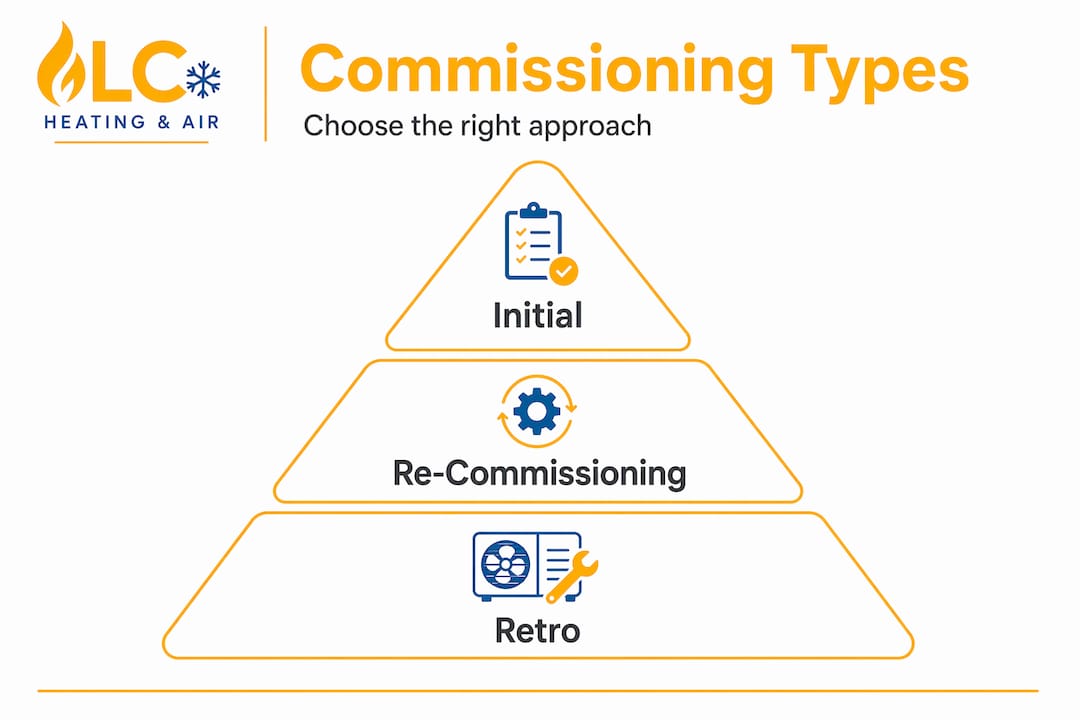
Not every home needs the same type of commissioning. There are three main types: initial commissioning for new systems, retro-commissioning for existing uncommissioned systems, and re-commissioning for systems needing renewed verification.
Here is what each one means for you:
- Initial commissioning: This applies to a brand-new HVAC installation. It verifies that the system was designed and installed correctly from day one. If you are getting a new system installed in your Los Angeles home, this is the type you want included in your project. Explore HVAC replacement services to understand what a full installation project looks like.
- Retro-commissioning: This is for existing systems that were never formally commissioned. Many homes in LA, especially those built before the 2000s, have systems that were installed and simply left running. Retro-commissioning finds the inefficiencies that have been costing you money for years. It is often the most cost-effective investment you can make in an older system. Check out HVAC retrofit options if your home falls into this category.
- Re-commissioning: Even a well-commissioned system drifts over time. Sensors lose calibration. Ductwork develops small leaks. Control settings get changed by contractors who do not document their work. Re-commissioning is a periodic check-up that restores your system to peak performance.
The right type depends on your system’s age, history, and current performance. If your energy bills have crept up over the past few years without an obvious cause, retro-commissioning or re-commissioning is worth a serious look.
Knowing the types helps you decide what fits your home, so now let’s look at the real benefits of commissioning.
Benefits of HVAC commissioning: energy savings, comfort, and system longevity
The benefits of HVAC commissioning are not abstract. They show up in your monthly bills, your daily comfort, and how long your equipment lasts.
Energy savings fact: Commissioning leads to median energy savings of 13% for new constructions and 16% for existing buildings.
For an LA homeowner running central air through a long summer, 13 to 16% savings is real money. On a $200 monthly energy bill, that is $26 to $32 back in your pocket every single month.
Beyond the numbers, here is what commissioning actually delivers:
- Consistent comfort: Rooms heat and cool evenly because airflow is balanced and controls are verified. No more hot spots or cold corners.
- Longer equipment life: Problems caught during commissioning, like a slightly undersized refrigerant charge or a loose electrical connection, do not become catastrophic failures two years later.
- Fewer surprise repairs: HVAC maintenance plans work better when the system starts from a verified baseline. Technicians know exactly how the system should behave, so deviations are easier to spot.
- Warranty protection: Some manufacturers require documented commissioning to honor equipment warranties. Skipping it could void coverage you paid for.
- Better indoor air quality: Properly commissioned ventilation systems deliver the right amount of fresh air, which matters especially in tightly sealed modern homes.
Pro Tip: Keep your commissioning report in a safe place. When you call for HVAC service down the road, that document tells the technician exactly how your system was set up and what the original performance targets were. It cuts diagnostic time significantly.
Having covered benefits, let’s share an insider’s perspective on common challenges and what homeowners often miss.
What most homeowners don’t realize about HVAC commissioning
After twenty years of working in Los Angeles homes, from 1920s Spanish Colonials in Los Feliz to modern multi-zone systems in Beverly Hills, we have seen a pattern. Homeowners who ask about commissioning almost always ask about the wrong thing. They want to know if the system “passed.” What they should be asking is whether the right tests were even performed.
Functional performance testing is where most commissioning falls short. Verifying that a thermostat raises and lowers temperature is not commissioning. Real commissioning tests every control sequence: what happens when the system switches from heating to cooling mode, how zone dampers respond under different load conditions, and whether the economizer activates correctly when outdoor air is suitable. These are the sequences that break down in real-world use, and they are the ones most often skipped.
Commissioning plans often miss seasonal or deferred testing needed to fully validate heating versus cooling modes. In Los Angeles, this is a real issue. A system commissioned in October may never have its cooling mode properly tested until the following June. By then, the contractor is long gone and any problems become your expense.
The other thing homeowners miss is the value of commissioning documentation. A thorough commissioning report is not just paperwork. It is a reference guide for every technician who touches your system for the next decade. It records original airflow readings, refrigerant charge levels, control settings, and test results. When something changes, that document tells you exactly what “normal” looks like. You can explore our HVAC troubleshooting tips to see how baseline data makes diagnosing problems faster and more accurate.
Our honest advice: engage a commissioning authority early, before installation begins, and insist on seasonal or deferred testing before you sign off on the project. Do not accept “it’s running fine” as a substitute for documented performance verification.
Reliable HVAC commissioning and services in Los Angeles
If you are a Los Angeles homeowner wondering whether your system has ever been properly commissioned, you are not alone. Most homes we visit have never had a formal commissioning process. That means there are likely efficiency and comfort improvements sitting untouched in your existing system.
At LC Heating & Air, we bring the same honest, thorough approach to every job that we have built our reputation on for over twenty years. Whether you need HVAC installation in Los Angeles with commissioning built in from the start, or a full evaluation of your existing system, our NATE-certified technicians give you straight answers and flat-rate pricing. We also offer HVAC maintenance plans designed to keep your system performing at its verified best year after year. If something needs attention, visit lahvaclc.com or call us to schedule a visit. No surprise fees. No pressure.
Frequently asked questions
How often should I have my HVAC system commissioned or re-commissioned?
Re-commissioning is typically recommended every 3 to 5 years or whenever there are significant changes in how your home is used or when system performance noticeably declines.
Is HVAC commissioning different for new installations versus existing homes?
Yes. Initial commissioning focuses on new systems to confirm they meet design specifications, while retro-commissioning evaluates and improves existing systems that were never formally verified after installation.
Can commissioning reduce my energy bills?
Proper HVAC commissioning delivers median energy savings of 13% for new constructions and 16% for existing buildings by confirming that every component operates as efficiently as designed.
Is Testing, Adjusting, and Balancing (TAB) enough to ensure HVAC efficiency?
TAB alone is not enough. It only confirms airflow and water flow rates meet design targets, while commissioning goes further by verifying control sequences, system integration, and full documentation accuracy.
Recommended
- HVAC Troubleshooting & How-To Guides | LC Heating & Air | LC Heating & Air
- HVAC Equipment & Pricing | Goodman, Daikin, ADP, Aspen | LC Heating & Air | LC Heating & Air
- HVAC Inspection Los Angeles | LC Heating & Air | (323) 970-3113 | LC Heating & Air
- HVAC Installation Los Angeles | LC Heating & Air | (323) 970-3113 | LC Heating & Air
Leo, Owner & Lead Technician at LC Heating & Air
Leo leads LC Heating & Air as an owner-operator and holds California CSLB C-20 HVAC license #1073586. His guides focus on practical diagnostics, safe repair decisions, and clear advice for Los Angeles homeowners.