- What is an HVAC permit requirement and when does it apply?
- Which HVAC projects require a permit and which ones don’t?
- How local jurisdictions shape HVAC permit rules, fees, and inspections
- How to obtain an HVAC permit: a step-by-step guide for homeowners
- Common HVAC permit issues homeowners often overlook
- Key takeaways
- Why I always tell homeowners to call the building department first
- How LC Heating and Air Conditioning makes the permit process easier
- FAQ
- Recommended

TL;DR:
- An HVAC permit is a legal authorization required before installing or modifying heating, ventilation, or air conditioning systems in most U.S. jurisdictions. It is triggered by equipment capacity changes, gas or electrical modifications, or penetrations of the building envelope, and a failure to obtain one can lead to fines, safety risks, and legal issues. Homeowners should contact their local building department beforehand to confirm permit requirements, gather proper documentation, and ensure compliance, simplifying the process and avoiding delays.
An HVAC permit requirement is a formal authorization from your local building department that must be obtained before installing, replacing, or significantly altering any heating, ventilation, or air conditioning system in your home. Most U.S. jurisdictions require a mechanical permit when HVAC work changes equipment capacity, gas or electrical connections, or penetrates the building envelope. Ordinary maintenance tasks like filter swaps or minor duct sealing are typically exempt. The authority having jurisdiction, commonly called the AHJ, is the local agency that sets and enforces these rules. Whether you live in Los Angeles, Virginia, or Florida, understanding what triggers a permit before you start any HVAC project can save you from fines, failed inspections, and serious safety risks.
What is an HVAC permit requirement and when does it apply?
An HVAC permit requirement is the legal obligation to obtain government approval before performing specific heating and cooling work on your property. The permit exists to protect you. It triggers an inspection process that confirms your new or modified system meets current building codes, energy efficiency standards, and safety requirements.
The International Energy Conservation Code, known as the IECC, sets baseline efficiency standards that most states adopt and adapt. Local building departments then layer their own rules on top. In Virginia, for example, the Virginia Mechanical Code governs statewide standards, but each of the state’s 133 local jurisdictions sets its own fees and administrative procedures. That variation is the rule across the country, not the exception.
Three core conditions typically trigger a permit requirement. First, any change to equipment capacity, such as upgrading from a 2-ton to a 3-ton air conditioner. Second, any modification to gas lines, electrical circuits, or refrigerant connections. Third, any work that penetrates the building envelope, like cutting a new hole for ductwork or a flue pipe. If your project touches any of these three areas, assume a permit is required until your local AHJ confirms otherwise.
Which HVAC projects require a permit and which ones don’t?
Understanding the line between permit-required work and exempt maintenance is one of the most practical things a homeowner can know. Getting this wrong in either direction costs you time or money.
Work that almost always requires a permit:
- New HVAC system installations, including split systems, heat pumps, and furnaces
- Full equipment replacements, even when swapping the same brand and tonnage
- Changes to ductwork routing or adding new duct branches
- New or modified gas line connections
- New or modified electrical circuits serving HVAC equipment
- Installation of mini-split systems requiring new line sets and electrical work
- Adding or relocating supply and return air vents
Work that is typically exempt from permits:
- Replacing air filters
- Cleaning coils or drain lines
- Replacing a thermostat with a like-for-like unit
- Minor duct sealing with mastic or tape that does not alter airflow capacity
- Replacing a capacitor or contactor on existing equipment
The most common misconception homeowners hold is that a like-for-like replacement does not need a permit. Like-for-like replacements do not exempt HVAC projects from permits because new equipment must meet updated energy efficiency standards. Riverside, California requires mechanical permits for nearly all HVAC replacements. Only plug-in portable units are exempt there. Florida’s Lakeland takes an equally firm stance, requiring a permit for all HVAC replacements including same-tonnage equipment swaps, plus a final inspection even under owner-builder rules.
Pro Tip: Before you buy a single piece of equipment, call your local building department or check their website to confirm exactly what your project scope requires. A five-minute phone call can prevent weeks of delays.
How local jurisdictions shape HVAC permit rules, fees, and inspections
The AHJ, or authority having jurisdiction, is the single most important concept in HVAC permitting. It refers to the local government body, usually a city or county building department, that has the legal authority to interpret and enforce building codes in your area. What the AHJ says goes, regardless of what you read in a national guide.
This local variation creates a wide range of outcomes for homeowners. Virginia illustrates this perfectly. The state enforces a uniform Virginia Mechanical Code, yet local permit fees and procedures vary widely across its 133 jurisdictions. A homeowner in Fairfax County faces different paperwork, fees, and timelines than one in Roanoke, even though both follow the same state code. Tennessee adds another layer: local municipalities regulate HVAC permits for projects under $25,000, with varying licensing and permit requirements based on project size and scope.
California and Florida consistently enforce some of the strictest permit regimes in the country. California is actively working to match equipment sales records to permit records to identify unpermitted installations, a response to HVACR permit compliance rates that have historically fallen below 10% over more than 20 years. That statistic reveals how widespread unpermitted HVAC work actually is, and why enforcement is tightening.
Here is a quick reference for what typical HVAC permit processes look like across different regulatory environments:
| Jurisdiction type | Permit required for replacement? | Typical inspection stages | Notable rule |
|---|---|---|---|
| Riverside, CA | Yes, nearly all replacements | Rough-in and final | Portable plug-in units exempt |
| Lakeland, FL | Yes, including like-for-like | Final inspection required | Owner-builder affidavit needed |
| Virginia (varies by city) | Yes, under state mechanical code | Rough-in and final | Fees vary by all 133 jurisdictions |
| Tennessee (local) | Depends on project size | Varies by municipality | Projects under $25,000 go to local office |
Most jurisdictions require two inspection stages: a rough-in inspection before walls are closed and a final inspection once the system is fully operational. Failing either stage means rescheduling, which can delay your project by days or weeks depending on inspector availability.
Pro Tip: Many cities now offer online permit portals. Riverside, California uses a public permit portal where you can check permit status, submit documents, and schedule inspections without a single phone call. Search your city name plus “building permit portal” to find yours.
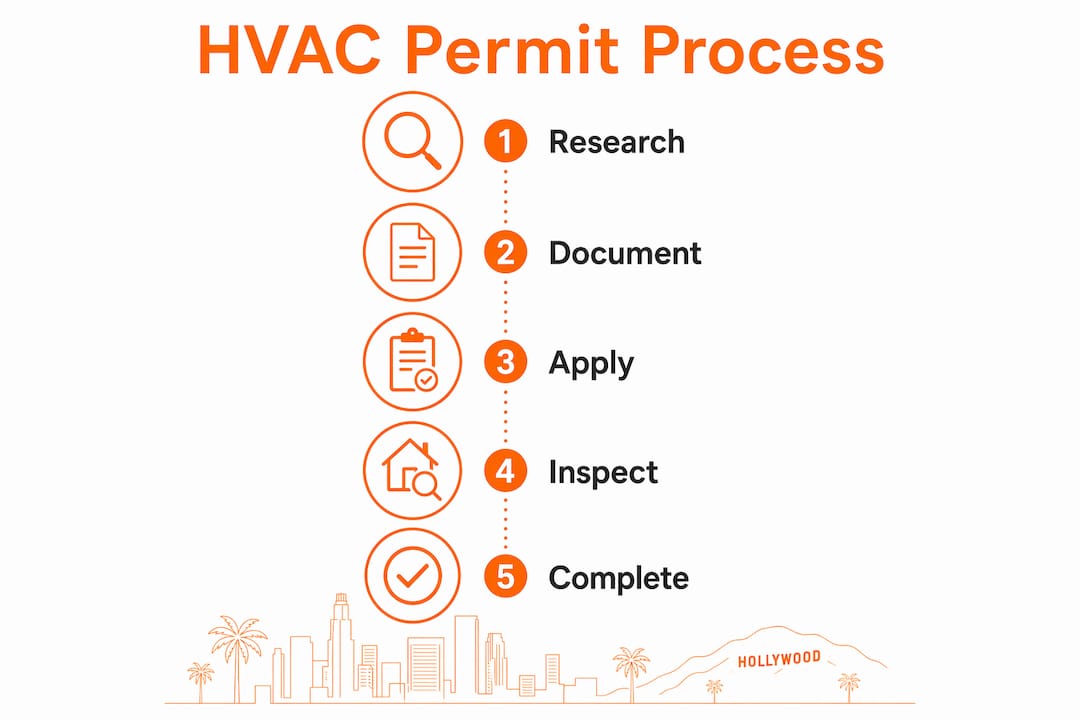
How to obtain an HVAC permit: a step-by-step guide for homeowners
The HVAC permit application process is more manageable than most homeowners expect. Here is how it typically works from start to finish.
-
Determine your project scope. Write down exactly what work will be done: equipment model, tonnage, fuel type, and any changes to ductwork, gas lines, or electrical circuits. This scope determines which permits you need.
-
Contact your local building department. Call or visit your city or county building department to confirm permit requirements for your specific project. Ask about fees, required documents, and typical processing times. Relying on national generalizations risks noncompliance because HVAC permitting is highly local.
-
Gather your documentation. Most permit applications require equipment specification sheets from the manufacturer, proof of the contractor’s license if you are hiring one, and a Manual J load calculation. The Manual J is an industry-standard method for sizing HVAC equipment to your home’s specific heating and cooling needs. Incomplete permit submissions slow permit issuance significantly, so having correct documentation upfront speeds approvals.
-
Submit your application. Many jurisdictions now accept online submissions through portals like Riverside’s public permit portal. Others still require in-person or mailed applications. Pay the permit fee at this stage.
-
Schedule your rough-in inspection. Once the permit is approved and work begins, schedule the rough-in inspection before any walls or ceilings are closed. The inspector checks that equipment placement, duct routing, and connections meet code.
-
Complete the work and schedule your final inspection. After the system is fully installed and operational, the final inspection confirms everything works correctly and safely. A passed final inspection closes out your permit.
-
Keep your permit records. Store the approved permit and inspection sign-off with your home records. These documents matter when you sell your home, file an insurance claim, or apply for energy rebates.
Owner-builder permits deserve a specific note. As a homeowner, you can often pull your own permit without hiring a licensed contractor. However, owner-builder exemptions only affect who pulls the permit. They do not remove the requirement for inspections, code compliance, or licensed specialists for refrigerant handling and gas work. Refrigerant work, for example, legally requires EPA Section 608 certification regardless of who owns the property. Knowing this boundary prevents a costly mistake.
You can find helpful guidance on HVAC project planning to prepare your documentation and understand what inspectors look for before your appointment.
Common HVAC permit issues homeowners often overlook
Even well-prepared homeowners run into surprises during the permit process. These are the most common issues worth knowing before you start.
Multiple permits may be required for one project. Projects that touch gas piping, refrigerant lines, electrical circuits, or duct routing often require multiple permits, not just a single mechanical permit. A full system replacement that involves a new gas line, a new electrical circuit, and new ductwork could require a mechanical permit, a plumbing permit, and an electrical permit simultaneously. Each permit has its own application, fee, and inspection schedule.
Energy code compliance applies to replacements, not just new installs. Many homeowners assume that replacing an old unit with the same model means no code review is needed. That assumption is wrong. New equipment must meet the current IECC efficiency minimums in effect at the time of installation, which may be stricter than when your original system was installed. This is precisely why Riverside and similar jurisdictions require permits even for direct replacements.
Consequences of skipping a permit are real and lasting. The risks include:
- Failed inspections that require tearing out completed work
- Fines from your local building department
- Voided homeowner’s insurance coverage for related claims
- Complications when selling your home, since unpermitted work must be disclosed
- Liability if an uninspected system causes a fire or carbon monoxide incident
California’s effort to cross-reference equipment sales with permit records shows that enforcement is becoming more sophisticated. Permit compliance rates below 10% historically have prompted regulators to find new ways to catch unpermitted installations. The risk of being caught is growing, not shrinking.
Documentation gaps cause the most delays. Missing a manufacturer’s data sheet or an incomplete Manual J calculation is the single most common reason permit applications get rejected or delayed. Prepare your full documentation package before you submit, not after.
Key takeaways
HVAC permit requirements are triggered by equipment changes, gas or electrical modifications, and building envelope penetrations. Skipping a permit creates lasting legal, financial, and safety risks that far outweigh the cost of compliance.
| Point | Details |
|---|---|
| Permits are triggered by scope, not cost | Any change to capacity, gas, electrical, or ductwork typically requires a permit regardless of project price. |
| Like-for-like replacements still need permits | New equipment must meet current energy codes, so even same-model swaps require authorization in most jurisdictions. |
| Local rules vary widely | Virginia’s 133 jurisdictions, California’s strict enforcement, and Florida’s owner-builder rules all differ significantly. |
| Documentation drives approval speed | Manual J calculations and manufacturer spec sheets submitted upfront prevent delays and rejections. |
| Owner-builder permits have real limits | Homeowners can pull their own permits but still need licensed specialists for refrigerant and gas work. |
Why I always tell homeowners to call the building department first
After more than two decades working on HVAC systems across Los Angeles, the single most expensive mistake I see homeowners make is assuming they already know whether a permit is required. They read something online, decide their project is “just a replacement,” and move forward without checking. Then the inspector shows up, or they try to sell the house, and the unpermitted work becomes a serious problem.
My honest advice is this: call your local building department before you buy the equipment. Not after. Not during installation. Before. That one call tells you exactly what permits you need, what documents to prepare, and how long the process takes. It costs you nothing and can save you thousands.
I have also seen homeowners get tripped up by the owner-builder route. Pulling your own permit is a legitimate option, and I respect homeowners who want to stay hands-on. But the permit does not make you qualified to handle refrigerant or gas lines. Those tasks require licensed professionals regardless of who holds the permit. Mixing up those two things leads to safety risks and code violations that no permit can fix after the fact.
The good news is that the permit process, once you understand it, is straightforward. Gather your equipment specs, get a Manual J calculation done, submit your application, and schedule your inspections. Treat the inspector as a resource, not an obstacle. They are there to confirm your system is safe and efficient. A system that passes inspection is a system you can trust.
— Leo
How LC Heating and Air Conditioning makes the permit process easier
Navigating HVAC permit regulations on your own is manageable, but having an experienced team handle it for you removes the guesswork entirely.

LC Heating and Air Conditioning has been serving Los Angeles homeowners for over 20 years, handling everything from HVAC installation permits to full system replacements with all required documentation, inspections, and code compliance built into every job. The team knows Los Angeles permit requirements inside and out, prepares the correct paperwork upfront, and coordinates inspections so your project moves without delays. Whether you need a new system, a replacement, or guidance on what your specific project requires, LC Heating and Air Conditioning delivers honest, same-day service with no surprise fees. Contact LC Heating and Air today to get started with a team that handles the permit process as carefully as the installation itself.
FAQ
Do I need an HVAC permit for a simple replacement?
Yes, in most jurisdictions you need a permit even for a like-for-like replacement because new equipment must comply with current energy efficiency codes. Cities like Riverside, CA and Lakeland, FL require permits for all HVAC replacements without exception.
What documents are required for an HVAC permit application?
Most permit applications require manufacturer specification sheets, a Manual J load calculation, and proof of contractor licensing if a professional is doing the work. Submitting complete documentation upfront is the fastest way to get your permit approved.
Can a homeowner pull their own HVAC permit?
Yes, many jurisdictions allow homeowners to pull an owner-builder permit, but this does not exempt you from inspections, code compliance, or the requirement to use licensed professionals for refrigerant and gas line work.
How long does the HVAC permit process take?
Processing times vary by jurisdiction, ranging from a few days for online submissions in cities with digital portals to several weeks in busier building departments. Calling your local AHJ before you start gives you a realistic timeline for your specific area.
What happens if I skip an HVAC permit?
Skipping a permit can result in fines, failed inspections that require removing completed work, voided homeowner’s insurance, and disclosure obligations when selling your home. California is actively cross-referencing equipment sales with permit records to identify unpermitted installations.
Recommended
Leo, Owner & Lead Technician at LC Heating & Air
Leo leads LC Heating & Air as an owner-operator and holds California CSLB C-20 HVAC license #1073586. His guides focus on practical diagnostics, safe repair decisions, and clear advice for Los Angeles homeowners.