- How does an air handler unit actually work?
- What are the key components inside an air handler?
- Why air handler units matter for your home’s comfort
- How does an air handler compare to an AC, furnace, and condenser?
- Who actually needs an air handler unit?
- How to keep your air handler running efficiently
- Warning signs your air handler may be failing
- Installation and placement considerations
- LC Heating and Air Conditioning is ready to help Los Angeles homeowners
- FAQ
- Key Takeaways
- Recommended
Air Handler Unit: What It Is and How It Works
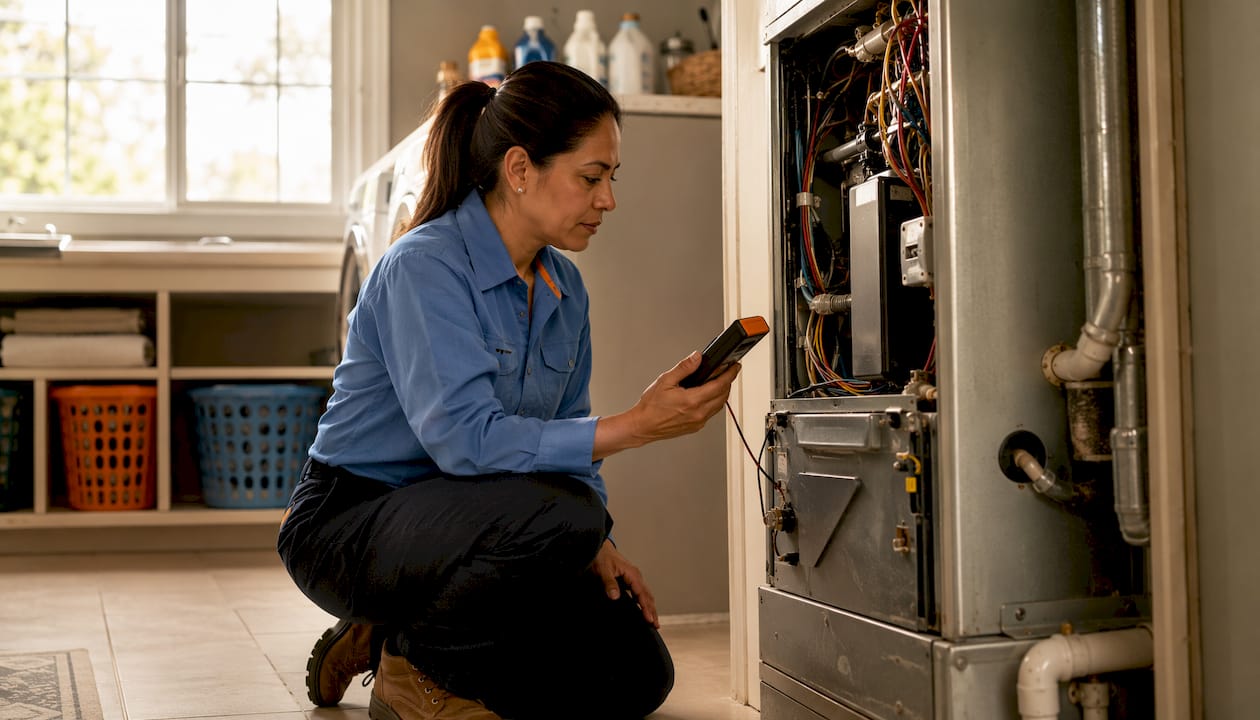
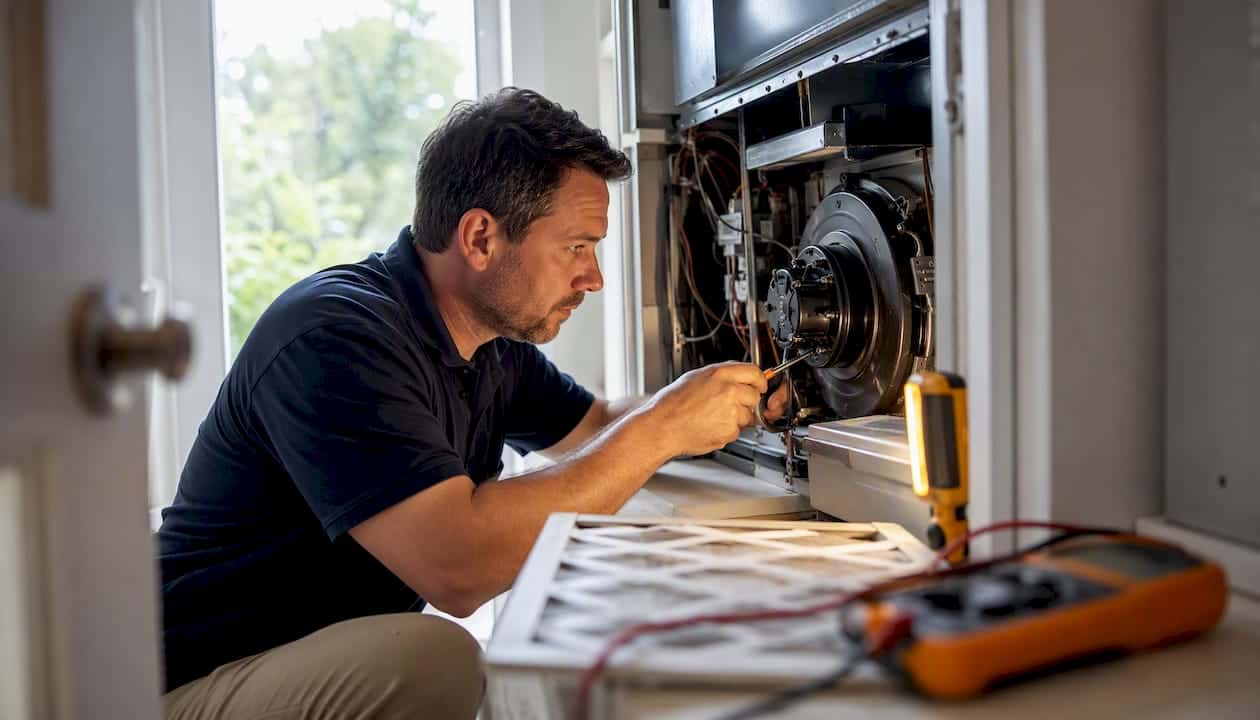
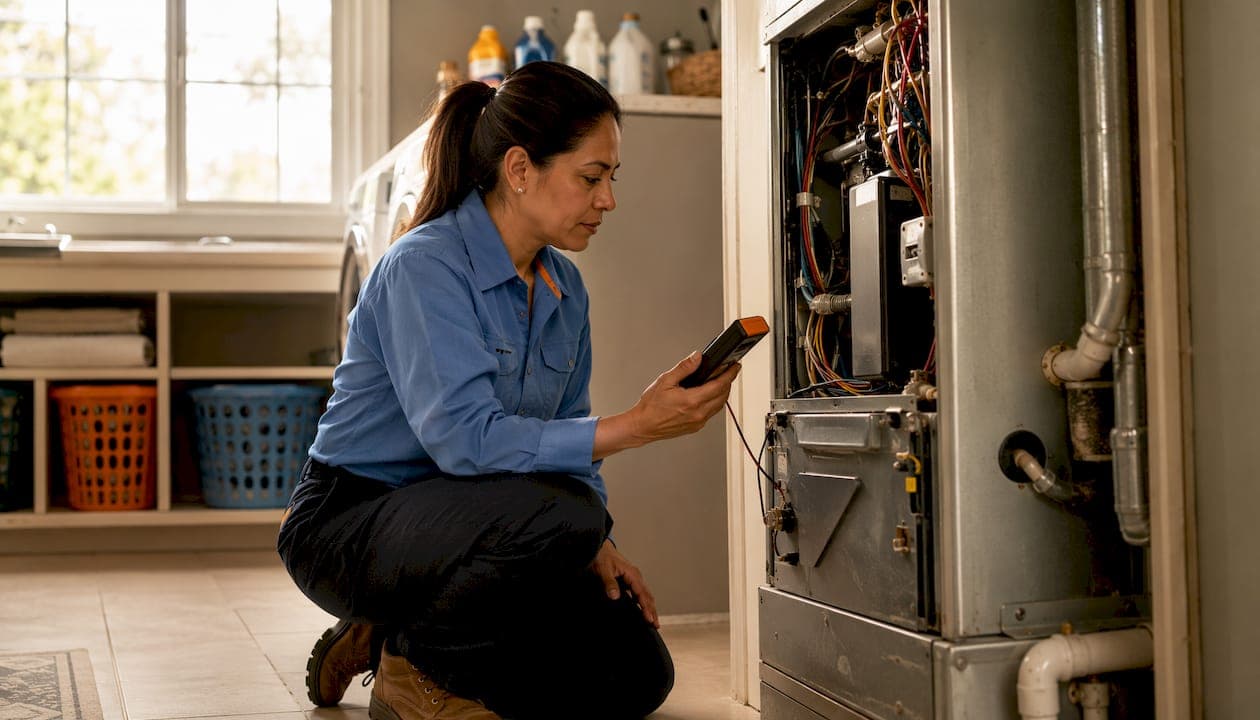
An air handler unit is the indoor half of your HVAC system. Its job is to move, filter, and distribute conditioned air through every room in your home. ASHRAE defines an air-handling unit as an assembly of fans and related equipment for circulation, filtration, heating, cooling, and humidity control. Think of it as the lungs of your climate control system: it breathes air in, conditions it, and pushes it back out through your ductwork.
Here is what you will typically find inside one:
- Blower motor and fan — pulls return air in and pushes conditioned air out through the ducts
- Evaporator coil — cools the air using refrigerant circulated from the outdoor unit
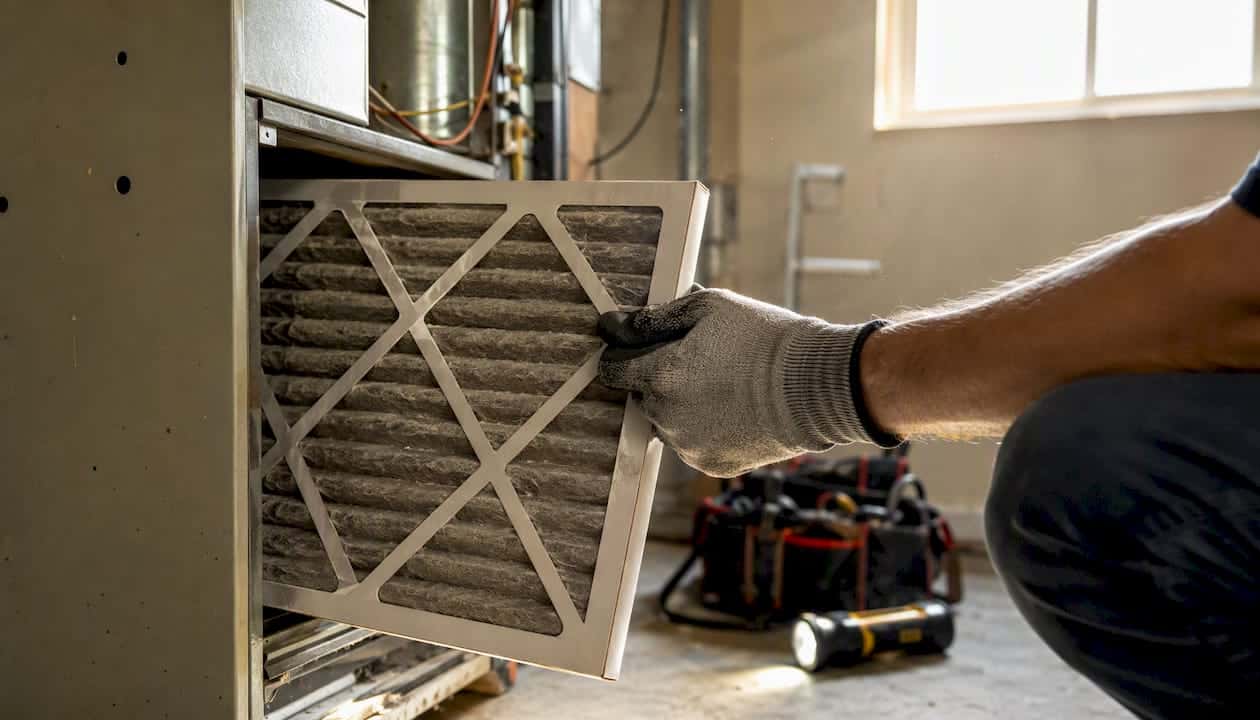
- Filter racks and air filters — trap dust, pollen, and airborne particles before air reaches living spaces
- Heating elements (in some models) — electric resistance strips that warm the air when needed
- Control board and electrical components — coordinate the unit’s operation with your thermostat
One quick clarification worth making: the blower is just the fan inside the air handler. The air handler itself is the full indoor cabinet containing the blower, coil, filters, and more. They are not the same thing.
How does an air handler unit actually work?
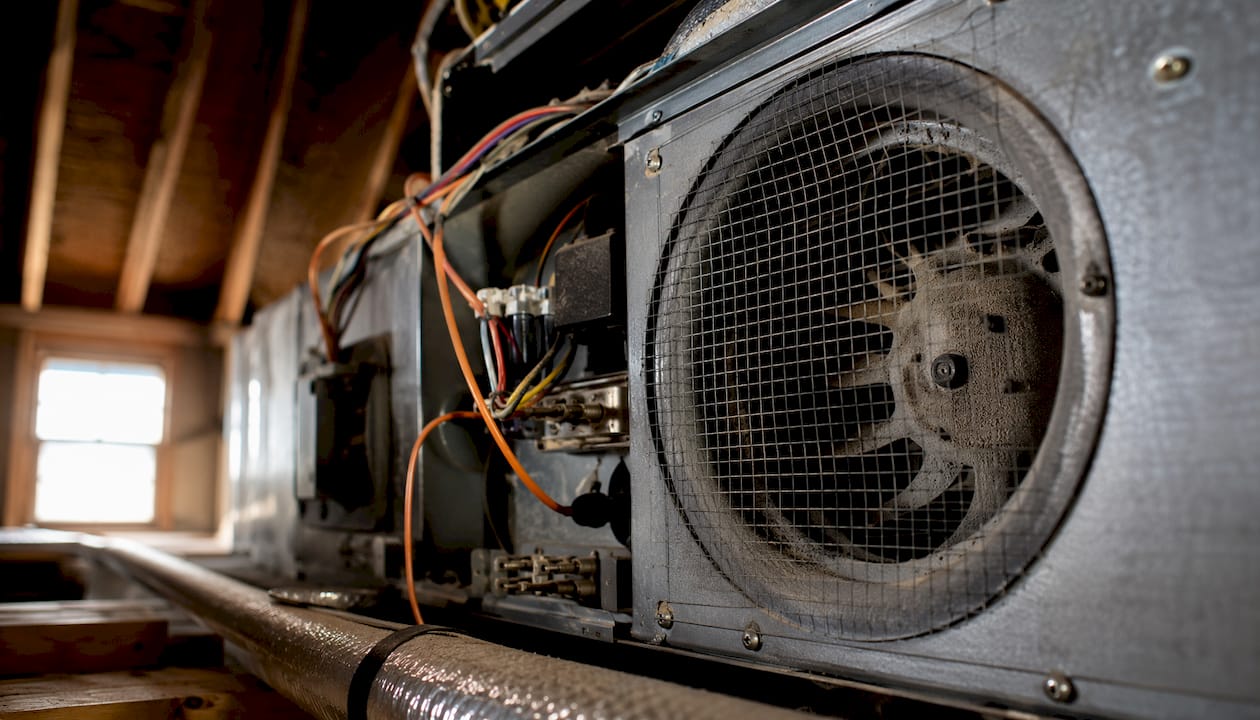
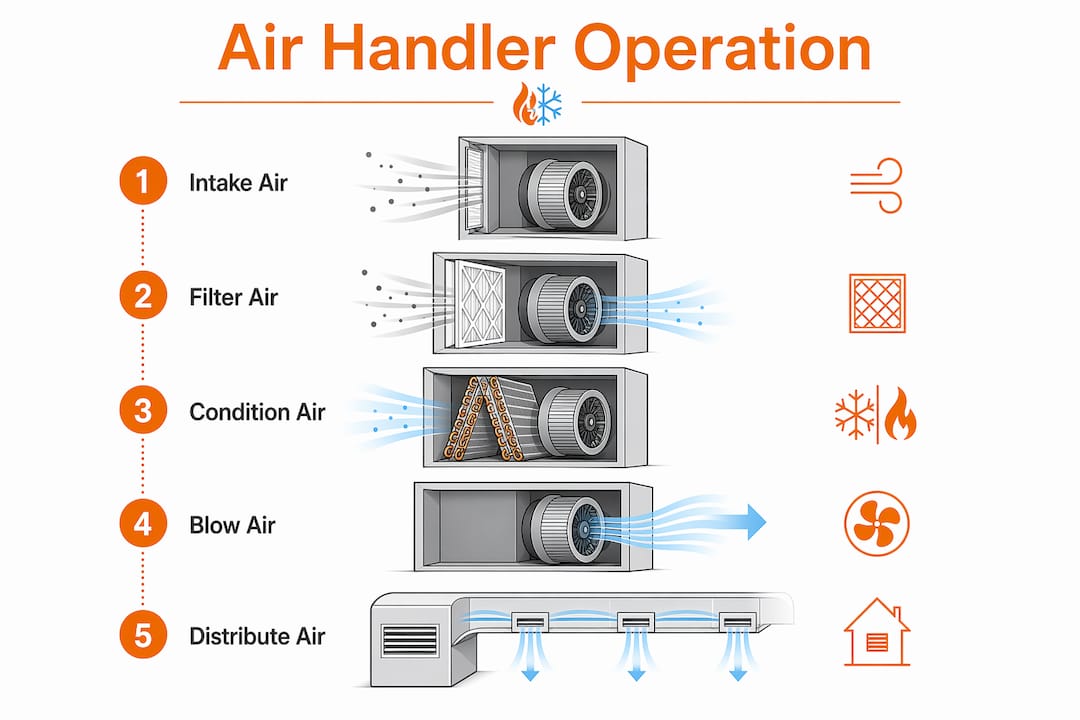
The process is straightforward once you see it step by step. Warm or stale air from your home gets pulled back through return vents and into the air handler. From there, it passes through the filter, which catches dust and debris. The cleaned air then flows across the evaporator coil, where refrigerant absorbs heat and cools it down. Finally, the blower fan pushes that conditioned air back through your supply ducts and into each room.
A few things worth knowing about how this process runs:
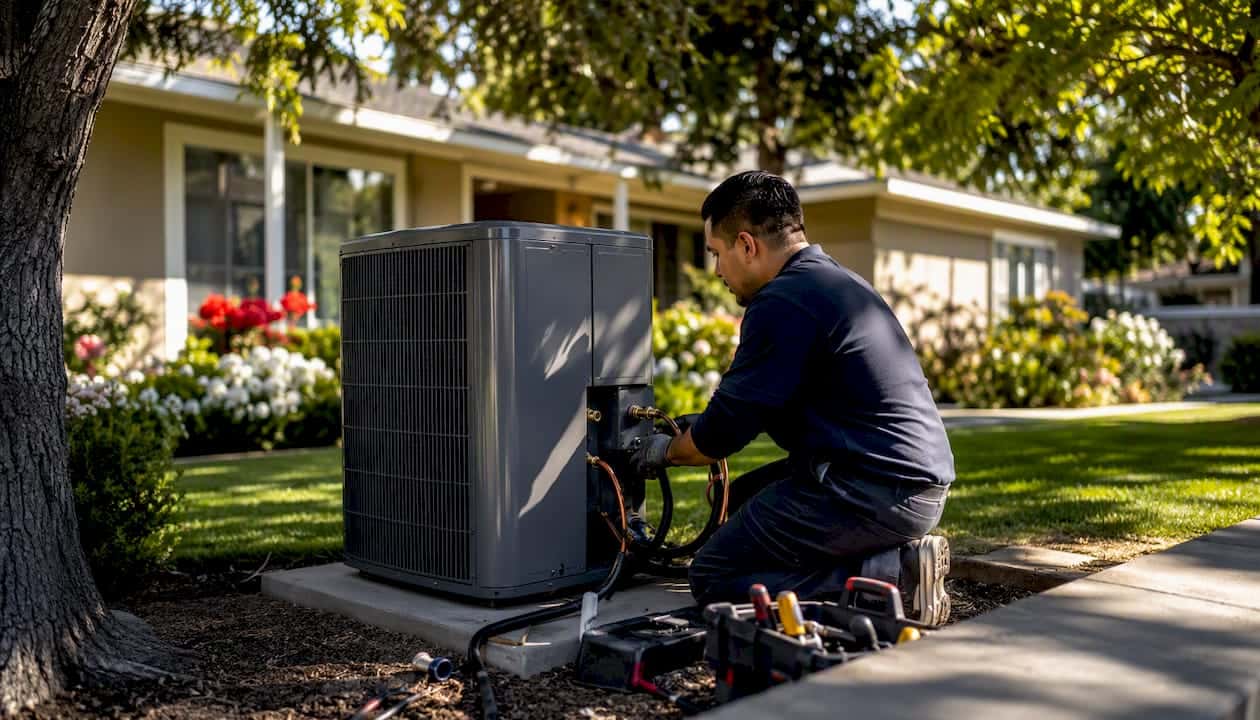
- The air handler works in tandem with your outdoor unit (a condenser or heat pump), which handles the heat transfer side of cooling or heating
- Variable-speed blower motors adjust airflow based on demand, which improves comfort and reduces energy use compared to single-speed fans
- The evaporator coil also removes humidity as it cools, and that moisture drains away through a condensate drain line
- In heating mode with a heat pump, the process reverses: the refrigerant cycle brings heat indoors, and the air handler distributes it
The air handler does not generate heat or cold on its own. It relies on the outdoor unit to do that work and simply moves the result through your home.
What are the key components inside an air handler?
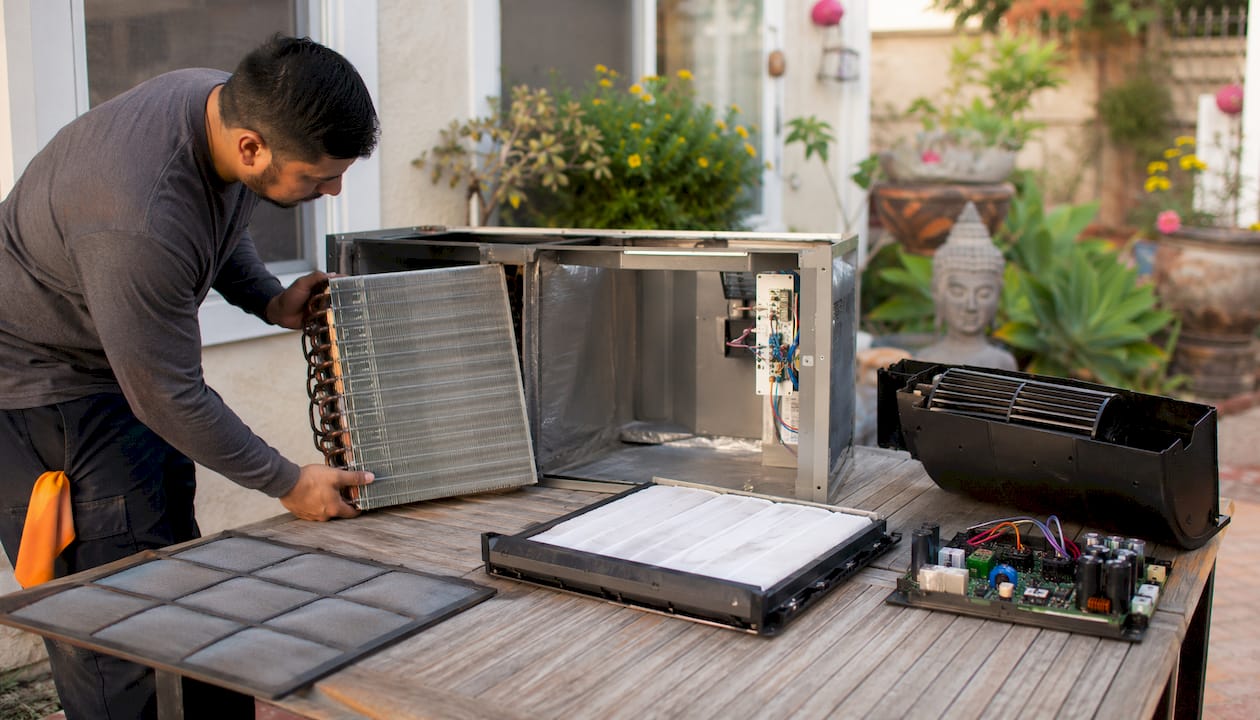
Every air handler shares the same core anatomy, though the exact configuration varies by model and manufacturer. Brands like Carrier, Goodman, and Trane each build their units with these fundamentals:
- Blower assembly — the motor and fan wheel that create airflow. Speed and size determine how much air moves through your system per minute.
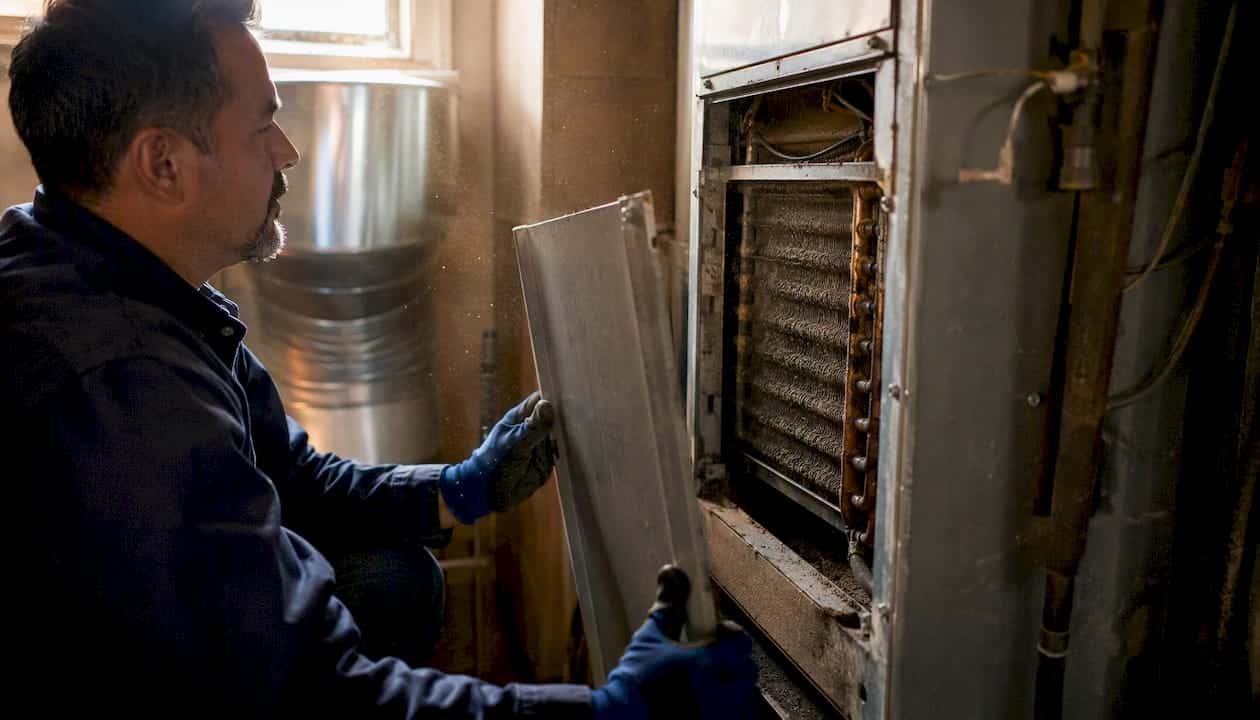
- Evaporator coil — a finned coil through which refrigerant flows. As warm air passes over it, the refrigerant absorbs heat, cooling the air and condensing moisture out of it.
- Filter rack — a frame that holds one or more air filters. The filter’s MERV rating determines how fine a particle it can catch, from basic dust to fine allergens.
- Electric heating strips — found in all-electric systems, these resistance coils heat the air when the heat pump alone cannot keep up in cold weather.
- Drain pan and condensate line — collects the water that drips off the evaporator coil and routes it away from the unit.
- Control board — receives signals from your thermostat and tells the blower and heating elements when to run.
You can browse ADP air handler models to see how these components come together in a real residential unit.
Why air handler units matter for your home’s comfort
Your air handler is the reason conditioned air actually reaches your bedroom, kitchen, and living room. Without it, your outdoor unit could run all day and you would never feel the difference inside. It circulates air consistently, which prevents hot and cold spots from forming in different rooms.
Air quality is the other big factor. The filter inside the air handler is your home’s primary defense against dust, pet dander, and pollen. A well-maintained filter keeps that air clean; a clogged one does the opposite, restricting airflow and forcing the blower to work harder.
Efficiency is where matching matters most. Mismatched HVAC components — like pairing an older air handler with a new heat pump — can reduce system efficiency significantly and shorten the lifespan of both units. AHRI certification standards exist precisely to help homeowners and contractors confirm that indoor and outdoor components are rated to work together. Getting that pairing right from the start saves real money over the life of the system.
How does an air handler compare to an AC, furnace, and condenser?
These four components often get confused because they all live under the “HVAC” umbrella. Each one has a distinct job.
| Component | Location | Primary function | Works with |
|---|---|---|---|
| Air handler | Indoors | Moves and distributes conditioned air | Heat pump or AC condenser |
| Air conditioner (condenser) | Outdoors | Removes heat from refrigerant, releases it outside | Air handler or fan coil |
| Furnace | Indoors | Generates heat by burning gas or using electric resistance | Its own built-in blower |
| Condenser | Outdoors | Transfers heat during the refrigerant cycle | Air handler or evaporator coil |
The air handler vs. furnace distinction trips up a lot of homeowners. A furnace generates heat and has its own blower built in, so it handles both functions in one cabinet. An air handler does not generate heat on its own; it depends on a heat pump or electric strips to do that. If your home runs on a gas furnace, you likely do not have a separate air handler at all.
Who actually needs an air handler unit?
Air handlers are standard in homes with heat pumps or fully electric HVAC systems. If your system uses a heat pump to heat and cool your home, the air handler is the indoor unit that makes it work. Homes with gas furnaces typically skip the air handler because the furnace already contains a blower and heat exchanger in one package.
Air handlers typically sit in attics, basements, or dedicated utility closets. They look a lot like a gas furnace in shape, which adds to the confusion. Three common configurations you will encounter:
- Constant volume (CV) units deliver a fixed airflow rate and are common in smaller homes or single-zone systems
- Variable air volume (VAV) units adjust airflow to different zones based on demand, making them well-suited for larger homes or multi-zone HVAC systems
- Rooftop units (RTUs) package the air handler and outdoor components together on the roof, more common in commercial buildings but occasionally used in flat-roof residential construction
How to keep your air handler running efficiently
Routine maintenance on an air handler is not complicated, but skipping it leads to expensive repairs. These are the tasks that matter most:
- Replace air filters every 1–3 months. Dirty air filters are the leading cause of blower motor overload, overheating, and frozen evaporator coils. A $10 filter change prevents a $500 repair.
- Clear the condensate drain line annually. Pour a cup of diluted white vinegar down the drain pan access point to prevent algae buildup and clogs.
- Inspect the blower wheel. Dust buildup on the fan blades reduces airflow and forces the motor to work harder. A visual check every season catches this early.
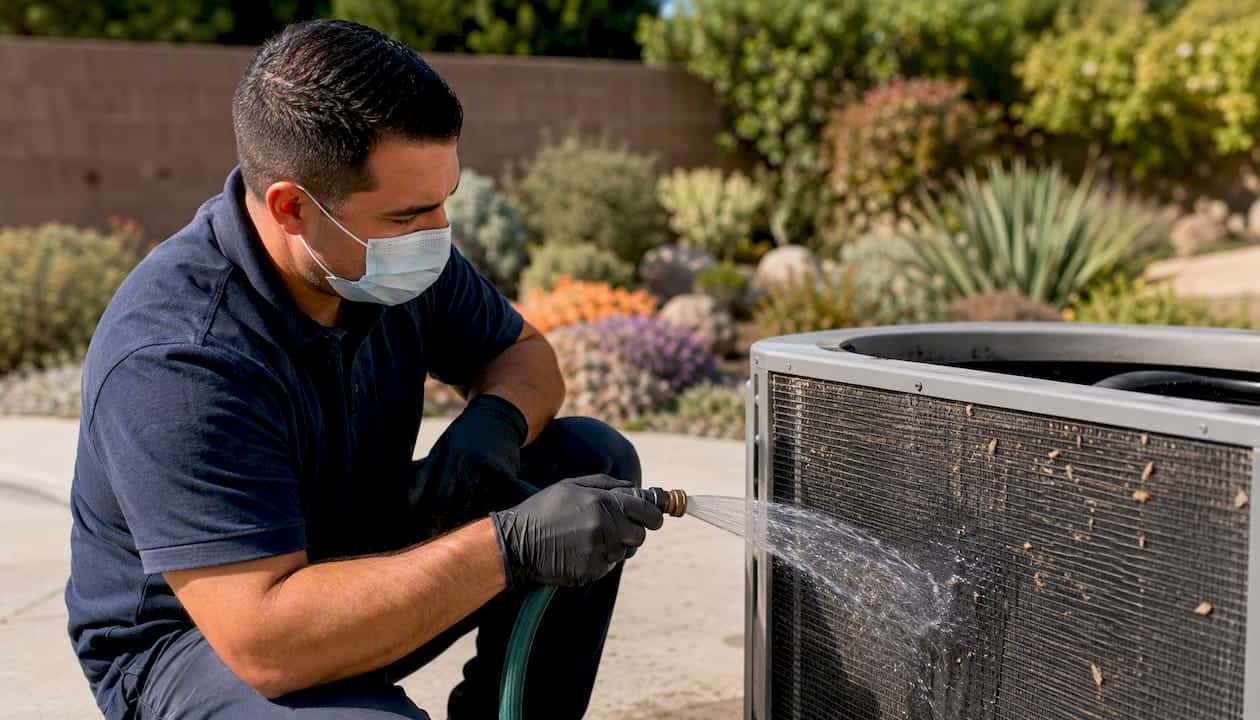
- Schedule a professional inspection once a year. A technician can check refrigerant levels, test electrical connections, and verify that the coil is clean — things that are hard to assess without tools.
Pro Tip: Set a phone reminder to check your filter on the first of every month. If it looks gray and dense, swap it out. This single habit prevents the majority of air handler service calls.
Good air conditioning maintenance habits extend well beyond the air handler, but the filter is always the place to start.
Warning signs your air handler may be failing
Catching a problem early keeps a minor fix from becoming a full replacement. Watch for these symptoms:
- Reduced airflow from vents — often the first sign of a clogged filter, dirty blower wheel, or failing motor
- Unusual noises — rattling, squealing, or banging usually point to a loose component or worn blower bearings
- Uneven temperatures room to room — the air handler may not be distributing air evenly, or a zone damper may have failed
- Rising energy bills without a usage change — a struggling blower or dirty coil forces the system to run longer to reach the set temperature
- Water pooling near the unit — clogged condensate drains are the most common cause; persistent water or rust may signal a cracked drain pan
Mismatched or aging components compound these problems fast. Pairing a new outdoor unit with an old air handler cuts system efficiency by at least 30% and accelerates wear on both sides. If you notice multiple symptoms at once, that is a strong signal to call a professional rather than troubleshoot further on your own. Common causes of HVAC failure often trace back to neglected air handler maintenance.
Installation and placement considerations
Where your air handler gets installed affects both performance and access for maintenance. Most residential units go in one of three spots: the attic, the basement, or a dedicated utility closet. Attic installations keep the unit out of living space but require good access for filter changes and drain line checks. Basement placement is often easier to service and keeps the unit in a more stable temperature environment. Closet installs work well in smaller homes but need adequate clearance around the cabinet for airflow and service access.
A few things a qualified installer will account for:
- Duct sizing and layout — the air handler’s blower must match the duct system’s static pressure requirements, or airflow suffers regardless of how good the unit is
- Drain line routing — the condensate line needs a clear path to a drain or outside, with a slight downward slope to prevent backups
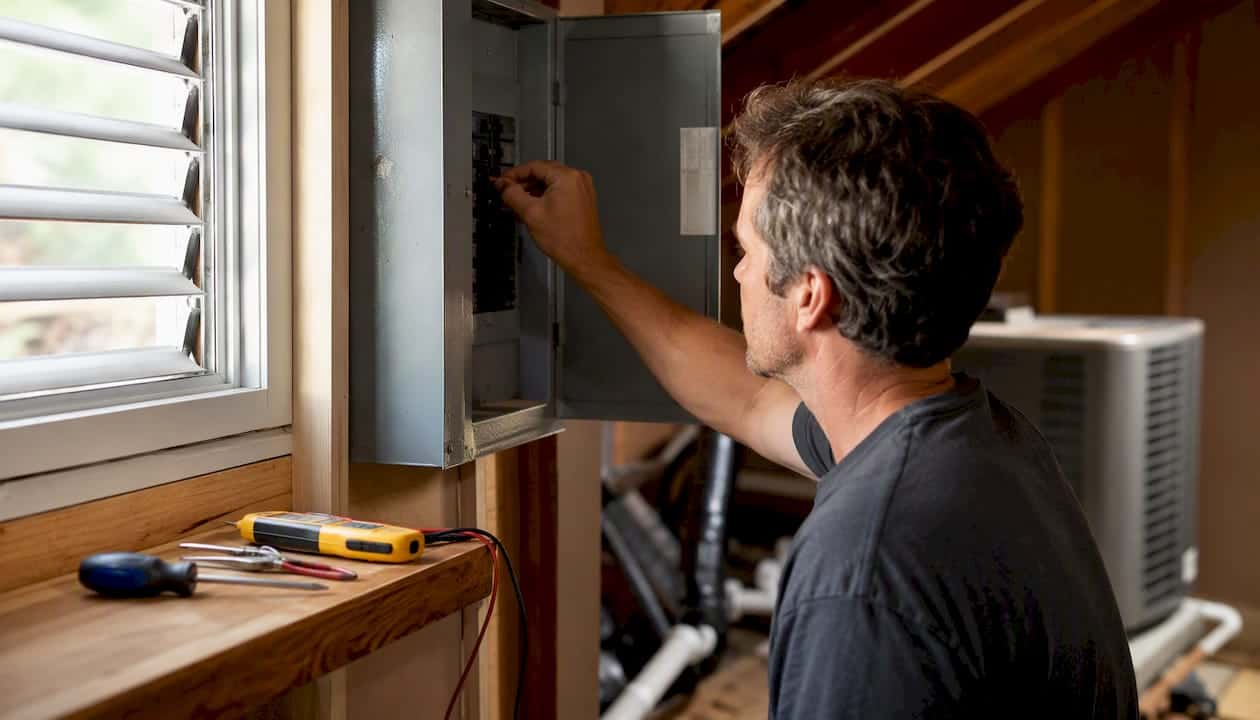
- Electrical supply — most residential air handlers run on 240V and need a dedicated circuit
- Component matching — the air handler’s capacity (measured in tons) must align with the outdoor unit’s rating; mismatches hurt efficiency and longevity, as noted above
If you are replacing only the outdoor unit, talk to your contractor about whether the existing air handler is still a compatible match. Replacing one without the other is a common and costly mistake.
LC Heating and Air Conditioning is ready to help Los Angeles homeowners

When your air handler needs attention, you want a team that gives you a straight answer, not a sales pitch. LC Heating and Air Conditioning has served Los Angeles homeowners for over twenty years, handling everything from historic homes with older duct systems to modern multi-zone setups. Leo and the team offer flat-rate pricing on repairs, so you know the cost before any work begins. No surprise diagnostic fees, no pressure to replace equipment that still has life in it.
Whether you need a filter check, a condensate drain cleared, or a full air handler replacement matched to your outdoor unit, LC Heating and Air Conditioning provides same-day service across Los Angeles. Browse HVAC equipment and pricing or schedule a service call to get a professional assessment of your system today.
FAQ
Is an air handler the same as a blower?
No. The blower is just the fan motor inside the air handler. The air handler is the full indoor cabinet that contains the blower, evaporator coil, filter rack, and other components.
What happens when an air handler goes bad?
A failing air handler typically shows reduced airflow, unusual noises, uneven room temperatures, higher energy bills, or water leaks near the unit. Left unresolved, these issues can lead to complete system failure.
How much does it cost to replace an AC air handler?
Replacement costs vary by unit size, brand, and local labor rates and are not publicly standardized. Contact a licensed HVAC contractor for an accurate quote based on your specific system and home.
Is an air handler the same as an AC unit?
No. The air conditioner (condenser) is the outdoor unit that removes heat from the refrigerant. The air handler is the indoor unit that moves and distributes the conditioned air through your ductwork.
Key Takeaways
An air handler unit is the indoor component that circulates, filters, and distributes conditioned air, and its performance depends entirely on proper maintenance and correct matching with the outdoor unit.
| Point | Details |
|---|---|
| Core function | The air handler moves and distributes conditioned air through your home’s ductwork. |
| Efficiency risk | Mismatched air handler and outdoor unit components reduce system efficiency significantly. |
| Top maintenance priority | Replacing dirty air filters prevents blower motor overload, frozen coils, and costly repairs. |
| Not the same as a furnace | A furnace generates heat with its own blower; an air handler distributes heat or cool air from an external source. |
| LC Heating and Air Conditioning | Provides flat-rate air handler repair and replacement for Los Angeles homeowners with same-day service. |
Recommended
Leo, Propietario y Técnico Principal en LC Heating & Air
Leo dirige LC Heating & Air como propietario-operador y tiene la licencia C-20 HVAC #1073586 de California. Sus guías se enfocan en diagnósticos prácticos, decisiones de reparación seguras y consejos claros para propietarios de Los Ángeles.