- Symptoms homeowners notice and how to interpret them
- Why insufficient return air causes these problems
- How to diagnose and test return airflow
- Common causes and how to fix them, short term and long term
- When to call a pro and what a diagnostic visit should include
- How LC Heating & Air Conditioning approaches return-air diagnostics
- The homeowner mistake that makes return-air problems worse
- Book a return-air diagnostic with LC Heating & Air Conditioning
- Sources
- FAQ
- Recommended

If your vents blow weak air, some rooms never feel right, and your system runs longer than it should, insufficient return air is a likely cause. When a home cannot pull enough air back into the system, static pressure climbs, effective airflow drops, and the blower, coil, and ductwork all take on extra strain they were never designed to handle.
TL;DR:
- Most return duct systems are undersized or blocked, causing high static pressure that reduces airflow and strains the HVAC equipment.
- Symptoms like weak register airflow, uneven room temperatures, noises, and higher energy bills indicate a likely return air restriction.
- Measuring static pressure and airflow before modifications ensures solutions target the real issue rather than overcorrecting with duct redesigns.
- Simple fixes such as replacing filters, clearing obstructions, and opening closed vents can improve airflow, but more complex issues may require professional assessment.
- A thorough diagnostic visit should include static pressure checks, duct leak testing, and register airflow measurements to accurately identify and resolve return airflow problems.
Symptoms homeowners notice and how to interpret them
Weak airflow at the supply registers is usually the first clue. Hold your hand 8 to 12 inches from a vent: if you barely feel a breeze where you used to feel a steady stream, the system is struggling to move air, often because it cannot draw enough back in through the returns.
Uneven room temperatures tell a related story. Close a bedroom door with the fan running, then slowly crack it open. If you feel a rush of air escaping around the edges, that room is pressurizing because it has no way to return air to the system, a phenomenon ACCA describes as a simple, persuasive way to demonstrate a return shortfall to homeowners.

Sound is another giveaway. A whistling return grille usually means air is being forced through too small an opening. Rumbling or a hollow, popping “oil-canning” noise in sheet metal ductwork points to a pressure imbalance flexing the metal.
Watch how the system behaves over a full cycle, too:
- Longer run times or short-cycling, as the system works harder to reach set temperature.
- A frozen evaporator coil, since starved airflow lets the coil get too cold and ice over.
- Musty odors or extra dust, signs of poor air circulation and possible return leaks pulling in unconditioned air.
- Climbing energy bills, because a restricted system consumes more power for less comfort.
Insufficient return air is more common than most homeowners assume. Industry guidance from ACCA notes that many homes have undersized return duct systems relative to what the equipment actually needs, which means these symptoms often trace back to a return grille or trunk line that was never sized for the job. A separate breakdown of inadequate return air symptoms lists noisy ducts, reduced supply airflow, uneven temperatures, and premature component wear as the classic pattern, which lines up closely with what homeowners report.
Why insufficient return air causes these problems
Every forced-air system depends on a balanced loop: the blower pushes conditioned air out through supply ducts, and an equal volume has to come back through the return ducts to keep the loop moving. When the return side cannot keep pace, the blower works against resistance it was not designed for, and that resistance shows up as static pressure.
Total external static pressure, or TESP, is the measurement technicians use to judge that resistance. Every piece of equipment has a maximum rated TESP on its data plate. According to IO HVAC Controls, when a measured TESP runs 10 to 20% above that rating, it is a strong sign of a real airflow restriction, most often an undersized or blocked return. That gap is the line between a system that is merely inefficient and one that is actively damaging itself.
Undersized returns are only part of the picture. Even a duct that looks fine can choke airflow if it gets pinched. Research from Lawrence Berkeley National Laboratory found that a duct compressed by as little as 15% can see pressure loss jump by 400 to 800%, turning a minor kink behind a wall into a serious restriction. A clogged filter adds the same kind of penalty, since it forces the same air volume through a smaller effective opening.

The downstream effects compound over time. A blower motor pulling against chronic high static pressure runs hotter and wears out faster. A coil with insufficient airflow gets colder than it should, which can cause ice buildup instead of producing cooled air. Refrigerant charge calculations assume a certain airflow across the coil, so when that airflow is off, the whole refrigerant cycle drifts out of its intended range, and that drift is often what produces the rumbling or oil-canning sounds in ductwork under strain.
How to diagnose and test return airflow
Before assuming you need a new duct system, run through a homeowner-level check. None of these steps require tools beyond a flashlight and your own hands.
- Check and replace the filter if it is visibly dirty or overdue, since a clogged filter is the single easiest fix to rule out.
- Turn the fan to “on” at the thermostat and listen and feel at each supply register for airflow strength.
- Feel each register from 8 to 12 inches back to judge whether airflow feels weak, moderate, or strong compared to other rooms.
- Run the closed-door test: shut a bedroom door with the fan running, then reopen it slowly to feel how much pressure was trapped inside.
- Inspect return grilles for furniture, rugs, curtains, or clutter blocking the opening, and clear anything found.
A technician follows a more precise version of the same logic:
- Locate a test port before the filter, on the return side of the air handler.
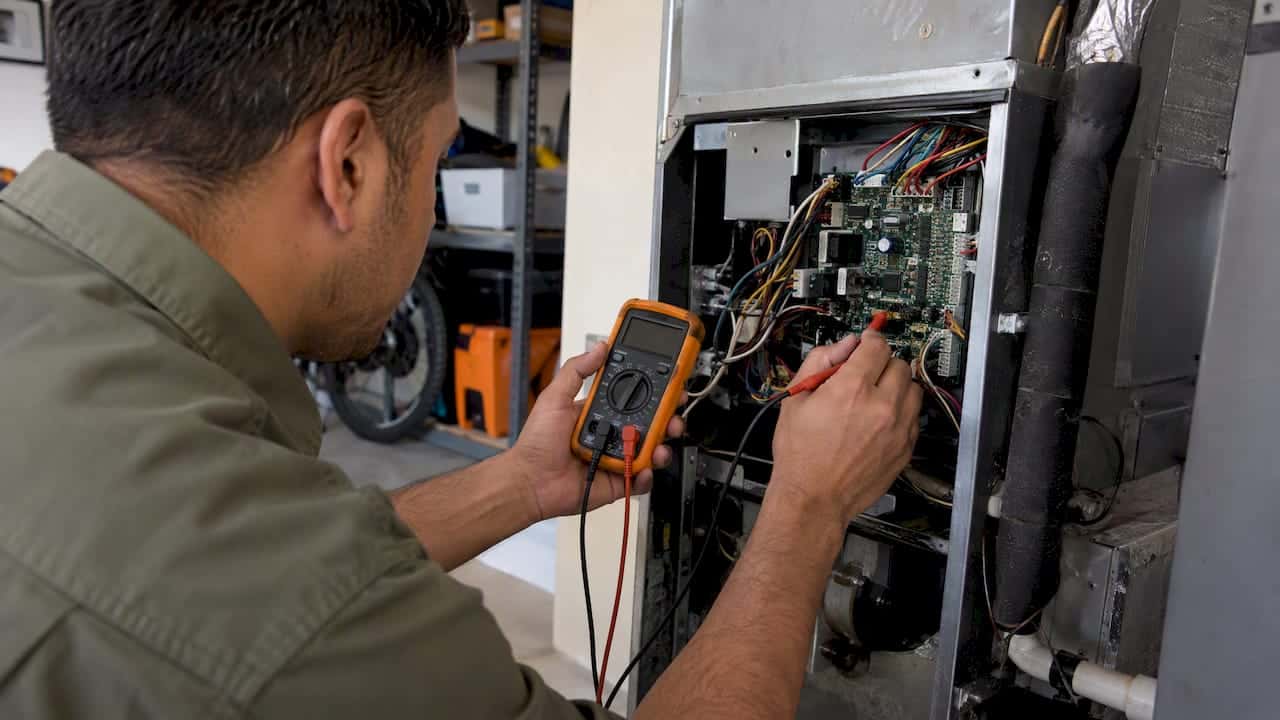
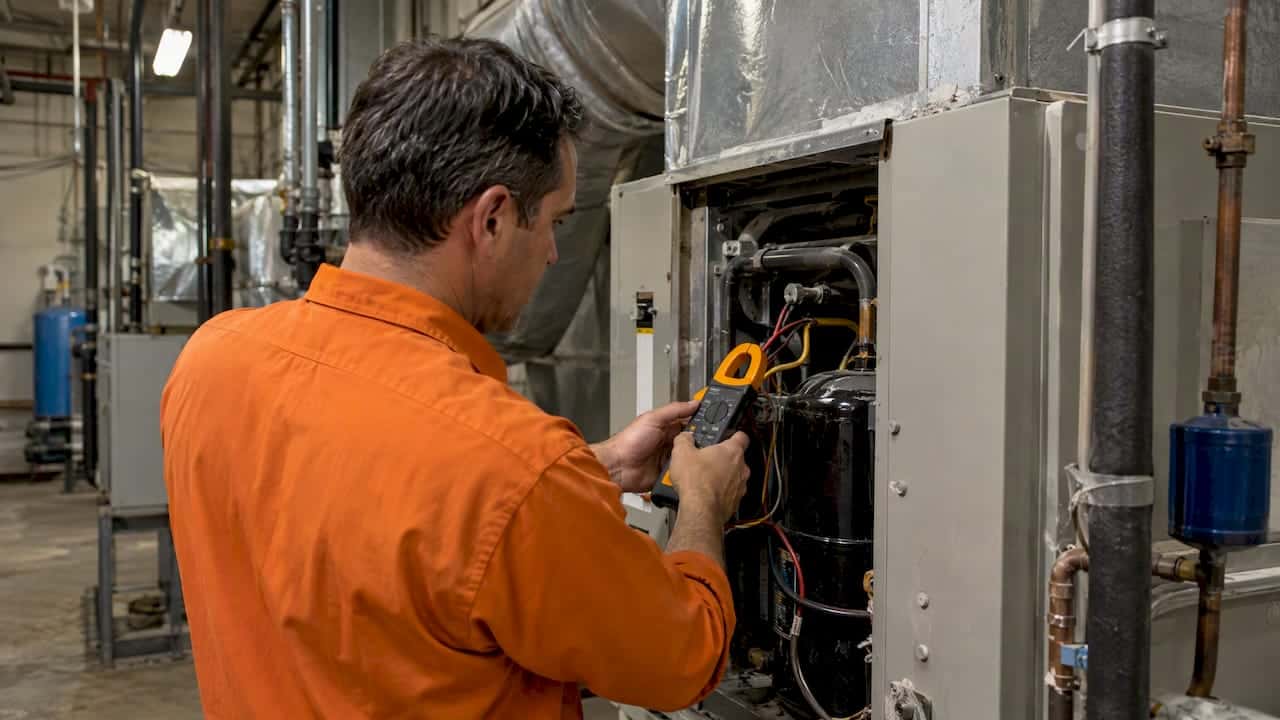
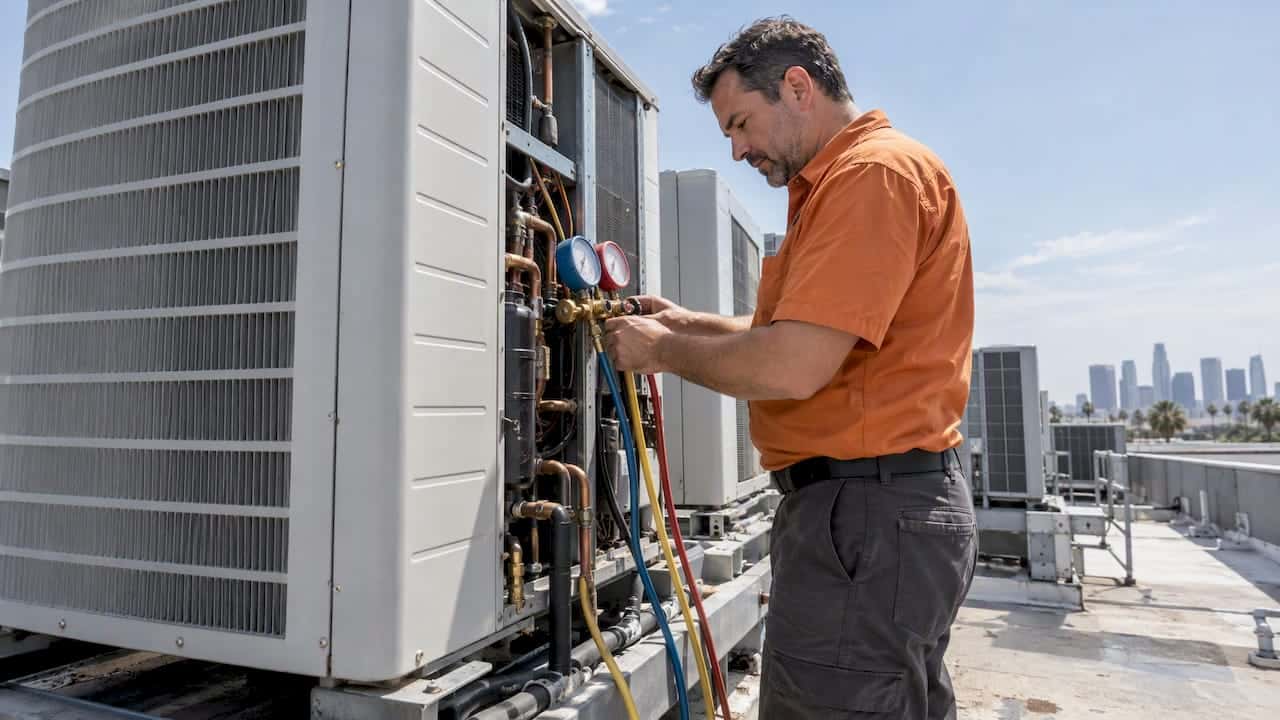
- Measure TESP with a manometer and compare the reading to the equipment’s rated maximum.
- Measure CFM at individual registers using a flow hood to spot which rooms are underserved.
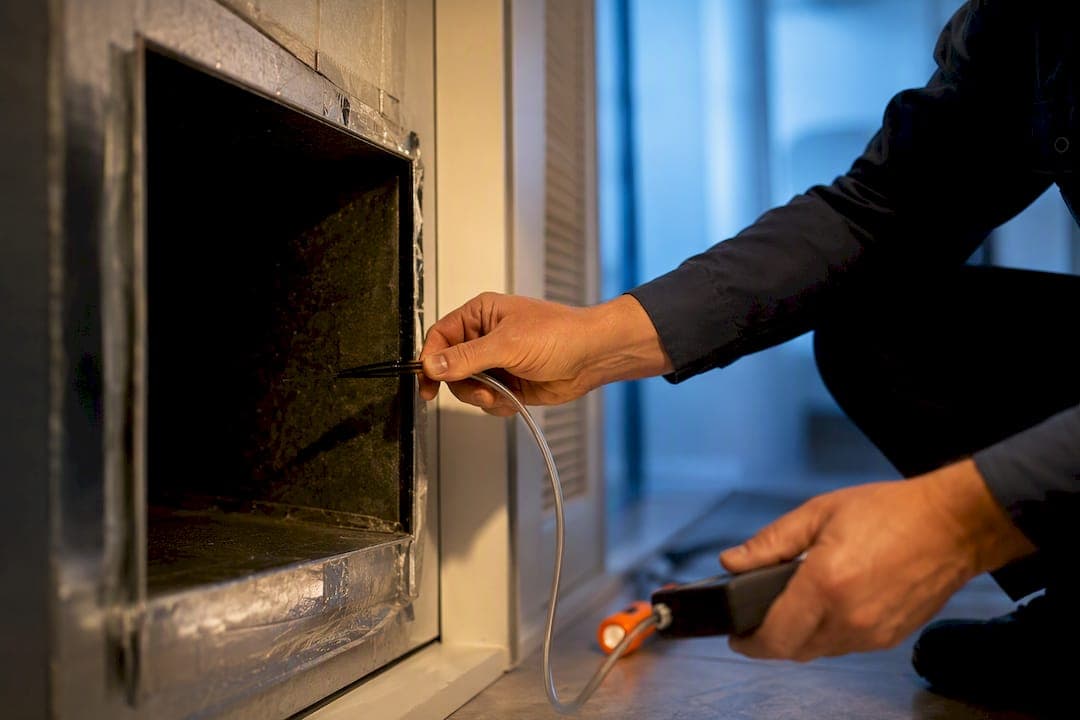
- Run a smoke-pencil test near duct joints, boots, and the return plenum to visually trace air leaks.
- Where leakage is suspected, perform a duct leakage test to quantify how much conditioned air is escaping.
Benchmarks matter here. A TESP reading 10 to 20% over the manufacturer’s maximum rating is generally treated as confirmation of a restriction serious enough to warrant duct work rather than a refrigerant top-off or a thermostat adjustment, per IO HVAC Controls. For heat pumps specifically, ACCA guidance points to a common target range of around three to four hundred cubic feet per minute (CFM) per ton for heat pump airflow., which is worth keeping in mind since heat pumps are often more sensitive to airflow shortfalls than standard AC systems.
One nuance worth knowing: ECM (electronically commutated motor) blowers try to compensate automatically for restriction by ramping up speed to hold a target airflow. That can mask a return problem for a while, since the system keeps delivering air even as static pressure climbs, until the motor itself starts to show wear.
Pro Tip: Measure static pressure both before and after the filter, and write down every reading with a date. Those numbers give a contractor a real baseline instead of a guess, and they make any estimate you receive easier to evaluate honestly.
Common causes and how to fix them, short term and long term
Not every return air problem needs the same solution. Matching the fix to the actual cause saves money and avoids tearing into ductwork that was never the real issue.
Undersized return grilles are one of the most frequent culprits. ACCA points out that the trunk and plenum are often sized correctly while the grille’s net free area is the actual choke point, meaning a grille swap alone can produce a noticeable improvement without touching the ductwork behind it. Blocked or obstructed returns, duct compressions from tight framing, and leaky or dirty filters round out the most common causes, along with too many supply vents left closed and door undercuts that were never adequate for the load in the first place.
Start with what costs nothing:
- Open closed supply vents throughout the house instead of shutting off unused rooms.
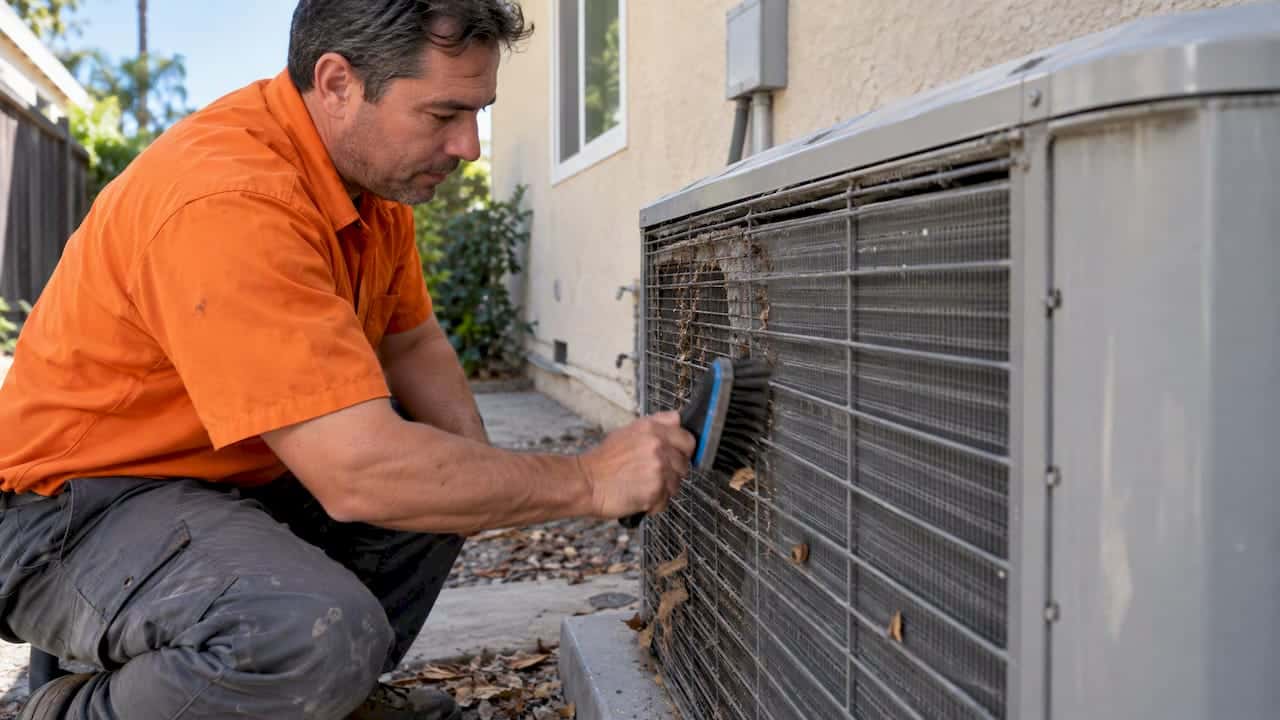
- Clear furniture, rugs, or curtains blocking return grilles.
- Replace a dirty filter with the correct size and rating.
- Leave interior doors open where practical to help air circulate back to central returns.
When those steps only partly help, a contractor-level fix usually goes further:
- Enlarging the return grille to increase net free area.
- Adding a second return on the same trunk line to share the load.
- Installing a transfer grille or jump duct so a closed-door room has a return path without needing its own full duct run, since door undercuts alone often fall short in homes with higher airflow demands.
- Sealing duct leaks and insulating return runs that pass through an attic, crawlspace, or garage.
For homes where none of that closes the gap, a full Manual D reassessment may be warranted, particularly when upgrading to a heat pump or higher-capacity equipment that needs more CFM per ton than the existing return system was designed to deliver. That is a bigger, more disruptive project, but it is also the only real fix when the return trunk itself is undersized for the load.
When to call a pro and what a diagnostic visit should include
Some symptoms are worth living with for a day or two while you try the easy fixes. Others deserve a call right away: a frozen coil, persistent oil-canning noise, a room that never reaches temperature no matter what you try, or any suspicion that a return duct is leaking air from a garage, attic, or crawlspace into your living space.
That last one matters more than it sounds. Building America research notes that return-side leaks can pull unconditioned or even contaminated air, including combustion byproducts, into the home’s air supply. That is a safety question, not just a comfort one, and it is why a licensed technician should be the one tracing and sealing those leaks.
A thorough diagnostic visit should include a few concrete measurements, not a guess based on a walk-through:
- Static pressure and TESP readings compared against the equipment’s rated maximum.
- Register-by-register CFM measurements.
- A duct leakage test where leaks are suspected.
- A visual inspection of return grilles, trunk lines, and filter condition.
- A Manual D sizing review when the numbers suggest the system was never matched to the home’s load.
A useful report hands you the actual measured values, not just a verbal summary, along with clear repair options, a realistic cost range for each, and a timeline. If a contractor recommends a fix without ever putting a manometer on the system, ask why.
How LC Heating & Air Conditioning approaches return-air diagnostics
We have spent more than twenty years working on HVAC systems across Los Angeles, from historic homes with original ductwork to modern multi-zone heat pump and mini-split installations, and return-air problems show up constantly in all of them. Our diagnostic visits follow the same sequence described above: a fan-on airflow check, magnehelic and manometer static pressure readings, a smoke-pencil pass along duct joints and the return plenum, and handheld CFM checks at individual registers.
Every diagnostic comes with pricing set before we start, so you know the cost upfront instead of watching it climb as the visit goes on. Same-day service may be available for symptoms that cannot wait, like a frozen coil or a system that has stopped keeping up with the heat. For readers who want more background before booking, our return-air primer and our guide to duct inspection techniques cover the mechanics in more depth.
The homeowner mistake that makes return-air problems worse
Most advice on this topic jumps straight to duct redesigns, and that overcorrects. The measurements matter more than the assumption. A weak vent or a noisy duct can come from a fifteen-dollar filter or a rug pushed against a grille just as easily as it can come from an undersized trunk line, and the only way to tell the difference is to actually measure static pressure and register CFM before spending money on either end.
The conventional wisdom also underrates the closed-door test. It costs nothing, takes thirty seconds, and tells you more about a specific room’s return shortfall than most homeowners expect from something so simple. If there is one thing to prioritize, it is this: measure before you modify. A contractor who shows up with a manometer and takes real readings is giving you something a visual inspection alone cannot, an honest basis for deciding whether you need a new filter or a new return duct.
— Leo
Book a return-air diagnostic with LC Heating & Air Conditioning
If the checks above point to a real restriction, the next step is a proper measurement, not another guess. We run a flat-rate diagnostic that includes a static pressure test, a smoke-pencil inspection of your return ductwork, and a written estimate before any work begins, with same-day appointments available across the Los Angeles area.

What that visit gets you:
- A measured static pressure reading compared against your system’s rated maximum.
- A smoke-pencil check of return joints and the plenum to catch leaks you cannot see.
- A written estimate with clear options, so you decide what happens next.
Hold onto whatever readings and photos you gather from your own checks. They give our technicians a head start and give you a way to compare notes against what we find. You can schedule a diagnostic directly, or browse our HVAC maintenance plan if you would rather stay ahead of these issues with regular inspections.
Sources
Technical claims in this article draw on ACCA’s return duct sizing guidance, Building America’s duct retrofit research, IO HVAC Controls’ static pressure explainer, and LBNL’s research on duct compression. For a homeowner-level look at duct sizing basics, see this guide to duct sizing and efficiency.
- What is external static pressure (ESP) and why it matters for HVAC airflow — IO HVAC Controls
- Increasing comfort, energy efficiency and revenue by properly sizing return duct systems — ACCA
- Compression effects on pressure loss — LBNL/ETA
FAQ
How do I boost return air flow in my home?
Start by clearing any furniture, rugs, or clutter blocking return grilles, and replace a dirty filter, since both are common causes of restricted airflow. If those steps do not help, a larger return grille, an added return, or a transfer grille between rooms are typical next fixes a contractor can install.
Why can I barely feel air coming out of my vents?
Weak airflow at the registers usually means the system cannot pull in enough return air to move a full volume of air through the ducts. High static pressure from an undersized or blocked return, a clogged filter, or a compressed duct section are the most common causes.
Can an HVAC system have too much return air?
An oversized return is far less common and far less damaging than an undersized one, since the goal is simply matching return capacity to what the equipment needs to move. Following Manual D sizing and measuring actual CFM at the registers is the reliable way to confirm the balance is right in either direction.
What happens if return air is undersized?
An undersized return raises static pressure, forcing the blower to work harder while delivering less usable airflow to each room. Left unaddressed, that stress can lead to a frozen coil, a shortened blower motor lifespan, and higher energy bills from a system that runs longer to reach the same comfort level.
When should I call a professional instead of troubleshooting myself?
Call a technician if you notice a frozen coil, persistent rumbling or oil-canning noise, a room that never reaches temperature, or any sign that return ducts are leaking air from a garage or attic into the home. A professional visit should include measured static pressure, register CFM readings, and a clear written estimate before any repair work begins.
Recommended
Leo, Propietario y Técnico Principal en LC Heating & Air
Leo dirige LC Heating & Air como propietario-operador y tiene la licencia C-20 HVAC #1073586 de California. Sus guías se enfocan en diagnósticos prácticos, decisiones de reparación seguras y consejos claros para propietarios de Los Ángeles.