- Why Does My Mini Split Smell? Common Odors and Their Causes
- What Should I Do Right Now If My Mini Split Smells Bad?
- How to Inspect Your Mini Split for the Real Source of the Smell
- When Should You Call an HVAC Technician for a Smelly Mini Split?
- Mini Split Odor Prevention: A Maintenance Checklist That Actually Works
- How a Local HVAC Pro Diagnoses a Persistent Mini Split Smell
- A Homeowner-First Take on Mini Split Odors
- Get Your Mini Split Smell Diagnosed Without the Guesswork
- Sources
- FAQ
- Recommended

If your mini split smells musty, sour, or like dirty socks, moisture is almost always the culprit, usually microbial growth on the coil, drain pan, or blower wheel. A burning or chemical smell is a different animal entirely and means shut the unit off now and call a technician. Start with the filters, check the drain outlet for standing water, and crack a window before you do anything else.
TL;DR:
- Microbial growth on the coil, drain pan, or blower wheel is the primary cause of musty odors and requires moisture control for effective prevention.
- Persistent sour smells during humid periods usually indicate stagnant condensate in the drain line, while electrical or refrigerant smells demand immediate professional inspection.
- Regular filter cleaning every two to three weeks, along with seasonal drain line checks, can significantly reduce the risk of odor recurrence caused by moisture buildup.
- DIY inspection should focus on the coil, drain pan, and drain line, but avoid opening sealed electrical components or refrigerant lines to prevent injury or system damage.
- A licensed HVAC technician can provide flat-rate diagnostics, identify hidden microbial growth, and perform targeted cleaning or repairs for longer-lasting odor removal.
Why Does My Mini Split Smell? Common Odors and Their Causes
Your nose is actually a decent diagnostic tool here. Different smells point to different problems, and matching the odor to the cause saves you from wasting a Saturday cleaning the wrong part.
Musty or “dirty sock” smell. This is the most common complaint homeowners bring up, and it has a name in the HVAC world: dirty sock syndrome. It happens when microbial growth colonizes a wet evaporator coil, a grimy drain pan, or a blower wheel that never fully dries between cooling cycles. The smell tends to show up strongest right when the unit kicks on, then fades as airflow picks up. ASHRAE’s own preventive-maintenance guidance points squarely at moisture control as the fix, because a dry coil simply can’t support the growth that produces those musty compounds.
Sour or vinegar-like smell. This one usually traces back to stagnant condensate sitting in the drain pan or line longer than it should. Standing water breeds bacteria fast, especially in a warm indoor unit that runs for hours at a time. If you notice this smell only during humid stretches, condensate is almost certainly your answer.
Fishy or sewage-like smell. Less common, and worth taking seriously. Sometimes it’s trapped organic debris decomposing inside the unit. Other times it’s not the mini split at all. A dry P-trap somewhere in your plumbing, a nearby sewer vent issue, or even a dead rodent in a wall cavity can produce a nearly identical smell. Before you tear into your mini split, walk the room and check nearby drains, because ruling out household sources first can save you an unnecessary repair call.
Sweet, chemical, or burning smell. Treat this differently than the others. A sweet or slightly chemical odor can indicate a refrigerant leak, while an acrid, electrical smell usually points to overheating components or a wiring problem. Neither of these is a “clean the filter and wait” situation.
Here’s a quick reference for matching what you’re smelling to what’s likely happening:
- Musty, moldy, or like dirty socks: wet coil, dirty drain pan, or damp blower wheel
- Sour or vinegar-like: stagnant condensate or bacterial buildup in the drain path
- Fishy or sewage-like: trapped debris, or a household plumbing/sewer issue unrelated to the unit
- Sweet, chemical, or burning: refrigerant leak or electrical fault, needs immediate attention
Knowing which category you’re in tells you exactly how urgent your next move needs to be.
What Should I Do Right Now If My Mini Split Smells Bad?
Not every odor calls for the same response, and getting the order of operations right matters more than people think.
- Check for burning or chemical smells first. If that’s what you’re smelling, turn the unit off at the wall switch or breaker and don’t run it again until a technician has looked at it. Refrigerant exposure and overheating electrical components are not DIY territory.
- Pull the filters and inspect them. Most mini splits use washable filters behind the front panel. Rinse them with lukewarm water, let them dry completely (a damp filter reinstalled wet just restarts the problem), and reinstall.
- Check the drain outlet. Look outside where the condensate line exits the wall. If water isn’t dripping out during a cooling cycle, or if you see algae buildup, the line may be clogged.
- Run a fan-only or dry cycle. Most mini splits have a “dry” or dehumidify mode. Running that for an hour or two, or simply running the fan-only setting after your last cooling cycle of the day, helps the coil dry out instead of sitting wet overnight.
- Ventilate the room. Open a window and let fresh air move through while you work. This does not solve the underlying cause, but it clears out the compounds you’re smelling while you address the real issue.
Pro Tip: Never spray bleach, disinfectant, or air freshener directly into the indoor head. Bleach can corrode internal components and react with residual refrigerant oils, and fragrance sprays just mask the smell for a few hours while the microbial source keeps growing underneath. Fix the moisture, don’t perfume it.
Filter cleaning should happen regularly under normal use. If you have pets, run the system constantly through a Los Angeles summer, or live somewhere dusty, every two to three weeks is more realistic. For a deeper look at what happens when a system starts underperforming alongside the smell, why your AC smells moldy walks through the connection between airflow problems and odor.
How to Inspect Your Mini Split for the Real Source of the Smell
Cleaning the filter fixes maybe half of odor complaints. The other half live deeper inside the unit, on the evaporator coil, the drain pan, and the blower wheel, none of which a filter rinse ever touches. Field data backs this up: standard EPA guidance on mini-split filtration notes that most mini-split filters exist to protect the equipment, not to capture the fine particles and microbial spores that actually cause odor, unless that filter carries a MERV 13 rating or higher. That gap explains why a lot of homeowners clean the filter, feel relief for a week, then smell the same thing again.
Here’s a practical inspection sequence you can follow before deciding whether to call someone:
- Remove the filter and shine a flashlight into the intake. Look for dust clumping, visible dark spots, or a slimy film on the surface behind it.
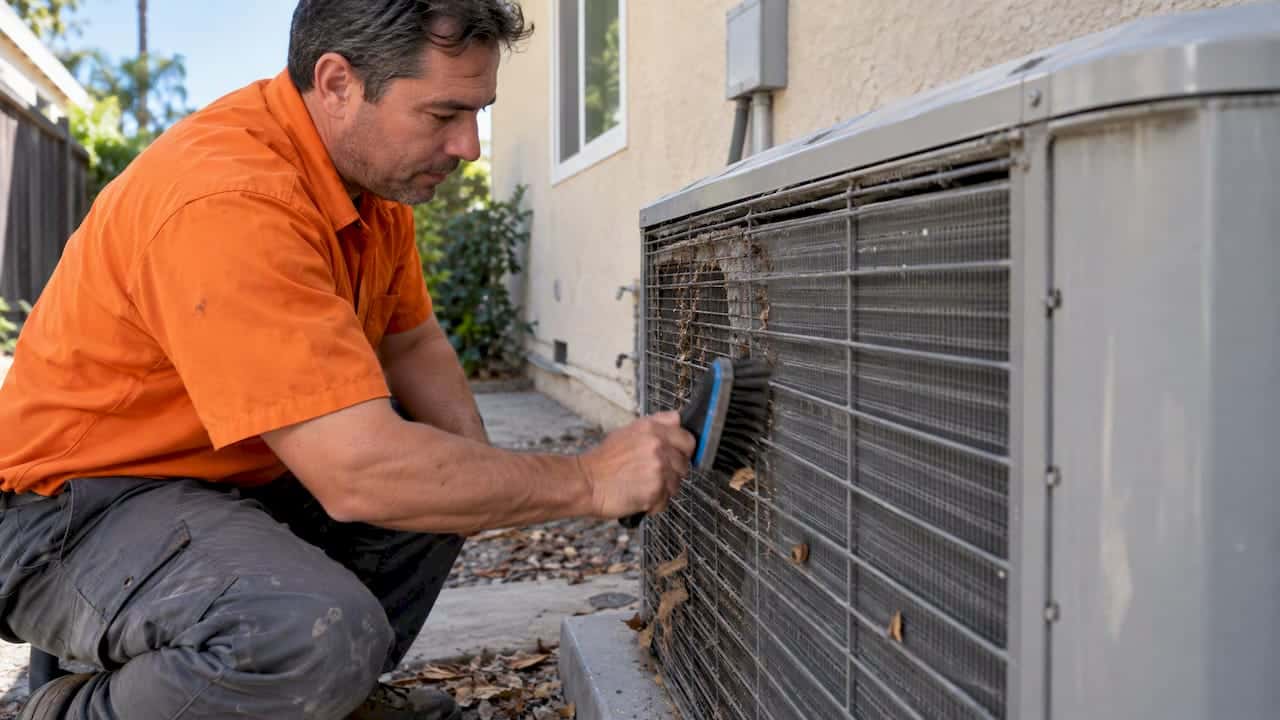
- Look at the evaporator coil, the ribbed metal surface just past the filter. A healthy coil looks clean and metallic. A contaminated one shows dark streaking or a fuzzy, biofilm-like coating.
- Check the drain pan beneath the coil for standing water, sediment, or algae growth.
- Follow the visible drain line as far as you can see it, looking for slime buildup or a sagging section that could trap water.
- Note when the smell is strongest, whether that’s the first two minutes of a cooling cycle, only in dehumidify mode, or constant, since that detail helps a technician diagnose faster.
Practical experience across HVAC preventive-maintenance protocols confirms that the odor source is usually hidden past the filter, on the coil and in the condensate path, which is exactly why filter cleaning alone often falls short according to ASHRAE’s own field guidance.
Two things are off-limits for a DIY inspection. Refrigerant lines and sealed electrical components sit behind panels for a reason, and opening them risks a refrigerant release or an electrical injury, plus it can void your system’s warranty. If your inspection turns up dark, slimy residue on the coil or in the pan, don’t assume you can scrub it out yourself and call it solved. The EPA’s mold guidance is specific on this point: fix the moisture source first, and don’t treat visible deposits as confirmed mold without a proper assessment, because incomplete cleaning tends to invite a fast recurrence.

Before you call a technician, take a few photos of what you found, note the exact mode the unit was running in when the smell peaked, and jot down how long the odor has persisted. That handful of details turns a guessing-game service call into a five-minute diagnosis.
When Should You Call an HVAC Technician for a Smelly Mini Split?
Some situations are DIY-friendly. Others aren’t, and pushing past that line risks your health, your equipment, or both.
Call a licensed technician immediately if you notice any of the following:
- A burning, acrid, or electrical smell, at any point, from any mode
- A sweet or chemical odor that could indicate a refrigerant leak
- Musty smell that persists after you’ve cleaned the filters and dried the unit for several days
- Visible mold, dark slime, or heavy buildup on the coil or in the drain pan
- Water leaking from the indoor unit, pooling on the floor, or staining the wall or ceiling below it
- Noticeably weaker airflow alongside the smell, which can point to a clogged coil restricting the system
A technician’s visit for this kind of complaint typically covers a full diagnostic pass: reproducing the odor by running the unit, inspecting the coil and blower with a borescope if needed, clearing or repairing the drain line, and, when microbial growth is confirmed, a targeted cleaning that goes well beyond what a homeowner can safely reach. If the cause turns out to be electrical or refrigerant-related, that gets handled as its own repair.
A diagnostic visit with a set rate provides a firm number before any work starts instead of an open-ended hourly estimate that climbs the longer the technician is in your home.
Mini Split Odor Prevention: A Maintenance Checklist That Actually Works
Odors are almost always a symptom of the same root problem: moisture sitting somewhere it shouldn’t. A consistent maintenance rhythm keeps that moisture from ever having the time to grow something that smells.
- Monthly: Pull and rinse the filters, glance at the drain outlet outside to confirm water is flowing freely, and run a fan-only cycle at the end of hot days so the coil dries overnight instead of sitting wet.
- Seasonally: Walk the condensate routing, especially before your first heavy cooling stretch of the year, and look for any slime buildup along the line. Clean it out if you find it rather than waiting for the smell to come back.
- Annually: Book a professional service visit for coil and blower cleaning, a full drain-line check, and an electrical safety inspection. This is the one homeowners skip most often, and it’s the one that catches problems before they turn into odors or breakdowns.
- Ongoing habits: Keep indoor humidity below roughly 60 percent where possible, use exhaust fans in bathrooms and kitchens, and avoid running the mini split in a way that lets it sit idle and damp for long stretches, like turning it off entirely for weeks during a mild spell.
Pro Tip: If your household includes pets or you notice more dust than usual, bump filter cleaning to every two weeks instead of monthly. It’s a five-minute task that prevents a much longer one later.
California’s coastal humidity swings, especially in homes closer to the marine layer, make condensate management more of a year-round concern than homeowners inland tend to expect. If your unit was installed without attention to slope and drainage, common mini-split project mistakes in California covers the installation errors that show up as odor problems months later.
How a Local HVAC Pro Diagnoses a Persistent Mini Split Smell
A technician doesn’t just spray a coil cleaner and call it done. The real diagnostic process starts by reproducing the smell, running the unit in the exact mode you reported it in, then working backward through the moisture path: filters, coil surface, drain pan, and condensate line, often with a borescope to see sections you can’t reach by hand.
From there, the fix depends on what turns up. Sometimes it’s a straightforward coil and blower cleaning. Sometimes the drain line needs to be cleared, resloped, or replaced outright. When microbial growth is heavy, targeted remediation goes further than a surface wipe, because leaving contamination behind just invites it back within weeks.
What separates a good service visit from a frustrating one:
- A diagnostic that identifies the actual source, not just a guess followed by a part swap
- A flat-rate quote before work begins, so there are no surprise add-ons once the panel comes off
- Same-day availability for odor complaints, since a lingering smell in a Los Angeles heat wave isn’t something you want to sit with for a week
- Experience specific to mini splits and heat pumps, which have different access points and failure modes than a central ducted system
A professional HVAC service approaches these calls with exactly that structure: diagnose first, price transparently, then fix the actual cause rather than the symptom.
A Homeowner-First Take on Mini Split Odors
Most odor complaints I see get treated like a mystery, when they’re usually a moisture problem hiding behind a simple part. California’s marine layer humidity and long dry spells both push condensate systems in ways that surprise homeowners. My advice is always the same: fix the water problem, don’t mask it, and don’t let anyone talk you into a full system replacement when a coil cleaning and a drain repair would solve it. If you’d rather have a professional confirm what’s going on, a flat-rate diagnostic gets you an honest answer without guesswork pricing.
— Leo
Get Your Mini Split Smell Diagnosed Without the Guesswork
Some HVAC companies offer a flat-rate diagnostic instead of an open-ended bill that grows every hour a technician is in your home. That approach matters most with odor complaints, where the temptation can be to recommend a full replacement instead of the coil cleaning or drain repair that actually solves it.

Book a service call and expect a clear walkthrough of what’s actually causing the smell, a repair estimate before any work starts, and no pressure toward a system you don’t need. Same-day availability is often on the table for odor and airflow complaints, since these tend to get worse the longer they sit. If your mini split has been smelling off for more than a few days, or if a burning smell sent you here, get it looked at now rather than waiting for it to escalate. For ongoing peace of mind, ask about the HVAC maintenance plan, which folds seasonal checks and coil cleaning into one predictable annual cost.
Sources
- ASHRAE IAQ preventive-maintenance checklist
- Do ductless mini-split heat pumps filter fine particles out of indoor air? | US EPA
FAQ
What Is the Best Air Freshener for a Mini Split System?
There isn’t one you should use inside the unit itself. Spraying fragrance into the indoor head only masks the odor-causing microbial growth temporarily while it keeps growing underneath, according to ASHRAE guidance on source control. Fixing the moisture source, drying the coil, clearing the drain, always outperforms any air freshener.
What Is the Average Lifespan of a Mini Split?
Most mini splits last many years with regular maintenance, though the exact lifespan depends heavily on how consistently filters get cleaned and how well condensate drainage is managed. Skipping annual professional service tends to shorten that lifespan through accumulated coil and drain problems.
Why Is There a Bad Smell Coming From My Split AC?
The most common cause is moisture-driven microbial growth on the evaporator coil, drain pan, or blower wheel, which produces a musty or dirty-sock smell. Sour smells usually point to stagnant condensate, while a sweet or burning smell signals something more serious, like a refrigerant leak or electrical fault, that needs professional attention right away.
What Does Mini Split Refrigerant Smell Like?
Refrigerant leaks typically produce a faint sweet or slightly chemical odor, sometimes compared to a subtle solvent smell. If you notice this alongside reduced cooling performance, turn the unit off and schedule a mini-split repair rather than continuing to run it.
How Often Should I Clean My Mini Split Filters to Prevent Odor?
Clean washable filters at least once a month under normal household use. Homes with pets, heavy dust, or near-constant summer use should check filters every two to three weeks, since a dirty filter accelerates the moisture buildup that leads to odor.
Recommended
Leo, Propietario y Técnico Principal en LC Heating & Air
Leo dirige LC Heating & Air como propietario-operador y tiene la licencia C-20 HVAC #1073586 de California. Sus guías se enfocan en diagnósticos prácticos, decisiones de reparación seguras y consejos claros para propietarios de Los Ángeles.