- Understanding HVAC Pricing: What Every Line Item Means
- How Much Should an HVAC Estimate Actually Cost?
- Repair or Replace? The Math That Settles the Argument
- Comparing HVAC Quotes Without Getting Played
- Estimate Templates You Can Actually Use
- How LC Heating & Air Builds a Transparent Estimate
- Why I Push Every Homeowner Toward Itemized Bids
- Get a Written, Itemized Estimate From LC Heating & Air
- Sources
- FAQ
- Recommended

A usable HVAC estimate is an itemized, written price that lists equipment (make, model, and efficiency rating), materials, labor hours and rates, permits, taxes, and warranty terms. Nothing should be vague. If a contractor hands you a single number with no breakdown, ask for a line-item revision and a written scope before you sign anything.
TL;DR:
- A detailed HVAC estimate should break down costs into equipment, materials, labor, permits, taxes, and warranties; vague single-price bids are unreliable.
- Typical full system replacements cost between $5,000 and $28,000, with costs varying based on system type, efficiency, ductwork condition, and job complexity.
- Repair costs exceeding $5,000 in total or on an older system nearing its service life generally favor replacing the unit over repair.
- Contractors include newer refrigerant standards and conversion allowances in estimates; if omitted, ask why these are not specified.
- Homeowners should always request written, itemized bids that match scope details and ask standardized questions to avoid surprises and scope disputes.
Understanding HVAC Pricing: What Every Line Item Means
An HVAC estimate breakdown is only useful if you can read it. Contractors who write vague, single-line bids are either cutting corners on the paperwork or hoping you won’t ask questions. A proper heating and cooling estimate breaks the job into parts you can verify one by one.
Here’s what each line should actually tell you:
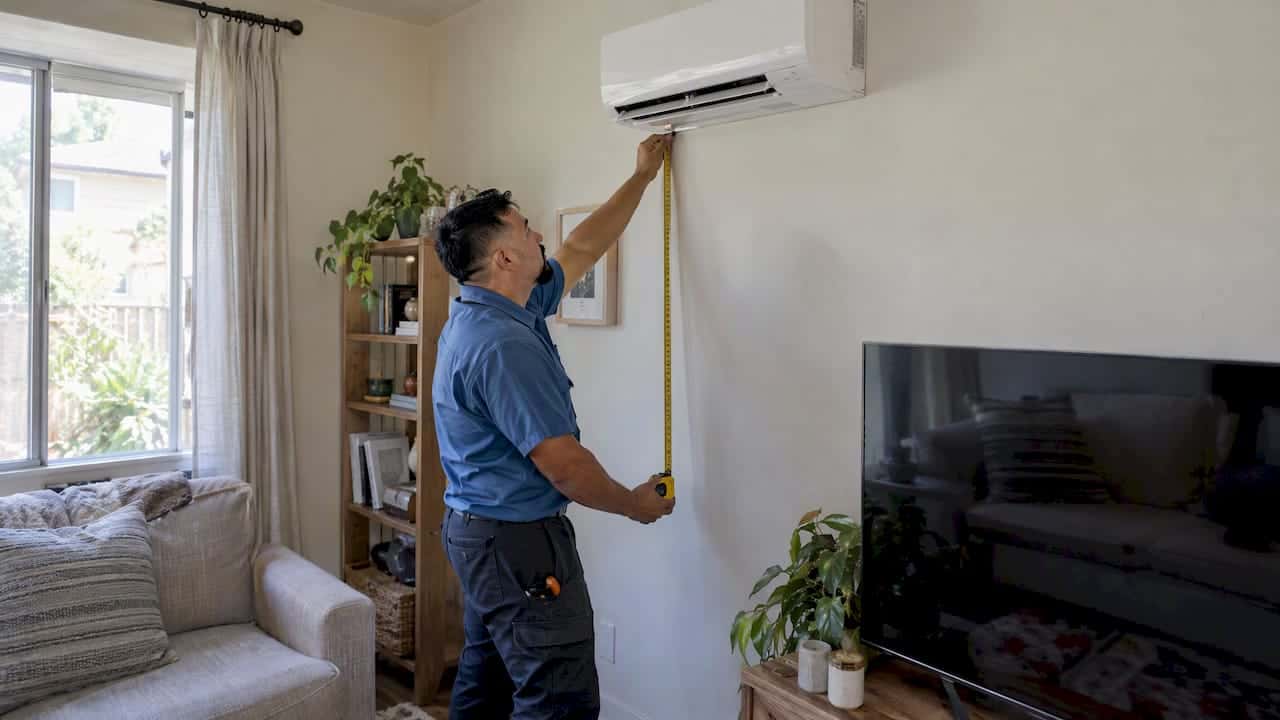
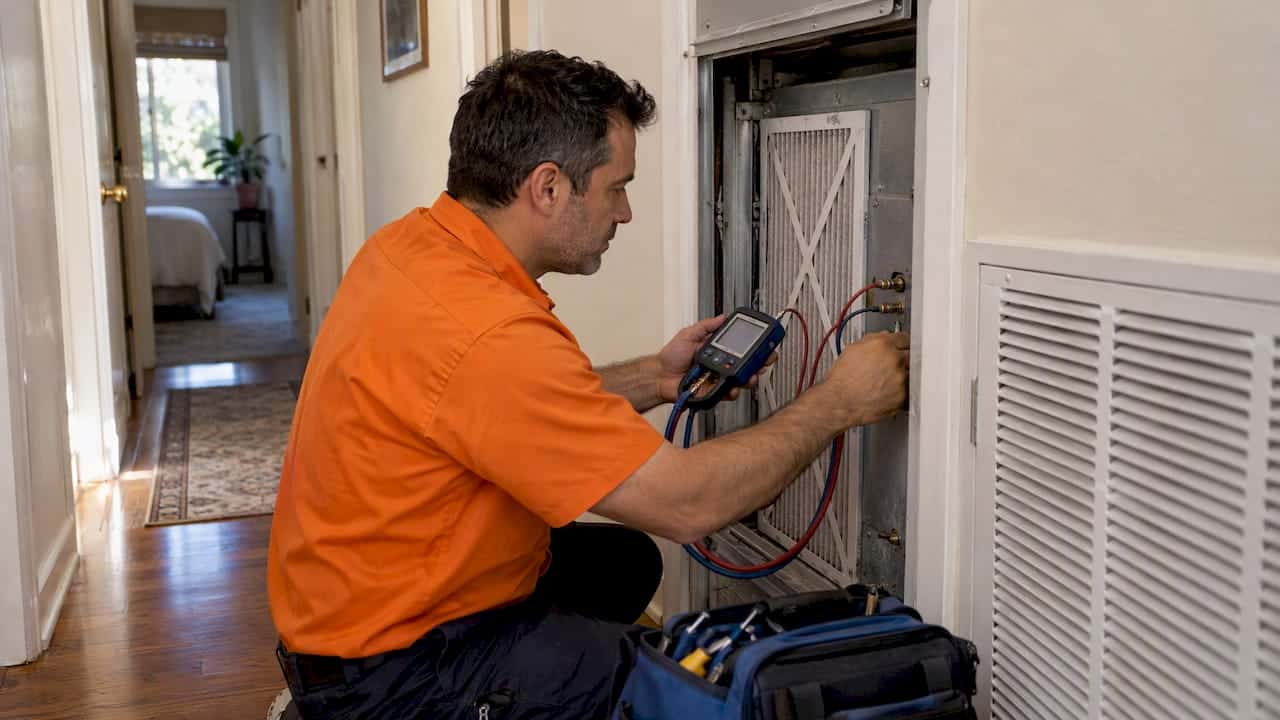
- Equipment. The exact make and model, plus efficiency ratings like SEER2, HSPF2, or AFUE. This line should also note whether the new unit matches the tonnage of your old system or requires a fresh load calculation, and whether indoor and outdoor components are properly matched.
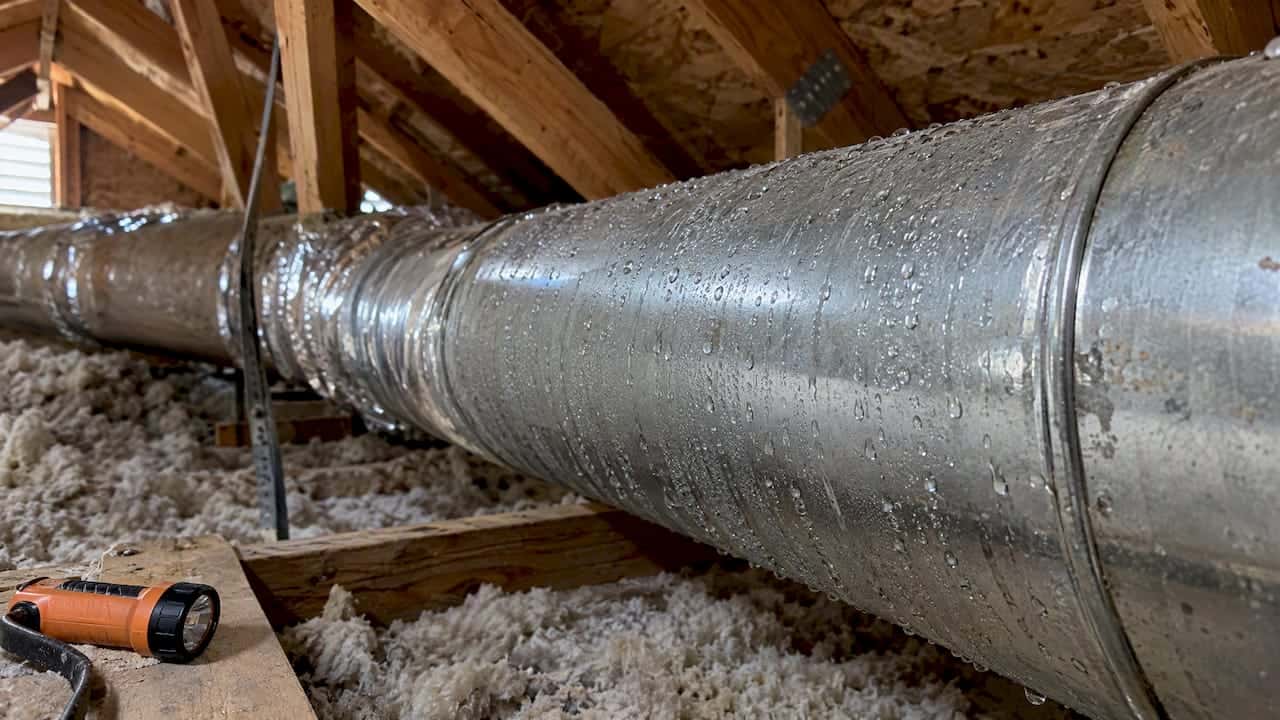
- Materials and consumables. Line sets, sheet metal for duct transitions, insulation, condensate drain lines, and startup filters. These add up fast on retrofit jobs where existing infrastructure needs modification.
- Labor. Estimated hours multiplied by an hourly rate, plus crew size. Attic work, roof-mounted units, or tight crawlspaces often carry an access premium because they slow the crew down and add safety gear.
- Permits and inspections. Most municipalities require a mechanical permit for HVAC installation, and your contractor should list the permit fee separately rather than folding it into “labor.” The EPA’s indoor air quality guidance outlines why proper permitting and inspection matter for airflow and ventilation outcomes, not just code compliance.
- Disposal and taxes. Old equipment removal, refrigerant recovery fees, and applicable sales tax.
- Markup, overhead, and contingency. Every contractor builds in a margin. A transparent estimate names it as its own line rather than hiding it inside padded material costs.
- Exclusions and change orders. What’s not covered (drywall repair after duct access, electrical panel upgrades) and what happens to pricing if the job scope changes mid-project.
Recent efficiency mandates and refrigerant transitions have added a new wrinkle. Because SEER2 standards and newer refrigerant blends are reshaping equipment lineups, many contractors now include a refrigerant-type note and a conversion allowance if your existing lines aren’t compatible with the replacement unit. If your quote skips that, ask why.
This is the standard most professional estimators recommend: itemized, technical line items rather than one lump “system” price, because a single number leaves too much room for scope disputes later.
How Much Should an HVAC Estimate Actually Cost?
Full HVAC replacements typically run $5,000 to $28,000, and where your job lands in that range depends heavily on system type, efficiency tier, and how much of your existing ductwork survives the job.
A few reference points make this concrete:
- Central split system replacement: Often the most cost-predictable job, since ductwork and electrical typically already exist.
- Heat pump conversion: Costs more upfront than a straight AC swap but often qualifies for rebates that offset the difference, especially in California.
- Ductless mini-split, multi-zone: Pricing scales with the number of indoor heads; each additional zone adds equipment and labor cost but skips the ductwork expense entirely.
- Full duct replacement: Commonly adds $3,000 or more to a project, and it’s one of the biggest reasons two quotes for “the same job” can differ by thousands.
Statistic to know: For a typical 2,000 square foot home, contractors generally spec a 2.5 to 3 ton system, with installed costs commonly falling in a range that shifts based on ductwork condition and equipment tier.
Climate matters more than most homeowners expect. A system sized for a mild coastal microclimate runs smaller and cheaper than the same square footage inland, where summer load calculations push tonnage up. Beyond tonnage, three things tend to move a bid the most: a compressor or evaporator coil that needs full replacement rather than repair, duct runs that fail inspection and need rerouting, and access complications like crane rental for rooftop package units or specialty labor for VRF commercial systems. None of those show up if you’re only comparing sticker prices.
Repair or Replace? The Math That Settles the Argument
Deciding between a repair and a full swap doesn’t have to be a gut call. Two established rules give you a starting point, though neither is absolute.
- Check the Trane threshold. Trane’s guidance generally favors repair for systems under five years old, and leans toward replacement once repair costs climb past roughly $3,000 on an older unit, particularly one nearing the end of its expected service life.
- Run the $5,000 Rule. Multiply the system’s age in years by the repair cost. If the result tops $5,000, replacement usually wins on long-term value. It’s a rule of thumb, not a law of physics, so weigh it alongside warranty coverage and repair history.
- Factor in refrigerant type. Systems still running phased-out R-22 face a hidden cost. Recharging or replacing refrigerant-sensitive parts on an R-22 unit often makes replacement the more economical path, even when the repair quote looks affordable on paper.
Worked example: An 8-year-old AC unit needs a $900 compressor repair. Multiply age by cost: 8 × $900 = $7,200. That clears the $5,000 threshold, which points toward replacement, especially if the unit is out of warranty or this is its second major repair in three years. If the same compressor quote came in on a 3-year-old system still under warranty, the math (3 × $900 = $2,700) and the age both point toward repair instead. Repair often remains the better call for younger systems with a clean repair history.
Comparing HVAC Quotes Without Getting Played
Getting three bids only helps if you’re comparing the same job three times. A lot of homeowners collect quotes that can’t actually be lined up against each other because the scopes differ in ways that aren’t obvious at first glance.
Before you compare numbers, confirm each bid covers the same scope: identical tonnage or BTU capacity, matching efficiency tier, the same ductwork work (repair, replace, or none), and the same permit responsibility.
Then ask every contractor the same set of direct questions:
- Who pulls the permit, and is that fee included in the estimate or billed separately?
- What’s your change-order policy if we find duct damage once the wall’s open?
- What’s the realistic install timeline, and does that include inspection scheduling?
- Who’s actually on the crew, and are they employees or subcontractors?
Pro Tip: Ask each contractor to send their estimate in writing, itemized, before you sign anything. A contractor who resists putting numbers on paper is telling you something about how they handle problems mid-job.
Watch for these red flags: a scope described in one vague sentence, a large “miscellaneous” or “allowance” line with no explanation, missing permit language, or a quote given only over the phone with nothing in writing. Warranty comparisons deserve the same scrutiny. Parts warranties, compressor-specific coverage, and labor warranties are three different things, and a contractor who bundles them into one vague “warranty included” line isn’t giving you the full picture. For a deeper list of questions worth asking before you commit, this homeowner’s guide covers replacement-specific scenarios worth raising with any bidder.
Estimate Templates You Can Actually Use
You don’t need estimating software to build a usable HVAC estimate checklist. A basic spreadsheet with the right columns does the job for most residential and small commercial jobs.
- Residential replacement template. Columns for equipment (make/model/efficiency), materials, labor hours × rate, permit fee, disposal fee, tax, and a clearly labeled contingency line for unknowns discovered once the old unit comes out.
- New-construction install template. Similar structure, but add a line for ductwork design and airflow balancing, since there’s no existing system to reference for load calculations.
- Service or repair ticket template. A shorter format: diagnostic fee, part cost, labor hours, and an explicit note on whether the quote is flat-rate or time-and-materials.
Every template needs the same core fields: unit description, quantity, unit price, labor hours, labor rate, line total, listed assumptions, and a dedicated permit line. Decide upfront whether you want a fixed price (better for budgeting, especially on replacement jobs) or time-and-materials pricing (more common on repair tickets where the scope isn’t clear until the tech opens the unit up). Ask your contractor to deliver the estimate as an editable file, whether that’s a Google Sheet, an XLSX file, or at minimum a printable PDF you can mark up with questions before you sign.
How LC Heating & Air Builds a Transparent Estimate
LC Heating and Air Conditioning runs flat-rate diagnostics and same-day repair scheduling across Los Angeles, so homeowners see a number before any work starts, not after. Every estimate lists equipment, labor hours, and stated assumptions as separate lines, the same discipline outlined in our diagnostic fee guide.
A sample residential replacement line item might read: “Daikin heat pump, 3-ton, 18 SEER2 — $X,XXX. Labor, 2-person crew, 8 hours at rate — $X,XXX. Permit and inspection — $XXX. Refrigerant line adaptation allowance — $XXX.”
Leo has spent over 20 years working on Los Angeles heating and cooling systems, from historic Hollywood bungalows to commercial VRF installs, and that range shapes how estimates get written here.
Why I Push Every Homeowner Toward Itemized Bids
I’ve seen enough vague one-line quotes to know they almost never favor the homeowner. An itemized estimate protects both sides: you know exactly what you’re paying for, and a contractor who writes one out clearly has nothing to hide. Use the templates above, and ask for a breakdown like this from whoever you hire, including us.
— Leo
Get a Written, Itemized Estimate From LC Heating & Air
LC Heating and Air Conditioning is the alternative to a phone-quote contractor for anyone in Los Angeles who wants a real number before committing. We run a flat-rate diagnostic, then hand you a written estimate that breaks out equipment, labor, permits, and warranty terms line by line, the same structure this guide just walked through.

Our team specializes in heat pumps, ductless mini-splits, and commercial VRF systems, alongside standard central AC and furnace work, and we offer same-day service across West Hollywood, Beverly Hills, Bel Air, Brentwood, and the greater Los Angeles area. Warranty terms get spelled out in writing, not verbally promised and forgotten. If you’ve got a system on its last legs or a repair quote that doesn’t add up, book a diagnostic with LC Heating and Air Conditioning and get an itemized estimate you can actually compare against anyone else’s bid.
Sources
- HVAC Repair or HVAC Replacement – Make the Right Choice - Trane®
- New HVAC system cost 2026 - CBS News
- True 2026 HVAC System Installation Cost & Pricing Guide
- HVAC Cost for a 2,000 sq ft Home (2026 Guide)
- Heating, Ventilation and Air Conditioning (HVAC) systems — EPA IAQ resources
FAQ
What is the $5,000 Rule for HVAC?
Multiply your system’s age in years by the repair cost quoted. If the result exceeds $5,000, replacement typically makes more financial sense than continuing to repair the existing unit.
How much is an HVAC system for a 2,000 sq ft house?
A 2,000 square foot home typically needs a 2.5 to 3 ton system, with total installed cost depending heavily on ductwork condition, efficiency tier, and system type.
How do I get an HVAC estimate breakdown?
Request a written, itemized quote that separates equipment, materials, labor hours and rate, permits, taxes, and warranty terms. If a contractor like LC Heating and Air Conditioning won’t itemize it, ask for a revised bid before signing anything.
What is the most expensive part of an HVAC system?
Compressors and evaporator coils are typically the priciest components to replace, with compressor jobs often running $1,800 to $3,500 or more installed depending on system size and access.
Recommended
Leo, Propietario y Técnico Principal en LC Heating & Air
Leo dirige LC Heating & Air como propietario-operador y tiene la licencia C-20 HVAC #1073586 de California. Sus guías se enfocan en diagnósticos prácticos, decisiones de reparación seguras y consejos claros para propietarios de Los Ángeles.